Skip to content
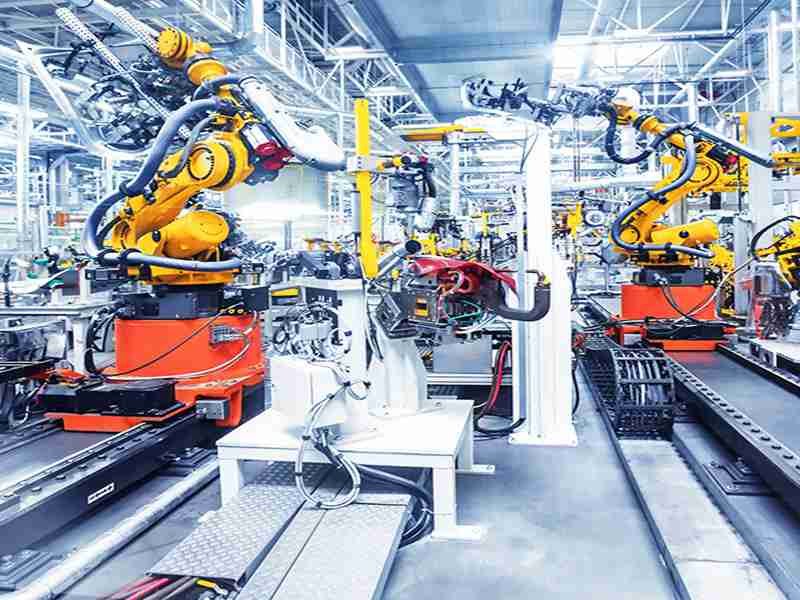
Industrial cables look simple until something goes wrong. A machine stops for no clear reason. A robot arm loses signal during repeated movement. A camera inspection system starts showing unstable images. A control cabinet passes factory testing but fails after installation because one cable cannot handle vibration, oil, EMI, or bending stress. In many industrial projects, cable assemblies are small parts in the BOM, but they can decide whether the whole system runs smoothly.
Choosing industrial cable manufacturers should not be treated as a simple price comparison. The right supplier should understand cable structure, connector compatibility, pinout, shielding, jacket materials, bending performance, voltage, current, impedance, OD, flexibility, flame resistance, oil resistance, UV resistance, corrosion resistance, and documentation requirements. A strong supplier should also support drawings, samples, testing, and production quality control before problems reach your equipment.
The right industrial cable manufacturer is the one that can turn your application needs into a stable, manufacturable cable solution. This means selecting suitable connectors and cables, confirming drawings before production, testing every assembly, supporting small prototype orders, and keeping delivery schedules realistic. For industrial equipment, the best supplier is not always the cheapest one. It is the one that helps reduce downtime, redesign risk, and long-term maintenance cost.
At Sino-Conn, many industrial cable assembly projects start with a practical request: “Can you make this cable according to our sample or photo?” Sometimes the customer has a clear drawing. Sometimes they only know the equipment model and required length. In both cases, the job is not just making a cable. The real work is understanding how the cable will be used and making sure it will survive the working environment.
What Are Industrial Cable Manufacturers?
Industrial cable manufacturers are companies that design, develop, manufacture, test, and customize cables used in industrial equipment, automation systems, robotics, machine vision systems, industrial computers, communication hardware, transportation equipment, test instruments, renewable energy systems, and many other industrial applications.
However, many customers misunderstand what industrial cable manufacturers actually do.
They often assume a cable manufacturer simply cuts wire, attaches connectors, and ships products.
In reality, modern industrial cable manufacturers play a much larger role.
For many industrial projects, the cable assembly is not a standard catalog item. It is a custom-engineered component designed around the customer’s equipment, installation environment, signal requirements, mechanical constraints, and production goals.
A cable that works perfectly in one machine may completely fail in another machine operating under different conditions.
This is why industrial cable manufacturers are involved in much more than production.
They help customers solve engineering, reliability, sourcing, and manufacturing challenges before problems reach the field.
What Do Industrial Cable Manufacturers Make?
Industrial cable manufacturers produce a wide range of products that support signal transmission, power delivery, communication, control systems, and data transfer.
The product categories are often much broader than many customers realize.
Common products include:
| Product Category | Typical Applications |
|---|---|
| Industrial Ethernet Cables | PLC systems, factory networking |
| USB Cable Assemblies | Industrial PCs, embedded systems |
| RF Coaxial Cable Assemblies | Wireless communication, testing |
| Sensor Cables | Automation systems |
| Encoder Cables | Servo motors |
| Motor Power Cables | Robotics and motion control |
| Waterproof Cable Assemblies | Outdoor equipment |
| Wire Harnesses | Control cabinets |
| Machine Vision Cables | Industrial cameras |
| High-Flex Cables | Drag chain systems |
| Custom Cable Assemblies | OEM equipment |

Many customers contact suppliers looking for a cable assembly but quickly discover they also need:
- Connector recommendations
- Shielding advice
- Pinout confirmation
- Cable material selection
- Drawings
- Compliance documents
- Testing support
For example, a machine builder may request a simple Ethernet cable.
After discussing the application, the project may actually require:
- Cat6 cable
- Double shielding
- PUR jacket
- Right-angle RJ45 connector
- 24 AWG conductors
- Drag-chain rated flexibility
- Custom length
- Specific labeling
At that point, the project becomes much more than supplying a standard Ethernet cable.
This is where industrial cable manufacturers create value.
At Sino-Conn, many inquiries begin with only a connector model number, equipment photo, or existing cable sample. Our engineering team helps customers identify the correct cable structure, shielding method, wire gauge, and connector options before preparing drawings for approval.
Why Are Industrial Cable Manufacturers Different?
Industrial environments create challenges that are rarely found in consumer electronics.
Industrial equipment often operates:
- 24 hours per day
- 7 days per week
- In high-vibration environments
- Near motors and inverters
- Around oil and chemicals
- Under temperature fluctuations
- In outdoor conditions
A cable failure in these environments can be extremely expensive.
The cost of the cable itself may only be a few dollars.
The cost of production downtime can be thousands of dollars per hour.
This changes how industrial customers evaluate suppliers.
The table below shows common industrial cable requirements and why they matter.
| Requirement | Importance |
|---|---|
| EMI Shielding | Stable communication and data transmission |
| Flexibility | Repeated bending resistance |
| Oil Resistance | Longer service life |
| UV Resistance | Outdoor durability |
| Flame Resistance | Safety compliance |
| Corrosion Resistance | Harsh environment protection |
| Temperature Resistance | Stable operation |
| Accurate Pinout | Prevent equipment failure |
Many industrial cable failures occur not because the cable was poorly assembled, but because the wrong cable was selected for the application.
For example:
A standard PVC cable may function correctly inside a control cabinet.
The same cable may fail within months if installed inside a robot arm moving thousands of times per day.
A standard unshielded cable may work during laboratory testing.
The same cable may generate communication errors when installed next to servo motors and variable-frequency drives.
Experienced industrial cable manufacturers help customers identify these risks before production begins.
Which Industries Need Industrial Cable Manufacturers?
Almost every industrial sector depends on specialized cable assemblies.
As automation continues to expand, cable requirements are becoming increasingly complex.
Major industries served by industrial cable manufacturers include:
| Industry | Common Applications |
|---|---|
| Industrial Automation | PLC systems, sensors |
| Robotics | Motion control |
| Machine Vision | Industrial cameras |
| Semiconductor Equipment | Precision control systems |
| Test & Measurement | Signal acquisition |
| Renewable Energy | Monitoring systems |
| Transportation | Control and communication |
| Telecommunications | Infrastructure hardware |
| Medical Equipment | Industrial subsystems |
| Aerospace Ground Systems | Testing equipment |
Interestingly, different industries focus on different priorities.
A robotics engineer often asks:
- How many bending cycles can the cable withstand?
- What is the minimum bend radius?
- Can the cable survive drag-chain operation?
A machine vision engineer may ask:
- How is signal integrity maintained?
- What shielding structure is used?
- Is impedance controlled?
A purchasing manager may ask:
- What is the lead time?
- Can you provide RoHS and REACH reports?
- Can you support annual production quantities?
A distributor may ask:
- Can you match this existing cable?
- Can you provide product photos?
- Can you quote quickly?
Understanding these different priorities is one of the reasons experienced industrial cable manufacturers are valuable partners.
At Sino-Conn, engineering teams, OEM factories, distributors, and procurement departments often approach the same project from completely different perspectives. Our role is to translate those requirements into a manufacturable cable solution.
Why Are Industrial Cable Manufacturers Important?
Many industrial companies focus heavily on major system components.
They spend months selecting:
- PLCs
- Servo motors
- Industrial computers
- Cameras
- Sensors
- Software platforms
Yet cable assemblies are sometimes selected at the last minute.
This often creates problems later.
The table below illustrates the impact of cable failures.
| Failure Type | Potential Consequence |
|---|---|
| Signal Loss | Communication errors |
| Connector Failure | Equipment downtime |
| EMI Problems | Unstable operation |
| Broken Conductors | Production interruption |
| Incorrect Pinout | Device malfunction |
| Jacket Damage | Reduced service life |
One industrial automation customer approached Sino-Conn after experiencing intermittent communication failures on moving-axis equipment.
The original cable assembly passed electrical testing and functioned correctly during commissioning.
However, after months of operation, repeated bending caused conductor fatigue near the connector exit.
The issue was not visible externally.
The equipment stopped unexpectedly and required troubleshooting.
After reviewing the application, the solution involved:
- Higher-flex conductors
- Improved strain relief
- Better shielding termination
The updated cable significantly improved service life.
This example highlights an important point.
Industrial cable manufacturers are not simply producing cable assemblies.
They are helping customers improve reliability, reduce downtime, lower maintenance costs, and protect equipment performance throughout the product lifecycle.
The best industrial cable manufacturers do not focus only on what the cable looks like today.
They focus on how the cable will perform after millions of movements, thousands of operating hours, and years of real-world use.
That long-term perspective is what separates an ordinary cable supplier from a true industrial cable manufacturing partner.
Which Industrial Cable Manufacturers Are Best?
There is no single industrial cable manufacturer that is the best for every project.
A supplier that performs well for a multinational automation company may not be suitable for a robotics startup. A factory that specializes in high-volume standard cables may not be the right choice for a machine builder requiring ten custom prototypes. Likewise, a supplier that offers the lowest price may not be able to support engineering changes, urgent samples, or long-term production stability.
The real question is not:
“Who is the best industrial cable manufacturer?”
The better question is:
“Which industrial cable manufacturer is best for my application, quantity, timeline, and technical requirements?”
Many industrial companies discover this difference only after encountering project delays, communication problems, quality issues, or unexpected redesign costs.
The most successful industrial projects usually begin with selecting a supplier that understands the application rather than simply quoting a cable.
What Makes Industrial Cable Manufacturers Reliable?
Reliability is one of the most important characteristics of an industrial cable manufacturer.
Most customers initially think reliability means product quality.
In reality, reliability starts much earlier.
A reliable supplier should provide confidence in several areas:
| Evaluation Area | Why It Matters |
|---|---|
| Engineering Capability | Reduces design mistakes |
| Drawing Accuracy | Prevents manufacturing errors |
| Material Selection | Improves service life |
| Quality Control | Reduces field failures |
| Delivery Stability | Protects production schedules |
| Communication | Speeds up decision making |
| Documentation | Supports customer approval |
| Production Consistency | Maintains long-term quality |
One practical way to evaluate a supplier is to observe the questions they ask.
For example, when reviewing a project, experienced industrial cable manufacturers often ask:
- Will the cable be stationary or moving?
- Will it operate inside a drag chain?
- Is EMI shielding required?
- Will the cable be exposed to oil?
- Is UV resistance required?
- What is the operating temperature?
- What certifications are needed?
- Is the connector original or compatible?
A supplier that immediately sends a quotation without understanding the application may overlook important requirements.
At Sino-Conn, many projects start with technical discussions before pricing is finalized. Understanding the application first often prevents costly changes later.
For example, a customer requesting a standard Ethernet cable for an industrial robot may actually require a high-flex cable with a much higher bending life than standard office Ethernet cables.
Without this discussion, the project could fail after installation.
Which Industrial Cable Manufacturers Support Custom Projects?
Customization has become one of the most important factors in industrial cable sourcing.
Very few industrial machines use completely standard cable assemblies.
Most OEM manufacturers eventually require modifications such as:
- Custom lengths
- Unique pin assignments
- Special connector orientations
- Waterproof structures
- High-flex cable constructions
- Shielding improvements
- Alternative connector brands
- Custom labels
The challenge is that not all manufacturers handle customization equally.
The table below illustrates common supplier differences.
| Capability | Standard Supplier | Custom-Focused Supplier |
|---|---|---|
| Fixed Product Range | High | Low |
| Engineering Support | Limited | Strong |
| Drawing Creation | Basic | Extensive |
| Custom Pinouts | Limited | Flexible |
| Small Quantities | Often Difficult | Usually Supported |
| Design Changes | Slow | Faster |
| Alternative Materials | Limited | Broad Selection |
This becomes especially important during product development.
A machine vision company may need:
- Specific cable lengths
- Reduced cable diameter
- Better shielding
- Smaller connectors
A robotics company may need:
- Continuous flexing performance
- Reduced weight
- Smaller bend radius
A standard catalog product often cannot meet all these requirements simultaneously.
This is one reason many industrial companies choose manufacturers that specialize in custom cable assemblies rather than only standard products.
Sino-Conn frequently supports projects involving:
- Custom Ethernet cables
- USB assemblies
- RF coaxial cables
- Sensor cables
- Industrial wire harnesses
- Waterproof cable assemblies
Many of these projects begin with only a sample or photo rather than a complete drawing.
Are Industrial Cable Manufacturers Worth Comparing?
Absolutely.
Many buyers focus primarily on unit price when comparing suppliers.
This can be a costly mistake.
Two suppliers may quote nearly identical products while providing very different levels of support.
Consider the following example:
| Supplier A | Supplier B |
|---|---|
| Lower price | Slightly higher price |
| No drawing review | Full engineering review |
| Basic testing | Multi-stage inspection |
| Standard lead time | Faster sample support |
| Limited communication | Direct technical support |
The difference may only be a few dollars per assembly.
However, if Supplier B helps avoid:
- A redesign
- A failed field installation
- A delayed product launch
- Weeks of engineering troubleshooting
the overall project savings can be substantial.
Many experienced OEM companies evaluate suppliers using a broader scorecard.
For example:
| Selection Factor | Importance |
|---|---|
| Product Quality | Very High |
| Engineering Support | Very High |
| Lead Time | High |
| Customization | High |
| Communication | High |
| Documentation | High |
| Pricing | Medium |
| Company Size | Low |
Interestingly, company size is often less important than engineering capability and responsiveness.
Customers care more about solving problems than buying from the largest supplier.

How Do Industrial Cable Manufacturers Stand Out?
The strongest industrial cable manufacturers typically stand out in four areas.
Technical Knowledge
Many cable assembly problems are not manufacturing problems.
They are application problems.
For example:
- Wrong wire gauge
- Incorrect shielding
- Poor connector selection
- Inadequate bend radius
Suppliers that understand these issues can recommend better solutions before production begins.
Fast Engineering Response
Industrial projects often move quickly.
Engineering teams may need:
- Drawings
- Samples
- Connector recommendations
- Cable alternatives
within days rather than weeks.
At Sino-Conn, drawings can typically be prepared within a few days, and simple projects may be reviewed much faster.
This helps customers maintain development schedules.
Flexible Manufacturing
Many industrial projects start with:
- One prototype
- Five samples
- Ten validation units
before moving to production.
High MOQ requirements can slow development.
Sino-Conn supports projects from a single piece, making it easier for customers to test concepts before committing to larger orders.
Long-Term Production Support
Many suppliers can make a prototype.
Fewer suppliers can support production consistently over time.
Industrial customers need confidence that:
- Materials remain available
- Drawings remain controlled
- Quality remains stable
- Delivery schedules remain predictable
These factors become increasingly important as projects move from development to production.
A Real Example of Supplier Selection
A machine builder developing automated inspection equipment approached Sino-Conn after struggling with an existing supplier.
The original supplier could manufacture the cable assembly but repeatedly encountered problems with:
- Connector lead times
- Engineering revisions
- Drawing updates
- Cable flexibility
The customer required:
- High-speed camera connections
- Limited installation space
- Frequent cable movement
- Small prototype quantities
After reviewing the application, Sino-Conn recommended:
- Alternative connector options
- Smaller cable diameter
- Improved shielding structure
- Updated strain relief design
Prototype samples were supplied for testing.
After validation, the customer moved into production.
The largest benefit was not a lower cable price.
It was reducing development time and eliminating several design revisions before mass production.
This illustrates why the best industrial cable manufacturers are often the companies that contribute engineering value rather than simply manufacturing products.
They help customers avoid mistakes, accelerate development, improve reliability, and move projects from concept to production more efficiently.
How Do Industrial Cable Manufacturers Ensure Quality?
Quality is one of the most important reasons customers change cable suppliers.
Interestingly, most industrial cable failures are not caused by obvious manufacturing defects.
In many cases, the cable passes electrical testing before shipment, works correctly during installation, and even performs well during initial equipment commissioning.
The problems often appear later.
Sometimes after several weeks.
Sometimes after several months.
Sometimes after thousands of operating cycles.
For industrial equipment manufacturers, these failures can be expensive.
The cost of replacing a cable may only be a few dollars.
The real cost comes from:
- Equipment downtime
- Production interruptions
- Service visits
- Engineering troubleshooting
- Customer complaints
- Delayed shipments
This is why experienced industrial cable manufacturers focus on preventing problems long before production starts.
Quality is not simply an inspection at the end of the process.
Quality begins with understanding how the cable will actually be used.
A cable designed for a stationary control cabinet should not be treated the same as a cable installed on a six-axis robot.
A cable used in an outdoor solar monitoring system requires different materials than a cable used inside an industrial computer.
The best manufacturers evaluate the entire application before selecting materials, connectors, shielding structures, and assembly methods.
What Standards Do Industrial Cable Manufacturers Follow?
Most industrial customers require more than a working cable.
They need confidence that the product meets internal standards, customer requirements, and regulatory expectations.
The most commonly requested certifications and compliance documents include:
| Standard | Purpose |
|---|---|
| ISO 9001 | Quality management system |
| UL | Safety and material compliance |
| RoHS | Restriction of hazardous substances |
| REACH | Chemical compliance |
| PFAS Declaration | Material transparency |
| COC | Certificate of Conformity |
| COO | Certificate of Origin |
However, certifications alone do not guarantee quality.
Many customers mistakenly assume that a supplier with certificates will automatically deliver reliable products.
The reality is more complicated.
Certificates demonstrate that a company follows documented processes.
They do not automatically confirm:
- Correct cable selection
- Proper shielding design
- Connector compatibility
- Crimp quality
- Assembly accuracy
This is why many industrial OEMs perform their own supplier evaluations.
A typical supplier review may include:
| Evaluation Area | Customer Focus |
|---|---|
| Engineering Capability | Problem-solving ability |
| Production Process | Manufacturing consistency |
| Inspection Methods | Defect prevention |
| Traceability | Batch tracking |
| Documentation | Technical support |
| Delivery Performance | Schedule reliability |
At Sino-Conn, customers frequently request cable specifications, connector specifications, drawings, RoHS reports, REACH reports, and material information before approving samples.
Many engineering teams need these documents before procurement can release an order.
How Do Industrial Cable Manufacturers Test Cables?
Testing is one of the easiest areas for customers to compare suppliers.
Unfortunately, it is also one of the most misunderstood.
Many customers ask:
“Do you test every cable?”
A better question is:
“How do you test every cable?”
Different testing methods identify different problems.
The most common inspections include:
| Test Type | Purpose |
|---|---|
| Continuity Test | Verify electrical paths |
| Short Circuit Test | Detect unintended connections |
| Insulation Resistance Test | Verify conductor isolation |
| High Voltage Test | Safety verification |
| Contact Resistance Test | Connector performance |
| Shield Continuity Test | EMI protection validation |
| Pull Force Test | Mechanical strength verification |
| Visual Inspection | Detect assembly defects |
| Dimensional Inspection | Verify mechanical accuracy |
One common misconception is that continuity testing guarantees quality.
In reality, a cable can pass continuity testing and still contain serious problems.
Examples include:
- Weak crimps
- Cold solder joints
- Incorrect shielding termination
- Damaged conductors
- Improper strain relief
Consider a machine vision application.
A cable may pass continuity testing while sitting on a workbench.
However, when the equipment starts moving, vibration causes an unstable shield connection to affect data transmission.
The customer experiences intermittent communication failures that are difficult to diagnose.
The cable technically passed inspection.
The actual application exposed a weakness that the basic test did not detect.
This is why multiple inspection methods are necessary.
At Sino-Conn, quality inspection is not limited to a single final test. Depending on project requirements, inspections are performed during production, after assembly, and before shipment.
How Do Industrial Cable Manufacturers Prevent Failures?
Preventing failures is more effective than finding them later.
Most industrial cable problems originate from one of four areas:
| Failure Source | Common Problem |
|---|---|
| Design | Wrong cable structure |
| Materials | Incorrect jacket or conductor |
| Assembly | Crimping or soldering defects |
| Application | Cable used outside intended conditions |
A large percentage of cable failures can be prevented during engineering review.
For example:
A customer may specify:
- Connector model
- Cable length
- Pinout
However, they may not mention:
- Drag chain operation
- Exposure to oil
- Outdoor UV exposure
- Nearby servo motors
- Continuous flexing
Without understanding these conditions, a supplier may select a cable that meets the drawing but fails in actual use.
This is one reason engineering discussions are important.
At Sino-Conn, custom projects are reviewed before production begins.
The engineering team evaluates:
- Connector compatibility
- Wire gauge
- Shielding requirements
- Material suitability
- Cable flexibility
- Mechanical routing
before drawings are finalized.
Many customers discover potential issues during drawing review rather than after installation.
This saves significant time and cost.
Why Do Industrial Cable Manufacturers Focus on Reliability?
Reliability has become increasingly important as factories become more automated.
Years ago, replacing a cable might require only a few minutes.
Today, a cable failure can affect:
- Production lines
- Robotics systems
- Machine vision inspection
- Data acquisition equipment
- Industrial networking
The impact extends far beyond the cable itself.
The table below illustrates how reliability influences total cost.
| Event | Relative Cost Impact |
|---|---|
| Cable Manufacturing Cost | Low |
| Cable Replacement Cost | Low |
| Technician Labor | Medium |
| Equipment Downtime | High |
| Production Loss | Very High |
| Customer Delay | Very High |
This explains why industrial customers increasingly prioritize reliability over unit price.
A slightly more expensive cable assembly that lasts twice as long often represents a lower total cost.
Several design factors strongly influence reliability.
| Design Factor | Long-Term Benefit |
|---|---|
| Gold-Plated Contacts | Stable electrical performance |
| Proper Shielding | Reduced EMI issues |
| High-Flex Conductors | Longer bending life |
| Correct Jacket Material | Better environmental resistance |
| Effective Strain Relief | Reduced conductor fatigue |
| Accurate Assembly | Consistent operation |
A robotics customer once approached Sino-Conn after repeated cable failures on a moving-axis system.
The original cable assembly functioned correctly during installation but failed after months of operation.
After reviewing the application, several issues were identified:
- Cable flexibility was insufficient.
- Strain relief design was weak.
- Bending stress concentrated near the connector.
The solution involved:
- High-flex conductors
- Improved strain relief
- Modified cable routing
The revised design significantly improved service life.
The connector itself never changed.
The improvement came from understanding how the cable was actually being used.
How Does Sino-Conn Maintain Consistent Quality?
Many suppliers can produce a successful prototype.
The greater challenge is maintaining the same quality across future production runs.
Customers need confidence that:
- The production version matches the approved sample.
- Materials remain consistent.
- Pinouts remain accurate.
- Inspection standards remain stable.
Sino-Conn uses a process focused on consistency rather than relying solely on final inspection.
Key quality activities include:
| Quality Activity | Purpose |
|---|---|
| Drawing Confirmation | Prevent specification errors |
| Material Verification | Ensure correct components |
| In-Process Inspection | Detect issues early |
| Finished Product Inspection | Verify assembly quality |
| Final Inspection | Confirm shipment readiness |
| Documentation Control | Maintain traceability |
Every custom cable assembly is manufactured according to a customer-approved drawing.
Before production begins, customers verify:
- Connector models
- Pin assignments
- Cable specifications
- Length
- Labels
- Special requirements
This helps ensure that the final product matches the approved design.
For many industrial customers, consistency matters more than perfection.
They need to know that the first order, the tenth order, and the hundredth order will perform the same way.
That consistency is what ultimately separates strong industrial cable manufacturers from ordinary suppliers.
The most reliable manufacturers understand that quality is not created during inspection.
It is created through engineering review, material control, manufacturing discipline, testing, and continuous attention to how the product will perform in the customer’s real-world application.
How Can Industrial Cable Manufacturers Customize Cables?
Most industrial cable assemblies are not purchased directly from a catalog.
Even when a standard connector is available, the complete cable assembly usually requires modifications to match the customer’s equipment, installation space, signal requirements, environmental conditions, or manufacturing process.
This is one reason why customization has become one of the most important capabilities when evaluating industrial cable manufacturers.
Many industrial projects start with a simple request:
“We need a cable similar to this one.”
However, after technical discussions, the actual requirements often become much more specific.
The customer may need:
- A different length
- A different connector orientation
- Better shielding
- Smaller cable diameter
- Improved flexibility
- Different wire gauge
- Stronger strain relief
- Alternative connector brands
In many cases, the original cable assembly works, but it is not optimized.
Customization allows engineers to improve performance, simplify installation, reduce costs, and extend service life without redesigning the entire system.
For industrial OEMs, customization is often not an optional feature.
It is part of the product development process.
What Can Industrial Cable Manufacturers Customize?
One common misconception is that cable customization only means changing the cable length.
In reality, nearly every component of a cable assembly can be modified.
The scope of customization is often much larger than customers expect.
| Customization Area | Common Options |
|---|---|
| Cable Length | 50 mm to 50 m+ |
| Connector Type | RJ45, USB, M12, D-Sub, RF, Circular |
| Connector Orientation | Straight, Right-Angle, Panel Mount |
| Wire Gauge | 30 AWG to 8 AWG |
| Shielding Structure | Foil, Braid, Double Shield |
| Cable Jacket | PVC, PUR, TPU, TPE, Silicone |
| Cable Color | Standard or Custom |
| Pin Assignment | Standard or Custom Wiring |
| Overmolding | Customized Strain Relief |
| Labeling | Serial Number, Part Number |
| Packaging | Individual or Bulk |
Different industries focus on different requirements.
For example:
A robotics company may prioritize:
- Flexibility
- Bend life
- Reduced cable weight
A machine vision company may prioritize:
- Signal integrity
- EMI shielding
- Smaller cable diameter
A transportation equipment manufacturer may prioritize:
- Vibration resistance
- Environmental protection
- Connector retention force
The ability to customize these factors often determines whether a cable assembly succeeds or fails in actual operation.
At Sino-Conn, many projects begin with customers providing only a sample cable or product photo. Our engineering team evaluates the application and identifies opportunities to improve performance before preparing manufacturing drawings.
How Do Industrial Cable Manufacturers Create Drawings?
Drawings are one of the most important tools in custom cable development.
Unfortunately, they are also one of the most overlooked.
Many cable failures originate from misunderstandings rather than manufacturing defects.
Examples include:
| Missing Information | Potential Problem |
|---|---|
| Connector Orientation | Installation interference |
| Pin Assignment | Equipment malfunction |
| Cable Length | Routing issues |
| Shield Connection | EMI problems |
| Wire Gauge | Power delivery issues |
| Label Information | Assembly confusion |
A professional cable assembly drawing typically includes:
- Connector model numbers
- Connector orientation
- Pin definitions
- Cable specifications
- Wire colors
- Length dimensions
- Shielding details
- Label requirements
- Assembly notes
Customers are often surprised by how many issues are discovered during drawing review.
A common example involves mirrored connectors.
A connector may appear correct in a photo but require the opposite orientation after installation.
Without a drawing review, the error may not be discovered until equipment assembly.
At Sino-Conn, every custom cable assembly is supported by a customer-approved drawing before production begins.
For many projects:
- Drawings are completed within 1–3 days
- Simple projects can be reviewed much faster
- CAD files can be converted into production drawings
- Existing assemblies can be reverse engineered
This process significantly reduces manufacturing risk.
Can Industrial Cable Manufacturers Build Cable Assemblies?
Many customers initially search for a cable manufacturer and later discover they need a complete cable assembly supplier.
A connector alone does not solve the problem.
The connector must be integrated with:
- Cable
- Shielding
- Terminations
- Labels
- Strain relief
- Overmolding
- Testing
A complete cable assembly often includes:
| Component | Purpose |
|---|---|
| Connector | Equipment interface |
| Cable | Signal or power transmission |
| Shielding | EMI protection |
| Termination | Electrical connection |
| Strain Relief | Mechanical protection |
| Overmolding | Durability enhancement |
| Labels | Identification |
| Testing | Verification |
This integrated approach offers several advantages.
First, compatibility improves.
The connector, cable, and termination are designed to work together.
Second, communication becomes simpler.
Customers communicate with one supplier instead of coordinating multiple vendors.
Third, quality control becomes easier.
Responsibility remains with a single manufacturer.
Sino-Conn specializes in complete cable assemblies rather than selling cable alone.
This includes:
- Industrial Ethernet cables
- USB cable assemblies
- RF coaxial assemblies
- Sensor cables
- Wire harnesses
- Waterproof cable assemblies
- High-flex cable assemblies
For OEM customers, this reduces sourcing complexity and accelerates product development.
How Fast Can Industrial Cable Manufacturers Deliver Samples?
Sample lead time often determines how quickly a project can move forward.
Many industrial development schedules depend on receiving cable assemblies before:
- Software testing
- Mechanical validation
- EMC verification
- Customer demonstrations
- Production planning
The following timeline is common for custom cable projects:
| Activity | Typical Time |
|---|---|
| Technical Review | Same Day to 2 Days |
| Drawing Creation | Same Day to 3 Days |
| Customer Approval | Customer Controlled |
| Sample Production | About 2 Weeks |
| Urgent Samples | 2–3 Days Possible |
| Mass Production | 3–4 Weeks |
| Expedited Production | Around 2 Weeks |
The ability to support rapid prototyping is especially important for:
- Startups
- Engineering teams
- Machine builders
- Automation companies
Many customers only need:
- 1 prototype
- 5 engineering samples
- 10 validation units
before making production decisions.
One advantage of working with Sino-Conn is that there is no MOQ requirement.
Customers can start with a single sample and scale up after validation.
This reduces development risk and avoids purchasing unnecessary inventory.
How Can Customization Reduce Total Project Cost?
Many customers assume customization increases cost.
In some situations, that is true.
However, customization often reduces total project cost when viewed from a broader perspective.
For example:
A customer may use a standard cable assembly that requires:
- Additional brackets
- Extra cable management
- Manual modifications during installation
A custom cable assembly may eliminate these requirements.
The result can be:
| Improvement | Business Impact |
|---|---|
| Faster Installation | Reduced labor cost |
| Better Routing | Improved reliability |
| Improved Shielding | Fewer communication issues |
| Smaller Diameter | Easier integration |
| Better Flexibility | Longer service life |
| Reduced Weight | Improved equipment performance |
A machine builder working with Sino-Conn once used a standard cable assembly that required technicians to manually shorten cables during equipment assembly.
The process added several minutes to every machine.
After redesigning the cable length and connector orientation, installation time was significantly reduced.
The cable assembly itself became slightly more specialized.
However, the reduction in assembly labor created a lower overall manufacturing cost.
This is one reason experienced OEM manufacturers often focus on total project cost rather than cable price alone.
How Does Sino-Conn Support Custom Industrial Cable Projects?
Customization is one of the areas where Sino-Conn creates the most value.
Customers frequently approach us with:
- Existing cable samples
- Product photos
- Connector part numbers
- Hand-drawn sketches
- CAD drawings
- Equipment specifications
Our engineering team then evaluates:
| Review Area | Purpose |
|---|---|
| Application Environment | Material selection |
| Signal Requirements | Shielding design |
| Connector Compatibility | Mechanical fit |
| Cable Flexibility | Motion requirements |
| Production Volume | Sourcing strategy |
| Cost Target | Solution optimization |
Based on this review, customers receive:
- Technical recommendations
- Connector options
- Cable options
- Engineering drawings
- Sample support
- Production quotations
Many projects evolve through several revisions before reaching production.
Having a manufacturer that can support these changes quickly helps customers move from concept to production with fewer delays and lower risk.
This is why customization has become one of the most important factors when selecting industrial cable manufacturers.
The strongest suppliers do not simply manufacture cables according to drawings.
They help customers improve the drawings, optimize the design, and build cable assemblies that perform reliably in the real-world environments where industrial equipment operates every day.

Why Choose Sino-Conn Among Industrial Cable Manufacturers?
Most industrial companies do not actively look for a new cable supplier unless something is not working.
In many cases, customers contact Sino-Conn because they are experiencing one or more of the following problems:
- Their current supplier responds too slowly.
- Engineering questions take days or weeks to answer.
- Drawings are not available before production.
- Cable assemblies arrive with inconsistencies.
- Small prototype orders are difficult to support.
- Connector lead times are becoming longer.
- Product costs continue to increase.
- Existing suppliers cannot support custom requirements.
For industrial equipment manufacturers, these issues create risks that extend far beyond the cable itself.
A delayed cable assembly can postpone:
- Prototype validation
- Software testing
- Equipment installation
- Customer demonstrations
- Production schedules
A poorly designed cable can create:
- Signal instability
- EMI issues
- Mechanical failures
- Excessive maintenance
The most valuable cable supplier is not necessarily the cheapest supplier.
It is the supplier that helps customers reduce risk, solve technical challenges, and move projects forward more efficiently.
This is the role Sino-Conn aims to play.
How Does Sino-Conn Support Industrial Projects?
Industrial projects rarely arrive with perfect documentation.
Many customers contact us with:
- A cable sample
- A connector model number
- Product photos
- Hand-drawn sketches
- Existing part numbers
- Incomplete specifications
This is especially common during:
- New product development
- Equipment upgrades
- Obsolete cable replacement
- Cost-reduction projects
Instead of immediately providing a quotation, Sino-Conn typically begins by understanding the application.
Our engineering review usually considers:
| Review Area | Purpose |
|---|---|
| Application Environment | Material selection |
| Signal Type | Shielding requirements |
| Voltage & Current | Conductor sizing |
| Mechanical Space | Connector selection |
| Motion Requirements | Flexibility evaluation |
| EMI Conditions | Shielding optimization |
| Production Quantity | Sourcing strategy |
| Cost Target | Solution optimization |
These discussions often identify issues before production begins.
For example:
A customer may request a standard Ethernet cable.
After reviewing the application, we discover the cable will be installed inside a continuously moving drag chain.
A standard cable may function initially but fail after repeated movement.
By recommending a high-flex cable structure during the design stage, the customer avoids future downtime and redesign costs.
This type of engineering support is often more valuable than the cable assembly itself.
What Makes Sino-Conn Different from Industrial Cable Manufacturers?
Many suppliers can manufacture cable assemblies.
The difference often comes down to flexibility, responsiveness, and technical understanding.
The table below highlights several areas where customers commonly see differences.
| Capability | Many Suppliers | Sino-Conn |
|---|---|---|
| Custom Drawings | Limited | Standard Process |
| Engineering Discussion | Basic | Detailed Technical Review |
| Prototype Quantities | Often Restricted | No MOQ |
| Connector Options | Limited | Original & Compatible |
| Cable Options | Limited | Wide Material Selection |
| Urgent Samples | Difficult | Supported When Feasible |
| Product Modification | Limited | Flexible |
| Communication Speed | Variable | Fast Response |
For many industrial customers, communication becomes a deciding factor.
A cable assembly project may involve:
- Multiple design revisions
- Connector changes
- Pinout updates
- Cable substitutions
- Shielding modifications
The faster these changes are addressed, the faster the project progresses.
This is one reason many customers choose to work directly with manufacturers that have both engineering and production capabilities.
How Fast Is Sino-Conn Engineering Support?
Development schedules continue to become shorter.
Many industrial customers operate under tight deadlines.
A delayed sample can impact an entire project timeline.
Common activities affected include:
- Mechanical verification
- Software integration
- EMC testing
- Customer demonstrations
- Production preparation
Sino-Conn focuses heavily on responsiveness.
Typical project timelines include:
| Activity | Typical Time |
|---|---|
| Initial Technical Review | Same Day |
| Drawing Preparation | 30 Minutes to 3 Days |
| Customer Revision Cycle | Customer Controlled |
| Standard Sample Production | Around 2 Weeks |
| Urgent Samples | 2–3 Days Possible |
| Standard Production | 3–4 Weeks |
| Expedited Production | Around 2 Weeks |
Actual lead times depend on:
- Material availability
- Connector sourcing
- Project complexity
- Quantity
- Testing requirements
However, one of the most common pieces of customer feedback is appreciation for rapid communication and technical response.
Many industrial projects lose momentum because suppliers take too long to answer questions.
Fast communication often becomes a competitive advantage.
Why Do Customers Choose Sino-Conn?
Customers choose Sino-Conn for different reasons depending on their role.
Engineers Choose Sino-Conn
Engineering teams often care most about:
- Technical feasibility
- Customization options
- Drawings
- Engineering support
- Problem solving
Engineers frequently contact us to discuss:
- Shielding improvements
- Connector alternatives
- Cable flexibility
- Bend radius
- Wire gauge selection
- Mechanical constraints
The ability to discuss technical details directly with an experienced team helps accelerate development.
OEM Manufacturers Choose Sino-Conn
OEM customers typically focus on:
- Cost control
- Quality consistency
- Production capacity
- Lead time stability
Many OEM projects begin with small quantities and later transition to production volumes.
Sino-Conn supports this process by allowing customers to validate designs before scaling production.
Procurement Teams Choose Sino-Conn
Procurement departments often prioritize:
- Supplier reliability
- Delivery performance
- Documentation
- Competitive pricing
Supporting these requirements requires more than manufacturing capability.
It requires predictable processes and clear communication.
Why Is No MOQ Important?
Many industrial cable projects begin with very small quantities.
Examples include:
- 1 prototype
- 5 engineering samples
- 10 validation units
- Pilot-production quantities
Large factories often prefer high-volume projects.
This can create challenges for startups, engineering teams, and machine builders.
Sino-Conn supports projects from a single piece.
This provides several advantages:
| Advantage | Customer Benefit |
|---|---|
| Lower Development Cost | Reduced upfront investment |
| Faster Validation | Immediate testing |
| Less Inventory Risk | Purchase only what is needed |
| Easier Design Changes | Modify before production |
| Faster Decision Making | Shorter development cycles |
Many customers start with a handful of samples before moving to larger production quantities.
Supporting this transition is an important part of the development process.
How Does Sino-Conn Help Reduce Total Project Cost?
Many customers focus on cable price.
However, cable price is only one component of total project cost.
The broader picture often includes:
- Engineering time
- Installation labor
- Downtime risk
- Maintenance cost
- Redesign expenses
A slightly more expensive cable assembly can reduce total cost if it:
- Lasts longer
- Installs faster
- Improves reliability
- Reduces troubleshooting
For example:
A machine builder previously used a standard cable assembly that required technicians to manually modify cable lengths during final assembly.
The cable itself was inexpensive.
However, installation time added several minutes to every machine.
After reviewing the project, Sino-Conn created a customized assembly with optimized lengths and connector orientations.
Although the cable assembly cost increased slightly, assembly labor decreased significantly.
Overall manufacturing cost was reduced.
This type of optimization is often overlooked when suppliers are selected based only on unit price.
Industrial Customer Case
A European automation equipment manufacturer approached Sino-Conn while developing a new control system.
The project required:
- Industrial Ethernet connectivity
- Compact installation space
- Multiple cable lengths
- Small prototype quantities
The customer’s previous supplier faced several challenges:
- Long lead times
- Limited customization
- High MOQ requirements
After reviewing the project, Sino-Conn provided:
- Connector recommendations
- Cable alternatives
- Engineering drawings
- Prototype samples
During testing, several modifications were requested.
Because the project was still in the prototype stage, changes were implemented quickly without disrupting development schedules.
The customer later transitioned into production.
The most important outcome was not cost reduction.
It was reducing development time and increasing confidence before mass production.
Why Do Customers Continue Working with Sino-Conn?
Customers often begin with a single project.
Many continue working with Sino-Conn because they value consistency.
The factors most frequently mentioned include:
| Customer Priority | Sino-Conn Approach |
|---|---|
| Technical Support | Engineering participation |
| Fast Response | Rapid communication |
| Drawings | Customer approval before production |
| Quality | Multi-stage inspection |
| Customization | Flexible solutions |
| Small Quantities | No MOQ |
| Documentation | Technical support materials |
| Lead Time | Flexible scheduling options |
Industrial cable assemblies may seem like small components.
However, they connect critical systems, transmit important signals, and influence equipment reliability every day.
For that reason, choosing the right supplier is about much more than purchasing cables.
It is about working with a partner that understands your application, supports your development process, and helps your equipment perform reliably throughout its service life.
That is the reason many OEM manufacturers, automation companies, robotics developers, machine vision suppliers, and industrial equipment builders choose Sino-Conn for custom cable assembly projects.
Ready to Discuss Your Industrial Cable Project?
Whether you are developing a new automation system, upgrading a robotics platform, building industrial control equipment, designing machine vision systems, or replacing an existing cable assembly, choosing the right industrial cable manufacturer can significantly impact project success.
Sino-Conn supports customers worldwide with:
- Custom cable assemblies
- Industrial Ethernet cables
- USB cable assemblies
- RF coaxial cables
- Sensor cables
- Wire harnesses
- Waterproof cable assemblies
- High-flex robotics cables
If you have a drawing, connector model, specification sheet, sample cable, or even just a product photo, our engineering team can help evaluate your requirements, recommend suitable solutions, prepare drawings, and provide a quotation.
Many successful projects start with a simple request:
“Can you make a cable like this?”
In many cases, the answer is yes—and often with more options, better performance, and greater flexibility than expected.