Skip to content
What Is an FFC Ribbon Cable and How Does It Work in Modern Electronics?
- andy
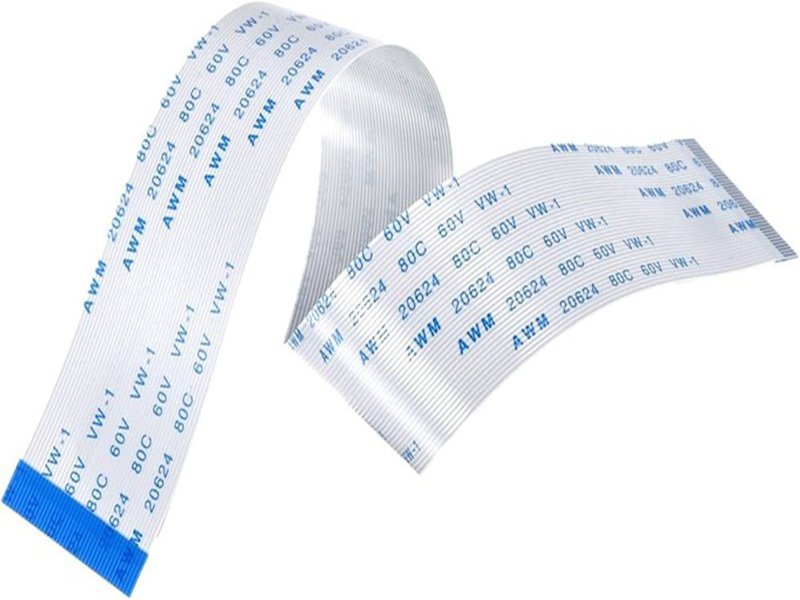
In modern electronics, space is currency. Thinner devices, tighter enclosures, faster time-to-market—all demand interconnects that are compact, reliable, and easy to assemble. That’s where the FFC (Flexible Flat Cable) ribbon quietly became indispensable. From laptop hinges to printers, from medical devices to industrial control panels, FFC ribbons make it possible to route dozens of conductors through millimeters of space—without sacrificing assembly speed or design flexibility.
Yet many buyers still approach FFCs with uncertainty. Some only have a part number. Others send a photo and ask, “Can you make this?” Engineers may know what they want functionally, but not how pitch, thickness, materials, or bending radius interact. Purchasing teams worry about lead time, MOQ, and certification. These gaps often lead to delays, redesigns, or unnecessary cost.
An FFC ribbon cable is a flat, flexible cable made of parallel copper conductors laminated between insulating films. Its purpose is to provide compact, lightweight, and reliable electrical connections between PCBs or components in space-constrained devices. FFCs enable tight bending, fast assembly with ZIF/LIF connectors, and customizable conductor count, pitch, length, and materials for signal or low-power transmission.
Behind that simple definition lies a set of engineering trade-offs that determine whether an FFC will quietly perform for years—or become a bottleneck. Let’s unpack how FFC ribbons work, why engineers choose them, and how to specify the right one for your application.
What Is an FFC Ribbon Cable?
An FFC ribbon cable is a flat, flexible interconnect consisting of evenly spaced conductors embedded in insulating film. It is designed for short-distance connections in compact electronics where flexibility, thin profile, and ease of assembly are critical.
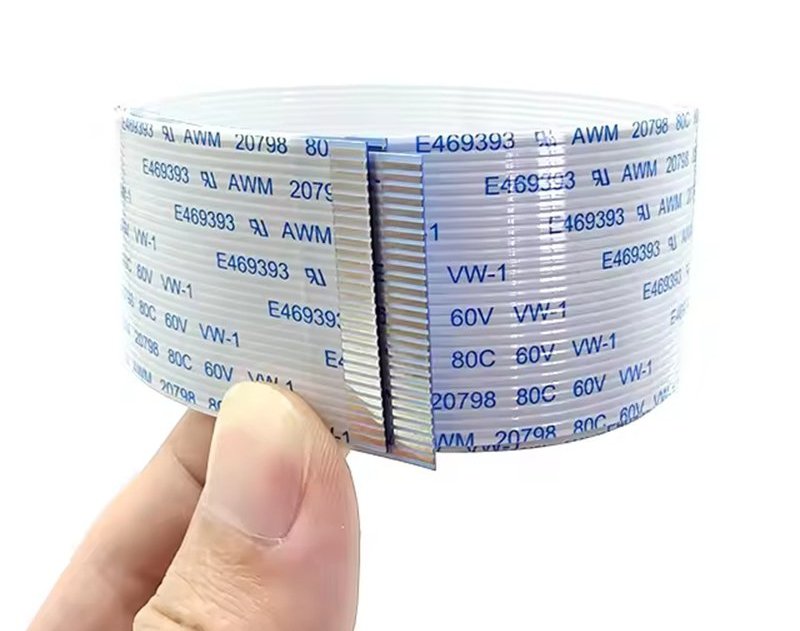
What does FFC stand for in cable assemblies?
FFC means Flexible Flat Cable. Unlike round cables, its geometry is planar. Conductors run parallel in a single layer, making impedance predictable and routing intuitive. This structure is ideal for connectors with aligned contacts, especially ZIF and LIF types widely used on PCBs.
What is an FFC ribbon cable made of?
Typical FFCs use rolled-annealed copper conductors for flexibility, laminated between polyester or polyimide films. Material choice affects temperature rating, chemical resistance, flame retardancy, and halogen-free compliance—key factors in medical, industrial, and consumer electronics.
How is FFC different from flat ribbon cable?
Traditional flat ribbon cables often use discrete insulated wires bonded side-by-side. FFCs are thinner, more flexible, and more dimensionally consistent, which improves connector mating accuracy and repeatability in automated assembly.
What Is the Purpose of an FFC Ribbon?
The purpose of an FFC ribbon is to enable compact, flexible, and reliable electrical connections where space, weight, and assembly efficiency matter more than long-distance transmission or high current.

Why is FFC used instead of round cables?
FFC ribbons minimize thickness and allow tight bending radii, making them ideal for hinges, foldable modules, and stacked PCBs. They also simplify routing—no twisting, no bundle management.
What design problems does an FFC ribbon solve?
They reduce connector height, improve airflow, and shorten assembly time. In high-volume production, these benefits translate directly into cost savings and higher yield.
Why do engineers choose FFC for compact devices?
Engineers value predictability. Known pitch, conductor alignment, and repeatable termination mean fewer surprises during EVT/DVT and smoother transition to mass production.
How Does an FFC Ribbon Cable Work?
An FFC works by transmitting electrical signals through parallel copper traces that mate directly with PCB connectors, ensuring stable contact pressure and consistent electrical performance.
How are conductors arranged?
Conductors are etched or laminated in fixed pitch. Common pitches include 0.3, 0.5, 1.0 mm. Smaller pitch increases density but tightens manufacturing tolerances.
How does pitch affect performance?
Pitch impacts impedance, crosstalk, and connector availability. Engineers balance signal integrity with sourcing flexibility.
How does an FFC connect to PCBs?
Most FFCs terminate into ZIF/LIF connectors. Orientation (same-side vs opposite-side contacts) must match PCB layout—an often-missed detail when only photos are provided.
What Are the Key Specifications of an FFC Ribbon?
Key FFC specifications include pitch, conductor count, thickness, voltage/current rating, bending radius, materials, and environmental resistance.
Electrical & Mechanical Parameters
| Parameter | Typical Range | Why It Matters |
|---|---|---|
| Pitch | 0.3–2.54 mm | Density & connector match |
| Voltage | 30–300 V | Safety & compliance |
| Current | 0.2–1.0 A/conductor | Thermal limits |
| Thickness | 0.1–0.3 mm | Space constraints |
| Bending Radius | ≥5–10× thickness | Flex life |
Material Considerations
| Material | Benefit | Typical Use |
|---|---|---|
| Polyester (PET) | Cost-effective | Consumer electronics |
| Polyimide (PI) | High-temp, flexible | Industrial, medical |
| Halogen-free films | Compliance | EU markets |
Understanding how these specs support the purpose of the FFC prevents over-engineering—or under-design.
Which Types of FFC Ribbon Cables Are Available?
FFC ribbons come in multiple pitches, contact orientations, lengths, and optional shielding structures to match different assembly and signal requirements.
Pitch & Orientation Choices
Smaller pitch enables higher I/O density. Contact orientation (Type A/B) must align with connector design.
EMI & Special Structures
For noise-sensitive applications, ground traces or shielding layers can be added—though at higher cost and thickness.
Customization Options
| Custom Feature | Why It’s Used |
|---|---|
| Length & fold pattern | Fit complex routing |
| Pin-out definition | Match PCB logic |
| Material upgrade | Heat/chemical resistance |
How Is an FFC Ribbon Cable Customized and Manufactured?
Customization starts with defining functional requirements, followed by drawing approval, prototyping, and controlled mass production.
From Requirement to Drawing
Customers may provide specs, part numbers, drawings—or just images. Engineering teams translate intent into measurable parameters, then issue CAD→PDF drawings for approval.
Lead Time & Flexibility
Typical samples take about two weeks; urgent prototypes can be delivered in days. Mass production follows once drawings are approved—no MOQ constraints help early validation.
Quality Control
Full-process inspection—during production, after completion, and before shipment—ensures consistency and compliance with UL, ISO, RoHS, REACH, and related standards.
How Do You Choose the Right FFC Ribbon Supplier?
Choose a supplier with strong engineering support, fast response, flexible sourcing options, and proven quality systems.
Engineering Matters
Suppliers who understand how purpose maps to specs reduce risk. Fast drawing turnaround and technical discussion are critical.
Risk of Image-Only Requests
Photos rarely show pitch, material, or rating. Without engineering validation, hidden mismatches appear late—and cost time.
Commercial Reality
OEMs prioritize price and capacity; engineers prioritize feasibility; traders prioritize speed. A capable supplier balances all three.
Are FFC Ribbon Cables Suitable for Your Application?
FFCs are ideal for compact, low-to-moderate power applications but may not suit high-current or long-distance transmission.
When FFC Is Right
Short runs, tight spaces, repeated flexing.
When to Consider Alternatives
High current, harsh EMI environments, or long cable lengths may favor FPC or round cables.
Why Work With a Custom FFC Ribbon Manufacturer?
Understanding application purpose reduces total cost—not just unit price. Flexible MOQ supports R&D. Fast prototyping accelerates validation. Full certification ensures global compliance. Working with an engineering-driven manufacturer like Sino-Conn means your FFC ribbon is designed to work the first time—and scale when you’re ready.

Ready to Customize Your FFC Ribbon Cable?
Whether you have a complete specification, an engineering drawing, or only a reference image, Sino-Conn is ready to support your project from concept to production. Start by sharing your application goals, electrical requirements, timelines, and cost expectations.
Our engineering-driven team works closely with R&D engineers, OEM factories, and global distributors to translate functional intent into reliable FFC ribbon solutions. With fast drawing turnaround, flexible customization, no MOQ, and full-process quality inspection, we help you reduce development risk and accelerate time to market.
Reach out to Sino-Conn today and let an experienced cable assembly partner turn your FFC design into a production-ready solution—accurately, efficiently, and on your terms.
Related Keywords :ffc ribbon cable, what is ffc, ffc cable purpose, flexible flat cable, ffc specifications, custom ffc cable, ffc vs fpc, ffc pitch, ffc applications, cable assemblies

With over 18 years of OEM/ODM cable assemblies industry experience, I would be happy to share with you the valuable knowledge related to cable assemblies products from the perspective of a leading supplier in China.
manufacturer catalogue
Get A Sample Now From Factory→
Get a quote quickly
Here, developing your OEM/ODM custom cable assemblies collection is no longer a challenge—it’s an excellent opportunity to bring your creative vision to life.