Skip to content
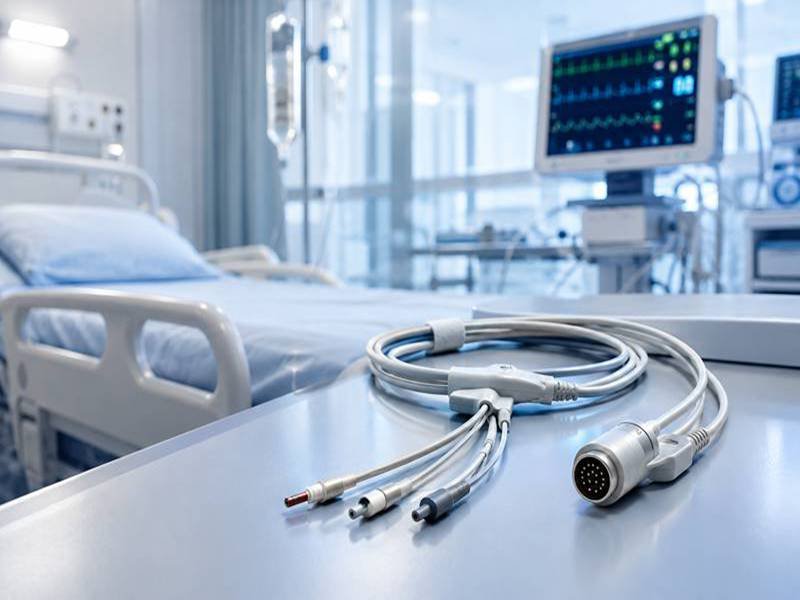
A wearable medical device can look perfect on the product drawing, but the real test begins when a patient wears it for several hours, several days, or even several weeks. The sensor may be small. The housing may be beautifully designed. The software may work well. But if the cable feels heavy, pulls on the skin, creates pressure around the connector, or becomes stiff after repeated movement, the whole user experience changes immediately.
That is why lightweight cable design is now one of the most important details in wearable medical devices. It is not only about making the cable thinner. A truly lightweight cable must keep stable signal transmission, enough shielding protection, good bending life, safe materials, and comfortable touch at the same time. For wearable ECG monitors, portable diagnostic devices, infusion systems, rehabilitation equipment, and remote patient monitoring products, the cable is not a simple accessory. It directly affects patient comfort, device reliability, assembly efficiency, and long-term product reputation.
Lightweight cable design for wearable medical devices means reducing cable diameter, weight, stiffness, and connector bulk while keeping electrical performance, EMI resistance, flexibility, and medical-use reliability. The design usually includes fine-stranded conductors, thin insulation, optimized shielding, soft jacket materials, compact connectors, proper strain relief, and full electrical inspection before shipment.
A common problem we see at Sino-Conn is that customers often send only a photo or a rough sample and ask, “Can you make the same one, but softer and lighter?” The answer is usually yes, but the better question is: lighter in which way? Less weight? Smaller OD? Better bending? Softer touch? Smaller connector? Lower pulling force on the patient? The right answer depends on the real application. A wearable cable for ECG signals is not designed the same way as a cable for a portable ultrasound probe or a rehabilitation device that moves thousands of times per day.
The small cable between the device and the body may look simple, but it carries a lot of responsibility. If it is designed correctly, the patient barely notices it. If it is designed poorly, the device may fail before the medical team ever receives useful data.
What Is Lightweight Cable Design?
Lightweight cable design is the process of optimizing every component inside a cable assembly to reduce its weight, outer diameter, and stiffness while maintaining stable electrical performance, mechanical strength, and long-term reliability. Instead of simply making the cable thinner, engineers carefully balance conductor size, insulation thickness, shielding structure, jacket material, connector dimensions, and strain relief to achieve the best overall performance for the intended medical application.
For wearable medical devices, lightweight cable design directly affects patient comfort, signal quality, battery efficiency, product appearance, and manufacturing costs. A cable that is only a few grams heavier than necessary may not seem significant on paper, but when worn continuously for 12, 24, or even 72 hours, the difference becomes noticeable. Excessive cable weight can pull on wearable sensors, increase patient discomfort, create motion artifacts during monitoring, and reduce the overall user experience.
From an OEM manufacturer’s perspective, lightweight cable design also improves assembly efficiency. Smaller and more flexible cables are easier to route inside compact housings, require less internal space, reduce mechanical stress on PCB connectors, and simplify automated assembly processes.
Rather than focusing on one parameter, experienced cable manufacturers evaluate the complete cable system.
| Design Objective | Engineering Purpose | Customer Benefit |
|---|---|---|
| Reduce cable weight | Improve wearing comfort | Better patient experience |
| Reduce outer diameter | Save installation space | Smaller medical devices |
| Improve flexibility | Reduce bending stress | Longer service life |
| Optimize shielding | Maintain signal integrity | More accurate medical data |
| Miniaturize connectors | Reduce product size | More compact wearable devices |
| Improve strain relief | Prevent conductor breakage | Higher long-term reliability |
The growing demand for wearable healthcare is one of the biggest reasons lightweight cable technology has advanced rapidly in recent years. Products such as ECG monitors, EEG systems, wearable ultrasound devices, infusion pumps, rehabilitation equipment, sleep monitoring devices, glucose monitoring systems, and remote patient monitoring equipment all require cables that are smaller, softer, and more reliable than traditional medical cables.
Unlike industrial equipment, wearable devices are constantly moving with the human body. Every step, every arm movement, and every change in posture bends the cable. A wearable monitoring cable may experience thousands of bending cycles every day. This makes flexibility just as important as electrical performance.
Many first-time product developers assume lightweight cable design simply means selecting a smaller wire gauge. In reality, reducing conductor size without considering signal transmission, current capacity, voltage drop, or mechanical durability often creates more problems than it solves.
Professional cable design begins by understanding the actual application.
Typical engineering questions include:
- What type of medical signal is being transmitted?
- How much current does the cable carry?
- How many conductors are required?
- Will the cable carry both power and data?
- How many bending cycles will occur during daily use?
- Does the cable require EMI shielding?
- Will the cable contact human skin?
- Does the device require sterilization or frequent alcohol cleaning?
- What connector size can fit inside the enclosure?
- What is the target cable outer diameter?
The answers to these questions determine the cable structure far more than simply asking for the “lightest cable possible.”
What Makes Lightweight Cable Design Different?
The biggest difference between a standard cable and a lightweight wearable medical cable is the design philosophy.
Standard cable assemblies are generally designed to perform reliably under a wide range of conditions. Wearable medical cables are engineered around one specific application. Every layer inside the cable serves a purpose, and every unnecessary gram is removed without affecting reliability.
For example, two medical cables may appear identical from the outside, yet their internal structures can be completely different.
| Component | Standard Cable | Lightweight Medical Cable |
|---|---|---|
| Conductor | Standard stranded copper | Fine-stranded or ultra-fine copper |
| Insulation | Standard wall thickness | Optimized thin-wall insulation |
| Shielding | Heavy braided shield | Application-specific shielding |
| Jacket | General-purpose PVC | TPU, Silicone, TPE or other medical-grade materials |
| Connector | Standard housing | Miniature or low-profile connector |
| Strain Relief | Conventional overmold | Optimized for repeated flexing |
Another important difference is how engineering decisions are made.
For wearable products, reducing one parameter often affects several others. A thinner jacket changes flexibility. A smaller conductor changes resistance. A different shielding structure changes cable diameter and bending characteristics. A lower-profile connector changes cable routing inside the device.
Because everything is interconnected, lightweight cable design is always a balancing process.
At Sino-Conn, our engineering team reviews the complete cable structure before recommending any modifications. Instead of reducing material blindly, we analyze the customer’s electrical requirements, mechanical space, connector compatibility, shielding needs, and production targets to determine where meaningful improvements can be made.
This engineering-first approach helps customers avoid repeated prototype revisions later in the project.
Why Is Lightweight Cable Design Important?
As wearable medical devices become smaller, the cable often becomes one of the largest remaining mechanical components. If the cable is not optimized, it can limit the performance of the entire product.
From discussions with medical OEM customers, the most common concerns include:
- The cable feels too stiff during long-term use.
- The connector occupies too much space inside the enclosure.
- The cable pulls on the wearable sensor during movement.
- The product fails EMC testing because of insufficient shielding.
- The cable breaks near the connector after repeated bending.
- The prototype works, but the cable is difficult to assemble during mass production.
These problems usually cannot be solved by changing only one component. They require optimization of the complete cable assembly.
The practical benefits of lightweight cable design can be seen throughout the product life cycle.
| Development Stage | Benefit of Lightweight Cable Design |
|---|---|
| Product Design | Smaller housing and improved industrial design |
| Prototype Testing | Better flexibility and easier cable routing |
| Clinical Evaluation | Improved patient comfort |
| Mass Production | Faster assembly and fewer installation issues |
| Product Use | Longer bending life and stable signal quality |
| Product Maintenance | Lower replacement frequency |
Patient comfort is especially important for wearable monitoring products.
Consider a Holter ECG monitor worn continuously for 48 hours. During this period, the patient walks, sleeps, exercises lightly, changes clothes, and performs normal daily activities. Every movement transfers stress to the cable.
If the cable is too heavy, the electrodes may shift position.
If the cable is too stiff, movement can create unwanted signal interference.
If the connector is oversized, it may press against clothing or the body.
These seemingly small design details directly influence monitoring accuracy and patient compliance.
One wearable monitoring customer worked with Sino-Conn after receiving complaints that users frequently adjusted the cable position during extended monitoring sessions. Although the electronics performed perfectly, the cable created unnecessary pulling force around the wearable sensor.
After reviewing the application, our engineers optimized three areas:
- Reduced cable outer diameter.
- Switched to a softer medical-grade jacket material.
- Redesigned the strain relief to improve cable movement.
The electrical design remained unchanged, but user feedback improved significantly during follow-up evaluations.
This illustrates an important principle.
Patients rarely judge a cable by its technical specifications.
They judge it by how it feels during everyday use.

Which Wearable Devices Need Lightweight Cable Design?
Almost every modern wearable medical device benefits from lightweight cable technology, but each application places different demands on the cable assembly.
For example, an ECG monitoring cable prioritizes signal integrity and flexibility, while a wearable ultrasound probe requires miniature coaxial structures capable of transmitting high-frequency signals with controlled impedance. Rehabilitation devices emphasize continuous flexing, and portable diagnostic equipment often requires compact cable routing inside very limited installation space.
Below are some common applications and their primary engineering priorities.
| Medical Device | Main Design Requirement | Recommended Cable Features |
|---|---|---|
| ECG Monitor | Stable bio-signal transmission | Fine-stranded conductor, EMI shielding |
| EEG System | Extremely low signal noise | High-performance shielding |
| Holter Monitor | Long-term patient comfort | Soft jacket, lightweight structure |
| Pulse Oximeter | Frequent movement | Flexible conductor, durable strain relief |
| Portable Ultrasound | High-frequency transmission | Miniature coaxial cable |
| Infusion Pump | Continuous operation | Reliable connector retention |
| Rehabilitation Equipment | Repeated bending | High-flex cable construction |
| Remote Patient Monitor | Long service life | Balanced flexibility and durability |
Although the applications differ, customers usually focus on similar performance targets.
They want a cable that is:
- Lightweight without becoming fragile.
- Flexible without losing shape.
- Small enough to fit inside compact devices.
- Resistant to repeated bending.
- Stable during signal transmission.
- Easy to assemble during production.
- Consistent from prototype to mass production.
At Sino-Conn, every wearable medical cable project starts with understanding these priorities before selecting materials or recommending cable structures.
Some customers provide complete engineering drawings.
Others send only a connector model or a product photo.
Regardless of the starting point, our engineering team reviews connector compatibility, conductor specification, shielding method, jacket material, cable dimensions, pin assignment, and manufacturing feasibility before preparing production drawings.
Most engineering drawings are completed within approximately three working days, and for urgent development projects, preliminary drawings can often be prepared much faster. Every drawing is confirmed with the customer before production begins, ensuring that the finished cable assembly matches the intended application from the very first sample.
This collaborative development process has helped medical device manufacturers shorten development cycles, reduce redesign costs, and bring lightweight wearable products to market more efficiently.
How Does Lightweight Cable Design Work?
Lightweight cable design is not achieved by removing material wherever possible. It is the result of carefully optimizing every layer of the cable assembly so that weight is reduced without affecting electrical performance, mechanical durability, patient comfort, or manufacturing efficiency.
For wearable medical devices, every gram matters because the cable moves with the patient rather than remaining fixed inside equipment. A cable that is only 15–20 grams heavier may continuously pull on a wearable sensor throughout the day. Over time, this can reduce wearing comfort, loosen adhesive patches, introduce signal noise caused by movement, and shorten the service life of the connector.
A professional lightweight cable design project usually starts with understanding the product instead of selecting the cable.
Engineers first study questions such as:
- What medical signals are transmitted?
- Does the cable carry power, data, or both?
- How often will the cable bend?
- Will the cable touch the patient’s skin?
- Does the product require sterilization or alcohol cleaning?
- How much installation space is available?
- What is the target weight?
- What certifications are required?
Only after these questions are answered can the conductor, shielding, insulation, connector, and overmolding be optimized together.
The table below shows the areas that engineers normally review during lightweight cable development.
| Design Area | Engineering Objective | Customer Benefit |
|---|---|---|
| Conductor | Reduce unnecessary copper weight | Better flexibility without sacrificing conductivity |
| Insulation | Reduce wall thickness safely | Smaller cable diameter |
| Shielding | Match EMI protection to application | Lower weight and stable signal transmission |
| Jacket | Improve flexibility and comfort | Better patient experience |
| Connector | Miniaturize overall assembly | Smaller wearable device |
| Strain Relief | Reduce stress concentration | Longer bending life |
| Cable Layout | Improve internal wire arrangement | Easier assembly and routing |
Many wearable medical OEMs are surprised that cable optimization often reduces more than just weight. It can also simplify enclosure assembly, improve cable routing, shorten assembly time, and reduce long-term maintenance costs.
At Sino-Conn, engineering discussions begin before quotation whenever possible. Customers can provide a drawing, connector model, existing cable, or even a product photo. Our engineers review the complete application and recommend practical improvements before production begins, helping avoid costly design changes later.
How Are Conductors Optimized?
The conductor is the heart of every cable assembly. It carries electrical signals and power, but it is also one of the largest contributors to cable weight.
A common misconception is that choosing a smaller wire gauge automatically creates a better lightweight cable. In reality, selecting the wrong conductor size can increase electrical resistance, create excessive voltage drop, reduce mechanical strength, and shorten cable life.
Instead of simply reducing conductor diameter, engineers first calculate what the application actually requires.
Typical evaluation includes:
- Operating voltage
- Current load
- Signal type
- Transmission distance
- Expected temperature rise
- Required flexibility
- Daily bending frequency
Only after these parameters are understood can the conductor be optimized.
For wearable medical devices, fine-stranded copper conductors are usually preferred because they distribute bending stress across hundreds of very small strands instead of concentrating it in fewer larger strands.
| Conductor Type | Flexibility | Weight | Typical Medical Application |
|---|---|---|---|
| Solid Copper | Poor | Medium | Fixed equipment |
| Standard Stranded Copper | Good | Medium | General cable assemblies |
| Fine-Stranded Copper | Excellent | Medium | Wearable monitoring devices |
| Ultra-Fine Stranded Copper | Outstanding | Medium | High-flex medical equipment |
| Silver-Plated Copper | Excellent | Medium | High-frequency signal cables |
| Tinned Copper | Good | Medium | Improved corrosion resistance |
One project completed by Sino-Conn involved a portable patient monitoring system where the original cable repeatedly failed near the connector after several weeks of testing.
The customer initially believed the conductor was too small and planned to increase the wire gauge.
After reviewing the application, our engineers found that conductor size was not the root cause.
Instead, we optimized:
- Strand construction
- Cable lay length
- Strain relief geometry
- Overmolding profile
The conductor size remained unchanged, yet the bending life improved significantly because stress was distributed more evenly throughout the cable.
This example illustrates an important engineering principle.
Longer cable life is often achieved through better structural design rather than simply using more copper.
How Is EMI Shielding Reduced?
Shielding presents one of the biggest engineering challenges in lightweight cable design.
Medical devices often transmit very weak biological signals. These signals can easily be affected by electromagnetic interference from wireless communication modules, nearby electronic equipment, power supplies, motors, or hospital environments.
Removing shielding to reduce weight is rarely a good solution.
Instead, experienced engineers optimize the shielding structure according to the actual operating environment.
Common shielding options include:
| Shield Structure | Weight | Flexibility | EMI Protection | Recommended Applications |
|---|---|---|---|---|
| Aluminum Foil | Very Low | Good | High-frequency protection | ECG, wearable sensors |
| Braided Copper | Higher | Good | Excellent | Diagnostic equipment |
| Spiral Shield | Medium | Excellent | Moderate | Continuous flexing applications |
| Foil + Drain Wire | Low | Good | Stable grounding | Compact wearable devices |
| Foil + Braided Shield | Higher | Medium | Outstanding | Critical medical electronics |
Many projects arrive at Sino-Conn with shielding requirements that are significantly higher than necessary.
For example, one wearable diagnostic equipment manufacturer requested double shielding because another supplier recommended “maximum protection.”
After reviewing the customer’s EMC environment, we discovered the device operated in a relatively low-interference environment.
Instead of maintaining a heavy foil-plus-braid construction, we redesigned the cable using an optimized foil shield with drain wire.
The customer achieved several improvements simultaneously:
- Approximately 15% lower cable weight
- Smaller cable outer diameter
- Better flexibility
- Lower production cost
- Stable electrical performance during EMC testing
The lesson is straightforward.
Good shielding is not determined by the amount of metal inside the cable.
It is determined by selecting the most appropriate shielding structure for the application.
How Is Flexibility Improved?
For wearable medical devices, flexibility is often more important than tensile strength.
A patient wearing an ECG monitor, rehabilitation sensor, or portable diagnostic device may bend the cable thousands of times every day. If the cable resists movement, it continuously transfers stress to the connector, wearable sensor, and internal conductors.
Improving flexibility requires optimizing the entire cable rather than relying on a softer jacket alone.
Several design factors influence bending performance.
| Design Factor | Effect on Flexibility |
|---|---|
| Fine-stranded conductor | Reduces internal stress |
| Jacket hardness | Improves cable feel |
| Cable OD | Smaller diameter bends more easily |
| Shield structure | Affects stiffness |
| Cable lay length | Improves internal movement |
| Strain relief | Prevents concentrated bending |
| Connector exit angle | Supports natural cable routing |
Customers often focus on jacket material first.
Although jacket material is important, it usually contributes only part of the overall flexibility.
For example, replacing PVC with TPU improves softness.
However, if the conductor remains coarse stranded and the braid is excessively dense, the cable may still feel stiff.
Likewise, selecting an extremely soft jacket without redesigning strain relief often causes premature conductor failure near the connector.
One rehabilitation equipment manufacturer approached Sino-Conn because therapists reported that the wearable cable felt uncomfortable during arm movement.
Instead of replacing the entire cable, we optimized four areas:
- Finer stranded conductor
- Softer medical-grade jacket
- Longer strain relief
- Modified cable exit direction
The finished cable maintained the same electrical specifications but moved much more naturally with the patient’s arm.
Customer feedback during field testing improved noticeably because the cable no longer resisted normal body movement.
How Is Reliability Maintained?
Reducing cable weight should never reduce reliability.
In wearable medical products, the cable often experiences more mechanical stress than the electronics themselves. Continuous movement, accidental pulling, repeated connector insertion, alcohol cleaning, transportation, and daily handling all contribute to long-term wear.
For this reason, lightweight cable design must be supported by systematic engineering validation.
Before production begins, Sino-Conn reviews critical technical parameters such as:
- Connector compatibility
- Pin assignment
- Wire specification
- Voltage and current requirements
- Shielding method
- Jacket material
- Cable outer diameter
- Temperature rating
- Flexibility requirements
- Environmental resistance
- Special customer specifications
After engineering confirmation, production drawings are prepared for customer approval. Standard drawings are typically completed within approximately three working days, while urgent projects may receive preliminary drawings much faster depending on project complexity.
Every production order then undergoes three independent quality inspection stages.
| Inspection Stage | Main Inspection Content |
|---|---|
| In-Process Inspection | Crimping, soldering, conductor routing, shielding, workmanship |
| Finished Product Inspection | Electrical testing, dimensions, appearance, connector verification |
| Pre-Shipment Inspection | Functional verification, cosmetic inspection, packaging confirmation |
Additional testing may include:
- Continuity testing
- High-voltage testing
- Insulation resistance testing
- Contact resistance testing
- Pull force testing
- Bending verification
- Shield continuity testing
- Dimensional measurement
- Connector mating inspection
One wearable rehabilitation equipment customer experienced repeated conductor failures after extended field testing.
The initial assumption was that the conductor itself needed to be upgraded.
After analyzing the application, Sino-Conn engineers found that almost all failures occurred within 20 mm of the connector because bending stress was concentrated at a single point.
Instead of increasing conductor size—which would have increased weight—we redesigned the strain relief, adjusted the conductor lay, and modified the overmolding profile.
The revised cable maintained nearly the same weight while significantly improving long-term durability.
This approach reflects how lightweight cable design should be evaluated.
A successful design is not simply the lightest cable that can be manufactured.
It is the lightest cable that continues to perform reliably throughout the entire service life of the medical device.
For wearable medical equipment manufacturers, this balance between weight, flexibility, electrical performance, manufacturability, and reliability is exactly where an experienced engineering partner creates the greatest value. At Sino-Conn, this engineering-first approach has helped customers shorten product development cycles, reduce redesign costs, and move from prototype validation to stable mass production with greater confidence.
Which Materials Improve Lightweight Cable Design?
Material selection is one of the most important decisions in lightweight cable design because every material inside the cable directly affects its weight, flexibility, durability, signal stability, and manufacturing cost. Two wearable medical cables may have the same outer diameter and connector, but completely different performance because they use different conductor materials, insulation compounds, shielding structures, and jacket materials.
For wearable medical devices, selecting materials should never begin with the question, “Which material is the lightest?” Instead, the correct question is, “Which combination of materials provides the best balance between weight, flexibility, durability, signal integrity, patient comfort, and long-term reliability?”
A wearable cable is expected to operate under conditions that are very different from those of ordinary electronic products. It may be bent thousands of times every day, cleaned repeatedly with alcohol, exposed to sweat and body oils, or worn continuously for 24 to 72 hours. Every material inside the cable must work together to maintain stable performance throughout its service life.
During cable development, experienced engineers evaluate multiple factors simultaneously.
| Material Selection Factor | Why It Matters |
|---|---|
| Weight | Improves wearing comfort and reduces sensor pulling force |
| Flexibility | Allows natural movement with the patient’s body |
| Mechanical Strength | Prevents cracking and conductor breakage |
| Chemical Resistance | Resists alcohol, disinfectants, and cleaning agents |
| Temperature Resistance | Maintains performance during storage and use |
| Wear Resistance | Reduces surface damage during long-term handling |
| EMI Performance | Protects sensitive medical signals |
| Manufacturing Stability | Ensures consistent mass production quality |
Many customers focus only on the jacket material because it is the visible part of the cable. In reality, the jacket usually contributes only one part of the overall performance. Conductors, insulation, shielding, fillers, tapes, and connector materials all influence the finished cable.
At Sino-Conn, every custom wearable medical cable project begins with an engineering review instead of selecting materials from a catalog. Our engineers evaluate the application, operating environment, connector size, bending frequency, cable routing, and electrical requirements before recommending the most suitable material combination. This approach often reduces unnecessary cost while improving overall cable performance.

Is TPU Better Than Silicone?
TPU and silicone are the two most common jacket materials used in wearable medical cable assemblies, but they are designed for different applications. Neither material is universally better. The correct choice depends entirely on how the cable will be used.
Medical-grade TPU has become one of the most widely used materials for portable and wearable medical devices because it combines high flexibility with excellent mechanical strength. Compared with many traditional materials, TPU offers better abrasion resistance, higher tear strength, and better resistance to oils, sweat, and daily cleaning.
Silicone, on the other hand, is preferred when maximum softness and patient comfort are the primary objectives. Even after long periods of bending, silicone maintains excellent flexibility. It also performs very well across a wide temperature range, making it suitable for certain specialized medical applications.
The differences become easier to understand when comparing their overall performance.
| Property | TPU | Silicone |
|---|---|---|
| Weight | Light | Light |
| Flexibility | Excellent | Outstanding |
| Surface Softness | Soft | Extremely Soft |
| Abrasion Resistance | Excellent | Good |
| Tear Resistance | Excellent | Medium |
| Oil Resistance | Excellent | Good |
| Alcohol Resistance | Very Good | Good |
| High Temperature Performance | Good | Excellent |
| Low Temperature Flexibility | Good | Excellent |
| Production Efficiency | High | Moderate |
The cable should be selected according to its working environment rather than the material’s popularity.
For example, wearable ECG monitors are frequently handled by nurses, patients, and caregivers. The cable may rub against clothing, bedding, or monitoring equipment throughout the day. TPU usually performs very well under these conditions because it maintains its appearance after repeated use.
For rehabilitation systems or wearable therapy equipment where patients move continuously, silicone may provide a softer feel against the skin and reduce the sensation of pulling during movement.
One Sino-Conn customer developing a portable patient monitoring system originally requested silicone because they believed softer material automatically meant higher quality. During prototype evaluation, however, the engineering team noticed that the cable frequently rubbed against the edge of the device housing. Over time, surface wear became visible.
Instead of changing the entire cable structure, we recommended switching to a medical-grade TPU jacket while keeping the same conductor, shielding, and connector design.
The customer achieved several improvements:
- Better abrasion resistance
- Longer service life
- Similar flexibility
- No change to the internal electrical design
- Lower long-term maintenance cost
In another project, the opposite solution was recommended.
A rehabilitation device manufacturer initially selected TPU because of its durability. During patient trials, therapists reported that the cable felt slightly stiff after several hours of continuous use.
After reviewing the application, Sino-Conn engineers recommended replacing the outer jacket with medical-grade silicone while maintaining the original conductor and shielding structure.
The softer jacket significantly improved patient comfort without affecting electrical performance.
These examples demonstrate an important engineering principle.
The best material is not the one with the highest specification.
The best material is the one that matches the real operating conditions.
Which Insulation Saves Space?
When customers think about lightweight cable design, insulation is often overlooked. However, insulation is one of the biggest contributors to cable outer diameter.
Reducing insulation thickness by only a few hundredths of a millimeter may significantly reduce the finished cable size, especially when multiple conductors are used.
The challenge is that insulation cannot simply be made thinner.
Engineers must ensure that thinner insulation still provides:
- Stable dielectric strength
- Adequate voltage resistance
- Mechanical protection
- Manufacturing consistency
- Long-term reliability
Common insulation materials used in wearable medical cables include:
| Insulation Material | Main Advantages | Typical Applications |
|---|---|---|
| TPE | Flexible and lightweight | Wearable monitoring devices |
| TPU | Durable and flexible | Portable medical equipment |
| FEP | Thin wall, excellent electrical properties | Precision signal transmission |
| ETFE | High mechanical strength | High-performance cable assemblies |
| PP | Low density | Compact internal wiring |
| XLPE | Stable insulation performance | Medical power applications |
Among these materials, fluoropolymers such as FEP are widely used when engineers need extremely thin insulation while maintaining excellent electrical performance. Because FEP has excellent dielectric properties, the insulation wall can often be thinner than many traditional materials while still meeting electrical requirements.
Although fluoropolymer materials generally cost more, they allow engineers to reduce cable diameter without sacrificing performance.
For wearable ultrasound probes, miniature coaxial cables, and other precision medical equipment, these advantages often justify the higher material cost.
One medical imaging customer approached Sino-Conn because the existing cable occupied too much space inside the handheld housing.
The first idea was to reduce conductor size.
Instead, our engineers reviewed the insulation material and recommended changing to a thinner high-performance insulation while maintaining the same conductor specification.
The customer achieved:
- Smaller cable OD
- Easier internal routing
- No change to signal performance
- No redesign of the PCB connector
Sometimes changing one material is more effective than redesigning the entire cable.
Which Shielding Is Best?
Medical signals are often extremely weak.
Signals collected from ECG electrodes, EEG sensors, wearable biosensors, or patient monitoring equipment can easily be affected by electromagnetic interference generated by wireless modules, switching power supplies, mobile phones, hospital equipment, or nearby electronic devices.
Good shielding is therefore essential.
However, more shielding does not always produce better results.
Many customers assume that double shielding is the safest option.
In reality, unnecessary shielding increases cable weight, reduces flexibility, enlarges cable diameter, and increases manufacturing cost.
Instead of asking “Which shielding is strongest?”, engineers should ask “Which shielding is sufficient?”
The answer depends entirely on the operating environment.
| Shield Type | Weight | Flexibility | EMI Performance | Typical Application |
|---|---|---|---|---|
| Aluminum Foil | Very Low | Good | Excellent for high-frequency interference | ECG, wearable sensors |
| Braided Copper | Higher | Good | Excellent overall protection | Medical diagnostic equipment |
| Spiral Shield | Medium | Excellent | Moderate | High-flex wearable devices |
| Foil + Drain Wire | Low | Good | Stable grounding | Compact wearable products |
| Foil + Braided Shield | Highest | Medium | Maximum protection | High-performance medical systems |
Selecting the correct shielding requires evaluating:
- Signal sensitivity
- Cable length
- Operating frequency
- Nearby electronic equipment
- Wireless communication modules
- Mechanical flexibility
- Product certification requirements
One wearable ECG project completed by Sino-Conn originally specified a dense braided shield because the customer believed it would provide the highest signal quality.
After reviewing the device environment, our engineers found that the product was designed primarily for home healthcare rather than hospital intensive care.
We optimized the shielding by replacing the heavy braid with a lightweight foil plus drain wire structure.
The new cable achieved:
- Approximately 18% lower cable weight
- Improved flexibility
- Smaller outer diameter
- Stable ECG signal quality
- Successful EMC verification
The customer also benefited from lower material costs and easier cable routing inside the wearable device.
This illustrates why shielding should always be selected according to application rather than assumption.
How Does Material Selection Affect Comfort?
From a patient’s perspective, comfort is often more important than technical specifications.
Most users never ask whether their cable uses TPU or silicone.
They notice whether the cable feels soft.
They notice whether it pulls on the wearable sensor.
They notice whether it catches on clothing.
They notice whether it restricts movement.
Comfort is influenced by the entire cable structure.
| Design Element | Effect on Patient Comfort |
|---|---|
| Jacket Material | Determines softness against the skin |
| Cable Weight | Reduces pulling force on wearable devices |
| Cable Diameter | Improves flexibility during movement |
| Connector Size | Reduces pressure against the body |
| Surface Finish | Improves handling experience |
| Cable Routing | Allows more natural movement |
One area often overlooked is connector weight.
Many wearable cables successfully reduce cable diameter but continue using oversized connector housings.
In practical use, the connector often contributes a significant portion of the total assembly weight.
Reducing connector size while maintaining reliable electrical contact often improves wearing comfort more than simply reducing conductor size.
Another important factor is jacket hardness.
A softer jacket does not automatically create a better cable.
If the material is too soft, it may wear more quickly or become difficult to process consistently during mass production.
Instead, engineers aim for the hardness that provides the best balance between comfort and durability.
At Sino-Conn, material recommendations are always based on the customer’s application rather than a standard material list.
Before proposing a cable structure, our engineering team typically reviews:
- Product operating environment
- Daily movement frequency
- Connector size limitations
- Cable routing inside the housing
- Cleaning and sterilization methods
- Expected product life
- Production quantity
- Budget requirements
This process often identifies opportunities to improve both performance and manufacturing efficiency.
For example, changing only the jacket material may improve comfort but increase production cost unnecessarily.
Changing the jacket material together with insulation thickness, shielding structure, and connector overmolding often produces a lighter, smaller, and more reliable cable while keeping overall project costs under control.
Material selection should therefore be viewed as a complete engineering decision rather than simply choosing one plastic over another.
For wearable medical devices, the best-performing cable is usually the result of several optimized materials working together—not one premium material used in isolation.
How Can Lightweight Cable Design Be Customized?
There is no universal cable solution for wearable medical devices. Even products with similar functions often require completely different cable assemblies because of differences in housing size, PCB layout, signal type, connector location, battery capacity, patient movement, and environmental requirements. This is why custom cable assemblies have become the preferred choice for medical OEMs instead of standard off-the-shelf cables.
For wearable devices, customization is not simply changing the cable length. A professional cable assembly may include dozens of customized parameters that work together to reduce weight, improve flexibility, simplify installation, and increase product reliability.
Many medical device manufacturers contact Sino-Conn after discovering that a standard cable is preventing further product development. The cable may be too thick for the enclosure, too stiff for patient comfort, or too large to fit next to other internal components. In many cases, the electronic design works perfectly, but the cable becomes the limiting factor.
A well-designed custom cable assembly solves these problems before mass production begins.
The engineering process usually starts by reviewing the customer’s application rather than the cable itself.
Typical design considerations include:
- Device dimensions
- Available installation space
- Connector position
- Signal and power requirements
- Cable movement during use
- Required bending life
- Shielding requirements
- Cleaning and sterilization methods
- Regulatory requirements
- Production volume
Once these factors are understood, engineers can optimize the entire cable structure instead of modifying only one component.
| Customization Area | Engineering Purpose | Customer Benefit |
|---|---|---|
| Cable Length | Match actual installation | Less excess cable, lower weight |
| Cable OD | Reduce space requirements | Smaller wearable devices |
| Connector Orientation | Improve routing | Easier assembly |
| Shield Structure | Match EMI environment | Stable signal quality |
| Jacket Material | Improve comfort | Better patient experience |
| Wire Gauge | Balance weight and conductivity | Reliable performance |
| Overmolding | Reduce stress concentration | Longer service life |
| Pin Assignment | Match PCB layout | Faster installation |
At Sino-Conn, engineering drawings are prepared before production begins. Standard drawing preparation normally takes around three working days, while urgent projects can often receive preliminary drawings much faster. Every drawing is confirmed with the customer before manufacturing, reducing the possibility of wiring errors or mechanical incompatibility during production.
Which Dimensions Can Be Customized?
Dimensions influence nearly every aspect of cable performance.
Many engineers initially focus only on reducing cable diameter, but a lightweight cable is the result of optimizing multiple dimensions together rather than making one part smaller.
The most frequently customized dimensions include:
- Overall cable length
- Cable outer diameter
- Individual conductor size
- Connector height
- Connector width
- Overmolding profile
- Cable exit angle
- Bend radius
- Strain relief length
Each dimension affects both mechanical and electrical performance.
For example, reducing cable length not only lowers weight but also decreases cable resistance, simplifies routing, and improves appearance.
Reducing connector height creates more internal space for batteries, sensors, or PCBs.
Adjusting the cable exit angle often eliminates sharp bends immediately after the connector, significantly increasing cable life.
The relationship between these dimensions is shown below.
| Dimension | Primary Effect | Secondary Benefit |
|---|---|---|
| Shorter Cable | Lower weight | Easier handling |
| Smaller OD | Better flexibility | More installation space |
| Lower Connector Profile | Compact device | Improved appearance |
| Longer Strain Relief | Better durability | Lower maintenance |
| Optimized Exit Angle | Reduced stress | Improved routing |
One wearable ECG manufacturer contacted Sino-Conn because the cable could not fit inside their latest enclosure revision.
Initially, the customer believed a new connector was required.
After reviewing the CAD files, our engineers found that only three modifications were necessary:
- Reduce cable OD by optimizing insulation thickness
- Lower the overmolding profile
- Rotate the cable exit direction
The connector itself remained unchanged.
As a result:
- The existing PCB was retained.
- No enclosure redesign was required.
- Assembly became easier.
- Development costs were reduced.
- Product launch remained on schedule.
This illustrates why reviewing the complete assembly often produces better results than replacing individual components.
How Are Connectors Miniaturized?
As wearable medical devices become smaller every year, connectors are often the largest remaining mechanical component.
Selecting the correct connector involves much more than finding the smallest available model.
Engineers must consider:
- Pin count
- Contact spacing
- Current rating
- Signal integrity
- Locking mechanism
- Mating force
- Cable exit direction
- Shield termination
- Assembly process
Choosing a connector that is too small may reduce reliability, while selecting one that is unnecessarily large increases cable weight and limits product miniaturization.
The following comparison illustrates the trade-offs.
| Connector Feature | Smaller Connector | Larger Connector |
|---|---|---|
| Device Size | Better | Larger housing required |
| Weight | Lower | Higher |
| Assembly Space | Better | Requires more room |
| Current Capacity | Lower | Higher |
| Mechanical Strength | Depends on design | Usually higher |
| Custom Overmolding | More complex | Easier |
Another important decision involves choosing between original branded connectors and high-quality compatible alternatives.
Original connectors are often preferred when:
- Customer specifications require them.
- Existing certifications depend on them.
- Long-term supply agreements already exist.
Compatible connectors may be the better option when:
- Faster delivery is required.
- Smaller production quantities are involved.
- Custom overmolding is needed.
- Project cost is an important consideration.
At Sino-Conn, we support both original and compatible connectors. Our engineering team evaluates connector availability, project schedule, customization requirements, and customer budget before recommending the most suitable option.
For many wearable medical devices, compatible connectors provide excellent electrical performance while allowing greater flexibility in custom cable design.
How Are Drawings Confirmed?
One of the most common reasons for production delays is incomplete engineering information.
Customers often provide connector part numbers but omit details such as cable orientation, shielding method, or pin assignment.
In wearable medical devices, even small differences can completely change the finished cable.
Typical drawing content includes:
| Drawing Item | Purpose |
|---|---|
| Connector Model | Confirms mating compatibility |
| Pin Assignment | Prevents wiring mistakes |
| Wire Specification | Defines conductor structure |
| Cable Length | Controls finished dimensions |
| Cable OD | Verifies installation space |
| Shield Structure | Defines EMI protection |
| Connector Orientation | Confirms assembly direction |
| Overmolding Shape | Supports mechanical protection |
| Labels | Product identification |
| Test Requirements | Defines inspection standards |
Many customers ask what information is required before requesting a quotation.
The answer depends on the project stage.
If available, customers may provide:
- Engineering drawings
- CAD or PDF files
- Existing cable samples
- Connector model numbers
- Cable photographs
- Application description
- Expected quantity
- Performance requirements
Even if complete documentation is unavailable, the project can still move forward.
A significant number of Sino-Conn projects begin with only photographs.
Our engineering team first identifies the connector family, estimates cable construction, discusses the application with the customer, and prepares engineering drawings for confirmation before production begins.
Customer Example
A European startup developing a wearable health monitoring device contacted Sino-Conn with only three mobile phone photographs of an early prototype.
There were no production drawings.
No BOM.
No connector specifications.
After several engineering discussions, we completed:
- Connector identification
- Pin assignment confirmation
- Cable structure recommendation
- Shielding proposal
- Production drawing preparation
The customer approved the drawings without requiring additional engineering resources, allowing prototype production to begin immediately.
This type of technical support is particularly valuable for startups and R&D teams with limited engineering manpower.
How Is Every Cable Tested?
Customization only creates value if every production cable performs exactly like the approved sample.
For wearable medical devices, consistency is critical because cable failure can interrupt monitoring, create unreliable medical data, or increase maintenance costs.
Quality control begins long before manufacturing starts.
Engineering drawings establish the production standard.
Incoming materials are verified.
Production processes are inspected.
Finished products undergo electrical and visual inspection.
At Sino-Conn, every custom cable assembly passes through three independent inspection stages.
| Inspection Stage | Inspection Focus |
|---|---|
| In-Process Inspection | Crimp quality, soldering, shielding, conductor routing |
| Finished Product Inspection | Electrical testing, dimensions, appearance |
| Pre-Shipment Inspection | Final functional verification and cosmetic inspection |
Depending on project requirements, additional testing may include:
| Test | Purpose |
|---|---|
| Continuity Test | Verify electrical connection |
| Insulation Resistance | Confirm insulation quality |
| Hi-Pot Test | Verify voltage withstand capability |
| Contact Resistance | Evaluate connector performance |
| Pull Force Test | Confirm mechanical strength |
| Flex Test | Simulate repeated movement |
| Shield Continuity | Verify EMI protection |
| Dimensional Inspection | Confirm drawing compliance |
| Visual Inspection | Detect cosmetic defects |
Wearable medical cables often experience repeated bending near the connector.
For this reason, engineering teams should evaluate not only electrical performance but also mechanical stress distribution.
One rehabilitation equipment manufacturer experienced repeated conductor failures during field testing.
The cable successfully passed standard electrical inspection.
However, repeated arm movement concentrated bending stress near the connector exit.
Rather than increasing conductor size—which would have made the cable heavier—Sino-Conn optimized:
- Internal conductor lay
- Overmolding profile
- Strain relief geometry
- Cable exit direction
The updated cable maintained almost the same weight while providing significantly better durability during long-term use.
This approach reduced warranty risk without increasing overall cable size.
For many OEM customers, this type of engineering optimization creates greater long-term value than simply purchasing a lower-cost cable.
Lightweight cable customization is therefore not a single design change but a complete engineering process that balances electrical performance, mechanical durability, patient comfort, manufacturing efficiency, and long-term reliability.
At Sino-Conn, customers receive support throughout every stage of development—from the initial technical discussion and drawing preparation to sample production, engineering revisions, pilot runs, and stable mass production.
Whether you have complete engineering documentation or only an early product concept, our engineering team can help transform your requirements into a customized lightweight cable assembly that is ready for production. With no minimum order quantity, flexible customization, rapid engineering support, sample lead times of approximately two weeks (or 2–3 days for urgent projects), mass production in 3–4 weeks, and 100% inspection at three quality-control stages, Sino-Conn helps wearable medical device manufacturers reduce development risk while bringing innovative products to market faster.
Why Choose Sino-Conn for Lightweight Cable Design?
Choosing a cable supplier is one of the most important decisions during wearable medical device development. The cable assembly is not only responsible for transmitting power or signals, but also affects product size, patient comfort, assembly efficiency, regulatory testing, long-term reliability, and maintenance costs. A supplier that only manufactures according to drawings may produce qualified cables, but an experienced engineering partner can often help improve the entire product before production even begins.
This is where Sino-Conn creates value.
Rather than simply quoting based on an existing specification, our engineering team works with customers to review the complete application. We analyze the cable’s operating environment, connector space, signal characteristics, mechanical movement, and production requirements before recommending an optimized cable structure.
For many customers, this engineering review identifies opportunities to reduce cable weight, improve flexibility, shorten assembly time, or simplify manufacturing without increasing project cost.
Our customers include medical device manufacturers, OEM factories, engineering companies, research institutions, and technology startups developing products such as wearable ECG monitors, portable ultrasound systems, patient monitoring equipment, rehabilitation devices, laboratory instruments, and other medical electronics.
The goal is always the same: build a cable assembly that performs reliably throughout the product’s entire life cycle.
How Does Sino-Conn Accelerate Product Development?
Speed is important during every stage of medical product development.
Delays in cable development often delay PCB verification, enclosure validation, EMC testing, clinical evaluation, pilot production, and commercial launch.
Many wearable medical projects involve several prototype revisions before final approval. If the cable supplier responds slowly, the entire development schedule can be affected.
At Sino-Conn, engineering support begins as soon as customer requirements are received.
Customers can provide:
- Engineering drawings
- CAD or PDF files
- Connector part numbers
- Existing cable samples
- Product photographs
- Application descriptions
- Performance requirements
Even if the documentation is incomplete, our engineering team can usually begin technical evaluation.
Typical project timeline:
| Development Stage | Sino-Conn Response |
|---|---|
| Requirement Review | Same day for most inquiries |
| Engineering Discussion | Immediate technical evaluation |
| Drawing Preparation | Approximately 3 working days |
| Simple Drawing Revision | Often within 24 hours |
| Urgent Preliminary Drawings | As fast as approximately 30 minutes for simple structures |
| Sample Production | Approximately 2 weeks |
| Urgent Samples | 2–3 days depending on material availability |
| Mass Production | Normally 3–4 weeks |
| Expedited Production | Around 2 weeks when materials are available |
Unlike many suppliers, Sino-Conn confirms production drawings before manufacturing starts.
This allows customers to verify:
- Connector models
- Cable length
- Pin assignment
- Wire specification
- Shielding structure
- Connector orientation
- Cable exit direction
- Overmolding shape
- Labels
- Testing requirements
Many production errors are avoided simply because engineering details are confirmed before materials enter production.
Customer Example
A European startup developing a wearable patient monitoring device needed prototype samples for investor demonstrations within a very limited schedule.
The enclosure design had already been completed, but the original cable occupied too much internal space.
Instead of recommending a completely new connector platform, Sino-Conn engineers optimized:
- Cable outer diameter
- Connector overmolding profile
- Cable exit direction
- Internal conductor arrangement
The revised design fit inside the existing housing without requiring enclosure modifications.
The customer completed prototype testing on schedule while avoiding additional tooling costs.
For engineering teams working under tight deadlines, saving several weeks of redesign often creates more value than reducing component cost.
How Does Sino-Conn Ensure Consistent Quality?
Medical cable assemblies are expected to operate reliably throughout years of continuous use.
Wearable devices experience repeated movement, accidental pulling, daily cleaning, transportation, and continuous connection cycles. Small manufacturing defects that may be acceptable in consumer electronics are often unacceptable in medical applications.
For this reason, quality control begins before production rather than after production.
Every project starts with engineering confirmation.
Production begins only after customer approval of the final drawing.
Incoming materials are inspected before entering production.
Each manufacturing process is monitored throughout assembly.
Finished products are electrically tested before shipment.
At Sino-Conn, every custom cable assembly passes through three independent quality inspection stages.
| Inspection Stage | Inspection Content |
|---|---|
| In-Process Inspection | Wire preparation, soldering, crimping, shielding, conductor routing |
| Finished Product Inspection | Electrical testing, connector verification, dimensions, appearance |
| Pre-Shipment Inspection | Functional verification, cosmetic inspection, packaging confirmation |
Depending on customer requirements, inspection may include:
- Continuity testing
- High-voltage testing
- Insulation resistance testing
- Contact resistance testing
- Pull force verification
- Cable length measurement
- Outer diameter measurement
- Shield continuity testing
- Pin assignment verification
- Connector orientation confirmation
- Appearance inspection
This three-stage inspection process significantly reduces the possibility of assembly errors reaching customers.
For wearable medical devices, consistency between prototype samples and production batches is equally important.
Every approved drawing becomes the production reference for future orders, allowing repeat production to remain stable over time.
Sino-Conn also supports projects requiring internationally recognized compliance documentation.
| Available Support | Purpose |
|---|---|
| UL | Applicable cable and component requirements |
| ISO Manufacturing System | Quality management |
| RoHS | Material compliance |
| REACH | Material compliance |
| PFAS-related material support | Project-dependent material selection |
| COC | Certificate of Conformity |
| COO | Certificate of Origin |
For OEM customers serving regulated medical markets, this documentation helps simplify purchasing, quality control, and export procedures.
Which Custom Solutions Does Sino-Conn Offer?
Every wearable medical device has different design priorities.
Some customers need the smallest possible cable.
Others prioritize flexibility.
Some focus on signal integrity, while others need repeated bending performance or rapid sample delivery.
Because of these differences, most medical cable assemblies require multiple customized parameters rather than a single modification.
Sino-Conn supports customization across nearly every part of the cable assembly.
| Customization Item | Available Options |
|---|---|
| Cable Length | Fully customized |
| Wire Gauge | Based on electrical requirements |
| Cable Structure | Multi-core, coaxial, hybrid cables |
| Shielding | Foil, braid, spiral, double shield |
| Jacket Material | TPU, Silicone, TPE, LSZH, PVC and more |
| Connector Brand | Original or compatible |
| Connector Direction | Straight, right-angle, custom angle |
| Pin Assignment | Fully customized |
| Overmolding | Custom tooling available |
| Cable Color | Customer specified |
| Labels | OEM identification |
| Packaging | Custom packaging support |
Customers frequently begin with only one requirement.
For example:
“We need a softer cable.”
After reviewing the application, Sino-Conn engineers may also recommend:
- Smaller cable diameter
- Improved shielding structure
- Lower-profile connector
- Better strain relief
- Optimized conductor construction
The result is not simply a softer cable.
It becomes a lighter, more flexible, easier-to-assemble cable with improved long-term reliability.
Customer Example
A wearable rehabilitation equipment manufacturer originally requested only a shorter cable.
During engineering review, our team discovered additional opportunities.
We optimized:
- Cable routing
- Connector orientation
- Jacket material
- Cable outer diameter
- Strain relief geometry
The final cable assembly weighed less, bent more naturally during patient movement, and required less installation space inside the equipment.
No changes were required to the customer’s electronics.
This type of engineering optimization often creates greater long-term value than simply fulfilling the original specification.
Why Do Medical OEMs Continue Working with Sino-Conn?
Medical OEMs evaluate suppliers differently from buyers of standard electronic components.
Price remains important, but it is rarely the deciding factor.
Customers developing wearable medical devices usually compare suppliers across multiple areas.
| Evaluation Area | Customer Concern |
|---|---|
| Engineering Support | Can design problems be solved? |
| Technical Response | How quickly are questions answered? |
| Customization Capability | Can the cable fit the product instead of the opposite? |
| Drawing Support | Can production errors be prevented? |
| Manufacturing Capacity | Can volume production remain consistent? |
| Quality Control | Will every batch match the approved sample? |
| Lead Time | Can prototypes and production stay on schedule? |
| Communication | Is technical discussion efficient? |
These areas are exactly where long-term cooperation is built.
Many of Sino-Conn’s customers first contacted us because their previous supplier could manufacture cables but could not help solve engineering problems.
Typical questions we receive include:
- Can we reduce cable weight without affecting signal quality?
- Can this connector fit inside a smaller enclosure?
- Can we switch from original connectors to compatible alternatives?
- Can shielding be improved without increasing cable diameter?
- Can the cable survive continuous bending during patient movement?
- Can the cable be redesigned using only a sample?
These discussions usually happen long before production begins.
The earlier our engineering team becomes involved, the more opportunities exist to optimize the finished product.
Customer Example
One customer developing a wearable diagnostic device originally specified a branded connector because it had been used during laboratory testing.
After reviewing production quantity, lead time, and customization requirements, Sino-Conn proposed a high-quality compatible connector that maintained the same mating interface.
The updated design provided several advantages:
- Shorter procurement lead time
- Greater availability
- Lower overall project cost
- Easier custom overmolding
- Smaller connector profile
Most importantly, the customer did not need to redesign the device itself.
Sino-Conn is more than a cable assembly manufacturer.
We are an engineering partner focused on helping customers develop smaller, lighter, and more reliable wearable medical devices.
From the first technical discussion to mass production, our team supports every stage of development.
Customers benefit from:
- No minimum order quantity, making prototype development more flexible.
- Engineering support based on drawings, samples, or even product photographs.
- Production drawings prepared before manufacturing for customer approval.
- Standard engineering drawings completed in approximately 3 working days, with urgent projects often supported much faster.
- Standard sample lead times of around 2 weeks, with 2–3-day urgent sample capability for selected projects.
- Normal production lead times of 3–4 weeks, with expedited production available in approximately 2 weeks when materials are ready.
- Flexible customization covering connectors, wire structures, shielding, materials, pin assignments, overmolding, labels, and packaging.
- 100% inspection through in-process, finished-product, and pre-shipment quality control.
For wearable medical devices, every gram of weight, every millimeter of space, and every electrical signal matters. Working with an experienced engineering team from the beginning of the project helps reduce development risk, improve product reliability, and accelerate the journey from concept to successful mass production.
Build Your Next Wearable Medical Cable with Sino-Conn
Wearable medical technology continues to become smaller, lighter, and more intelligent. As devices evolve, cable assemblies are expected to do more while occupying less space. They must transmit sensitive signals accurately, remain flexible after thousands of movements, feel comfortable for patients, and fit inside increasingly compact medical products.
Meeting these requirements is rarely possible with a standard off-the-shelf cable.
A successful wearable medical cable is the result of careful engineering, material selection, precision manufacturing, and rigorous quality control. Every detail—from conductor construction and shielding design to connector orientation and strain relief—contributes to the overall performance of the device.
That is why choosing an experienced cable assembly manufacturer early in the development process can significantly reduce technical risk, shorten development cycles, and improve product reliability.
At Sino-Conn, we work closely with medical device manufacturers, OEM factories, engineering teams, research institutions, and technology startups to develop custom cable assemblies that match real-world applications.
Our engineering capabilities include:
- Custom cable assemblies with no minimum order quantity
- Cable design based on drawings, samples, or product photos
- Engineering drawing preparation before production
- Support for custom cable length, pin assignment, shielding, materials, connector orientation, and overmolding
- Standard sample lead time of approximately 2 weeks
- Urgent sample support in as little as 2–3 days for selected projects
- Standard production lead time of 3–4 weeks
- Expedited production available in approximately 2 weeks when materials are ready
- 100% inspection through in-process, finished-product, and pre-shipment quality checks
- Support for projects requiring UL, RoHS, REACH, PFAS-related material requirements, COC, and COO documentation where applicable
Whether you are developing the next generation of wearable ECG equipment, portable diagnostic devices, rehabilitation systems, patient monitoring products, or compact medical electronics, our engineering team is ready to help transform your concept into a reliable production-ready cable assembly.
If you already have engineering drawings, we can review them and recommend optimization opportunities.
If you only have a prototype, sample cable, or product photographs, we can help identify the correct connectors, evaluate the cable structure, prepare production drawings, and provide practical engineering recommendations before manufacturing begins.
Ready to start your project?
Send us your drawing, sample, connector part number, or even a product photo. Our engineering team will evaluate your application, recommend the most suitable lightweight cable solution, and provide a customized quotation based on your technical requirements, target quantity, and production schedule.
The earlier we become involved in your project, the more opportunities we have to reduce weight, improve flexibility, optimize manufacturing, and help your wearable medical device reach the market with greater confidence.