Skip to content
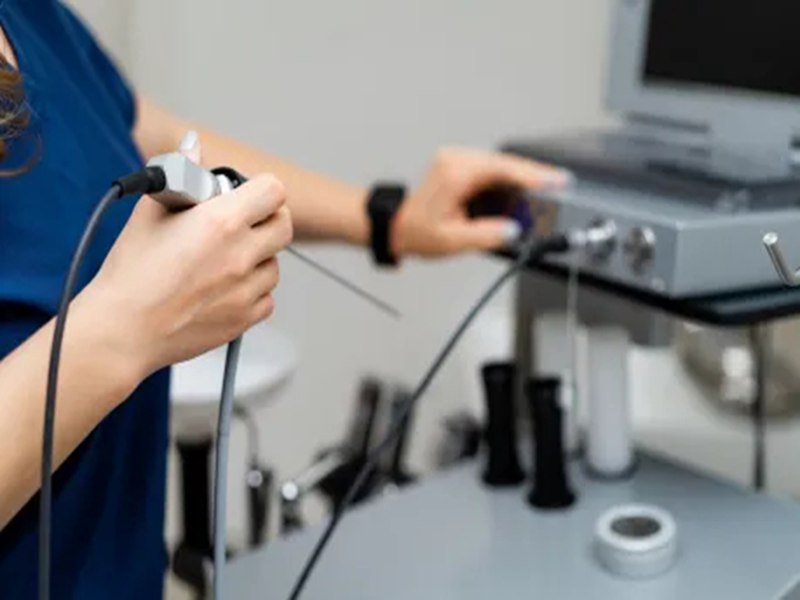
Medical cable failures are often treated as isolated quality incidents, but in practice, they are usually the result of engineering decisions made much earlier in the product lifecycle. A cable assembly that appears electrically functional during initial validation may still fail prematurely if its materials, mechanical structure, connector system, or shielding design were not matched to the actual operating environment. In medical applications, those operating conditions are often much harsher than teams initially assume. Repeated flexing, aggressive disinfectants, sterilization exposure, connector wear, fluid contamination, and electromagnetic interference can gradually weaken cable performance long before obvious failure becomes visible.
Medical cables fail primarily because the real application environment places combined mechanical, electrical, chemical, and thermal stress on the assembly. Preventing failure requires correct material selection, robust strain relief design, validated testing, reliable connector choices, and manufacturing discipline that matches medical reliability expectations.
This is particularly important because “medical use” does not describe a single environment. A patient monitoring cable, an ultrasound probe cable, a surgical system interconnect, and a portable diagnostic device cable all experience completely different stress profiles. A design that performs reliably in one application may fail quickly in another. For OEM engineers, sourcing managers, and product developers, the practical question is not simply whether a cable works today, but whether it will continue working after months or years of actual use. That distinction is where reliable medical cable engineering begins.
Why Do Medical Cables Fail?
Medical cables fail when the real operating environment is more demanding than the cable was designed to handle. The most common causes include repeated flexing, poor strain relief, connector wear, material degradation, shielding breakdown, sterilization damage, and weak validation processes. In many cases, the cable does not fail because of a single dramatic defect, but because small engineering compromises gradually accumulate until reliability becomes unacceptable.

Medical cable failures are expensive, frustrating, and often avoidable.
For many medical device manufacturers, the first visible sign of trouble is not a broken cable. It is usually something less obvious: intermittent signal instability, occasional disconnects, noisy data, failed device self-checks, inconsistent imaging quality, or customer complaints that “the issue disappears when the cable is moved.”
That uncertainty is what makes cable failures so disruptive.
Unlike a visibly cracked housing or a completely dead PCB, cable failures often behave unpredictably. A product may pass factory inspection, work normally during early deployment, and then begin showing inconsistent problems weeks or months later. This creates a difficult troubleshooting scenario because the root cause is often mechanical fatigue or environmental degradation that developed gradually.
Industry studies across electronic interconnect systems consistently show that connector and interconnect-related failures account for a significant share of field reliability issues, particularly in systems exposed to repeated mechanical stress. In medical applications, the failure risk becomes even higher because cables are handled constantly, cleaned aggressively, bent repeatedly, and often expected to survive years of use in environments where uptime matters.
Medical applications are especially demanding because “medical cable” is not one category.
A cable used inside an ultrasound system faces completely different stress compared with:
- a patient ECG lead
- a portable diagnostic handheld device
- a robotic surgical cable
- an endoscopy imaging cable
- a wearable monitoring device
This matters because a design that performs well in one environment can fail very quickly in another.
A simple comparison illustrates the point:
| Medical Application | Main Failure Stress |
|---|---|
| Patient monitoring | repeated flex + connector wear |
| Portable diagnostics | pulling + vibration + transport shock |
| Surgical equipment | sterilization + thermal cycling |
| Imaging systems | signal integrity + shielding stress |
| Wearable medical devices | constant bending + lightweight mechanical fatigue |
One of the most common sourcing mistakes is assuming that if a cable “looks similar,” it will behave similarly.
It will not.
Two assemblies may appear almost identical externally while being completely different internally.
Differences that dramatically affect reliability include:
- conductor strand count
- copper construction
- shielding type
- braid coverage percentage
- insulation material
- overmold design
- connector plating quality
- termination workmanship
- strain relief geometry
- impedance control
This is why many replacement projects fail the second time as well—the new supplier copied appearance, not engineering intent.
Customers often come with one of three situations:
The first is a failed cable that needs replacement.
The second is an existing supplier whose lead times, quality, or engineering responsiveness have become problematic.
The third is an incomplete reference—perhaps only photos, a sample, or a rough specification—combined with the question: “Can you make this?”
That last scenario is extremely common in custom cable manufacturing.
At Sino-Conn, a large percentage of custom cable inquiries begin this way, especially from OEM teams replacing legacy assemblies or buyers trying to source alternatives more efficiently. In those situations, the most important work happens before quoting or production. The real task is understanding what the application actually requires and where the original design may have failed.
What Causes Medical Cable Failure?
Medical cable failure rarely comes from a single root cause. More often, failure is the result of multiple smaller weaknesses interacting over time.
A cable may have acceptable electrical performance but weak mechanical transitions. A connector may meet nominal specifications but degrade rapidly under repeated clinical handling. A flexible material may feel premium in hand but perform poorly under chemical exposure.
These issues often remain hidden until the product enters real use.
The most common failure mechanisms are shown below:
| Failure Mechanism | Typical Root Cause | Customer Symptom |
|---|---|---|
| Conductor fatigue | repeated bending | intermittent disconnect |
| Connector wear | insertion cycle stress | unstable connection |
| Shield failure | flex damage / poor shielding | signal noise / imaging errors |
| Material degradation | cleaning chemicals / sterilization | cracking / stiffness |
| Strain relief failure | poor mechanical transition | break near connector |
| Solder fatigue | repeated movement | intermittent electrical issue |
| Seal failure | fluid ingress | corrosion / reliability loss |
Conductor fatigue remains one of the most common issues, especially in handheld or frequently moved systems.
Copper is highly conductive, but repeated mechanical stress gradually weakens conductor strands. Over time, strands fracture internally until electrical continuity becomes unstable. The frustrating part is that the cable may still appear visually perfect from the outside.
Connector failures are another major contributor.
Many engineers initially focus on the cable body while assuming the connector is stable. In reality, connectors are moving mechanical systems. Contacts wear, spring force changes, plating degrades, and repeated insertion cycles reduce long-term stability.
Medical users are not gentle with cables because they are focused on patients, workflow, and speed—not preserving cable assemblies.
That is normal.
Products should be designed around real human behavior, not ideal handling assumptions.
Which Medical Cable Failures Happen Most?
Some failure modes appear far more often than others, especially in real field environments.
1. Conductor fatigue
This is extremely common in applications involving movement.
Repeated bending concentrates stress in specific areas, particularly near connector exits. If conductor construction is too rigid or strain relief is weak, fatigue progresses quickly.
Symptoms include:
- movement-sensitive failure
- intermittent operation
- unstable signals
- failures that temporarily disappear when repositioned
Fine-stranded conductor designs usually provide much longer flex life than coarse conductor structures.
2. Connector degradation
Repeated mating cycles gradually wear connector systems.

Failure may involve:
- rising contact resistance
- unstable signal transmission
- weak retention
- intermittent disconnects
- physical looseness
Connector selection matters far more than many buyers initially realize.
Original connectors may provide stronger documented lifecycle performance, but equivalent connectors can also perform well when chosen appropriately. The right decision depends on the application, not branding alone.
3. Strain relief failure
This is one of the most preventable problems.
Mechanical stress rarely distributes evenly through a cable.
It concentrates at transition points.
That means:
- connector exits
- branch junctions
- rigid-to-flex transitions
- overmold boundaries
Poor strain relief dramatically shortens product life.
4. Shielding degradation
In imaging, monitoring, and data-sensitive medical equipment, shielding problems can create failures that are difficult to diagnose.
Symptoms may include:
- unstable readings
- noisy signals
- communication errors
- image distortion
These failures are often mistakenly blamed on electronics rather than cable design.
Are Medical Cable Connector Failures Common?
Yes, and in many practical medical applications they are among the most common failure sources.
Connectors operate under combined electrical and mechanical stress. Unlike the cable body, which may remain relatively stable if properly supported, connectors experience repeated insertion, removal, side loading, vibration, cleaning exposure, and handling impact.
Cycle life matters.
For example:
- a low-use internal interconnect may see very limited mating cycles
- a bedside monitoring connector may be connected and disconnected daily
- a portable diagnostic system may experience frequent field handling
The same connector strategy does not fit every application.
A common mistake is choosing connectors based only on mating compatibility or price.
More useful evaluation criteria include:
- insertion cycle rating
- contact plating durability
- retention force
- dimensional consistency
- sterilization compatibility
- EMI continuity
- supply chain stability
This is one area where engineering discussion matters more than simple part-number matching.
Do Medical Cables Fail Too Early?
Sometimes they do—but often because expectations were never clearly aligned with actual operating conditions.
A cable intended for moderate intermittent use may be deployed in continuous motion.
A connector designed for limited cycles may be handled dozens of times each week.
A flexible polymer selected for appearance may be exposed to aggressive disinfectants.
When that happens, failure is not surprising.
The question is not whether the cable failed early.
The question is whether the design assumptions were realistic in the first place.
This is exactly why early engineering review matters.
A medical cable that survives long-term use is usually not the result of luck.
It is the result of deliberate engineering decisions made before production ever started.
How Do Medical Cable Materials Affect Failure?
Medical cable materials have a direct impact on product reliability, service life, and field failure rates. A cable may meet all required electrical specifications during initial testing, but if its material system is not matched to the actual operating environment, premature failure becomes much more likely. Common material-related failures include jacket cracking, hardening, reduced flexibility, insulation breakdown, chemical degradation, sealing failure, and mechanical fatigue.
Material selection is often underestimated during early product development.
Many sourcing teams focus first on connector type, cable dimensions, pin definitions, or target pricing. Those factors are important, but in medical applications, the material system often determines whether a cable performs reliably after months or years of real use.
This is because medical environments are rarely gentle on cable assemblies.
A typical medical cable may be exposed to:
- daily repeated flexing
- constant operator handling
- alcohol-based disinfectants
- hydrogen peroxide cleaning solutions
- elevated temperatures
- tight internal routing
- connector pulling stress
- repeated storage bending
- long-term EMI-sensitive operation
- sterilization cycles in some applications
A material that performs well in a standard industrial environment may fail much faster in a clinical setting.
One of the most common misconceptions is assuming that “medical cable material” refers to a single standard category.
It does not.
The material requirements for a patient monitoring lead are completely different from those for an endoscopy imaging cable, a surgical instrument cable, a wearable monitoring system, or a portable diagnostic device. The correct material choice depends entirely on the real operating conditions.
That is why material selection should be treated as an engineering decision rather than a cosmetic or procurement decision.
Which Medical Cable Materials Last Longer?
Material durability depends on how closely the material properties match the application environment.
There is no universally best medical cable material. The right answer depends on mechanical movement, chemical exposure, sterilization requirements, routing constraints, and lifecycle expectations.
The comparison below reflects practical engineering considerations rather than marketing descriptions.
| Material | Flexibility | Abrasion Resistance | Chemical Resistance | Sterilization Resistance | Mechanical Durability |
|---|---|---|---|---|---|
| Silicone | Excellent | Medium | Moderate | Good | Medium |
| TPU | Very Good | Excellent | Excellent | Moderate | High |
| TPE | Good | Good | Good | Moderate | Medium |
| FEP | Medium | Excellent | Excellent | Excellent | High |
| PTFE | Medium | Excellent | Excellent | Excellent | Very High |
| PVC | Moderate | Medium | Moderate | Poor | Low–Medium |
For many buyers, the most practical question is not which material sounds more advanced, but which material is least likely to create warranty claims, service failures, or expensive redesign work.
Silicone is widely used where flexibility and soft handling matter.
TPU performs strongly where abrasion resistance and mechanical durability are more important.
Fluoropolymer materials such as FEP and PTFE are often preferred where sterilization resistance and chemical durability are critical.
PVC may remain acceptable for certain lower-demand applications, but it is generally less suitable for high-reliability medical programs.
Material selection becomes much more accurate when teams define real usage conditions clearly.
For example:
- Will the cable be moved continuously?
- Will it be cleaned several times per day?
- Will it be sterilized?
- Does the device operate near heat sources?
- Is lightweight flexibility more important than durability?
- Will the cable be routed through tight mechanical spaces?
The answers to these questions determine whether a material is appropriate.
Is Silicone Better for Medical Cables?
Silicone is one of the most commonly requested materials in medical cable projects because it offers excellent flexibility, soft handling, and a premium feel that many customers associate with medical-grade products.
In the right application, silicone performs extremely well.
Its main advantages include:
- excellent bend flexibility
- good temperature tolerance
- comfortable handling
- soft external feel
- stable performance in flexible-use applications
Silicone is often a strong choice for:
- patient monitoring cables
- handheld probe cables
- flexible operator-handled systems
- applications where cable softness improves usability
However, silicone is not automatically the most durable option.
Compared with tougher engineering polymers, silicone generally offers lower abrasion resistance and weaker resistance to physical abuse. If a cable is repeatedly dragged, tightly wrapped, compressed during transport, or exposed to rough operator handling, silicone may show wear faster than tougher alternatives.
This is where many sourcing decisions go wrong.
Some teams request silicone simply because it is commonly seen in medical products or because a previous design used it. That approach often overlooks the actual operating conditions.
A portable diagnostic cable used in mobile service environments faces very different mechanical stress compared with a stationary monitoring cable used in a controlled clinical space.
At Sino-Conn, material discussions often shift once engineering teams explain how the product will actually be used. A project that initially appears to require silicone may ultimately perform better with a tougher construction if mechanical abuse or aggressive cleaning is part of normal operation.
Material familiarity should never replace application analysis.
Are TPU Medical Cables More Durable?
In many real-world medical applications, TPU provides significantly better durability than silicone.
TPU is one of the most practical material choices for custom medical cable assemblies because it balances flexibility, toughness, and chemical resistance effectively.
Its advantages include:
- excellent abrasion resistance
- strong tear resistance
- high mechanical durability
- strong chemical resistance
- good flexibility
- stable appearance over time
- strong handling tolerance
This makes TPU particularly effective for:
- portable medical devices
- operator-handled equipment
- transportable diagnostic systems
- external cable assemblies exposed to daily wear
A direct comparison illustrates the trade-offs:
| Property | Silicone | TPU |
|---|---|---|
| Flexibility | Excellent | Very Good |
| Softness | Excellent | Very Good |
| Abrasion Resistance | Medium | Excellent |
| Tear Resistance | Medium | High |
| Chemical Resistance | Moderate | Excellent |
| Handling Durability | Medium | High |
| Surface Wear Resistance | Medium | High |
This is why many OEM teams move toward TPU when field reliability issues are linked to abrasion, handling damage, or premature jacket wear.
However, TPU is not always the correct choice.
In applications involving repeated sterilization, certain fluoropolymer materials may offer stronger long-term performance. In applications where extreme softness and user comfort are critical, silicone may still be preferable.
Material selection should always reflect the failure mode being prevented.
Do Sterilization Cycles Damage Medical Cables?
Yes. Repeated sterilization is one of the most aggressive stress factors a medical cable can experience.
A cable that performs reliably in standard clinical use may fail quickly if it is exposed to sterilization conditions beyond what its materials were designed to tolerate.
Common failure mechanisms include:
- hardening
- embrittlement
- insulation cracking
- shrinkage
- overmold separation
- seal degradation
- connector corrosion
- loss of flexibility
Different sterilization methods create different types of stress.
| Sterilization Method | Main Risk |
|---|---|
| Steam Autoclave | heat + moisture + pressure |
| Ethylene Oxide (EO) | chemical exposure |
| Gamma Sterilization | polymer degradation |
| Repeated Surface Disinfection | cumulative chemical attack |
Steam sterilization is particularly demanding because repeated exposure to heat and moisture accelerates material aging.
One important engineering mistake is assuming short-term survival equals lifecycle suitability.
A cable surviving 10 sterilization cycles does not automatically mean it will survive 500 cycles.
Lifecycle expectations matter.
Critical project questions include:
- How often will sterilization occur?
- Which sterilization method will be used?
- Is the cable reusable or disposable?
- What service life is expected?
- Are connectors also exposed?
Without clear answers, material decisions become guesswork.
Can Chemical Exposure Destroy Medical Cable Materials?
Yes, and this is one of the most common long-term reliability problems in medical cable assemblies.
Modern medical environments involve aggressive and repeated cleaning.
Typical chemical exposure includes:
- isopropyl alcohol
- hydrogen peroxide cleaners
- bleach-based disinfectants
- quaternary ammonium solutions
- specialty hospital sanitation chemicals
Material degradation often develops gradually.
Early prototypes may appear completely stable.
Months later, the same cable may show:
- discoloration
- stiffness
- cracking
- swelling
- surface tackiness
- reduced flexibility
- seal deterioration
This delayed failure pattern makes chemical compatibility especially dangerous because early product validation may not reveal the problem.
For frequently cleaned products, material compatibility should be reviewed against actual cleaning protocols rather than general assumptions.
Why Do Some Medical Cables Look Premium but Fail Early?
Visual appearance is a poor predictor of long-term reliability.
A softer cable may feel more expensive.
A glossy jacket may look cleaner.
A lightweight assembly may appear technically advanced.
None of those characteristics guarantee durability.
Real reliability depends on:
- polymer chemistry
- conductor construction
- shielding structure
- strain relief design
- environmental compatibility
- connector quality
- manufacturing consistency
This is one reason sample-based sourcing can be risky when engineering details are unclear.
Two cables with nearly identical appearance may have dramatically different internal construction and very different service life expectations.
A number of replacement projects begin because the original cable looked acceptable during evaluation but failed too early in actual deployment. In many of these cases, the visible design was not the problem—the hidden material decisions were.
The most reliable medical cable is not the one that looks best on day one.
It is the one that continues performing after real clinical use, repeated handling, and long-term environmental exposure.
How Does Medical Cable Design Prevent Failure?
Medical cable reliability is heavily influenced by design decisions made long before production begins. Material quality matters, manufacturing quality matters, but poor structural design can still cause early failure even when both are excellent. Common design-related failure causes include weak strain relief, unrealistic bend radius assumptions, poor connector selection, inadequate shielding architecture, improper conductor routing, and mechanical transitions that concentrate stress.
A large percentage of field failures are not caused by defective manufacturing.
They are caused by designs that looked acceptable in early development but were never truly matched to how the product would be used.
This happens more often than many teams expect.
A medical cable may pass continuity testing, electrical validation, and even short-term prototype trials. Yet after several months in actual use, the same cable begins showing intermittent failures, unstable signals, connector looseness, or visible structural damage.
In most of these cases, the root problem is design—not assembly execution.
Medical environments are mechanically unforgiving.
Cable assemblies are pulled, bent, twisted, wrapped, stored under tension, repeatedly plugged and unplugged, routed through tight internal spaces, and sometimes exposed to sterilization or chemical cleaning. If the design assumes ideal handling, real-world reliability drops quickly.
A practical breakdown of common design-driven failures looks like this:
| Design Weakness | Typical Failure Result |
|---|---|
| weak strain relief | conductor break near connector |
| unrealistic bend radius | internal copper fatigue |
| poor shielding structure | EMI instability / signal noise |
| weak connector retention | intermittent disconnect |
| poor conductor routing | internal stress / assembly inconsistency |
| oversized cable in tight routing | long-term fatigue damage |
| poor branch transition design | breakage at split points |
| impedance-uncontrolled design | unstable data or imaging signals |
This is why cable design should be treated as an engineering discipline rather than simply a dimensional exercise.
A cable that “fits” is not necessarily a cable that survives.
How Does Strain Relief Protect Medical Cables?
Strain relief is one of the most important reliability features in any medical cable assembly because it determines how mechanical force is distributed during normal use.
Without proper strain relief, stress concentrates at the weakest mechanical point—usually where the flexible cable body transitions into a rigid connector or molded structure.
That concentrated stress gradually causes:
- conductor strand fatigue
- solder cracking
- shielding separation
- insulation tearing
- connector instability
This failure mode is extremely common.
In practical field returns, one of the highest-risk failure zones is within the first few centimeters from the connector exit.
Why?
Because that is where movement happens most frequently.
A patient monitoring cable may be repositioned dozens of times every day.
A handheld ultrasound cable may experience thousands of directional movements each week.
A portable diagnostic device cable may be repeatedly packed, unpacked, and wrapped tightly for transport.
If force is concentrated into one hard transition point, fatigue becomes unavoidable.
Good strain relief works by distributing stress gradually across a larger section of cable.
Effective strain relief design considers:
- cable outer diameter
- cable flexibility
- expected pull force
- connector housing geometry
- user movement patterns
- bend angle expectations
- material stiffness transition
A simple design comparison:
| Strain Relief Design | Expected Result |
|---|---|
| abrupt rigid transition | early fatigue failure |
| short stiff overmold | localized stress concentration |
| gradual tapered transition | significantly improved flex life |
| flexible multi-stage transition | strongest durability performance |
This is one area where “copying an existing design” can be dangerous.
If the original cable failed because of poor strain relief geometry, replicating it simply repeats the same reliability problem.
At Sino-Conn, redesign work often focuses on this exact issue. Customers sometimes arrive with a failed legacy cable and request an exact replacement, but once the failure location is reviewed, the better solution is usually structural improvement rather than visual duplication.
Which Medical Cable Shielding Works Best?
Shielding design directly affects signal reliability, EMI performance, and long-term stability, especially in imaging systems, patient monitoring equipment, and medical data communication assemblies.
Modern medical environments are electrically noisy.
Potential interference sources include:
- imaging equipment
- switching power supplies
- wireless communication modules
- electrosurgical devices
- control electronics
- motors
- battery systems
- nearby digital equipment
Weak shielding can create failures that are frustrating because they often resemble unrelated electronic faults.
Symptoms may include:
- unstable sensor readings
- intermittent communication loss
- image distortion
- unexpected signal noise
- failed compliance testing
- inconsistent diagnostic performance
The right shielding design depends on application requirements.
Common options:
| Shield Type | EMI Protection | Flex Durability | Best Use Case |
|---|---|---|---|
| Foil Shield | Excellent | Lower | high-speed static applications |
| Braided Shield | Strong | High | repeated movement environments |
| Spiral Shield | Moderate | Excellent | highly flexible assemblies |
| Hybrid Shield | Excellent | Strong | demanding medical applications |
Foil shielding performs very well electrically, but repeated flexing can reduce long-term durability if the mechanical design is poor.
Braided shielding generally handles movement better, but shielding effectiveness depends heavily on braid density and termination quality.
Spiral shielding improves flexibility, though EMI protection may be lower depending on application sensitivity.
Hybrid structures often provide the strongest balance for advanced medical assemblies.
For signal-sensitive applications such as imaging, shielding decisions also affect impedance stability.
A cable that passes continuity but has weak shielding design may still create unreliable system performance.
This is why experienced engineering teams evaluate shielding as part of total system design—not as an afterthought.
Do Custom Medical Cable Pinouts Improve Reliability?
Yes, when properly engineered.
Many cable reliability problems are indirectly caused by internal layout compromises rather than obvious external mechanical weaknesses.
This often happens when teams force new products to match legacy connector definitions without considering internal routing efficiency.
The result may include:
- excessive conductor crossover
- internal crowding
- uneven stress distribution
- shielding discontinuity
- assembly inconsistency
- impedance instability
Externally, two cable assemblies may look nearly identical.
Internally, one may be clean and structurally efficient, while the other contains multiple hidden stress points.
Custom pinout optimization can improve:
- conductor routing efficiency
- signal separation
- assembly repeatability
- mechanical balance
- shielding continuity
- manufacturability
- long-term durability
This matters even more in:
- compact diagnostic systems
- miniature connector assemblies
- imaging platforms
- differential signal applications
- embedded medical electronics
A poor internal routing structure often creates reliability problems that are difficult to diagnose later because the failure symptoms appear electrical while the real cause is mechanical stress or layout compromise.
This is one reason engineering-led suppliers are often more useful than simple build-to-print factories.
At Sino-Conn, engineering conversations frequently begin with application review rather than immediate production discussion, especially when customers are developing custom cable assemblies rather than replacing known mature designs.
How Does Bend Radius Affect Medical Cable Life?
Minimum bend radius is one of the most ignored reliability variables in cable design, yet it has a direct effect on long-term service life.
Every cable construction has mechanical limits.
When those limits are exceeded repeatedly, internal damage accumulates even if the cable still looks perfect externally.
Common damage includes:
- copper conductor fatigue
- shield cracking
- insulation stress damage
- impedance instability
- intermittent electrical failure
Applications with elevated bend stress include:
- handheld probes
- portable monitoring systems
- wearable medical electronics
- articulated devices
- compact routed equipment
Repeated over-bending dramatically shortens cable life.
Approximate lifecycle impact:
| Bend Condition | Reliability Effect |
|---|---|
| within design limits | normal expected service life |
| moderate repeated over-bending | accelerated fatigue |
| repeated sharp bend stress | major lifecycle reduction |
| folding / kink-level stress | rapid failure risk |
One of the biggest design mistakes is assuming users will handle cables carefully.
Real clinical use does not work that way.
Cables are often:
- wrapped tightly
- stored under compression
- pulled at awkward angles
- routed through tight equipment spaces
- bent aggressively during repositioning
Design assumptions should reflect real user behavior.
Not ideal user behavior.
That difference often determines whether a cable survives two years or fails within months.
Why Does Connector Selection Affect Cable Reliability?
Connector selection affects reliability far beyond simple mating compatibility.
A connector is not just a mechanical endpoint.
It is a wear component.
Medical connectors experience:
- repeated insertion cycles
- side loading
- operator handling stress
- vibration
- cleaning exposure
- occasional accidental pulling
Poor connector selection can lead to:
- unstable electrical contact
- increasing contact resistance
- retention weakness
- signal instability
- intermittent disconnects
- premature mechanical wear
Important evaluation factors include:
| Connector Factor | Reliability Impact |
|---|---|
| insertion cycle rating | long-term durability |
| plating quality | contact stability |
| retention strength | disconnect resistance |
| dimensional consistency | mating reliability |
| shielding continuity | EMI performance |
| chemical compatibility | cleaning survivability |
A connector that works perfectly during prototype evaluation may degrade quickly if lifecycle expectations were underestimated.
This is especially important in frequently handled medical devices.
Connector choice should always be based on actual use conditions—not just part-number familiarity or cost.
How Are Medical Cables Tested for Reliability?
Medical cable reliability is verified through a combination of electrical testing, mechanical validation, environmental evaluation, functional testing, and multi-stage inspection. A cable that passes basic electrical checks may still fail in real medical use if repeated flexing, connector wear, chemical exposure, sterilization stress, or mechanical fatigue were not properly evaluated during validation.
Testing is one of the most misunderstood parts of cable manufacturing.
Many buyers assume that if a cable is “100% tested,” reliability is guaranteed. In reality, that depends entirely on what was actually tested.
A continuity check confirms that electrical paths are connected at the moment of inspection. That is useful, but it does not tell you how the cable will behave after repeated movement, hundreds of connector mating cycles, daily chemical cleaning, or months of clinical use.
This matters because most real cable failures are progressive rather than immediate.
A medical cable rarely fails on day one if assembly was completed correctly. Problems usually appear later, after repeated stress begins to weaken conductors, connectors, shielding structures, or insulation systems. That delayed failure pattern is exactly why reliability testing should simulate realistic operating conditions rather than focusing only on production pass/fail checks.
For OEM teams, testing affects much more than product quality.
It directly influences:
- warranty cost
- service workload
- product launch risk
- engineering redesign expense
- customer complaints
- field reliability reputation
- long-term product support cost
A failed cable discovered during prototype evaluation is manageable.
A failed cable discovered after device deployment is expensive.
That difference is why serious medical cable programs invest in validation discipline.
What Medical Cable Tests Matter Most?
No single test can accurately represent total cable reliability because different failure modes require different validation methods.
A cable may be electrically correct but mechanically weak. It may survive movement but fail under chemical exposure. It may pass dimensional inspection but create unstable signal performance inside the actual medical device.

That is why testing must be layered.
A practical overview looks like this:
| Test Category | Purpose | Failure Risk Detected |
|---|---|---|
| Continuity Test | verifies electrical path | open circuits |
| Insulation Resistance Test | checks leakage protection | insulation weakness |
| Hipot Test | verifies dielectric integrity | breakdown risk |
| Contact Resistance Test | checks connector stability | poor contact performance |
| Flex Test | validates repeated movement durability | conductor fatigue |
| Pull Test | confirms connector retention strength | mechanical separation |
| Bend Test | evaluates routing stress tolerance | over-bend fatigue |
| Functional Test | validates real product performance | application instability |
| Environmental Test | checks material durability | chemical / thermal failure |
| Visual & Dimensional Inspection | confirms workmanship and fit | assembly defects |
Each test answers a different reliability question.
Electrical testing focuses on whether the cable works.
Mechanical testing focuses on whether the cable survives.
Environmental testing focuses on whether the materials remain stable.
Functional testing focuses on whether the cable performs correctly inside the actual system.
This distinction matters because many sourcing misunderstandings happen when buyers hear “tested” without understanding test scope.
For example, an imaging cable carrying sensitive data may pass continuity, insulation resistance, and dimensional inspection while still generating unstable system performance because shielding integrity or impedance behavior was never properly validated.
Similarly, a patient monitoring cable may appear electrically perfect at shipment but fail prematurely if repeated movement was never evaluated.
Reliable testing is never one-dimensional.
Is Continuity Testing Enough for Medical Cables?
No.
Continuity testing is one of the most basic electrical verification methods in cable manufacturing, but it addresses only a small portion of long-term reliability.
Continuity testing confirms that conductive paths are connected correctly at the time of inspection. It is highly effective for identifying obvious assembly mistakes such as open circuits, wiring errors, or missing connections.
What it does not tell you is how the cable behaves after real use.
It does not evaluate:
- repeated flex durability
- connector lifecycle wear
- shielding stability
- sterilization resistance
- chemical compatibility
- insulation aging
- intermittent movement failures
- EMI performance
- application-level signal behavior
This limitation becomes especially important in medical products because failures often begin intermittently.
A cable may pass all initial electrical checks and still begin showing:
- occasional disconnects
- unstable signal readings
- imaging noise
- connector sensitivity during movement
- failures that disappear temporarily after repositioning
Those are some of the most difficult problems for customers because they are inconsistent and hard to reproduce.
One reason OEM teams become frustrated with replacement suppliers is that the cable technically “passed inspection,” yet field reliability remained poor.
The issue is usually not that testing was dishonest.
The issue is that testing scope was too narrow.
For custom medical cable assemblies, continuity testing should be viewed as a baseline requirement—not a complete validation strategy.
How Do Flex Tests Predict Medical Cable Failure?
Flex testing is one of the most valuable reliability validation tools because repeated mechanical movement is one of the most common causes of cable failure in medical applications.
Copper conductors rarely fail because of electrical specification errors.
They fail because mechanical fatigue gradually damages conductor strands until continuity becomes unstable.
The same applies to shielding structures, solder joints, and connector transitions.
Flex testing helps accelerate those conditions in a controlled environment so weaknesses appear earlier during validation rather than later in field use.
Typical test variables include:
- bend angle
- cycle count
- bend radius
- movement speed
- applied load
- movement direction
- test temperature
The usefulness of flex testing depends entirely on realism.
A simple low-cycle bend demonstration provides very limited predictive value if the real product will experience constant daily movement.
Consider the difference:
| Application | Real Movement Stress |
|---|---|
| handheld ultrasound cable | thousands of directional movements weekly |
| patient monitoring cable | frequent repositioning |
| wearable monitoring cable | continuous low-radius flex |
| portable diagnostic cable | repeated transport handling |
| articulated robotic system cable | repeated dynamic routing |
Testing conditions should reflect actual application stress.
This is one area where experienced engineering teams ask more detailed questions.
Instead of asking “Do you perform flex testing?”, the better technical discussion focuses on:
- how many cycles?
- what bend radius?
- under what load?
- does the movement reflect real use?
At Sino-Conn, engineering discussions around dynamic-use cable assemblies often focus heavily on flex-related failure prevention because this remains one of the highest-frequency real-world failure mechanisms.
What Does Pull Testing Actually Prove?
Pull testing validates the mechanical strength of cable-to-connector attachment.
This is far more important than many buyers initially realize because connector exits are among the most common failure zones in cable assemblies.
In practical use, cables are rarely handled under ideal conditions.
Medical staff may disconnect devices quickly, reposition equipment aggressively, pull cables unintentionally, or store assemblies under mechanical stress. Portable systems are especially vulnerable because movement and transport increase strain on connector transitions.
Weak termination structures may fail long before the cable body itself shows visible wear.
Pull testing helps evaluate:
- crimp integrity
- solder mechanical strength
- overmold reinforcement effectiveness
- connector retention durability
- termination consistency
Without this validation, a cable may pass electrical inspection and still fail rapidly when subjected to normal handling forces.
Applications where pull testing is especially important include:
- patient leads
- portable medical systems
- handheld diagnostic devices
- wearable electronics
- frequently connected cable assemblies
Mechanical reliability should never be assumed simply because electrical performance is acceptable.
Why Is Functional Testing More Important Than Basic Electrical Testing?
Basic electrical tests verify component-level correctness.
Functional testing verifies real application performance.
That difference is critical.
A cable may pass continuity, insulation resistance, and contact resistance checks while still performing poorly inside the actual medical device.
Examples include:
- unstable imaging signals
- intermittent communication failures
- EMI-related sensor noise
- inconsistent connector mating behavior
- signal degradation under operating conditions
This happens because basic electrical tests do not fully replicate application behavior.
Functional testing becomes especially important for:
- imaging assemblies
- high-speed communication cables
- EMI-sensitive devices
- powered cable assemblies
- embedded communication interfaces
For custom projects, functional validation often provides more practical confidence than generic production electrical checks.
That is particularly true when the cable interacts closely with system-level signal performance.
Are Environmental Tests Necessary?
For many medical applications, absolutely.
A cable that performs well under standard room-temperature inspection conditions may behave very differently after repeated environmental stress.
Relevant exposure conditions include:
- daily disinfectant cleaning
- humidity
- thermal cycling
- sterilization
- vibration
- transport shock
- prolonged storage stress
Environmental validation helps identify failures that may not appear during standard electrical inspection.
Examples:
| Environmental Stress | Common Failure Risk |
|---|---|
| repeated alcohol cleaning | jacket hardening / cracking |
| hydrogen peroxide exposure | polymer degradation |
| humidity | corrosion / insulation instability |
| thermal cycling | seal fatigue / material movement |
| sterilization | embrittlement / connector damage |
| vibration | intermittent connector instability |
This type of validation becomes especially important when products are expected to remain in service for extended periods.
A prototype surviving several days in controlled engineering testing does not necessarily reflect two years of actual clinical use.
Environmental reliability is often where hidden material weaknesses appear.
Why Does Inspection Matter Alongside Testing?
Testing confirms performance under defined conditions.
Inspection prevents defective assemblies from progressing through production.
Both are necessary, but they serve different purposes.
A strong medical cable quality workflow usually includes multiple inspection stages because catching defects earlier is dramatically less expensive than discovering them after shipment or integration.
Typical inspection stages include:
Incoming inspection
This verifies that raw materials match approved requirements, including connector identity, wire specification, material conformity, and dimensional accuracy. A cable assembly cannot become reliable if incorrect materials enter production.
Process inspection
This focuses on manufacturing execution, including wire stripping quality, crimp consistency, solder workmanship, shielding termination quality, and assembly correctness. Many defects are easiest to prevent during production rather than after completion.
Finished inspection
This validates completed assemblies for dimensions, appearance, labeling accuracy, and electrical performance.
Pre-shipment inspection
This provides final release confidence before delivery.
At Sino-Conn, custom cable manufacturing workflows typically use layered inspection rather than relying on one final pass/fail checkpoint. This approach aligns with the practical reality that defect prevention is more efficient than late-stage defect discovery.
For OEM customers, this matters because defect timing changes cost dramatically.
A wiring error found during assembly may take minutes to correct.
The same issue discovered after system integration may consume hours of troubleshooting.
A field failure can trigger warranty costs, service labor, and customer dissatisfaction.
That cost escalation is exactly why disciplined inspection matters.
What Should Customers Actually Ask About Testing?
A common question is:
“Do you test the cable?”
That question is too broad to be useful.
More meaningful technical questions include:
- What tests are performed on every assembly?
- Which tests are sampling-based?
- Is mechanical validation included?
- How is flex durability evaluated?
- Are connector retention checks performed?
- Is functional validation available?
- Are environmental stress tests relevant to this application?
- How does validation reflect actual operating conditions?
These questions lead to much better supplier evaluation discussions.
Because customers are not buying a cable that worked once in the factory.
They are buying a cable expected to keep working in the real world.
How Do You Choose Reliable Medical Cable Suppliers?
A reliable medical cable supplier should offer far more than production capacity. The right partner should demonstrate engineering problem-solving ability, strong material knowledge, connector sourcing flexibility, validation discipline, rapid prototyping capability, and quality processes aligned with medical reliability expectations. Supplier selection directly affects product durability, development speed, compliance readiness, and long-term lifecycle performance.
For many medical device teams, supplier evaluation begins with pricing comparisons, lead time expectations, and manufacturing capacity claims. While those factors are commercially important, they rarely determine long-term project success on their own.
Medical cable assemblies are highly application-specific engineered products. Unlike standard commodity cables, medical cable systems often involve demanding environmental conditions, miniature connector constraints, repeated mechanical movement, sensitive signal transmission requirements, sterilization exposure, and strict consistency expectations. A supplier that simply manufactures based on drawings may not be enough if the design itself contains hidden reliability risks.
The strongest suppliers act as engineering partners, helping customers identify weaknesses early, optimize structural design, and reduce failure risk before mass production begins.
What Should You Ask a Medical Cable Supplier?
Choosing a medical cable supplier should begin with technical evaluation rather than purely commercial comparison.
The first and most important question is whether the supplier understands your application environment. Medical cable reliability depends heavily on how accurately the design reflects actual use conditions. A supplier capable of discussing mechanical stress, sterilization exposure, signal sensitivity, shielding strategy, connector lifecycle expectations, and material trade-offs will usually provide more long-term value than one focused only on manufacturing execution.
Engineering support is another critical factor. Product development rarely moves in a straight line. Cable structures evolve, connector selections change, dimensions are refined, and routing constraints emerge during development. A capable supplier should be able to translate concepts into production-ready drawings efficiently and respond quickly to engineering revisions.
At Sino-Conn, many custom medical cable projects begin not with final documentation, but with early engineering discussions. Some projects start from a sample, some from sketches, and some from incomplete application descriptions. The ability to convert those early-stage requirements into practical engineering solutions is often what accelerates product development.
Quality control processes should also be examined carefully. Medical cable quality is not defined only by final electrical inspection. Buyers should understand how raw materials are verified, how workmanship is controlled during production, how critical dimensions are monitored, and whether inspection processes reflect the reliability demands of medical applications.
Connector sourcing flexibility is another practical consideration. Some applications may require original branded connectors for lifecycle consistency or regulatory confidence. Others may benefit from compatible alternatives that improve lead time, flexibility, or cost structure. A transparent supplier should be able to explain the trade-offs clearly.
Ultimately, the most valuable supplier is not always the lowest-cost manufacturer. It is often the supplier most capable of preventing expensive reliability problems later.
Can Medical Cable Suppliers Work From a Sample?
Yes, experienced suppliers can often develop custom medical cable solutions based on existing samples, reference products, or even partial technical information. However, the process requires engineering interpretation rather than simple visual duplication.
This situation is more common than many people realize. Engineering teams may be replacing a legacy cable with incomplete documentation. Procurement teams may only have a physical sample from a previous supplier. Distributors may receive customer requests supported only by photos or part numbers.
A physical sample can reveal many useful details, including connector type, external dimensions, cable diameter, branch structure, overmolding geometry, and general construction style. However, many critical technical characteristics remain hidden unless proper analysis is performed.
For example, a sample may not clearly reveal:
- exact conductor strand construction
- shielding density and structure
- insulation chemistry
- impedance targets
- internal routing architecture
- plating specifications
- flex life assumptions
- sterilization compatibility
This distinction matters because two visually identical cable assemblies may perform very differently in real medical environments.
A reliable development process usually includes sample analysis, application review, engineering interpretation, drawing confirmation, prototype validation, and controlled production approval.
At Sino-Conn, many customers initially approach with incomplete technical information, especially when replacing failed cable assemblies or seeking alternatives to existing suppliers. In these cases, engineering analysis becomes essential to avoid simply reproducing the same weaknesses.
The more important question is not whether a supplier can replicate a sample.
It is whether they can identify what should be improved.
Are Original Medical Cable Connectors Better?
Original connectors are not automatically the correct choice for every medical cable project.
They offer clear advantages in some applications, particularly where documented lifecycle performance, tight dimensional consistency, long-term sourcing traceability, or established application acceptance are important.
Original connector advantages often include:
- stronger performance documentation
- tighter manufacturing consistency
- established lifecycle expectations
- predictable mating behavior
- clearer supply chain traceability
However, original connectors also introduce practical challenges.
These may include:
- higher cost
- longer lead times
- inventory constraints
- reduced customization flexibility
- limited support for low-volume development programs
Compatible alternatives can be highly effective in the right context. In some projects, they provide faster access, stronger sourcing flexibility, lower cost, and better adaptability for custom engineering requirements.
The decision should always be application-driven.
For example, a prototype development program focused on rapid validation may prioritize flexibility and speed. A long-lifecycle production medical platform with strict reliability expectations may justify original connector preference.
This is not a purely commercial decision.
It is an engineering and lifecycle decision.
A capable supplier should explain the trade-offs honestly instead of defaulting automatically to whichever option is easier to quote or source.
How Fast Should Medical Cable Prototypes Be Ready?
Prototype timing depends heavily on project complexity, but supplier responsiveness remains one of the most important factors in development efficiency.
Slow prototype cycles create downstream delays across engineering validation, internal testing, design revisions, regulatory preparation, and overall product launch schedules.
Medical cable prototype development often involves far more than assembly labor.
A realistic engineering process may include:
- connector sourcing
- cable material evaluation
- custom pinout definition
- drawing generation
- shielding architecture review
- overmolding preparation
- dimensional validation
- test preparation
Simple assemblies may move quickly.
More complex custom medical cable assemblies involving miniature connectors, unusual shielding structures, sterilization-specific materials, or advanced electrical requirements naturally require more engineering preparation.
What matters most is not simply raw speed, but engineering responsiveness and timeline predictability.
At Sino-Conn, depending on project structure, urgent prototype programs can often be accelerated significantly, while standard custom medical cable development follows structured engineering timelines based on complexity.
For product development teams, clear communication is often as valuable as fast execution. A realistic timeline delivered consistently creates far less disruption than aggressive promises followed by repeated delays.
Build More Reliable Medical Cables
Medical cable failures rarely happen without warning. In most cases, they are the result of design choices, material mismatches, connector limitations, or insufficient validation that were overlooked early in development.
The good news is that these failures are preventable.
Choosing the right materials, designing for real operating conditions, validating performance properly, and working with an experienced engineering-focused cable assembly manufacturer can dramatically reduce product risk, service costs, and unexpected field failures.
At Sino-Conn, we help medical device manufacturers, OEM engineering teams, and product developers turn complex cable requirements into practical, reliable custom solutions. Whether you are replacing an unreliable legacy cable, optimizing a new design, or developing a completely custom medical cable assembly, our team can support you with engineering consultation, connector selection, rapid prototyping, custom drawings, and strict quality control.
If you are looking for a more reliable custom medical cable solution, Sino-Conn is ready to help. Contact our engineering team to discuss your project.