Skip to content
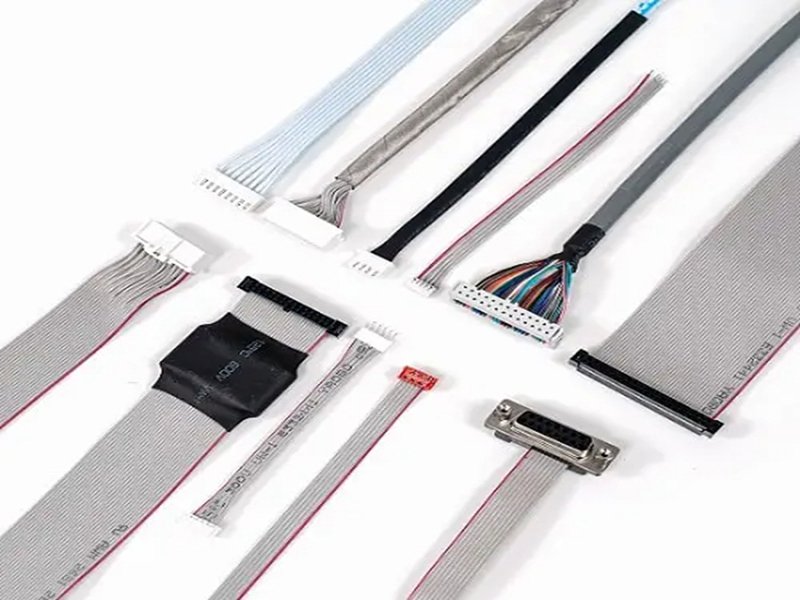
When you open up a computer, printer, or even a high-precision medical device, you’re likely to see a flat, colorful strip connecting different components. This isn’t just any cable—it’s a ribbon cable. And while it might look simple, this often-overlooked piece of engineering plays a vital role in the functionality of modern electronics. From saving space inside compact devices to enabling fast, reliable parallel data transmission, ribbon cables are a quiet but powerful player in today’s interconnected world.
Ribbon cables are used to connect internal electronic components where multiple conductors are needed in parallel, such as in computers, printers, industrial systems, and medical devices. Their flat, flexible design makes them ideal for tight spaces and high-density connections.
Think of them as the super-organized, space-saving solution to what would otherwise be a mess of tangled wires. The beauty of ribbon cables lies in their simplicity and versatility. They’ve been around for decades, but with the rise of compact smart devices and complex control systems, they’ve become more essential than ever.
Let’s dive in—we’ll uncover where they’re used, how they work, their types, benefits, limitations, and how Sino-conn is helping customers like you customize the perfect ribbon cable solution.
What Is a Ribbon Cable and How Does It Work?
Ribbon cables are flat, flexible cables made of multiple parallel conductors, used to transmit signals or power between electronic components inside devices.
Ribbon cables, also called flat cables or multi-wire planar cables, are designed with conductors (usually copper) arranged in parallel and encased in insulating material like PVC or Teflon. This configuration makes them highly suitable for transmitting multiple signals simultaneously without cross-talk or confusion.
Ribbon Cable Technical Specification Summary:
| Specification Item | Range or Options | Description |
|---|---|---|
| Conductor Material | Bare Copper / Tinned Copper | Copper enables higher conductivity for signal lines |
| Insulation Material | PVC / Teflon / Silicone | Teflon for high-temp, silicone for high-flex |
| Number of Conductors | 4 / 10 / 20 / 40 / 64 / 80+ | Depends on interface and use case |
| Pitch (Spacing) | 0.5mm / 1.0mm / 1.27mm / 2.54mm | Matches standard header configurations |
| Voltage Rating | 30V / 60V / 300V | Varies by UL type and usage environment |
| Temperature Range | -40°C to +105°C (Teflon up to 200°C) | For general or harsh environments |
| Flame Rating | VW-1 / FT1 / UL 2651 | Meets fire safety standards |
| Certifications Available | UL / ISO / RoHS / REACH / PFAS | Global compliance guaranteed |
Each conductor in the cable corresponds to a pin on a connector, which makes installation and routing incredibly easy. They are commonly terminated with IDC (Insulation Displacement Connectors), allowing for fast, tool-less connection to headers or sockets.

The materials used vary depending on the environment: PVC for general use, Teflon for high-temperature applications, or even silicone for extreme flexibility. Ribbon cables can also be shielded to reduce EMI (electromagnetic interference), a growing concern in high-frequency applications.
Their flat shape means they can fold and bend to fit within tight electronic enclosures, making them indispensable for compact electronics.
The difference between ribbon cables and traditional round cables lies in organization and space efficiency. Round cables are great for long-distance, rugged environments, but inside delicate equipment where space is limited, ribbon cables shine.

Which Industries Commonly Use Ribbon Cables?
Ribbon cables are used across industries like computing, automotive, medical, aerospace, and manufacturing where compact, organized internal wiring is critical.
Ribbon cables may not get the limelight, but they’re everywhere. In consumer electronics, they link hard drives to motherboards or screens to control panels. In printers and scanners, they help transmit commands to moving parts. You’ll even find them in musical instruments like electronic keyboards.
In medical devices, ribbon cables are ideal due to their reliable signal transmission and clean layout, which supports ease of maintenance and safety compliance.

In industrial automation, ribbon cables are frequently used in control panels, PLCs, and robotics systems, where hundreds of wires need to be organized and labeled clearly.
In aerospace and automotive systems, ribbon cables help reduce weight while maintaining signal integrity in compact control modules and infotainment systems.
Their application is growing in renewable energy and smart home tech too, as devices get smaller and smarter.
How Do Ribbon Cables Solve Connectivity Challenges?
Ribbon cables provide space-saving, organized, customizable wiring solutions that support high-speed data and signal transmission across complex systems.
If you’ve ever opened a device and admired how tidy everything looks, you can probably thank ribbon cables. Traditional wires can easily become a chaotic mess, leading to difficult repairs and potential errors. Ribbon cables keep everything in parallel, organized, and labeled.
Space-saving is a huge benefit, especially in today’s world of ever-smaller devices. Their flexibility allows them to be routed through small paths or folded to fit.
They support high-speed parallel data transmission, which is essential in systems that require real-time responsiveness, like automation controllers or medical imaging systems.
Customization is another strength. Whether it’s specific conductor counts, custom pin-outs, length variations, shielding needs, or special insulation materials, ribbon cables can be tailored to exact system requirements.

Real-world Example: In a European medical diagnostic device, a compact controller board required over 30 signal lines to connect with its imaging sensor. Traditional wire bundles interfered with airflow and created EMI hotspots. Sino-conn engineers designed a shielded ribbon cable with twisted pairs and flame-retardant insulation, reducing EMI by 60% and improving air circulation, leading to a 15% increase in thermal efficiency.
Another case involved a U.S.-based robotics OEM whose control units demanded signal isolation, compact cable routing, and rugged durability. Sino-conn supplied a series of ribbon cables with custom pin-outs, EMI shielding, and reinforced strain relief ends that passed 1 million flex-cycle tests without failure. This gave their robotic arms consistent communication and extended lifespan in high-vibration environments.
What Are the Different Types of Ribbon Cables?
Ribbon cables come in various forms, including flat, twisted pair, shielded, FFC, and FPC types, each suited for specific applications and performance needs.
- Flat Ribbon Cable: The classic form with evenly spaced parallel conductors. Available in standard widths like 10, 20, 40 pins, etc.
- Twisted Pair Ribbon Cable: Pairs of conductors are twisted to reduce EMI, ideal for signal-sensitive applications.
- Shielded Ribbon Cable: Includes a metallic shield layer to block electromagnetic interference.
- FFC (Flexible Flat Cable): Ultra-thin, used in mobile phones, cameras, laptops. Generally not compatible with IDC connectors.
- FPC (Flexible Printed Circuit): Printed circuits on flexible substrates, often custom-designed for one specific application.
Connector types vary too. IDC is most common, but JST, Molex, or custom connectors can also be used. Sino-conn helps customers match the right connector and pin-out for any application.
Ribbon Cable Type Comparison:
| Cable Type | Structure Description | Typical Application | Connector Compatibility | Special Feature |
|---|---|---|---|---|
| Flat Ribbon Cable | Parallel conductors in flat layout | Computers, printers, control panels | IDC, Molex | Easy routing, low cost |
| Twisted Pair Ribbon Cable | Twisted conductor pairs within flat cable | Signal-sensitive devices, sensors | IDC, JST | EMI reduction |
| Shielded Ribbon Cable | Metallic shielding around flat ribbon | Industrial and medical systems | IDC, custom | Improved EMI protection |
| FFC (Flexible Flat Cable) | Flat copper strips on film | Mobile phones, laptops, cameras | ZIF, LIF | Ultra-thin, highly flexible |
| FPC (Printed Circuit) | Etched circuits on flexible plastic | Wearables, compact electronics | Solder pads, custom | Custom circuit integration |
Do Ribbon Cables Require Certification and Customization?
Yes. Certifications like UL, RoHS, ISO, and REACH are crucial for compliance, and most applications benefit from tailored cable solutions.
Depending on your market (especially in Europe and North America), ribbon cables often need to meet strict environmental and safety regulations:
- UL (Underwriters Laboratories)
- RoHS (Restriction of Hazardous Substances)
- REACH (Registration, Evaluation, Authorization and Restriction of Chemicals)
- PFAS-Free Certification, if required
Sino-conn provides all necessary documentation and testing support.
Customization is standard: clients may request specific lengths, pin-outs, materials, or even request drawings. Sino-conn typically delivers drawings within 30 minutes to 3 days and begins production only after client approval.
Need original or compatible connectors? Sino-conn can supply both. Originals offer long-term brand trust, while compatible options offer cost savings and faster lead times—ideal for urgent or volume production needs.
How Sino-conn Meets Global Cable Needs
Sino-conn supports engineers, OEMs, and distributors with fast prototyping, no MOQ, and full customization backed by top-tier quality control.
Sino-conn is not just a cable supplier—they’re your solution partner. Whether you’re a design engineer developing a new product or a purchasing manager for an OEM, Sino-conn provides full support:
| Service Type | Standard Lead Time | Rush Service Time | Notes |
|---|---|---|---|
| Drawing (CAD/PDF) | 1–3 business days | Within 30 minutes | Confirmed before production |
| Sample Production | 2–3 business days | 24–48 hours | Standard or engineering samples |
| Mass Production | 10–15 business days | ≤7 business days | Shorter for repeat orders or fast-track requests |
| Customer Support | Email / Call / Video | Real-time video support | Multi-language sales team for quick communication |
- Sample Lead Time: 2–3 working days (rush samples available in 24–48 hrs)
- Mass Production Lead Time: 2 weeks (or less for urgent orders)
- Engineering Support: BOM analysis, CAD-to-PDF drawings, layout optimization
- No MOQ Policy: Order 1 unit or 10,000—we’ve got you covered
All ribbon cables go through 3-stage 100% inspection:
- In-process inspection
- Finished goods inspection
- Pre-shipment QC
To demonstrate our capabilities, Sino-conn recently worked with a German automotive Tier 1 supplier who required a ribbon cable assembly with tight tolerance (±0.1mm), UL 2651 standard compliance, and low halogen content. We delivered custom drawings within 1 hour, provided first samples in 48 hours, and completed a 20,000-piece order in 10 working days.
Another client—a Singapore-based lab automation startup—struggled to find a supplier willing to do small-volume custom builds. Sino-conn delivered just 10 fully customized assemblies, including matching connector overmolding and EMI protection, helping the client win a grant by demonstrating a working prototype ahead of deadline.
With video call support, multi-language sales, flexible pricing, and scalable logistics, Sino-conn ensures every client—big or small—receives enterprise-level service and technical precision.—they’re your solution partner. Whether you’re a design engineer developing a new product or a purchasing manager for an OEM, Sino-conn provides full support:
- Sample Lead Time: 2–3 working days (rush samples available in 24–48 hrs)
- Mass Production Lead Time: 2 weeks (or less for urgent orders)
- Engineering Support: BOM analysis, CAD-to-PDF drawings, layout optimization
- No MOQ Policy: Order 1 unit or 10,000—we’ve got you covered
All ribbon cables go through 3-stage 100% inspection:
- In-process inspection
- Finished goods inspection
- Pre-shipment QC
With video call support, multi-language sales, and flexible pricing, Sino-conn makes it easy to move from idea to reality—quickly.
What Are the Disadvantages of Ribbon Cable?
While ribbon cables are versatile, they can be prone to EMI, are less durable in harsh environments, and not suitable for high-flex applications.
Every technology has trade-offs, and ribbon cables are no exception.
- EMI Susceptibility: Unless shielded, ribbon cables can pick up noise, especially in high-frequency environments.
- Environmental Durability: Standard PVC jackets aren’t great for moisture, oil, or vibration exposure. Teflon or silicone can be used in these cases.
- Flexibility Limitation: Over time, repeated bending can cause cracks or shorts in the conductors.
That said, these disadvantages can be mitigated with smart design choices and proper material selection—something Sino-conn helps every client navigate.
Ready to Build Your Custom Ribbon Cable?
Whether you’re a product designer, OEM buyer, or distributor, Sino-conn is ready to support your custom cable needs. With a commitment to quality, speed, and flexibility, we help you move from design to production with confidence.
Let us help you build the right cable for your application.
Contact Sino-conn now to get a quote, a drawing, or just talk to an expert.