Skip to content
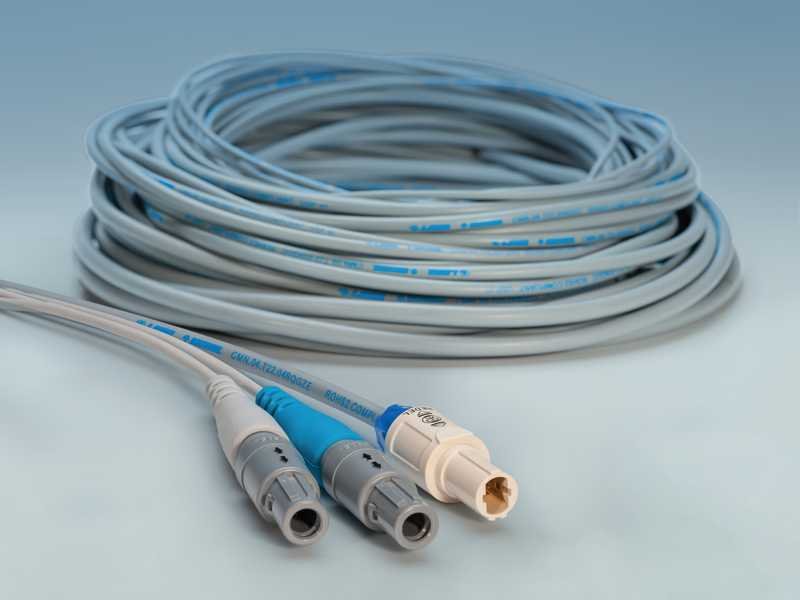
A medical cable usually looks simple from the outside. It may only appear to be a soft cable with two connectors. But once it is used in a real medical device, the situation becomes very different. The cable may be bent every day, pulled during equipment movement, cleaned with chemical agents, routed through a narrow housing, or connected to a moving probe, robotic arm, monitoring module, imaging sensor, or portable diagnostic unit.
In many medical applications, cable failure does not start with a complete break. It often begins with small internal damage. A few copper strands break first. The shield becomes loose. The jacket starts to crack near the connector. The signal becomes unstable only when the cable is bent at a certain angle. These problems are difficult to catch during a quick incoming inspection, but they can become serious after the product is installed in hospitals, clinics, laboratories, or home-care environments.
High-flex cable solutions improve medical device reliability by using finer copper strands, flexible insulation, suitable jacket materials, stable shielding, controlled bend radius, and strong strain relief design. A good high-flex medical cable should keep signal, power, and mechanical performance stable after repeated bending, twisting, plugging, cleaning, and daily handling.
For medical device manufacturers, the cable is not just an accessory. It is part of the device’s reliability system. A low-cost cable may save a few dollars at the purchasing stage, but one field failure may cost much more in service labor, replacement parts, downtime, and customer trust. This is why engineering teams often spend serious time confirming cable drawings, pinout, material, flex life, shielding, connector source, outer diameter, and production inspection before approving a medical cable supplier.
What Are High-Flex Cable Solutions?
High-flex cable solutions are cable assemblies specifically designed to withstand continuous bending, twisting, pulling, and movement without experiencing premature electrical or mechanical failure. Unlike standard cables that are primarily intended for fixed installations, high-flex cable solutions are engineered for applications where motion is part of normal operation.

In medical equipment, cable movement is often unavoidable. A patient monitor cable may be connected and disconnected dozens of times per day. An ultrasound probe cable may be bent hundreds of times during a single shift. A robotic surgery system may subject cables to thousands of complex movements every day. In these situations, a standard cable assembly may function correctly at first but gradually develop problems such as conductor breakage, signal instability, shielding degradation, or connector failure.
This is why high-flex cable solutions have become an essential component in modern healthcare equipment.
For medical device manufacturers, the challenge is not simply finding a cable that works today. The challenge is finding a cable that continues working reliably after months or years of real-world use.
A properly designed high-flex cable solution combines several engineering elements:
| Design Factor | Purpose |
|---|---|
| Fine-Strand Conductors | Improve bending performance and reduce copper fatigue |
| Flexible Insulation | Minimize internal stress during movement |
| Medical-Grade Jacket Materials | Improve durability and handling comfort |
| Shielding Structure | Maintain signal integrity and EMI protection |
| Strain Relief Design | Protect cable exit points from concentrated stress |
| Connector Selection | Ensure reliable mechanical and electrical performance |
| Customized Routing Design | Match actual application requirements |
When these elements work together, the cable becomes significantly more resistant to mechanical fatigue while maintaining stable electrical performance.
What Makes High-Flex Cables Different?
Many purchasing teams compare cable assemblies based on connector type, length, and price. Engineers often take a different approach.
They focus on what happens inside the cable after repeated movement.
The largest difference between a standard cable and a high-flex cable is often invisible from the outside.
Consider the conductor structure.
A standard cable may use relatively few copper strands. This construction is economical and works well in fixed installations. However, repeated bending concentrates stress on individual strands. Over time, those strands begin to break.
A high-flex cable typically uses a much larger number of finer copper strands.
For example:
| Wire Type | Approximate Strand Structure | Flexibility |
|---|---|---|
| Standard Power Cable | Low strand count | Basic |
| Industrial Flexible Cable | Medium strand count | Good |
| Medical High-Flex Cable | High strand count | Excellent |
| Robotics Grade Cable | Ultra-fine strand construction | Outstanding |
As strand count increases, the cable can bend more easily while distributing stress across many conductors.
The jacket material also plays an important role.
Some customers focus only on softness. Softness is important, but durability matters just as much.
A medical cable jacket may need to resist:
- Alcohol-based disinfectants
- Hospital cleaning agents
- Repeated wiping
- Abrasion from daily handling
- Moderate chemical exposure
- Mechanical wear
- Temperature fluctuations
The choice of jacket material directly affects service life.
For example:
| Material | Flexibility | Wear Resistance | Common Medical Applications |
|---|---|---|---|
| PVC | Moderate | Good | Basic equipment |
| TPU | Excellent | Excellent | Portable devices |
| Silicone | Outstanding | Good | Handheld medical equipment |
| TPE | Very Good | Good | General medical systems |
Another major difference is the connector transition area.
Industry experience shows that a large percentage of cable failures occur within a short distance from the connector.
This is where the flexible cable meets a rigid connector housing.
Without proper strain relief, repeated bending creates stress concentration in one location.
A properly designed high-flex cable assembly uses:
- Custom overmolding
- Flexible boots
- Extended strain relief sections
- Optimized cable exit angles
These features significantly improve durability.
At Sino-Conn, many medical cable projects involve redesigning the connector exit area because the customer’s previous supplier focused on electrical requirements but overlooked long-term mechanical reliability.
In many cases, a relatively small modification to the overmold structure can dramatically improve field performance.
Where Are High-Flex Cable Solutions Used?
High-flex cable solutions are found throughout the medical industry because movement is present in far more applications than many people realize.
Most people immediately think about robotic systems, but many other medical devices also place substantial mechanical stress on cable assemblies.
The following table shows common applications and the challenges they create:
| Medical Equipment | Typical Cable Challenge |
|---|---|
| Ultrasound Systems | Constant probe movement |
| Patient Monitoring Equipment | Frequent handling and connection |
| Surgical Equipment | Repetitive operator movement |
| Endoscopy Systems | Tight routing paths |
| Medical Imaging Equipment | Signal integrity and EMI control |
| Portable Diagnostic Devices | Flexibility and lightweight design |
| Medical Robotics | Continuous motion and torsion |
| Laboratory Equipment | Repeated equipment operation |
Ultrasound systems provide a good example.
The probe cable is often one of the most heavily used cable assemblies in the entire device.
During a single day, the cable may be:
- Twisted
- Bent
- Wrapped
- Stored
- Pulled
- Repositioned
A standard cable construction would experience accelerated wear under these conditions.
Medical robotics presents another demanding environment.
Unlike traditional equipment where movement is relatively simple, robotic systems often create multiple simultaneous forces:
- Bending
- Torsion
- Vibration
- Repetitive movement
The cable must withstand all of these stresses while maintaining reliable power and data transmission.
Sino-Conn has worked with customers developing medical devices that require compact cable assemblies for limited installation space. In many of these projects, reducing cable diameter while maintaining flexibility becomes a key requirement.
Achieving both objectives simultaneously often requires optimization of conductor size, insulation thickness, shielding structure, and jacket material.
This is one reason custom cable assemblies continue to dominate the medical sector.
Off-the-shelf products rarely address every mechanical and electrical requirement.
Why Do Medical Devices Need High Flexibility?
The demand for high-flex cable solutions is driven by reliability expectations.
Medical devices are expected to perform consistently for years while operating in environments where failure is not easily tolerated.
When a cable fails, the cost is rarely limited to replacing the cable itself.
Additional costs may include:
| Potential Impact | Business Consequence |
|---|---|
| Device Downtime | Reduced equipment availability |
| Service Visits | Increased maintenance costs |
| Warranty Claims | Direct financial impact |
| Product Reputation | Customer dissatisfaction |
| Production Delays | Inventory and logistics disruption |
| Regulatory Concerns | Additional validation requirements |
A cable assembly may represent only a small percentage of the total product cost, yet it can have a significant influence on long-term reliability.
For example, a medical imaging manufacturer may spend tens of thousands of dollars developing a sophisticated system.
If a cable assembly repeatedly fails in the field, the customer often remembers the failure rather than the technology.
This is why many engineering teams evaluate cable assemblies based on total lifecycle performance rather than purchase price alone.
Several factors influence flex life:
| Factor | Influence on Service Life |
|---|---|
| Strand Count | Higher strand count generally improves flexibility |
| Bend Radius | Larger radius reduces conductor stress |
| Jacket Material | Affects durability and flexibility |
| Shield Design | Impacts both EMI and mechanical performance |
| Strain Relief | Protects critical transition points |
| Installation Method | Poor routing can shorten lifespan |
One customer approached Sino-Conn after experiencing repeated failures in a portable medical device.
The original cable assembly functioned properly during initial testing but began failing after months of field use.
After reviewing the application, several issues were identified:
- Bend radius was too tight
- Connector exit protection was insufficient
- Cable flexibility was lower than required
The revised design incorporated:
- Higher strand count conductors
- Improved strain relief
- More flexible jacket material
The result was a significant improvement in durability during customer validation testing.
This example highlights an important point.
The best high-flex cable solution is rarely the most expensive cable available.
The best solution is the one engineered around the actual application, movement pattern, environmental conditions, and performance requirements.
That is why many medical device manufacturers now involve cable assembly suppliers earlier in the development process rather than treating the cable as a final purchasing decision.
When cable design is considered early, reliability risks can often be identified and addressed before they become field failures.
Why Are High-Flex Cable Solutions Important?
High-flex cable solutions are important because medical equipment is expected to operate reliably every day, often for many years, while being exposed to constant movement, repeated handling, cleaning procedures, and demanding clinical environments. In many medical devices, cable assemblies are among the most frequently stressed components. When a cable fails, the impact is often much greater than the replacement cost of the cable itself.
A modern medical device may contain advanced processors, sensors, displays, imaging modules, and software systems worth thousands of dollars. However, all of these components depend on stable power and signal transmission. If the cable assembly becomes unreliable, the entire system can be affected.
Many device manufacturers focus heavily on electronics development while underestimating the importance of cable reliability. In reality, cable-related issues are among the most common causes of field service events in equipment that involves frequent movement.
A properly designed high-flex cable solution helps reduce these risks by improving mechanical durability, maintaining stable electrical performance, protecting signal integrity, and extending service life under real operating conditions.
The importance of high-flex cable solutions becomes even greater as medical devices continue moving toward:
- Portable equipment
- Compact designs
- Wireless-assisted systems
- Medical robotics
- Mobile diagnostic devices
- Handheld instruments
- Wearable healthcare devices
All of these trends increase cable movement and place greater demands on cable assemblies.
How Does Constant Movement Affect Cables?
Most cable failures do not occur because of excessive voltage or excessive current.
Instead, they occur because of repeated mechanical stress.
Every time a cable bends, twists, or flexes, the internal conductors experience strain. A single bend usually causes no damage. The problem occurs when the same movement is repeated thousands, tens of thousands, or even millions of times.
For example:
| Application | Daily Movements |
|---|---|
| Patient Monitoring Cable | 50-200 |
| Portable Ultrasound Probe | 200-1000+ |
| Surgical Equipment Cable | 500-3000+ |
| Medical Robotic System | Thousands to Tens of Thousands |
| Diagnostic Test Equipment | Hundreds |
After enough cycles, several problems may develop:
Conductor Fatigue
Copper conductors gradually weaken as they repeatedly flex.
Initially, a few strands may break.
The cable continues functioning because many strands remain intact.
Over time, additional strands fail, increasing resistance and reducing reliability.
Eventually, intermittent electrical problems begin to appear.
Shielding Damage
Medical devices often require stable EMI performance.
Repeated bending can gradually deform the shielding structure.
When this happens:
- Signal quality may decrease
- Noise susceptibility may increase
- Data transmission may become unstable
This is particularly important for:
- Ultrasound systems
- Medical imaging equipment
- Diagnostic instruments
- Sensor-based devices
Jacket Deterioration
The outer jacket is constantly exposed to:
- Handling
- Cleaning chemicals
- Friction
- Storage stress
- Environmental conditions
When the wrong material is selected, cracking or hardening may occur long before the device reaches its expected service life.
Many field failures start at the connector exit because this area experiences the highest concentration of mechanical stress.
At Sino-Conn, connector exit protection is one of the first areas reviewed during custom medical cable development because this location frequently determines long-term durability.
What Failures Can High-Flex Cable Solutions Prevent?
A cable assembly can fail in many ways.
Some failures are obvious.
Others can be extremely difficult to diagnose.
The most expensive failures are often intermittent problems because they consume significant engineering and service resources.
Common medical cable failure modes include:
| Failure Mode | Visible Symptoms | Potential Consequences |
|---|---|---|
| Broken Conductors | Intermittent operation | Device downtime |
| Connector Stress Failure | Signal loss when cable moves | Service intervention |
| Shield Damage | Increased noise | Reduced imaging quality |
| Jacket Cracking | Physical damage visible | Reduced lifespan |
| Pin Pullout | Connection instability | Device malfunction |
| Solder Joint Fatigue | Intermittent electrical contact | Difficult troubleshooting |
| Excessive Cable Stiffness | User discomfort | Reduced usability |
Many of these failures develop gradually.
For example, a customer may report:
“The device only works when the cable is held in a certain position.”
This type of complaint often indicates internal conductor fatigue.
The challenge is that the cable may pass a simple continuity test when stationary.
Only when the cable moves does the problem appear.
A medical equipment manufacturer once approached Sino-Conn regarding recurring failures in a handheld diagnostic device.
The original cable assembly used a relatively rigid structure because cost reduction had been prioritized during the initial design phase.
After approximately one year of field use, service requests began increasing.
Engineering analysis revealed:
- Conductor fatigue near the connector
- Insufficient strain relief length
- Limited flexibility in the cable structure
The redesign included:
- Higher strand count conductors
- Flexible medical-grade jacket material
- Extended strain relief design
The customer reported a significant reduction in field failures after implementation.
This example highlights a common industry reality:
Reducing cable cost by a few dollars can sometimes create much larger service costs later.
How Do High-Flex Cable Solutions Improve Reliability?
Reliability is achieved through a combination of design choices rather than a single feature.
The most successful medical cable assemblies are designed around how the equipment is actually used.
This requires understanding:
- Movement frequency
- Bend radius
- Routing path
- Connector orientation
- Environmental conditions
- Signal requirements
- Cleaning procedures
When these factors are considered early, cable life can improve dramatically.
The table below shows how various design improvements contribute to reliability:
| Design Feature | Reliability Benefit |
|---|---|
| Fine-Strand Conductors | Improved flex life |
| Flexible Insulation | Reduced internal stress |
| TPU Jacket | Better abrasion resistance |
| Silicone Jacket | Improved flexibility |
| Multi-Layer Shielding | Better signal stability |
| Optimized Strain Relief | Reduced connector stress |
| Overmold Design | Improved mechanical protection |
| Custom Cable Routing | Reduced bend concentration |
One area that is frequently overlooked is cable routing.
Even a high-quality cable can fail prematurely if installed incorrectly.
Examples include:
- Sharp bends
- Excessive tension
- Twisting during installation
- Poor support locations
- Tight enclosure routing
For this reason, experienced suppliers often discuss installation conditions before finalizing a cable design.
At Sino-Conn, engineering discussions frequently involve:
- Minimum bend radius
- Cable exit direction
- Connector orientation
- Routing space limitations
- Movement patterns
These conversations help prevent problems that are difficult to solve after production begins.
Another important reliability factor is consistency.
Medical device manufacturers need every cable assembly to perform the same way.
A cable that performs well in validation testing but varies during production creates unnecessary risk.
To address this, Sino-Conn performs:
| Inspection Stage | Purpose |
|---|---|
| Incoming Material Inspection | Verify material quality |
| In-Process Inspection | Detect assembly issues early |
| Finished Product Inspection | Confirm assembly accuracy |
| Pre-Shipment Inspection | Final verification before delivery |
This multi-stage inspection process helps reduce the likelihood of:
- Wrong pinouts
- Crimp defects
- Soldering issues
- Connector assembly errors
- Cosmetic defects
For medical customers, consistency is often just as important as performance.
Why Is Flex Life Critical for Patient Safety?
When discussing high-flex cable solutions, many people immediately focus on durability and maintenance costs.
Patient safety is equally important.
Medical devices often operate in situations where stable signal transmission is essential.
Examples include:
- Patient monitoring
- Medical imaging
- Surgical systems
- Diagnostic equipment
- Therapeutic devices
If cable performance becomes unstable, the device may not deliver reliable information to healthcare professionals.
The consequences vary depending on the application.
For example:
| Device Type | Importance of Stable Cable Performance |
|---|---|
| Patient Monitor | Continuous physiological data |
| Ultrasound System | Accurate image transmission |
| Surgical Equipment | Reliable instrument operation |
| Medical Robotics | Precise motion control |
| Diagnostic Analyzer | Consistent measurement accuracy |
This does not mean every cable failure creates a safety event.
However, reducing cable-related interruptions helps maintain overall system reliability and operational confidence.
Many medical device manufacturers now evaluate cable assemblies based on expected lifecycle performance rather than simply focusing on initial purchase price.
A simplified comparison illustrates the difference:
| Factor | Standard Cable | High-Flex Cable Solution |
|---|---|---|
| Initial Cost | Lower | Higher |
| Flex Life | Lower | Significantly Higher |
| Maintenance Frequency | Higher | Lower |
| Service Costs | Higher | Lower |
| Downtime Risk | Higher | Lower |
| Long-Term Value | Moderate | Strong |
When viewed over the full life of the equipment, high-flex cable solutions often provide a lower total ownership cost.
This is particularly true for equipment that experiences daily movement.
For medical device manufacturers, investing in a properly engineered high-flex cable solution is often one of the simplest ways to improve product reliability, reduce warranty exposure, support long-term customer satisfaction, and strengthen overall product performance in the field.
Which High-Flex Cable Solutions Work Best?
The best high-flex cable solution depends on how the medical device is used, how often the cable moves, the type of signal being transmitted, available installation space, cleaning requirements, and expected service life.
Many engineers initially search for the “best flexible cable” or the “highest flex-life cable.” In practice, there is no universal answer.
A cable that performs exceptionally well in a medical robotic arm may be completely unsuitable for a patient monitoring device. Likewise, a cable designed for high-speed imaging signals may add unnecessary cost to a simple power application.
The most successful medical cable projects start by understanding the application rather than the cable itself.
Before selecting a cable structure, engineers should evaluate:
| Design Factor | Questions to Consider |
|---|---|
| Movement Type | Bending, torsion, pulling, or vibration? |
| Flex Frequency | 50 cycles/day or 50,000 cycles/day? |
| Installation Space | Is routing space limited? |
| Signal Type | Power, RF, data, video, sensor, or mixed signals? |
| EMI Environment | Is shielding critical? |
| Cleaning Method | Alcohol, disinfectants, sterilization? |
| Service Life Goal | 2 years, 5 years, or 10+ years? |
| Device Category | Portable, stationary, imaging, robotic, surgical? |
The reality is that most cable failures are not caused by electrical overload.
They are caused by selecting the wrong cable construction for the actual movement conditions.
At Sino-Conn, many medical cable projects begin after a customer experiences field failures with an existing assembly. In many cases, the original cable met electrical requirements but was not optimized for mechanical durability.
The solution often involves changing conductor structure, shielding design, jacket material, or strain relief rather than changing the connector itself.
Which Materials Increase Flex Life?
Material selection has a greater impact on cable life than many people realize.
Two cables may have identical connectors and identical dimensions but exhibit completely different performance after months of operation simply because different materials were used.
The conductor is usually the first component evaluated.
A conductor designed for repeated movement typically contains significantly more copper strands than a standard cable.
The relationship is simple:
More strands generally mean better flexibility.
For example:
| Conductor Type | Typical Application | Relative Flex Performance |
|---|---|---|
| Standard Stranded Copper | Fixed installation | Basic |
| Fine-Strand Copper | Moderate movement | Good |
| High-Strand Copper | Frequent movement | Excellent |
| Ultra-Fine Strand Copper | Continuous motion | Outstanding |
As strand diameter decreases and strand count increases, bending stress is distributed more evenly throughout the conductor.
This helps delay conductor fatigue.
The jacket material is equally important.
Medical devices are exposed to a combination of mechanical and environmental challenges:
- Daily handling
- Equipment movement
- Repeated cleaning
- Disinfectant exposure
- Storage stress
- Abrasion
- Temperature variation
The most common jacket materials used in medical cable assemblies include:
| Material | Flexibility | Durability | Typical Medical Use |
|---|---|---|---|
| PVC | Moderate | Good | Basic equipment |
| TPU | Excellent | Excellent | Portable devices |
| Silicone | Outstanding | Good | Handheld devices |
| TPE | Very Good | Good | Monitoring systems |
| Custom Medical Compound | Application Specific | Application Specific | Specialized devices |
Silicone jackets are often selected when softness and operator comfort are important.
For example:
- Ultrasound probes
- Patient monitoring cables
- Handheld diagnostic tools
TPU jackets are frequently chosen when abrasion resistance is a priority.
Examples include:
- Portable medical equipment
- Mobile carts
- External cable assemblies
- Frequently handled devices
One customer developing a portable imaging device approached Sino-Conn because their existing PVC cable became noticeably stiffer after prolonged use.
The revised cable used a TPU jacket combined with a higher-strand-count conductor.
The result was improved flexibility, better user experience, and longer field life.
Another factor often overlooked is cable weight.
For handheld medical equipment, reducing cable weight can significantly improve ergonomics.
A lighter cable may reduce operator fatigue during long procedures while improving maneuverability.

Which Shielding Designs Reduce EMI?
EMI control has become increasingly important as medical devices process more data at higher speeds.
Many modern medical systems combine:
- Power transmission
- Sensor signals
- High-speed data
- Video transmission
- Wireless communication modules
All of these systems can generate or receive electromagnetic interference.
Without proper shielding, several problems may occur:
- Image noise
- Data errors
- Signal instability
- Sensor inaccuracies
- Communication interruptions
Shielding design must balance electrical performance with flexibility.
The strongest shield is not always the best solution.
A highly rigid shield may improve EMI protection while reducing cable life.
The most common shielding structures include:
| Shield Type | EMI Protection | Flexibility |
|---|---|---|
| Aluminum Foil | Good | Excellent |
| Copper Braid | Excellent | Good |
| Spiral Shield | Good | Excellent |
| Foil + Braid | Outstanding | Moderate |
| Multi-Layer Shield | Maximum Protection | Application Dependent |
Foil shielding offers excellent coverage and low weight.
Braided shielding provides stronger mechanical durability and grounding performance.
Spiral shielding is particularly attractive in high-flex applications because it remains flexible during repeated movement.
Medical imaging systems often require more sophisticated shielding because signal quality directly affects image performance.
The table below shows typical shielding requirements:
| Medical Device | EMI Sensitivity |
|---|---|
| Ultrasound Systems | High |
| Medical Imaging Equipment | Very High |
| Diagnostic Instruments | High |
| Patient Monitoring Systems | Medium to High |
| Portable Devices | Medium |
| Medical Robotics | High |
One common mistake is selecting shielding solely based on EMI performance.
The cable must still survive the required movement cycles.
A cable that passes EMI testing but fails mechanically after six months creates a different set of problems.
This is why Sino-Conn reviews shielding requirements together with:
- Bend radius
- Cable routing
- Motion frequency
- Connector design
- Available installation space
A balanced design typically produces better long-term results than maximizing a single parameter.
Which High-Flex Cable Solutions Suit Different Devices?
Different medical devices place very different demands on cable assemblies.
The ideal cable structure for a patient monitor is not necessarily the ideal structure for a surgical robot.
The following table provides a general guideline:
| Medical Application | Recommended High-Flex Solution |
|---|---|
| Patient Monitoring | Soft multi-conductor cable |
| Ultrasound Equipment | Flexible coaxial or hybrid cable |
| Medical Imaging | Shielded low-noise cable assembly |
| Surgical Equipment | Reinforced shielded cable |
| Portable Diagnostic Device | Lightweight TPU cable |
| Endoscopy System | Small diameter flexible cable |
| Medical Robotics | Torsion-resistant cable system |
| Laboratory Equipment | Compact shielded cable assembly |
Patient monitoring systems prioritize:
- User comfort
- Soft handling
- Reliable signal transmission
- Frequent connection cycles
Ultrasound systems typically require:
- High flexibility
- Stable signal transmission
- Lightweight cable structure
- EMI protection
Medical imaging systems often prioritize:
- Signal integrity
- Low noise
- Shielding effectiveness
- Consistent impedance
Medical robotics introduces some of the most demanding requirements.
Robotic cables may experience:
- Continuous bending
- Simultaneous torsion
- High cycle counts
- Tight routing paths
- Long operating hours
In these applications, conductor construction becomes particularly important.
Many robotic systems require cables capable of surviving hundreds of thousands or even millions of movement cycles.
A standard flexible cable may not be sufficient.
This is one reason medical robotics has become one of the fastest-growing segments for advanced cable assemblies.
At Sino-Conn, robotic and motion-control projects often require extensive discussion regarding:
- Cable routing
- Bend radius
- Torsion angle
- Connector orientation
- Strain relief design
These factors frequently determine whether a cable survives long-term operation.
Which Connector and Strain Relief Designs Work Best?
Many cable failures occur near the connector rather than in the cable body itself.
This is because the connector creates a transition between a flexible cable and a rigid component.
When movement occurs, stress tends to concentrate at this location.
Industry experience shows that connector exits are among the highest-risk areas for:
- Conductor fatigue
- Jacket cracking
- Shield separation
- Wire pullout
The following design features help improve reliability:
| Design Feature | Benefit |
|---|---|
| Overmolded Connector | Improved strain distribution |
| Extended Strain Relief | Reduced bending concentration |
| Angled Connector | Reduced cable stress |
| Flexible Boot | Better movement control |
| Reinforced Exit Design | Improved durability |
| Cable Clamp System | Better pull resistance |
For example, a right-angle connector may significantly reduce stress in a compact enclosure compared to a straight connector.
Likewise, a properly designed overmold can increase cable life without changing the conductor or jacket material.
One medical customer approached Sino-Conn after experiencing repeated failures near a connector on a portable diagnostic device.
The cable itself remained intact.
The failure repeatedly occurred within a short distance of the connector housing.
After reviewing the application, the assembly was redesigned with:
- Longer strain relief
- Softer transition geometry
- Improved cable routing
The customer subsequently reported substantially improved durability during validation testing.
This example highlights an important lesson.
The best high-flex cable solution is rarely defined by one component.
Long-term performance usually results from multiple design decisions working together:
- Conductor selection
- Jacket material
- Shielding structure
- Connector choice
- Strain relief geometry
- Cable routing
When all of these elements are optimized around the actual medical application, the result is a cable assembly that performs reliably not only during initial testing but throughout years of real-world use.
How Do You Choose High-Flex Cable Solutions?
Choosing a high-flex cable solution is one of the most important decisions during medical device development. A cable assembly may account for only a small percentage of the total product cost, but it often has a major impact on reliability, maintenance requirements, service costs, user experience, and overall product reputation.
Many cable selection mistakes occur because the discussion starts with a connector part number instead of the application itself.
A connector tells only part of the story.
To select the right high-flex cable solution, engineers need to understand:
- How the cable will move
- How often it will move
- What signals it carries
- Where it is installed
- What environmental conditions it faces
- How long it is expected to last
A cable that performs well in a laboratory test may not necessarily perform well in a hospital environment where it is handled daily by different operators.
The most successful medical device manufacturers typically evaluate the entire application rather than focusing on individual cable specifications.
The following process is commonly used during high-flex cable selection:
| Evaluation Area | Why It Matters |
|---|---|
| Application Analysis | Defines real operating conditions |
| Mechanical Requirements | Determines flex performance |
| Electrical Requirements | Ensures signal integrity |
| Environmental Requirements | Guides material selection |
| Connector Selection | Ensures compatibility |
| Supplier Capability | Supports long-term production |
| Documentation & Validation | Reduces development risk |
The earlier these factors are considered, the easier it becomes to avoid redesigns later.
What Specifications Matter Most?
Many RFQs contain only three pieces of information:
- Connector A
- Connector B
- Cable Length
While this may be enough to receive a quotation, it is rarely enough to determine the most suitable cable design.
Several technical parameters significantly influence cable performance.
The most important specifications include:
| Specification | Importance |
|---|---|
| Wire Gauge (AWG) | Current carrying capacity |
| Strand Count | Flexibility and flex life |
| Voltage Rating | Safety and compliance |
| Shielding Structure | EMI protection |
| Outer Diameter (OD) | Routing and flexibility |
| Bend Radius | Mechanical durability |
| Jacket Material | Environmental resistance |
| Connector Type | Mechanical compatibility |
| Pinout Definition | Functional performance |
| Cable Weight | User handling and ergonomics |
Among these factors, strand count is often overlooked.
Consider two cables that both use 26 AWG conductors.
One cable may use fewer large strands.
The other may use many fine strands.
Although both cables share the same wire gauge, their flex performance can be dramatically different.
For medical applications involving repeated movement, strand count often becomes more important than AWG alone.
Another frequently overlooked parameter is cable outer diameter.
Many engineers initially prefer the smallest possible cable.
However, extremely small cables may create trade-offs involving:
- Shielding performance
- Current capacity
- Durability
- Connector compatibility
The goal is not simply minimizing cable size.
The goal is finding the best balance between:
- Flexibility
- Reliability
- Electrical performance
- User experience
At Sino-Conn, customers often provide a target cable diameter based on enclosure limitations. The engineering team then evaluates conductor size, shielding structure, insulation thickness, and jacket material to determine whether the requirement is realistic and reliable for long-term use.
How Many Flex Cycles Are Needed?
One of the most valuable questions during cable selection is:
“How many times will the cable move during its service life?”
Many customers do not initially know the answer.
That is completely normal.
Even an estimate can be extremely useful.
The expected movement frequency helps determine whether a standard flexible cable is sufficient or whether a specialized high-flex construction is required.
The following table provides a general reference:
| Application Type | Estimated Flex Cycles |
|---|---|
| Service Access Cable | Hundreds |
| Portable Device Cable | Thousands |
| Daily Operator Handling | Tens of Thousands |
| Ultrasound Probe Cable | Hundreds of Thousands |
| Medical Robotics Cable | Millions |
For example:
A portable patient monitor may be connected and disconnected dozens of times every day.
Over five years of operation, that can result in tens of thousands of movement cycles.
A robotic surgical system may exceed that number in a much shorter period.
This is why movement analysis is so important.
The type of movement also matters.
Different motion types create different stresses.
| Movement Type | Typical Stress |
|---|---|
| Bending | Conductor fatigue |
| Torsion | Shield and conductor distortion |
| Pulling | Connector stress |
| Vibration | Long-term fatigue |
| Repeated Plugging | Connector wear |
A cable designed for bending may not perform equally well under torsional movement.
This is particularly important for:
- Medical robotics
- Rotating imaging systems
- Automated laboratory equipment
- Motion-controlled devices
One customer approached Sino-Conn after experiencing repeated failures in a moving medical platform.
Initially, the project specification focused only on cable flexibility.
After discussing the application, it became clear that torsional movement was actually the dominant stress factor.
The final solution involved a different conductor and shielding structure optimized for combined bending and twisting.
Without understanding the motion profile, the issue would likely have persisted.
How Do You Evaluate Cable Suppliers?
Choosing the right cable supplier is often just as important as choosing the cable itself.
A supplier’s engineering capability can significantly influence project success.
Medical cable assemblies are rarely simple catalog products.
Most projects involve some degree of customization.
This may include:
- Cable length adjustments
- Pinout modifications
- Shielding changes
- Connector alternatives
- Material optimization
- Mechanical redesign
Because of this, supplier evaluation should go beyond pricing.
The following criteria are commonly used by medical device manufacturers:
| Evaluation Category | Questions to Ask |
|---|---|
| Engineering Support | Can they review the application? |
| Customization Ability | Can they modify the design? |
| Drawing Capability | Can they provide production drawings? |
| Prototype Support | How quickly can samples be delivered? |
| Quality Control | What inspection processes are used? |
| Documentation | Can they provide specifications and certifications? |
| Communication | How responsive is the team? |
| Production Capacity | Can they support future growth? |
A supplier that simply manufactures according to a drawing may be sufficient for mature products.
For new product development, engineering support often becomes much more valuable.
At Sino-Conn, a large percentage of custom cable projects begin with incomplete information.
Customers may provide:
- A photo
- A sample
- A hand sketch
- A concept drawing
- A connector model
The engineering team then works with the customer to define:
- Cable structure
- Materials
- Pinout
- Shielding
- Connector options
- Mechanical requirements
This collaborative approach helps reduce development risk before production begins.
How Do Certifications and Compliance Requirements Affect Selection?
Medical cable selection is not only about electrical and mechanical performance.
Documentation requirements can be equally important.
Different customers require different levels of compliance support depending on:
- Country
- Industry segment
- Regulatory requirements
- Customer specifications
Common documentation requests include:
| Document | Purpose |
|---|---|
| UL | Safety-related requirements |
| RoHS | Restricted substances compliance |
| REACH | Chemical substance compliance |
| PFAS Information | Material transparency |
| ISO Documentation | Quality system support |
| COC | Certificate of Conformity |
| COO | Country of Origin |
| Material Specifications | Material verification |
Some projects require these documents from the beginning.
Others request them during validation or customer audits.
Failure to consider documentation requirements early can delay product launches.
This is especially true when the end customer operates in highly regulated industries.
For this reason, many medical device companies include documentation review as part of supplier qualification.
Sino-Conn regularly supports customers requiring:
- Material specifications
- Compliance documentation
- Cable drawings
- Connector specifications
- Custom assembly documentation
Providing these documents early often helps customers accelerate internal approval processes.
Original Connectors or Compatible Alternatives?
This question appears in medical cable projects more often than many people expect.
Many customers begin with a specific branded connector.
Examples include connectors from major global manufacturers used in:
- Medical imaging
- Patient monitoring
- Laboratory equipment
- Portable devices
There are generally two options:
| Option | Advantages | Challenges |
|---|---|---|
| Original Connector | Brand recognition, specified by customer | Higher cost, longer lead times |
| Compatible Alternative | Lower cost, faster availability, more flexibility | Requires validation |
For many development-stage projects, compatible alternatives provide several advantages.
They may offer:
- Faster sample delivery
- Lower prototype cost
- Better availability
- Greater customization flexibility
For production programs, the decision often depends on:
- Customer requirements
- Budget
- Production volume
- Supply chain strategy
Many OEM customers evaluate both options before making a final decision.
At Sino-Conn, both original and compatible connector solutions can be supported depending on project requirements.
The engineering team reviews:
- Electrical compatibility
- Mechanical fit
- Reliability expectations
- Cost targets
- Delivery requirements
This allows customers to make informed decisions based on actual project priorities rather than assumptions.
Ultimately, selecting the right high-flex cable solution is not about choosing the most expensive cable or the most complex cable.
It is about understanding the application, identifying the real risks, evaluating long-term operating conditions, and working with a supplier capable of translating those requirements into a reliable, manufacturable cable assembly.
When those factors are addressed early, medical device manufacturers can reduce development risk, improve field reliability, shorten validation cycles, and create a better experience for both healthcare professionals and end users.

How Can High-Flex Cable Solutions Be Customized?
Customization is one of the biggest advantages of high-flex cable solutions, especially in the medical industry. Unlike consumer electronics, medical devices rarely share the same operating environment, mechanical structure, connector interface, movement pattern, or compliance requirements. Even devices that perform similar functions often require completely different cable assemblies.
A patient monitor cable designed for a bedside system may need a soft silicone jacket and lightweight construction. A surgical robot cable may require extreme flex life, torsion resistance, multi-layer shielding, and compact routing. An ultrasound system may prioritize signal integrity, lightweight handling, and low-noise transmission.
Because of these differences, many medical cable assemblies are custom-built rather than selected from standard catalogs.
In fact, one of the most common situations encountered by cable manufacturers is when a customer provides only:
- A photo
- A sample
- A connector part number
- A rough sketch
- A cable from a competitor
- An existing assembly that needs improvement
The customer often knows what problem needs to be solved but may not know exactly which cable construction is required.
This is where customization becomes valuable.
A properly customized high-flex cable assembly can improve:
- Device reliability
- User comfort
- Cable lifespan
- Signal stability
- EMI performance
- Installation efficiency
- Manufacturing consistency
At Sino-Conn, many medical projects begin with engineering discussions rather than quotations because identifying the real application requirements usually determines the final cable design.
What Can Be Customized?
Many buyers assume cable customization means changing the cable length.
In reality, almost every component of a cable assembly can be modified to suit the application.
The following table shows the most commonly customized elements:
| Component | Available Customization |
|---|---|
| Cable Length | From a few centimeters to several meters |
| Wire Gauge | Based on current and flexibility requirements |
| Conductor Structure | Different strand counts and flex levels |
| Jacket Material | TPU, Silicone, TPE, PVC, custom compounds |
| Cable Color | Custom colors available |
| Shielding Design | Foil, braid, spiral, hybrid shielding |
| Connector Type | Original or compatible connectors |
| Connector Orientation | Straight, right-angle, left-angle |
| Pinout | Fully customized wiring |
| Overmold | Shape, material, hardness, color |
| Strain Relief | Length and geometry optimization |
| Labels | Serial numbers, barcodes, customer part numbers |
| Packaging | Customer-specific packaging requirements |
One project may require only a simple length change.
Another may require redesigning the entire cable structure.
For example, a portable medical device manufacturer may request:
- Smaller outer diameter
- Lighter weight
- Improved flexibility
- Better abrasion resistance
- Reduced cable drag
Achieving all of these goals simultaneously usually requires multiple design changes rather than a single modification.
In another case, a medical imaging customer may prioritize:
- Signal stability
- Controlled impedance
- Low EMI
- Connector reliability
This may result in a completely different cable construction even if the cable looks similar externally.
The most successful custom cable projects focus on solving application problems rather than copying appearance alone.
How Are High-Flex Cable Solutions Developed?
Many medical device companies have experienced situations where a cable assembly looked correct on paper but failed during testing.
The reason is simple.
A cable assembly is both an electrical component and a mechanical component.
The design must satisfy both requirements simultaneously.
For this reason, successful custom cable development follows a structured process.
A typical project workflow includes:
| Stage | Purpose |
|---|---|
| Requirement Collection | Understand application details |
| Engineering Review | Select suitable materials and structure |
| Preliminary Drawing | Confirm dimensions and wiring |
| Customer Feedback | Verify requirements |
| Sample Production | Functional and fit testing |
| Design Optimization | Adjust based on test results |
| Production Approval | Final drawing confirmation |
| Mass Production | Controlled manufacturing process |
One of the most important stages is requirement collection.
The more information available at the beginning, the more accurately the cable can be designed.
Useful information includes:
- Device type
- Operating environment
- Movement type
- Bend radius
- Connector models
- Voltage and current
- Signal type
- Cable length
- Available installation space
- Cleaning requirements
- Service life target
However, many customers do not have all this information.
This is common during early-stage product development.
At Sino-Conn, engineering teams frequently receive:
- Photos
- Existing samples
- Prototype drawings
- Competitor products
These can usually provide enough information to start the evaluation process.
One advantage of custom development is that potential problems can often be identified before production begins.
Examples include:
| Potential Issue | Early Engineering Solution |
|---|---|
| Cable Too Stiff | Change conductor structure |
| Excessive OD | Optimize insulation thickness |
| EMI Concerns | Upgrade shielding structure |
| Tight Routing Space | Select smaller connector |
| Connector Stress | Redesign strain relief |
| Excessive Weight | Use lighter cable materials |
Addressing these issues early often saves weeks or months of redesign later.
How Can High-Flex Cable Solutions Be Optimized for Medical Devices?
Medical devices create challenges that are not common in many other industries.
The cable assembly often becomes part of the user experience.
Healthcare professionals interact directly with cables every day.
A cable that is too stiff, too heavy, or difficult to manage can negatively affect usability.
The following design priorities are frequently seen in medical projects:
| Requirement | Why It Matters |
|---|---|
| Lightweight Construction | Improves handling comfort |
| Small Diameter | Easier routing |
| Soft Jacket | Better user experience |
| High Flex Life | Reduced maintenance |
| EMI Protection | Stable signal transmission |
| Chemical Resistance | Cleaning durability |
| Compact Connectors | Space saving |
| Reliable Strain Relief | Longer service life |
For example, ultrasound probe cables are often optimized for:
- Lightweight feel
- High flexibility
- Low operator fatigue
- Signal stability
Medical robotic cables are often optimized for:
- Continuous movement
- Torsion resistance
- Long service life
- High reliability
Patient monitoring cables frequently prioritize:
- Softness
- Comfort
- Durability
- Easy handling
One customer developing a handheld diagnostic device contacted Sino-Conn because users complained that the cable felt bulky and difficult to maneuver.
After reviewing the assembly, several changes were made:
- Smaller cable OD
- Higher strand-count conductor
- Softer jacket material
- Improved strain relief
The updated design provided a noticeably better user experience while maintaining the same electrical performance.
This illustrates how customization can improve both technical performance and customer satisfaction.
Why Choose Sino-Conn High-Flex Cable Solutions?
Choosing a cable supplier is not only about manufacturing capability.
Medical device companies often need a partner that can support engineering, prototyping, testing, documentation, and production.
Sino-Conn focuses heavily on custom cable assemblies and supports projects ranging from early-stage development to volume production.
Several factors frequently attract medical customers.
Fast Engineering Response
Development schedules are often tight.
Customers do not want to wait weeks simply to know whether a design is feasible.
Sino-Conn can often provide:
| Service | Typical Response Time |
|---|---|
| Initial Technical Review | Same Day |
| Preliminary Evaluation | Within 24 Hours |
| Simple Drawing Support | As Fast As 30 Minutes |
| Standard Drawing Preparation | Around 3 Days |
Fast feedback helps customers move projects forward more efficiently.
Flexible Prototype Support
Many medical projects start with low quantities.
Prototype quantities may range from:
- 1 piece
- 5 pieces
- 10 pieces
- 20 pieces
Unlike some suppliers that require large minimum orders, Sino-Conn supports low-volume development projects with no MOQ requirement.
This is especially valuable during:
- R&D
- Validation
- Pilot production
- Design verification
Original and Compatible Connector Options
Medical device manufacturers often face connector supply challenges.
Original branded connectors may offer excellent performance but sometimes involve:
- Long lead times
- Higher costs
- Limited availability
Compatible alternatives may provide:
- Faster delivery
- Better flexibility
- Lower development cost
Sino-Conn supports both approaches depending on customer requirements.
Documentation and Drawings
Documentation is often as important as the cable itself.
Customers frequently request:
- Drawings
- Material specifications
- Connector specifications
- RoHS documents
- REACH documents
- PFAS information
- COC
- COO
Providing these documents early helps accelerate internal approvals and qualification processes.
Quality Control
Consistency becomes critical once a project enters production.
Sino-Conn performs multiple inspection stages including:
| Inspection Process | Objective |
|---|---|
| Incoming Material Inspection | Verify raw materials |
| Process Inspection | Monitor production quality |
| Finished Product Inspection | Verify assembly accuracy |
| Pre-Shipment Inspection | Confirm shipment quality |
Each custom cable assembly is inspected before shipment.
For medical customers, this reduces the risk of receiving assemblies with:
- Incorrect pinouts
- Connector defects
- Crimping issues
- Soldering defects
- Cosmetic problems
Ultimately, customization is not simply about changing dimensions or connector types.
The goal is to create a cable assembly that matches the device, the environment, the user, and the performance requirements.
When customization is done correctly, the result is often longer service life, improved reliability, easier installation, better user experience, and lower overall ownership cost throughout the life of the medical device.
Conclusion
Medical device reliability is influenced by thousands of design decisions, but cable assemblies remain one of the most overlooked components during product development.
A cable that appears simple from the outside may be responsible for carrying critical power, transmitting sensitive signals, maintaining EMI performance, and surviving years of continuous movement. When the cable design does not match the application, problems often emerge long after laboratory testing has been completed.
High-flex cable solutions help address these challenges through optimized conductor structures, flexible materials, reliable shielding, reinforced strain relief systems, and application-specific engineering. The result is improved durability, more stable performance, lower maintenance costs, and greater confidence in the final medical device.
Whether you are developing a new imaging system, upgrading a patient monitoring platform, designing a portable diagnostic device, or building advanced medical robotics, selecting the right cable solution early in the project can prevent costly redesigns later.
If you are looking for a custom high-flex medical cable assembly, Sino-Conn can support your project from concept to production.
Simply send us your drawing, cable specification, connector part number, sample, or even a product photo. Our engineering team can help evaluate the requirements, recommend suitable materials and structures, prepare drawings for approval, and provide prototype samples for testing.
The earlier the discussion starts, the easier it becomes to build a cable solution that matches your performance, reliability, and cost objectives.