Skip to content
Medical Cables Manufacturer vs General Electronics Cables Supplier: Which to Choose?
- andy
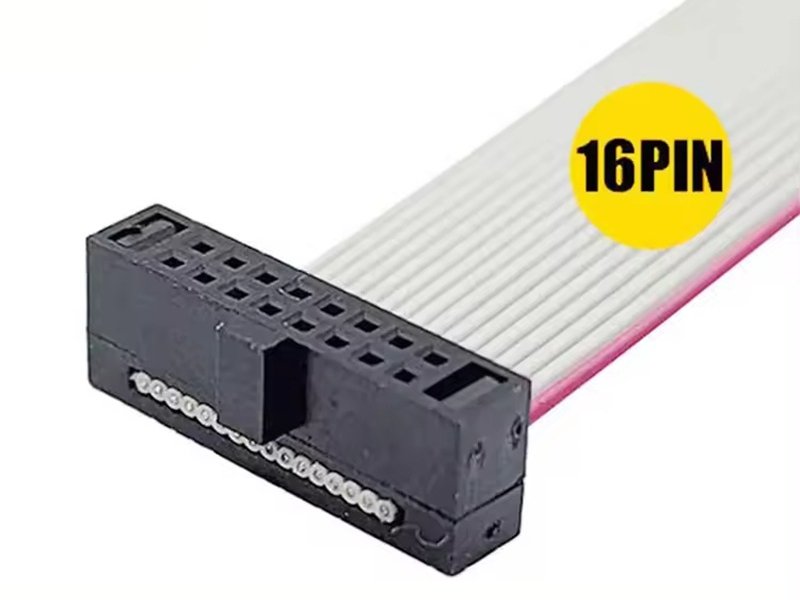
Ribbon cables are everywhere in modern electronics, yet they are often misunderstood or oversimplified. Among them, the 16 pin ribbon cable stands out as one of the most commonly requested configurations—frequently specified by engineers, referenced by part number by procurement teams, and often identified only by a photo or a rough description when projects move quickly. Despite its apparent simplicity, a 16 pin ribbon cable is not a “generic” product. Small differences in pitch, conductor size, insulation material, connector type, or pinout definition can dramatically affect compatibility, reliability, and long-term performance.
Many buyers assume that if two ribbon cables both have 16 pins, they are interchangeable. In practice, this assumption leads to common problems: misaligned connectors, signal instability, unexpected EMI issues, or assemblies that physically fit but fail during operation. Engineers tend to focus on electrical integrity and signal routing, while purchasing teams are concerned with cost, lead time, and supplier reliability. Both perspectives are valid—but neither is sufficient on its own.
A 16 pin ribbon cable is a flat, multi-conductor cable with sixteen parallel copper conductors, commonly used for signal and control connections between boards, modules, or devices. It is typically terminated with IDC or crimp connectors and can be customized in pitch, length, pinout, materials, and compliance. Choosing the right 16 pin ribbon cable depends on application environment, electrical requirements, connector compatibility, and lifecycle expectations—not just pin count.
Imagine a control system upgrade delayed not by software or hardware redesign, but by a ribbon cable that “looked right” yet failed EMI testing. These are the details that matter—and understanding them upfront saves time, cost, and frustration. Let’s take a closer look.
What Is a 16 Pin Ribbon Cable?
A 16 pin ribbon cable is a flat cable assembly consisting of sixteen parallel conductors arranged in a single plane, typically used for low-voltage signal or control transmission between electronic components. It is commonly terminated with IDC or crimp-style connectors and can be produced in various pitches, lengths, materials, and pinout configurations.
What Does “16 Pin” Mean in a Ribbon Cable?
The term “16 pin” refers to the number of individual conductors within the ribbon cable. Each conductor corresponds to one electrical path, usually mapped directly to a connector pin. Unlike round multi-core cables, ribbon cables keep conductors parallel and evenly spaced, simplifying routing and identification.
However, pin count alone does not define compatibility. Two 16 pin ribbon cables may differ in conductor gauge, spacing, insulation thickness, or connector orientation. Engineers should treat “16 pin” as a starting point—not a complete specification.
How Is a 16 Pin Ribbon Cable Structured?
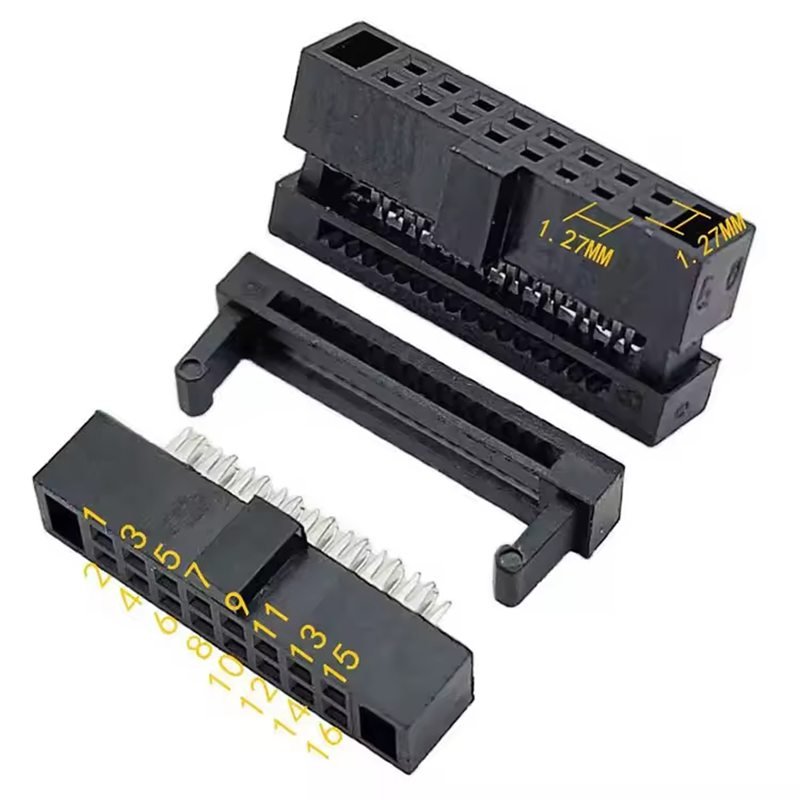
A typical 16 pin ribbon cable consists of:
- Copper conductors (solid or stranded)
- Insulation layers bonding conductors together
- Optional stripe or edge marking for pin 1 identification
- One or two terminated connectors
The flat geometry minimizes height and simplifies parallel signal routing, making it ideal for board-to-board or board-to-device connections.
Is a 16 Pin Ribbon Cable the Same as an IDC Cable?
Not always. IDC (Insulation Displacement Connector) refers to a termination method, not the cable itself. Many 16 pin ribbon cables use IDC connectors, but ribbon cables can also be terminated with crimp housings, custom connectors, or mixed-end configurations.
Which Applications Use 16 Pin Ribbon Cables?
16 pin ribbon cables are widely used in control systems, instrumentation, industrial equipment, medical devices, and embedded electronics where compact, organized signal transmission is required.
Where Are 16 Pin Ribbon Cables Used in Control and Signal Systems?
In control systems, 16 pin ribbon cables are often used to connect:
- Control boards to interface panels
- Sensor modules to processing units
- I/O expansion boards to main controllers
Their flat layout simplifies cable management and reduces assembly errors during installation.
Which Industries Commonly Use 16 Pin Ribbon Cables?
| Industry | Typical Use Case |
|---|---|
| Industrial Automation | PLC I/O connections |
| Medical Devices | Internal signal harnesses |
| Test & Measurement | Instrument interconnects |
| Consumer Electronics | Display or control interfaces |
| OEM Equipment | Modular sub-assemblies |
Are 16 Pin Ribbon Cables Used in Industrial or Medical Equipment?
Yes—but requirements vary significantly. Medical and industrial applications often demand stricter material compliance, flame resistance, flexibility, and long-term reliability. In these cases, “standard” ribbon cables are rarely sufficient without customization.
What Are the Key Specifications of a 16 Pin Ribbon Cable?
When specifying a 16 pin ribbon cable, pin count alone is never sufficient. In real projects, performance, compatibility, and long-term reliability are determined by a combination of mechanical, electrical, and material parameters. Overlooking any one of these factors can result in assembly issues, signal instability, or compliance failures later in the project. Understanding the key specifications allows engineers and buyers to move from a “looks correct” cable to a functionally correct cable.
1. Pitch and Conductor Arrangement
Pitch defines the center-to-center spacing between adjacent conductors and must match the mating connector exactly.
- Common pitches for 16 pin ribbon cables include:
- 2.54 mm (0.1 inch) – the most widely used standard
- 1.27 mm (0.05 inch) – used where higher density is required
- All conductors are arranged in a single flat plane, maintaining parallel geometry for consistent routing.
Why it matters:
A pitch mismatch—even if visually small—will prevent proper termination or cause unreliable contact over time.
| Parameter | Typical Options |
|---|---|
| Number of Conductors | 16 |
| Pitch | 2.54 mm, 1.27 mm |
| Conductor Layout | Parallel, flat |
2. Conductor Size and Type
The conductor defines both electrical performance and mechanical durability.
- Common conductor sizes:
- 28 AWG – standard for signal and control applications
- 26 AWG – higher current capacity and improved robustness
- Conductor types:
- Solid copper – stable routing, suited for static installations
- Stranded copper – improved flexibility for repeated movement
Why it matters:
Using an undersized conductor can cause voltage drop or heating, while the wrong conductor type can lead to fatigue failure in dynamic applications.
| Specification | Typical Choices |
|---|---|
| Conductor Size | 28 AWG, 26 AWG |
| Conductor Material | Copper |
| Conductor Type | Solid or stranded |
3. Insulation and Jacket Materials
Insulation material affects flexibility, flame resistance, chemical durability, and regulatory compliance.
- PVC – cost-effective, general-purpose use
- LSZH – low smoke, halogen-free, required in many regulated environments
- TPU or special polymers – enhanced flexibility, abrasion resistance
Why it matters:
Material choice often determines whether a cable passes safety audits or fails compliance checks in industrial or medical environments.
| Material | Key Characteristics |
|---|---|
| PVC | Economical, widely used |
| LSZH | Low smoke, halogen-free |
| TPU | Flexible, durable |
4. Electrical Ratings and Signal Integrity
Although 16 pin ribbon cables are typically used for low-voltage signals, electrical limits must still be verified.
Key parameters include:
- Rated voltage per conductor
- Maximum current per conductor
- Crosstalk potential between adjacent lines
- Sensitivity to EMI
Why it matters:
As signal speed increases or noise margins shrink, ribbon cable geometry can influence signal integrity more than expected.
5. Temperature Range and Mechanical Flexibility
Operating temperature and movement conditions define long-term reliability.
- Typical operating ranges depend on insulation material
- Flexing or vibration environments require stranded conductors and flexible jackets
- Static installations allow simpler constructions
Why it matters:
Many field failures occur not at startup, but after months of thermal cycling or mechanical stress.
6. Connector Compatibility and Pinout Definition
A 16 pin ribbon cable must be specified together with its termination method.
- Common termination options:
- IDC connectors
- Crimp housings
- Mixed-end configurations
- Pinout options:
- Straight-through
- Crossed
- Application-defined mapping
Why it matters:
Incorrect pinout is one of the most common—and costly—errors in ribbon cable assemblies. Clear drawings and confirmation before production are essential.
Key Specification Overview
| Specification Category | Why It Matters |
|---|---|
| Pitch | Determines connector compatibility |
| Conductor Size | Affects current and durability |
| Insulation Material | Impacts compliance and safety |
| Electrical Rating | Ensures stable signal transmission |
| Flexibility | Prevents fatigue failure |
| Pinout | Ensures functional correctness |
Understanding these specifications allows customers to communicate requirements clearly and avoid assumptions that lead to rework or delays. In practice, most successful projects define these parameters early and confirm them through drawings before production begins—especially when the ribbon cable is part of a larger system or regulated application.
How Do You Choose the Right 16 Pin Ribbon Cable?
Choosing the right 16 pin ribbon cable requires matching cable structure, materials, pinout, and connectors to the actual application environment, electrical needs, and maintenance expectations.

How Does Application Environment Affect Selection?
Controlled indoor environments allow for simpler designs, while industrial or medical environments often require enhanced insulation, strain relief, and durability.
How Do Pinout and Connection Method Influence Design?
Pinout definition determines how signals are mapped from one end to the other. Errors here are among the most common causes of field failures. Clear drawings and confirmation before production are essential.
How Do Length, Flexibility, and EMI Considerations Matter?
Longer cables increase signal loss and noise susceptibility. Flexing applications require stranded conductors and appropriate insulation materials to avoid fatigue failure.
Can 16 Pin Ribbon Cables Be Customized?
Yes. Nearly every aspect of a 16 pin ribbon cable can be customized to meet specific mechanical, electrical, and compliance requirements.
What Parts of a 16 Pin Ribbon Cable Can Be Customized?
| Custom Item | Options |
|---|---|
| Length | Fully custom |
| Pinout | Straight, crossed, defined |
| Connector Type | Original or compatible |
| Materials | PVC, LSZH, TPU |
| Compliance | UL, RoHS, REACH, PFAS |
How Are Drawings, Samples, and Specifications Confirmed?
Professional manufacturers convert customer input—drawings, photos, or descriptions—into verified CAD drawings before production. This step prevents costly misunderstandings.
Are Original or Compatible Connectors Available?
Both options are commonly used. Original connectors may offer brand assurance, while compatible connectors provide flexibility, shorter lead times, and cost advantages.
What Should You Prepare Before Requesting a Quote for a 16 Pin Ribbon Cable?
Providing clear application details, pinout requirements, connector preferences, and compliance needs helps suppliers deliver accurate quotations quickly.
What Information Helps Get an Accurate Quotation?
- Application description
- Operating environment
- Required certifications
- Estimated quantities
Do You Need a Drawing or Is a Reference Image Enough?
A drawing is ideal, but experienced manufacturers can work from reference images and clarify missing details during the engineering phase.
How Do Lead Time, MOQ, and Compliance Affect Pricing?
Custom ribbon cables are typically built to order. Lead time, certification testing, and material choice all influence cost more than pin count alone.

Ready to Customize Your 16 Pin Ribbon Cable?
A 16 pin ribbon cable may look simple, but the details behind it determine whether your system works reliably—or becomes a source of repeated issues. The most successful projects start with clear communication, verified drawings, and a manufacturer that understands both engineering requirements and real-world production constraints.
If you have a drawing, a part number, or even just a photo of the cable you need, Sino-Conn can help translate that information into a manufacturable, compliant, and cost-effective solution. From rapid samples to volume production, our team works closely with engineers and procurement teams to deliver ribbon cable assemblies that match your application—exactly.
Start your 16 pin ribbon cable inquiry with Sino-Conn today and get clarity before production begins.
Related Keywords :16 pin ribbon cable,ribbon cable assembly,IDC ribbon cable,custom ribbon cable,flat ribbon cable,control signal cable,industrial ribbon cable,medical ribbon cable,OEM cable assembly,pinout ribbon cable

With over 18 years of OEM/ODM cable assemblies industry experience, I would be happy to share with you the valuable knowledge related to cable assemblies products from the perspective of a leading supplier in China.
manufacturer catalogue
Get A Sample Now From Factory→
Get a quote quickly
Here, developing your OEM/ODM custom cable assemblies collection is no longer a challenge—it’s an excellent opportunity to bring your creative vision to life.