Skip to content
When engineers design automated production lines or connect intelligent factory systems, one invisible component carries the lifeblood of every data transaction — the Ethernet cable. It’s the unsung hero connecting sensors, controllers, and cloud gateways across the modern industrial world. Whether you’re setting up a smart factory or a data center, the reliability of your Ethernet cable directly affects communication stability, network speed, and system uptime.
An Ethernet cable is a twisted-pair data cable that transmits information between network devices such as computers, routers, and controllers. It supports high-speed, stable, and interference-resistant data transfer across categories (Cat5e, Cat6, Cat7, Cat8) and can be customized by manufacturers like Sino-conn for length, shielding, material, and connector type to meet industrial and OEM requirements.
At Sino-conn, we’ve seen how one overlooked cable specification can impact entire projects. In one case, a European automation client faced EMI issues from unshielded lines — replacing them with Sino-conn’s double-shielded Cat6a cables solved it overnight. That’s why understanding Ethernet cable fundamentals isn’t just theory — it’s engineering risk control. Let’s dive deeper.
What Is an Ethernet Cable and How Does It Work?
An Ethernet cable transmits electrical signals between network devices through twisted copper pairs that minimize interference. Plugged into RJ45 or M12 connectors, it ensures fast and reliable data exchange across local area networks (LANs). At Sino-conn, engineers can customize impedance, shielding, and materials to enhance transmission quality for any industrial or OEM application.
What Does an Ethernet Cable Do?
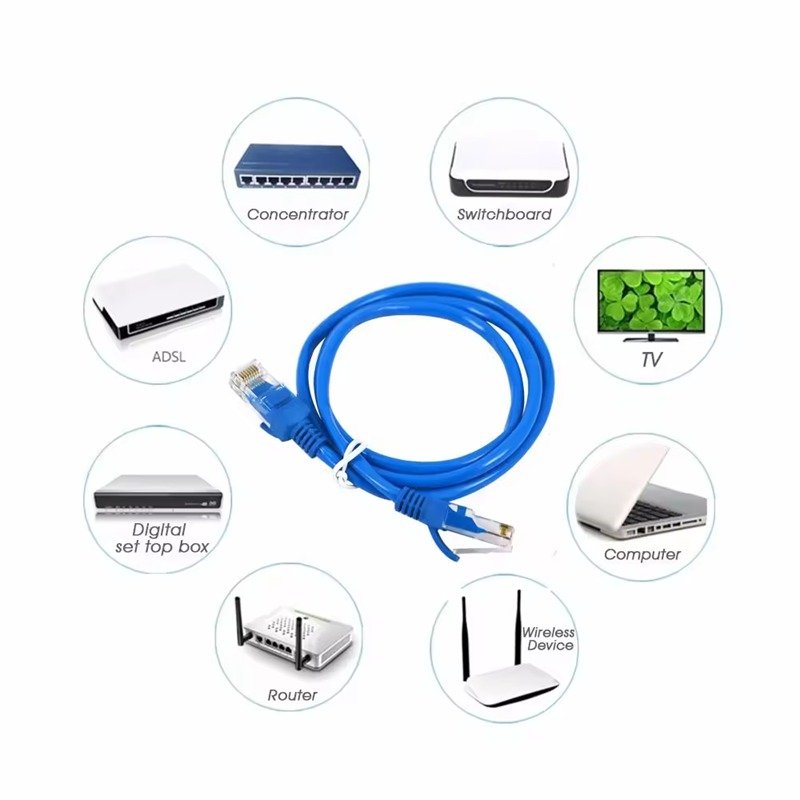
An Ethernet cable’s primary function is to connect network devices for wired communication — whether between computers and routers in offices or PLCs and HMIs in factories. Compared to wireless, it delivers stable, low-latency, and secure data transfer. Sino-conn’s customized versions also handle environmental stress like oil, vibration, or temperature fluctuations.
How Does an Ethernet Cable Work?
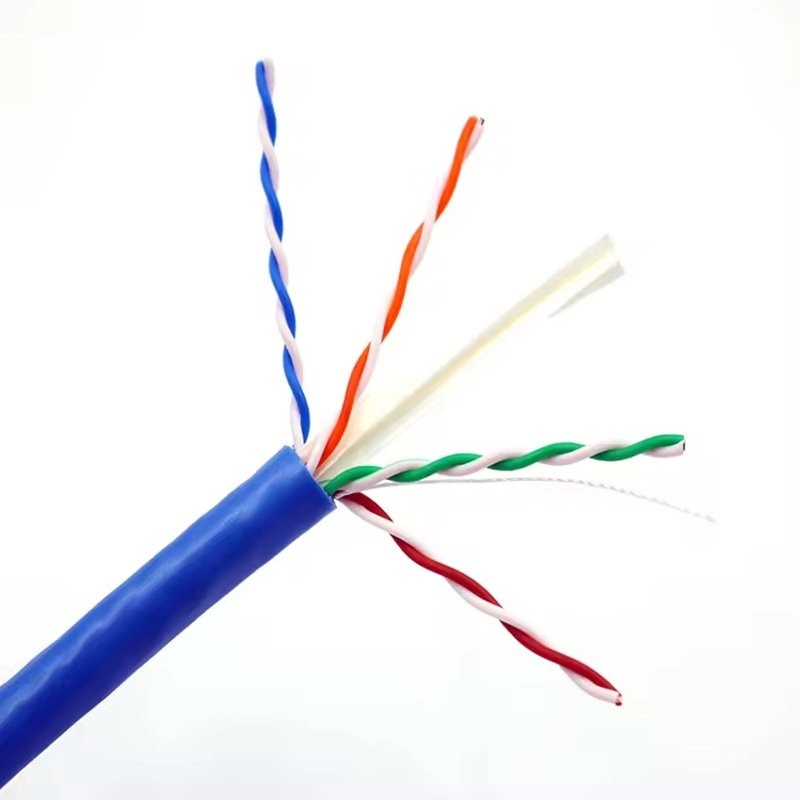
Inside an Ethernet cable, eight copper conductors form four twisted pairs that carry electrical pulses. Each twist helps cancel electromagnetic interference (EMI), ensuring accurate signal transmission even in noisy industrial environments. Differential signaling allows one wire to carry a signal while the other carries its inverse, further improving noise rejection — a principle Sino-conn engineers leverage when designing high-performance cables.
Where Does the Ethernet Cable Plug Into?
Ethernet cables typically use RJ45 connectors, plugging into PCs, routers, switches, or industrial controllers. In industrial automation, M12 connectors (circular, IP-rated) are common for vibration or moisture resistance. Sino-conn manufactures both RJ45 and M12 assemblies, offering OEMs flexibility for different form factors and environmental conditions.
Ethernet technology remains the gold standard for wired networking because of its balance between speed, cost, and robustness. While fiber optics offer longer distances, copper Ethernet cables dominate industrial and commercial spaces for their durability and affordability.
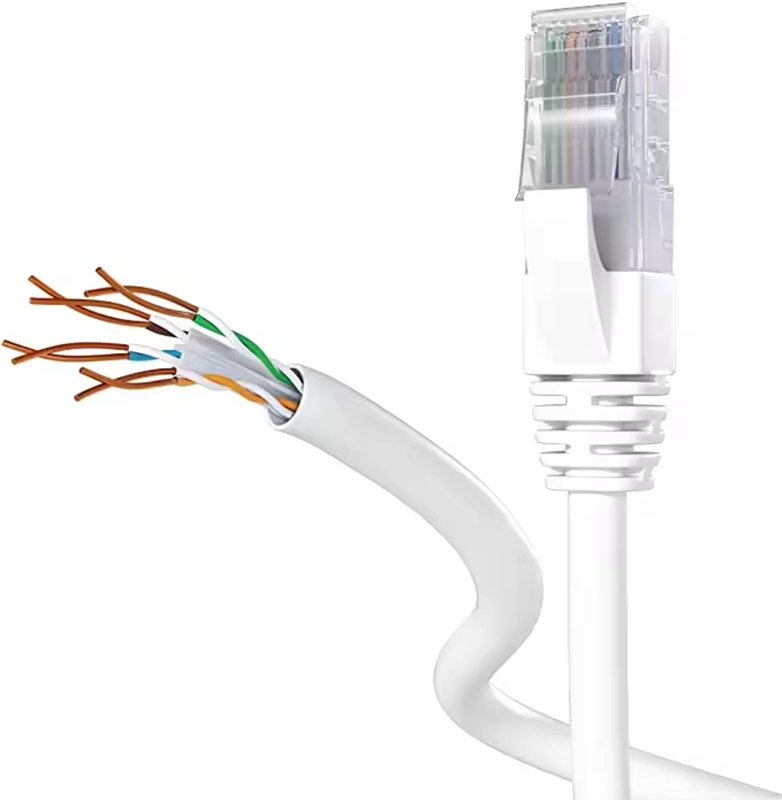
At Sino-conn, we see that signal integrity and EMI shielding are top priorities in OEM projects. Engineers often underestimate how small changes in cable construction — like shielding type (UTP, FTP, STP) or conductor material — influence performance. For example:
| Parameter | Typical Value | Impact on Performance |
|---|---|---|
| Impedance | 100 ± 15 ohms | Matching prevents reflection |
| Shielding | UTP / STP / FTP | Reduces EMI in industrial use |
| Max Length | 100 meters | Standard Ethernet limit |
| Temperature Range | -20°C to 80°C | Defines application scope |
Sino-conn designs each Ethernet assembly with precise impedance matching and offers custom jackets (PVC, LSZH, PUR) depending on flame resistance, oil resistance, or outdoor UV exposure. In one automotive assembly line, replacing generic PVC cables with Sino-conn PUR Ethernet cables reduced downtime caused by mechanical stress by 35%.
Ultimately, the right Ethernet cable ensures consistent data flow, protecting your automation system from hidden failures.
What Are the Different Types of Ethernet Cables?
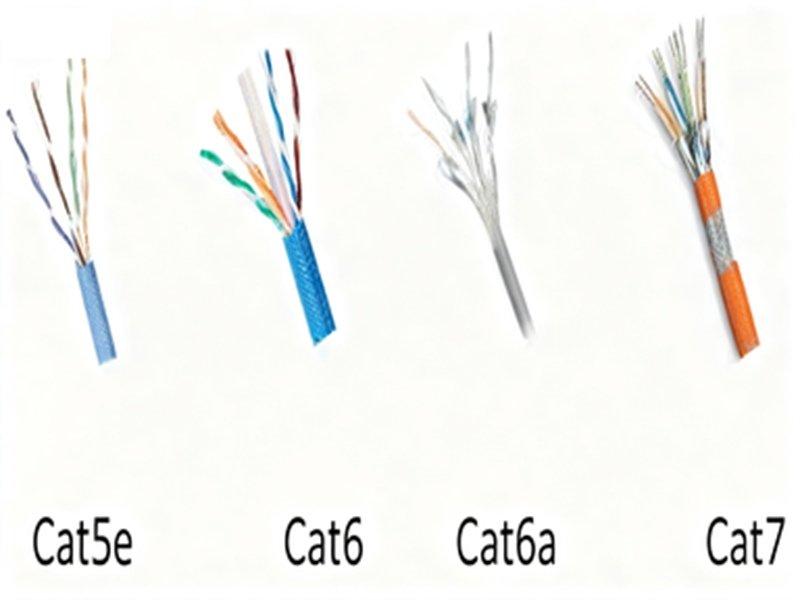
Ethernet cables are classified by performance categories — Cat5e, Cat6, Cat6a, Cat7, and Cat8 — based on bandwidth, frequency, and shielding. Sino-conn manufactures all categories, offering tailored designs for industrial, commercial, or high-speed applications to meet specific data rate and EMI requirements.
Cat5e and Cat6: Common Commercial Standards
Cat5e supports up to 1 Gbps and 100 MHz, ideal for office and light industrial LANs. Cat6 doubles the frequency to 250 MHz, improving performance for gigabit networks. Sino-conn supplies these with customizable lengths, RJ45 connectors, and flexible jackets suitable for equipment integration.
Cat6a, Cat7, and Cat8: For Industrial and High-Speed Data Centers
- Cat6a: Up to 10 Gbps at 500 MHz, enhanced shielding for EMI protection.
- Cat7: 10 Gbps at 600 MHz, individually shielded pairs for precision environments.
- Cat8: 25–40 Gbps at 2000 MHz, perfect for data centers and industrial automation. Sino-conn’s Cat8 assemblies use premium copper and shield braids, ensuring signal stability even in high-frequency interference zones.
Shielded vs. Unshielded Ethernet Cables: Which Should You Choose?
Unshielded twisted pair (UTP) cables suit offices or homes. Shielded (STP/FTP/SFTP) types protect against EMI — crucial in industrial automation, medical imaging, or defense systems. Sino-conn helps OEMs evaluate EMI sources and select optimal shielding.
The difference between categories isn’t just speed — it’s construction precision. At Sino-conn, cable design engineers evaluate pair geometry, dielectric material, and jacket flexibility to maintain performance under motion or bending.
| Category | Bandwidth | Max Speed | Shielding Option | Typical Use |
|---|---|---|---|---|
| Cat5e | 100 MHz | 1 Gbps | UTP | General LAN |
| Cat6 | 250 MHz | 1–10 Gbps | UTP/STP | Office, factory |
| Cat6a | 500 MHz | 10 Gbps | STP/FTP | Industrial |
| Cat7 | 600 MHz | 10 Gbps | S/FTP | Data center |
| Cat8 | 2000 MHz | 25–40 Gbps | S/FTP | High-frequency use |
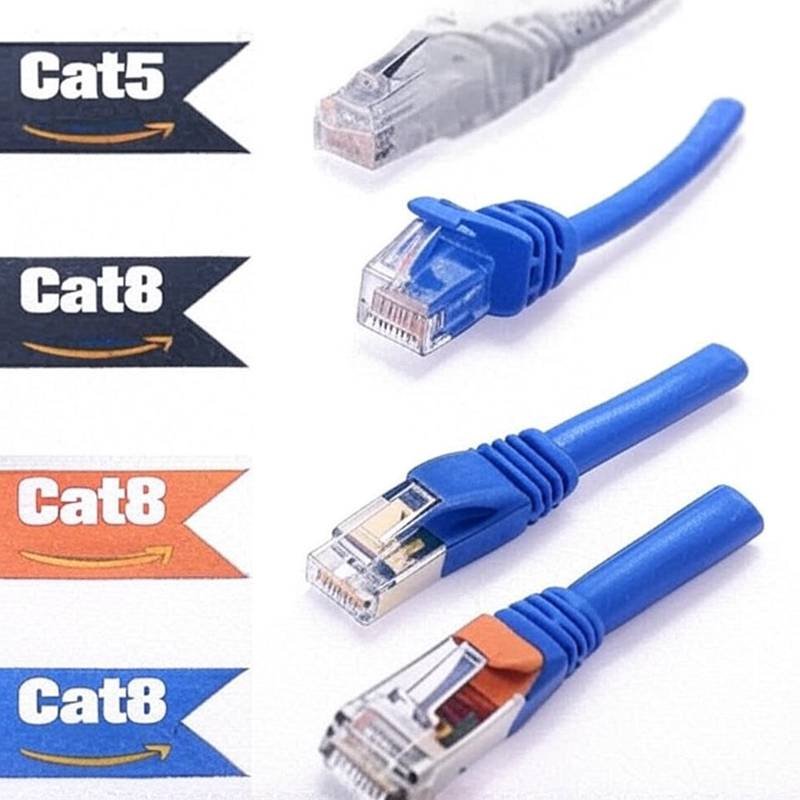
Selecting the right cable depends on distance, environment, and interference. Sino-conn’s technical team can simulate and verify impedance consistency using network analyzers before production. This guarantees that each OEM client receives assemblies performing precisely within specification.
How to Choose the Right Ethernet Cable for Your Application
Selecting the right Ethernet cable involves more than matching connectors or categories. Each application imposes unique electrical, mechanical, and environmental demands that influence performance, reliability, and compliance. Engineers and system designers must evaluate these parameters early in the design phase to ensure long-term signal integrity and installation efficiency.
At Sino-conn, cable selection is approached systematically—starting with bandwidth and transmission distance, then moving through shielding design, material durability, and mechanical fit.
1. Determine Network Performance Requirements
The first step is identifying the required data rate and network standard. Ethernet cables are categorized according to frequency and transmission capability:
| Category | Maximum Frequency | Typical Data Rate | Recommended Application |
|---|---|---|---|
| Cat5e | 100 MHz | Up to 1 Gbps | Office LANs, legacy systems |
| Cat6 | 250 MHz | 1–10 Gbps (≤55 m) | Industrial control, automation |
| Cat6a | 500 MHz | 10 Gbps (≤100 m) | Data centers, high-speed imaging |
| Cat7 / 7a | 600–1000 MHz | 10 Gbps+ | EMI-sensitive or mission-critical networks |
| Cat8 | 2000 MHz | 25–40 Gbps (≤30 m) | Server-to-switch connections |
Choosing a higher category ensures headroom for future bandwidth growth but may increase stiffness or cost. Sino-conn’s engineers often validate compatibility through impedance and NEXT (near-end crosstalk) analysis before finalizing the design.
2. Consider the Installation Environment
Ethernet cable performance can degrade significantly when exposed to temperature extremes, chemicals, or mechanical stress. Understanding the installation environment is key to material and construction selection:
| Environment | Recommended Jacket / Design | Key Characteristics |
|---|---|---|
| Office / Indoor LAN | PVC | Standard flexibility, cost-effective |
| Industrial / Factory | PUR or TPE | Oil-resistant, abrasion-tolerant |
| Outdoor / UV Exposure | PE or UV-stabilized PUR | Weatherproof and temperature resistant |
| Cleanroom / Medical | LSZH | Halogen-free, low smoke emission |
| Dynamic / Robotic | High-flex TPE + stranded cores | High cycle endurance, small bending radius |
At Sino-conn, cable selection integrates mechanical modeling to estimate minimum bending radius, tensile load, and flex life according to the target application.
3. Evaluate Shielding and Noise Immunity
Electromagnetic interference (EMI) can severely affect signal integrity, particularly in electrically noisy environments such as production lines or control panels. The appropriate shielding structure depends on both environmental noise level and signal frequency:
| Shielding Type | Construction | Suitable Conditions |
|---|---|---|
| UTP (Unshielded Twisted Pair) | No overall shield | Low-interference environments |
| FTP (Foil Twisted Pair) | Foil around all pairs | Moderate EMI zones |
| STP (Shielded Twisted Pair) | Braided copper shield | High EMI or industrial use |
| S/FTP | Braided + foil shield per pair | Precision data, critical control |
Engineers should also ensure proper grounding and connector continuity; a poorly terminated shield can introduce more noise than it eliminates. Sino-conn verifies shielding effectiveness using EMI testing under simulated interference conditions.
4. Match Connector Type to System Interface
Connectors define both signal compatibility and environmental sealing. While RJ45 is standard in office and IT systems, industrial automation often uses rugged or sealed connectors for reliability.
| Connector Type | Standard | Application |
|---|---|---|
| RJ45 | Common for Cat5e–Cat6a | LAN, office, rack systems |
| M12 D-coded | 100 Mbps / IP67 | Industrial Ethernet, sensors |
| M12 X-coded | 10 Gbps / IP67 | High-speed industrial communication |
| Field-Installable Plug | Tool-free or re-terminable | On-site installation or maintenance |
Sino-conn supports both standard and custom overmolded connectors, allowing mechanical adaptation for space constraints, panel cutouts, or routing direction (e.g., 90° angled RJ45 for confined enclosures).
5. Verify Mechanical and Electrical Compatibility
Performance depends not only on category rating but also on geometry control and impedance stability. Parameters to verify include:
- Characteristic Impedance: Typically 100 ±15 Ω for twisted-pair Ethernet
- Propagation Delay & Skew: Must meet IEEE 802.3 standards for synchronization
- Bend Radius: Typically ≥8×OD for static; ≥10×OD for dynamic use
- Pull Strength & Strain Relief: Ensures mechanical stability under cable movement
Sino-conn engineers perform continuity, impedance, and flex-life testing during sample qualification to ensure cables maintain signal integrity under operational stresses.
6. Compliance, Safety, and Certification Requirements
For OEM and industrial use, compliance is non-negotiable. When selecting or designing Ethernet cables, consider:
- UL / CSA certification for safety
- RoHS / REACH compliance for material safety
- ISO/IEC 11801 and TIA-568 standards for performance
- IP67/IP68 ratings for waterproof connectors (if applicable)
Sino-conn’s production lines and materials comply with these global standards, ensuring reliable documentation and traceability for system-level certification.
7. Plan for Scalability and Maintenance
Ethernet networks evolve — bandwidth, topology, and device interfaces can change over time. It’s good engineering practice to:
- Leave 10–20% headroom in data rate capacity
- Choose cables with future-proof categories (Cat6a or higher)
- Use modular connectors or patch panels to simplify upgrades
- Maintain documentation of cable types, lengths, and routes
Sino-conn supports OEMs with long-term part numbering and consistent production control, ensuring repeatability and scalability across product generations.
Choosing the right Ethernet cable is a system-level engineering decision involving bandwidth, environmental conditions, mechanical constraints, and compliance requirements.
By understanding how each variable affects performance, engineers can specify cables that maintain signal integrity, mechanical reliability, and lifecycle consistency across demanding applications — from automation and medical devices to networking infrastructure.
At Sino-conn, this selection process is supported through engineering consultation, simulation, and prototype validation to help OEMs achieve optimal connectivity performance within their specific design parameters.
Do Ethernet Cables Support Customization?
Yes — Ethernet cables can be highly customized to match specific application, environmental, and performance requirements. In industrial or OEM settings, off-the-shelf Ethernet cables often fail to meet exact needs for impedance, mechanical flexibility, or connector layout. That’s where customization becomes essential. At Sino-conn, engineers approach Ethernet cable design as a system-level optimization process — balancing electrical characteristics, materials, and assembly methods to ensure compatibility and long-term stability.

Customization Parameters and Design Flexibility
Ethernet cable customization typically covers four primary areas: electrical performance, mechanical properties, environmental resistance, and connector configuration.
Sino-conn’s engineering team collaborates with clients from the concept stage to define:
| Customization Aspect | Typical Options | Engineering Purpose |
|---|---|---|
| Length & Impedance Control | 0.1 m to 100 m; 100 ±15 Ω | Signal integrity, reflection prevention |
| Conductor Type | Solid / Stranded Copper | Fixed vs. flexible installations |
| Shielding Structure | UTP, FTP, STP, S/FTP | EMI protection and crosstalk control |
| Jacket Material | PVC, LSZH, PUR, TPE | Flame, oil, and UV resistance |
| Connector Interface | RJ45, M12, IP67-rated | Equipment and environment adaptation |
| Overmolding & Labeling | Custom colors, logos, part codes | Identification and strain relief |
Every design begins with a performance specification — such as signal frequency, environment, or bending radius — followed by simulation and sample validation. For instance, in automated machinery, cables may require a bending radius below 10×OD or more than 5 million flex cycles. Sino-conn’s engineers apply material selection and shielding design to meet those parameters.
Design Workflow and Technical Validation
The customization process at Sino-conn emphasizes data-driven design validation. Engineers generate a 2D or 3D drawing (usually within 3 days, or within 30 minutes for standard assemblies), allowing the client to confirm pin-out and geometry before prototyping.
Each sample undergoes:
- Electrical continuity and impedance verification using network analyzers
- Shielding effectiveness testing under simulated EMI conditions
- Tensile and flex life tests for mechanical durability
- Thermal aging and environmental stress testing if specified
Only after client approval does production begin, ensuring all dimensions and performance values remain within tolerance. This workflow reduces rework and enhances traceability — key to OEM-grade reliability.

Material Selection and Application Considerations
Selecting the right materials is fundamental to Ethernet cable performance. Sino-conn engineers evaluate environmental stressors such as temperature variation, oil exposure, and UV radiation, then recommend jacket compounds accordingly:
- PVC for general-purpose use (indoor LAN, office environments)
- LSZH for public or enclosed spaces requiring flame retardancy
- PUR or TPE for robotic and outdoor applications with high abrasion resistance
In medical or cleanroom environments, halogen-free and low-smoke compounds are prioritized to ensure safety and compliance with international standards like ROHS, REACH, and PFAS directives.
Shielding structure is another key customization layer. For instance, an STP or S/FTP cable provides superior noise immunity in areas with motors or high-frequency drives, while UTP remains adequate for low-interference environments. Sino-conn adjusts pair twist rates and shielding thickness to fine-tune performance for each project.

Connector and Assembly Adaptation
Ethernet connectors can vary widely depending on application. Beyond standard RJ45, industrial systems often require M12 (D-coded or X-coded) connectors for vibration resistance or waterproof IP67 sealing.
Sino-conn supports both genuine branded connectors and compatible alternatives, selected based on customer specification, cost target, and availability.
For each assembly, overmolding geometry, strain relief, and color coding are adapted to match the host equipment’s installation layout. For example, right-angle overmolds are preferred in space-limited enclosures, while extended boots help relieve stress in robotic arms.
Quality Control and Certification Compliance
Every customized Ethernet cable from Sino-conn follows a multi-stage inspection process — covering incoming materials, in-process assembly, and final electrical verification. Testing includes:
- 100% continuity and insulation resistance check
- Hi-pot (high voltage) testing for dielectric integrity
- Frequency sweep analysis to verify impedance stability
Sino-conn’s manufacturing facilities are certified under UL, ISO, ROHS, and REACH, ensuring both material compliance and process traceability. Each cable assembly is serialized for identification and repeatability in future orders.
Collaborative Engineering Support
Customization isn’t limited to the product — it extends to communication and documentation. Sino-conn’s engineering team supports clients through:
- Direct technical discussions via video or chat
- Documentation sharing (datasheets, test reports, certificates)
- Iterative prototyping for design verification
This collaborative model helps OEMs and system integrators shorten development cycles and ensure electrical compatibility between components. Many clients, especially in automation and medical sectors, rely on Sino-conn’s rapid design feedback to finalize their product integration.
In summary, Ethernet cable customization bridges the gap between generic connectivity and system-level performance.
Through precise impedance control, robust material engineering, and transparent technical validation, Sino-conn enables OEMs to achieve optimized, reliable Ethernet solutions — built for the specific challenges of their environments and equipment designs.
What Are the Advantages of Working with Sino-conn?
Partnering with Sino-conn offers rapid prototyping, flexible pricing, no MOQ, and professional engineering support. OEMs gain consistent quality, short lead times, and tailored cable solutions designed for their specific industry requirements.
Rapid Prototyping and Flexible Production
Sino-conn provides samples within 2–3 days and full production within 2–4 weeks. There’s no MOQ, enabling engineers to validate designs before scaling. OEMs value the responsiveness and ability to adjust specifications instantly.
Pricing and Connector Options
Sino-conn’s pricing is flexible — from premium genuine connectors to cost-effective equivalents. This lets OEMs meet both performance and budget targets. Global clients from the U.S., Japan, and Europe appreciate the transparent cost structures.
Technical and Communication Support
Technical expertise defines Sino-conn’s value. Engineers communicate directly via video calls to refine designs. Every project includes CAD drawings for approval, ensuring no mismatch between concept and final product.
Beyond cables, Sino-conn builds long-term engineering partnerships. Many clients start with small prototype batches and evolve into multi-year supply contracts. The combination of fast iteration, documentation accuracy, and price competitiveness makes Sino-conn a preferred OEM partner worldwide.
Even trade distributors rely on Sino-conn’s technical knowledge to bridge gaps between end-user demand and manufacturing feasibility. Engineers appreciate Sino-conn’s transparency — every connector type, material, and shielding layer is explained before production.
Sino-conn’s quality control employs high-frequency signal testers, tensile machines, and environmental chambers. This guarantees reliability for mission-critical systems like medical diagnostics or industrial automation networks.
How Is the Future of Ethernet Cable Evolving?
Ethernet cables are evolving toward higher bandwidths (Cat8+), industrial-grade materials, and eco-friendly insulation. Sino-conn invests in next-generation Ethernet technologies supporting Industry 4.0, IoT, and sustainable manufacturing.
Cat8 and Cat9: The Next Generation of Ethernet
Future Ethernet standards aim for 25–40+ Gbps with improved shielding and shorter latency. Sino-conn’s R&D team is testing Cat8.2 designs optimized for high-frequency data centers and 5G backhaul infrastructure.
Industrial Ethernet and IoT Applications
Ethernet remains essential in Industry 4.0 — connecting PLCs, sensors, and cloud systems. Sino-conn supports these transitions by developing rugged, vibration-proof, and oil-resistant assemblies.
Material Innovation and Sustainability Trends
As global regulations tighten, Sino-conn is adopting halogen-free, recyclable materials. Engineers are experimenting with bio-based insulation and low-smoke compounds that balance performance with environmental responsibility.
The Ethernet ecosystem continues expanding. With AI-driven manufacturing, real-time control demands ultra-low latency and interference-resistant cables. Sino-conn’s future-ready assemblies integrate double shielding and tighter impedance control to meet these new thresholds.
Moreover, with sustainability becoming a procurement criterion, Sino-conn is leading green-cable design initiatives aligned with ROHS, REACH, and PFAS directives.
In short, the Ethernet cable’s evolution is not just about faster data — it’s about smarter, cleaner, and more resilient infrastructure, and Sino-conn is at the forefront.
Conclusion:
In today’s world of data-driven manufacturing and connected systems, Ethernet cables are no longer simple wires — they’re engineered components. With Sino-conn’s expertise in customization, testing, and global compliance, OEMs gain a partner that understands both technical precision and business urgency.
Whether you need a single prototype or mass production, Sino-conn delivers rapid drawings, flexible pricing, certified materials, and zero-MOQ solutions.
Ready to design your custom Ethernet cable assembly?
Contact Sino-conn today for a free consultation, drawings, and tailored quotation within hours.