Skip to content
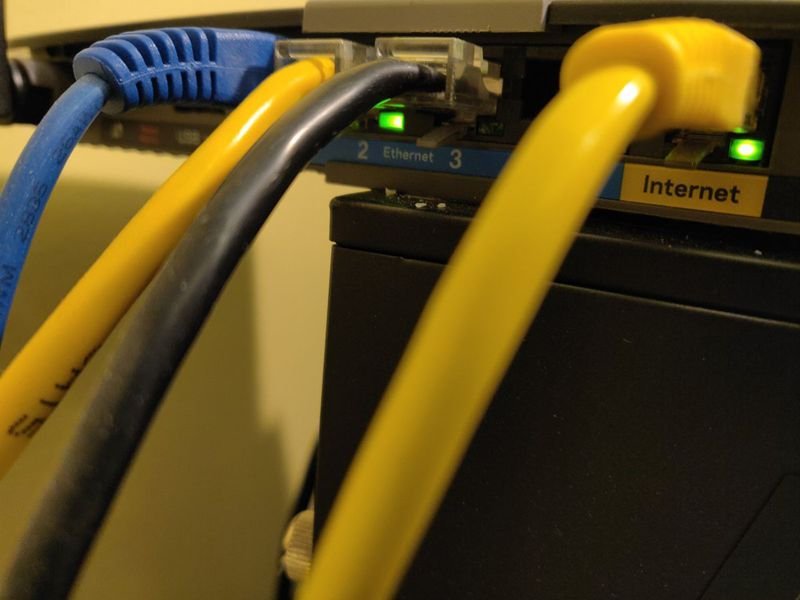
Many people upgrade routers, switches, servers, cameras, or internet plans first, but forget one simple part sitting between all of them: the Ethernet cable. A cable looks inexpensive compared with network equipment, yet it can decide whether a system runs at full speed or keeps dropping packets, slowing transfers, or failing tests.
The fastest Ethernet cable for copper network connections is Cat8 Ethernet cable. Cat8 supports up to 25Gbps or 40Gbps transmission, with bandwidth up to 2000MHz and a standard channel distance of up to 30 meters. It is mainly used in data centers, server racks, high-speed switches, AI computing systems, and other short-distance high-performance networks.
But the real question is not only “Which cable is fastest?” The better question is: “Which Ethernet cable is fast enough for my equipment, installation distance, environment, and budget?” A home user, a gaming setup, an office, a factory automation line, and a server room do not need the same cable. Choosing only by category name can lead to overspending, poor flexibility, difficult installation, or unstable performance.
At Sino-Conn, many Ethernet cable assembly projects start from very practical questions. A customer may send only a picture and ask, “Can you make the same one?” Another customer may provide a detailed drawing with pinout, length, jacket material, shielding requirement, connector brand, and test standard. Both types of customers care about the same result: the cable must fit, transmit reliably, pass inspection, and arrive on time.
One customer once upgraded a machine vision system and expected the new cameras to run smoothly at higher data rates. The cameras and switch were correct, but the cable length, shielding, and connector strain relief were not suitable for the moving equipment. After changing to a better cable structure with proper shielding and a stronger overmold design, the signal became stable. That is why the fastest Ethernet cable is not just a category label. It is a complete cable assembly decision.
What Is the Fastest Ethernet Cable?
The fastest Ethernet cable available today for copper-based networking is Cat8 Ethernet cable. It supports transmission speeds of up to 40Gbps and a bandwidth of up to 2000MHz over distances of up to 30 meters. Compared with Cat5e, Cat6, Cat6A, and Cat7, Cat8 offers the highest performance for applications that require large amounts of data to be transferred quickly and reliably.
However, when customers ask about the fastest Ethernet cable, they are usually trying to solve a practical problem rather than simply looking for the highest specification. They may be upgrading a server room, building a machine vision system, deploying AI computing hardware, installing industrial automation equipment, or designing a new product that requires high-speed Ethernet communication.
The real question is often:
- Which Ethernet cable supports my required speed?
- Will the cable work reliably in my environment?
- How far can the signal travel?
- Is Cat8 necessary or is Cat6A enough?
- How much performance improvement will I actually gain?
These are the questions that matter when selecting an Ethernet cable.
Is Cat8 the Fastest Ethernet Cable?
From a standardized copper Ethernet perspective, Cat8 is currently the highest-performing Ethernet cable category available.
The development of Ethernet cable categories has followed the increasing demand for network speed over the last two decades.
| Category | Bandwidth | Maximum Speed | Maximum Distance |
|---|---|---|---|
| Cat5e | 100MHz | 1Gbps | 100m |
| Cat6 | 250MHz | 10Gbps (55m) | 100m |
| Cat6A | 500MHz | 10Gbps | 100m |
| Cat7 | 600MHz | 10Gbps | 100m |
| Cat8 | 2000MHz | 25Gbps / 40Gbps | 30m |
Looking only at the numbers, Cat8 appears to be the obvious choice.
In reality, cable selection is rarely that simple.
For example, if an office network consists of:
- 1Gbps switches
- 1Gbps routers
- Standard workstations
- Cloud-based applications
installing Cat8 cables will not suddenly make the network 40 times faster.
The network can only operate at the speed supported by the slowest component in the communication chain.
Many customers are surprised when they learn that upgrading from Cat5e to Cat8 does not improve performance because the switches and network adapters remain limited to 1Gbps.
This is why professional network planning always begins with equipment capabilities rather than cable specifications alone.
How Fast Is Cat8?
To understand Cat8 performance, it helps to look at actual data transfer scenarios.
Theoretical maximum speeds are useful, but customers usually want to know what these numbers mean in real-world applications.
Approximate transfer times for a 100GB file:
| Network Speed | Transfer Time |
|---|---|
| 1Gbps | Around 13-15 minutes |
| 10Gbps | Around 1.5 minutes |
| 25Gbps | Around 35 seconds |
| 40Gbps | Around 20 seconds |
For organizations moving large files every day, these differences are significant.
Industries that regularly transfer large data volumes include:
- AI model training
- Video production
- Medical imaging
- Machine vision inspection
- Cloud storage systems
- Scientific research
- Data analytics
- Financial trading systems
Consider a machine vision production line with ten cameras generating high-resolution images continuously.
Each camera may generate several gigabytes of image data every hour.
If network bandwidth becomes a bottleneck, production efficiency can suffer.
Several years ago, Sino-Conn worked with a customer developing automated optical inspection equipment. The customer initially used lower-category network cables because they were readily available. During testing, image transmission delays occurred whenever multiple cameras transmitted simultaneously.
After reviewing the system architecture, the customer upgraded the network infrastructure and selected higher-performance shielded Ethernet cable assemblies. The communication stability improved noticeably, and the system passed throughput testing.
The lesson was not simply that faster cables are better.
The lesson was that the cable must match the performance requirements of the application.
Why Does Bandwidth Matter?
Many customers focus entirely on Gigabits per second.
Bandwidth is equally important.
Bandwidth determines how much signal information the cable can carry.
Think of bandwidth as the width of a highway.
A wider highway can handle more traffic without congestion.
The same principle applies to Ethernet transmission.
| Cable Category | Bandwidth |
|---|---|
| Cat5e | 100MHz |
| Cat6 | 250MHz |
| Cat6A | 500MHz |
| Cat7 | 600MHz |
| Cat8 | 2000MHz |
The jump from 500MHz in Cat6A to 2000MHz in Cat8 is substantial.
This increased bandwidth helps support:
- Higher transmission frequencies
- Lower signal distortion
- Better performance at high data rates
- Reduced susceptibility to crosstalk
In environments where multiple high-speed connections operate simultaneously, bandwidth becomes increasingly important.
Data centers are a good example.
A single rack may contain:
- Servers
- Storage systems
- Switches
- AI processors
- Backup equipment
All generating network traffic at the same time.
Cat8 was specifically developed for these high-density environments.
Why Are Most Customers Still Choosing Cat6A?
One of the biggest misconceptions in networking is that the fastest Ethernet cable is automatically the best Ethernet cable.
If that were true, Cat8 would dominate every project.
Instead, Cat6A remains one of the most widely specified Ethernet cable categories for commercial installations.
There are several reasons.
First, Cat6A supports 10Gbps at the full 100-meter channel length.
Second, Cat6A is generally easier to install because the cable is often smaller and more flexible than Cat8.
Third, most business networks still operate comfortably within 10Gbps requirements.
Typical Cat6A applications include:
- Office buildings
- Hospitals
- Schools
- Warehouses
- Retail facilities
- Security systems
- Industrial control systems
For these projects, Cat6A provides an excellent balance of:
- Performance
- Cost
- Distance capability
- Installation convenience
At Sino-Conn, a large percentage of custom Ethernet cable assembly projects continue to use Cat6A because customers prioritize reliability and long-term infrastructure planning rather than chasing maximum theoretical speed.
What Factors Matter More Than Speed?
Customers often spend significant time comparing Cat6A, Cat7, and Cat8 while overlooking factors that can have a greater impact on real-world performance.
Some of the most important considerations include:
Shielding Structure
Poor shielding can introduce signal problems even when using a high-performance cable.
Common interference sources include:
- Servo motors
- Variable frequency drives
- Power transformers
- Welding equipment
- Industrial machinery
In these environments, a properly shielded Cat6A cable may outperform a poorly shielded Cat8 cable.
Connector Quality
Many network failures originate at the connector rather than inside the cable itself.
Important factors include:
- Contact quality
- Gold plating thickness
- Shield termination
- Mechanical retention
- Strain relief design
For OEM equipment manufacturers, connector reliability often becomes a critical design consideration.
Cable Flexibility
High-speed performance means little if the cable cannot survive the installation environment.
Applications involving:
- Robotic systems
- Moving machinery
- Automated guided vehicles
- Medical carts
often require high-flex Ethernet cable designs.
In these cases, jacket material selection becomes extremely important.
Options may include:
- PVC
- TPU
- PUR
- TPE
- LSZH
Each material offers different advantages depending on the environment.
Manufacturing Consistency
Two cables may share the same category rating yet perform differently due to manufacturing quality.
Professional customers frequently request:
- Drawings
- Material specifications
- Test reports
- Compliance certificates
because consistency matters as much as specification.
Sino-Conn supports customers by providing:
- Custom drawings before production
- Cable specifications
- Connector specifications
- RoHS compliance
- REACH compliance
- UL-supported solutions
- Full inspection processes
This helps ensure that the cable delivered matches the cable approved during the design phase.
Where Is the Fastest Ethernet Cable Worth the Investment?
Cat8 delivers the greatest value when high-speed communication directly affects productivity, efficiency, or revenue.
Typical applications include:
| Application | Recommended Category |
|---|---|
| AI Servers | Cat8 |
| Data Centers | Cat8 |
| High-Speed Storage Systems | Cat8 |
| Machine Vision Systems | Cat6A / Cat8 |
| Medical Imaging Equipment | Cat6A / Cat8 |
| Industrial Automation | Shielded Cat6A |
| Office Networks | Cat6A |
| Home Networks | Cat6 / Cat6A |
For many customers, the fastest Ethernet cable is not the cable with the highest specification.
It is the cable that delivers the required performance reliably for years without creating installation, maintenance, or cost problems.
That is why experienced engineers evaluate the entire system before selecting a cable category.
The cable, connectors, shielding, installation environment, transmission distance, flexibility requirements, and future upgrade plans must all work together.
When those factors are properly balanced, the result is a network infrastructure that remains stable, scalable, and cost-effective long after the installation is complete.
Which Fastest Ethernet Cable Should You Choose?
Choosing the fastest Ethernet cable is not simply a matter of buying the highest category available. In fact, this is one of the most common mistakes made during network upgrades. Many companies spend significantly more on Cat8 infrastructure only to discover that their switches, routers, servers, or end devices cannot fully utilize its capabilities.
The right Ethernet cable should be selected based on five key factors:
- Network speed requirements
- Installation distance
- Operating environment
- Future upgrade plans
- Total project budget
A cable that perfectly matches these requirements will often provide better long-term value than simply choosing the cable with the highest specification.
At Sino-Conn, customers range from home automation developers and machine vision engineers to industrial equipment manufacturers and data center operators. While they often ask the same question—”What is the fastest Ethernet cable?”—the final recommendation is frequently different because their applications are different.
Before selecting a cable category, it is useful to understand where each option provides the greatest value.
Fastest Ethernet Cable for Home
For residential installations, the fastest Ethernet cable is rarely the most practical Ethernet cable.
Most home internet services currently range between:
| Internet Plan | Common Speed |
|---|---|
| Entry-Level Fiber | 300Mbps-500Mbps |
| Standard Fiber | 1Gbps |
| Premium Fiber | 2Gbps-5Gbps |
| High-End Fiber | 10Gbps |
Even when a homeowner purchases a 1Gbps internet plan, the actual usage pattern usually includes:
- Video streaming
- Web browsing
- Video conferencing
- Smart home devices
- Gaming consoles
- Mobile devices
These activities rarely push a network beyond 1Gbps.
As a result, Cat6 is often sufficient for many homes.
However, if the homeowner is building a new house, the cabling installed today may remain in the walls for 10 to 20 years. In this situation, many network professionals recommend Cat6A because it supports:
- 10Gbps transmission
- Full 100-meter distance
- Better future compatibility
- Improved noise immunity
Home network recommendation:
| Home Application | Recommended Cable |
|---|---|
| Standard Internet | Cat6 |
| Smart Home System | Cat6 |
| Home Office | Cat6A |
| NAS Storage System | Cat6A |
| Media Server | Cat6A |
| Home Lab | Cat6A or Cat8 |
One customer working from home installed a 10Gb NAS storage server for video editing. Initially, he considered Cat8 because he wanted the “fastest cable available.”
After reviewing the project requirements, Cat6A was selected because the cable runs exceeded 40 meters. The final network achieved the full 10Gb performance required without the additional cost associated with Cat8.
This illustrates an important point:
The best Ethernet cable is the one that matches the actual network architecture.
Fastest Ethernet Cable for Gaming
Gaming is one of the most misunderstood Ethernet cable applications.
Many gamers believe upgrading from Cat6 to Cat8 will dramatically reduce latency.
In reality, online gaming performance is influenced primarily by:
- ISP routing
- Server location
- Network congestion
- Router quality
- Packet loss
- Wireless interference
The Ethernet cable itself usually contributes very little latency.
For example:
| Connection Type | Approximate Latency Contribution |
|---|---|
| Cat5e | Less than 1ms |
| Cat6 | Less than 1ms |
| Cat6A | Less than 1ms |
| Cat8 | Less than 1ms |
The difference is almost impossible for users to perceive.
What actually matters for gamers is network stability.
A stable wired Ethernet connection typically offers:
- Lower packet loss
- More consistent ping
- Better streaming quality
- More reliable downloads
- Reduced wireless interference
For gaming setups, the following are usually more important than cable category:
- High-quality connectors
- Proper shielding
- Good strain relief
- Reliable cable construction
Most gaming systems perform exceptionally well with Cat6 or Cat6A.
Cat8 becomes useful only when the gaming setup is integrated into a larger high-speed environment involving:
- Local servers
- Professional streaming
- Video production
- Content creation
- High-speed storage systems
Fastest Ethernet Cable for Business
Business environments require a different approach because network infrastructure often remains in service for many years.
Replacing Ethernet cables after installation can be expensive due to:
- Labor costs
- Downtime
- Ceiling access
- Wall access
- Equipment relocation
For this reason, many businesses prioritize future-proofing during the initial installation.
Common business applications include:
- Office workstations
- VoIP systems
- Security cameras
- Wireless access points
- Meeting room systems
- Cloud applications
- Local file servers
Most of these applications operate comfortably within 10Gbps requirements.
This is one reason why Cat6A remains the preferred choice for many commercial projects.
Business infrastructure comparison:
| Category | Speed | Distance | Typical Business Use |
|---|---|---|---|
| Cat6 | 1-10Gbps | Up to 55m at 10G | Small office |
| Cat6A | 10Gbps | 100m | Office building |
| Cat7 | 10Gbps | 100m | Special EMI environments |
| Cat8 | 40Gbps | 30m | Server room |
Several years ago, Sino-Conn supported an OEM customer developing industrial monitoring equipment for large manufacturing facilities.
The engineering team originally specified Cat8 because they wanted maximum performance.
After reviewing the installation layout, the longest cable runs exceeded 70 meters.
Cat8 would have required redesigning the network topology.
A shielded Cat6A solution delivered the required speed while maintaining full transmission distance.
The customer reduced project costs and simplified installation without sacrificing performance.
Fastest Ethernet Cable for Industrial Automation
Industrial environments present challenges that are rarely encountered in office networks.
Common interference sources include:
- Servo drives
- Inverters
- High-voltage motors
- Welding equipment
- Switching power supplies
- Robotic systems
In these environments, electromagnetic interference can become a greater concern than network speed itself.
Many industrial customers focus on:
- EMI resistance
- Shielding performance
- Cable flexibility
- Oil resistance
- Abrasion resistance
- Continuous motion capability
For industrial systems, a well-designed shielded Cat6A cable often provides better long-term performance than a standard Cat8 cable.
Industrial applications frequently require customized cable assemblies such as:
- M12 to RJ45 Ethernet cables
- High-flex robotic Ethernet cables
- Drag chain Ethernet cables
- Waterproof Ethernet cables
- Industrial switch connections
At Sino-Conn, many industrial Ethernet projects require customization beyond standard cable specifications.
Customers often request:
- Specific cable lengths
- Special connector orientations
- TPU or PUR jackets
- Double shielding structures
- Custom labels
- Particular pin assignments
These details can significantly affect reliability in industrial environments.
Fastest Ethernet Cable for Data Centers
Data centers represent the environment where Cat8 delivers its greatest advantages.
Unlike office networks, data centers often contain:
- High-performance servers
- Storage arrays
- AI computing systems
- Virtualization platforms
- Network switches
- Cloud infrastructure
These systems continuously exchange large volumes of data.
In many server environments, the distance between equipment is relatively short.
Common connections include:
- Server to switch
- Switch to switch
- Storage to server
- Rack-to-rack links
Most of these links fall within Cat8’s 30-meter limitation.
Data center advantages of Cat8:
| Feature | Benefit |
|---|---|
| 40Gbps Support | Faster server communication |
| 2000MHz Bandwidth | Greater data capacity |
| Enhanced Shielding | Improved signal integrity |
| Reduced Crosstalk | Better performance in dense racks |
| Future Readiness | Supports infrastructure growth |
A customer developing AI computing hardware approached Sino-Conn for custom high-speed Ethernet cable assemblies.
The challenge involved:
- High-density racks
- Limited cable routing space
- High-speed communication
- Large-scale deployment
The project required custom cable lengths, shielded connectors, and strict quality control to ensure consistent performance across hundreds of cable assemblies.
Because the cable lengths were optimized for each rack position, airflow management improved and installation time decreased significantly.
These are the types of improvements that matter in large-scale deployments.
How Should You Actually Choose the Fastest Ethernet Cable?
Instead of asking only “Which Ethernet cable is fastest?”, ask the following questions:
- What speed do my devices support?
A network can only operate as fast as its slowest component.
- How long are the cable runs?
Cat8 performs exceptionally well at shorter distances, while Cat6A remains stronger for longer runs.
- Is there significant EMI?
Factories and industrial facilities often require additional shielding.
- Will the cable move repeatedly?
Flexible cable constructions may be more important than category rating.
- Is future expansion expected?
Infrastructure upgrades are easier when the cabling already supports future requirements.
A practical selection guide looks like this:
| Environment | Recommended Solution |
|---|---|
| Home Network | Cat6 or Cat6A |
| Gaming Setup | Cat6 or Cat6A |
| Office Building | Cat6A |
| Hospital | Shielded Cat6A |
| Manufacturing Plant | Shielded Cat6A |
| Machine Vision System | Cat6A or Cat8 |
| Data Center | Cat8 |
| AI Computing System | Cat8 |
| Server Rack | Cat8 |
The fastest Ethernet cable is not necessarily the cable with the highest category number.
The right choice is the cable that delivers the required speed, supports the installation distance, withstands the operating environment, and remains reliable throughout the life of the system.
That approach consistently produces better results than simply selecting the highest specification available.
How Does the Fastest Ethernet Cable Compare?
When people search for the fastest Ethernet cable, they often compare Cat8, Cat7, Cat6A, Cat6, and Cat5e based on speed alone. In reality, speed is only one part of the decision. Distance, shielding, flexibility, installation difficulty, equipment compatibility, and overall project cost can be just as important.
Many network upgrades fail to deliver the expected improvement because the cable category was selected without considering the actual application. A data center, a hospital, a factory automation line, a gaming setup, and an office building may all require completely different cabling strategies.
The goal is not to buy the newest Ethernet cable category. The goal is to select the cable that delivers the required performance with the lowest long-term risk and the highest return on investment.
The comparison below provides a practical overview of the most common Ethernet cable categories used today.
| Category | Bandwidth | Maximum Speed | Maximum Distance | Shielding | Typical Applications |
|---|---|---|---|---|---|
| Cat5e | 100MHz | 1Gbps | 100m | Optional | Home, office |
| Cat6 | 250MHz | 10Gbps (55m) | 100m | Optional | Office, gaming |
| Cat6A | 500MHz | 10Gbps | 100m | Optional | Commercial buildings |
| Cat7 | 600MHz | 10Gbps | 100m | Shielded | Industrial networks |
| Cat8 | 2000MHz | 25Gbps / 40Gbps | 30m | Shielded | Data centers |
Understanding what these numbers actually mean helps avoid costly mistakes during network planning.

Cat5e vs Fastest Ethernet Cable
Cat5e remains one of the most widely installed Ethernet cable categories in the world.
Even today, many offices, schools, retail stores, warehouses, and homes continue operating on Cat5e infrastructure without significant problems.
Cat5e supports:
- 1Gbps Ethernet
- 100MHz bandwidth
- Up to 100 meters
For applications such as:
- Web browsing
- Office software
- Video conferencing
- IP telephones
- Basic network printers
- Smart home devices
Cat5e still performs adequately.
The challenge appears when data requirements increase.
Modern applications generate significantly more traffic than they did when Cat5e became popular.
Examples include:
- 4K video surveillance
- Cloud backup synchronization
- Large CAD files
- Machine vision images
- AI workloads
- Medical image processing
- High-speed NAS systems
A single 4K security camera may require between 15Mbps and 25Mbps continuously depending on compression settings.
A manufacturing facility with 100 cameras can easily exceed several gigabits of traffic.
In these situations, Cat5e becomes increasingly restrictive.
Performance comparison:
| Feature | Cat5e | Cat8 |
|---|---|---|
| Bandwidth | 100MHz | 2000MHz |
| Speed | 1Gbps | 40Gbps |
| Shielding | Optional | Required |
| Future Expansion | Limited | Excellent |
| Data Center Use | Rare | Common |
One customer contacted Sino-Conn while upgrading a machine vision inspection line. Their existing Cat5e network functioned correctly when only a few cameras operated simultaneously. Once additional cameras were installed, network congestion began affecting image transmission.
After evaluating the application, higher-performance Ethernet cable assemblies were introduced as part of a broader network upgrade. The communication bottleneck was eliminated, allowing the inspection system to operate at its intended speed.
This example illustrates a common issue: the cable that was sufficient five years ago may no longer support today’s data requirements.

Cat6A vs Fastest Ethernet Cable
Among all Ethernet cable categories currently available, Cat6A is often the most balanced solution.
Many IT professionals consider Cat6A the practical standard for modern commercial installations because it offers:
- 10Gbps transmission
- Full 100-meter channel length
- Strong future compatibility
- Reasonable installation cost
- Excellent equipment compatibility
Cat6A has become extremely popular in:
- Office buildings
- Hospitals
- Universities
- Airports
- Data rooms
- Manufacturing facilities
- Security systems
Compared with Cat8, Cat6A provides lower maximum speed but greater flexibility in building infrastructure projects.
Comparison:
| Feature | Cat6A | Cat8 |
|---|---|---|
| Maximum Speed | 10Gbps | 40Gbps |
| Maximum Distance | 100m | 30m |
| Bandwidth | 500MHz | 2000MHz |
| Cable Diameter | Smaller | Larger |
| Installation Difficulty | Lower | Higher |
| Cost | Lower | Higher |
Distance is one of the biggest reasons Cat6A remains popular.
Consider a typical office floor.
Cable runs may range from:
- 20m workstation drops
- 40m conference room connections
- 70m security camera links
- 90m network backbone segments
Cat8 cannot fully support many of these distances at its highest performance levels.
As a result, Cat6A often becomes the preferred choice despite Cat8’s higher speed rating.
At Sino-Conn, a significant portion of custom Ethernet cable assembly projects use Cat6A because customers prioritize reliability, installation flexibility, and future scalability rather than maximum theoretical speed.
For OEM equipment manufacturers, Cat6A also offers advantages in terms of cable routing because its smaller diameter can simplify installation inside compact equipment enclosures.

Cat7 vs Fastest Ethernet Cable
Cat7 generates considerable confusion in the Ethernet market.
Many customers assume Cat7 must be better than Cat6A because the category number is higher.
The reality is more complicated.
Cat7 was designed to provide:
- 10Gbps transmission
- 600MHz bandwidth
- Enhanced shielding performance
Compared with Cat6A, Cat7’s primary advantage is its shielding structure.
In electrically noisy environments, shielding can become extremely important.
Common interference sources include:
- Servo motors
- Variable frequency drives
- Welding machines
- High-current power cables
- Industrial robots
- Electrical substations
In these environments, maintaining signal integrity is often more important than increasing transmission speed.
Comparison:
| Feature | Cat7 | Cat8 |
|---|---|---|
| Speed | 10Gbps | 40Gbps |
| Bandwidth | 600MHz | 2000MHz |
| Distance | 100m | 30m |
| Shielding | Excellent | Excellent |
| Data Center Use | Limited | Extensive |
Although Cat7 performs well in many industrial applications, it never achieved the same widespread adoption as Cat6A.
Many organizations chose either:
- Cat6A for commercial infrastructure
- Cat8 for high-speed data centers
As a result, Cat7 occupies a more specialized position in today’s market.
For industrial automation projects involving high EMI environments, Cat7 may still be a very practical solution.

Cat8 vs Other Ethernet Cables
Cat8 was specifically developed to address the growing demand for high-speed copper Ethernet transmission.
Modern data centers process enormous amounts of information every second.
Examples include:
- AI model training
- Cloud computing
- Real-time analytics
- Virtualization
- Large-scale storage systems
- Financial trading platforms
These applications require significantly more bandwidth than traditional office networks.
Cat8 specifications include:
- Up to 40Gbps speed
- 2000MHz bandwidth
- Superior shielding
- Reduced alien crosstalk
- Improved signal integrity
Performance comparison:
| Category | Relative Bandwidth |
|---|---|
| Cat5e | 1x |
| Cat6 | 2.5x |
| Cat6A | 5x |
| Cat7 | 6x |
| Cat8 | 20x |
The jump from Cat6A’s 500MHz to Cat8’s 2000MHz is substantial.
This allows Cat8 to handle significantly larger amounts of data simultaneously.
However, Cat8 is not automatically the best solution for every project.
Advantages:
- Highest copper Ethernet speed available
- Excellent shielding performance
- Future-ready infrastructure
- Outstanding data center performance
Limitations:
- Higher cost
- Larger cable diameter
- Reduced flexibility
- Shorter maximum distance
- More demanding cable management
For example, many customers assume Cat8 should replace Cat6A throughout an office building.
In practice, this may create problems.
The larger cable diameter can:
- Reduce cable tray capacity
- Increase installation difficulty
- Increase bend radius requirements
- Increase project costs
Meanwhile, the additional speed capability may never be utilized.
This is why experienced network designers evaluate the complete project before selecting a cable category.
Which Ethernet Cable Delivers the Best Value?
The answer depends entirely on the application.
The table below summarizes practical recommendations.
| Environment | Recommended Cable |
|---|---|
| Home Network | Cat6 |
| Home Office | Cat6A |
| Gaming Setup | Cat6A |
| Small Business | Cat6A |
| Hospital | Shielded Cat6A |
| Factory Automation | Shielded Cat6A or Cat7 |
| Machine Vision | Cat6A or Cat8 |
| Server Rack | Cat8 |
| Data Center | Cat8 |
| AI Computing | Cat8 |
When evaluating Ethernet cable options, focus on the following questions:
- What speed do my devices support?
- How long are the cable runs?
- Is EMI present?
- Will the cable move repeatedly?
- Is future expansion expected?
- Does the project require custom lengths or connectors?
At Sino-Conn, many customers initially request Cat8 because they have heard it is the fastest Ethernet cable available.
After reviewing the actual project requirements, some continue with Cat8, while others discover that Cat6A or a shielded industrial Ethernet cable provides a better balance of performance, installation convenience, and cost.
The best Ethernet cable is rarely chosen by category number alone. It is chosen by understanding how the cable will be used, what environment it must survive, and what performance the network actually requires over the next several years.
Can the Fastest Ethernet Cable Be Customized?
Absolutely. In fact, most high-performance Ethernet cable assemblies used in industrial equipment, AI computing systems, medical devices, machine vision platforms, telecommunications equipment, and server infrastructure are customized rather than purchased as standard retail products.
Many people imagine Ethernet cables as simple off-the-shelf patch cords available in fixed lengths such as 1 meter, 2 meters, or 5 meters. While those products work well for general networking, they often cannot meet the requirements of OEM manufacturers, equipment designers, system integrators, and industrial automation companies.
A custom Ethernet cable assembly allows every part of the cable to be optimized for a specific application, including:
- Cable category
- Cable length
- Connector type
- Connector orientation
- Pin assignment
- Shielding structure
- Jacket material
- Cable flexibility
- Environmental protection
- Labeling
- Packaging
The reality is that two Cat8 Ethernet cables may share the same category rating but perform very differently depending on how they are designed and manufactured.
This is why many professional customers focus on cable assembly specifications rather than cable category alone.
Fastest Ethernet Cable Length Options
Length is one of the most common customization requests.
Many standard Ethernet cables are available only in fixed lengths:
- 0.5m
- 1m
- 2m
- 3m
- 5m
- 10m
For commercial users, these standard lengths are usually acceptable.
For OEM manufacturers, however, excess cable can create serious problems.
Longer-than-necessary cables may cause:
- Congested cable routing
- Poor airflow
- Difficult maintenance
- Untidy installations
- Increased assembly time
- Additional weight
Consider a server cabinet containing 48 network ports.
If each cable contains just 0.5 meters of unnecessary length, the cabinet may contain over 24 meters of excess cable.
This affects:
- Air circulation
- Cable management
- Serviceability
- Appearance
Many customers therefore specify exact cable lengths.
Examples include:
- 385mm
- 620mm
- 875mm
- 1240mm
- 2375mm
rather than using standard retail lengths.
At Sino-Conn, custom Ethernet cable lengths can be manufactured according to customer drawings, sample cables, or installation requirements.
One AI server customer reduced rack cable volume by nearly 30% after switching from standard patch cables to custom-length Ethernet assemblies.
The improvement not only created cleaner cable routing but also simplified maintenance and equipment replacement.
Fastest Ethernet Cable Connector Options
Connector selection often has a greater impact on installation success than cable category.
Many equipment manufacturers operate in space-constrained environments where a standard straight RJ45 connector simply cannot fit.
Available connector options include:
| Connector Type | Typical Application |
|---|---|
| Straight RJ45 | General networking |
| Left-Angle RJ45 | Limited side clearance |
| Right-Angle RJ45 | Cabinet installations |
| Up-Angle RJ45 | Vertical routing |
| Down-Angle RJ45 | Enclosed equipment |
| Shielded RJ45 | Industrial environments |
| Locking Ethernet Connector | Vibration environments |
For example, a machine vision equipment manufacturer approached Sino-Conn after experiencing installation problems inside a compact inspection system.
The standard Ethernet connector extended too far beyond the enclosure.
The result was:
- Increased mechanical stress
- Difficulty closing panels
- Risk of connector damage
After switching to a right-angle connector configuration, the installation became much more reliable while maintaining full Ethernet performance.
This type of customization is especially common in:
- Medical devices
- Embedded systems
- Industrial controllers
- Portable instruments
- Robotics equipment
Customers often underestimate how much connector design can influence overall product reliability.
Fastest Ethernet Cable Shielding Options
As Ethernet speeds increase, shielding becomes increasingly important.
High-speed signals are more vulnerable to:
- Electromagnetic interference
- Radio frequency interference
- Crosstalk
- Signal degradation
The proper shielding structure depends heavily on the operating environment.
Common shielding options include:
| Shield Type | Structure |
|---|---|
| UTP | No shielding |
| FTP | Aluminum foil shield |
| STP | Braided shield |
| S/FTP | Foil plus braid |
| Cat8 Shielded | Multi-layer shielding |
Factories represent one of the most challenging Ethernet environments.
Potential noise sources include:
- Servo motors
- Inverters
- Industrial robots
- Welding systems
- Power cables
- Variable frequency drives
In these situations, shielding performance may be more important than cable speed itself.
A properly shielded Cat6A cable often delivers more stable communication than a poorly shielded Cat8 cable.
One industrial automation customer experienced intermittent communication failures despite using premium Ethernet hardware.
After investigation, the problem was traced to inadequate shielding near high-current motor cables.
A redesigned Ethernet cable assembly with improved shielding significantly reduced communication errors.
For industrial environments, shielding should always be considered during the cable selection process.
Fastest Ethernet Cable Jacket Options
The outer jacket is often overlooked, yet it directly affects cable durability.
Different environments require different materials.
Common jacket options include:
| Material | Key Advantages |
|---|---|
| PVC | Cost-effective |
| TPU | Flexible and wear-resistant |
| PUR | Excellent abrasion resistance |
| TPE | High flexibility |
| LSZH | Low smoke and halogen-free |
The right jacket depends on how the cable will be used.
For example:
Office Environment:
- PVC often performs well
- Low cost
- Easy installation
Medical Equipment:
- Flexible materials preferred
- Clean appearance
- Frequent movement
Industrial Automation:
- Oil resistance required
- Abrasion resistance important
- Chemical exposure possible
Robotics:
- Continuous bending
- High flex cycles
- Motion durability
At Sino-Conn, jacket selection is frequently customized according to application requirements rather than simply choosing the lowest-cost option.
This helps improve cable service life and reduce maintenance costs.
Fastest Ethernet Cable for Continuous Motion
One of the fastest-growing Ethernet cable markets involves moving equipment.
Examples include:
- Industrial robots
- Automated guided vehicles
- Packaging machines
- CNC equipment
- Semiconductor manufacturing systems
These applications place very different demands on Ethernet cables compared with office networks.
A standard Ethernet cable may fail after repeated bending because it was never designed for continuous motion.
Motion applications often require:
- Fine-stranded conductors
- Flexible shielding structures
- High-flex jackets
- Reinforced strain relief
- Reduced cable weight
Typical flex-life expectations may range from:
| Application | Expected Bend Cycles |
|---|---|
| Office Cable | Minimal movement |
| Industrial Equipment | Thousands of cycles |
| Robotics | Millions of cycles |
| Drag Chain Systems | Millions of cycles |
One customer producing automated inspection equipment experienced repeated Ethernet cable failures approximately every three months.
Investigation revealed that the original cable design used a standard network cable inside a moving cable chain.
A redesigned high-flex Ethernet assembly significantly extended service life and reduced machine downtime.
When selecting a cable for motion applications, flexibility often becomes more important than maximum speed.
Fastest Ethernet Cable Pinout Options
Many customers assume Ethernet cables always use standard pin assignments.
While this is true for common networking applications, OEM equipment often requires customized wiring.
Possible modifications include:
- Custom pin assignments
- Crossover configurations
- Power integration
- Hybrid cable assemblies
- Combined signal and Ethernet designs
Custom pinouts are frequently used in:
- Industrial equipment
- Medical systems
- Embedded electronics
- Telecommunications hardware
At Sino-Conn, engineering teams often review customer drawings to verify pin assignments before production begins.
This reduces the risk of assembly errors and helps ensure compatibility with the final equipment.
Fastest Ethernet Cable Original vs Compatible Connectors
Another common question involves connector sourcing.
Many customers request specific brands such as:
- TE Connectivity
- Molex
- Amphenol
- Hirose
- Harting
Original branded connectors can provide:
- Brand traceability
- Specific approvals
- Long-term consistency
However, they may also involve:
- Higher costs
- Longer lead times
- Large MOQs
In many projects, high-quality compatible connectors provide excellent performance while offering:
- Faster delivery
- Greater flexibility
- Lower cost
- Better availability
The best choice depends on project priorities.
Some customers require original branded components due to internal specifications.
Others prioritize cost control and production flexibility.
What Information Should You Provide for a Custom Ethernet Cable?
Customers often ask what information is required to receive an accurate quotation.
The more details provided, the faster and more accurate the evaluation becomes.
Useful information includes:
- Cable category
- Length
- Connector type
- Connector orientation
- Shielding requirements
- Pinout
- Jacket material
- Working environment
- Operating temperature
- Certifications required
- Annual demand quantity
If technical specifications are unavailable, a photo or sample cable is often sufficient to begin the discussion.
Many Sino-Conn projects begin with nothing more than:
- A picture
- A hand sketch
- A sample assembly
- A brief application description
The engineering team can then help develop drawings and specifications for customer approval before production begins.
Why Do OEM Manufacturers Choose Custom Ethernet Cable Assemblies?
Standard Ethernet cables are designed for general-purpose networking.
OEM manufacturers require solutions designed around their products.
Benefits of customization include:
- Reduced installation time
- Improved reliability
- Better appearance
- Optimized routing
- Improved airflow
- Enhanced durability
- Simplified maintenance
- Better system integration
For industries such as:
- Medical equipment
- Industrial automation
- Robotics
- Machine vision
- Telecommunications
- AI computing
- Embedded systems
custom Ethernet cable assemblies frequently provide better long-term value than standard off-the-shelf products.
The fastest Ethernet cable is not defined solely by Cat8, Cat7, or Cat6A specifications. The most effective solution is the one designed around the actual application. When cable structure, connector design, shielding, flexibility, materials, and installation requirements are all optimized together, the result is a network cable assembly that delivers both speed and long-term reliability.
Why Choose Sino-Conn for Fastest Ethernet Cable Projects?
Selecting the fastest Ethernet cable is only the first step. The larger challenge is ensuring the cable assembly actually works in the customer’s equipment, survives the operating environment, arrives on schedule, and performs consistently from prototype to mass production.
Many Ethernet cable suppliers can sell a standard Cat6A or Cat8 patch cord. Far fewer suppliers can support a project that requires custom lengths, special connector orientations, industrial-grade shielding, flexible cable structures, custom pinouts, engineering drawings, and ongoing production support.
This is where Sino-Conn focuses its efforts.
Over the years, we have worked with customers from a wide range of industries, including:
- Industrial automation
- Robotics
- Machine vision
- Medical devices
- AI computing hardware
- Telecommunications
- Embedded systems
- Test equipment
- Security systems
- Data center infrastructure
Many of these projects involve requirements that standard retail Ethernet cables simply cannot meet.
A machine vision manufacturer may need a shielded Cat6A cable with a specific bend radius.
A robotics company may need a high-flex Ethernet cable capable of continuous motion.
A medical device company may require detailed material specifications and compliance documentation.
An AI server manufacturer may need hundreds of custom-length Cat8 assemblies optimized for rack installations.
Each project requires a different solution.
That is why many customers choose a cable assembly manufacturer rather than a catalog distributor.
Fastest Ethernet Cable Engineering Support
One of the biggest challenges in custom Ethernet cable projects is translating an idea into a manufacturable product.
Some customers provide:
- Detailed drawings
- Connector part numbers
- Complete specifications
- Testing requirements
Others provide only:
- A sample cable
- A photo
- A sketch
- A brief description
Both situations are common.
At Sino-Conn, engineering support begins before production starts.
Customers often need assistance with:
- Cable category selection
- Connector selection
- Shielding recommendations
- Material selection
- Pin assignment verification
- Mechanical design
- Cable routing optimization
For example, a customer developing a compact industrial controller initially specified a standard straight RJ45 connector.
During drawing review, it became clear that the connector would interfere with the enclosure cover.
The engineering team recommended a right-angle solution.
This modification eliminated the mechanical issue without requiring any redesign of the enclosure.
Small improvements like this can save weeks of engineering time.
Many customers also require drawings before approving production.
Sino-Conn supports:
- PDF drawings
- CAD-based drawings
- Pinout drawings
- Assembly drawings
In many cases, drawings can be completed within a few days.
For urgent projects, preliminary drawings can often be prepared much faster.
This allows customers to verify:
- Length
- Connector orientation
- Pin assignments
- Cable structure
- Mechanical fit
before production begins.
Fastest Ethernet Cable Quality Control
Ethernet communication becomes increasingly sensitive as transmission speeds increase.
A small defect may not affect a 1Gbps connection but could create problems in higher-speed environments.
Potential issues include:
- Improper shielding termination
- Poor connector crimping
- Inconsistent conductor preparation
- Pin assignment errors
- Mechanical damage
This is why inspection processes matter.
Sino-Conn follows multiple inspection stages throughout production.
Typical process flow:
| Inspection Stage | Purpose |
|---|---|
| Incoming Material Inspection | Verify cable and connector quality |
| Production Inspection | Monitor assembly consistency |
| Electrical Testing | Verify connectivity |
| Visual Inspection | Verify workmanship |
| Final Inspection | Confirm shipment quality |
Each cable assembly undergoes inspection before shipment.
Testing may include:
- Continuity testing
- Open circuit testing
- Short circuit testing
- Pinout verification
- Appearance inspection
- Dimensional verification
For many customers, especially OEM manufacturers, consistency is often more important than achieving the lowest purchase price.
One failed cable inside a machine can create downtime costs far exceeding the cable price itself.
This is particularly true in industries such as:
- Semiconductor equipment
- Medical systems
- Automated production lines
- Telecommunications infrastructure
where equipment reliability directly affects operations.
Fastest Ethernet Cable Lead Time
Lead time is frequently one of the most important factors in a purchasing decision.
Many projects operate under strict development schedules.
A delayed cable assembly can postpone:
- Prototype testing
- Product validation
- Customer demonstrations
- Production launches
For this reason, customers often ask about production timing before discussing pricing.
Sino-Conn supports both standard and urgent project schedules.
Typical project timelines:
| Project Type | Lead Time |
|---|---|
| Drawing Preparation | Approximately 3 days |
| Urgent Drawing Support | As fast as same day |
| Sample Production | Around 2 weeks |
| Urgent Samples | 2-3 days depending on materials |
| Batch Production | 3-4 weeks |
| Expedited Production | Approximately 2 weeks |
Actual timing depends on:
- Connector availability
- Cable material availability
- Quantity
- Assembly complexity
- Certification requirements
Unlike standard catalog products, custom Ethernet cable assemblies require engineering review and production planning.
However, this additional effort often results in a cable that performs significantly better within the final application.
One customer developing machine vision equipment required several design revisions during prototype testing.
Because the project involved custom Ethernet assemblies, cable lengths and connector orientations could be adjusted between prototype stages without redesigning the equipment.
This flexibility helped accelerate the overall development process.
Fastest Ethernet Cable Custom Solutions
No two Ethernet cable projects are exactly the same.
Even customers using the same Cat8 cable category often require completely different cable assemblies.
Customization options include:
| Custom Feature | Available Options |
|---|---|
| Length | Custom dimensions |
| Connector | Original or compatible |
| Connector Orientation | Straight, left-angle, right-angle |
| Shielding | UTP, FTP, STP, S/FTP |
| Jacket Material | PVC, TPU, PUR, TPE, LSZH |
| Color | Custom colors |
| Labeling | Custom identification |
| Pinout | Standard or custom |
| Overmolding | Custom design |
| Packaging | Project-specific packaging |
Many projects involve special requirements such as:
- Tight installation spaces
- High EMI environments
- Continuous motion
- Outdoor use
- Medical applications
- Oil exposure
- High temperatures
These requirements often influence cable design more than Ethernet category.
For example, a factory automation customer may prioritize:
- Shielding
- Oil resistance
- Flexibility
while a data center customer may prioritize:
- High density
- Cable management
- Signal integrity
Both may require Ethernet cables, but the final assemblies will be completely different.
Fastest Ethernet Cable Case Study: Machine Vision System
A machine vision customer contacted Sino-Conn while developing an automated inspection platform.
The system included:
- Multiple industrial cameras
- High-speed image processing
- Motion control equipment
- Servo systems
The customer experienced intermittent communication issues during testing.
Initial investigation revealed several contributing factors:
- Excess cable length
- Inadequate shielding
- Connector strain
- Routing near motor cables
The engineering team recommended:
- Shielded Ethernet cable assemblies
- Optimized cable lengths
- Improved strain relief
- Better cable routing
After implementation, communication stability improved significantly.
The project eventually moved into production using customized Ethernet cable assemblies designed specifically for the application.
The most important lesson was that network reliability depended on the entire cable assembly design rather than Ethernet category alone.
Fastest Ethernet Cable Documentation Support
Many professional customers require documentation before approving suppliers.
Depending on project requirements, Sino-Conn can support documentation such as:
- Cable specifications
- Connector specifications
- Assembly drawings
- RoHS compliance
- REACH compliance
- UL-supported materials
- COC
- COO
This documentation is especially important for:
- Medical equipment manufacturers
- Industrial OEMs
- Government projects
- International distributors
Having documentation available early in the project often shortens approval cycles and simplifies procurement processes.
Fastest Ethernet Cable MOQ Flexibility
One challenge many customers face is supplier minimum order quantities.
Large manufacturers often focus on very high-volume projects.
For prototype development, this can be difficult.
Sino-Conn supports projects ranging from:
- Single prototype assemblies
- Small engineering builds
- Pilot production
- Full-scale manufacturing
This flexibility is particularly valuable for:
- R&D teams
- Startups
- Product developers
- New equipment launches
Many successful production projects begin with only one sample cable.
As testing progresses and designs are finalized, production quantities can then increase.
Why Do Customers Continue Working with Sino-Conn?
When customers return for additional projects, the reason is rarely based on cable category alone.
The decision is usually based on a combination of factors:
- Technical understanding
- Fast communication
- Drawing support
- Customization capability
- Flexible production
- Reliable quality
- Competitive pricing
- On-time delivery
Many Ethernet cable suppliers can sell a cable.
Far fewer can help solve design problems, improve manufacturability, support rapid prototypes, and maintain consistency through production.
For customers developing industrial equipment, AI hardware, machine vision systems, medical devices, or other advanced products, that difference often becomes more important than the Ethernet cable category itself.
The fastest Ethernet cable only delivers value when it is properly designed, correctly manufactured, thoroughly inspected, and matched to the application. Combining those elements is what turns a cable assembly into a reliable long-term solution.
Conclusion
The fastest Ethernet cable available today is Cat8. With support for up to 40Gbps transmission and 2000MHz bandwidth, Cat8 provides exceptional performance for modern data centers, AI computing systems, high-speed servers, and demanding industrial applications.
At the same time, selecting the right Ethernet cable requires more than comparing category numbers. Distance limitations, installation conditions, EMI exposure, flexibility requirements, connector design, and long-term reliability all play important roles in network performance.
A Cat8 cable may be the ideal solution for a server rack, while a Cat6A cable may be the smarter investment for a large office building. The goal is not simply to purchase the fastest Ethernet cable—it is to choose the cable assembly that best matches your application.
At Sino-Conn, we help customers move beyond generic cable specifications and develop Ethernet cable assemblies tailored to real-world requirements.
Whether you need:
- Cat6, Cat6A, Cat7, or Cat8 cable assemblies
- Custom cable lengths
- Special pinout definitions
- Shielded Ethernet solutions
- Right-angle or low-profile RJ45 connectors
- Industrial-grade Ethernet cables
- High-flex robotic Ethernet cables
- Medical Ethernet cable assemblies
- Prototype development
- OEM and volume production
our engineering team can support your project from concept through production.
Send us your drawing, cable specification, connector part number, sample, or even a simple photo. Our team can review your requirements, recommend the most suitable solution, and provide drawings for confirmation before production begins.
If you are planning a new Ethernet cable project or looking for a reliable custom cable assembly manufacturer, contact Sino-Conn today for a technical review and quotation.