 Skip to content
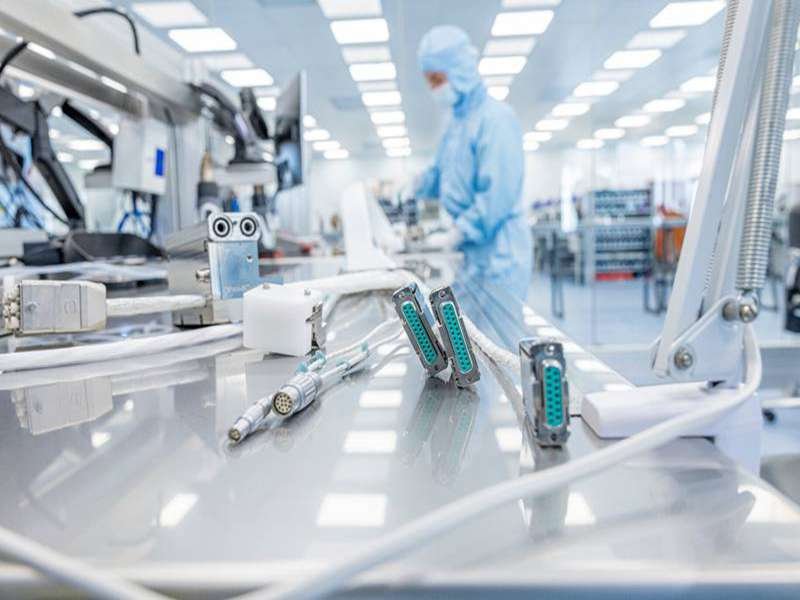
A medical cable assembly may look like a simple cable from the outside, but inside it can contain dozens of decisions that affect safety, signal quality, comfort, cleaning resistance, flexibility, and long-term reliability. One wrong material, one weak crimp, one poor shielding design, or one unclear pinout can delay a medical device project for weeks. In medical equipment, a cable is not just an accessory. It is often the part that connects the patient, the sensor, the monitor, the imaging system, or the surgical tool together.
Medical cable assembly manufacturing is difficult because every cable must balance electrical performance, mechanical strength, patient safety, material compliance, cleaning resistance, EMI control, and production consistency. A reliable medical cable requires suitable materials, clear drawings, stable process control, proper shielding, 100% electrical testing, and full documentation before it can be used in medical devices.
The real challenge is that no two medical cable projects are exactly the same. A cable for a patient monitor needs comfort and repeated bending resistance. A cable for ultrasound imaging needs signal stability and shielding. A cable for surgical equipment may need high durability, sterilization resistance, and compact routing. A cable for portable diagnostic equipment may need to be lightweight, flexible, and strong enough for daily movement. This is why medical cable manufacturing depends heavily on engineering review before production begins.
At Sino-Conn, many medical cable projects start from a connector model, a product photo, a sample cable, or a rough drawing. Some customers know every technical parameter. Others only know what the cable must connect to and where it will be used. In both cases, the most important job is to turn the requirement into a manufacturable cable assembly with confirmed materials, dimensions, pinout, shielding, testing, and documentation.
What Challenges Affect Medical Cable Assembly Manufacturing?
Medical cable assembly manufacturing is difficult because a medical cable must satisfy requirements that often conflict with each other.
Engineers want smaller cables.
Hospitals want longer service life.
Purchasing teams want lower costs.
Regulatory teams want complete documentation.
Users want flexibility and comfort.
Meanwhile, manufacturers must ensure every cable performs consistently from the first sample to the ten-thousandth production unit.
This is why medical cable assemblies are fundamentally different from ordinary industrial or consumer cables.
A consumer USB cable may only need to survive occasional use.
A medical cable may be connected and disconnected hundreds of times, cleaned daily with disinfectants, bent thousands of times, transported between departments, and expected to operate reliably for many years.
The challenge becomes even greater as medical devices become smaller, lighter, and more connected.
Today’s medical equipment frequently combines:
- High-speed data transmission
- Power delivery
- Sensitive signal collection
- Compact packaging
- Portable operation
All within a single cable assembly.
The result is that medical cable manufacturing is no longer simply about connecting Point A to Point B. It is about creating a reliable interconnection system capable of supporting the entire medical device throughout its operational life.
Material Selection
Material selection is often where medical cable projects succeed or fail.
Many customers initially focus on connector brands and cable appearance. However, most long-term reliability problems originate from material choices made during the early design stage.
A typical medical cable assembly may contain more than 15 individual materials.
These may include:
- Cable jacket
- Wire insulation
- Connector housing
- Overmold
- Strain relief
- Adhesives
- Potting compounds
- Labels
- Shielding materials
- Heat shrink tubing
Each material influences performance differently.
For example:
| Requirement | Material Impact |
|---|---|
| Flexibility | Jacket and insulation |
| Cleaning resistance | Jacket and overmold |
| Service life | Cable construction |
| Signal quality | Shielding materials |
| Durability | Connector housing |
| Comfort | Outer jacket softness |
A common mistake occurs when customers attempt to duplicate an existing cable based solely on photos.
Two cables may look identical externally while containing completely different internal materials.
For example:
A TPU jacket and a silicone jacket may both appear black.
However:
| Property | Silicone | TPU |
|---|---|---|
| Flexibility | Excellent | Good |
| Surface Feel | Soft | Firmer |
| Abrasion Resistance | Moderate | Excellent |
| Cost | Higher | Lower |
One portable patient monitoring customer approached Sino-Conn with a replacement cable project.
The original cable looked simple, but after reviewing the application, it became clear that the cable was being bent repeatedly near the patient connection point throughout the day.
Replacing the original material with a lower-cost alternative would have reduced lifespan significantly.
Instead, the final design prioritized flexibility and bend resistance, resulting in improved durability during testing.
The lesson is simple:
In medical applications, material selection should be driven by how the cable will be used, not how it looks.
Miniaturization
Medical devices are shrinking every year.
Portable ultrasound systems.
Handheld scanners.
Wearable monitoring devices.
Endoscopic systems.
Point-of-care diagnostic equipment.
All require smaller cable assemblies.
While miniaturization improves usability, it introduces major manufacturing challenges.
Consider a traditional cable assembly using 24 AWG conductors.
Now compare it to a medical micro coax assembly using conductors smaller than a human hair.
The manufacturing difficulty changes dramatically.
| Feature | Standard Cable | Micro Cable |
|---|---|---|
| Processing Difficulty | Medium | Very High |
| Inspection Complexity | Medium | Very High |
| Rework Capability | Moderate | Limited |
| Signal Sensitivity | Medium | High |
As conductor size decreases:
- Stripping becomes more difficult
- Soldering becomes more critical
- Shield termination becomes more sensitive
- Inspection becomes more challenging
A small manufacturing variation that would be insignificant on a larger cable can completely affect a miniature assembly.
Medical imaging systems provide a good example.
Modern ultrasound and imaging equipment frequently rely on micro coaxial cable assemblies to transmit large amounts of data through extremely limited space.
A connector pitch reduction from 1.27 mm to 0.5 mm may seem small on paper.
For manufacturing teams, however, it represents a substantial increase in assembly complexity.
At Sino-Conn, medical micro coax projects often require engineering reviews before quoting because manufacturability becomes just as important as electrical performance.
A design that works on one prototype must also be capable of being manufactured consistently in larger quantities.
EMI Control
Signal interference is one of the most underestimated problems in medical cable assembly manufacturing.
Hospitals contain an enormous amount of electronic equipment operating simultaneously.
A single room may contain:
- Patient monitors
- Infusion pumps
- Diagnostic equipment
- Wireless networks
- Mobile devices
- Imaging systems
All generate electromagnetic noise.
Medical devices often process very small signals.
For example:
- ECG systems measure electrical activity generated by the heart
- EEG systems measure electrical activity generated by the brain
- Imaging systems transmit high-frequency signals
These signals can be affected by interference if shielding is inadequate.
Common EMI-related symptoms include:
- Image noise
- Data instability
- Signal distortion
- Communication errors
- Inconsistent measurements
Many customers assume that specifying a shielded cable solves the problem.
In reality, shielding effectiveness depends on the entire assembly.
Key factors include:
- Shield coverage
- Shield material
- Grounding strategy
- Connector shell design
- Shield termination quality
One imaging equipment manufacturer contacted Sino-Conn after experiencing intermittent image artifacts during validation testing.
The cable already included foil shielding.
However, the shield termination at the connector was not optimized.
After modifying the termination structure, signal stability improved without changing the device electronics.
This illustrates an important reality:
EMI performance is often determined by details that are invisible from the outside.
Reliability Issues
Reliability remains the most important challenge in medical cable manufacturing.
Medical devices often remain in service for years.
During that time, cables experience:
- Repeated flexing
- Connector mating cycles
- Cleaning procedures
- Transportation
- Daily handling
A cable may be bent thousands of times each month.
Over several years, this can result in hundreds of thousands of flex cycles.
Medical device manufacturers therefore place significant emphasis on durability testing.
Common performance targets include:
| Requirement | Common Expectation |
|---|---|
| Flex Life | 100,000+ cycles |
| Connector Mating Cycles | 1,000+ |
| Service Life | 5–10 years |
| Cleaning Exposure | Daily |
Failures frequently occur in predictable locations.
The most common include:
- Connector exits
- Strain relief areas
- Shield termination points
- Repeated bend locations
One diagnostic equipment customer experienced repeated failures near the handheld probe end of the assembly.
Electrical testing initially showed no issues.
After reviewing how operators used the device, the root cause became clear.
The cable was being bent sharply at the same location hundreds of times per day.
Sino-Conn redesigned:
- Cable flexibility
- Strain relief geometry
- Overmold structure
The updated assembly demonstrated significantly improved durability.
Reliability is rarely determined by one component.
It is usually the result of dozens of design decisions working together.
Cost Pressure
Medical cable assemblies must achieve high performance while remaining commercially viable.
This creates constant pressure throughout product development.
Engineering teams often prioritize:
- Better materials
- Stronger shielding
- Higher durability
- Additional testing
Purchasing teams often focus on:
- Unit cost
- Lead time
- Supply stability
Production teams focus on:
- Manufacturability
- Yield rate
- Consistency
Balancing these priorities can be difficult.
Consider the following comparison:
| Decision | Lower Cost Option | Higher Performance Option |
|---|---|---|
| Connector | Compatible | Original |
| Shielding | Single Foil | Foil + Braid |
| Jacket | PVC | Silicone |
| Protection | Heat Shrink | Custom Overmold |
None of these choices are inherently right or wrong.
The correct decision depends on:
- Device type
- Expected lifespan
- Production volume
- Regulatory requirements
- Budget
For example:
An engineering prototype may prioritize speed and flexibility.
A production medical device may prioritize long-term reliability and documentation.
At Sino-Conn, many projects begin by discussing application requirements before discussing price.
This allows customers to compare multiple solutions.
Some customers require original connectors.
Others prefer compatible alternatives that offer:
- Faster lead times
- Lower costs
- Greater customization flexibility
The objective is not to build the most expensive cable.
The objective is to build the most appropriate cable for the application.
That distinction is what separates successful medical cable projects from expensive redesigns later in development.
Why Is Medical Cable Assembly Manufacturing So Demanding?
Many people outside the medical industry assume that a medical cable assembly is simply a cable with a medical connector attached. After all, electricity still travels through copper conductors, connectors still connect two devices, and the manufacturing process appears similar to industrial cable assemblies.
In reality, medical cable assembly manufacturing is often one of the most demanding segments of the cable assembly industry.
The reason is simple.
Medical cables are expected to perform reliably under conditions where failure is far more costly than replacing a cable.
A defective consumer cable may inconvenience a user.
A defective industrial cable may stop a production line.
A defective medical cable can interrupt patient monitoring, delay diagnosis, postpone treatment, or cause medical equipment to be removed from service.
This changes how medical device manufacturers evaluate suppliers.
Instead of asking only:
“What is the price?”
They often ask:
- How reliable is the assembly?
- Can you provide complete material information?
- Can you guarantee consistency between batches?
- What testing methods do you use?
- Can you support design changes during development?
- Can you provide drawings and documentation?
These requirements make medical cable manufacturing fundamentally different from ordinary cable assembly production.
Patient Safety
Patient safety influences almost every decision made during medical cable development.
A medical cable may never touch a patient directly, yet it can still affect the performance of equipment used for diagnosis, monitoring, imaging, or treatment.
For example:
- ECG systems monitor heart activity
- EEG systems monitor brain activity
- Ultrasound systems collect imaging data
- Patient monitors collect vital signs
- Surgical equipment transmits control signals
Each of these systems relies on stable electrical connections.
Even a brief interruption may create problems.
Potential consequences include:
| Failure Type | Potential Result |
|---|---|
| Intermittent Connection | Missing patient data |
| Signal Noise | Incorrect readings |
| Cable Damage | Equipment downtime |
| Connector Failure | Procedure interruption |
| Shield Failure | Data instability |
Medical device manufacturers therefore evaluate cable assemblies differently from many industrial customers.
Instead of asking whether a cable works today, they ask:
Will it still work after:
- Thousands of flex cycles?
- Daily cleaning?
- Years of use?
- Repeated transport?
This long-term perspective significantly increases design and manufacturing requirements.
One patient monitoring customer approached Sino-Conn during a redesign project because their existing cable passed initial testing but developed intermittent failures after extended use.
The issue was not the conductor.
The issue was strain concentration near the patient connector.
After reviewing actual usage conditions, the cable structure and strain relief design were modified to improve durability.
This is a common theme in medical projects.
The failure often comes from real-world use rather than laboratory testing.
Device Accuracy
Modern medical devices process more data than ever before.
Many diagnostic systems work with extremely small signals that must remain stable throughout transmission.
Examples include:
- ECG signals
- EEG signals
- Sensor outputs
- Imaging signals
- High-speed display data
These signals can be affected by:
- Contact resistance
- EMI interference
- Poor shielding
- Inconsistent grounding
- Connector instability
The challenge is that electrical problems are not always obvious.
A cable may pass continuity testing while still affecting signal quality.
For example:
An ultrasound imaging system may continue operating normally while image quality gradually deteriorates due to shielding issues.
A monitoring system may continue collecting data while introducing intermittent noise that affects interpretation.
Because of this, medical device manufacturers frequently focus on signal stability rather than basic electrical connectivity.
Important considerations include:
| Parameter | Importance |
|---|---|
| Signal Integrity | Very High |
| Shield Continuity | Very High |
| Ground Stability | Very High |
| Contact Resistance | High |
| Connector Quality | High |
One imaging customer contacted Sino-Conn because of random image artifacts appearing during equipment validation.
Initial investigations focused on the imaging electronics.
After further testing, the cable shielding structure was identified as the source of the problem.
A revised cable design improved image consistency without modifying the imaging system itself.
This highlights an important fact.
Medical cable assemblies often influence system performance more than many engineers initially expect.
Regulatory Standards
Regulatory expectations add another layer of complexity to medical cable manufacturing.
Many customers require documentation before approving production.
Examples include:
- RoHS reports
- REACH reports
- PFAS information
- Material specifications
- COC documents
- COO documents
Some projects also require:
- Traceability records
- Inspection reports
- Supplier qualification data
- Material declarations
Documentation requests often increase significantly when a project moves from prototype stage into production.
A prototype may require only basic specifications.
Production programs often require detailed records supporting the entire supply chain.
For example:
| Development Stage | Documentation Requirement |
|---|---|
| Prototype | Basic specifications |
| Engineering Validation | Material information |
| Pilot Production | Inspection records |
| Mass Production | Full documentation package |
At Sino-Conn, many medical customers request documentation before sample approval because regulatory and quality teams review materials long before production orders are released.
This means manufacturing is only part of the job.
Supporting documentation becomes equally important.
A supplier may build an excellent cable assembly, but if required documentation cannot be provided, the project may still be delayed.
Long Service Life
Medical devices often remain in operation far longer than many consumer products.
Hospitals commonly use equipment for years.
In some cases, equipment remains active for a decade or longer.
This creates unique durability requirements.
A medical cable assembly may experience:
- Daily movement
- Repeated cleaning
- Frequent connector mating
- Transportation between departments
- Constant handling by different operators
Many medical customers establish performance goals such as:
| Requirement | Common Target |
|---|---|
| Flex Life | 100,000+ cycles |
| Connector Mating | 1,000+ cycles |
| Product Life | 5–10 years |
| Daily Cleaning | Continuous exposure |
Achieving these targets depends on multiple design decisions.
Examples include:
- Material selection
- Cable construction
- Connector quality
- Shielding structure
- Overmolding design
- Strain relief geometry
A portable diagnostic device manufacturer once approached Sino-Conn because cables were failing near the handheld end after several months of field use.
Electrical performance was acceptable.
The issue was mechanical fatigue.
After reviewing how operators actually handled the device, the design was modified with:
- Improved cable flexibility
- Longer strain relief
- Reinforced overmolding
The updated design achieved significantly better durability.
The lesson is simple.
Reliability is rarely created by one component.
It is usually the result of dozens of engineering decisions working together.
Quality Expectations
Medical device manufacturers generally maintain higher quality expectations than most industries.
This applies not only to performance but also to appearance, documentation, traceability, and consistency.
Customers commonly evaluate:
- Connector fit
- Cable dimensions
- Label accuracy
- Appearance consistency
- Electrical performance
- Documentation completeness
Many medical companies require every assembly to be tested before shipment.
Common inspections include:
| Inspection Method | Purpose |
|---|---|
| Visual Inspection | Appearance verification |
| Continuity Testing | Circuit confirmation |
| Hi-Pot Testing | Insulation verification |
| Pull Testing | Mechanical strength |
| Dimensional Inspection | Drawing compliance |
| Functional Testing | Performance validation |
At Sino-Conn, production quality control typically includes:
- In-process inspection
- Finished product inspection
- Final inspection before shipment
This three-stage inspection approach helps reduce:
- Wiring errors
- Pinout mistakes
- Connector defects
- Cosmetic inconsistencies
For medical customers, consistency is often more important than achieving perfect results on a single sample.
A prototype that works once is useful.
A manufacturing process that delivers the same result across hundreds or thousands of assemblies is far more valuable.
This is why medical cable assembly manufacturing remains one of the most demanding areas of cable production.
Success depends not only on building a cable that works, but on building a process capable of producing that cable reliably, repeatedly, and consistently throughout the life of the product.
Which Materials Create Medical Cable Assembly Manufacturing Challenges?
When medical device companies experience cable failures, many engineers initially suspect the connector, the shielding structure, or the assembly process.
In reality, material selection is often the root cause.
The reason is simple.
Every performance characteristic that customers care about is influenced by materials.
For example:
- Flexibility comes from materials.
- Durability comes from materials.
- Chemical resistance comes from materials.
- Patient comfort comes from materials.
- Cleaning resistance comes from materials.
- Service life comes from materials.
A medical cable assembly may contain more than twenty individual materials working together.
These can include:
- Cable jackets
- Wire insulation
- Fillers
- Braiding materials
- Shielding materials
- Connector housings
- Terminal plating
- Adhesives
- Potting compounds
- Overmold materials
- Strain relief materials
Selecting the wrong material may not cause immediate failure.
The cable may pass inspection.
The device may pass initial testing.
The problem often appears months later after real-world use.
This is why experienced medical device engineers frequently spend more time discussing materials than discussing connector appearance.
At Sino-Conn, many medical cable projects begin with a material review before the first prototype is built. Understanding how the cable will be used often reveals risks that are not visible on drawings alone.

Silicone Cables
Silicone is one of the most common materials used in medical cable assemblies.
The primary reason is flexibility.
Few materials remain as flexible as silicone over a wide temperature range.
This makes silicone particularly attractive for:
- Patient monitoring cables
- ECG cables
- EEG cables
- Portable medical devices
- Wearable equipment
Medical staff often prefer silicone cables because they feel softer and are easier to handle.
A comparison of common cable jacket materials illustrates why.
| Property | Silicone | TPU | PVC |
|---|---|---|---|
| Flexibility | Excellent | Good | Moderate |
| Soft Touch | Excellent | Good | Moderate |
| Low Temperature Performance | Excellent | Good | Fair |
| Patient Comfort | Excellent | Good | Fair |
| Cost | Higher | Medium | Lower |
However, silicone introduces manufacturing challenges.
Silicone cables can:
- Stretch during processing
- Require specialized stripping techniques
- Be more difficult to print consistently
- Increase material costs
In some cases, silicone may also require different overmolding strategies because adhesion characteristics differ from TPU and PVC materials.
One customer developing a wearable patient monitoring device initially wanted the lowest-cost cable available.
After evaluating how patients would interact with the device, a silicone solution was selected instead.
The result was improved comfort and better flexibility during daily use.
The material increased cost slightly but significantly improved the user experience.

TPU Cables
TPU has become one of the fastest-growing materials in medical cable manufacturing.
Many engineers view TPU as a balance between flexibility and durability.
Compared with silicone, TPU generally offers:
- Better abrasion resistance
- Improved cut resistance
- Better appearance retention
- Stronger mechanical durability
This makes TPU particularly useful for:
- Portable diagnostic devices
- Handheld scanners
- Mobile medical equipment
- Patient transport systems
Medical equipment used in hospitals is frequently:
- Pulled across floors
- Wrapped around carts
- Stored repeatedly
- Transported between departments
These conditions create wear that softer materials may struggle to withstand.
TPU performs particularly well in these environments.
| Property | TPU Performance |
|---|---|
| Abrasion Resistance | Excellent |
| Tear Resistance | Excellent |
| Chemical Resistance | Good |
| Flexibility | Good |
| Appearance Durability | Excellent |
However, TPU is not perfect.
A common challenge involves balancing flexibility and wall thickness.
A thicker TPU jacket improves durability but may reduce flexibility.
A thinner jacket improves handling but may reduce lifespan.
One portable ultrasound equipment customer approached Sino-Conn after experiencing premature cable jacket wear.
The original design prioritized flexibility.
After evaluating the actual use conditions, a modified TPU construction improved durability without making the cable noticeably stiffer.
This type of optimization is common in medical projects where performance requirements compete with each other.

Micro Coax
Micro coaxial cables create some of the most difficult manufacturing challenges in the medical cable industry.
These cables are widely used in:
- Ultrasound systems
- Endoscopy equipment
- Medical imaging devices
- High-resolution displays
- Diagnostic imaging systems
The reason is simple.
Micro coaxial cables can transmit high-speed signals while occupying very little space.
Modern imaging systems often require:
- Higher resolution
- Faster transmission speeds
- Smaller device dimensions
Micro coax helps achieve all three.
However, manufacturing complexity increases dramatically.
Consider the construction of a micro coax cable.
A single cable may contain:
- Center conductor
- Dielectric layer
- Shield layer
- Outer jacket
Each layer is extremely small.
In some designs, conductor diameters are measured in fractions of a millimeter.
This creates challenges in:
- Stripping
- Soldering
- Crimping
- Inspection
- Testing
| Manufacturing Task | Standard Cable | Micro Coax |
|---|---|---|
| Stripping | Easy | Very Difficult |
| Shield Termination | Moderate | Complex |
| Inspection | Visual | Magnification Required |
| Rework | Possible | Limited |
One mistake during processing can damage the signal path.
This is why medical imaging customers often prioritize supplier experience over unit price.
At Sino-Conn, micro coax projects are reviewed carefully before production because manufacturability becomes just as important as electrical performance.
A design that performs well electrically must also be capable of being assembled consistently.
Medical Connectors
Medical connectors create another major material-related challenge.
Many customers focus on connector models and specifications.
However, connector materials often determine long-term performance.
Important connector material considerations include:
- Housing material
- Contact plating
- Insulator material
- Seal material
For example:
| Connector Component | Material Importance |
|---|---|
| Housing | Durability and cleaning resistance |
| Contacts | Signal reliability |
| Plating | Corrosion resistance |
| Insulator | Electrical stability |
| Seals | Environmental protection |
Connector materials affect:
- Connector lifespan
- Mating cycle performance
- Cleaning resistance
- Mechanical durability
Medical connectors frequently experience hundreds or thousands of mating cycles during their service life.
Poor material selection may lead to:
- Contact wear
- Increased resistance
- Corrosion
- Connector cracking
Many medical device manufacturers prefer original connector brands because they are familiar with their performance.
However, compatible connectors can also be a practical option in some projects.
Compatible solutions may offer:
- Lower cost
- Faster lead times
- Greater flexibility
- Easier customization
At Sino-Conn, both original and compatible connector solutions are evaluated based on the application, production volume, budget, and documentation requirements.
Biocompatible Materials
Biocompatibility introduces another layer of complexity.
Many medical devices operate close to patients.
Some components may experience:
- Direct skin contact
- Indirect patient contact
- Long-term exposure
As a result, material selection must consider more than mechanical performance.
Engineers must also evaluate:
- Material composition
- Surface characteristics
- Documentation availability
- Regulatory requirements
A material may perform extremely well mechanically but still create challenges if supporting documentation is unavailable.
This becomes particularly important during:
- Product approvals
- Supplier audits
- Customer reviews
Common requests include:
| Documentation | Purpose |
|---|---|
| Material Specification | Material verification |
| RoHS Information | Substance compliance |
| REACH Information | Chemical compliance |
| PFAS Information | Material disclosure |
| COC | Product conformity |
| COO | Origin verification |
One medical wearable device manufacturer contacted Sino-Conn while developing a new patient-contact product.
Several candidate materials performed similarly during mechanical testing.
The final selection was heavily influenced by documentation availability and customer compliance requirements.
This illustrates a reality many new medical device companies discover late in development.
Choosing a material is not only about performance.
It is also about proving that the material is suitable.
Material Compatibility
One challenge that receives less attention is material compatibility.
A cable assembly is not made from one material.
It is a combination of many materials.
Even when individual materials perform well independently, problems can occur when they interact.
Examples include:
- Overmold adhesion problems
- Chemical incompatibility
- Thermal expansion differences
- Shielding material interactions
- Cleaning chemical exposure
A successful medical cable design must evaluate the complete material system.
Not just the cable jacket.
Not just the connector.
The entire assembly.
At Sino-Conn, engineering reviews often examine:
- Connector materials
- Cable materials
- Overmold materials
- Shielding structures
- Environmental exposure
before prototype production begins.
This approach helps identify risks early and reduces costly design revisions later.
Ultimately, material selection remains one of the most influential decisions in medical cable assembly manufacturing. A connector can often be replaced. A cable length can be adjusted. A drawing can be revised. But a poor material decision can affect flexibility, reliability, EMI performance, service life, compliance, manufacturing consistency, and user experience all at the same time.
That is why experienced medical device manufacturers view materials not as a purchasing decision, but as an engineering decision.
How Can Medical Cable Assembly Manufacturing Challenges Be Reduced?
Many medical device companies assume manufacturing challenges begin when production starts.
In reality, most manufacturing problems begin much earlier.
A cable assembly that fails during production is often the result of decisions made weeks or even months before manufacturing.
Examples include:
- Incomplete specifications
- Incorrect material selection
- Poor connector choice
- Unrealistic cable routing
- Insufficient shielding design
- Limited space for assembly
- Missing testing requirements
When these issues are discovered after prototypes are built, the project becomes more expensive and time-consuming.
Medical device development is already costly.
Engineering resources are limited.
Testing schedules are tight.
Regulatory reviews take time.
No company wants to repeat a prototype cycle because a cable assembly problem was discovered late in development.
The most successful medical cable projects reduce risk early.
Instead of asking:
“Can this cable be manufactured?”
Experienced engineering teams ask:
- Can it be manufactured consistently?
- Can it pass testing repeatedly?
- Can it scale from prototypes to production?
- Can it meet documentation requirements?
- Can it maintain performance after years of use?
The following approaches are among the most effective ways to reduce medical cable assembly manufacturing challenges.
Custom Design
One of the biggest mistakes in medical device development is forcing a standard cable assembly into a custom application.
A standard cable may appear cheaper initially.
However, it often creates hidden costs later.
Examples include:
- Difficult installation
- Excessive cable stress
- Poor routing
- Reduced flexibility
- Connector clearance issues
- Increased assembly time
Custom design allows the cable assembly to fit the application rather than forcing the application to adapt to the cable.
Areas commonly customized include:
| Design Element | Common Customization |
|---|---|
| Cable Length | Exact routing length |
| Pinout | Application-specific wiring |
| Connector Orientation | Straight, angled, custom exit |
| Cable Material | Silicone, TPU, TPE, FEP |
| Shielding Structure | Single or multi-layer shielding |
| Overmolding | Custom strain relief |
| Labels | Device-specific identification |
For example:
A customer developing a portable ultrasound system initially selected an off-the-shelf cable.
During evaluation, technicians reported several issues:
- Cable was too stiff
- Routing was difficult
- Connector exit angle was awkward
Instead of redesigning the device housing, Sino-Conn modified:
- Cable flexibility
- Connector orientation
- Strain relief geometry
The updated assembly improved handling while maintaining electrical performance.
This type of optimization is often faster and less expensive than modifying the medical device itself.
A well-designed cable assembly frequently simplifies the entire product.
EMI Shielding
Many medical devices depend on stable signal transmission.
As devices become smaller and more powerful, EMI challenges increase.
Medical equipment often operates alongside:
- Wireless networks
- Mobile devices
- Imaging equipment
- Patient monitoring systems
- Diagnostic instruments
These devices generate electromagnetic noise continuously.
Without proper shielding, cable assemblies can become a pathway for interference.
Medical systems commonly affected include:
- ECG equipment
- EEG systems
- Ultrasound devices
- Endoscopy systems
- Medical imaging platforms
Many engineers initially focus on shielding material selection.
However, shielding performance depends on much more than foil or braid.
Successful EMI control requires attention to:
- Shield coverage
- Drain wire design
- Grounding strategy
- Connector shell contact
- Shield termination quality
- Cable routing
A common misconception is that adding more shielding automatically improves performance.
This is not always true.
Consider the following comparison:
| Shield Design | EMI Protection | Flexibility | Cable Diameter |
|---|---|---|---|
| Foil Shield | Good | Excellent | Small |
| Braid Shield | Very Good | Good | Medium |
| Foil + Braid | Excellent | Lower | Larger |
A customer developing a compact imaging system approached Sino-Conn because image noise appeared during equipment validation.
The original cable already included shielding.
Further investigation revealed the shielding termination at the connector was inconsistent.
After redesigning the termination structure, signal stability improved significantly.
The cable diameter remained unchanged.
This demonstrates that good shielding design is often more important than simply adding additional shielding layers.
Rapid Prototyping
Few medical cable assemblies are perfect on the first prototype.
Even highly experienced engineering teams make adjustments after physical evaluation.
The earlier these adjustments are discovered, the lower the overall project cost.
Rapid prototyping allows engineers to evaluate:
- Connector fit
- Cable routing
- Flexibility
- Shielding performance
- Assembly convenience
- User interaction
Medical device development frequently follows a path similar to this:
| Stage | Purpose |
|---|---|
| Prototype | Verify concept |
| Engineering Sample | Functional evaluation |
| Validation Sample | Reliability testing |
| Pilot Build | Production verification |
| Mass Production | Volume manufacturing |
One reason many medical projects are delayed is that prototype evaluation starts too late.
A six-week delay caused by a cable redesign can affect:
- Verification testing
- Certification schedules
- Product launch dates
- Production planning
At Sino-Conn, many projects begin with prototype support because identifying risks early often prevents costly revisions later.
Some customers provide:
- CAD drawings
- Connector part numbers
- Existing samples
- Product photos
Others provide only a rough concept.
In both situations, rapid prototyping helps convert ideas into testable products.
The faster a design can be evaluated physically, the faster engineering decisions can be made.
Testing Methods
Testing is one of the most effective ways to reduce manufacturing risk.
Many cable assembly failures are not visible during visual inspection.
A cable may look perfect externally while containing hidden problems.
Testing helps identify these issues before products reach customers.
Common medical cable tests include:
| Test | Purpose |
|---|---|
| Continuity Test | Verify electrical paths |
| Hi-Pot Test | Verify insulation |
| Pull Force Test | Verify mechanical strength |
| Flex Test | Evaluate durability |
| Dimensional Inspection | Verify specifications |
| Functional Test | Verify performance |
Additional testing may be required depending on the application.
Examples include:
- Temperature cycling
- Chemical resistance
- Connector mating cycles
- Vibration testing
- Signal integrity testing
- Shielding effectiveness testing
One wearable medical device customer experienced intermittent field failures.
Visual inspection showed no obvious defects.
Additional flex testing revealed conductor fatigue near the connector exit.
The issue was solved through:
- Improved strain relief
- Modified cable construction
- Enhanced durability testing
Testing should not be viewed as an expense.
It is often far less expensive than replacing failed products in the field.
Process Control
Many customers focus heavily on final inspection.
However, most quality issues originate during manufacturing rather than final testing.
Consider these examples:
- Incorrect stripping length
- Inconsistent crimp force
- Poor soldering
- Incomplete shield termination
- Incorrect labels
- Connector orientation errors
These issues may be difficult to detect once assembly is complete.
Strong process control helps prevent them from occurring.
Important process controls include:
| Process Area | Control Method |
|---|---|
| Wire Cutting | Length verification |
| Crimping | Pull-force validation |
| Soldering | Process standards |
| Shielding | Termination inspection |
| Assembly | Drawing verification |
| Testing | 100% electrical verification |
At Sino-Conn, quality control includes:
- Process inspection during production
- Finished product inspection
- Final inspection before shipment
This three-stage inspection approach helps improve consistency and reduce variability.
For medical customers, consistency is often more important than achieving excellent results on a single sample.
A successful supplier must be capable of producing the same quality repeatedly across multiple production batches.
Early Supplier Involvement
One of the most effective ways to reduce manufacturing challenges is involving the cable assembly supplier earlier in the project.
Many engineering teams finalize a design and only contact suppliers when quotations are needed.
This approach often misses valuable feedback.
Experienced cable manufacturers can identify risks related to:
- Connector availability
- Cable flexibility
- Manufacturability
- Shielding strategy
- Material compatibility
- Production scalability
A small design change made during development can prevent major problems later.
For example:
One medical monitoring customer originally selected a connector that required a 16-week lead time.
By reviewing the project during the design phase, Sino-Conn recommended an alternative solution with:
- Comparable performance
- Faster availability
- Lower cost
- Easier customization
The change reduced project risk without affecting functionality.
Many medical device companies discover that supplier involvement during development creates more value than supplier involvement during purchasing.
The earlier manufacturing expertise enters the conversation, the easier it becomes to avoid costly mistakes.
Ultimately, reducing medical cable assembly manufacturing challenges is not about finding a perfect cable. It is about making better decisions throughout the project. Proper materials, thoughtful design, effective shielding, rapid prototyping, comprehensive testing, strong process control, and early engineering collaboration work together to create reliable medical cable assemblies that perform consistently from the first prototype to full-scale production.
Which Medical Cable Assembly Manufacturing Partner Is Best?
There is no single medical cable assembly manufacturer that is the best choice for every project.
The better question is:
Which manufacturer is the best fit for your medical device?
A startup developing its first wearable monitoring device has very different requirements from a multinational medical equipment company producing 50,000 systems per year.
An R&D engineer building five prototypes thinks differently from a purchasing manager sourcing annual production.
A medical imaging company focuses heavily on signal integrity.
A patient monitoring company may focus more on flexibility and comfort.
A surgical equipment manufacturer may prioritize reliability and cleaning resistance.
Because of these differences, the best manufacturing partner is rarely the company with the lowest price.
The best partner is usually the supplier that can consistently help customers reduce development risk, improve reliability, shorten project timelines, and support future production growth.
Many medical device companies discover this lesson after experiencing problems with their first supplier.
Common situations include:
- Samples work but mass production becomes unstable.
- Drawings do not match production.
- Documentation is incomplete.
- Engineering support disappears after quotation.
- Lead times become unpredictable.
- Quality varies between batches.
These problems often cost far more than the savings achieved through a lower purchase price.
The right manufacturing partner should support the entire product lifecycle, not simply manufacture parts.
Engineering Support
Engineering support is often the biggest difference between an average supplier and an excellent supplier.
Many factories can build products when every detail is clearly defined.
Far fewer can help when information is incomplete.
In reality, medical cable projects frequently begin with:
- A sample cable
- A connector model
- A product photo
- A rough drawing
- A prototype device
Some customers know exactly what they need.
Others know what the cable must accomplish but are uncertain about the optimal design.
This is especially common among:
- Medical startups
- University research teams
- Product development groups
- Emerging device manufacturers
Strong engineering support helps answer questions such as:
- Which cable material is most suitable?
- Does the application require shielding?
- Will the connector survive repeated use?
- Can the cable be made more flexible?
- Is the design suitable for production?
A supplier should be capable of discussing:
- Connectors
- Cable structures
- Shielding methods
- Material options
- Assembly processes
- Reliability concerns
At Sino-Conn, many medical projects begin with engineering discussions rather than pricing discussions.
Some customers provide only photographs.
Others provide existing cable samples.
The engineering team reviews the application before recommending a solution.
This often helps customers avoid design mistakes before prototypes are built.
Drawing Capability
Many medical cable assembly problems begin with unclear documentation.
A cable may look correct externally but contain:
- Incorrect pin assignments
- Wrong connector orientation
- Incorrect wire specifications
- Missing shielding requirements
The cost of finding these problems after production is much higher than identifying them before manufacturing begins.
This is why drawing capability is critical.
A professional supplier should provide:
| Document Type | Purpose |
|---|---|
| Assembly Drawing | Overall cable structure |
| Pinout Drawing | Wiring definition |
| Connector Drawing | Mechanical verification |
| Cable Specification | Material confirmation |
| Revision Records | Change management |
Medical device manufacturers often require drawings for:
- Internal approval
- Prototype review
- Validation testing
- Documentation control
At Sino-Conn, drawings are typically provided before production begins.
Customers review and approve:
- Connector models
- Cable lengths
- Wire colors
- Pin assignments
- Shielding structures
- Labels
- Overmolding details
Only after approval does production begin.
This process significantly reduces misunderstandings.
A useful question to ask any supplier is:
“Can you provide a complete drawing package before production?”
The answer often reveals the maturity of the engineering team.
Quality Control
Medical customers often evaluate quality differently from industrial customers.
The goal is not simply to avoid defects.
The goal is to achieve consistency.
A prototype that performs well once has limited value if production batches vary.
Medical device manufacturers typically expect:
- Consistent dimensions
- Consistent electrical performance
- Consistent appearance
- Consistent documentation
Quality control should cover the entire manufacturing process.
Common inspection activities include:
| Inspection | Purpose |
|---|---|
| Visual Inspection | Appearance verification |
| Continuity Testing | Electrical verification |
| Hi-Pot Testing | Insulation verification |
| Pull Testing | Mechanical verification |
| Dimensional Inspection | Drawing compliance |
| Functional Testing | Application validation |
Many medical projects also require:
- Traceability
- Material verification
- Inspection records
- Compliance documentation
At Sino-Conn, quality control generally includes:
- Process inspection
- Finished product inspection
- Final inspection before shipment
This three-stage approach helps reduce variability between production batches.
For medical customers, consistent quality is usually more important than achieving exceptionally low pricing.
Lead Time
Speed matters in medical device development.
A delayed cable assembly can delay:
- Prototype testing
- Validation programs
- Clinical evaluations
- Regulatory submissions
- Product launches
Many medical device companies discover that cable assemblies often become critical-path components.
A device cannot be tested if the cable is unavailable.
This makes lead time an important supplier evaluation factor.
Customers should evaluate:
| Project Stage | Time Sensitivity |
|---|---|
| Quotation | High |
| Drawing Support | High |
| Prototype Production | Very High |
| Validation Samples | Very High |
| Production Orders | High |
At Sino-Conn, typical timelines include:
| Activity | Typical Time |
|---|---|
| Engineering Review | Fast response |
| Drawing Preparation | Usually within a few days |
| Standard Samples | Approximately 2 weeks |
| Urgent Samples | As fast as 2–3 days |
| Standard Production | Approximately 3–4 weeks |
| Urgent Production | Around 2 weeks when feasible |
Fast communication often saves as much time as fast manufacturing.
Waiting several days for answers to simple engineering questions can significantly delay a project.
This is why responsive suppliers often create more value than suppliers that focus only on production capacity.
Customization
Very few medical cable assemblies remain unchanged throughout development.
Most projects experience multiple revisions.
Common changes include:
- Cable length adjustments
- Connector replacements
- Shielding modifications
- Material upgrades
- Pinout revisions
- Overmolding changes
A supplier should be capable of adapting quickly.
Common customization areas include:
| Customization Area | Importance |
|---|---|
| Cable Length | High |
| Pinout | Very High |
| Connector Selection | High |
| Material Selection | Very High |
| Shielding Structure | Very High |
| Labeling | Medium |
| Overmolding | High |
One medical imaging customer originally designed a cable assembly around a connector that later became difficult to source.
Instead of redesigning the entire device, Sino-Conn developed an alternative connector solution with comparable performance.
The project continued without major delays.
Flexibility like this becomes particularly valuable during product development.
Manufacturing Scalability
Many suppliers can build prototypes.
Fewer suppliers can support the transition to production.
Medical device companies often move through several stages:
| Stage | Quantity |
|---|---|
| Prototype | 1–20 pcs |
| Engineering Sample | 20–100 pcs |
| Validation Build | 100–500 pcs |
| Pilot Production | 500–2,000 pcs |
| Mass Production | Thousands+ |
Some suppliers perform well during prototype development but struggle when production volumes increase.
Common issues include:
- Quality variation
- Longer lead times
- Capacity limitations
- Documentation gaps
A good manufacturing partner should support growth throughout the entire product lifecycle.
At Sino-Conn, projects can begin with a single prototype and continue through larger production volumes without changing suppliers.
This helps maintain consistency and reduces the need for repeated qualification work.
Sino-Conn Solutions
Medical cable assembly projects often require more than manufacturing capability.
They require collaboration.
Sino-Conn supports medical device manufacturers through:
- Connector identification
- Material selection
- Shielding recommendations
- Drawing development
- Prototype production
- Custom cable assembly manufacturing
- Compliance documentation support
Many customers initially provide:
- Product photos
- Existing cable samples
- Connector models
- Rough sketches
The engineering team converts these inputs into production-ready cable assemblies.
Additional advantages include:
| Capability | Sino-Conn Support |
|---|---|
| MOQ | No MOQ |
| Prototype Support | Yes |
| Drawing Development | Yes |
| Custom Pinouts | Yes |
| Shielding Solutions | Yes |
| Material Selection | Yes |
| Compliance Documents | Yes |
| Engineering Review | Yes |
Medical device development is already challenging.
The right cable assembly manufacturing partner should reduce complexity rather than add to it.
The best supplier is not necessarily the cheapest, the largest, or the most famous.
The best supplier is the one that helps you move from concept to prototype, from prototype to validation, and from validation to production with the fewest surprises along the way.
For many medical device manufacturers, that is the difference between a successful product launch and months of avoidable delays.
Frequently Asked Questions
What Is the Biggest Challenge in Medical Cable Assembly Manufacturing?
The biggest challenge is balancing multiple requirements that often conflict with each other.
Medical device manufacturers want cable assemblies that are:
- Flexible
- Durable
- Compact
- Easy to clean
- EMI-resistant
- Cost-effective
- Easy to manufacture
The problem is that improving one characteristic often affects another.
For example:
| Improvement | Possible Trade-Off |
|---|---|
| More Shielding | Larger cable diameter |
| Smaller Cable | More difficult manufacturing |
| Softer Material | Reduced abrasion resistance |
| Lower Cost | Fewer material options |
| Higher Flexibility | Shorter lifespan in some environments |
This is why medical cable development usually involves multiple prototype revisions before production begins.
One portable medical equipment customer initially requested the smallest possible cable diameter.
After prototype evaluation, it became clear that the cable needed additional shielding and stronger strain relief to achieve the required durability.
The final assembly was slightly larger but significantly more reliable.
Most successful medical cable projects are not the result of maximizing one performance parameter.
They are the result of finding the right balance between all requirements.
Why Are Medical Cable Assemblies More Expensive?
Medical cable assemblies often cost more because they require more engineering work, stricter process control, higher-quality materials, and additional testing.
A standard industrial cable assembly may only require:
- Basic materials
- Standard connectors
- Continuity testing
A medical cable assembly may additionally require:
- Specialized materials
- Flexible cable constructions
- Shielding systems
- Multiple inspection stages
- Documentation support
- Prototype validation
Cost drivers typically include:
| Factor | Impact on Cost |
|---|---|
| Premium Materials | High |
| Medical Connectors | High |
| Shielding | Medium to High |
| Testing Requirements | Medium |
| Documentation | Medium |
| Small Quantities | High |
Another factor is production volume.
Many medical projects begin with:
- 5 samples
- 10 prototypes
- 50 validation units
Small quantities naturally cost more per unit than large production runs.
At Sino-Conn, many medical customers start with low-volume prototype builds before moving into production. This allows design verification before larger investments are made.
The lowest-priced cable assembly is not always the lowest-cost solution. A cable that fails during testing or field use often creates far greater costs than the original purchase price.
How Are Medical Cable Assemblies Tested?
Medical cable testing goes far beyond checking whether electricity flows through the cable.
Testing aims to verify that the assembly can survive real-world use conditions.
Common tests include:
| Test | Purpose |
|---|---|
| Continuity Test | Verify wiring correctness |
| Hi-Pot Test | Verify insulation integrity |
| Pull Force Test | Verify terminal strength |
| Flex Test | Evaluate repeated movement |
| Dimensional Inspection | Verify drawing compliance |
| Functional Test | Verify application performance |
Additional testing may be required depending on the application.
Examples include:
- Temperature cycling
- Vibration testing
- Connector mating cycle testing
- Shield effectiveness testing
- Chemical resistance testing
A patient monitoring cable may require extensive flex testing because it is moved frequently.
An imaging cable may require signal integrity verification because image quality depends on stable transmission.
At Sino-Conn, assemblies are typically subjected to multiple inspection stages during production, followed by final verification before shipment.
Testing requirements should always be discussed early because they influence design, material selection, and production planning.
Which Medical Cable Material Is Best?
There is no single material that is best for every medical cable application.
The right material depends on how the cable will be used.
Common options include:
| Material | Main Advantage |
|---|---|
| Silicone | Excellent flexibility |
| TPU | Excellent abrasion resistance |
| TPE | Balanced flexibility and cost |
| FEP | Chemical resistance |
| PTFE | High temperature performance |
| Medical PVC | Cost-effective solution |
For example:
A wearable monitoring device often benefits from silicone because comfort and flexibility are important.
A portable diagnostic device may benefit from TPU because it experiences frequent handling and transportation.
An imaging system may prioritize shielding performance rather than outer jacket softness.
One of the most common mistakes during development is selecting materials based only on appearance.
Two cables may look identical externally while delivering very different performance over time.
At Sino-Conn, material selection is usually based on:
- Device type
- Environment
- Flex requirements
- Cleaning procedures
- Service life targets
Understanding the application always comes before choosing the material.
Can Medical Cable Assemblies Be Customized?
Yes.
In fact, most medical cable assemblies used in commercial devices contain some level of customization.
Common customization options include:
- Cable length
- Connector selection
- Pinout definition
- Shielding structure
- Cable material
- Overmolding design
- Labels
- Packaging
A standard cable assembly may work for early testing, but production devices often require a more optimized solution.
For example:
A cable that is 300 mm too long may create routing problems inside a compact medical device.
A connector exiting at the wrong angle may interfere with enclosure design.
A customer developing a handheld diagnostic product approached Sino-Conn after discovering that a standard cable assembly created excessive bending stress near the connector.
A custom overmold and modified cable routing solved the problem without changing the device housing.
Customization often reduces:
- Assembly time
- Service issues
- Installation difficulties
- Long-term reliability risks
The goal is not simply to create a custom cable.
The goal is to create a cable that fits the application correctly.
How Do You Choose a Medical Cable Assembly Manufacturer?
Selecting a medical cable assembly manufacturer involves much more than comparing quotations.
A good supplier should be evaluated based on several factors.
Important areas include:
| Evaluation Area | Why It Matters |
|---|---|
| Engineering Support | Reduces design risk |
| Drawing Capability | Prevents misunderstandings |
| Quality Control | Improves consistency |
| Documentation Support | Helps approvals |
| Prototype Capability | Speeds development |
| Production Capacity | Supports growth |
| Communication Speed | Reduces delays |
Many customers focus heavily on pricing during supplier selection.
However, medical projects often succeed or fail because of engineering support rather than component cost.
Questions worth asking include:
- Can the supplier review my design?
- Can they recommend alternative materials?
- Can they support rapid prototypes?
- Can they provide compliance documentation?
- Can they scale from prototypes to production?
At Sino-Conn, many medical projects begin with a discussion about the application rather than the price.
Customers often send:
- Drawings
- Photos
- Samples
- Connector part numbers
The engineering team reviews the project and helps identify potential risks before production begins.
A supplier that helps solve problems early often creates far more value than a supplier that only provides a lower quotation.
How Long Does Medical Cable Assembly Development Usually Take?
The timeline depends on design complexity, material availability, testing requirements, and customer approval speed.
A typical project may follow this path:
| Stage | Typical Duration |
|---|---|
| Requirement Review | 1–3 Days |
| Drawing Preparation | 1–3 Days |
| Prototype Production | 1–2 Weeks |
| Testing and Evaluation | Customer Dependent |
| Design Revision | 1–2 Weeks |
| Production Release | Customer Approval |
| Mass Production | 3–4 Weeks |
Urgent projects can often move faster.
At Sino-Conn, some sample projects can be completed in as little as 2–3 days when materials are available and requirements are clearly defined.
The largest delays usually occur when specifications are incomplete or when design changes happen after prototype evaluation.
Providing detailed information at the beginning of the project is often the fastest way to reduce development time.
What Information Should You Send When Requesting a Quote?
Many customers believe they need a complete drawing before contacting a cable assembly manufacturer.
This is not always necessary.
Useful information includes:
- Connector model
- Cable length
- Wire specification
- Device application
- Product photos
- Existing samples
- Pinout information
- Annual quantity estimate
Even if some information is unavailable, a supplier can often help fill the gaps.
At Sino-Conn, customers frequently send only:
- A cable photo
- A sample assembly
- A connector model number
From there, the engineering team can help identify materials, connectors, cable structures, and manufacturing options.
The more information available at the beginning, the faster and more accurate the quotation and prototype process becomes.
Can a Compatible Connector Replace an Original Medical Connector?
In many cases, yes.
However, the answer depends on the application, documentation requirements, and customer preferences.
Original connectors often offer:
- Brand recognition
- Existing qualification history
- Established supply chains
Compatible connectors may offer:
| Advantage | Benefit |
|---|---|
| Lower Cost | Reduced project budget |
| Faster Availability | Shorter lead time |
| Greater Flexibility | Easier customization |
| Lower MOQ | Better for prototypes |
Many customers use compatible connectors during prototype development and later evaluate original connectors before mass production.
At Sino-Conn, both original and compatible connector solutions can be discussed based on project requirements.
The best choice depends on balancing cost, availability, performance, documentation, and long-term supply considerations.
Ready to Discuss Your Medical Cable Project?
Whether you are developing a new patient monitoring device, imaging system, diagnostic instrument, wearable medical product, surgical device, or portable healthcare solution, selecting the right cable assembly partner can reduce development risk and accelerate product launch.
Sino-Conn supports medical cable assembly projects from concept through production. Our engineering team can help review connector options, recommend cable materials, optimize shielding structures, develop drawings, build prototypes, and manufacture custom assemblies tailored to your application.
If you already have a drawing, connector model, or complete specification, we can review it and provide recommendations quickly.
If you only have a sample cable or product photo, we can help identify the connector, evaluate the structure, and develop a custom solution.
Send your requirements to Sino-Conn today and let our engineering team help turn your medical cable assembly concept into a reliable, production-ready product.



