Skip to content
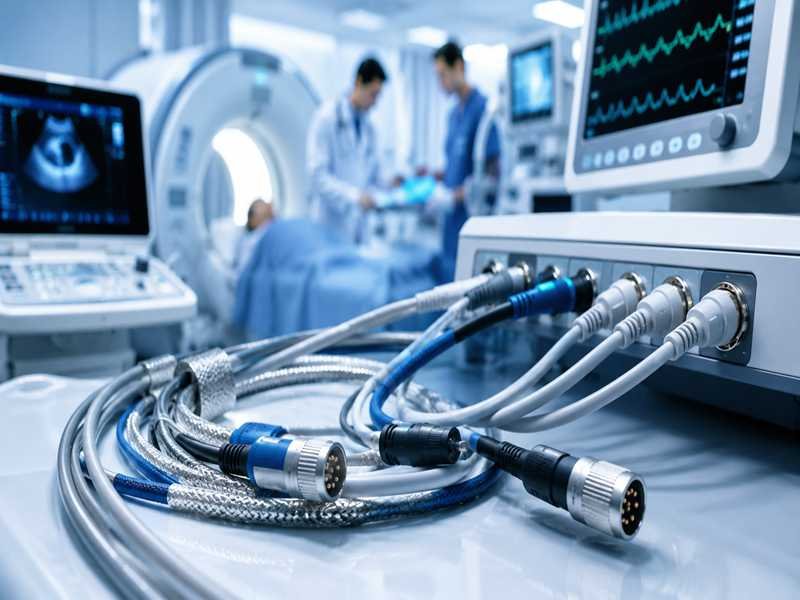
A medical cable assembly can pass an electrical test and still fail a customer audit. This is a situation many medical device teams do not fully expect until the project moves from prototype to approval. The cable may connect correctly. The signal may be stable. The sample may look clean. But when quality, regulatory, or purchasing teams begin checking supplier documents, new questions appear: Is the material compliant? Can the cable be traced? Is the supplier’s process controlled? Are RoHS, REACH, UL, COC, COO, or PFAS documents available? Does the drawing match the delivered product?
Medical cable assembly standards and certifications help verify material safety, production consistency, documentation control, and supplier reliability. Common requirements include ISO quality systems, UL-recognized materials, RoHS and REACH compliance, PFAS-related declarations, COC, COO, inspection records, product drawings, and cable or connector specifications. For medical device projects, certification is not only paperwork. It reduces approval delays, production risk, and supplier uncertainty.
In real projects, certification questions often appear after the engineering team has already selected a cable design. That timing can create unnecessary delays. A better approach is to consider standards, documents, and inspection requirements at the same time as cable length, connector type, shielding, OD, material, and flexibility. At Sino-Conn, many medical cable projects begin with a technical drawing, but they are not released for production until specifications, materials, and approval details are confirmed. This helps customers avoid the common problem of having a working cable that cannot pass internal qualification.
What Are Medical Cable Standards?
Medical cable standards are a combination of technical requirements, quality controls, material regulations, manufacturing procedures, and documentation practices used to ensure that a cable assembly can consistently meet the expectations of medical device manufacturers.

Many people assume medical cable standards only refer to certifications such as ISO 13485, UL, RoHS, or REACH.
In reality, standards begin much earlier than certifications.
A medical cable assembly is often evaluated long before production starts.
Engineers want to know whether the cable can achieve the required electrical performance.
Quality teams want to know whether the cable can be produced consistently.
Purchasing teams want to know whether the supplier can support long-term production.
Regulatory teams want to know whether the materials and documentation satisfy compliance requirements.
For this reason, medical cable standards are not a single document.
They are a complete framework that helps ensure a cable assembly performs consistently throughout development, validation, production, and field use.
Medical Cable Requirements
Medical devices often operate in environments where failure is costly.
A consumer product may be replaced if a cable fails.
A medical device may require service visits, production recalls, revalidation, or equipment downtime.
Because of this, medical cable assemblies are usually held to a higher standard than ordinary commercial cable assemblies.
A medical cable assembly is commonly evaluated in the following areas:
| Requirement Category | Typical Evaluation Items |
|---|---|
| Electrical Performance | Voltage, current, impedance, shielding |
| Mechanical Performance | Flexibility, bend radius, pull strength |
| Material Compliance | RoHS, REACH, PFAS, halogen-free requirements |
| Environmental Resistance | Temperature, oil, UV, corrosion resistance |
| Manufacturing Quality | Workmanship, inspection records |
| Documentation | Specifications, drawings, compliance records |
| Traceability | Material lots, production records |
For example, an ultrasound probe cable may be bent thousands of times during its service life.
An endoscopy cable may need to route through extremely narrow spaces while maintaining image quality.
A patient monitoring cable may need stable signal transmission over many years of operation.
These requirements influence cable design from the beginning.
At Sino-Conn, medical customers frequently request complete cable specifications before approving samples. These specifications often include:
- Cable structure
- Conductor size
- Insulation material
- Shielding structure
- Outer diameter
- Flexibility data
- Voltage rating
- Current rating
- Connector details
- Compliance information
This level of detail allows engineering teams to evaluate suitability before investing additional development resources.
Product vs Process
One of the biggest misconceptions in medical cable sourcing is believing that a compliant product automatically means a compliant manufacturing process.
These are two different subjects.
The product refers to the cable assembly itself.
The process refers to how the cable assembly is produced.
Both are important.
| Product Focus | Process Focus |
|---|---|
| Cable design | Manufacturing control |
| Material selection | Work instructions |
| Connector selection | Operator training |
| Electrical performance | Inspection procedures |
| Compliance declarations | Quality management |
| Finished product testing | Change control |
A cable assembly may pass electrical testing today.
Without process control, future production batches may not perform identically.
Medical OEMs are often more concerned about future consistency than initial sample success.
For example:
A prototype order may contain only 10 pieces.
Mass production may require:
- 1,000 pieces
- 5,000 pieces
- 20,000 pieces
The challenge is not producing ten good samples.
The challenge is producing thousands of identical assemblies over multiple years.
This is why quality systems, production procedures, inspection records, and traceability are so important in medical projects.
One medical equipment customer approached Sino-Conn after experiencing quality variations between multiple suppliers.
The cable assemblies appeared nearly identical.
However, cable flexibility varied between batches because different materials had been used without formal change notification.
The electrical performance remained acceptable, but assembly efficiency and user experience changed noticeably.
This situation demonstrates why process control matters just as much as product design.
Industry Standards
Medical cable assemblies are influenced by several different standards rather than one universal requirement.
The standards involved depend on:
- Device category
- Market destination
- Customer quality system
- Regulatory requirements
- Risk level of the application
Common standards and compliance requirements include:
| Standard or Requirement | Purpose |
|---|---|
| ISO 13485 | Medical quality management |
| UL | Safety-related material recognition |
| RoHS | Restricted substance control |
| REACH | Chemical compliance |
| PFAS Declarations | Material disclosure |
| IPC/WHMA-A-620 | Cable assembly workmanship |
| COC | Product conformity confirmation |
| COO | Country of origin verification |
Not every project requires every document.
For example:
A prototype used only for internal engineering testing may require minimal documentation.
A production medical device intended for global markets may require:
- Multiple compliance declarations
- Material traceability
- Inspection records
- Supplier qualification documentation
Many medical OEMs develop their own supplier requirements that extend beyond industry standards.
This is why engineering discussions should include compliance requirements early rather than treating them as a final purchasing task.
At Sino-Conn, one of the first questions asked during medical projects is not simply “What cable do you need?”
Instead, the discussion often includes:
- Which market will the device be sold into?
- What compliance documents are required?
- Are there material restrictions?
- Does the customer require UL-recognized wire?
- Is PFAS information needed?
- Are COC or COO documents required with shipments?
These questions help prevent delays later in development.
Why Standards Matter
Many people view standards as paperwork.
Experienced medical device manufacturers view them as risk management tools.
The purpose of standards is not to create additional documentation.
The purpose is to reduce uncertainty.
Without standards, projects become difficult to control.
Potential issues include:
- Material substitutions
- Drawing misunderstandings
- Production variation
- Incomplete records
- Compliance gaps
- Qualification delays
The table below illustrates the difference.
| Without Defined Standards | With Defined Standards |
|---|---|
| Requirements interpreted differently | Requirements documented clearly |
| Materials may change unexpectedly | Approved material control |
| Inspection varies by operator | Standardized inspection process |
| Difficult root-cause analysis | Traceability available |
| Longer qualification cycles | Faster approval process |
| Greater production variability | Better consistency |
A medical cable assembly often represents a relatively small percentage of the total device cost.
However, it can influence:
- Device reliability
- Production efficiency
- Regulatory approval
- Customer satisfaction
Because of this, leading medical OEMs evaluate standards long before placing production orders.
Real-World Example
A European patient monitoring equipment manufacturer contacted Sino-Conn regarding a custom cable assembly used inside a diagnostic platform.
Initially, the customer focused primarily on technical details:
- Connector type
- Cable length
- Shielding structure
- Routing space
After sample approval, the quality department requested additional information.
The list included:
- RoHS documentation
- REACH declarations
- Cable specifications
- Connector specifications
- Country of origin information
- Certificate of conformity
The engineering design was already complete.
The challenge shifted to supplier qualification.
Fortunately, these requirements were discussed before mass production began.
The required documentation package was prepared during the sample stage rather than after the production order was released.
This shortened the approval process significantly.
The lesson from this project is simple.
Medical cable standards are not something that should be considered after a design is complete.
They should be considered at the same time as connector selection, cable structure, shielding design, and production planning.
The most successful medical cable projects combine technical performance, compliance support, documentation control, and production consistency from the very beginning.
Which Medical Cable Certifications Matter?
Not all certifications have the same impact on a medical cable assembly project.
One of the most common mistakes made by new sourcing teams is assuming that every certificate carries equal importance. In reality, different certifications solve different problems.
Some certifications focus on manufacturing quality systems.
Some focus on material compliance.
Some help support product safety.
Others are mainly used for documentation, audits, customs clearance, or supplier qualification.
The certifications that matter most depend on:
- The type of medical device
- The country where the device will be sold
- The customer’s quality system
- Regulatory requirements
- Internal supplier approval procedures
A prototype cable for internal testing may require very little documentation.
A production cable for a patient monitoring system or imaging platform may require multiple certificates, declarations, specifications, and inspection records before approval.
The table below shows the certifications and documents most commonly requested by medical OEMs.
| Certification or Document | Main Purpose | Request Frequency |
|---|---|---|
| ISO 13485 | Medical quality management | Very High |
| UL | Material and safety recognition | High |
| RoHS | Restricted substance compliance | Very High |
| REACH | Chemical compliance | Very High |
| PFAS Declaration | Material disclosure | Increasing |
| COC | Product conformity confirmation | High |
| COO | Country of origin confirmation | Moderate to High |
| Cable Specifications | Technical evaluation | Very High |
| Connector Specifications | Technical evaluation | Very High |
Interestingly, many medical device companies review technical specifications before they review pricing.
A supplier that can provide complete documentation often gains trust much faster than a supplier that only offers a lower price.
ISO 13485
ISO 13485 is often the first certification discussed during medical cable supplier qualification.
However, it is frequently misunderstood.
Many people believe ISO 13485 certifies a cable assembly.
It does not.
ISO 13485 evaluates the quality management system used by a manufacturer.
The standard focuses on:
- Process control
- Document management
- Traceability
- Corrective actions
- Risk management
- Supplier control
For medical device companies, ISO 13485 provides confidence that production activities are managed through documented procedures rather than informal practices.
| ISO 13485 Area | Benefit to Medical OEM |
|---|---|
| Controlled Documentation | Reduces drawing mistakes |
| Traceability | Faster issue investigation |
| Change Management | Prevents unexpected changes |
| Training Systems | Improves production consistency |
| Corrective Actions | Supports continuous improvement |
Medical device projects often remain in production for many years.
A monitoring device, imaging platform, or diagnostic system may remain active for 5–15 years.
If a problem occurs years later, traceability becomes critical.
An organized quality system helps answer questions such as:
- Which materials were used?
- Which production batch was affected?
- Which inspection records exist?
- Has the design changed?
Several medical customers working with Sino-Conn request quality system information during the quotation stage because supplier stability often matters more than obtaining the lowest initial price.

UL Certification
UL is one of the most recognized safety-related certifications in the electronics industry.
Medical customers frequently ask:
“Is the wire UL approved?”
In most cases, they are referring to UL-recognized wire or UL-recognized components.
UL-recognized materials help demonstrate that specific construction requirements have been evaluated.
Common information associated with UL-recognized wire includes:
- Voltage rating
- Temperature rating
- Flame resistance
- Material construction
- Insulation characteristics
| Common UL Rating | Typical Use |
|---|---|
| 80°C | General electronics |
| 105°C | Medical and industrial equipment |
| 150°C | High-temperature environments |
| 300V | Internal wiring |
| 600V | Higher voltage applications |
A common misunderstanding is assuming that a UL-recognized wire automatically means the entire cable assembly is UL certified.
These are different things.
The wire may be UL-recognized while the finished custom cable assembly is built according to the customer’s own design.
Medical OEMs often specify UL-recognized wire because it simplifies their internal approval process and provides greater confidence in long-term material consistency.
At Sino-Conn, many North American medical projects specifically require UL-recognized wire as part of the cable specification package.

RoHS Compliance
RoHS is one of the most commonly requested compliance documents in the medical electronics industry.
Even when not legally required, many medical device companies require RoHS documentation from every supplier.
RoHS focuses on restricting certain hazardous substances in electronic products.
The purpose is to reduce environmental and health-related risks associated with specific materials.
Commonly restricted substances include:
- Lead
- Mercury
- Cadmium
- Hexavalent Chromium
- Certain brominated flame retardants
| Customer Category | RoHS Requirement Level |
|---|---|
| Medical OEM | Very High |
| Medical Contract Manufacturer | Very High |
| Diagnostic Equipment Manufacturer | High |
| Engineering Prototype Project | Moderate |
RoHS documentation is often requested alongside cable specifications and drawings during supplier qualification.
Many purchasing teams will not release a supplier for approval until RoHS declarations are available.
For custom cable assemblies, RoHS may apply to:
- Cable jackets
- Connector housings
- Contact materials
- Heat shrink tubing
- Sleeving materials
- Overmold materials
Providing RoHS documentation early helps prevent approval delays later.

REACH Compliance
REACH is frequently requested together with RoHS, but it addresses a different area.
RoHS controls restricted substances.
REACH focuses on chemical substances and disclosure obligations.
Many engineers assume RoHS and REACH are interchangeable.
They are not.
| Compliance Type | Focus |
|---|---|
| RoHS | Hazardous substance restriction |
| REACH | Chemical substance disclosure |
European medical device manufacturers often place particular emphasis on REACH compliance because of regulatory expectations within the European market.
A cable assembly may function perfectly.
The supplier may have excellent manufacturing capability.
Without REACH documentation, however, the customer may still be unable to complete internal qualification.
This is one reason compliance requirements should be discussed during the early stages of a project rather than immediately before shipment.
At Sino-Conn, REACH documentation is among the most frequently requested compliance documents for European medical projects.

PFAS Requirements
PFAS has become one of the fastest-growing topics in medical device supply chains.
Five years ago, PFAS questions were relatively uncommon.
Today, many medical OEMs actively collect PFAS-related information from suppliers.
PFAS-related requests may include:
- PFAS declarations
- Material composition information
- Component-level disclosures
- Supply chain surveys
The level of detail varies depending on the customer and market.
| Region | PFAS Inquiry Trend |
|---|---|
| Europe | Very High |
| North America | Increasing Rapidly |
| Japan | Moderate |
| Southeast Asia | Emerging |
Many customers are collecting PFAS information even before formal regulatory requirements apply to their products.
The goal is preparation.
Companies want visibility into their supply chains before future restrictions become more widespread.
Sino-Conn has seen a noticeable increase in PFAS-related inquiries from medical customers over the past several years, particularly among European OEMs.
COC and COO
Although COC and COO are not certifications in the same way as ISO 13485 or UL, they remain important documents in many medical projects.
Certificate of Conformity (COC)
A COC confirms that the supplied product conforms to agreed specifications and requirements.
The document may reference:
- Customer drawing numbers
- Part numbers
- Inspection standards
- Compliance declarations
Many medical OEMs request a COC with every shipment because it provides documented confirmation that the delivered product matches the approved design.
Certificate of Origin (COO)
A COO identifies where the product was manufactured.
This document is commonly used for:
- Customs clearance
- Import procedures
- Trade compliance
- Internal purchasing records
For global medical device manufacturers, COO documents often become part of routine shipment documentation.
Which Certifications Do Medical OEMs Prioritize Most?
Based on medical projects supported by Sino-Conn, the certifications and documents most frequently requested during supplier qualification generally follow the pattern below:
| Priority Level | Most Requested Items |
|---|---|
| 1 | Cable Specifications |
| 2 | Connector Specifications |
| 3 | RoHS Compliance |
| 4 | REACH Compliance |
| 5 | ISO Quality System Information |
| 6 | COC |
| 7 | UL Material Information |
| 8 | COO |
| 9 | PFAS Declarations |
This ranking often surprises people.
Many assume certifications come first.
In practice, engineering teams usually want to understand the cable itself before reviewing certifications.
The most successful medical cable suppliers therefore provide both:
- Strong technical documentation
- Strong compliance support
Because in medical device development, a cable assembly is rarely approved based on performance alone.
Customers want confidence in the product, the process, the documentation, and the long-term reliability of the supplier supporting the project.
Why Are Medical Cable Certifications Important?
Medical cable certifications are important because they help medical device manufacturers reduce uncertainty.
A certification does not guarantee that a cable assembly will never fail.
A certification does not automatically make a supplier better than every competitor.
What certifications do provide is confidence.
Confidence that materials are controlled.
Confidence that production processes are documented.
Confidence that compliance requirements have been reviewed.
Confidence that future production is more likely to match approved samples.
For medical device companies, this confidence has real business value.
A delayed certification review can postpone product validation.
A missing compliance document can delay supplier approval.
An undocumented material change can trigger requalification.
In many projects, the largest risks are not electrical failures.
They are process failures.
They are documentation failures.
They are supply chain failures.
This is why certifications receive so much attention throughout the medical device industry.
Regulatory Compliance
Medical devices operate within highly controlled regulatory environments.
Even when a cable assembly represents only a small portion of the final device, it may still become part of the technical file, supplier qualification record, or compliance review package.
Many medical OEMs maintain detailed supplier approval procedures.
Before a cable supplier is approved, the customer may request:
- Quality certifications
- Material declarations
- Compliance documents
- Product specifications
- Inspection procedures
- Traceability information
The objective is not to create paperwork.
The objective is to demonstrate control.
A regulatory review often asks simple questions:
Can the manufacturer identify the materials used?
Can the supplier prove compliance?
Can changes be controlled?
Can issues be traced?
Certifications help answer these questions.
| Regulatory Concern | Supporting Documentation |
|---|---|
| Material compliance | RoHS, REACH, PFAS declarations |
| Manufacturing control | ISO quality systems |
| Product conformity | COC |
| Product origin | COO |
| Material safety | UL-recognized materials |
Medical device companies often discover that obtaining these documents after production begins is significantly more difficult than requesting them during supplier qualification.
This is one reason many medical customers contact Sino-Conn early in development to discuss compliance requirements before finalizing cable designs.
Product Safety
Every medical device manufacturer has a responsibility to reduce unnecessary risk.
Although cable assemblies are often hidden inside equipment, they influence:
- Electrical performance
- Signal stability
- System reliability
- Material safety
Certifications help provide visibility into the materials and processes used to build these assemblies.
For example, customers frequently request:
- UL-recognized wire
- RoHS declarations
- REACH declarations
- Material specifications
These documents help confirm that materials align with customer requirements.
A cable assembly used in a diagnostic platform may remain in service for many years.
If a material issue is discovered later, documentation helps determine:
- Which products are affected
- Which materials were used
- Which production batches are involved
Without documentation, investigations become significantly more difficult.
This is one reason quality teams often place equal importance on paperwork and product performance.
Quality Consistency
Producing ten cable assemblies is relatively straightforward.
Producing ten thousand identical cable assemblies over five years is a completely different challenge.
Many medical devices remain in production far longer than consumer electronics.
| Medical Device Category | Typical Production Lifecycle |
|---|---|
| Patient Monitoring Systems | 5–10 Years |
| Diagnostic Equipment | 5–12 Years |
| Imaging Systems | 7–15 Years |
| Surgical Platforms | 7–15 Years |
Throughout these lifecycles, customers expect:
- Stable materials
- Stable dimensions
- Stable performance
- Stable documentation
A sample approved today should closely resemble a production batch manufactured years later.
This is where certifications and controlled quality systems become valuable.
They encourage:
- Approved drawings
- Controlled materials
- Defined inspection procedures
- Change management
- Record retention
Several medical customers that work with Sino-Conn originally approached us after experiencing batch-to-batch variation from other suppliers.
The issue was not catastrophic failure.
More commonly, it involved:
- Different cable flexibility
- Different connector retention
- Different jacket materials
- Different assembly appearance
Small variations can create large problems when products are assembled in volume.
Consistency often becomes more important than initial prototype performance.
Customer Requirements
Medical device companies rarely request certifications because they enjoy collecting documents.
Every document usually serves a purpose somewhere inside the organization.
Different departments evaluate suppliers differently.
| Department | Main Concern |
|---|---|
| Engineering | Performance and functionality |
| Quality | Traceability and consistency |
| Regulatory | Compliance documentation |
| Purchasing | Supplier reliability |
| Manufacturing | Repeatability |
A supplier may satisfy one department while failing another.
For example:
The engineering team may approve the cable design.
The quality department may reject the supplier due to incomplete documentation.
The purchasing team may question long-term supply capability.
The regulatory team may require additional declarations.
This explains why certifications play such an important role during supplier qualification.
Many medical OEMs use supplier approval checklists containing dozens of documentation requirements.
Passing electrical testing alone is rarely enough.
At Sino-Conn, it is common for customers to request:
- Cable specifications
- Connector specifications
- RoHS declarations
- REACH declarations
- Inspection records
- Certificates of conformity
before issuing production orders.
Market Access
Medical devices are increasingly sold globally.
A supplier supporting a local prototype project may only need limited documentation.
A supplier supporting international commercial production often needs much more.
Different regions emphasize different requirements.
| Market Region | Frequently Requested Documents |
|---|---|
| North America | UL, RoHS, COC |
| Europe | RoHS, REACH, PFAS information |
| Japan | Material specifications and traceability |
| Global OEM Programs | Multiple compliance packages |
A missing document can delay:
- Supplier approval
- Product launch
- Customs clearance
- Customer qualification
This is one reason experienced OEMs evaluate documentation early.
The cost of obtaining compliance information during development is usually far lower than the cost of delaying a product launch.
Supply Chain Stability
Medical device companies expect long-term support.
Many products remain active for years.
During that time, supply chains inevitably change.
Potential challenges include:
- Material discontinuation
- Component shortages
- Regulatory updates
- Supplier transitions
Certifications and documentation help manage these changes.
When records are maintained properly, companies can:
- Identify affected products
- Review historical materials
- Evaluate alternatives
- Assess potential risks
Without documentation, these activities become much more difficult.
One medical monitoring equipment manufacturer contacted Sino-Conn after struggling to identify material differences between historical cable shipments from multiple suppliers.
Because documentation varied significantly between suppliers, the investigation took much longer than expected.
After implementing a standardized documentation package, future reviews became far more efficient.
This demonstrates that certifications provide value long after the original order has shipped.
Project Case
A European medical diagnostics company was preparing to launch a new patient monitoring platform.
The engineering team had already approved the cable assembly design.
Prototype testing was complete.
The customer expected supplier approval to be straightforward.
However, during qualification, additional requirements emerged:
- RoHS documentation
- REACH documentation
- Material specifications
- Traceability records
- Certificate of conformity
The cable itself performed perfectly.
The challenge was documentation readiness.
Fortunately, these requirements were identified before production scaling began.
Working with Sino-Conn, the customer assembled the required compliance package and completed supplier qualification without redesigning the cable.
The technical product remained unchanged.
What improved was visibility.
The customer gained confidence in:
- Material compliance
- Production controls
- Documentation consistency
- Future supply support
This project illustrates an important reality.
For many medical cable assemblies, certification is not about proving the cable works.
It is about proving the entire process surrounding the cable is controlled, repeatable, and supportable over the life of the product.
That confidence is often what separates a supplier that can provide samples from a supplier that can support a medical device program for years.
How Do You Verify Medical Cable Certifications?
Verifying medical cable certifications is not only checking whether a supplier can send a PDF file. A certificate may look complete, but it still needs to match the supplier, material, cable assembly, production batch, and project requirement.
For medical device projects, verification should answer several practical questions:
Does this document apply to the actual cable assembly?
Is the certificate still valid?
Does the company name match the supplier or material manufacturer?
Does the document cover the cable, connector, wire, jacket, shielding, or only one component?
Can the supplier provide updated documents when the project moves from sample to mass production?
Many approval delays happen because documents are checked too late. The cable sample may already be approved, but the quality team later discovers that RoHS, REACH, UL material information, COC, COO, or cable specifications are missing or incomplete. A better approach is to verify certifications during the quotation or sample stage, before the project becomes urgent.
Required Documents
The first step is knowing which documents are actually needed for your project. Not every medical cable assembly requires every certificate. A prototype used only for engineering testing may need fewer documents. A cable used in a commercial medical device may require a more complete approval package.
A practical document checklist may include:
| Document | What It Confirms | When to Request |
|---|---|---|
| Cable Specification | Cable structure, OD, material, voltage, current, shielding | Before sample approval |
| Connector Specification | Connector model, dimensions, material, mating interface | Before drawing confirmation |
| CAD/PDF Drawing | Length, pinout, connector direction, structure | Before production |
| RoHS Declaration | Restricted substance compliance | Before supplier approval |
| REACH Declaration | Chemical substance compliance | Before supplier approval |
| PFAS Statement | Fluorinated substance information | If customer or market requires it |
| UL Wire Information | Wire safety-related recognition | If UL wire is specified |
| COC | Product conforms to agreed requirements | With shipment |
| COO | Country of origin | With shipment or customs documents |
| Inspection Record | Product checked before delivery | Before shipment or with shipment |
For medical OEMs, the most useful documents are usually the ones that connect directly to the approved product. A general company certificate is helpful, but it does not replace a product drawing, cable specification, connector specification, or material declaration.
At Sino-Conn, custom medical cable assemblies are normally confirmed by drawing before production. This helps customers verify the most important details first: length, connector, pinout, cable type, orientation, material, and special requirements. Once the drawing is approved, compliance documents and shipment documents can be prepared around the confirmed design.
Certificate Validation
After receiving a certificate, the next step is checking whether it is valid and relevant. Many customers only check whether a document exists. That is not enough for medical cable projects.
A certificate should be reviewed for several details:
| Check Point | Why It Matters |
|---|---|
| Company Name | Confirms the document belongs to the correct supplier or material source |
| Validity Date | Prevents using expired documents |
| Certificate Scope | Confirms what the document actually covers |
| Product or Material Match | Ensures the document applies to the cable or component used |
| Revision Number | Avoids outdated versions |
| Issuing Organization | Confirms credibility |
| Language and Format | Supports customer file and audit review |
One common issue is company name mismatch. A supplier may send a certificate from a wire manufacturer, connector manufacturer, or related trading company. That may still be useful, but the customer should understand what the certificate covers.
For example:
A UL certificate may apply to the wire material.
A RoHS declaration may apply to the connector.
A REACH declaration may apply to the cable jacket.
A COC may apply to the finished cable assembly.
These are different documents with different purposes. They should not be mixed together as if they all certify the same thing.
A second common issue is scope mismatch. A supplier may send an ISO certificate, but the scope may cover general electronics trading rather than cable assembly manufacturing. In medical projects, quality teams often check this carefully.
Supplier Audits
For larger medical projects, customers may verify certifications through supplier audits or supplier questionnaires. This does not always mean an on-site audit. Many medical OEMs begin with a document review.
They may ask suppliers to provide:
- Quality system certificate
- Company profile
- Production process overview
- Inspection flow
- Material control method
- Traceability process
- Change control process
- RoHS/REACH/PFAS documents
- Sample inspection report
- Approved drawing
A supplier audit usually focuses on whether the supplier can control production consistently, not only whether the first sample looks good.
| Audit Area | Customer Concern |
|---|---|
| Material Control | Will the same material be used in future batches? |
| Drawing Control | Will production follow the approved drawing? |
| Process Control | Are assembly steps stable and repeatable? |
| Inspection Control | Is every product checked before shipment? |
| Change Control | Will the customer be informed before changes? |
| Traceability | Can issues be investigated later? |
At Sino-Conn, medical cable projects normally go through multiple inspection stages, including process inspection, finished product inspection, and pre-shipment inspection. For customers, this matters because many medical cable failures are not caused by the design itself. They are caused by inconsistent assembly, wrong material use, poor crimping, weak shielding termination, or unapproved changes.
Common Mistakes
Certification verification often fails because customers and suppliers discuss documents too late or too generally.
Several mistakes appear frequently in medical cable projects.
The first mistake is asking only, “Do you have certificates?” This question is too broad. A supplier may answer yes, but the available certificates may not match the project.
A better question is:
Can you provide the cable specification, connector specification, RoHS, REACH, and COC for this exact cable assembly?
The second mistake is assuming UL wire means the finished assembly is UL certified. These are not the same. If the customer requires UL-recognized wire, that should be clearly written in the drawing or specification.
The third mistake is checking documents only before shipment. If a required document is missing at that stage, the shipment may be ready but cannot be approved.
The fourth mistake is ignoring document revisions. Medical OEMs often need the latest certificate version. An old declaration may not be accepted during supplier approval.
| Mistake | Possible Result |
|---|---|
| Asking for generic certificates only | Documents may not apply to the product |
| Checking documents too late | Shipment or approval delays |
| Confusing component and assembly certification | Wrong compliance assumption |
| Ignoring expiry dates | Audit rejection |
| No approved drawing | Product and document mismatch |
| No change control | Future batch risk |
A practical solution is to create a document checklist before sample production. This checklist should be shared between engineering, purchasing, quality, and supplier teams.
Warning Signs
Some warning signs do not automatically mean a supplier is unreliable, but they do mean the customer should check more carefully.
Common warning signs include:
- The supplier cannot explain what each certificate covers.
- The supplier provides expired documents.
- The certificate company name does not match the supplier and no explanation is given.
- The supplier cannot provide cable or connector specifications.
- The supplier refuses drawing confirmation before production.
- The supplier changes materials without customer approval.
- The supplier can provide a low price but cannot provide compliance documents.
- The supplier cannot provide inspection records or COC with shipment.
For medical cable assemblies, the lowest price is rarely the safest choice if documentation is incomplete. A low-cost cable that cannot pass supplier qualification can delay the entire project.
A European medical equipment customer once contacted Sino-Conn after receiving samples from another supplier. The samples looked acceptable, and the price was attractive. During internal approval, however, the supplier could not provide matching cable specifications, RoHS documentation, or a clear COC format. The customer had to restart the supplier review process, which delayed the project more than the original price savings could justify.
This is a common situation in medical cable sourcing. A supplier’s technical ability and document support must be evaluated together.
Practical Verification Checklist
Before approving a medical cable assembly supplier, customers can use a simple verification checklist.
| Verification Item | Yes/No |
|---|---|
| Is there an approved drawing for the exact cable assembly? | |
| Are cable and connector specifications available? | |
| Are RoHS and REACH documents available if required? | |
| Is PFAS information available if required? | |
| Is UL wire information available if UL wire is specified? | |
| Can the supplier provide COC with shipment? | |
| Can COO be provided if needed? | |
| Are inspection records available? | |
| Is there a clear process for material changes? | |
| Can the supplier support repeat production? |
At Sino-Conn, many customers send their required document checklist together with drawings or samples. This is the most efficient way to start a medical cable project. If the customer does not have a complete checklist, our team can help review the common documents usually needed for custom medical cable assemblies.
Verification should not be treated as a final step after the cable is already produced. It should be part of the early project discussion. When technical design, drawings, materials, certifications, and inspection requirements are confirmed together, medical cable assembly projects move faster, with fewer surprises and lower approval risk.
Can Certified Medical Cable Assemblies Reduce Risk?
The short answer is yes, but probably not in the way many people think.
Most engineers initially focus on whether a cable assembly can transmit power, signals, or data correctly. That is certainly important, but technical performance is only one part of the risk equation.
Medical device projects involve multiple teams:
- Engineering
- Quality
- Purchasing
- Manufacturing
- Regulatory
- Supply chain management
A cable assembly may satisfy one department and still create problems for another.
For example:
The cable may pass electrical testing.
The supplier may not have adequate documentation.
The material may be compliant today.
The supplier may not have a process to control future material changes.
The prototype may work perfectly.
Future production batches may not match the approved sample.
Certified medical cable assemblies help reduce these risks because they introduce structure, documentation, traceability, and process control into the supply chain.
The real value is not the certificate itself.
The real value is the system behind the certificate.
Design Risk
One of the most expensive risks in medical device development occurs during the design phase.
A design mistake discovered before production is usually manageable.
The same mistake discovered after tooling, validation, or production release can become extremely costly.
Medical cable assemblies influence:
- Mechanical integration
- Electrical performance
- EMI shielding
- Routing space
- Connector compatibility
- Regulatory documentation
Many development teams focus heavily on connectors and electrical requirements while overlooking documentation and compliance requirements.
This can create delays later.
A common scenario looks like this:
The engineering team approves the cable design.
The prototype passes testing.
The purchasing department places an order.
The quality team then requests:
- RoHS documentation
- REACH documentation
- Material declarations
- Cable specifications
- Inspection procedures
If these requirements were not discussed earlier, the project timeline may be affected.
| Design Stage Risk | Potential Consequence |
|---|---|
| Undefined cable specification | Design ambiguity |
| Missing compliance review | Approval delays |
| Incorrect connector selection | Mechanical redesign |
| Missing material declarations | Qualification problems |
| No drawing approval | Production errors |
At Sino-Conn, medical cable projects typically begin with technical review and drawing confirmation before production starts. This helps customers identify risks before samples are built rather than after validation has already begun.
For many OEMs, this early review process saves weeks of engineering time later in the project.
Production Risk
Production risk often receives less attention during prototype development.
The prototype works.
The sample is approved.
Everyone assumes production will proceed smoothly.
Unfortunately, production introduces challenges that may not appear during sample builds.
Examples include:
- Material substitutions
- Operator differences
- Process variation
- Assembly inconsistency
- Inspection gaps
Medical OEMs are often less concerned about whether a supplier can build ten good samples.
They are more concerned about whether the supplier can build ten thousand identical assemblies.
| Production Concern | Why It Matters |
|---|---|
| Material consistency | Affects performance and compliance |
| Connector consistency | Affects mating reliability |
| Shielding consistency | Affects signal stability |
| Process control | Reduces variation |
| Inspection control | Improves outgoing quality |
One medical monitoring equipment customer contacted Sino-Conn after experiencing significant variation between production batches from another supplier.
The assemblies looked nearly identical.
However:
- Cable flexibility varied
- Outer diameter varied
- Connector retention varied
The product still functioned, but assembly efficiency and customer confidence declined.
The problem was not design.
The problem was production control.
This illustrates why quality systems and documented processes matter.
Supply Chain Risk
Many medical devices remain on the market for years.
Some systems continue production for over a decade.
During this period, supply chains inevitably change.
Potential challenges include:
- Raw material discontinuation
- Connector shortages
- Regulatory updates
- Supplier acquisitions
- Factory relocations
Without proper documentation and traceability, these changes can create major problems.
A certified and well-controlled supplier is generally better equipped to manage such situations.
For example, if a wire manufacturer discontinues a material, the customer may need answers to several questions:
Can an equivalent material be identified?
Will performance remain unchanged?
Will compliance remain valid?
Will documentation need updating?
The ability to answer these questions depends heavily on documentation and process control.
| Supply Chain Risk | Impact on Medical OEM |
|---|---|
| Material discontinuation | Possible redesign |
| Supplier instability | Production interruption |
| Regulatory changes | Additional qualification |
| Component shortages | Longer lead times |
| Poor traceability | Difficult investigations |
Medical OEMs increasingly evaluate suppliers based on long-term stability rather than simply current pricing.
This is one reason many customers request quality documentation during supplier qualification.
Compliance Risk
Compliance-related issues can delay projects even when the cable itself performs perfectly.
The cable may:
- Pass electrical testing
- Fit mechanically
- Meet performance requirements
Yet still fail internal approval because documentation is incomplete.
Examples include:
- Missing RoHS declaration
- Missing REACH declaration
- Missing PFAS information
- Outdated certificates
- Incomplete COC documentation
One compliance issue can delay:
- Supplier approval
- Production release
- Product validation
- Customer audits
| Missing Document | Potential Result |
|---|---|
| RoHS | Supplier rejection |
| REACH | Approval delay |
| PFAS Statement | Additional review |
| COC | Shipment hold |
| COO | Customs complications |
At Sino-Conn, compliance requirements are usually discussed during quotation or sample development rather than immediately before shipment. This helps customers identify documentation gaps early and avoid last-minute surprises.
Financial Risk
Many companies think certifications increase cost.
In some cases, documentation and qualification activities do add effort.
However, the cost of poor control is usually much higher.
Potential expenses may include:
- Project delays
- Revalidation
- Additional testing
- Product redesign
- Production downtime
- Supplier replacement
The financial impact of a delayed product launch often exceeds the cost difference between suppliers.
Consider a simple example:
A supplier offers a lower price but cannot provide:
- Reliable documentation
- Stable material sourcing
- Quality records
The immediate purchase cost may be lower.
The long-term project cost may be significantly higher.
This is why many medical OEMs evaluate total project risk rather than focusing solely on piece price.
Customer Confidence
Medical device companies are not simply purchasing a cable assembly.
They are choosing a supplier that may support their product for years.
Confidence becomes an important factor.
Confidence comes from:
- Clear documentation
- Stable communication
- Process transparency
- Consistent production
- Reliable support
When customers receive:
- Approved drawings
- Complete specifications
- Compliance documents
- Inspection records
they can make decisions more quickly and with greater certainty.
This often shortens approval cycles and improves collaboration between departments.
One reason many engineering teams continue working with established suppliers is not because the cable itself is dramatically different.
It is because the supplier consistently provides the information needed to support development, validation, production, and future revisions.
Real Medical Project Example
A European medical diagnostics company was developing a new patient monitoring platform.
The cable assembly itself was relatively simple.
The project involved:
- Low-voltage signal transmission
- Compact internal routing
- Standard connector interfaces
The engineering team approved the design quickly.
The challenge emerged during supplier qualification.
The customer needed:
- RoHS documentation
- REACH declarations
- Material specifications
- Inspection records
- Certificate of conformity
Their original supplier could provide samples but struggled to provide complete documentation.
As a result, supplier approval slowed significantly.
The customer later worked with Sino-Conn to establish a more structured documentation package.
The cable design remained essentially unchanged.
What improved was visibility into the product and process.
The customer gained confidence in:
- Material compliance
- Production consistency
- Documentation availability
- Long-term support
Most importantly, future orders became easier because the documentation framework was already established.
Sino-Conn Risk Reduction Support
Risk reduction begins long before production.
It starts during the first technical discussion.
For medical cable projects, Sino-Conn commonly supports customers with:
| Support Area | Customer Benefit |
|---|---|
| Cable Specification Review | Clear technical requirements |
| Connector Identification | Reduced design errors |
| Drawing Preparation | Production accuracy |
| Compliance Documentation | Faster qualification |
| Material Recommendations | Better application fit |
| Prototype Development | Faster validation |
| Quality Inspection | Improved consistency |
| COC and COO Support | Simplified shipment process |
Many customers initially provide only:
- Photos
- Existing samples
- Connector images
- Device layouts
From this information, our engineering team can help develop a documented cable assembly solution that supports both technical and compliance requirements.
Ultimately, certified medical cable assemblies reduce risk because they create visibility. Visibility into materials. Visibility into production. Visibility into compliance. Visibility into future supply stability.
The cable itself may represent only a small portion of the final medical device cost, but the documentation, traceability, and process control surrounding that cable can significantly influence project success. For many medical OEMs, reducing uncertainty is just as important as achieving electrical performance, and that is where certified medical cable assemblies provide their greatest value.