Skip to content

In medical equipment, the cable is often one of the last parts people pay attention to, but it is one of the first parts that can create trouble in real use. A monitor may show unstable data. An imaging system may produce noise. A handheld device may pass early testing but fail after repeated bending in daily operation. In many cases, the problem is not the connector shape, not the housing, and not even the machine itself. The real issue is that the cable was selected too quickly, copied only by appearance, or built without fully defining the internal structure.
This is exactly why custom medical cables matter. In medical projects, the cable is rarely just a piece of wire between two points. It has to match the equipment, the signal type, the working environment, the movement of the operator, the cleaning process, the compliance requirements, and the production plan. A cable that works in a normal electronic device may not be suitable for an ultrasound system, patient monitor, diagnostic instrument, or portable therapy device. Even when two assemblies look almost the same from the outside, the conductor, shielding, insulation, jacket, pin assignment, and strain relief design inside can create very different results in the field.
A custom medical cable is a cable assembly built for a specific medical application rather than chosen as a standard off-the-shelf item. It is designed around the exact connector, electrical parameters, material requirements, shielding structure, flexibility target, and use environment of the device. The right solution is chosen by first defining the real operating conditions, then matching the cable structure to the performance, safety, and production needs of the project.
Many projects do not start with complete engineering data. Some customers only provide a part number. Some only send a photo. Some know the connector, but not the pinout, conductor spec, shielding requirement, or jacket material. That is normal. What matters is whether the supplier can turn incomplete input into a buildable, testable, repeatable product. At Sino-Conn, this is often where the project really begins. A customer may send one image and ask, “Can you make the same cable?” The correct answer is not simply yes or no. The correct next step is to identify what the cable must actually do, what risks are hidden inside the unfinished specification, and how to turn that into a confirmed drawing before production starts.
That difference is often what separates a cable that merely looks right from one that works reliably in the customer’s device for the long term.
What Is a Custom Medical Cable?
A custom medical cable is a cable assembly built specifically for one piece of medical equipment, not selected from standard stock. It is designed around the real device interface, signal type, working environment, and production requirements. The goal is simple: the cable must not only “fit,” but also work consistently over time without causing signal issues, mechanical failure, or compliance problems.
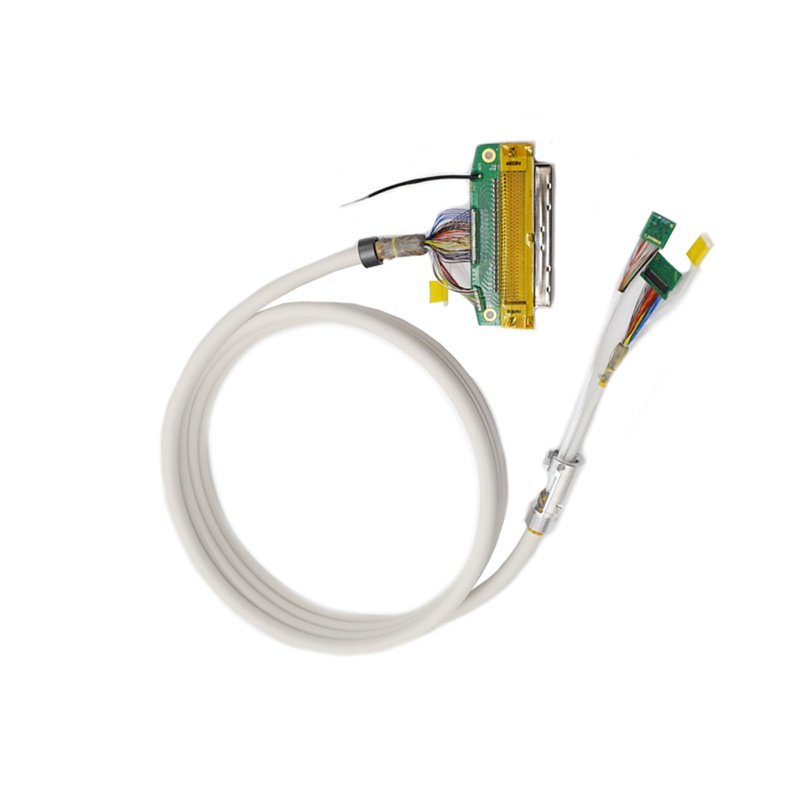
In real projects, most customers do not start with a complete specification. They may provide a connector model, a sample cable, or sometimes only a photo. From there, the cable needs to be defined step by step—what signals it carries, how it is connected, how it will be used, and what conditions it must withstand. This is where a custom solution becomes necessary.
What Defines a Medical Cable?
A medical cable is defined by how it performs in actual use, not just by how it looks or connects. Compared with general electronic cables, medical cables must handle stricter requirements in terms of signal stability, durability, and safety.
Customers usually focus on very practical questions:
- Will the signal remain stable without noise or interference?
- Can the cable withstand repeated bending during daily use?
- Will the material degrade under cleaning agents or heat?
- Can the cable maintain performance over months or years?
Below is a simplified view of what typically defines a medical cable:
| Parameter | Typical Requirement | Practical Meaning |
|---|---|---|
| Signal performance | Low noise, stable transmission | Accurate readings and imaging |
| Shielding | EMI protection | Avoid interference from nearby devices |
| Flexibility | High bend cycles | Suitable for handheld or moving devices |
| Material safety | Non-toxic, flame-resistant | Safe for medical environments |
| Durability | Long service life | Reduced maintenance and replacement |
| Compliance | UL, RoHS, REACH | Required for market access |
In many cases, issues do not appear immediately. A cable may pass initial testing but fail after repeated use. Common problems include:
- Signal becoming unstable after bending
- Outer jacket hardening or cracking
- Connector loosening over time
- Increased noise affecting device accuracy
These problems usually come from incomplete definition at the beginning, not from production errors alone.
At Sino-Conn, when customers request a cable, the first step is not production—it is understanding how the cable will actually be used. This helps avoid hidden risks that are not visible from appearance alone.
What Makes a Cable “Custom”?
A cable becomes “custom” when it is designed around your exact application instead of using a standard product.
In medical projects, customization is not optional in many cases. It is required because:
- Devices have unique connector interfaces
- Internal space is limited
- Signal types vary (power, data, sensitive signals)
- Movement conditions differ (fixed vs flexible use)
- Compliance requirements must be met
Typical customization items include:
| Custom Area | What Is Defined |
|---|---|
| Length | Exact cable length based on device layout |
| Pinout | Signal mapping between connectors |
| Connector type | Original or compatible options |
| Cable structure | Coaxial, twisted pair, multi-core, hybrid |
| Shielding | Single, double, or special shielding |
| Material | PVC, TPU, silicone, halogen-free |
| Shape | Straight, coiled, branched |
For example:
- A cable for a handheld probe may need to be soft and highly flexible
- A cable inside a machine may prioritize stability and routing
- A cable carrying sensitive signals may require double shielding
At Sino-Conn, many projects start with incomplete information. Customers often send:
- A photo and ask if it can be replicated
- A sample without internal structure details
- A part number without full specification
In these cases, the process usually includes:
- Identifying connector types
- Clarifying application and signal requirements
- Defining cable structure and materials
- Creating a drawing for confirmation
- Producing samples for validation
Drawings are typically provided within about 3 days, and faster in simple cases. This step is critical because it ensures both sides agree on the exact product before production begins.
What Types of Medical Cables Are Common?
Medical cables cover a wide range of applications, and each type has different priorities.
Below are some common categories and what customers usually care about:
| Type | Application | Key Concern |
|---|---|---|
| Patient monitoring cables | ECG, EEG, vital signs | Low noise, flexibility |
| Imaging cables | Ultrasound, imaging systems | Signal stability, shielding |
| Endoscopy cables | Cameras and sensors | Small size, precision |
| Power + signal cables | Portable devices | Mixed transmission reliability |
| Internal wire harness | Equipment inside systems | Space and assembly consistency |
| Handheld device cables | Portable tools | Flexibility and durability |

Each type requires a different design approach.
For example:
- Monitoring cables must reduce noise as much as possible
- Imaging cables must maintain consistent signal across channels
- Handheld cables must survive frequent bending without failure
Using the wrong structure may not cause immediate failure, but problems often appear later during actual use.
What Information Do You Need to Start a Project?
Customers often ask what information is required to get a quotation or start a project. In reality, not all details need to be complete at the beginning, but the more information provided, the faster and more accurate the process will be.
Minimum useful information includes:
- Connector models (if known)
- Cable length
- Application or device type
- Quantity (even an estimate)
More detailed information improves accuracy:
| Information | Why It Helps |
|---|---|
| Pinout | Prevents wiring errors |
| Signal type | Determines shielding and structure |
| Environment | Helps choose material |
| Certification needs | Affects material and documentation |
| Drawing or sample | Speeds up analysis |
At Sino-Conn, even if only a photo is provided, the team can help reconstruct the design step by step. This is especially useful for traders or customers who are not deeply familiar with cable specifications.
Why a Specification Sheet Matters More Than Appearance
One of the most common misunderstandings is assuming that a cable can be copied based on appearance alone.
In reality:
- Two cables can look identical externally
- But have completely different internal structures
Key internal differences may include:
- Conductor material and size
- Shielding type and density
- Insulation thickness
- Pin assignment
- Assembly method
These differences directly affect performance.
That is why a proper specification sheet is important. It usually includes:
- Dimensions and structure
- Electrical parameters
- Material details
- Connector models
- Compliance information
At Sino-Conn, specification sheets and drawings are provided before production. This ensures that what is produced matches what is expected.
Skipping this step often leads to:
- Rework
- Delays
- Additional cost
Why Custom Medical Cables Are Usually Made to Order
Unlike standard cables, custom medical cables are rarely stocked.
Reasons include:
- Each project has unique specifications
- Small differences in pinout or length make cables non-interchangeable
- Material and connector combinations vary
Typical production flow:
- Requirement confirmation
- Drawing approval
- Sample production
- Testing and validation
- Mass production
Typical timeline:
| Stage | Time |
|---|---|
| Drawing | 1–3 days |
| Sample | ~2 weeks (faster if urgent) |
| Mass production | 3–4 weeks |
At Sino-Conn, urgent projects can be accelerated:
- Samples as fast as 2–3 days (simple cases)
- Production shortened to around 2 weeks when possible
Because there is no MOQ, customers can start with small quantities, test the product, and then move to larger orders.
In summary, a custom medical cable is not just a product—it is a defined solution built around real application needs. The more clearly those needs are understood at the beginning, the smoother the project will be from design to production.
How to Design a Custom Medical Cable Assembly?
Designing a custom medical cable is a step-by-step process that turns real usage needs into a stable, manufacturable product. It is not only about selecting a connector and adding a cable in between. It involves defining signal behavior, confirming mechanical structure, choosing materials based on environment, and making sure the design can be produced consistently.
In many projects, problems come from skipping steps at the beginning. Missing a pin definition, choosing the wrong material, or not considering how the cable will move during use can all lead to failure later. A clear design process helps reduce these risks before production starts.
What Specifications Are Required?
A reliable design always starts with clear specifications. Even if not all details are available at the beginning, the goal is to define the key parameters that affect performance and production.
Below is a practical list of what usually needs to be confirmed:
| Category | Key Information | Why It Matters |
|---|---|---|
| Connector | Model, pitch, pin count, locking | Ensures correct mating with device |
| Electrical | Voltage, current, signal type | Prevents overheating or signal loss |
| Cable structure | Core type, shielding, twisting | Affects EMI and performance |
| Mechanical | Length, OD, bend radius | Affects installation and durability |
| Environment | Temperature, movement, cleaning | Determines material choice |
| Compliance | UL, RoHS, REACH, PFAS | Required for certification |
In real situations, customers often provide incomplete information, such as:
- Only connector part number
- Only a sample cable
- Only a rough description
Customers often don’t have all the details at the beginning. What really matters is how quickly those missing parts can be clarified and turned into a workable design.
At Sino-Conn, the process usually includes:
- Reviewing available information
- Identifying missing parameters
- Suggesting suitable structure and materials
- Creating a drawing for confirmation
Drawings are typically completed within about 1–3 days, and faster for simple projects. This step ensures that both sides are aligned before production begins.
How Is Pinout and Signal Mapping Defined?
Pinout is one of the most critical parts of the design, but it is also one of the most common sources of mistakes.
Even if the connectors are correct, a wrong pin assignment can cause:
- Signal mismatch
- Short circuits
- Device malfunction
A proper pinout definition should include:
- Signal name for each pin
- Direction of signal (input/output)
- Grounding points
- Shield connection
Example of a simplified pin definition:
| Pin | Function | Notes |
|---|---|---|
| 1 | Power + | 12V |
| 2 | Ground | Shared ground |
| 3 | Signal A | Shielded |
| 4 | Signal B | Twisted pair |
Customers sometimes assume that pinout is standard, but in many medical devices, it is customized.
At Sino-Conn:
- Pinout is confirmed before drawing
- Drawings clearly show wiring connections
- Customers approve before production
This step avoids costly rework later.
How Are Connectors and Cable Structures Matched?
Connector and cable structure must work together. Choosing them separately without considering compatibility can lead to problems.
Connector Considerations:
- Size and pitch
- Locking mechanism
- Durability (insertion cycles)
- Availability and lead time
Cable Structure Options:
| Structure | Use Case |
|---|---|
| Single core | Simple power |
| Multi-core | Mixed signals |
| Twisted pair | Noise-sensitive signals |
| Coaxial | High-frequency signals |
| Hybrid | Power + signal combined |
For example:
- A high-speed signal should not use a simple multi-core structure
- A sensitive signal should not be left unshielded
- A compact device may require smaller OD cables
At Sino-Conn, customers can choose between:
- Original connectors (higher cost, longer lead time)
- Compatible connectors (faster, more flexible)
This helps balance performance, cost, and delivery.
How Are Materials Selected for Medical Use?
Material selection directly affects how the cable performs over time. This is especially important in medical environments.
Common materials include:
| Material | Feature | Typical Use |
|---|---|---|
| PVC | Low cost | General applications |
| TPU | Flexible, durable | Portable devices |
| Silicone | Soft, heat-resistant | Medical environments |
| TPE | Good bending performance | Repeated movement |
| Halogen-free | Low toxicity | Safety-critical use |
Customers often care about:
- Will the cable stay soft?
- Will it crack after bending?
- Can it handle cleaning chemicals?
- Is it safe for medical use?
For example:
- A handheld device may require TPU or silicone
- Internal wiring may use PVC for cost control
- High-end devices may require halogen-free materials
At Sino-Conn, material selection is based on real application, not just cost.
How Does Shielding Affect Signal Stability?
Shielding is critical for maintaining signal quality, especially in medical devices.
Common shielding types:
| Type | Feature | Application |
|---|---|---|
| Foil | Basic protection | General signals |
| Braided | Strong protection | Industrial or medical |
| Double shielding | High performance | Imaging systems |
| Coaxial | Controlled signal | High-frequency |
Important factors include:
- Shield coverage
- Grounding method
- Signal type
- Cable routing
For example:
- Imaging systems require stable multi-channel signals
- Monitoring devices require low noise
- High-speed data requires impedance control
In real projects, poor shielding can lead to:
- Noise
- Signal loss
- Unstable performance
At Sino-Conn, shielding structure is defined based on application, and samples are tested before mass production.
How Is a Design Validated Before Mass Production?
Before moving to mass production, validation is necessary.
Typical steps include:
- Drawing confirmation
- Sample production
- Functional testing
- Mechanical testing
- Customer approval
Skipping validation can lead to:
- Production errors
- Performance issues
- Increased cost
At Sino-Conn:
- Samples are provided for testing
- Adjustments can be made quickly
- No MOQ allows low-risk validation
Why Drawing Confirmation Is Critical?
Drawing confirmation is one of the most important steps in custom cable design.
A proper drawing includes:
- Connector models
- Cable structure
- Pinout
- Dimensions
- Materials
Without drawing confirmation, risks include:
- Wrong assembly
- Miscommunication
- Production delay
At Sino-Conn:
- Drawings are always provided before production
- Customers approve before manufacturing
- Changes can be made quickly
This step ensures accuracy and reduces risk.
What Are Common Design Mistakes to Avoid?
Many problems in medical cable projects come from avoidable mistakes:
- Copying cables based on appearance only
- Ignoring pinout definition
- Choosing materials based only on cost
- Not considering real usage environment
- Skipping sample validation
These mistakes often lead to:
- Rework
- Delays
- Higher cost
Working with an experienced supplier helps avoid these issues early.
Designing a custom medical cable is essentially about clearly defining requirements, selecting the right components, confirming all details through drawings, and validating everything with samples. When each step is handled properly, the transition from design to production becomes much smoother and more predictable.
Why Do Medical Projects Require Custom Cable Assemblies?
Medical projects require custom cable assemblies because standard cables rarely match the real conditions of medical equipment. In actual use, cables must handle specific signals, fit limited space, withstand repeated movement, and meet compliance requirements. A standard cable may work during initial testing, but over time, it often leads to signal instability, mechanical failure, or inconsistent performance. Customization ensures that the cable is built for the exact application, reducing risk and improving long-term reliability.
Why Standard Cables Often Fail in Medical Use?
Standard cables are designed for general applications, where conditions are relatively stable and performance requirements are moderate. Medical environments are very different.
In real projects, the most common problems with standard cables include:
- Signal noise or interference
- Cable breaking after repeated bending
- Jacket material hardening or cracking
- Connector loosening over time
- Inconsistent performance between batches
A typical failure pattern looks like this:
| Stage | What Happens |
|---|---|
| Initial test | Cable works normally |
| Early use | Minor signal instability |
| Repeated use | Intermittent issues appear |
| Long-term use | Failure or replacement needed |
These issues often happen because:
- The cable structure is not matched to the signal type
- Shielding is insufficient
- Materials are not suitable for the environment
- The cable is copied based on appearance only
For example, a customer may replace a cable with one that “looks the same,” but internally:
- The shielding density is lower
- The conductor size is different
- The material is not designed for repeated movement
At Sino-Conn, many customers come after experiencing these issues. After analyzing the original cable and redefining the structure, the problems are usually resolved at the design stage.
What Are Typical Application Requirements?
Different medical applications place very different demands on cables. A single standard solution cannot meet all of them.
Below is a practical comparison:
| Application | Key Requirement | What Happens If Not Met |
|---|---|---|
| Patient monitoring | Low noise signal | Incorrect readings |
| Imaging systems | Stable multi-channel signal | Poor image quality |
| Surgical devices | High durability | Failure during operation |
| Portable devices | Flexibility | Cable fatigue and breakage |
| Internal wiring | Stability and fit | Assembly or maintenance issues |
Customers often underestimate how much the usage condition affects cable design.
Key factors to consider:
- Movement frequency: Is the cable bent daily or fixed in place?
- Space limitation: Does the cable need a small outer diameter?
- Signal type: Is it power, analog signal, digital data, or mixed?
- Environment: Will it be exposed to cleaning agents or heat?
For example:
- A cable in a handheld probe may experience thousands of bends per day
- A cable inside a machine may never move but must fit tight routing space
- A cable in an imaging system must maintain consistent signal across channels
At Sino-Conn, these conditions are discussed early in the project to ensure the design matches actual use.
Why Medical Cables Require Higher Reliability?
Medical equipment is expected to work consistently over long periods. Unlike consumer products, failure is not acceptable.
Customers usually expect:
- Stable performance over months or years
- Minimal maintenance
- Consistent behavior across all units
In practice, reliability is affected by:
| Factor | Impact |
|---|---|
| Material quality | Determines lifespan |
| Shielding design | Affects signal stability |
| Assembly process | Affects consistency |
| Strain relief design | Prevents mechanical failure |
A cable that works during testing but fails after installation creates much higher cost than a properly designed cable from the beginning.
For example:
- Replacing cables in installed equipment may require disassembly
- Service interruptions may affect customer operations
- Rework increases both cost and lead time
At Sino-Conn, quality control includes:
- Process inspection
- Final inspection
- Pre-shipment inspection
This three-stage inspection helps ensure consistency across batches.
Why Early Customization Reduces Total Cost?
Many customers think customization increases cost. In reality, it often reduces total project cost.
Here’s why:
| Stage | Cost Impact |
|---|---|
| Early design | Low cost, high impact |
| Sample stage | Moderate cost |
| Production issue | High cost |
If problems are discovered after production:
- Materials may need to be replaced
- Products may need rework
- Delivery may be delayed
Early customization helps:
- Match materials to real needs
- Avoid over-spec or under-spec
- Reduce failure rate
- Improve production efficiency
At Sino-Conn:
- Multiple solutions can be provided (cost vs performance)
- Customers can choose based on budget and application
- No MOQ allows testing before committing to large orders
This approach reduces risk, especially for new projects.
Why Do Different Customer Types Require Different Solutions?
Not all customers approach medical cable projects in the same way.
Different customer types have different priorities:
| Customer Type | Main Concern |
|---|---|
| Engineers (R&D) | Performance and feasibility |
| OEM manufacturers | Cost and delivery |
| Traders | Price and sourcing speed |
| Procurement teams | Stability and supplier reliability |
For example:
- Engineers may focus on whether the cable can meet signal requirements
- OEM factories may focus on reducing cost while maintaining performance
- Traders may need fast quotation and flexible solutions
At Sino-Conn, solutions are adjusted based on customer type:
- Technical discussion for engineering teams
- Cost optimization for OEM customers
- Fast response for trading companies
This helps improve communication efficiency and increases the chance of successful cooperation.
Why Is It Important to Define Requirements Before Quotation?
Many customers request pricing before defining details. This often leads to confusion.
Without clear specifications:
- Quotations may not be comparable
- Different suppliers may quote different structures
- Final product may not match expectations
A reliable quotation usually requires:
- Connector models
- Cable length
- Pinout
- Material requirement
- Quantity
Without this information, pricing is only an estimate.
At Sino-Conn:
- Missing information is identified early
- Suggestions are provided based on application
- Drawings are created before production
This ensures that the quotation reflects the actual product.
Why Custom Cables Become Long-Term Solutions?
Once a custom medical cable is properly designed and validated, it often becomes a standard part of the product.
Reasons include:
- The cable is matched to the device
- Performance is verified
- Production is stable
This leads to:
- Repeat orders
- Long-term cooperation
- Reduced sourcing risk
At Sino-Conn, many projects start with small sample quantities and later move to stable mass production.
Because there is no MOQ, customers can start small, test the design, and scale up when ready.
For most medical projects, the cable is not something you can simply pick from a catalog. It needs to match how the device actually works in real use. Getting this part right early usually saves a lot of time and trouble later.
Which Factors Affect Quality, Cost, and Lead Time?
In custom medical cable projects, quality, cost, and lead time are closely connected. Changing one factor often affects the others. For example, choosing a different connector may improve delivery time but increase cost. Adding shielding may improve performance but also increase complexity and production time.
From what we see in real projects, most delays and cost changes do not come from production itself—they come from unclear requirements, late design changes, or incorrect assumptions at the beginning. Understanding what actually drives these three factors helps customers make better decisions early.
What Impacts Pricing in Custom Medical Cables?
Pricing in custom medical cables is not fixed because each project is different. Even cables that look similar can have very different costs depending on internal structure and material selection.
Below are the main factors that affect pricing:
| Factor | Impact Level | What It Means in Practice |
|---|---|---|
| Connector type | High | Original connectors can be 2–5× more expensive than compatible ones |
| Cable structure | High | Coaxial, multi-layer shielding, hybrid cables increase cost |
| Material | Medium | Silicone and TPU cost more than PVC |
| Length | Medium | Longer cables increase material usage |
| Quantity | High | Higher volume reduces unit price significantly |
| Assembly complexity | High | Multi-branch or tight tolerance increases labor cost |
| Certification | Medium | Special materials and documents may add cost |
Practical Example:
| Configuration | Cost Level |
|---|---|
| PVC + simple structure + compatible connector | Low |
| TPU + shielded structure + original connector | Medium |
| Silicone + double shielding + precision assembly | High |
Another key factor is volume:
- Prototype (1–10 pcs) → highest unit cost
- Small batch (100–1000 pcs) → moderate
- Mass production (10k+) → significantly lower
At Sino-Conn, pricing is usually provided in multiple options:
- Lower-cost option (for budget-sensitive projects)
- Balanced option (cost + performance)
- High-performance option (for critical applications)
This allows customers to choose based on actual needs rather than being limited to one solution.
How Do Connectors and Supply Chain Affect Lead Time?
Connectors are one of the biggest variables in lead time.
In many projects, the cable itself can be produced quickly, but connector availability becomes the bottleneck.
| Connector Type | Typical Situation |
|---|---|
| Original branded | Stable quality but longer lead time |
| Compatible alternatives | Faster availability, more flexible |
| Special or rare models | May require sourcing time |
Common situations:
- Some original connectors have lead times of several weeks or more
- Stock availability may fluctuate
- Small quantities are harder to source quickly
This is why many customers consider alternatives during early stages.
At Sino-Conn:
- Common connectors are kept in stock when possible
- Compatible options can be offered to reduce lead time
- Customers can choose based on urgency
For urgent projects, this flexibility can reduce delivery time significantly.
How Does Material Selection Affect Performance and Cost?
Material selection directly affects both performance and cost.
Customers often focus on price first, but material choice usually determines how the cable behaves over time.
| Material | Cost Level | Real Performance |
|---|---|---|
| PVC | Low | Basic performance, limited flexibility |
| TPU | Medium | Flexible, good wear resistance |
| Silicone | High | Very soft, heat-resistant |
| TPE | Medium | Good bending performance |
| Halogen-free | Medium–High | Safer, environmentally compliant |
In real applications:
- A cable used daily in a handheld device may fail quickly if PVC is used
- A cable exposed to heat or cleaning agents may degrade if material is not suitable
- A softer material may improve user experience but increase cost
At Sino-Conn, material is selected based on:
- Application environment
- Movement frequency
- Customer budget
This helps avoid over-spec (too expensive) or under-spec (failure risk).
How Does Design Complexity Affect Production?
Not all cables are equally easy to produce. Complexity has a direct impact on both cost and lead time.
| Design Type | Production Difficulty |
|---|---|
| Simple straight cable | Low |
| Shielded cable | Medium |
| Multi-core or hybrid | Medium–High |
| Multi-branch harness | High |
Complex designs may require:
- More manual assembly
- Additional quality checks
- Specialized processes
For example:
- A cable with multiple branches requires careful routing and fixing
- A hybrid cable with power + signal requires separation and shielding
- Small OD cables require more precise handling
At Sino-Conn:
- Production processes are adjusted based on complexity
- Experienced workers handle critical assemblies
- Quality is checked at multiple stages
This helps maintain consistency even for complex designs.
How Do Certifications and Compliance Affect Timeline?
Certification requirements can influence both material selection and lead time.
Common requirements include:
- UL
- RoHS
- REACH
- PFAS-free
These requirements may affect:
| Area | Impact |
|---|---|
| Material sourcing | Some materials may need to be replaced |
| Documentation | Additional paperwork required |
| Testing | Extra validation steps |
For example:
- PFAS-free materials may have longer sourcing time
- Halogen-free materials may limit available options
If certification requirements are added late in the project, it may cause:
- Redesign
- Material change
- Production delay
At Sino-Conn:
- Certification documents can be provided together with specifications
- Materials are selected to match compliance from the beginning
This helps avoid delays later.
How Does Communication Affect Project Timeline?
One factor that is often underestimated is communication speed.
Delays often come from:
- Waiting for clarification
- Incomplete information
- Slow response from suppliers
Typical impact:
| Situation | Result |
|---|---|
| Missing specifications | Repeated revisions |
| Slow feedback | Extended timeline |
| Unclear requirements | Production errors |
In contrast, fast communication helps:
- Confirm details quickly
- Reduce errors
- Speed up decision-making
At Sino-Conn:
- Quotation and drawing response is fast
- Sales team understands technical details
- Video communication is available if needed
This reduces back-and-forth and keeps projects moving.
How Can Customers Balance Quality, Cost, and Lead Time?
In most projects, it is not possible to optimize all three at the same time. Customers usually need to prioritize based on project stage.
| Priority | Recommended Approach |
|---|---|
| Fast delivery | Use available materials and compatible connectors |
| Low cost | Optimize structure and material |
| High performance | Use original connectors and higher-grade materials |
Typical scenarios:
- R&D stage → prioritize speed and flexibility
- Pilot production → balance cost and performance
- Mass production → focus on cost and stability
At Sino-Conn:
- Multiple solutions are provided
- Customers can choose based on priorities
- No MOQ allows flexible testing
From what we’ve seen, projects move much more smoothly when these trade-offs are discussed early instead of after production starts.
Getting the right balance between quality, cost, and lead time is not about choosing one over the others. It is about making practical decisions based on how the cable will actually be used and how the project will move forward.
How to Choose the Right Medical Cable Manufacturer?
Choosing the right supplier is not only about price. It is about whether the supplier can understand your application, support your design, and deliver consistent quality over time.

What Capabilities Should a Supplier Have?
A reliable medical cable manufacturer should have both engineering capability and production control.
Key capabilities to look for:
| Capability | Why It Matters |
|---|---|
| Engineering support | Helps define unclear requirements |
| Drawing capability | Ensures accuracy before production |
| Material knowledge | Matches cable to application |
| Process control | Ensures consistency |
| Testing ability | Verifies performance |
| Certification support | Meets compliance requirements |
Many suppliers can produce cables, but fewer can define and improve a design.
At Sino-Conn:
- Engineering team supports design and optimization
- Fast drawing (CAD to PDF) before production
- Multiple solutions offered based on customer needs
How Important Are Engineering Support and Drawings?
In custom cable projects, drawings are one of the most important steps.
Without confirmed drawings, risks include:
- Wrong pinout
- Incorrect length or structure
- Miscommunication
- Production errors
A proper process should include:
- Requirement clarification
- Drawing creation
- Customer confirmation
- Sample production
- Validation
- Mass production
Skipping the drawing step often leads to problems later.
At Sino-Conn:
- All projects include drawing confirmation
- Drawings are provided quickly
- Changes can be made before production
This reduces error rate significantly.
Do You Need OEM or Fully Custom Solutions?
Not every project needs full customization. Some projects can use partial customization.
| Solution Type | Suitable For |
|---|---|
| Standard + minor changes | Simple projects |
| Semi-custom | Moderate requirements |
| Fully custom | Complex medical applications |
Customers should choose based on:
- Application complexity
- Budget
- Timeline
- Risk tolerance
For example:
- Early R&D → flexible, low MOQ, fast samples
- OEM production → stable supply, cost control
- High-end medical device → full customization + strict validation
Sino-Conn supports all three approaches, allowing customers to scale from prototype to mass production smoothly.
Why Communication and Response Speed Matter?
In custom projects, speed is not only about production—it is also about communication.
Delays often come from:
- Slow responses
- Incomplete answers
- Repeated clarification
Fast and clear communication can:
- Reduce project timeline
- Improve accuracy
- Build trust
At Sino-Conn:
- Quick response (often same day)
- Technical understanding from sales team
- Video communication available if needed
This helps customers move faster and avoid unnecessary delays.

Start Your Custom Medical Cable Project with Sino-Conn
If you are working on a medical cable project, the most important step is not just finding a supplier—it is finding a partner who can help you define, optimize, and deliver the right solution.
At Sino-Conn, we support customers from early concept to mass production:
- No MOQ (starting from 1 piece)
- Fast drawing support (30 minutes–3 days)
- Sample lead time as fast as 2–3 days
- Mass production in as fast as 2 weeks
- Multiple solution options (cost vs performance)
- Full certification support (UL, RoHS, REACH, PFAS, etc.)
- 100% inspection (process + final + pre-shipment)
Whether you have:
- A complete drawing
- A part number
- A sample
- Or just an idea
We can help you turn it into a reliable, manufacturable cable assembly.
If you are not sure where to start, simply send:
- A photo
- A sketch
- Or basic requirements
Our team will help you define the rest.
Contact Sino-Conn today to request a quotation or start your custom medical cable design.