Skip to content
What Is Medical Grade MC Cable and How to Choose the Right Custom Solution?
- andy

In the medical device industry, cables are often treated as a supporting part of the system. On paper, that sounds reasonable. A monitor, imaging unit, handheld probe, surgical tool, or diagnostic platform is usually defined by its electronics, software, sensors, and overall system design. But when projects move from engineering review to real use, the cable assembly often becomes one of the first parts to expose weakness. Signal instability, intermittent contact, EMI issues, poor bending life, oversized outer diameter, jacket cracking, connector mismatch, or sterilization-related material failure can all start from the cable. That is why experienced engineers do not treat medical cables as generic accessories. They treat them as critical functional components.
Medical grade MC cable is usually discussed in a very broad way online, but most customers do not need broad statements. They need practical answers. They want to know what the cable should be made of, how shielding should be designed, whether the cable can stay flexible after repeated use, whether the pin definition can be customized, how quickly drawings can be confirmed, and whether the supplier can support both small prototype quantities and stable production later. In many real inquiries, the customer does not even start with a full specification. Sometimes they only send a photo, an old sample, a handwritten pin map, or a part number that is no longer easy to source.
Medical grade MC cable is a custom cable assembly built for medical devices that require stable electrical performance, strong shielding, reliable materials, and consistent manufacturing quality. It usually involves precise control of conductor structure, insulation, shielding, connector matching, flexibility, outer diameter, and compliance items such as UL, ROHS, REACH, and ISO-related production control. The right solution depends on the device, the installation space, the signal type, and the working environment.
One common situation in this industry is simple but expensive: a cable looks correct from the outside, but once installed, the system starts showing unstable data, extra noise, or poor long-term reliability. The outside view may match. The internal structure does not. That gap between “looks similar” and “works correctly” is exactly where real custom cable engineering begins.
What Is Medical Grade MC Cable?
A medical grade MC cable is not defined by how it looks from the outside. In real projects, customers often receive cables that appear identical to their original sample, but once installed, the system shows unstable signals, noise interference, or connection issues. The difference usually comes from the internal structure, not the appearance.
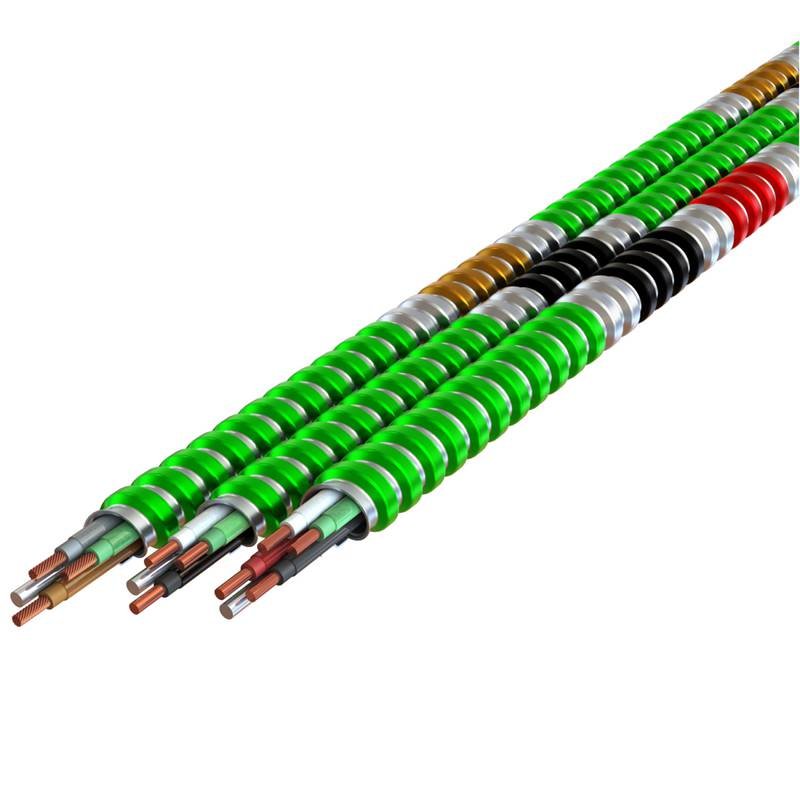
In practical terms, a medical grade MC cable refers to a multi-core cable assembly designed specifically for medical equipment, where electrical performance, mechanical reliability, and material stability must all meet a higher standard than general industrial or consumer cables.
For most customers, the real question is not “what is it,” but “will it work reliably in my device over time.” That depends on how the cable is built inside.
What does “medical grade” actually require in real projects?
In real purchasing and engineering scenarios, “medical grade” usually means the cable must meet several conditions at the same time. Missing any one of them can lead to problems later.
First is stable electrical performance. Medical devices often deal with sensitive signals. Even small fluctuations can affect readings or system behavior. This is why shielding structure, conductor quality, and pin consistency matter.
Second is mechanical durability. Many medical cables are bent repeatedly, especially in portable devices or handheld tools. A cable that fails after a few thousand cycles is not acceptable in most applications.
Third is material reliability. The cable may be exposed to cleaning agents, temperature changes, or long-term use. Materials must not crack, harden, or degrade.
Fourth is consistency in production. A sample that works well is not enough. The supplier must be able to reproduce the same quality in every batch.
Below is a practical comparison based on real project expectations:
| Requirement | General Cable | Medical Application Cable |
|---|---|---|
| Signal stability | Acceptable | Must be consistent and low-noise |
| Shielding | Basic | Often multi-layer (foil + braid) |
| Flex life | 1,000–5,000 cycles | 20,000–100,000+ cycles |
| Material | Standard PVC | TPU / TPE / Silicone options |
| Inspection | Sampling | Often 100% inspection required |
At Sino-Conn, we see many cases where customers initially use standard cables and later switch to custom medical-grade solutions after experiencing instability or durability issues.
What does MC cable mean in medical applications?
In most medical projects, MC cable refers to a multi-core cable that integrates multiple functions into one assembly. Instead of using several separate cables, engineers prefer a single cable that combines signal, power, and shielding.
This approach reduces installation complexity and improves system reliability, but it also increases design difficulty.
A typical medical MC cable may include:
- Signal conductors (for data or sensing)
- Power conductors (for device operation)
- Shielding layers (to reduce interference)
- Drain wire (for grounding stability)
- Sometimes coaxial or twisted pair structures inside
The advantage is clear: fewer connections, cleaner layout, and better integration.
The challenge is also clear: different signals inside the same cable can interfere with each other if the design is not properly controlled.
This is why simply copying the outside of a cable is not enough. The internal layout must be designed based on how the device actually works.
Which materials and structures matter most?
Customers often ask: “Which material is best?” The better question is: “Which combination works for my application?”
Different parts of the cable serve different purposes:
Conductor structure
Fine stranded copper is usually used for flexibility. Larger conductors are used for higher current. The wrong choice can lead to either stiffness or overheating.
Insulation layer
Controls electrical separation and affects cable size. Poor insulation design can lead to signal instability.
Shielding structure
This is one of the most critical parts. In many medical environments, EMI is unavoidable. A common structure is:
- Aluminum foil (for full coverage)
- Braided shielding (for strength and grounding)
Jacket material
This affects flexibility, durability, and user experience.
Below is a practical comparison:
| Material | Typical Use | Key Advantage |
|---|---|---|
| PVC | Basic equipment | Low cost |
| TPU | Portable devices | Flexible, wear-resistant |
| TPE | General medical use | Balanced performance |
| Silicone | High-end applications | Soft, high temperature resistance |
At Sino-Conn, we often adjust material selection based on real usage. For example:
- Portable devices → softer materials, smaller OD
- Fixed equipment → stronger shielding, more stable structure
Why do “same-looking” cables perform differently?
This is one of the most common problems customers face.
Two cables can look identical from the outside but perform very differently because of:
- Different conductor quality
- Different shielding coverage
- Different internal layout
- Different crimping or soldering quality
For example, a cable with 60% shielding coverage may look the same as one with 90% coverage, but in a high-interference environment, the difference becomes obvious.
Another example is pin definition. If even one wire is incorrectly mapped, the cable may partially work but fail under certain conditions.
At Sino-Conn, every project is confirmed with a drawing before production, and all cables go through three stages of inspection:
- In-process inspection
- Final inspection
- Pre-shipment inspection
This helps avoid the common issue of “sample works, batch fails.”
What information do you actually need before ordering?
Many customers hesitate because they think they need a complete specification before contacting a supplier. In reality, you can start with much less.
You can begin with:
- A sample
- A photo
- A connector model
- A simple description of the application
From there, the supplier should help you define:
- Cable structure
- Pinout
- Material
- Shielding method
- Length and tolerance
At Sino-Conn, we often receive incomplete information and help customers turn it into a complete, production-ready design.
Typical workflow:
- Receive customer input (sample / photo / drawing)
- Clarify missing parameters
- Provide drawing (30 minutes – 3 days)
- Confirm with customer
- Build sample
- Move to production
Key takeaway for customers
If you are evaluating a medical grade MC cable, focus on these points instead of appearance:
- Does the cable match your signal and power requirements?
- Is the shielding sufficient for your environment?
- Is the material suitable for your usage (flexibility, temperature, cleaning)?
- Is the structure verified with a drawing?
- Can the supplier reproduce the same quality in production?
A cable that “looks right” is not enough. A cable that “works consistently” is what really matters.
Which Applications Require Medical Grade MC Cable?
Medical grade MC cable is used in many types of equipment, but the key point is not where it is used, but why a standard cable is not enough in those applications. In most cases, customers start with a general cable and only switch to a medical-grade custom solution after encountering issues such as signal instability, interference, or short service life.
In real projects, the need for a medical-grade MC cable usually comes from three factors:
signal sensitivity, mechanical stress, and environmental conditions. When one or more of these become demanding, a standard cable often cannot meet the requirement.
Which medical devices actually require this type of cable?
Medical MC cables are commonly used in equipment where performance stability directly affects data accuracy or device reliability.
Typical applications include:
| Device Type | Why MC Cable Is Needed |
|---|---|
| Patient monitoring systems | Requires low-noise signal transmission |
| Imaging equipment (CT, ultrasound) | Needs stable signal and shielding |
| Portable diagnostic devices | Requires flexibility and small size |
| Surgical systems | Needs durability under repeated movement |
| Control consoles & modules | Requires multi-signal integration |

From a practical point of view, the more complex the device, the more likely it needs a multi-core cable solution.
For example, a monitoring system may need to transmit multiple signals at the same time. Instead of using several separate cables, engineers prefer one integrated MC cable to simplify assembly and reduce connection points.
At Sino-Conn, many customers come with requests like:
“we are currently using multiple cables, can we combine them into one?”
The answer is usually yes, but it requires careful internal design to avoid signal interference.
How are MC cables used differently in monitoring, imaging, and surgical equipment?
Even though these devices all use cables, their priorities are very different. Understanding this helps avoid choosing the wrong structure.
Monitoring equipment (ECG, patient monitors)
These systems deal with very small signals. The biggest problem here is noise.
If shielding is not strong enough or grounding is not stable, the signal can become unstable or inaccurate. In some cases, customers report “random fluctuation” or “unstable readings,” which often comes from cable design rather than the device itself.
Key requirements:
- High shielding effectiveness (often >85% coverage)
- Stable conductor quality
- Reliable grounding structure
Imaging equipment (ultrasound, CT systems)
In imaging systems, the challenge is not just noise, but signal consistency.
These systems often transmit large amounts of data. If impedance is not stable or if the internal structure is not consistent, signal loss or distortion can occur.
Key requirements:
- Controlled impedance (typically ±5%–10%)
- Low signal attenuation
- Consistent internal structure
Even small differences in cable construction can affect image quality.
Surgical and treatment equipment
In these applications, cables are frequently moved, bent, or repositioned.
The most common issue is not electrical failure, but mechanical failure:
- Cable breakage near connector
- Internal conductor fatigue
- Outer jacket damage
Key requirements:
- High flex life (often 20,000–100,000+ cycles)
- Strong strain relief design
- Durable jacket material
Portable medical devices
Portable equipment adds another layer of complexity.
Here, the cable is not just a technical component—it is part of the user experience.
If the cable is too stiff, too thick, or too heavy, it affects usability. This is especially important in handheld devices.
Key requirements:
- Small outer diameter (often 2–5mm range)
- Soft and flexible material (TPE / TPU)
- Lightweight structure
Why do some applications fail with standard cables?
Many customers initially try to use standard cables to reduce cost or simplify sourcing. The problems usually appear after installation or during testing.
Common issues include:
- Signal noise in monitoring systems
- Data instability in imaging equipment
- Cable stiffness affecting usability
- Short service life due to repeated bending
Below is a summary of typical failure reasons:
| Problem | Root Cause |
|---|---|
| Signal interference | Insufficient shielding |
| Unstable data | Poor impedance control |
| Cable breakage | Weak conductor or structure |
| Difficult installation | Cable too thick or stiff |
| Inconsistent performance | Poor manufacturing control |
These issues are often not visible from the outside. The cable may look correct but fail in actual use.
At Sino-Conn, many projects start after customers encounter these problems. The goal is not just to copy the existing cable, but to improve the structure so that the problem does not happen again.
How does application environment affect cable design?
The working environment plays a major role in cable design, but it is often overlooked in early discussions.
Key environmental factors include:
Electrical environment
If the device is used near other electronic equipment, EMI becomes more serious. Stronger shielding is required.
Mechanical usage
If the cable is frequently bent or moved, flexibility and strain relief become critical.
Space constraints
In compact devices, cable diameter must be controlled without sacrificing performance.
Cleaning and maintenance
Some cables are exposed to cleaning agents or temperature changes. Material selection becomes important.
Below is a practical reference:
| Environment | Design Priority |
|---|---|
| High EMI environment | Strong shielding (foil + braid) |
| Frequent movement | Flexible conductor + durable jacket |
| Limited space | Small OD, optimized structure |
| Chemical exposure | Resistant materials (TPE / silicone) |
At Sino-Conn, we usually ask customers about these conditions early in the project. This helps avoid redesign later.
When should you consider a custom MC cable instead of a standard one?
Not every project needs a custom cable. However, you should consider customization if you see any of the following:
- Your current cable causes signal instability
- You need to combine multiple cables into one
- The cable does not fit well in your device
- You need better flexibility or smaller size
- Your supplier cannot provide drawings or technical support
In many cases, the cost difference between a standard cable and a custom cable is small compared to the cost of system failure or redesign.
At Sino-Conn, we often help customers move from a “temporary working solution” to a “stable long-term solution.”
Key takeaway for customers
The need for a medical grade MC cable is not determined by the device name, but by the actual requirements of the application.
Before choosing a cable, ask:
- Does my application require stable, low-noise signals?
- Will the cable be bent or moved frequently?
- Is space limited inside the device?
- Are there multiple signals that can be integrated into one cable?
If the answer to any of these is yes, a standard cable may not be enough.
A properly designed MC cable can improve not only performance, but also installation efficiency and long-term reliability.
How Is Medical Grade MC Cable Designed and Manufactured?
In real projects, most problems with medical cables do not come from materials alone. They come from unclear requirements, incorrect structure definition, or inconsistent manufacturing.
Many customers believe that once they provide a sample or a part number, the cable can be reproduced directly. In practice, that is rarely enough. Two cables can look identical but behave very differently because of internal structure, shielding method, or assembly process.
A reliable medical MC cable is usually built through a structured process:
- Clarify application and missing parameters
- Define connector, pinout, and cable structure
- Confirm technical specifications
- Approve drawing before production
- Validate with samples
- Control quality during production
Skipping any step often leads to rework, delays, or performance issues.
Real Case: Fixingnal Instability in a Medical Monitoring System
What was the problem?
A customer from Germany contacted us after experiencing unstable readings in their patient monitoring system. The device worked correctly during initial testing, but once installed in a hospital environment, the signal started fluctuating.
They initially suspected the PCB or sensor module. After several internal checks, the issue was still unresolved.
What did we find?
After reviewing their existing cable, we identified several issues:
- Shielding coverage was only around 60%, not sufficient for a high-EMI hospital environment
- Grounding structure was inconsistent, leading to unstable signal reference
- The internal conductor layout mixed power and signal lines without proper separation
The cable looked correct externally, but the internal structure was not suitable for the application.
What did we change?
At Sino-Conn, we redesigned the cable based on actual usage conditions:
- Upgraded shielding to foil + high-density braided shielding (>90% coverage)
- Optimized internal layout to separate signal and power conductors
- Added a dedicated drain wire to improve grounding stability
- Adjusted outer diameter slightly to maintain flexibility while improving structure
We provided a new drawing within 1 day and delivered samples within 3 days.
What was the result?
After testing the new cable:
- Signal fluctuation was eliminated
- System readings became stable
- No additional hardware changes were required
The customer later moved to mass production with the optimized design.
What this means for you
If your system shows:
- Unstable signals
- Unexpected noise
- Intermittent issues
The problem may not be your electronics. It may be the cable.
How to define connector, pinout, and cable structure correctly?
This is the most critical step in the entire process, and also the place where most errors happen.
In many real inquiries, customers provide:
- A connector model
- A sample cable
- A photo
- Or a simple description
However, these do not fully define how the cable should work.
The most important element is pinout definition. If even one signal is connected incorrectly, the system may partially work but fail under certain conditions.
At this stage, the following must be clearly defined:
- Connector type (both ends)
- Pin-to-pin mapping (pinout)
- Signal type (power / data / mixed)
- Shield connection method (floating or grounded)
- Cable exit direction and assembly orientation
A typical mistake is focusing only on connector matching while ignoring internal wiring logic.
At Sino-Conn, we usually convert customer input into a CAD drawing within 30 minutes to 3 days, depending on complexity. This drawing includes:
- Connector model and orientation
- Pin definition
- Cable structure
- Length and tolerance
- Material notes
This step is important because once the drawing is confirmed, both sides are aligned before production starts.
What technical specifications must be confirmed before production?
After structure is defined, the next step is to confirm key performance parameters. These are not optional. They directly affect whether the cable will work in the device.
The most critical specifications include:
Shielding performance
In medical environments, EMI is common due to multiple electronic devices operating together. Poor shielding can cause unstable signals.
Typical requirement:
- Shielding coverage: 85%–100%
- Structure: foil + braid for high-performance applications
Impedance stability
For high-speed or sensitive signals, impedance must remain consistent along the cable.
Typical range:
- Impedance tolerance: ±5% to ±10%
If not controlled, signal reflection and data errors may occur.
Flexibility and bending life
For cables used in portable or moving devices, bending life is critical.
Typical range:
- Standard cable: 1,000–5,000 cycles
- Medical cable: 20,000–100,000+ cycles
This depends on conductor structure and material.
Outer diameter (OD)
Cable size affects installation and usability.
Typical range:
- Compact devices: 2–5 mm
- Standard assemblies: 5–10 mm+
Reducing OD while maintaining performance is a common challenge.
Temperature and environment
Medical cables may be exposed to temperature variation or cleaning processes.
Typical range:
- Temperature: -20°C to +105°C or higher
- Material: TPU / TPE / silicone depending on application
Below is a summary table:
| Parameter | Typical Medical Requirement |
|---|---|
| Shielding coverage | 85%–100% |
| Impedance tolerance | ±5%–10% |
| Bending life | 20,000–100,000+ cycles |
| Temperature range | -20°C to +105°C |
| Outer diameter | 2–10 mm+ |
At Sino-Conn, these parameters are discussed early to avoid redesign later.
How is a drawing created and why is it necessary?
In many failed projects, there was one common issue: no confirmed drawing before production.
Without a drawing, assumptions are made:
- Pinout may be guessed incorrectly
- Cable length tolerance may be unclear
- Shielding structure may not match application
- Connector orientation may be wrong
A proper drawing should include:
- Connector models and positions
- Pin definition
- Cable structure and layers
- Material specification
- Length and tolerance
At Sino-Conn, drawing workflow:
- Simple projects: within 30 minutes to a few hours
- Complex projects: within 1–3 days
Customers review and approve before production starts. This step alone prevents most common errors.
How are samples produced and validated?
Once the drawing is confirmed, the next step is sample production.
Typical lead time:
- Standard: around 2 weeks
- Urgent: 2–3 days
During sampling, the goal is not just to “make a cable,” but to verify:
- Electrical performance
- Mechanical fit
- Connector compatibility
- Flexibility and usability
Customers usually test:
- System functionality
- Signal stability
- Physical installation
If any issue appears, adjustments are made before moving to mass production.
This step is critical because fixing problems at sample stage is much easier than after production.
What happens during mass production?
Mass production is where consistency becomes critical.
A cable that works well as a sample must be reproduced consistently across hundreds or thousands of units.
At Sino-Conn, production control includes:
Material control
- Verified suppliers for conductors and connectors
- Stable material batches
Process control
- Standardized crimping and soldering process
- Controlled shielding termination
Assembly control
- Consistent cable length and structure
- Proper strain relief and overmolding
How is quality controlled to avoid batch issues?
Quality issues in cable projects often come from inconsistency, not design.
To avoid this, Sino-Conn uses a three-stage inspection process:
In-process inspection
Checks during production to catch early issues.
Final inspection
After assembly, ensuring electrical and mechanical performance.
Pre-shipment inspection
Before delivery, verifying overall quality.
Typical tests include:
- Continuity test
- Insulation resistance test
- High voltage test
- Visual inspection
- Pull force test
This approach ensures that the batch matches the approved sample.
Where do most cable projects fail, and how can you avoid it?
Based on real project experience, most failures come from:
| Problem | Root Cause |
|---|---|
| Wrong wiring | No clear pinout definition |
| Signal instability | Poor shielding or impedance |
| Cable breakage | Weak structure or material |
| Installation issues | Incorrect OD or stiffness |
| Batch inconsistency | Poor process control |
The best way to avoid these issues is:
- Confirm all details with a drawing
- Test samples before production
- Work with a supplier who understands your application
Key takeaway for customers
Designing and manufacturing a medical MC cable is not about copying a sample. It is about building a cable that works reliably in your specific device.
Before starting production, make sure:
- The structure is clearly defined
- The specifications match your application
- The drawing is confirmed
- The sample is tested
- The supplier can ensure consistent production
A well-designed cable reduces risk, saves time, and improves overall product performance.
Which Certifications and Standards Are Required?
In medical cable projects, certifications are often one of the first questions customers ask. But in real situations, the confusion is not about “what certifications exist,” but about which ones are actually required for this project, and which ones are just optional.
Many customers either overestimate or underestimate certification requirements. Some assume that every medical cable must meet the highest level of compliance. Others ignore certifications until the final stage, which can delay the project.
The key is to match certifications to your market, device type, and customer expectations.
Which certifications are actually required in most projects?
In real projects, a few certifications appear very frequently. These are considered “basic requirements” in many markets.
UL (Underwriters Laboratories)
UL is mainly related to electrical safety and material compliance, especially for the US market.
Typical situations where UL is required:
- Products sold in the United States
- Devices integrated into certified medical systems
- OEM customers who already follow UL standards
If UL is required, both the cable structure and materials must meet specific standards. This can affect material selection and lead time.
ROHS (Restriction of Hazardous Substances)
ROHS is almost a global baseline requirement. It restricts harmful substances such as lead, mercury, and cadmium.
Typical requirement:
- Maximum limits for hazardous substances must be below regulated levels
- Applies to most electronics and medical devices
In most cases, customers expect ROHS compliance by default.
REACH
REACH focuses on chemical safety and substance control, especially in Europe.
Typical scenarios:
- Products entering EU markets
- Customers requiring full material transparency
REACH is often requested together with ROHS.
ISO 9001 / ISO 14001
These are not product certifications, but factory-level certifications.
- ISO 9001 → Quality management system
- ISO 14001 → Environmental management
Customers use these to evaluate whether the supplier has a stable production system.
Below is a simplified overview:
| Certification | What It Covers | When It Is Required |
|---|---|---|
| UL | Electrical safety | US market, system-level certification |
| ROHS | Hazardous substances | Global baseline |
| REACH | Chemical compliance | EU market |
| ISO 9001 | Quality system | Supplier evaluation |
| ISO 14001 | Environmental system | Supplier evaluation |
At Sino-Conn, these certifications are commonly provided as part of project documentation when required.
Do all medical cables need special medical certifications?
This is one of the most misunderstood questions.
The answer is: not all medical cables require special medical certification.
It depends on how the cable is used.
When special requirements are needed:
- The cable has direct or indirect contact with the human body
- The device requires strict regulatory approval
- The cable is part of a certified medical system
When basic certifications are usually enough:
- Internal wiring inside equipment
- Cable assemblies not exposed to patients
- Non-critical signal transmission
In many cases, customers initially think they need “medical certification,” but after clarification, standard compliance (UL + ROHS + REACH) is sufficient.
What about biocompatibility and special material requirements?
Biocompatibility becomes important when the cable interacts with the human body.
Typical scenarios:
- Patient monitoring leads
- Wearable medical devices
- Skin-contact components
In these cases, materials must not cause irritation or chemical risk.
However, for many internal cables, biocompatibility is not required.
Other common material-related requirements include:
- Halogen-free (low smoke, safer in fire conditions)
- Flame retardant
- Resistance to cleaning chemicals
- UV resistance (for certain environments)
Below is a practical reference:
| Requirement | When It Matters |
|---|---|
| Biocompatibility | Skin contact applications |
| Halogen-free | Safety-focused environments |
| Flame retardant | Equipment safety requirements |
| Chemical resistance | Cleaning or sterilization exposure |
At Sino-Conn, material selection is usually based on how the cable will actually be used, not just general assumptions.
How do certification requirements differ by region?
Certification requirements are not the same across all markets. This is important for customers planning global sales.
United States
- UL is often required
- Strong focus on safety standards
Europe
- ROHS + REACH are essential
- Chemical compliance is strictly monitored
Asia (Japan, Korea, Southeast Asia)
- Requirements vary
- Often follow international standards but may be less strict depending on application
India and emerging markets
- More flexible requirements
- Cost sensitivity is higher
| Region | Key Focus |
|---|---|
| USA | UL compliance |
| Europe | ROHS + REACH |
| Japan/Korea | High quality expectations |
| Southeast Asia | Cost-performance balance |
Understanding your target market early helps avoid delays later.
What documents should your supplier provide?
Customers often ask for certifications, but what they actually need are complete supporting documents.
Typical documentation includes:
- Material compliance reports (ROHS / REACH)
- Certification copies (UL, ISO)
- Cable specifications (structure, material, electrical data)
- Drawings (approved before production)
At Sino-Conn, we usually provide:
- Detailed specification sheets
- Connector and cable material information
- CAD drawings converted to PDF for confirmation
- Compliance documents when required
This helps customers move faster in internal approval and certification processes.
What are the most common mistakes customers make?
From real project experience, certification-related issues often come from misunderstanding requirements.
Common mistakes include:
Requesting unnecessary certifications
This increases cost and lead time without real benefit.
Ignoring certification until late stage
This can delay shipment or approval.
Assuming all cables are the same
Different materials and structures may require different compliance checks.
Not confirming documentation early
Missing documents can slow down purchasing or certification processes.
How to choose the right level of certification?
The best approach is simple: match certification to your actual application and market.
Ask these questions:
- Where will the product be sold?
- Does the cable interact with the human body?
- Is the device already certified or in certification process?
- What does your customer or system integrator require?
Once these are clear, the required certifications become much easier to define.
Key takeaway for customers
Certifications are important, but they should not be treated as a checklist without context.
Focus on:
- Meeting the requirements of your market
- Supporting your device certification process
- Ensuring material safety and compliance
- Working with a supplier who can provide complete documentation
At Sino-Conn, the goal is not just to provide certificates, but to help customers choose the right level of compliance without unnecessary cost or delay.
How to Choose the Right Medical Grade MC Cable Supplier?
Choosing a cable supplier is often more important than choosing the cable itself. In many projects, the failure does not come from the design concept—it comes from execution. A drawing may look correct, a sample may pass initial testing, but once production starts, problems appear: inconsistent crimping, unstable shielding, connector mismatch, delayed delivery, or lack of communication.
A reliable supplier should not only be able to “make cables.” They should be able to understand your application, identify risks early, and help you avoid problems before they happen.
What should engineers vs purchasing teams focus on?
Different roles inside a company evaluate suppliers differently, and both perspectives are important.
Engineers usually care about whether the cable can actually work. They focus on:
- Whether the supplier understands signal types and application scenarios
- Whether pinout and structure can be correctly defined
- Whether the supplier can provide drawings quickly and accurately
- Whether technical discussions are clear and efficient
Purchasing teams, on the other hand, focus more on:
- Price competitiveness
- Lead time stability
- Supply continuity
- Payment terms
The problem is that many suppliers only satisfy one side. Some are cheap but lack engineering capability. Others are technically strong but slow or inflexible.
A good supplier should balance both.
| Evaluation Area | What Engineers Care About | What Purchasing Cares About |
|---|---|---|
| Technical capability | Correct design, stable performance | Risk of failure and returns |
| Price | Secondary | Primary |
| Lead time | Important for testing | Critical for planning |
| Communication | Clear technical support | Fast response |
| Flexibility | Custom design support | MOQ, payment terms |
At Sino-Conn, most projects start with engineers, then move to purchasing. That is why early-stage technical support and later-stage production stability must both be strong.
How to evaluate customization capability and response speed?
Customization is not just about saying “yes, we can do it.” It is about how efficiently and accurately the supplier can turn your requirement into a working product.
In real projects, speed is often the difference between winning and losing an order.
Here are a few practical indicators you can use to evaluate a supplier:
Drawing capability
- Can they provide a clear drawing based on your input?
- How fast can they deliver it?
- Is the drawing detailed enough for confirmation?
At Sino-Conn, drawings can be delivered in as fast as 30 minutes for simple projects, and within 1–3 days for more complex designs.

Sample turnaround
- Standard sample lead time is usually around 2 weeks
- Urgent projects can be completed in 2–3 days
Technical communication
- Do they ask the right questions?
- Do they identify missing parameters?
- Can they explain design choices clearly?
Flexibility in requirements
- Can they adjust length, pin definition, material, and structure?
- Can they support both small quantity prototypes and large-scale production?
One of the most common issues customers face is slow response. Waiting several days just to confirm a drawing can delay the entire project. Fast response does not just save time—it reduces uncertainty.
Is OEM or alternative connector better for your project?
This is a very common and practical question in real projects.
Many customers prefer original connectors because they trust brand quality. However, original connectors often come with:
- Higher cost
- Longer lead time
- Limited flexibility for small quantities
On the other hand, equivalent (compatible) connectors can offer:
- Lower cost
- Faster availability
- More flexibility in customization
The key point is that performance is often very close if the alternative is properly selected and validated.
| Option | When It Works Best |
|---|---|
| Original connector | High-volume production, strict brand requirement |
| Equivalent connector | Prototyping, cost-sensitive projects, faster delivery |
At Sino-Conn, we usually provide both options and explain the difference clearly, so customers can make an informed decision based on their priorities.
How do lead time, MOQ, and pricing affect your decision?
These three factors often determine whether a project can move forward smoothly.
Lead time
In medical projects, delays in cable delivery can delay the entire device development. Fast sampling and stable production timelines are critical.
Typical reference:
- Sample: 2 weeks (as fast as 2–3 days)
- Mass production: 3–4 weeks (urgent orders around 2 weeks)
MOQ (Minimum Order Quantity)
Many suppliers require high MOQ, which creates problems for prototyping or small projects.
At Sino-Conn:
- No MOQ
- 1 piece is acceptable for prototype
This is especially helpful for engineering teams that need to test before scaling up.
Pricing
Price is not just about the lowest number. It depends on:
- Connector choice (original vs equivalent)
- Material selection
- Structure complexity
- Order quantity
Different markets also have different pricing expectations. For example:
| Region | Typical Price Level |
|---|---|
| USA / Germany | Higher |
| Japan / Korea | Medium to high |
| India / Southeast Asia | Lower |
The best approach is to balance performance, cost, and delivery—not optimize only one.
Ready to Start Your Medical Cable Project?
If you are working on a medical device, you probably already know that the cable is not just a small component. It directly affects signal stability, product reliability, and user experience.
The fastest way to move forward is not to search endlessly for standard products, but to define your requirement clearly and work with a supplier who can turn that requirement into a reliable cable assembly.
At Sino-Conn, we work with different types of customers:
- Engineers who need technical support and fast prototyping
- OEM factories that require stable production and competitive pricing
- Distributors who need flexible solutions and fast response
What we provide is not just manufacturing, but a complete support process:
- Fast drawing support (30 minutes to 3 days)
- Sample delivery as fast as 2–3 days
- No MOQ for prototyping
- Flexible connector options (original or equivalent)
- Full inspection process (in-process + final + pre-shipment)
- Complete documentation (UL, ISO, ROHS, REACH, etc.)
If you already have:
- A drawing
- A sample
- A connector model
- Or even just a photo
You can send it to us, and we will help you define the correct cable structure and provide a workable solution.
If you are still at the early stage and not sure about the exact specifications, that is also fine. We can work with you step by step to clarify the requirements and avoid common mistakes.
Start your inquiry today and get a response within hours, not days.
Related Keywords :medical grade mc cable, medical cable assembly, custom medical cable, medical cable manufacturer, medical wire harness, medical device cable, mc cable, shielded medical cable, flexible medical cable, low noise cable, medical connector cable, custom cable assembly, EMI shielding cable, medical equipment wiring, silicone medical cable, TPU medical cable, medical cable supplier, UL medical cable, ISO cable assembly, custom wire harness manufacturer

With over 18 years of OEM/ODM cable assemblies industry experience, I would be happy to share with you the valuable knowledge related to cable assemblies products from the perspective of a leading supplier in China.
manufacturer catalogue
Get A Sample Now From Factory→
Get a quote quickly
Here, developing your OEM/ODM custom cable assemblies collection is no longer a challenge—it’s an excellent opportunity to bring your creative vision to life.