Skip to content
Automotive Electrical Connectors Types: A Complete Guide to Selection and Applications
- andy
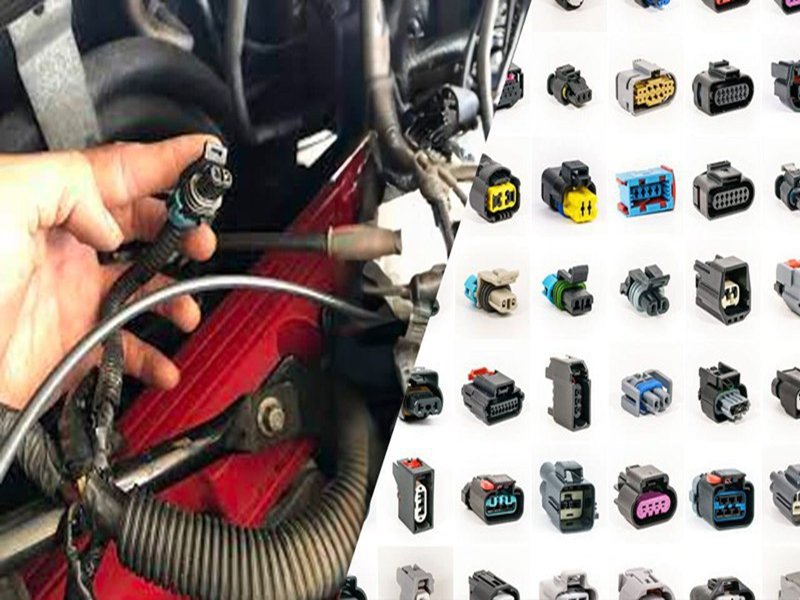
Automotive electrical connectors are rarely noticed when a vehicle works as expected—and immediately blamed when something fails. A modern car contains hundreds, sometimes thousands, of connectors linking sensors, ECUs, actuators, power modules, lighting systems, and infotainment devices. Yet many buyers and even non-specialist engineers still treat connectors as interchangeable parts, chosen late in the design process or copied from existing models without deeper evaluation.
This mindset creates hidden risks. Connectors are not just passive interfaces; they define how signals survive noise, how power flows under load, and how assemblies tolerate vibration, heat, moisture, oil, and long-term mechanical stress. In real projects, connector-related issues often appear months after production, when redesign is costly and timelines are already tight.
Automotive electrical connectors are specialized components designed to ensure reliable electrical and mechanical connections in vehicles. They are classified by application, function, structure, and environmental protection. Choosing the right connector involves evaluating electrical ratings, mechanical durability, sealing requirements, termination methods, and production constraints. Proper connector selection reduces failure risks, improves assembly reliability, and supports efficient custom wire harness manufacturing.
Behind every “simple” connector choice lies a series of trade-offs—cost versus flexibility, original versus alternative parts, crimp versus solder, speed versus customization. Understanding these trade-offs is what separates smooth projects from painful ones. In the sections below, we break down automotive electrical connector types from an engineering and manufacturing perspective, so you can make decisions with clarity instead of assumptions.
What Are Automotive Electrical Connectors?
Automotive electrical connectors are components that join wires, cables, or circuits within a vehicle, enabling electrical signals and power to pass reliably under harsh operating conditions. Unlike consumer connectors, they are designed for vibration resistance, temperature extremes, moisture exposure, and long service life. They are a core part of every automotive wire harness and directly impact system reliability.

What Role Do Connectors Play in Automotive Wire Harnesses?
In a wire harness, connectors serve as controlled interfaces between subsystems. They allow modules to be assembled, serviced, or replaced without rewiring the entire system. From an engineering standpoint, connectors define where mechanical stress concentrates, where EMI shielding must be terminated, and where failures are statistically most likely to occur.
Field data consistently shows that connector interfaces—not cables—are the most common failure points in automotive electrical systems. This is because connectors experience repeated mating cycles, vibration-induced micro-movement, and environmental exposure at the vehicle’s edges. A well-designed harness can only perform as well as its weakest connector interface.
Why Automotive Connectors Are Different from Industrial or Consumer Types
Automotive connectors must operate across wide temperature ranges, often from −40 °C to +125 °C or higher. They must survive continuous vibration, engine heat, oil mist, road salt, humidity, and UV exposure. Consumer connectors prioritize convenience; automotive connectors prioritize durability and predictability over a decade or more of service life.
Which Types of Automotive Electrical Connectors Are Most Common?
Automotive electrical connectors are not categorized by a single standard. In real vehicle platforms, connectors are selected based on where they are used, what they carry, and what conditions they must survive. Understanding the most common connector types therefore requires looking at them from multiple, overlapping perspectives rather than a single list.
From an engineering standpoint, most automotive electrical connectors fall into a few core groups: application-based connectors, function-based connectors, and environment-based connectors. Each group answers a different design question—where is it used, what does it carry, and what does it need to withstand. Engineers typically start with application, then refine the choice using electrical and mechanical constraints.
Application-Based Connector Types
One of the most practical ways to classify automotive connectors is by where they are used in the vehicle. Different vehicle zones impose very different electrical and mechanical demands, and connectors are designed accordingly.
Common Automotive Connectors by Application Area
| Application Area | Typical Systems | Key Design Priorities |
|---|---|---|
| Powertrain | Engine sensors, injectors, ECUs | High temperature resistance, vibration tolerance, oil resistance |
| Chassis & Safety | ABS, airbags, steering systems | Secure locking, signal stability, anti-vibration |
| Body Electronics | Lighting, door modules, mirrors | Compact size, assembly efficiency |
| Interior Systems | Infotainment, HVAC, dashboards | Cost control, ease of mating, space saving |
This classification matters because a connector designed for interior electronics may fail rapidly if reused in a powertrain or underbody environment without upgraded materials or sealing.
Function-Based Connector Types: Signal vs Power
Another essential distinction is what the connector is electrically responsible for. Automotive connectors are commonly divided into signal connectors, power connectors, and hybrid designs.
Signal vs Power Automotive Connectors
| Parameter | Signal Connectors | Power Connectors |
|---|---|---|
| Typical Current | Low (mA to a few A) | High (several A to 100 A+) |
| Main Concern | Signal integrity, EMI control | Heat dissipation, voltage drop |
| Terminal Size | Small, precise | Larger, thicker |
| Common Use | Sensors, data lines, control signals | Batteries, motors, heaters |
In many modern vehicles, hybrid connectors combine both signal and power circuits in a single housing. While this reduces harness size and routing complexity, it increases design requirements for insulation, thermal management, and assembly precision.
Environment-Based Connector Types: Sealed vs Unsealed
Environmental exposure is another major factor that defines connector type.
Sealed connectors are designed to block water, dust, and contaminants using gaskets, wire seals, or overmolded structures. They are essential for engine compartments, exterior lighting, and underbody applications.
Unsealed connectors are smaller and more cost-effective but are limited to protected interior environments.
Sealed vs Unsealed Automotive Connectors
| Feature | Sealed Connectors | Unsealed Connectors |
|---|---|---|
| Water & Dust Protection | High | Low |
| Typical Use Area | Engine bay, exterior, underbody | Interior modules |
| Size & Cost | Larger, higher cost | Smaller, lower cost |
| Failure Risk in Harsh Areas | Low | High |
A large number of field failures can be traced back to unsealed connectors being used outside their intended environment, especially in regions with high humidity, temperature fluctuation, or road salt exposure.
Why These Connector Categories Matter in Real Projects
In practice, automotive connector selection is rarely about choosing “the best” connector type in isolation. It is about choosing the most appropriate connector for a specific application, electrical load, and operating environment.
A connector that meets electrical requirements but lacks mechanical robustness—or adequate sealing—can become the weakest point in an otherwise well-designed wire harness. For OEMs, engineers, and buyers, understanding these common connector categories helps reduce miscommunication, avoid overdesign or underdesign, and shorten development cycles.
It also makes discussions with wire harness manufacturers far more efficient, especially when early-stage inquiries are based only on photos, legacy part numbers, or incomplete specifications.
How Are Automotive Electrical Connectors Classified by Structure?
Structurally, automotive connectors are classified by sealing, locking mechanisms, and terminal design. Key distinctions include sealed versus unsealed housings, different latch and secondary lock systems, and terminal retention methods. Structural choices directly affect vibration resistance, environmental protection, serviceability, and long-term reliability.
What Is the Difference Between Sealed and Unsealed Connectors?
Sealed connectors use gaskets, wire seals, or overmolded structures to prevent water, dust, and contaminants from entering. They are essential for engine bays, underbody areas, and exterior applications. Unsealed connectors are smaller and cheaper but limited to protected interior environments.
Choosing sealed designs increases cost and size but dramatically reduces failure risk in harsh environments. Many field failures trace back to unsealed connectors being used outside their intended conditions.
How Do Locking and Terminal Structures Differ?
Locking systems prevent accidental disengagement under vibration. Secondary locks ensure terminals remain fully seated even if the primary latch is stressed. Terminal structures vary in contact geometry, plating, and retention force, all of which influence electrical stability over time.
What Electrical and Mechanical Specifications Matter Most?
Key specifications include voltage and current ratings, impedance and EMI shielding needs, connector dimensions, mating cycles, temperature resistance, chemical resistance, and strain relief design. These parameters must be evaluated together, not in isolation, to ensure long-term performance in automotive environments.
Which Electrical Parameters Should Be Confirmed First?
Voltage and current ratings set the baseline. Impedance matters for high-speed signals. EMI shielding requirements dictate connector shell design and grounding methods. Ignoring these factors early often leads to late-stage redesigns.
What Mechanical Factors Affect Connector Reliability?
Mechanical stress concentrates at connector transitions. Strain relief, bending radius, housing material, and mating durability all influence lifespan. Automotive connectors are mechanical components as much as electrical ones.
Key Specification Checklist
| Category | Parameters |
|---|---|
| Electrical | Voltage, current, impedance |
| Mechanical | Size, latch, strain relief |
| Environment | Temperature, oil, moisture |
| Lifecycle | Mating cycles, vibration |
How Do OEMs and Engineers Choose the Right Connector Type?
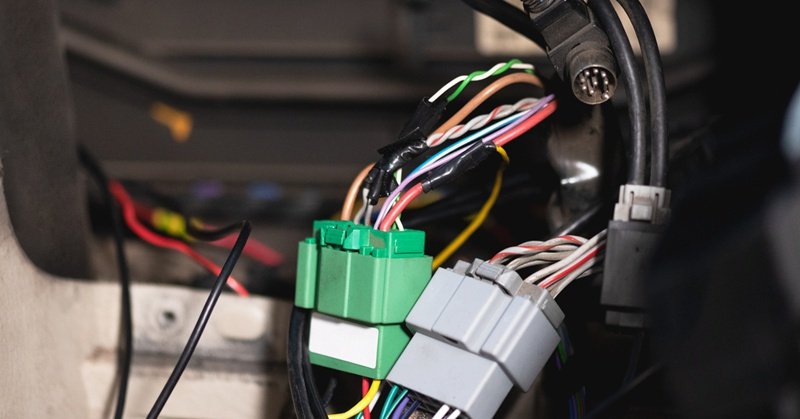
Choosing the right automotive electrical connector is rarely a single-step decision. In real-world projects, connector selection is the result of multiple trade-offs between engineering requirements, manufacturing constraints, cost targets, and supply chain realities. OEMs and engineers approach this process differently depending on their role, project stage, and production volume—but the goal is always the same: long-term reliability with minimal risk.
In practice, the most successful projects treat connector selection as a cross-functional decision, not just a catalog choice. Engineering teams focus on performance and integration, while OEM factories and purchasing teams evaluate feasibility, lead time, and cost stability. A connector that looks ideal on paper may still fail at scale if it cannot be sourced, assembled, or validated efficiently.
Is It Better to Crimp or Solder Automotive Wiring?
One of the most common questions in automotive wiring is whether crimping or soldering provides a better connection. In modern automotive wire harness production, crimping is overwhelmingly preferred—and for good reason.
Crimped connections, when performed with controlled tooling and verified parameters, create a gas-tight mechanical bond between the terminal and conductor. This structure tolerates vibration, thermal cycling, and long-term mechanical stress far better than soldered joints. Soldering, while electrically sound, introduces stiffness at the joint, which can concentrate stress and lead to fatigue failures under vibration.
For this reason, soldering is typically limited to repair work, low-vibration electronics, or specific niche applications—not high-volume automotive harnesses.
Crimp vs Solder in Automotive Wire Harnesses
| Factor | Crimping | Soldering |
|---|---|---|
| Vibration Resistance | High | Lower |
| Process Consistency | High (tool-controlled) | Operator-dependent |
| Mechanical Flexibility | Maintained | Reduced |
| Automotive Production Use | Standard | Limited |
How Do Engineers Select Connectors During R&D?
During the R&D phase, engineers prioritize technical feasibility and system integration over cost optimization. Connector selection at this stage focuses on whether the connector can physically fit, function electrically, and survive the intended environment.
Engineers typically evaluate connector pin count, pinout definition, mating orientation, shielding continuity, and routing constraints. Drawings and early samples play a critical role here, especially when initial requirements are incomplete or based on reference photos rather than full specifications.
At this stage, flexibility matters more than unit price. Engineers often prefer connector solutions that allow minor adjustments to housing, pin assignment, or cable construction as the design evolves.
R&D Connector Selection Priorities
| Priority | Why It Matters |
|---|---|
| Fit & Dimensions | Must integrate with housings and enclosures |
| Pinout Definition | Ensures correct signal and power mapping |
| Electrical Performance | Prevents signal integrity or EMI issues |
| Design Flexibility | Supports iteration and validation |
What Do OEM Factories and Buyers Care About Most?
Once a design moves toward production, priorities shift. OEM factories and purchasing teams focus on repeatability, supply stability, and cost control. A connector that performs well in prototypes may still be rejected if it cannot be sourced consistently or assembled efficiently at scale.
OEM buyers evaluate connector availability, lead time, tooling requirements, quality control history, and payment terms. In many cases, they must balance the preference for original connectors with the practical advantages of alternative options that offer shorter lead times and greater flexibility.
Price sensitivity also varies by region and industry. Automotive OEMs expect predictable pricing and delivery, especially for long-term programs.
Engineering vs OEM Purchasing Priorities
| Aspect | R&D Engineers | OEM Factories / Buyers |
|---|---|---|
| Main Focus | Performance & feasibility | Cost & supply stability |
| Connector Flexibility | Very important | Secondary |
| Lead Time | Moderate concern | High concern |
| Documentation & QC | Validation-focused | Audit-focused |
Why Supplier Capability Influences Connector Choice
An often-overlooked factor in connector selection is supplier capability. A manufacturer that can quickly provide drawings, samples, and clear technical feedback reduces decision risk for both engineers and buyers.
When suppliers support CAD-to-PDF drawings, fast prototyping, and no-MOQ builds, connector selection becomes a collaborative process rather than a bottleneck. This is especially valuable when projects start with limited information—such as photos, partial part numbers, or legacy designs.
In these cases, the “right” connector is not just the one that meets specifications, but the one that can be validated, produced, and supported throughout the product lifecycle.
Why This Decision Process Matters
Connector selection directly affects development timelines, production yield, and long-term reliability. Projects that align engineering intent with OEM manufacturing realities experience fewer late-stage changes and smoother transitions from prototype to mass production.
For customers evaluating custom wire harness solutions, understanding how OEMs and engineers choose connectors makes technical discussions more efficient and reduces the risk of costly misalignment.
Are Original or Alternative Automotive Connectors Better?
Original connectors offer brand assurance and documentation but often have longer lead times and limited flexibility. Alternative connectors provide comparable performance with faster delivery and greater customization options. The better choice depends on volume, timeline, and design flexibility needs.
Original connectors are preferred in high-volume, locked designs. Alternatives excel in prototypes, small batches, and custom assemblies where speed and adaptability matter most.
How Can a Custom Wire Harness Manufacturer Support Connector Selection?
An experienced custom wire harness manufacturer supports connector selection by providing drawings, samples, fast feedback, flexible sourcing, and full specification alignment before production. This reduces risk, shortens development cycles, and improves project outcomes.
Clear drawings, rapid samples, no MOQ, and multiple sourcing options allow projects to move forward without unnecessary delays. Connector selection becomes a collaborative process rather than a bottleneck.
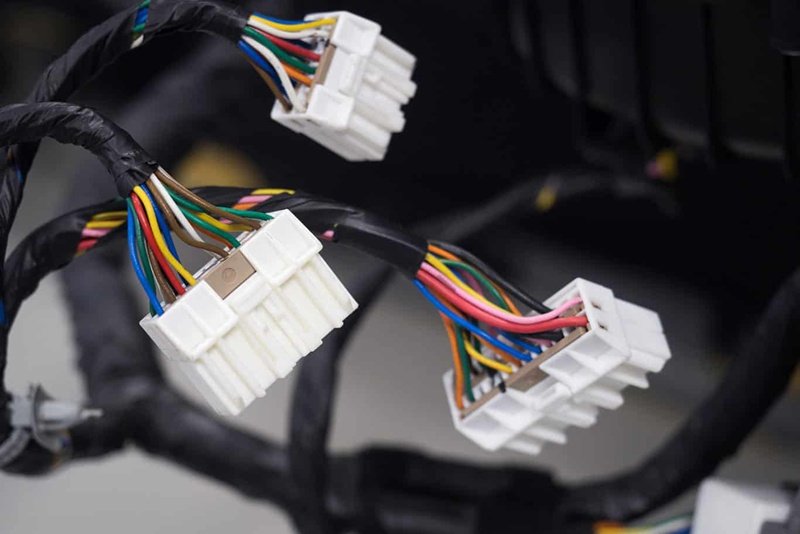
Ready to Specify Your Automotive Connector Solution?
Every automotive project is different. Connector selection should reflect your application, timeline, volume, and long-term reliability goals—not assumptions or copied designs. If you are evaluating connector types, comparing crimp and solder options, or building a custom wire harness from drawings, photos, or incomplete specifications, Sino-Conn can support you from concept to production.
Contact Sino-Conn to discuss your automotive electrical connector and custom cable assembly requirements, request drawings, samples, or a tailored quotation, and turn uncertainty into a validated solution.
Related Keywords :automotive electrical connectors, automotive connector types, wire harness connectors, automotive wiring connectors, crimp vs solder automotive, custom wire harness, automotive cable assembly, sealed automotive connectors, OEM automotive connectors, connector selection guide

With over 18 years of OEM/ODM cable assemblies industry experience, I would be happy to share with you the valuable knowledge related to cable assemblies products from the perspective of a leading supplier in China.
manufacturer catalogue
Get A Sample Now From Factory→
Get a quote quickly
Here, developing your OEM/ODM custom cable assemblies collection is no longer a challenge—it’s an excellent opportunity to bring your creative vision to life.