Skip to content
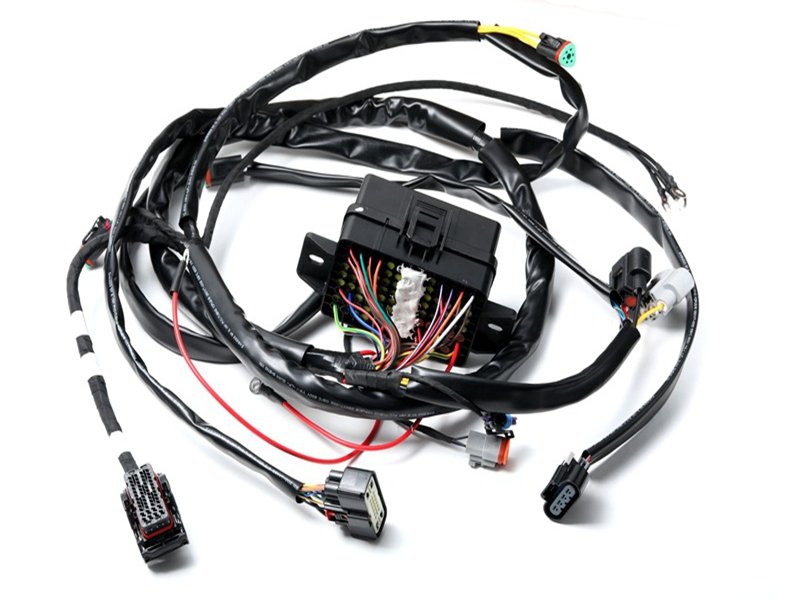
A modern car runs on wiring. The vehicle may look mechanical from the outside, but underneath, it’s a network of power lines and signal paths feeding dozens to hundreds of modules—engine control, lighting, braking sensors, safety systems, infotainment, and, in EVs, high-voltage power distribution. When a wiring harness in car fails, the symptom usually shows up somewhere else: a warning light, a sensor fault, a control module that “sometimes works.” That is why harness issues are expensive—diagnosis often takes longer than the repair.
Car manufacturers don’t use one universal harness because different areas of a vehicle live in different worlds. The engine bay sees heat, oil, and vibration. The underbody sees water and debris. The cabin sees dense electronics and EMI. Each zone needs a different design strategy: wire gauge, insulation, shielding, connector locking, abrasion protection, and routing control.
Types of wiring harness in car are grouped by vehicle zone and function—engine, body, chassis, dashboard, and power. Each wiring harness in car uses different wire gauges, insulation, shielding, and connectors to match its environment and electrical load. Understanding these types helps engineers and sourcing teams avoid overheating, signal noise, fatigue breaks, and rework during assembly and service.
If you’ve ever chased an “electrical ghost” in a car, you know the truth: the harness isn’t always the problem, but it’s always a suspect worth understanding.
What Is Wiring Harness in Car?
A wiring harness in car is not just a bundle of wires. It is a pre-engineered electrical system designed to distribute power and signals safely and consistently across the vehicle, while surviving mechanical stress, heat, vibration, and environmental exposure for years of operation.
In practical automotive manufacturing, a wiring harness in car serves as the physical backbone of the vehicle’s electrical architecture. Every sensor, control unit, actuator, and power consumer relies on the harness to deliver stable voltage and accurate signals. If the harness design or build quality is weak, the vehicle may still function—but reliability, diagnostics, and long-term durability will suffer.
From an engineering standpoint, a wiring harness in car integrates electrical design, mechanical protection, and assembly efficiency into one controlled product. It reduces assembly errors, standardizes routing, and ensures that electrical behavior remains predictable under real driving conditions.
What a wiring harness in car actually includes
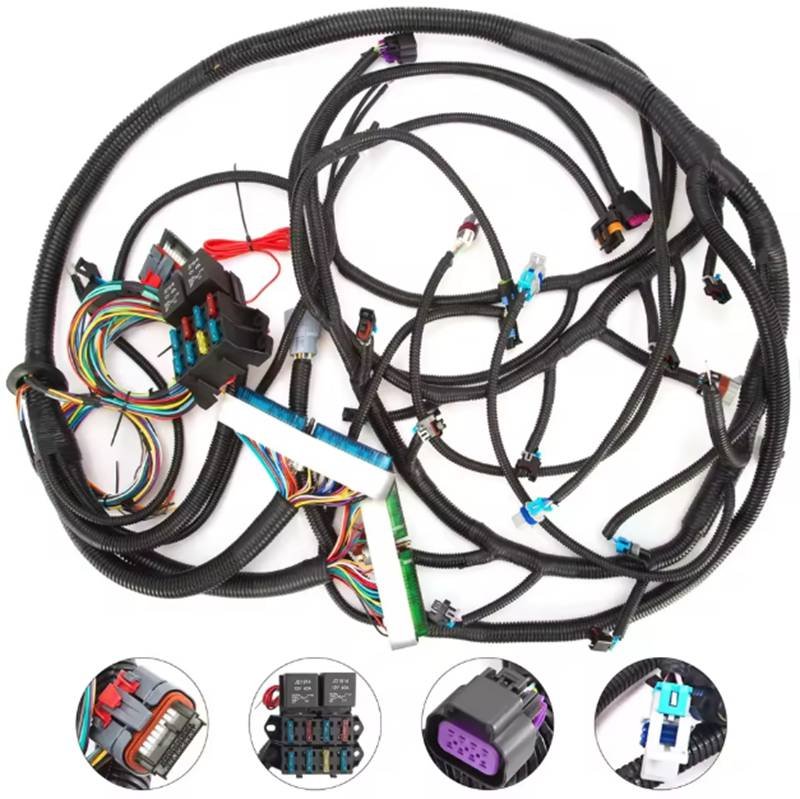
Many sourcing mistakes happen because people think a harness equals “wire + connector.” In reality, a wiring harness in car includes multiple engineered elements:
- Conductors Selected by current load, voltage drop, and flex life. Wire gauge is not chosen only by amperage, but also by heat buildup and routing length.
- Terminals and connectors Defined by mating cycles, locking force, sealing level, and vibration resistance. Connector choice directly affects serviceability and failure rate.
- Insulation and jackets Chosen based on temperature, oil exposure, abrasion, and aging behavior—not just cost.
- Protection system Looms, tapes, sleeves, grommets, and clips that prevent abrasion, noise, and fatigue.
- Routing logic Branch lengths, bend radius control, fixing points, and slack management.
A harness that skips protection or routing control may pass initial electrical tests but fail mechanically months later.
What a wiring harness in car must do in real use
A properly designed wiring harness in car must satisfy both electrical and mechanical requirements at the same time.
Electrical responsibilities
- deliver correct voltage and current without excessive drop
- maintain signal integrity for sensors and communication lines
- prevent short circuits and leakage
- minimize electromagnetic interference through routing and shielding
Mechanical responsibilities
- survive continuous vibration from driving
- tolerate temperature cycles from cold start to hot operation
- withstand repeated bending in doors, tailgates, and hinges
- resist abrasion, moisture, oil, and road debris
Most harness failures occur when one side is considered and the other is ignored.
Why wiring harness in car failures are hard to diagnose

Unlike electronic components, wiring harness failures often appear as secondary symptoms.
Common real-world scenarios:
- a sensor reports unstable values → root cause is a fatigued conductor
- a warning light appears randomly → root cause is connector fretting
- a module resets intermittently → root cause is voltage drop under load
Because harnesses are hidden behind panels, dashboards, and engine covers, diagnosis often starts elsewhere. This is why OEMs invest heavily in harness design quality upfront—to avoid invisible problems later.
Key specification points customers should define
When specifying a wiring harness in car, customers should clearly define more than just length and connector model.
| Specification item | Why it matters |
|---|---|
| Current load / fuse rating | prevents overheating |
| Wire gauge & strand count | affects heat and flex life |
| Installation zone | defines material and protection |
| Temperature range | prevents insulation aging |
| Sealing requirement | controls moisture ingress |
| Movement (static / flexing) | determines fatigue resistance |
| EMI sensitivity | affects routing and shielding |
| Branch tolerance | prevents installation stress |
How wiring harness in car design affects cost over time
A cheaper harness at purchase price can become the most expensive part in the vehicle lifecycle.
Cost drivers influenced by harness design:
- assembly time on the production line
- service and diagnostic labor
- warranty claims and recalls
- customer satisfaction
For example:
- undersized wire saves cents but increases heat and failure risk
- poor routing saves time in design but causes long-term fatigue
- low-quality terminals save cost but increase contact resistance
This is why experienced OEMs evaluate harnesses by total cost of ownership, not unit price alone.
How Sino-Conn approaches wiring harness in car projects
Sino-Conn treats a wiring harness in car as a controlled system, not an item pulled from a catalog.
Key practices include:
- confirming installation zone and environment first
- rebuilding incomplete input into clear drawings
- locking pinout and branch lengths before production
- applying 100% inspection rather than sampling
- offering connector and material options based on lead time and risk
This approach helps ensure that the harness you approve as a sample behaves the same way in production and in real vehicle use.
What Types of Wiring Harness in Car Are Used?
Types of wiring harness in car are defined by where the harness is installed and what it must survive, not simply by function names. A harness designed for the engine bay cannot be safely reused in the cabin, and a body harness will fail quickly if routed under the chassis. Each type exists because the electrical load, movement, temperature, and exposure are fundamentally different.
From an engineering perspective, classifying wiring harness in car by type helps answer four critical questions early:
- What environment will the harness face?
- How much current and signal sensitivity does it carry?
- How much movement or vibration will it see?
- What protection level is required to meet vehicle life targets?
Below are the main wiring harness types used in cars, explained the way engineers and sourcing teams actually evaluate them.
Engine wiring harness in car
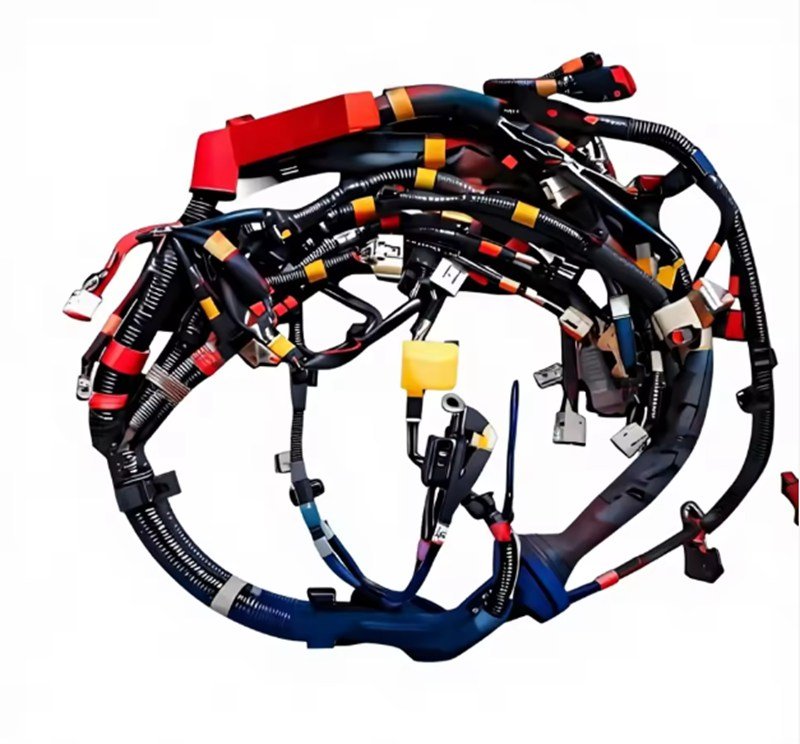
The engine wiring harness in car operates in the harshest zone of the vehicle.
Primary role
- connect engine sensors, actuators, injectors, ignition coils, and ECU interfaces
Typical electrical range
- low-voltage signal lines (5–12 V sensors)
- medium-current control circuits
- localized high-current feeds
Environmental stress
- continuous ambient temperatures often exceeding 100°C
- oil, fuel vapor, coolant exposure
- constant vibration from engine operation
Key design differences
- heat-resistant insulation and jackets
- reinforced strain relief at connectors
- abrasion sleeves near metal brackets
- tight control of branch exit angles
Common failure modes
- insulation hardening and cracking
- conductor breakage near connectors
- intermittent sensor faults
Body wiring harness in car
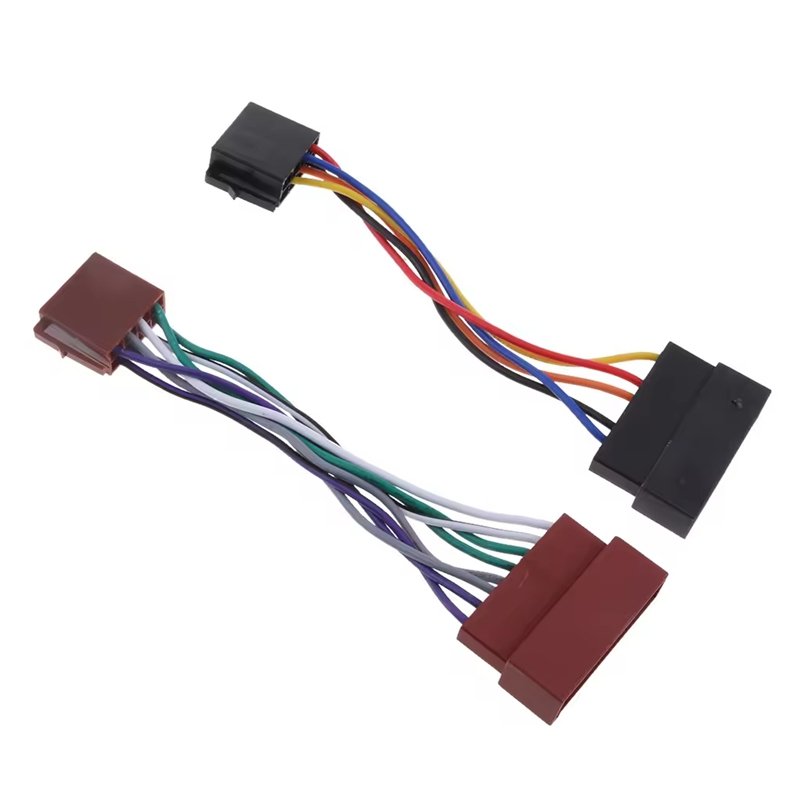
The body wiring harness in car serves comfort, lighting, and body control functions.
Primary role
- connect doors, windows, mirrors, lighting, seats, locks, and body control modules
Typical electrical range
- low to medium current
- mixed signal and power lines
Environmental stress
- moderate temperature
- frequent movement (doors, tailgate)
- limited exposure to fluids
Key design differences
- fine-strand conductors for flex life
- carefully controlled bend radius
- compact routing to fit body channels
Common failure modes
- conductor fatigue at hinge areas
- broken signals after repeated door cycles
Chassis wiring harness in car

The chassis wiring harness in car is installed along the vehicle underbody or frame.
Primary role
- connect ABS sensors, suspension sensors, underbody electronics
Typical electrical range
- low-voltage sensor signals
- stable reference and ground paths
Environmental stress
- water splash, mud, road salt
- stone impact and debris
- wide temperature variation
Key design differences
- sealed connectors and grommets
- thick outer jackets or conduits
- strong fixing points to prevent movement
Common failure modes
- corrosion at terminals
- jacket abrasion leading to shorts
Dashboard wiring harness in car

The dashboard wiring harness in car supports driver interface and control electronics.
Primary role
- connect instrument clusters, infotainment, HVAC, switches, ADAS interfaces
Typical electrical range
- low-voltage signals
- data and communication lines
Environmental stress
- lower temperature
- high electronic density
- increased EMI risk
Key design differences
- clean separation of power and signal paths
- careful branch labeling and organization
- EMI-aware routing and grounding
Common failure modes
- signal instability
- random display or control issues
Power wiring harness in car

The power wiring harness in car handles the highest electrical loads in the vehicle.
Primary role
- distribute battery power to starter, alternator, fuse boxes, and high-load systems
Typical electrical range
- high current (tens to hundreds of amps in some cases)
Environmental stress
- heat from current flow
- vibration and mechanical stress
Key design differences
- large wire gauge
- low-resistance terminals
- robust crimps and heat dissipation
- secure routing away from hot surfaces
Common failure modes
- overheating due to undersized wire
- voltage drop causing system reset
- terminal loosening under vibration
High-level comparison engineers actually use
| Harness type | Main stress | Key design focus | Most common failure |
|---|---|---|---|
| Engine wiring harness in car | Heat + vibration | thermal & mechanical durability | insulation cracking |
| Body wiring harness in car | Repeated bending | flex life | conductor fatigue |
| Chassis wiring harness in car | Water + debris | sealing & abrasion | corrosion |
| Dashboard wiring harness in car | EMI + density | routing & signal stability | noise/intermittence |
| Power wiring harness in car | High current | low resistance & heat control | overheating |
Why mixing harness types creates long-term problems
One of the most common sourcing mistakes is treating wiring harness in car types as interchangeable.
Examples:
- using body harness wire in engine bay → early insulation aging
- routing dashboard harness under chassis → corrosion failure
- downsizing power harness wire gauge → voltage drop and heating
These shortcuts often pass initial testing but fail after months or years of real use.
Where Is Wiring Harness in Car Installed?
A wiring harness in car is never designed in isolation. Its structure, materials, and protection are driven first by where it is installed, not by cost or convenience. Two harnesses with the same electrical function may require completely different designs if they live in different vehicle zones.
Wiring harness in car engine bay
The engine bay is the most demanding environment for any wiring harness in car.
Environmental conditions
- continuous high temperature from engine and exhaust
- oil, fuel vapor, and chemical exposure
- constant vibration from engine operation
Design priorities
- insulation that does not harden or crack under heat
- jackets resistant to oil and fuel
- strong strain relief to absorb vibration
- abrasion protection near brackets and sharp edges
Common failure modes
- insulation embrittlement leading to short circuits
- connector backshell loosening
- conductor breakage near termination points
Engine bay harnesses often fail slowly, creating intermittent faults that are difficult to trace. This is why material choice matters more here than anywhere else.
Wiring harness in car cabin
The cabin looks gentle, but it creates a different kind of challenge.
Environmental conditions
- moderate temperature
- dense electronic modules
- tight routing space
Design priorities
- compact bundling to fit behind panels
- clean branch layout for service access
- EMI-aware routing to prevent signal interference
Common failure modes
- signal noise due to poor routing
- connector mis-mating during assembly
- service damage during dashboard removal
Cabin harnesses are often blamed for “electronic glitches,” when the real issue is routing and separation, not component quality.
Wiring harness in car underbody
Underbody installation is unforgiving.
Environmental conditions
- water splash and road salt
- mud, gravel, and debris
- wide temperature variation
Design priorities
- sealed connectors and grommets
- thick outer protection layers
- secure fixing points to avoid movement
Common failure modes
- corrosion at terminals
- jacket abrasion from constant rubbing
- water ingress leading to intermittent faults
Underbody harnesses demand durability over compactness. Thin protection saves cost upfront but increases warranty risk later.
Wiring harness in car doors and tailgate
Doors and tailgates introduce motion.
Environmental conditions
- thousands of open/close cycles
- bending at fixed hinge points
Design priorities
- high-flex wire with fine strand count
- controlled bend radius
- extra protection at hinge areas
Common failure modes
- conductor fatigue after repeated bending
- broken signals that only fail at certain positions
These failures often appear after years of use, which is why early design decisions are critical.
Installation zone vs harness design focus
| Installation zone | Main stress | Design focus |
|---|---|---|
| Engine bay | Heat, vibration | thermal & mechanical resistance |
| Cabin | EMI, density | routing & signal stability |
| Underbody | Water, debris | sealing & abrasion protection |
| Doors / tailgate | Repeated bending | flex life |
How Is Wiring Harness in Car Designed?
Designing a wiring harness in car is a structured process. Problems usually arise when steps are skipped or rushed—not because the technology is complex, but because assumptions are left unverified.
How wiring harness in car layout is planned

Layout planning starts before any wire is cut.
Key inputs
- vehicle architecture
- mounting points and routing channels
- component locations and movement paths
Layout decisions include
- branch lengths and tolerances
- routing paths away from heat and sharp edges
- slack allowance for vibration and service
What goes wrong when layout is poor
- harness tension causing fatigue
- branches too short to reach connectors
- excessive slack causing rubbing
A 5–10 mm mistake in layout may look harmless on paper but can become a real issue after installation.
How connectors for wiring harness in car are chosen
Connectors are not interchangeable parts.
Connector selection depends on
- current and voltage load
- sealing requirement
- mating cycles
- space constraints
Key trade-offs
- sealed connectors improve durability but increase size and cost
- compact connectors save space but reduce tolerance
Common sourcing mistake Choosing a connector family without confirming availability, lead time, or compatibility with existing tooling.
A good supplier confirms connector choice early and offers alternatives when supply risk exists.
How materials for wiring harness in car are selected
Material selection determines long-term reliability.
Key material areas
- conductor strand count
- insulation type
- outer protection (loom, tape, sleeve)
Selection logic
- high-flex zones need fine-strand wire
- high-heat zones need thermal stability
- wet zones need sealed protection
Failure pattern Wrong material rarely fails immediately. It degrades slowly until a fault appears months or years later.
How EMI is handled in wiring harness in car
Modern vehicles pack electronics closely.
EMI control methods
- separating power and signal paths
- twisted pairs for sensitive signals
- shielding where required
- proper grounding strategy
Common EMI mistakes
- adding shielding without proper termination
- routing power and signal together
- grounding at inconsistent points
EMI problems are often blamed on electronics, but the harness layout is frequently the root cause.
Design-stage decisions and downstream impact
| Design choice | If done wrong | Result |
|---|---|---|
| Branch length | Too short or tight | fatigue, broken wires |
| Connector choice | Poor fit or supply risk | delays, rework |
| Material selection | Not environment-matched | early aging |
| EMI routing | Poor separation | signal noise |
| Fixing points | Insufficient | abrasion damage |
How Do You Choose Wiring Harness in Car?
Choosing a wiring harness in car is less about finding the lowest unit price and more about reducing downstream risk. Most harness-related failures show up late—after assembly, testing, or even in the field—when fixing them is expensive.
How engineers define wiring harness in car
Engineers usually start with function, then quickly move to risk control.
What engineers care about
- correct pinout and connector keying
- current load and wire gauge margin
- EMI behavior in dense electronic areas
- bend life in moving zones
- environmental match (heat, oil, water)
Where projects fail
- relying on photos instead of drawings
- not locking down branch lengths and tolerances
- assuming “similar material” is acceptable
Engineers prefer suppliers who:
- ask clarifying questions early
- issue drawings fast
- highlight potential failure points before sampling
A good harness supplier acts like a second set of eyes—not just a builder.
How OEMs source wiring harness in car
OEMs focus on repeatability and delivery stability.
OEM priorities
- sample = production consistency
- predictable lead times
- scalable process without quality drop
- inspection discipline
Common OEM pain points
- perfect samples, unstable production
- unapproved material changes
- late discovery of routing or length issues
OEMs often accept slightly higher pricing if it means fewer line stoppages and warranty claims later.
How custom wiring harness in car works
Customization is the rule, not the exception, in automotive harness projects.
Common customization areas
- cable length and branch tolerance
- pinout definition
- connector family and sealing level
- material upgrades by installation zone
- protective sleeves and fixing points
What keeps customization under control
- all changes reflected in drawings
- customer approval before production
- revision tracking
Customization without documentation is where most disputes start.
Different buyers, different priorities
| Role | Main concern |
|---|---|
| Engineer | correctness and reliability |
| OEM | consistency and delivery |
| Procurement | risk, lead time, cost balance |
How Does Sino-Conn Build Wiring Harness in Car?
Sino-Conn builds wiring harness in car projects around control, clarity, and speed—not assumptions.
How Sino-Conn designs wiring harness in car
Design starts with confirmation, even when customer input is incomplete.
Typical workflow
- customer provides drawing, spec, or reference photo
- Sino-Conn confirms connector family, pinout, and environment
- CAD drawing is issued (CAD → PDF)
- customer approval is obtained
- production begins only after confirmation
This process prevents:
- misinterpretation
- wrong pinout
- sample–production mismatch
Fast drawings are not about speed alone—they are about locking decisions early.
How Sino-Conn tests wiring harness in car
Testing is not treated as a checkbox.
Core checks applied
- 100% continuity and pinout verification
- short and isolation checks
- visual inspection of terminations
- mechanical checks where movement or load exists
Inspection structure
- in-process inspection
- final assembly inspection
- pre-shipment inspection
This layered approach catches:
- human error
- variation between pieces
- late-stage damage
How Sino-Conn delivers wiring harness in car
Speed matters, especially during development.
Typical timelines
- drawings: same day to 3 days
- samples: standard ~2 weeks, urgent 2–3 days
- production: 3–4 weeks, faster when needed
What enables speed
- no MOQ (1 pc allowed)
- flexible connector sourcing (original or alternative)
- clear communication, including video calls
Speed without clarity creates rework. Sino-Conn prioritizes clarity first, then speed.
Sino-Conn advantages for wiring harness in car projects
| Capability | Why it matters |
|---|---|
| No MOQ | supports prototyping |
| Fast drawings | reduces miscommunication |
| Connector flexibility | manages lead time risk |
| 100% inspection | lowers field failure risk |
| Rapid sampling | keeps development on schedule |
Final Checklist Before Ordering Wiring Harness in Car
Before ordering a wiring harness in car, most problems are not caused by poor manufacturing—but by missing or unclear decisions made before production starts. Once tooling, crimping, and routing are locked, correcting mistakes becomes slow and expensive.

This checklist focuses on what must be confirmed, frozen, and documented before you release an order. If every item below is clear, your risk drops sharply. If several are vague, delays and quality issues are almost guaranteed.
1. Wiring harness in car application and installation zone
Do not assume the supplier understands where the harness will be installed.
You should clearly confirm:
- exact installation area (engine bay, cabin, door, chassis, trunk)
- proximity to heat sources (engine block, exhaust, inverter)
- exposure to oil, water, road salt, or UV
- static or dynamic installation (fixed vs repeated movement)
Why this matters Installation zone directly determines insulation material, jacket type, connector sealing level, and protection method.
Common mistake Customer says “automotive harness” without specifying zone → supplier uses general materials → early aging or corrosion.
2. Electrical load and circuit definition
Every wiring harness in car must be electrically defined before quoting.
Confirm the following in writing:
- voltage level for each circuit
- maximum continuous current
- peak or surge current
- duty cycle (continuous, intermittent, pulse)
If multiple circuits exist, they should be clearly separated by function.
| Item | Minimum information required |
|---|---|
| Power lines | max current + duration |
| Signal lines | voltage level + sensitivity |
| Ground paths | shared or dedicated |
| Communication lines | EMI sensitivity |
3. Wire specification and insulation choice
Do not approve a wiring harness in car without confirming wire details.
You should lock:
- conductor material (copper, tinned copper)
- wire gauge (AWG or mm²)
- strand count (solid vs fine strand)
- insulation material
- temperature rating
| Parameter | Typical impact |
|---|---|
| Thicker wire | lower voltage drop, higher cost |
| Higher strand count | better flex life |
| Higher temp insulation | better durability, higher price |
Common mistake Choosing wire by gauge only, ignoring strand count and insulation aging.
4. Connector and terminal confirmation
Connector choice affects reliability more than most buyers expect.
Confirm clearly:
- connector brand and series
- original or equivalent alternative
- sealing level (sealed / unsealed)
- mating cycle requirement
- locking mechanism
Also confirm:
- terminal material and plating
- crimp specification
Why this matters Two connectors with the same shape can have very different vibration, sealing, and lifespan performance.
5. Pinout and interconnection definition
Never rely on verbal or image-based confirmation.
Before production, you must approve:
- pinout table
- wire color or marking
- left-to-right / A-to-B connection logic
- grounding strategy
| Check item | Status |
|---|---|
| Pin numbering clear | ✔ |
| Cross connections verified | ✔ |
| Ground logic confirmed | ✔ |
Common mistake Customer sends only photos → supplier guesses pin logic → functional mismatch.
6. Length, branch, and tolerance control
Wiring harness in car length errors cause installation stress.
You should confirm:
- main trunk length
- each branch length
- tolerance allowed (+/– mm)
- breakout angles
7. Protection and fixing method
Protection is not optional—it defines service life.
Confirm:
- loom, sleeve, or tape type
- abrasion protection points
- grommets for pass-throughs
- clips, ties, or brackets
| Protection item | Required? |
|---|---|
| Abrasion sleeve | engine / chassis |
| Heat shield | near exhaust |
| Sealing grommet | body pass-through |
8. Drawing and document approval
A wiring harness in car should never enter production without approved drawings.
You should receive and approve:
- assembly drawing (CAD or PDF)
- pinout diagram
- BOM list
9. Testing and inspection requirements
Do not assume “standard testing” means the same thing to every supplier.
Confirm:
- 100% continuity test
- short / open detection
- visual inspection points
- pull force or crimp check (if required)
| Test item | Coverage |
|---|---|
| Electrical continuity | 100% |
| Visual inspection | 100% |
| Final check before shipment | required |
10. Lead time, MOQ, and change control
Before ordering, confirm:
- sample lead time
- mass production lead time
- MOQ policy
- process for design changes
Also ask:
- what happens if a change is needed after drawing approval?
Suppliers with clear change control reduce hidden delays.
Conclusion
A wiring harness in car is not a generic part. It is a system that must survive heat, vibration, movement, moisture, and electrical noise—often at the same time. Choosing the right harness type, design, and manufacturing partner early saves time, cost, and long-term reliability issues.
If you are developing or sourcing wiring harness in car projects and need:
- fast drawings
- flexible customization
- reliable inspection
- low-risk sampling to production

Sino-Conn is ready to support your project. Send your drawings, specifications, or reference photos, and our team will help you turn them into a stable, build-ready wiring harness solution.