Skip to content
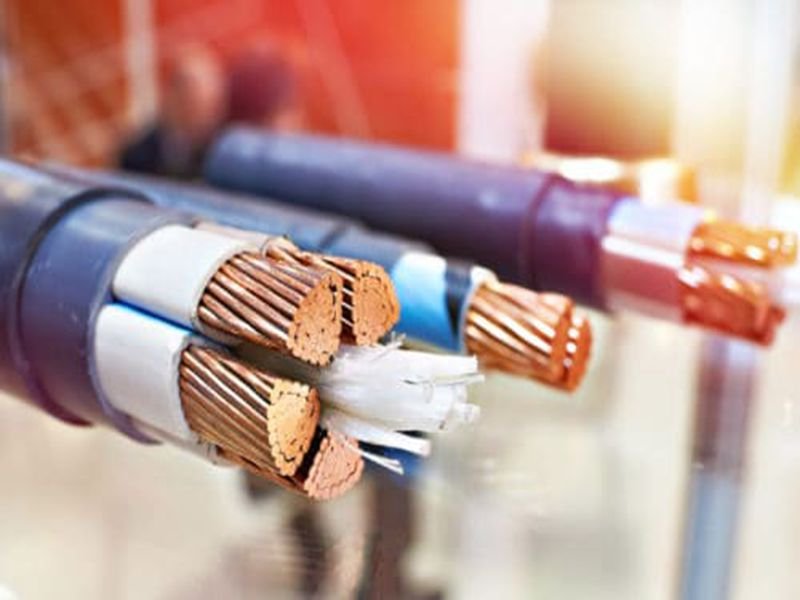
Electrical cables are rarely seen but always relied upon. They run silently under floors, inside machines, behind walls, and through data centers—powering devices, transmitting signals, and connecting entire systems together. Yet for most engineers, buyers, and project managers, the challenge is not simply identifying a cable type; it is understanding how structure, materials, shielding techniques, voltage ratings, and application environments shape cable performance and reliability.
The 40 most common electrical cables differ by conductor material, insulation type, voltage capacity, shielding structure, and application environment. Power cables (THHN, NM-B), control cables, coaxial cables, Ethernet cables, fiber optics, and specialty high-temperature or halogen-free cables serve different electrical and communication needs. Choosing the right type requires evaluating voltage, current, EMI conditions, flexibility, environmental exposure, and connector compatibility.
If choosing a cable was only about the “name,” professionals would simply match a model number and move on. But real-world projects—from medical devices to assembly lines—are never that simple. For companies like Sino-conn, where customers often send only a photo or incomplete notes, the work becomes detective-like: interpreting unclear requirements, engineering the structure, and ensuring every cable not only fits but passes voltage, bending, EMI, and material compatibility demands.
To understand how these 40 cable types are used—and how to confidently choose the right one—let’s break down classifications, applications, and material engineering in a clear, practical way.
What Are Electrical Cables and How Are They Classified?
Electrical cables are built from conductors, insulation, shielding, fillers, and an outer jacket. They are classified by voltage rating, construction method, application purpose, and environmental endurance. Major groups include power cables, control cables, communication cables, coaxial cables, fiber optic cables, and specialty high-temperature or halogen-free cables. Classification helps match the right cable to electrical load, EMI conditions, bending requirements, and operating environments.
Most electrical cables look alike from the outside—round, smooth, and coated in a jacket. But beneath that jacket is a carefully engineered structure that determines how safely, accurately, and reliably a system performs. Choosing the right cable is never just about matching a name or buying the “closest” model. It’s about understanding how each internal layer works together to handle heat, voltage, interference, mechanical stress, and chemical exposure.
That’s why Sino-conn rarely treats cable selection as a simple lookup process. Many customers do not come with full drawings or specifications. Sometimes they only send a blurry photo, or a message saying, “I need a 3-core shielded cable for my sensor,” or “Can you copy this wire?” When that happens, Sino-conn engineers break the cable down layer by layer—conductor strand counts, insulation hardness, jacket compound, shield density, overall diameter tolerance—to identify what the cable actually needs to be, not just what it looks like.
Classification plays a major role in this engineering process. Voltage rating determines insulation thickness and dielectric strength. Application category determines shielding type and conductor material. Environmental classification influences what jacket the cable should use—PVC, TPU, LSZH, PE, silicone, or others. Without proper classification, a cable may pass initial testing but fail early in real-world conditions.
Global markets complicate classification even further. A cable approved for use in Southeast Asia might fail in Germany due to smoke density rules. A cable acceptable in the U.S. might be rejected in Japan because the insulation compound contains restricted additives. Certifications like UL, IEC/EN, JIS, RoHS, REACH, PFAS-free, and Halogen-free all influence what materials and constructions are allowed.
Modern engineering also pushes classification beyond electrical characteristics. Motion-intensive equipment—robotic arms, packaging machines, conveyors—requires cables capable of surviving 1 to 5 million bending cycles. Outdoor telecom cables need UV resistance for 5–10 years. Medical electronics prefer halogen-free materials because they minimize toxic fumes. Heavy industrial applications need jackets that resist oil, lubricants, coolants, and mechanical abrasion.
Sino-conn evaluates every project according to these classifications before a quotation is issued. Fast drawing services—usually delivered within 30 minutes to 3 hours—allow customers to confirm structure, shielding, jacket type, and pinout before samples are produced. This eliminates costly mistakes and ensures the cable design matches the real-life environment, not just the model number.
Below is a deeper guide of how electrical cables are classified in practical engineering.
What Defines an Electrical Cable Structure?
Every cable consists of several internal layers that determine performance. Sino-conn evaluates each layer during drawing and prototyping.

1) Conductor Layer (determines current carrying, flexibility, and signal behavior)
- Materials: oxygen-free copper, tinned copper, or aluminum
- Stranding: fine-strand options like 7/0.12, 19/0.16, 37/0.12 for flexible designs
- Surface plating: tin (corrosion resistance), silver (RF performance)
- Important effects:
- more strands → greater flexibility
- larger cross-section → higher current
2) Insulation Layer (controls temperature, voltage resistance, dielectric properties)
Common Sino-conn choices:
- PVC — economical, stable
- PE — low-loss for data cables
- XLPE — higher temperature and dielectric strength
- Silicone — works in -60°C to +200°C
3) Shielding Layer (controls EMI stability)
- Aluminum-foil shielding
- Copper braid (70–95% coverage)
- Double-layer (foil + braid) for industrial noise
- Spiral shields for flexible applications
4) Fillers (keeps the cable round and mechanically stable)
- Cotton yarn
- PP rope
- PVC rods for larger cables
Fillers maintain uniform OD so connectors fit perfectly—important in custom assemblies.
5) Outer Jacket (protects against abrasion, oil, UV, temperature, fire)
- PVC — general indoor use
- TPU — flexible, tough, oil-resistant
- LSZH — low smoke, halogen-free for public or medical spaces
How Are Electrical Cables Categorized by Voltage Rating?
Low Voltage (<1 kV) — Sino-conn’s most frequent category
- Used for appliances, EV chargers, industrial machines
- Insulation typically PVC or XLPE
- Cross-section ranges: 0.2 mm² to 6.0 mm²
Medium Voltage (1–35 kV)
- Industrial distribution
- Requires thick insulation and special compounds
High Voltage (>35 kV)
- Specialized applications
- Rare for custom assemblies
Why voltage classification matters:
- Too-low insulation rating → breakdown or fire risk
- Incorrect voltage match → conductor heating and failure
- Certification is often tied directly to voltage class
Sino-conn performs dielectric tests for verification.
Which Classification Standards Matter for Global Projects?
UL / CSA (North America)
- Essential for appliances, medical devices, chargers
- Includes flame tests and conductor resistance tests
- Sino-conn supplies full UL traceability and documentation
IEC / EN (Europe)
- Focus on flame retardancy, smoke density, and toxicity
- Often requires LSZH materials
RoHS / REACH
- Restricts harmful chemicals
- Required for entering European markets
PFAS-Free
- Rapidly growing requirement in the U.S. and EU
- Sino-conn has completed PFAS-free material sourcing
COC / COO
- Required for customs clearance and global shipments
How Does Environment Influence Cable Classification?
1) Extreme Temperature
- Silicone: -60°C to +200°C
- XLPE: up to +125°C
- PVC: best under +80°C
2) Oil Exposure
- TPU jacket survives 3–5+ years in oily industrial environments
3) Outdoor UV
- UV-stabilized PVC, PE, and TPU required
- Telecom and solar installations depend on UV resistance
4) Continuous Motion
- Drag-chain cables
- Strand count 19–37 per core
- Must pass 1,000,000+ bend tests
5) Flame & Smoke Requirements
- LSZH or halogen-free jackets
- Required in hospitals, subways, high-occupancy buildings
Sino-conn helps customers choose the right environmental class to extend service life and avoid maintenance costs.
Which Are the 40 Most Common Types of Electrical Cables Today?
The 40 most common electrical cables cover power distribution, industrial automation, networking, RF communication, consumer electronics, and high-performance specialized environments. Each type has a unique combination of conductor design, insulation chemistry, shielding structure, jacket material, voltage rating, and environmental endurance. Understanding these differences helps engineers avoid overheating, EMI issues, bending failure, and premature degradation—ensuring long-term performance and safety.
Every electrical system—factory robots, medical machines, EV chargers, servers, cameras, home appliances—relies on cables designed for completely different tasks. A coaxial cable can never replace an Ethernet cable; a PVC control cable never survives inside a robotic arm; a non-shielded power cable cannot be used near a VFD motor. This is why understanding the “40 common cable types” is not about memorizing names—it’s about understanding why the cable exists.
At Sino-conn, customers rarely bring complete datasheets. Instead, they often provide:
- a cut piece of cable from an old machine
- a blurry image from a technician
- a short code like “RG174” or “Cat6A”
- or a simple message: “We need a stronger version of this.”
Our engineers treat cable evaluation like a technical investigation. Before we quote or sketch drawings, we:
- measure conductor diameter and strand count
- check insulation hardness (Shore A / Shore D)
- determine jacket compound (PVC? TPU? LSZH?)
- check shield density under microscope
- measure OD accuracy (±0.05–0.10 mm control)
- perform a bend test if flexibility matters
Only when these details are clear can the cable truly be matched or improved.
POWER TRANSMISSION CABLE TYPES
1. THHN Cable
Structure
- Solid/stranded copper
- PVC insulation
- Nylon jacket
Materials & Specs
- 600V rated
- 90°C dry condition
Environment
- Indoor conduits
- Not suitable for wet areas
Applications
- Building wiring
- Panels & distribution boxes
Sino-conn Notes
Most U.S. OEMs request precise cut lengths + ring terminals. We maintain strict OD tolerance so connectors crimp securely.
2. THWN / THWN-2 Cable
Structure
- Copper conductor
- PVC insulation
- Nylon jacket for moisture resistance
Specs
- THWN: 75°C wet / 90°C dry
- THWN-2: 90°C wet/dry
Environment
- Wet areas, HVAC units, pump systems
Applications
- Water treatment equipment
- Outdoor conduit runs
Sino-conn Notes
Often used in machines installed outdoors. Customers frequently request UL file verification—Sino-conn provides complete paperwork.
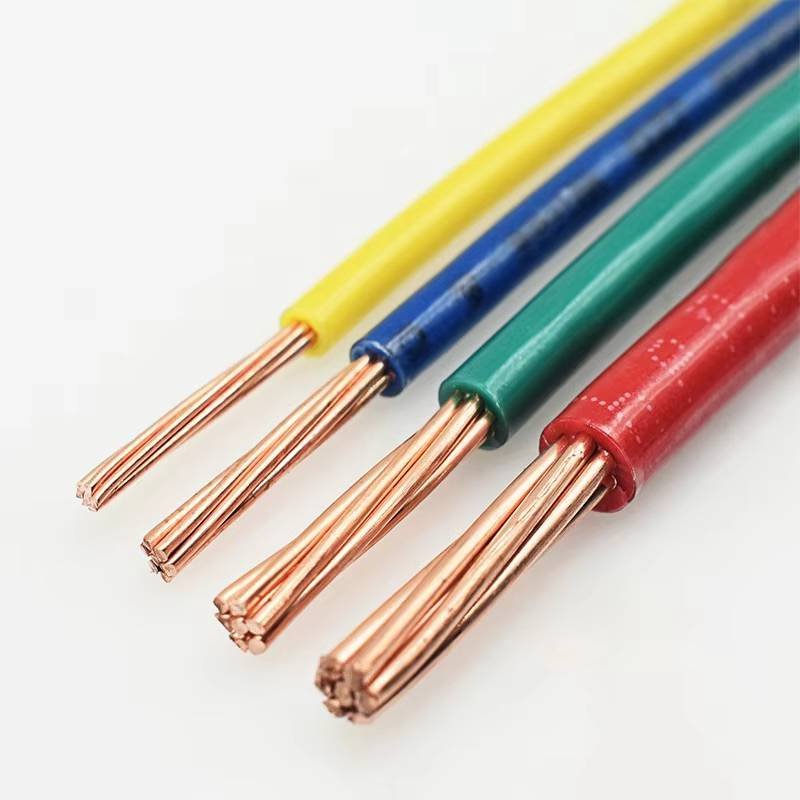
3. XHHW Cable
Structure
- XLPE insulated copper/aluminum
Specs
- 600V / 1000V
- Lower dielectric loss than PVC
Environment
- High heat
- Chemical-resistant locations
Applications
- Industrial machinery
- Compressor units
Sino-conn Notes
Common upgrade from THHN. Many engineers request XLPE for better longevity—especially in high-temperature cabinets.
4. UF-B Cable
Structure
- Solid copper
- Moisture-resistant PVC jacket
Specs
- 600V
- Direct burial rated
Environment
- Underground trenches
- Sunlight exposure
Applications
- Outdoor lighting
- Irrigation pumps
Sino-conn Notes
We don’t manufacture UF-B rolls but we cut and assemble connectors for OEM installations requiring ready-to-use sections.
5. NM-B (Romex) Cable
Structure
- 2–3 copper conductors + bare ground
- PVC insulation
- PVC outer cover
Specs
- Dry locations only
- 600V rated
Environment
- Residential indoor
Applications
- Home appliances
- Wall wiring
Sino-conn Notes
Sino-conn mainly supports custom assemblies (e.g., NM-B with pre-installed terminals for small appliance OEMs).
6. SEU / SER Cable
Structure
- Multiple conductors
- Reinforced jacket
Specs
- High mechanical strength
Environment
- Outdoor and structural feed
Applications
- HVAC units
- Service entrance wiring
Sino-conn Notes
Popular with U.S. HVAC and heat pump OEMs; we do cut-to-length + connector kits.
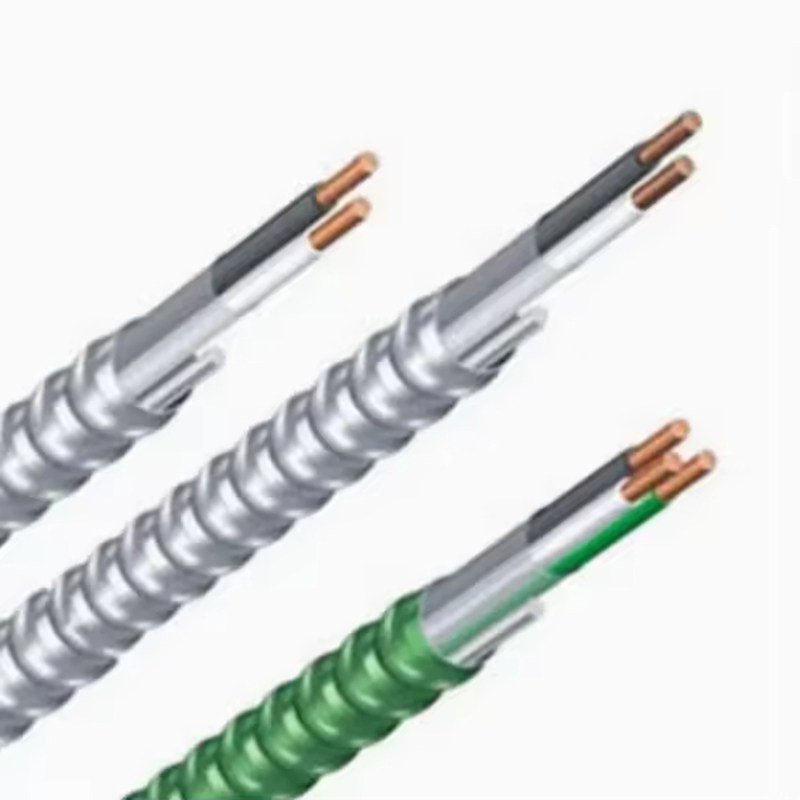
7. Metal-Clad (MC) Cable
Structure
- Conductors + PVC insulation
- Aluminum armor around cable
Specs
- Crush/impact-resistant
Environment
- Commercial buildings
- Risk of physical impact
Applications
- Industrial fixtures
- Motors and control boxes
Sino-conn Notes
Customers often need MC cable assemblies with gland connectors. We maintain consistent armor spacing for reliable gland fit.
8. Armored Cable (AC)
Structure
- Steel or aluminum interlocked armor
- Multi-core conductors
Specs
- Excellent crush protection
- Lower EMI resistance than MC
Environment
- Factories, workshops
Applications
- Lighting, power drops
Sino-conn Notes
Often used in older equipment; Sino-conn reproduces legacy AC cables with modern materials for maintenance clients.
9. SOOW Cable
Structure
- Flexible stranded copper
- Rubber insulation
- Rubber jacket
Specs
- 600V
- High flexibility
Environment
- Portable tools
- Harsh industrial sites
Applications
- Construction equipment
- Generators
Sino-conn Notes
Popular with OEMs requiring reels. We guarantee flexibility at low temperatures (down to –25°C).
10. Battery Cable (EV / Automotive)
Structure
- Thick finely stranded copper
- Flexible PVC/XLPE jacket
Specs
- High current (50A–400A)
- Low voltage drop
Environment
- Vehicles, EV chargers
- Heat & vibration
Applications
- Battery to inverter
- Power distribution modules
Sino-conn Notes
We often terminate these with lugs, boots, and heat-shrink for EV customers.
INDUSTRIAL CONTROL & AUTOMATION CABLES
11. PVC Control Cable
Structure
- Multiple cores, often twisted
- Optional aluminum foil shield
Specs
- 300/500V
- Moderate flexibility
Environment
- Dry industrial cabinets
Applications
- PLC wiring
- Relays & sensors
Sino-conn Notes
Large stock allows fast sampling in 1–2 days.
12. PUR/TPU Control Cable
Structure
- Fine-stranded cores
- TPU jacket
Specs
- Oil-resistant
- Highly flexible
Environment
- Robotics
- CNC machines
Applications
- Moving assemblies
- Tool changers
Sino-conn Notes
We test them for 1–3 million cycles in bending rigs.
13. VFD Cable
Structure
- Heavy copper braid + foil
- XLPE insulation
- Symmetrical grounding
Specs
- Designed to reduce EMI
- Withstands motor voltage spikes
Environment
- Motor noise zones
Applications
- VFD motors
- Pumps, blowers
Sino-conn Notes
Engineers send us impedance targets; we customize twist pitch to meet them.
14. Servo Motor Cable
Structure
- Power cores + shielded encoder pairs
- Reinforced fill
Specs
- Low capacitance
- Precision signal integrity
Environment
- Motion control
Applications
- Automation systems
- Robotics
Sino-conn Notes
We match OEM colors/pin-out exactly; common in European machinery.
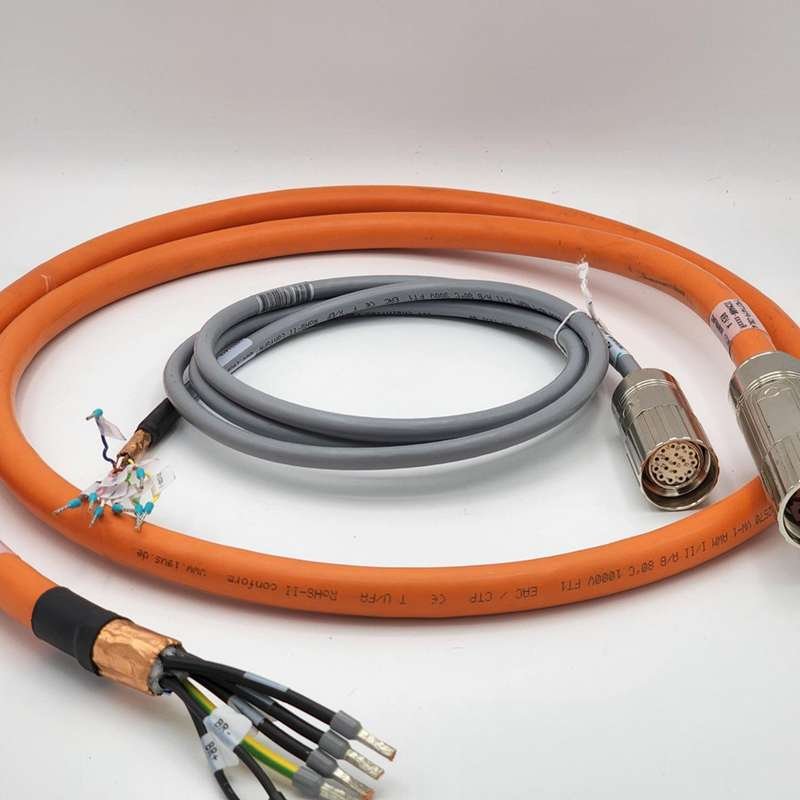
15. Encoder Cable
Structure
- Shielded twisted pairs
- Foil + braid
Specs
- High signal accuracy
- Low delay skew
Environment
- Motors, position sensors
Applications
- CNC, robotics
Sino-conn Notes
Our strict OD control ensures correct fit into encoder connectors.
16. Drag-Chain Cable
Structure
- Ultra-fine strands
- TPE/TPU insulation
- High-flex jacket
Specs
- Bend life: 3–5 million cycles
Environment
- Continuous motion
Applications
- Robotics rails
- 3D printers
Sino-conn Notes
Most requested by industrial automation R&D teams.
17. Instrumentation Cable
Structure
- Triads / pairs
- Foil shield
Specs
- Stable impedance
- Low noise pickup
Environment
- Measurement systems
Applications
- Laboratory equipment
- Medical analyzers
Sino-conn Notes
Medical companies often request halogen-free versions.
18. Shielded Multi-Core Control Cable
Structure
- 4–20 cores
- Aluminum foil + braid
Specs
- Crosstalk reduction
Environment
- Automation cabinets
Applications
- Valves, sensors
Sino-conn Notes
We support custom core numbering and labeling.
COMMUNICATION & NETWORK CABLES
19. Cat5e Cable
Structure
- 4 twisted pairs
- Tight twist pitch
- No braid; optional foil
Materials
- PE insulation
- PVC or LSZH jacket
Specs
- 100 MHz
- Up to 1 Gbps Ethernet
Environment
- Indoor networking
- Office and residential
Applications
- Basic LAN connections
- PoE devices under 15W
Sino-conn Notes
We supply Cat5e for low-cost OEM routers and CCTV installers who need large quantities with stable performance and exact length tolerance.
20. Cat6 Cable
Structure
- 4 twisted pairs
- Improved twist consistency
- Optional spline for isolation
Materials
- PE insulation
- PVC/LSZH jacket
Specs
- 250 MHz
- Up to 1–10 Gbps depending on distance
Environment
- Small business networks
- POS terminals
Applications
- PoE+ devices
- Access points
Sino-conn Notes
We keep stock of Cat6 cores so sampling is fast. Many customers pair Cat6 with shielded RJ45 connectors we crimp in-house.
21. Cat6A Cable
Structure
- S/FTP or F/FTP shielding
- Shielded pairs + outer braid
Materials
- PE foam insulation
- LSZH/PVC jacket
Specs
- 500 MHz
- Reliable 10 Gbps Ethernet
Environment
- Industrial networks
- Automated factories
Applications
- High-speed data transfer
- PoE++ systems
Sino-conn Notes
Strict OD tolerance matters because Cat6A connectors are sensitive to over-size. Sino-conn maintains ±0.05–0.10 mm control.
22. Cat7 Cable
Structure
- S/FTP construction
- Individual shields on every pair
Materials
- Foamed PE
- LSZH recommended
Specs
- 600–1000 MHz
- 10 Gbps+ short-distance
Environment
- EMI-heavy industrial floors
Applications
- Robotics networks
- Industrial Ethernet
Sino-conn Notes
Cat7 requires precise shield braiding. We use 80–95% braid coverage depending on EMI requirements.
23. Cat8 Cable
Structure
- Double-shielded pairs
- Thick overall braid
Materials
- Advanced PE foam
- LSZH jacket
Specs
- 2000 MHz
- 25–40 Gbps (short runs)
Environment
- Data centers
- High-frequency applications
Applications
- Server racks
- Storage networks
Sino-conn Notes
Often paired with custom SFP/QSFP ends. Customers rely on our testing to ensure low return loss.
24. Coaxial Cable RG6
Structure
- Copper-clad steel center
- Foam dielectric
- Aluminum braid + foil
Specs
- Low attenuation
- High-frequency support
Environment
- Outdoor CCTV
- Cable TV systems
Applications
- Satellite receivers
- Security cameras
Sino-conn Notes
We frequently deliver RG6 with pre-installed F-connectors to installers.

25. Coaxial Cable RG59
Structure
- Solid copper core
- PE dielectric
- Moderate shield
Specs
- Good for short RF runs
- Higher loss than RG6
Environment
- Indoor CCTV / analog video
Applications
- DVR systems
- Composite video equipment
Sino-conn Notes
RG59 remains popular because many older camera systems still use it. We replicate legacy cables reliably.
26. Coaxial Cable RG174
Structure
- 7-strand copper-clad steel
- PE insulation
- Single braid
Specs
- Very thin (2.5 mm OD)
- Higher loss but high flexibility
Environment
- WiFi routers
- Small RF devices
Applications
- SMA/BNC pigtails
- IoT antennas
Sino-conn Notes
RG174 is one of our highest-volume RF cables. Most orders include SMA, RP-SMA, or MMCX molded ends.
27. Twinax Cable
Structure
- Two inner conductors + shield
- Controlled impedance
Specs
- Excellent for differential signals
- Lower EMI
Environment
- Server rooms
- Storage networking
Applications
- SFP+/QSFP DAC assemblies
Sino-conn Notes
We build short DAC cables (0.5–3m) for OEM server clients.
28. Fiber Optic Cable (Single-Mode & Multi-Mode)
Structure
- Glass core
- Cladding
- Kevlar yarn strength
- Outer jacket
Specs
- Very low signal loss
- Immune to EMI
Environment
- Indoor/outdoor telecom
- Data centers
Applications
- Internet backbone
- Industrial control rooms
Sino-conn Notes
We produce LC/SC patch cords with precise insertion loss testing.
CONSUMER ELECTRONICS & DEVICE CABLES
29. USB 2.0 Cable
Structure
- 4-core (power + data)
- Simple shield
Specs
- 480 Mbps
- 5V power
Environment
- Consumer electronics
Applications
- Printers, keyboards
Sino-conn Notes
Popular for custom-length USB cables for appliances.
30. USB 3.0 / 3.1 Cable
Structure
- 9-core design
- Multiple shields
Specs
- 5–10 Gbps
- Higher power output
Environment
- PCs, monitors
Applications
- High-speed external drives
Sino-conn Notes
We ensure correct impedance (90Ω differential) through precise twisting.
31. USB-C Cable
Structure
- Up to 24 conductors
- Complex shielding layouts
- E-marker chip optional
Specs
- Power + video + data
- Supports PD charging
Environment
- Smartphones, monitors
Applications
- USB-C docking, cameras
Sino-conn Notes
Many OEMs ask for short USB-C cables that big brands do not produce—our specialty.
32. HDMI Cable
Structure
- Multiple shielded twisted pairs
- Thick outer jacket
Specs
- Up to 48 Gbps (HDMI 2.1)
Environment
- Home theaters
- Industrial displays
Applications
- 4K/8K displays
Sino-conn Notes
Industrial clients often ask for 30–60 cm HDMI lengths, which we custom build.
33. DisplayPort Cable
Structure
- Four high-speed pairs
- Multiple shields
Specs
- Supports high refresh rates
Environment
- Gaming / industrial monitors
Applications
- Workstations
- HMI screens
Sino-conn Notes
Small-batch customizations are our niche.
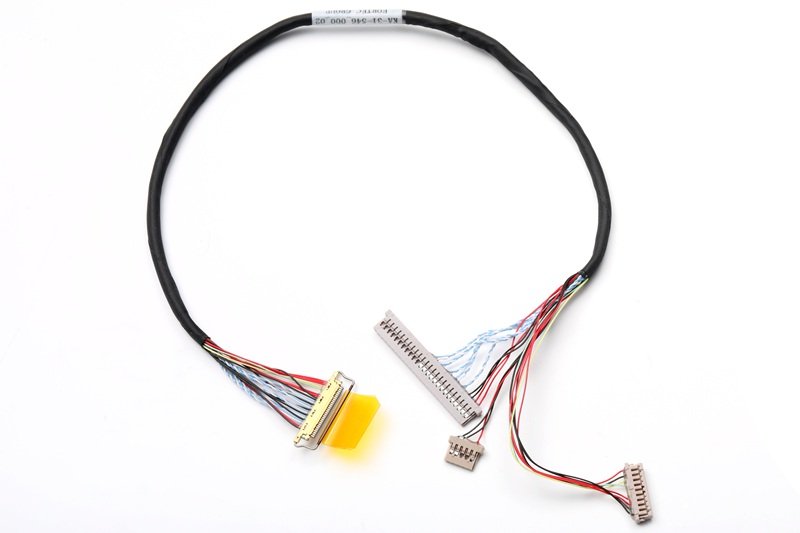
34. LVDS Cable
Structure
- Ribbon or round
- Shielded pairs
Specs
- Low noise
- Stable differential signaling
Environment
- Industrial displays
- Medical HMI
Applications
- Touchscreens
- Embedded systems
Sino-conn Notes
Pinout accuracy is critical; customers rely on our CAD drawings.
35. FFC / FPC Cable
Structure
- Flat copper foil
- PET/PEN insulation
Specs
- Ultra-thin (0.3–1.0 mm)
Environment
- Compact devices
Applications
- Laptops, cameras
Sino-conn Notes
We offer exact pitch options: 0.5mm, 1.0mm, etc.
36. Power Adapter Cable
Structure
- DC coaxial core
- Stranded conductor
Specs
- 5–24V typical
- Low resistance
Environment
- Electronics
Applications
- DC power accessories
Sino-conn Notes
OEMs often request customized plug sizes (5.52.1, 5.52.5, etc.).
SPECIALTY CABLE TYPES
37. High-Temperature Silicone Cable
Structure
- Stranded copper
- Silicone rubber insulation
Specs
- 60°C to +200°C
Environment
- Kitchens, labs
Applications
- Heating devices
Sino-conn Notes
Silicone is soft; we keep OD roundness stable with special fillers.
38. Fire-Resistant Cable
Structure
- Mica tape
- XLPE insulation
- LSZH jacket
Specs
- Maintains circuit in fire
Environment
- Public buildings
Applications
- Emergency circuits
Sino-conn Notes
Often paired with halogen-free requests for European clients.
39. Oil-Resistant TPU Cable
Structure
- TPU jacket
- Flexible strands
Specs
- Survives oil & coolants
Environment
- Factories
Applications
- Machine tools
Sino-conn Notes
We test TPU cables under oil exposure for 72–168 hours.
40. UV-Resistant Outdoor Cable
Structure
- UV-stabilized PE/PVC
- Optional water-blocking gel
Specs
- Long-term sunlight exposure
Environment
- Outdoor telecom
- Solar systems
Applications
- Antenna cables
- Outdoor PoE devices
Sino-conn Notes
We provide UV testing reports for clients selling into Europe and the U.S.
How Are Electrical Cables Constructed?
Electrical cables are constructed by combining a conductor, insulation, shielding, fillers, and a protective outer jacket. Each layer performs a specific job—carrying current, resisting heat, blocking interference, maintaining shape, and protecting against environmental damage. The construction method determines flexibility, voltage capacity, temperature limits, EMI performance, and long-term durability. Precision in each layer is essential for producing reliable cables for industrial, consumer, medical, and communication systems.

Every electrical cable follows the same basic idea—copper inside, protection outside—but the real engineering hides in how each layer is designed and combined. Cable construction is the difference between a cable that survives five months and one that lasts five years in continuous operation.
At Sino-conn, construction starts long before the production line. When a customer sends a request—sometimes with nothing more than a photo—our engineering team reconstructs the internal structure: determining conductor size, insulation thickness, twisting pattern, shield type, filler materials, jacket options, and required OD tolerances. This “reverse engineering” approach allows us to build the cable from the inside out, ensuring it truly matches the application environment.
Each layer is selected by answering a few practical questions:
- How much current will the conductor carry?
- What temperature will the insulation face?
- Is EMI a threat?
- Will the cable bend constantly?
- Is the environment oily? Wet? Outdoors? High-temperature?
- Does the destination country require specific certifications (UL, RoHS, REACH, PFAS-Free)?
Copper stranding determines flexibility and current capability. Insulation defines dielectric strength and heat tolerance. Shielding is the barrier against electromagnetic noise. Fillers keep everything round and mechanically stable. Jackets protect against abrasion, chemicals, UV, or fire. If any layer is chosen incorrectly, the cable will fail prematurely—even if the outer appearance looks “correct.”
Sino-conn follows a structured construction process:
- Conductor Preparation – Stranding machines twist fine copper wires (7/0.12, 19/0.16, 37/0.12, etc.) into precise bundles. We keep resistance consistency within ±2% of spec.
- Insulation Extrusion – PVC, PE, XLPE, TPU, or silicone is extruded onto the conductor under strict temperature control to avoid bubbles or microscopic cracks.
- Shield Application – For shielded cables, we add aluminum foil, braided copper, or combined shielding with a controlled braid density (70–95%).
- Core Assembly – Multiple insulated cores are twisted in specific lay lengths to reduce crosstalk or improve flexibility.
- Filler Addition – Cotton yarn, PP rope, or PVC rods fill the gaps to maintain roundness and mechanical strength.
- Outer Jacket Extrusion – Jackets are extruded with precise thickness; we maintain OD tolerance within ±0.10 mm for custom assemblies.
- Testing & QC – We run electrical tests (continuity, insulation resistance), mechanical tests (bending, tensile), and environmental tests (oil resistance, UV aging).
What Materials Are Used for Conductors?
Conductor material determines current capacity, flexibility, DC resistance, and signal behavior. Sino-conn mainly uses:
1) Bare Copper (OFC)
- Highest conductivity
- Used for power and low-frequency control cables
- Stable and cost-effective
2) Tinned Copper
- Resists oxidation
- Essential for marine, outdoor, and humidity-prone areas
- Better solderability
3) Silver-Plated Copper
- Extremely low resistance at high frequencies
- Used for RF, microwave, and medical cables
4) Copper-Clad Steel (CCS)
- Used in coaxial cables
- High tensile strength for long runs
5) Stranding Levels
- Coarse: 7/0.26 → stiff but strong
- Medium: 19/0.16 → good balance
- Ultra-fine: 37/0.10 → high flexibility for drag-chain
Sino-conn picks conductor type based on real usage—not just catalog data.
What Insulation and Jacket Materials Are Most Common?
Insulation defines a cable’s electrical safety. Jackets define its survival in real-world conditions.
Insulation Materials
PVC
- Most common
- Good flexibility
- Cost-effective
PE (solid or foam)
- Low dielectric loss for data cables
- Used in coax and Ethernet
XLPE
- High-temperature (125°C)
- Used in power and VFD cables
Silicone
- Extreme temperatures (-60°C to 200°C)
- Used in ovens, heaters, lab equipment
Jacket Materials
PVC – general indoor protection
TPU/PUR – oil-resistant, abrasion-resistant, flexible
LSZH – low smoke, zero halogen (hospitals, subways, tunnels)
PE – UV-resistant, ideal for outdoor & telecom
Neoprene/Rubber – rugged applications
Sino-conn selects insulation + jacket combinations based on environment. For example:
- Oil + bending → TPU
- High dielectric strength → XLPE
- Outdoor + UV → PE
- Medical → LSZH
How Do Shielding Methods Reduce EMI?
Shielding is essential in environments with motors, VFDs, RF transmitters, or sensitive signal lines.
1) Aluminum Foil Shield (100% coverage)
- Blocks high-frequency interference
- Lightweight
- Common in Ethernet and instrumentation cables
2) Braided Copper Shield (70–95% coverage)
- Excellent low-frequency protection
- Mechanical durability
- Used in servo, VFD, encoder, coaxial cables
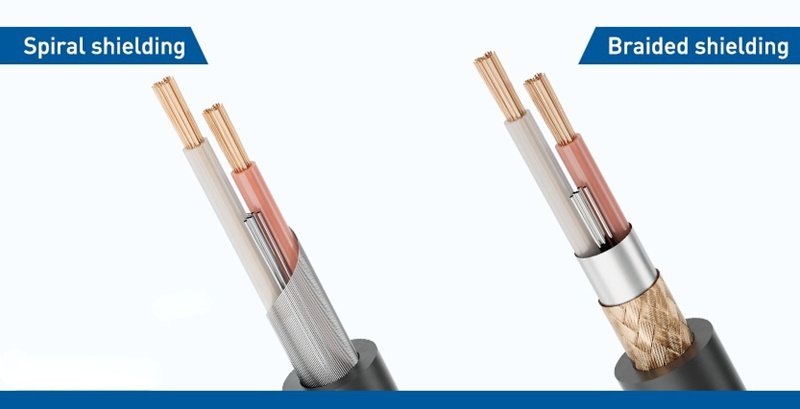
3) Spiral Shield
- Very flexible
- Used in retractable and robotic cables
4) Double Shielding (Foil + Braid)
- Best overall EMI performance
- Essential for VFD and servo motor cables
Sino-conn Approach
We adjust braid density based on EMI severity:
- 70% for low-noise environments
- 85% for industrial floors
- 95% for servo/encoder precision systems
Customers often send us noise issues, and we modify shield layers until the interference disappears.
How Do OD, Bend Radius & Flexibility Affect Cable Performance?
Cable flexibility is not only about softness—it’s about how the internal layers move together.
OD (Outer Diameter)
- Affects connector fit
- Impacts flexibility
- Too large = stiff and hard to route
- Too small = risk of insulation cracking
Sino-conn keeps OD tolerance within ±0.05–0.10 mm for custom assemblies.
Bend Radius
- Standard cables: 8–10x OD
- High-flex cables: 4–6x OD
- Drag-chain cables: engineered for millions of cycles
Flexibility Factors
- Strand count (more = softer)
- Jacket material (TPU > PVC > XLPE)
- Filler softness
- Shielding type (spiral > braid)
- Twisting pattern
Real Client Example
A robotics manufacturer needed cables that could bend 3 million cycles without conductor breakage. Sino-conn changed:
- conductor to 37/0.10 strands
- jacket to TPU
- shielding to spiral
- fillers to cotton yarn
The new design exceeded 5 million cycles in testing.
What Technical Specifications Matter When Selecting an Electrical Cable?
Key cable specifications include voltage rating, current capacity, insulation type, shielding method, conductor size, temperature range, bend radius, environmental resistance, and compliance certifications. These parameters determine whether a cable can safely handle electrical load, survive mechanical stress, and perform reliably under real operating conditions. Understanding these specifications helps engineers choose cables that meet application demands and avoid failures in industrial, commercial, or consumer systems.
Engineers and buyers often focus on the cable “type”—Cat6, RG174, 18AWG, silicone cable, etc.—but real-world performance depends on technical specifications, not the model name. Two cables with the same AWG size or the same appearance may behave completely differently under heat, vibration, bending, EMI interference, or long-term environmental exposure.
This explains why Sino-conn always asks for more details—even when customers believe the type alone is enough. Many inquiries start with:
- “I need a 6mm cable.”
- “It looks like RG174.”
- “It’s a 3-core wire.”
- “This is the cable from our old supplier—can you duplicate it?”
But the correct cable design depends on deeper factors: voltage, current, EMI noise levels, required flexibility, chemical exposure, connector type, insulation thickness, and temperature limits. A wrong choice might not fail immediately but will degrade early—cracking, melting, losing shielding effectiveness, or introducing signal noise.
Sino-conn engineers evaluate technical specifications using a simple but effective approach:
1 — Electrical Specs:
These determine safe operation—voltage, current, capacitance, impedance, attenuation.
2 — Mechanical Specs:
Flexibility, strand count, bend radius, tensile strength, OD tolerance.
3 — Environmental Specs:
Temperature, humidity, UV, oil, flame rating, abrasion.
4 — Compliance Specs:
UL, RoHS, REACH, PFAS-free, LSZH requirements.
During quoting, Sino-conn maps each specification to the customer’s real use case. For example:
- A cable used inside a CNC machine must resist oil mist and vibration.
- A cable going outdoors needs UV-stabilized PE.
- A medical cable needs halogen-free materials.
- A cable in a robotic arm must survive millions of bending cycles.
- A VFD cable must have EMC-optimized shielding.
What Electrical Ratings Are Critical When Selecting a Cable?
Electrical ratings define how safely a cable handles load.
Voltage Rating
- Shows maximum safe insulation level
- Common classes: 300V, 600V, 1000V
- Selecting too low causes insulation breakdown
Current Capacity (Ampacity)
- Depends on conductor size (AWG/mm²) & ambient heat
- Higher current = thicker copper
- Sino-conn calculates current using IEC & UL tables
Capacitance & Impedance
- Important for data (USB, HDMI, Ethernet, LVDS)
- Incorrect impedance causes signal loss
- Sino-conn controls impedance through twist pitch & insulation consistency
DC Resistance
- Lower resistance = less voltage drop
- Critical for long cable runs
Sino-conn Note:
We perform 100% continuity and insulation tests before shipping. For signal cables, impedance testing ensures stability over distance.
How Do Mechanical Specifications Influence Cable Performance?
Mechanical properties determine cable longevity in real environments.
Strand Count
- More strands = more flexibility
- Examples:
- 7/0.26 (stiff, general use)
- 19/0.16 (medium-flex)
- 37/0.10 (high-flex)
Bend Radius
- Standard: 8–10× OD
- Drag-chain cables: 4–6× OD
- Sino-conn tests high-flex cables for 1–5 million cycles
Overall Diameter (OD)
- Affects connector fit
- Impacts routing space
- Sino-conn maintains OD within ±0.05–0.10 mm
Tensile Strength
- Essential when cables are pulled through conduits
- Affected by conductor material and fillers
Sino-conn Note:
We adjust jacketing and filler choice to achieve target flexibility without sacrificing core stability.
Which Environmental Factors Must Be Considered?
Environmental exposure is often the factor that destroys cables early.
Temperature Range
- PVC: up to 80°C
- XLPE: up to 125°C
- Silicone: up to 200°C
Chemical Resistance
- Oil → choose TPU
- Solvent → choose XLPE or FEP
- Moisture → choose PE or PVC with moisture barrier
UV Resistance
- Outdoor applications need UV-stabilized jackets
Fire Safety
- LSZH required for tunnels, hospitals, public buildings
Abrasive Environments
- TPU provides superb abrasion resistance
Sino-conn Note:
We always ask customers about installation environment because the wrong jacket is a top cause of failure.
Why Are Compliance & Certification Requirements Important?
Certifications ensure the cable is legally allowed into specific markets.
UL/CSA
- Required for U.S./Canadian appliances, medical, EV, laboratory equipment
- Includes flame testing and conductor verification
RoHS / REACH
- Essential for Europe
- Restricts hazardous chemicals
PFAS-Free
- Rapidly growing requirement in the U.S. & EU
- Sino-conn provides PFAS-free alternatives upon request
LSZH Requirements
- Demanded for subway, tunnel, hospital projects
COC / COO Documents
- Required for customs, especially for Middle Eastern & African countries
Sino-conn Note:
We maintain full traceability—including UL files, batch numbers, and test reports—so that compliance is never a barrier for your shipment.
How Are Electrical Cables Used Across Different Industries?
Electrical cables support every modern industry by delivering power, transmitting data, or carrying control signals. Their construction varies depending on the environment—industrial automation requires flexible and shielded cables, medical devices demand low-toxicity and precise signal lines, while telecom and data centers rely on high-bandwidth Ethernet and fiber cables. Selecting the correct cable ensures safety, EMC stability, and long-term reliability across all applications.
Electrical cables form the hidden infrastructure behind every industry. Whether a system requires clean data transmission, high-current delivery, long-distance communication, high-flex motion performance, or chemical resistance, the cable design directly determines whether the equipment performs reliably—or fails early. That’s why different sectors use completely different cable constructions, even when the outer appearance looks similar.
In Sino-conn’s daily work, the variety of industries means we rarely supply “generic” cables. Instead, customers describe how the cable will be used, and our engineers redesign or optimize the internal structure accordingly. For example:
- Automation engineers request flexible, shielded, oil-resistant cables.
- Medical designers require halogen-free, skin-safe materials for compliance and safety.
- Telecom installers need precise impedance control for long-distance communication.
- EV and battery manufacturers demand high-current copper and heat-resistant insulation.
- Consumer electronics OEMs need custom-length USB-C, HDMI, or LVDS cables with correct impedance.
Understanding industry-specific requirements ensures the cable doesn’t just “fit”—it works flawlessly.
Below is a guide of how cables function in the world’s major industries and how Sino-conn supports each one.
How Are Cables Used in Consumer Electronics?
Consumer electronics rely on cables that provide power, fast data transfer, and long-term durability without adding cost or bulk.
Key Cable Types
- USB 2.0 / USB 3.0 / USB-C
- HDMI / DisplayPort
- FFC/FPC ribbon cables
- LVDS display cables
- DC power cables
Environmental Needs
- Frequent bending
- Compact form factor
- Connector stability
Sino-conn Experience
We support small-batch prototyping (1–50 pcs) for device manufacturers who need:
- short custom lengths
- molded connectors
- impedance-verified signal lines
- stable batches for mass production
Many customers come to us after realizing big cable brands will not produce custom lengths or small runs.
Which Cable Types Are Required in Medical Equipment?
Medical equipment demands cable construction that protects both patient safety and data accuracy.
Typical Cable Types
- Shielded control cables
- Medical-grade LVDS
- Silicone high-temperature cables
- Ultra-flex sensor/ECG cables
- Halogen-free power cords
Compliance Needs
- LSZH materials
- Biocompatible insulation
- Precise signal integrity
Sino-conn Experience
Medical R&D teams depend on our rapid drawing service (30 minutes–3 hours). We often adjust:
- shielding coverage
- conductor plating
- jacket materials
- flex-life performance
This ensures stable readings for ECG monitors, sensors, laboratory analyzers, and imaging systems.
How Do Industrial Automation & Robotics Use Electrical Cables?
Industrial automation is one of the toughest environments for cables.

Key Cable Types
- Drag-chain cables
- Servo motor cables
- Encoder cables
- VFD control cables
- Oil-resistant TPU control cables
Environmental Challenges
- Constant bending (1–5 million cycles)
- Heavy EMI from motors
- Oil, lubricant, and coolant exposure
- High vibration
- Tight routing inside machinery
Sino-conn Experience
For automation customers, we redesign:
- conductor stranding (e.g., 37/0.10 for ultra-flex designs)
- TPU/XLPE insulation combinations
- double shielding (foil + 95% braid)
- cotton or PP fillers to maintain roundness
We have helped global OEM factories reduce failure rates by up to 60% simply by improving cable construction for high-flex environments.
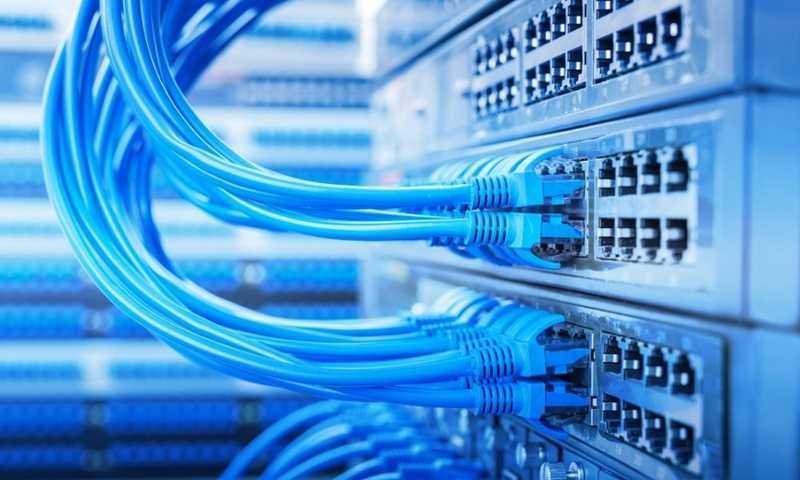
What Role Do Cables Play in Telecom, Networking & Data Centers?
High-bandwidth communication requires precise control of impedance, twist rate, shielding, and attenuation.
Common Cable Types
- Cat6 / Cat6A / Cat7 / Cat8
- Fiber optic patch cords
- Twinax DAC cables
- RG6 / RG59 / RG174 coax
Performance Needs
- Low return loss
- Low insertion loss
- Immunity to EMI
- Precise 90Ω / 100Ω differential impedance
Sino-conn Experience
We manufacture Ethernet, fiber, and RF assemblies for installers who need:
- certified fluke test results
- correct pin-outs
- custom lengths from 0.2–20 meters
- rapid lead times for data center upgrades
Our controlled twist length ensures stable performance even under PoE++ loads.
How Are Cables Used in Automotive & EV Systems?
Vehicles and EV systems require cables that handle high currents, vibration, and temperature changes.
Key Cable Types
- Battery cables (25–70 mm²)
- Silicone high-temp cables
- Shielded control cables
- CAN-bus twisted-pair cables
- Charging system cables
Challenges
- Heat from engines
- Vibration from movement
- Chemical exposure (oil, coolant)
- Long-term reliability
Sino-conn Experience
We frequently produce custom EV battery cables with:
- crimped lugs
- waterproof boots
- heat-shrink tubing
- extra-flex copper stranding
These assemblies are tested for continuity, torque load, and thermal aging before shipment.
Which Cable Types Support Home Appliances & Household Devices?
Appliances require long-lasting, safe, cost-efficient cables.
Typical Cable Types
- PVC power cables
- Control cables
- Heat-resistant silicone wiring
- Temperature sensor wires
Needs
- Stable temperature performance
- Flame-retardant insulation
- Long-term bending resistance
Sino-conn Experience
We produce OEM wiring sets for appliances such as air fryers, rice cookers, refrigerators, and dryers.
Customers often send a sample harness, and we replicate it precisely—improving durability where needed.
Conclusion
Whether you’re designing a new product or replacing old wires in legacy equipment, the right cable structure determines long-term performance, safety, and reliability. Sino-conn supports every industry with:

Ready to Build Your Cable Assembly?
Share your drawings, samples, or even just a photo.
Sino-conn’s engineering team will reconstruct the cable, optimize the structure, and deliver a reliable solution tailored to your application.
Click here to start your custom cable project with Sino-conn.