Skip to content
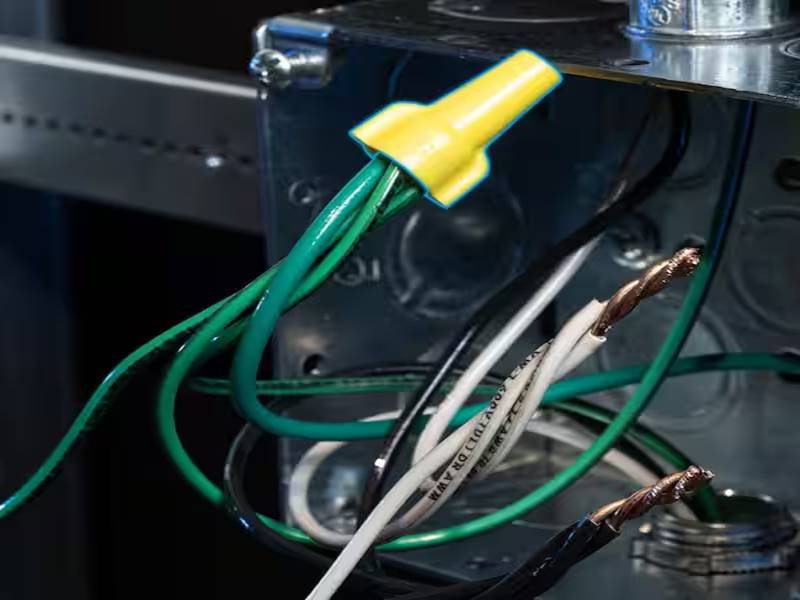
Walk into any electrical installation site, and you will see twist-on wire connectors everywhere. They are small, inexpensive, and quick to install. That is exactly why many people treat them as “simple parts” instead of critical connection points. But in real projects, connection issues rarely come from the cable itself. They come from how wires are joined.
Twist-on wire connectors work by holding stripped wires together inside a spring-loaded cap, creating both electrical contact and insulation. To use them safely, wires must be properly stripped, aligned, matched to the connector size, and secured firmly, followed by a physical check to ensure stability.
What often gets overlooked is consistency. In one project, a connection may work perfectly. In another, using the same connector, it may fail within weeks. The difference is usually not the connector—it is how it was used.
A customer from Eastern Europe once approached Sino-Conn after repeated failures in a control panel installation. The wiring used twist-on connectors, and everything passed initial testing. But after three months, intermittent signal loss started appearing. After inspection, the issue traced back to uneven wire stripping and inconsistent tightening across different installers. The fix was not replacing the connector—it was redesigning the connection method entirely.
Understanding how to use these connectors properly is important. Knowing when they are no longer the right solution is even more important.
What Are Twist-On Wire Connectors
Twist-on wire connectors are small insulated caps used to join two or more electrical wires together. Inside the cap, there is a metal spring that grips the conductors when you twist it on. That spring is what creates the electrical contact. The plastic shell is what protects the connection from exposure.
In simple terms, they are a fast way to connect wires without soldering or crimping. That is why they are widely used in residential wiring, lighting systems, and basic electrical installations.
But from a practical project perspective, they are not just “caps.” They are a manual connection method. That means the final result depends heavily on how the installer handles the wires.

What Do Twist-On Wire Connectors Do
Their job is straightforward:
- Hold multiple wires together
- Maintain electrical continuity
- Provide insulation around the connection
However, the way they achieve this is worth understanding.
The internal spring does not “lock” wires in a fixed structure like a crimp terminal. Instead, it relies on pressure and friction. When wires are twisted together inside the connector, the spring presses them inward. That pressure allows current to pass between conductors.
Here is where things get more practical.
If the wires are:
- evenly stripped
- aligned properly
- within the correct size range
the pressure is distributed evenly, and the connection is stable.
If not, problems start to appear:
- one wire may not be fully engaged
- pressure may be uneven
- resistance may increase
A customer from Eastern Europe once sent us a batch of failed wiring samples used in LED installations. Externally, everything looked normal. After opening the connectors, it was clear that one conductor in each splice was slightly shorter. That small difference caused unstable contact over time.
This kind of issue is very common. The connector itself was fine. The problem was in how the wires were prepared.
Where Are Twist-On Wire Connectors Used
They are mainly used in environments where speed and convenience matter more than precision.
Typical usage includes:
| Application | Real Scenario | Why They Are Chosen |
|---|---|---|
| Residential wiring | Light fixtures, switches | Quick installation |
| Commercial buildings | Basic power distribution | Low cost |
| Maintenance work | Repairing existing wiring | Easy to replace |
| Temporary setups | Testing or short-term use | No tools required |
These connectors are not commonly used in:
- medical equipment
- automotive systems
- communication or RF systems
- industrial automation
The reason is not complexity. It is consistency.
In one project, a German OEM customer initially used twist-on connectors in control panels. During early builds (small quantity), everything worked fine. When production increased, differences between operators became obvious:
- some connections were tighter
- some wires were not fully engaged
- inspection became difficult
Failure rate increased from under 1% to around 5–6%.
After switching to pre-assembled cable harnesses, the issue disappeared.
This is something we see often. Twist-on connectors work well when one person is doing careful installation. Once multiple people or batches are involved, consistency becomes harder to control.
Are Twist-On Wire Connectors Reliable
They can be reliable, but only under the right conditions.
From actual project feedback, reliability depends on four key factors:
| Factor | Good Practice | Risk if Ignored |
|---|---|---|
| Wire size match | Use correct connector range | Loose or damaged connection |
| Strip length | Keep wires equal length | Uneven contact |
| Installation force | Tight but controlled | Too loose or over-tight |
| Environment | Stable, low vibration | Movement and degradation |
What customers often experience is not immediate failure, but delayed issues.
Common complaints include:
- connection works at first, then becomes unstable
- occasional signal loss
- heating at connection points
- difficult troubleshooting
A North American HVAC customer shared a case where control wiring started failing after a few months. Temperature checks showed that some splice points reached nearly double the expected heat level.
The cause:
- slightly loose connections
- uneven wire contact
After improving installation checks, failures dropped. Later, they replaced critical connections with crimped assemblies to eliminate the issue entirely.
Another important point is inspection.
With twist-on connectors:
- you cannot see inside the connection
- you cannot easily verify internal contact quality
This makes quality control difficult, especially in batch production.
That is where many customers start looking for alternatives.
Instead of relying on manual installation, they move toward defined solutions.
At Sino-Conn, we often receive inquiries like:
- “We only have a sample or photo, can you make the same?”
- “Our current wiring works, but quality is not stable.”
In these cases, the goal is not just to replicate the connection, but to improve it:
- define pinout clearly
- standardize materials
- control assembly process
- ensure consistent output
This is why twist-on connectors are often the starting point—but not the final solution in many projects.
If you look at it from a project lifecycle perspective:
- Early stage → twist-on connectors are practical
- Growing production → variability becomes visible
- Scaled production → consistency becomes critical
That is usually when customers begin to move away from manual connection methods.
And most of the time, that decision is not driven by theory.
It is driven by real problems they have already experienced.
How to Use Twist-On Wire Connectors
Using twist-on wire connectors is not complicated, but doing it consistently well is where most issues appear. The difference between a stable connection and a problematic one usually comes down to preparation, matching, and checking—not the connector itself.

From actual project experience, most failures are not caused by “wrong products,” but by small inconsistencies in how wires are handled before and during installation.
A correct process can be broken down into four parts:
- wire preparation
- connector selection
- installation method
- inspection
Each step matters.
How to Strip Wires for Twist-On Wire Connectors
Wire stripping looks simple, but it directly affects connection quality.
In real installations, these are the most common problems:
- strip length varies from wire to wire
- conductor strands are cut or damaged
- insulation edges are uneven
These issues may not be visible after installation, but they affect how the internal spring contacts the wires.
A practical approach is:
| Step | Requirement | Why It Matters |
|---|---|---|
| Strip length | Keep all wires equal (typically 10–15 mm) | Ensures even pressure inside connector |
| Conductor condition | No broken strands or cuts | Maintains full current capacity |
| Clean surface | No oil or oxidation | Improves electrical contact |
| Straight ends | No bending before insertion | Helps proper alignment |
A distributor in Southeast Asia once shared that their field technicians used manual stripping without a fixed standard. Some stripped longer, some shorter. As a result:
- connectors looked fine externally
- internal contact was inconsistent
After introducing a simple strip-length guideline, reported issues dropped by over 30%.
This is a good reminder:
most connection problems start before the connector is even installed.
In manufacturing environments, this step is controlled by machines. At Sino-Conn, conductor preparation is standardized and tied to drawings, which removes variation from operator habits.
How to Install Twist-On Wire Connectors
Once wires are prepared, the way they are combined determines the final result.
The correct process is not just “twist and done.” It should follow a consistent method.
Basic installation steps:
- Align wires evenly so stripped ends match
- Keep conductors parallel, not crossed
- Hold wires firmly together
- Insert into connector and twist clockwise
- Continue tightening until firm resistance is felt
What often goes wrong is subtle:
- wires are not aligned evenly
- one wire sits deeper or shorter than others
- connector is tightened inconsistently
These small differences create uneven pressure inside the connector.
Here is a comparison of good vs poor installation:
| Condition | Good Installation | Poor Installation |
|---|---|---|
| Wire alignment | Even and parallel | Uneven, staggered |
| Tightness | Firm and stable | Loose or over-tight |
| Entry angle | Straight | Angled or forced |
| Copper exposure | None visible | Partial exposure |
A real case from an OEM customer in India showed how installation affects performance.
They had two teams assembling control wiring:
- experienced technicians → failure rate below 1%
- new operators → failure rate around 4%
Same materials, same connectors.
The difference was installation consistency.
That is one of the main limitations of twist-on connectors:
they rely heavily on human judgment.
In contrast, factory-built cable assemblies use fixed processes instead of operator experience.
How to Check Twist-On Wire Connectors
Installation is not complete until the connection is checked.
This is one of the most skipped steps, especially in fast-paced work environments.
A proper check should include:
| Check Type | Method | Purpose |
|---|---|---|
| Pull test | Lightly pull each wire | Confirms mechanical grip |
| Visual check | Look for exposed copper | Ensures insulation safety |
| Alignment check | Verify wires enter evenly | Indicates internal contact quality |
| Stability check | Move wires slightly | Detects weak connections |
The pull test is especially important.
If a wire moves, even slightly, the connection is not secure.
A North American HVAC contractor shared a case where systems started failing after installation. Initial inspection showed no obvious issue. After applying pull tests:
- several connections failed immediately
- wires were not fully engaged
After making pull testing mandatory:
- service calls reduced by over 50%
This shows how a simple step can prevent major problems.
Additional Practical Considerations
There are also some real-world factors that affect performance but are often ignored.
1. Mixing wire types
Combining solid and stranded wires can create uneven pressure. The spring may grip one better than the other.
2. Environment
In areas with vibration, heat, or moisture:
- connections may loosen over time
- resistance may increase
3. Rework and handling
Repeated adjustments after installation can weaken the connection.
Case Insight: When Manual Wiring Becomes a Bottleneck
A customer from Eastern Europe producing display control systems initially used twist-on connectors because they were fast and flexible.
As production scaled:
- assembly time increased
- quality became inconsistent
- troubleshooting took longer
Their feedback was clear:
“Every unit is slightly different. We cannot control it.”
After switching to pre-defined cable assemblies:
- assembly became plug-and-play
- inspection became easier
- overall defect rate dropped significantly
At that stage, the question was no longer how to use connectors better.
It was how to remove variability from the process.
Where Sino-Conn Fits in This Process
In many inquiries we receive, customers are already past the “how to use” stage.
They usually come with questions like:
- “Can you make this cable based on our sample?”
- “We want to avoid manual wiring errors.”
- “We need more stable quality across batches.”
What they are really looking for is:
- defined wiring structure (pinout)
- consistent assembly process
- reliable long-term performance
Instead of relying on installation skills, the connection is built into the product itself.
That shift is often small in appearance, but it makes a big difference in:
- production efficiency
- quality control
- customer satisfaction
Understanding how to use twist-on wire connectors correctly will solve many basic problems.
Recognizing when they are no longer the right solution is what improves the entire project.
Common Twist-On Wire Connectors Mistakes
Most problems with twist-on wire connectors do not show up immediately. The connection works, passes a quick test, and everything looks fine. Weeks or months later, issues begin to appear—unstable signals, overheating points, or random failures that are hard to trace.
From actual project feedback, these problems usually come from a few repeated mistakes. They are small details, but once they stack together, the connection becomes unreliable.
Do Wrong Sizes Affect Twist-On Wire Connectors
Using the wrong connector size is one of the most common issues, especially in projects where teams try to simplify inventory.
Each connector is designed for a specific range:
- wire gauge (AWG)
- number of conductors
- type of wire (solid or stranded)
In practice, many installers use “one size for everything.” It works in some cases, but it introduces risk.
Here is what typically happens:
| Situation | What Happens Inside | Result |
|---|---|---|
| Connector too large | Spring cannot compress wires fully | Loose contact |
| Connector too small | Wires forced in unevenly | Damaged strands |
| Mixed wire sizes | Uneven pressure distribution | Partial connection |
A lighting contractor in the Middle East shared a case where they used one connector type for different wire combinations. At the beginning, everything passed testing. After several months:
- some connections became unstable
- maintenance requests increased
After reviewing the installation, the issue was clear:
smaller wires were not properly compressed inside oversized connectors.
Once they switched to matching connector sizes:
- failure rate dropped by nearly 40%
- maintenance calls reduced significantly
This is a simple adjustment, but it has a direct impact on long-term reliability.
Are Loose Twist-On Wire Connectors Unsafe
A loose connection is not just a quality issue—it can become a safety issue.
When wires are not tightly secured:
- contact resistance increases
- current flow becomes unstable
- heat builds up at the connection point
This heat is often not noticed immediately. Over time, it can:
- damage insulation
- weaken the connection further
- in extreme cases, create fire risk
A practical example comes from an HVAC system installer in North America.
They reported:
- random control failures
- occasional overheating at junction boxes
Temperature testing showed:
- stable connections: around 35–45°C
- loose connections: up to 80–100°C under load
The connectors looked properly installed from the outside.
After performing pull tests:
- several wires were not fully secured
Once installation checks were improved:
- system stability increased
- service calls dropped by over 50%
What this shows is simple:
a connection that “feels okay” is not always reliable.
Can Twist-On Wire Connectors Fail Over Time
Yes, and this is where most real issues happen.
Unlike immediate installation errors, time-based failures are harder to detect and more expensive to fix.
Several factors contribute to long-term failure:
| Factor | What Happens | Result |
|---|---|---|
| Vibration | Wires move slightly inside connector | Intermittent connection |
| Temperature cycles | Metal expands and contracts | Reduced pressure |
| Oxidation | Contact surface degrades | Increased resistance |
| Repeated handling | Connection is disturbed | Unstable performance |
A European automation company faced repeated downtime in conveyor systems. The wiring used twist-on connectors for signal transmission.
Initial inspections found no visible problems.
After deeper testing:
- vibration caused micro-movement inside connectors
- signal became unstable over time
The solution was not to “tighten better,” but to remove the manual connection entirely.
After switching to fixed cable assemblies:
- downtime reduced by over 60%
- maintenance frequency dropped significantly
This type of issue is very common in:
- industrial environments
- equipment exposed to vibration
- systems requiring stable signals
Additional Real-World Mistakes Often Overlooked
Beyond the common issues, there are a few smaller mistakes that appear frequently in customer feedback.
Uneven wire stripping
If one wire is shorter than others, it may not be fully engaged inside the connector.
Mixing solid and stranded wires
The spring may grip one type better than the other, leading to uneven contact.
Over-twisting during installation
Too much force can damage strands or deform the connection.
Reusing connectors
Some installers reuse connectors during rework. This reduces internal spring effectiveness.
Case Insight: When Small Mistakes Become Big Problems
A customer from Southeast Asia producing electrical panels shared their experience.
They were using twist-on connectors because:
- fast installation
- low cost
- easy handling
At low production volume, everything worked fine.
As orders increased:
- different operators produced slightly different results
- inspection became harder
- failure rate increased to around 5%
The issue was not a single mistake.
It was the accumulation of small inconsistencies:
- different strip lengths
- different tightening force
- different wire combinations
After switching to pre-assembled wiring harnesses:
- assembly became standardized
- defect rate dropped below 1%
Where Sino-Conn Becomes Relevant
Most customers do not start by looking for alternatives. They start by trying to fix small issues.
Typical questions we receive:
- “Why are some connections unstable?”
- “Why do results differ between batches?”
- “Can we make this wiring more consistent?”
In many cases, the problem is not the connector itself.
It is the lack of control in the process.
At Sino-Conn, instead of adjusting individual steps, the approach is to:
- define the connection through drawings
- standardize materials and structure
- control the assembly process
- inspect every unit before shipment
That way, the result does not depend on who installs it.
Mistakes with twist-on wire connectors are rarely dramatic.
They are small, repeated, and easy to overlook.
But over time, they become:
- higher maintenance cost
- inconsistent product quality
- harder troubleshooting
Fixing the mistake helps.
Removing the source of variability solves the problem completely.
Twist-On Wire Connectors vs Other Methods
Twist-on wire connectors are popular because they are quick and easy. But once a project moves beyond simple installation, other connection methods start to show clear advantages.
Choosing the right method is not just about “what works.” It is about:
- how stable the connection is over time
- how consistent the results are across multiple units
- how easy it is to control quality
In many real projects, the question is not whether twist-on connectors can work.
The real question is whether they are the best option for the job.

Are Crimp Better Than Twist-On Wire Connectors
Crimp connections are widely used in industrial and production environments because they provide a fixed and repeatable connection.
Instead of relying on manual twisting, crimping uses a tool to compress the conductor and terminal together.
Here is a practical comparison:
| Feature | Twist-On Connectors | Crimp Connections |
|---|---|---|
| Installation method | Manual | Tool-controlled |
| Consistency | Depends on operator | High repeatability |
| Mechanical strength | Moderate | Strong |
| Vibration resistance | Limited | Excellent |
| Inspection | Difficult (internal) | Easier (visible form) |
A control panel manufacturer in India shared their experience:
- using twist-on connectors → failure rate around 3%
- switching to crimp terminals → failure rate below 1%
The installation time increased slightly, but the improvement in reliability made a clear difference.
Crimping is especially useful when:
- multiple units are produced
- different operators are involved
- connections must withstand vibration
This is why crimping is rarely optional in automotive and industrial applications.
Do Engineers Still Use Twist-On Wire Connectors
Yes, but usually in limited situations.
From engineering practice, twist-on connectors are mainly used for:
- quick testing
- temporary setups
- prototype adjustments
They are useful because they allow flexibility. You can change wiring quickly without special tools.
However, once a design is finalized, engineers typically move away from them.
The main reasons are:
- lack of repeatability
- difficulty in quality control
- limited suitability for complex systems
A Japanese customer working on electronic equipment followed this path:
- early stage → twist-on connectors for flexibility
- pilot production → mixed methods
- mass production → fully defined cable assemblies
Their feedback was straightforward:
“During testing, flexibility matters. During production, consistency matters more.”
This shift happens in many projects.
When to Replace Twist-On Wire Connectors
There is usually a clear moment when twist-on connectors stop being the right choice.
It often comes from practical issues, not theory.
Here are common signals:
| Situation | What You Notice |
|---|---|
| Increasing production | Results vary between operators |
| Rising failure rate | More rework or maintenance |
| Complex wiring | Hard to manage connections |
| Harsh environment | Connections degrade over time |
| Customer complaints | Quality not consistent |
A European automation company faced repeated issues in conveyor systems:
- wiring used twist-on connectors
- initial performance was fine
- failures appeared after months of operation
The root cause was not obvious at first.
After testing:
- vibration caused slight movement inside connectors
- connections became unstable over time
After switching to structured cable assemblies:
- downtime reduced by over 60%
- troubleshooting became easier
This type of situation is very common when systems move from simple installation to real operation.
Additional Comparison: Soldering and Custom Assemblies
Besides crimping, there are two other common alternatives: soldering and custom cable assemblies.
Soldering
- Provides good electrical contact
- Requires skill and time
- Not ideal for vibration environments (can crack over time)
Custom Cable Assemblies
- Pre-designed and pre-assembled
- No manual connection during installation
- High consistency across all units
Here is a broader comparison:
| Method | Speed | Consistency | Durability | Suitable for Production |
|---|---|---|---|---|
| Twist-on connectors | Fast | Low | Medium | Limited |
| Crimping | Medium | High | High | Yes |
| Soldering | Slow | Medium | Medium | Limited |
| Cable assembly | Fast (installation) | Very high | Very high | Best option |
Case Insight: From Manual Wiring to Structured Solution
A customer from Southeast Asia producing control systems shared their transition.
Initial setup:
- twist-on connectors
- manual wiring
- flexible but inconsistent
As production increased:
- defect rate reached around 5%
- troubleshooting time increased
- assembly time became unpredictable
After working with Sino-Conn:
- wiring was converted into custom harnesses
- connectors and pin definitions were fixed
- installation became plug-and-play
Results:
- defect rate dropped below 1%
- assembly time reduced by ~20%
- quality became consistent across batches
The key change was not just the connection method.
It was moving the connection from the field into a controlled process.
Where Sino-Conn Fits in This Decision
Customers usually reach out when they notice patterns:
- “Same design, different results”
- “Installation quality depends on the person”
- “Too much time spent fixing wiring issues”
At this stage, the focus shifts from choosing connectors to designing a solution.
Instead of connecting wires manually:
- wiring structure is defined in drawings
- materials and connectors are selected based on application
- assembly is standardized
- each unit is inspected before delivery
Sino-Conn supports this transition by:
- providing drawings within ~3 days (faster if urgent)
- offering both original and equivalent connector options
- allowing flexible quantities (starting from 1 piece)
- ensuring full inspection before shipment
Twist-on wire connectors still have their place.
They are useful, practical, and widely used.
But once a project requires:
- consistency
- scalability
- long-term stability
other methods become more suitable.
Most customers do not switch because they want to try something new.
They switch because they need results that manual wiring cannot consistently deliver.
Better Solutions Than Twist-On Wire Connectors
Twist-on wire connectors are useful when speed matters and the wiring is simple. But once a project starts to scale, or the environment becomes more demanding, the focus changes. It is no longer about “how fast can we connect wires,” but “how do we keep every connection consistent and stable over time.”
Many customers don’t switch methods because they want something more advanced. They switch because they are dealing with:
- repeated installation differences
- rising maintenance cost
- unstable performance in the field
At that point, improving the installation method is usually not enough. The better approach is to change how the connection is created.
Why Twist-On Wire Connectors Limit Performance
The biggest limitation is variability.
Every twist-on connection depends on:
- who installs it
- how the wires are prepared
- how much force is applied
- how carefully the final check is done
This means two identical products can perform differently.
In small quantities, this may not be obvious. In larger batches, the differences become visible very quickly.
A customer from Turkey working on display control systems shared a typical situation:
- first 20 units → no issues
- next 200 units → inconsistent behavior
- some units required rework
After checking the wiring:
- strip length varied
- tightening force differed
- wire alignment was inconsistent
None of these issues were major on their own. Together, they caused instability.
Here is how that variability affects projects:
| Factor | Manual Connection Impact | Result |
|---|---|---|
| Operator skill | Different techniques | Inconsistent quality |
| Installation force | No standard control | Uneven contact |
| Inspection | Limited visibility | Hidden defects |
| Scaling production | More variation | Higher defect rate |
Once production increases, these small differences become a real cost:
- more time spent troubleshooting
- higher rejection rate
- delayed delivery
This is usually the point where customers start looking for a different solution.
How Custom Cable Assemblies Replace Wire Connectors
A custom cable assembly takes the connection out of the installation process and builds it into the product itself.
Instead of:
- cutting wires on site
- stripping manually
- twisting connectors
everything is pre-defined and pre-assembled.
This includes:
- exact cable length
- fixed pinout (how wires connect)
- selected connectors
- controlled materials
- tested performance
The result is simple for the end user:
plug in and use.
From a production perspective, this removes several sources of variation.
Here is a comparison:
| Step | Twist-On Method | Cable Assembly Method |
|---|---|---|
| Wire preparation | Manual | Factory controlled |
| Connection | On-site installation | Pre-assembled |
| Quality control | Limited | Full inspection |
| Installation time | Variable | Consistent |
| Error rate | Higher | Lower |
A European customer producing industrial control panels shared their transition:
Before:
- manual wiring with twist-on connectors
- assembly time inconsistent
- rework rate around 6–8%
After switching to custom harnesses:
- assembly became standardized
- rework dropped below 1%
- installation time reduced by about 25%
The biggest improvement was not speed—it was predictability.
When to Upgrade from Twist-On Wire Connectors
Not every project needs to change immediately. But there are clear signs that the current method is no longer enough.
You should consider upgrading when you see:
| Situation | What It Means |
|---|---|
| Frequent troubleshooting | Connection quality not stable |
| Different results between batches | Installation not consistent |
| Increased production volume | Manual process becoming a bottleneck |
| Harsh working conditions | Connection cannot hold over time |
| Customer complaints | Quality expectations not met |
A customer from Southeast Asia summarized it well:
“We didn’t change because we wanted to. We changed because we couldn’t control the result anymore.”
That is usually the turning point.
Additional Practical Benefits of Moving to Assemblies
Switching to cable assemblies does more than improve reliability.
It also improves:
- assembly efficiency
- quality traceability
- product appearance
- ease of maintenance
For example:
| Benefit | Practical Impact |
|---|---|
| Fixed structure | No wiring mistakes during installation |
| Defined materials | Easier certification (UL, RoHS, etc.) |
| Cleaner layout | Better product presentation |
| Faster installation | Reduced labor cost |
These are important for OEM customers, especially those supplying finished products.
Case Insight: From Field Wiring to Controlled Production
A North American equipment manufacturer initially used twist-on connectors for internal wiring.
At low volume:
- installation was manageable
- issues were rare
As orders increased:
- assembly time became unpredictable
- quality varied between operators
- inspection became difficult
They approached Sino-Conn with a simple request:
“Can you make this wiring more consistent?”
After reviewing their setup:
- wiring was redesigned into a custom harness
- connectors and routing were defined
- assembly was moved to a controlled process
Results:
- defect rate dropped significantly
- assembly became faster and more predictable
- customer complaints reduced
The key change was not the connector itself.
It was removing variability from the process.
Where Sino-Conn Supports This Transition
Most customers do not come with a complete technical specification.
Often, they provide:
- a sample cable
- a photo
- a rough idea of what they need
From there, the process is built step by step:
- confirm requirements
- create drawings (usually within 3 days, faster if needed)
- build samples
- adjust based on feedback
- move to production
Flexibility is also important:
- original or equivalent connectors can be selected
- no strict MOQ (starting from 1 piece)
- different price solutions based on application
Every unit is checked before shipment:
- process inspection
- final inspection
- pre-shipment inspection
This ensures that what the customer receives is consistent—not dependent on installation conditions.
Twist-on wire connectors are still useful in many situations.
They are simple, practical, and widely used.
But once a project requires:
- stable performance
- repeatable results
- scalable production
a more controlled solution becomes necessary.
Most customers do not replace twist-on connectors because they are “bad.”
They replace them because their project has grown beyond what manual wiring can reliably support.
Ready to Improve Your Wiring Reliability?
If you are still using twist-on wire connectors and starting to see issues like unstable connections, inconsistent results, or increasing maintenance costs, it may be time to rethink your wiring approach.
Many customers come to us with the same concerns:
- “Our wiring works, but quality is not consistent.”
- “Different operators produce different results.”
- “We spend too much time fixing connection issues.”
These are not isolated problems. They are signs that manual wiring is reaching its limit.
What Sino-Conn Can Help You With
Instead of just supplying cables, we help you build a stable and repeatable connection solution.
You can expect:
- Custom cable assemblies based on your real application
- Fast drawing support (usually within 3 days, urgent in 30 minutes)
- Flexible connector options (original or equivalent)
- No MOQ (starting from 1 piece)
- Full specification support (materials, shielding, performance)
- 100% inspection before shipment
What You Can Send Us
You don’t need a perfect drawing to start.
Most of our projects begin with:
- A sample cable
- A photo of your current wiring
- A rough sketch or pin definition
- Or even just a description of your application
We will help you turn that into a clear and manufacturable solution.
Typical Results After Switching
Here’s what customers usually see after moving from manual wiring to custom assemblies:
| Improvement Area | Result |
|---|---|
| Defect rate | Reduced from ~5% to below 1% |
| Assembly time | Reduced by 15–30% |
| Troubleshooting | Significantly reduced |
| Product consistency | Stable across batches |
Start with Your Most Problematic Connection
You don’t need to change everything at once.
Most customers begin with:
the connection that fails most often
the part that causes the most rework
From there, improvements become much easier.
Tell Us About Your Project
If you have a project in progress, feel free to share:
- drawings
- photos
- specifications
- or just your problem
We’ll help you evaluate the best solution and provide a customized cable assembly that fits your needs.