Skip to content
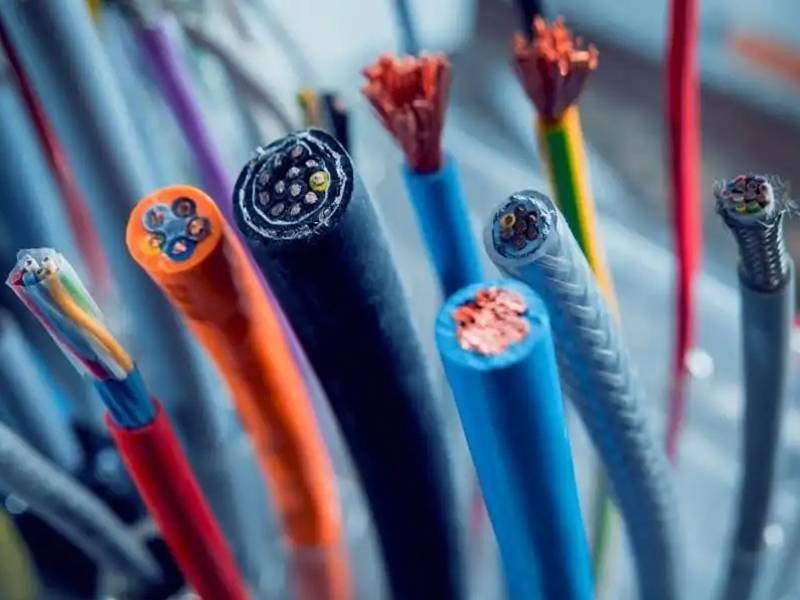
The terms wire and cable are often used interchangeably, even by experienced buyers and engineers. On drawings, in emails, and during sourcing discussions, it’s common to hear someone say “this wire” when they actually mean a multi-conductor cable—or to request a “cable” when a single conductor wire would have been sufficient. In low-risk applications, this confusion may not cause immediate problems. In real OEM projects, however, misunderstanding the difference between cable and wire can lead to incorrect specifications, compliance issues, unnecessary cost, or early product failure.
The difference is not just about how many conductors are inside. It affects electrical performance, mechanical durability, safety ratings, shielding capability, and regulatory approval. A wire and a cable behave very differently once installed into a real product, exposed to heat, movement, EMI, or harsh environments. Choosing the wrong one is rarely a cosmetic mistake—it is usually an engineering one.
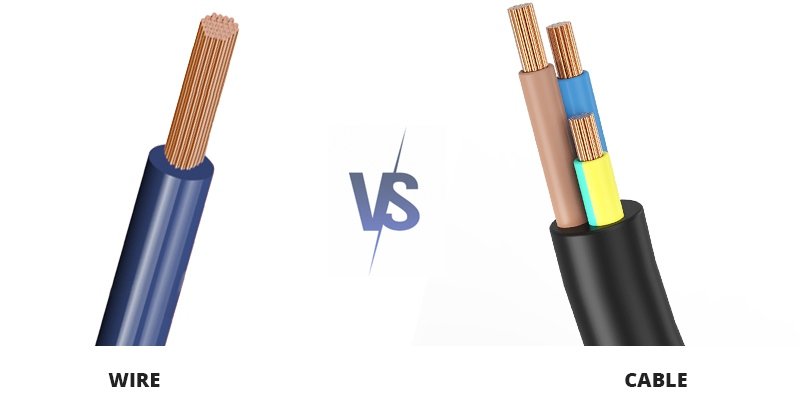
A wire is a single electrical conductor used to carry current or signals, typically insulated but not mechanically or electrically protected beyond that. A cable is an assembly of two or more wires bundled together with additional insulation, shielding, and structural layers to provide protection, signal integrity, and durability. The choice between wire and cable depends on electrical load, environment, movement, and safety requirements.
To understand why this distinction matters, imagine a control system failing in the field—not because the electronics were wrong, but because a “wire” was used where a “cable” was required. That scenario happens more often than most buyers expect. Let’s start by clearly defining what a wire really is.
What Is a Wire?
A wire is a single electrical conductor designed to carry current or signals from one point to another. It may be solid or stranded and is typically covered with a basic insulation layer for electrical safety. Unlike a cable, a wire does not include multiple conductors, shielding, or structural protection, and is usually intended for internal, controlled environments within a device or enclosure.
In professional electrical and cable assembly engineering, a wire is the most basic electrical transmission element. It is intentionally simple by design. Understanding what a wire is also requires understanding what it is not.
A wire is not designed to manage environmental risk, electromagnetic interference, or mechanical stress on its own. Those responsibilities belong either to the surrounding product structure or to a cable assembly.
This distinction is critical in OEM projects, where misusing wires often leads to reliability issues that only appear after products enter real-world use.

What does “wire” mean in electrical engineering terms?
In strict electrical terms, a wire consists of:
- One conductive path (no bundled conductors)
- A defined conductor size (usually specified by AWG or cross-section)
- Optional basic insulation for electrical isolation
The conductor itself may be made from copper, tinned copper, or aluminum, depending on conductivity, corrosion resistance, and cost considerations. The wire’s role is singular: to conduct electricity efficiently, not to protect itself from external influences.
What are the three main types of wire?
In real applications, wires are commonly classified into three functional types:
- Solid wire A single, solid conductor. It offers stable electrical characteristics and low resistance but minimal flexibility. Commonly used in fixed, static installations.
- Stranded wire Multiple small strands twisted together to form one conductor. This improves flexibility and vibration resistance, making it suitable for internal wiring in equipment.
- Fine-stranded (flexible) wire Designed for repeated movement and bending. While more flexible, it still lacks external protection and must rely on system design to avoid damage.
All three are still wires, not cables, because they remain single-conductor elements without additional protective structure.
Which materials are commonly used for wires?
Wire performance and grading are heavily influenced by material selection.
Common conductor materials include:
- Bare copper – excellent conductivity
- Tinned copper – improved corrosion resistance
- Aluminum – lighter and lower cost for power applications
Insulation materials may include PVC, XLPE, silicone, or fluoropolymers, chosen based on temperature rating, voltage rating, and regulatory requirements. However, changing insulation does not convert a wire into a cable.
How are wires typically used in real products?
Wires are most appropriate in:
- Internal device wiring
- Control panels and enclosures
- PCB-to-component connections
- Low-risk, static environments
They are usually protected by:
- Enclosures
- Conduits
- Harness routing
- Additional mechanical supports
When a wire is exposed to motion, abrasion, EMI, or external environments without protection, failure risk increases rapidly.
What are the limitations of using wires?
Wires have inherent limitations that define when they should not be used:
- No inherent EMI shielding
- Minimal mechanical protection
- Limited resistance to environmental exposure
- High dependency on surrounding design for safety
These limitations are not flaws—they are design boundaries. Problems occur only when wires are used outside their intended scope.
Why wires are often misused in OEM projects
In OEM sourcing, wires are often chosen because they appear:
- Cheaper
- Simpler
- Faster to procure
However, many field failures trace back to wire misuse, especially when:
- Multiple signals are bundled manually
- Wires are routed externally
- Compliance requirements are underestimated
In such cases, a cable—not a wire—should have been specified.
What Is a Cable?
A cable is an engineered assembly of two or more insulated conductors bundled together with additional layers such as fillers, shielding, and an outer jacket. Unlike a single wire, a cable is designed to provide electrical isolation, mechanical protection, environmental resistance, and signal integrity, making it suitable for external connections, complex systems, and regulated or high-risk applications.

What defines a cable compared to a wire?
The defining difference between a cable and a wire is functional integration.
A cable integrates:
- Multiple conductors working together
- Individual insulation for each conductor
- Structural elements to maintain geometry
- Optional shielding to control EMI
- An outer jacket to protect against the environment
A wire relies on the surrounding product for protection.
A cable carries its own protection with it.
This is why cables are used wherever reliability and safety cannot depend on perfect installation conditions.
How are cables constructed internally?
Although cable designs vary widely, most cables follow a layered structure:
- Conductors Copper or copper-alloy conductors carrying power or signals.
- Primary insulation Electrically isolates each conductor to prevent shorts and leakage.
- Fillers or binders Maintain shape, spacing, and mechanical stability, especially in round cables.
- Shielding (optional but common) Foil, braid, or combined shields to reduce EMI and crosstalk.
- Outer jacket Provides mechanical strength, abrasion resistance, and environmental protection.
Each layer contributes directly to the cable’s grade, application range, and compliance level.
Why do cables include insulation and shielding?
Insulation alone prevents electrical faults, but shielding controls electromagnetic behavior.
Shielding is critical when:
- Signals are low-level or high-speed
- Multiple conductors run close together
- External noise sources are present
Without proper shielding, even correctly rated conductors can experience:
- Signal distortion
- Data loss
- Unstable system behavior
This is why cables—not wires—are mandatory in data, control, medical, and industrial systems.
What problems are cables designed to solve?
Cables exist to manage real-world uncertainty.
They are designed to:
- Absorb mechanical stress and vibration
- Prevent abrasion and conductor fatigue
- Resist oil, moisture, UV, and chemicals
- Maintain performance over long service life
A wire assumes ideal conditions.
A cable assumes conditions will not be ideal.
Where are cables typically used?
Cables are commonly used in:
- External device connections
- Machine-to-machine interfaces
- Control and automation systems
- Medical equipment
- Industrial and outdoor installations

Any time a connection must survive movement, exposure, or regulatory scrutiny, a cable is the correct choice.
Why cables are essential in regulated and OEM projects
In OEM projects, cables are often required not because of electrical necessity, but because of:
- Safety standards
- Installation codes
- Liability considerations
Using a wire where a cable is expected can result in:
- Failed certification
- Rejected inspections
- Field reliability issues
Cables provide predictable, auditable performance, which is why regulators and end customers trust them.
Common misconceptions about cables
Some common misunderstandings include:
- “A cable is just bundled wires”
- “If voltage is low, a wire is enough”
- “Shielding is optional unless problems appear”
In practice, many failures occur before problems are visible—during certification, EMC testing, or long-term use.
What Are the Key Differences Between Cable and Wire?
The key difference between a cable and a wire lies in structure, protection, and application. A wire is a single conductor with basic insulation, designed for internal and controlled environments. A cable contains multiple insulated conductors with additional layers such as shielding and an outer jacket, providing mechanical protection, EMI control, and environmental resistance for external or high-risk applications.
In real engineering and OEM sourcing, however, the differences go much deeper. They affect how a product performs over time, how it passes certification, and how much risk a company carries after shipment.

Let’s break these differences down across the dimensions that actually matter.
How do structure and complexity differ?
A wire has a simple structure:
- One conductor
- One insulation layer
- No inherent mechanical or EMI protection
A cable is structurally layered:
- Multiple conductors
- Individual insulation for each conductor
- Fillers or binders for geometry
- Optional shielding layers
- An outer jacket for protection
This added complexity is intentional. It allows a cable to behave consistently even when routing, movement, or environment are not ideal—conditions where wires are highly vulnerable.
Which provides better mechanical protection?
Mechanical protection is one of the most decisive differences.
- Wires depend entirely on the surrounding product design (enclosures, clamps, conduits).
- Cables include built-in protection against abrasion, bending, pulling, and vibration.
In applications involving motion, external routing, or long service life, a wire becomes a weak link. A cable, by contrast, is designed to absorb mechanical stress without transferring damage to the conductor.
How do cable and wire differ in EMI and signal integrity?
Wires offer no intrinsic EMI control. Any noise immunity must come from external shielding or layout.
Cables can include:
- Foil shielding
- Braided shielding
- Combined shields
These structures:
- Reduce electromagnetic interference
- Prevent crosstalk between conductors
- Protect sensitive signals
For data transmission, control systems, medical devices, or industrial automation, this difference alone often makes a cable mandatory.
Which is safer in regulated environments?
From a safety and compliance perspective, cables are inherently more robust.
Cables are often designed to meet:
- Flame retardancy requirements
- Smoke and toxicity limits
- Mechanical safety standards
Wires, while electrically safe, rely on the end product to meet these requirements. In regulated industries, inspectors and auditors typically expect cables, not exposed or loosely bundled wires.
How do environmental resistance capabilities differ?
Environmental exposure is another major dividing line.
- Wires are sensitive to moisture, oil, UV, and chemicals unless fully protected.
- Cables can be jacketed with materials engineered for specific environments.
This makes cables suitable for:
- Outdoor installations
- Industrial plants
- Medical cleaning processes
- Automotive and transportation systems

Using a wire in such environments often leads to premature aging or failure.
How do lifecycle and reliability expectations differ?
Wires are typically selected for:
- Short internal runs
- Low movement
- Easy replacement
Cables are selected for:
- Long-term reliability
- Minimal maintenance
- Difficult-to-access installations
From a lifecycle cost perspective, cables often reduce total cost—even if their upfront price is higher—by preventing downtime, repairs, or recalls.
Wire vs Cable — Detailed Engineering Comparison
| Aspect | Wire | Cable |
|---|---|---|
| Conductor count | Single | Multiple |
| Structural layers | Minimal | Multi-layer |
| Mechanical protection | External only | Built-in |
| EMI shielding | None | Optional / Common |
| Environmental resistance | Low | Medium to High |
| Compliance readiness | Limited | Strong |
| Typical use | Internal wiring | System interconnect |
| Failure risk if misused | High | Low |
Common Selection Mistakes to Avoid
- Choosing wire because voltage/current is low
- Ignoring movement or vibration during operation
- Assuming “shielding can be added later”
- Underestimating certification and audit requirements
Most of these mistakes are discovered after production starts—when correction is expensive.
Which Applications Use Wires vs Cables?
Wires are typically used for internal, low-risk electrical connections in controlled environments, while cables are used for external, multi-conductor, or high-risk applications that require mechanical protection, EMI control, and environmental resistance. The choice depends on exposure, movement, safety requirements, and regulatory expectations rather than voltage or current alone.
When is a wire sufficient?
A wire is appropriate when the operating environment is predictable, protected, and low-risk.
Typical scenarios include:
- Internal wiring inside sealed enclosures
- PCB-to-component connections
- Control panel wiring with strain relief
- Short, fixed runs with no movement
In these cases, the surrounding product provides:
- Mechanical protection
- Environmental isolation
- EMI shielding
Here, a wire performs exactly as intended—efficiently and cost-effectively—without being asked to manage external risks.
When is a cable required?
A cable becomes necessary when the connection itself must manage risk.
Common cable-required scenarios include:
- External device-to-device connections
- Multi-signal or power-and-signal routing
- Installations exposed to movement or vibration
- Applications requiring EMI control
- Products subject to safety or installation standards

In these situations, relying on individual wires introduces unpredictable failure points. A cable’s structure ensures consistent performance even when installation or operating conditions vary.
How do industrial applications influence the choice?
Industrial environments are rarely forgiving.
They often involve:
- Continuous operation
- Vibration and mechanical shock
- Oil, dust, moisture, and chemical exposure
- Long service life expectations
Even low-voltage control signals in industrial systems almost always use cables, because reliability and downtime cost far outweigh material savings. Wires are typically limited to protected internal zones.
Why medical and regulated industries favor cables
In regulated industries, the decision is often made before engineering optimization begins.
Medical, laboratory, and safety-related applications require:
- Predictable insulation behavior
- Consistent EMI performance
- Resistance to cleaning agents or sterilization
- Clear documentation and traceability
Cables are favored because they provide auditable, repeatable performance that regulators and quality systems recognize. Exposed or loosely managed wires are rarely acceptable.
How movement and flex determine wire vs cable
Motion is one of the fastest ways to expose a wrong choice.
- Static installations may tolerate wires
- Dynamic installations almost never do
Repeated bending, dragging, or vibration quickly damages single-conductor wires. Cables designed for flexing distribute stress across multiple strands, fillers, and jackets, dramatically extending service life.
How OEM and commercial products differ
In OEM and commercial products:
- Internal assemblies may use wires
- External interfaces almost always use cables
This division helps manufacturers:
- Pass certification
- Reduce field failures
- Simplify installation for end users
A product may contain both wires and cables—but each is placed where it makes sense from a risk and responsibility standpoint.
Wire vs Cable by Application — Practical Guide
| Application Scenario | Recommended Choice | Reason |
|---|---|---|
| Inside sealed enclosure | Wire | Environment controlled |
| PCB internal connections | Wire | Minimal movement |
| External device connection | Cable | Mechanical & EMI protection |
| Industrial machinery | Cable | Vibration & exposure |
| Medical equipment | Cable | Safety & compliance |
| Outdoor installation | Cable | UV & moisture resistance |
| Temporary lab setup | Wire (limited) | Controlled use |
Common Application-Level Mistakes
- Using wires for external connections to save cost
- Bundling wires manually instead of using a cable
- Ignoring movement during normal operation
- Assuming “low voltage = low risk”
Most of these mistakes only become visible during:
- EMC testing
- Safety audits
- Field use after shipment
By then, correction is expensive.
How Do Cable and Wire Differ in Standards and Ratings?
Cables and wires differ significantly in standards and ratings. Wires are typically certified for basic electrical safety such as voltage, temperature, and insulation integrity, while cables must meet broader standards covering mechanical protection, flame resistance, EMI shielding, environmental durability, and installation safety. These differences affect certification approval, product compliance, and long-term reliability.
The difference between cable and wire becomes most visible during certification, inspection, or market entry, not during early prototyping. Many OEMs discover too late that a component that “worked electrically” does not satisfy regulatory expectations.
Standards and ratings are not just technical details—they define who is responsible for safety and reliability:
- With a wire, responsibility shifts to the end product
- With a cable, responsibility is partially embedded in the component itself
This distinction has real consequences.
Which UL and IEC standards typically apply to wires?
Wires are usually evaluated under single-conductor-focused standards, which emphasize basic electrical safety.
These standards typically address:
- Conductor size (AWG or cross-section)
- Voltage rating
- Temperature rating
- Insulation material performance
They assume that the wire will be:
- Installed inside a protected enclosure
- Supported by additional mechanical protection
- Not directly exposed to users or harsh environments
As a result, wire standards are narrow in scope and rely heavily on the final product design to manage risk.
Which standards and certifications apply to cables?
Cables are evaluated as complete systems, not just conductors.
Cable standards often include requirements for:
- Flame retardancy and fire behavior
- Mechanical durability and strain resistance
- EMI shielding effectiveness
- Jacket material performance
- Environmental resistance (oil, moisture, UV)
Depending on the application and market, cables may need to comply with multiple frameworks simultaneously, making their certification broader, stricter, and more costly—but also more predictable in performance.
How voltage and temperature ratings differ in practice
Although both wires and cables carry voltage and temperature ratings, the interpretation differs.
- A wire’s rating assumes ideal installation conditions
- A cable’s rating assumes real-world stress
For example, a wire rated for a certain temperature may overheat when bundled or flexed, while a cable’s structure is designed to manage heat dissipation and spacing. This is why cables often achieve higher effective reliability, even when headline ratings look similar.
How flame, smoke, and safety requirements differ
Fire behavior is a major dividing line.
Cables are often required to meet:
- Flame propagation limits
- Smoke density requirements
- Toxic gas emission restrictions
Wires may not be evaluated for these behaviors at the system level. In buildings, transportation, and medical environments, this difference alone often makes a cable mandatory.
How EMI and EMC compliance influence standards
EMI is rarely addressed at the wire level.
Cables, especially shielded cables, are often integral to:
- EMC compliance
- Noise control
- Signal integrity
Regulators and test labs frequently expect EMI mitigation to be handled at the cable level, not improvised through routing or external shielding. Using wires in EMI-sensitive systems often leads to test failures late in development.
How standards affect global market access
Another overlooked factor is market access.
Cables with recognized certifications:
- Are easier to approve across regions
- Reduce documentation burden
- Simplify audits and inspections
Wires may require additional justification or protective measures in each target market. For OEMs selling globally, cables often reduce friction—even when unit cost is higher.
Wire vs Cable — Standards & Ratings Comparison
| Compliance Aspect | Wire | Cable |
|---|---|---|
| Electrical safety | Yes | Yes |
| Mechanical protection | External only | Built-in |
| Flame retardancy | Limited | Common |
| EMI / EMC support | No | Optional / Common |
| Environmental resistance | Low | Medium–High |
| Certification scope | Narrow | Broad |
| Audit acceptance | Conditional | Strong |
Common Compliance-Related Mistakes
- Assuming electrical rating alone ensures approval
- Ignoring flame or smoke requirements until late testing
- Using wires where inspectors expect cables
- Treating EMI problems as routing issues instead of component issues
These mistakes often surface after tooling, production, or certification testing, when correction is costly.
How Should Buyers Choose Between Cable and Wire for OEM Projects?
Buyers should choose between cable and wire by evaluating application environment, mechanical stress, EMI sensitivity, regulatory requirements, and product lifecycle risk. Wires are suitable for internal, protected connections, while cables are required for external, multi-conductor, or regulated applications. Early collaboration with experienced suppliers helps prevent mis-specification, compliance failures, and costly redesigns.
OEM Selection Is About Risk Control, Not Vocabulary
In OEM projects, selecting between cable and wire is rarely a simple technical choice.
It is a risk management decision that directly affects:
- Product reliability
- Certification approval
- Warranty exposure
- Long-term customer satisfaction
Many sourcing issues arise not because buyers lack information, but because decisions are made too late, after design constraints are already locked in.
The following framework reflects how experienced OEM teams make this decision in practice.
How do you identify wires and cables in real OEM projects?
In real sourcing scenarios, buyers are often given:
- Reference samples
- Photos
- Incomplete drawings
- Legacy part numbers
To identify whether a solution should be a wire or a cable, ask:
- Does this connection include multiple conductors?
- Is there an outer jacket providing protection?
- Is shielding present or required?
- Will this be routed externally or move during use?
If protection, structure, or EMI control is part of the requirement, a cable is usually the correct choice—even if the original sample looks simple.
What application questions should buyers ask before quoting?
Before requesting pricing, buyers should clarify:
- Where is the connection installed (inside or outside)?
- Will it move, bend, or vibrate during operation?
- Is EMI a concern for system performance?
- Which markets and standards apply?
- What is the expected product lifespan?
These questions often determine the choice before cost or lead time are considered. Skipping them almost guarantees rework later.
How do cost, lead time, and MOQ differ in practice?
From a purchasing perspective:
- Wires are typically lower cost, faster to source, and simpler to manufacture.
- Cables involve more materials, testing, and documentation, increasing unit cost and lead time.
However, many OEMs underestimate downstream cost, such as:
- Certification failures
- Field returns
- Production delays
In many cases, choosing a cable early reduces total project cost—even if the initial quote is higher.
How should buyers balance over-specification vs under-specification?
Two common mistakes exist:
- Over-specifying cables for simple internal connections
- Under-specifying wires for exposed or regulated applications
The optimal approach is to define the minimum safe and compliant solution, then optimize within that boundary. This requires understanding real operating conditions—not worst-case assumptions or cost-only thinking.
How does supplier capability affect the decision?
Supplier involvement is often the difference between success and frustration.
Experienced suppliers can:
- Interpret partial or unclear requirements
- Recommend wire-to-cable transitions
- Offer qualified alternative materials
- Provide drawings quickly for confirmation
At Sino-conn, drawings and specifications are typically provided within hours or days, allowing OEMs to lock decisions early and avoid late-stage changes.
How should OEMs plan for future scaling and compliance?
Buyers should consider not just the first production run, but:
- Future market expansion
- Regulatory updates
- Volume scaling
A wire solution that works for pilot builds may become a liability at scale. Cables often provide future-proofing, especially for global distribution.
Common OEM Selection Pitfalls
- Treating wire vs cable as a terminology issue
- Waiting until certification testing to decide
- Relying on legacy designs without re-evaluation
- Assuming cost savings without assessing risk
Most failures are not technical—they are decision-timing failures.
Start Your OEM Cable or Wire Project with Sino-conn
Choosing between a wire and a cable is not a vocabulary issue.
It is a design, compliance, and reliability decision.
Whether you are:
- Replacing an existing wire harness
- Designing a new cable assembly
- Unsure if a wire is sufficient or a cable is required
Sino-conn helps OEMs and engineers clarify requirements early, define correct specifications, and deliver reliable wire and cable assemblies—backed by fast drawings, flexible customization, and full testing and certification support.
Send us your drawing, reference model, or even just a photo.
We’ll help you determine the right solution—and get it built correctly the first time.