Skip to content

Medical devices are becoming smaller, more integrated, and more application-specific than ever before. From patient monitoring systems and diagnostic imaging equipment to surgical tools and portable medical electronics, connectors are no longer simple interfaces. They are critical system components that directly affect signal integrity, patient safety, device reliability, and regulatory compliance.
Yet many medical projects still underestimate the complexity behind connectors. A connector that works perfectly in a consumer product may fail prematurely in a medical environment. A standard off-the-shelf solution may pass initial testing but struggle with repeated sterilization, vibration, or long-term mechanical stress. As a result, more OEMs and medical device developers are turning to custom medical connector manufacturing instead of adapting generic parts.
Custom medical connector manufacturing is the process of designing, engineering, and assembling medical-grade connectors and cable interfaces tailored to specific device requirements. It involves defining electrical, mechanical, and material specifications; confirming drawings and pinouts; ensuring compliance with medical regulations; and controlling manufacturing and inspection processes. Unlike standard connectors, custom medical connectors are optimized for reliability, safety, and long-term performance in regulated medical environments.
The real value of custom manufacturing is not only in the final product, but in the engineering process behind it. Understanding how specifications are defined, how designs are approved, and how manufacturing risks are controlled can significantly reduce delays, failures, and costly redesigns. Let’s start by clarifying what custom medical connector manufacturing actually means.
What Is Custom Medical Connector Manufacturing?

Custom medical connector manufacturing refers to the design and production of connector systems specifically engineered for medical devices. Unlike standard connectors, these are tailored to defined electrical, mechanical, environmental, and regulatory requirements. The process includes specification review, material selection, drawing approval, controlled assembly, testing, and documentation to ensure safety, reliability, and compliance in medical applications.
What Makes Medical Connectors Different from Standard Connectors?
Medical connectors operate in environments where failure is not just inconvenient—it can be critical. Unlike consumer or industrial connectors, medical connectors often face repeated mating cycles, cleaning or sterilization exposure, tight mechanical tolerances, and strict electrical stability requirements.
In addition, medical devices frequently integrate multiple functions—power, data, sensing, and control—into compact interfaces. This places higher demands on pin density, shielding, and mechanical alignment. A connector that is “electrically correct” but mechanically unstable can introduce intermittent faults that are extremely difficult to diagnose.
Another key difference is regulatory expectation. Medical connectors must support compliance documentation, traceability, and consistent manufacturing processes. Even when a connector itself is not directly certified, it must align with the overall compliance strategy of the medical device.
What Does “Custom” Really Mean in Medical Connector Manufacturing?

“Custom” does not necessarily mean reinventing every component. In medical connector manufacturing, customization usually involves controlled adaptation—selecting appropriate connector platforms and tailoring them through cable integration, pin definition, materials, shielding, and mechanical features.
Common customization elements include:
- Cable length and routing geometry
- Pinout and signal mapping
- Connector orientation and keying
- Jacket material and flexibility
- Shielding structure and grounding method
The goal is not novelty, but fitness for application. Customization ensures the connector functions reliably within the specific medical device, rather than forcing the device to adapt to a generic part.
Which Specifications Are Required for Medical Connector Manufacturing?
Custom medical connector manufacturing begins not on the production line, but at the specification definition stage. In medical projects, unclear or incomplete specifications are the single most common cause of delays, repeated sampling, cost overruns, and field reliability issues. Unlike consumer products, medical devices operate in regulated environments where assumptions are risky and undocumented decisions can lead to compliance or safety concerns.
A complete medical connector specification is not just a checklist—it is a shared technical contract between the device designer and the manufacturer. It defines what must be built, how it must perform, and under which conditions it must remain reliable over time.
Below are the core specification categories that must be clearly defined before custom medical connector manufacturing can proceed.
Electrical Specifications: What Must Be Defined Up Front
Electrical parameters form the foundation of connector design and directly affect patient safety and device functionality. These values must be defined with both normal operation and worst-case scenarios in mind.
Key electrical specifications include:
- Rated voltage and current (continuous and peak)
- Signal type (power, analog, digital, high-speed data)
- Impedance requirements for controlled-signal applications
- Grounding and shielding expectations
In medical devices, electrical margins are often tighter than in industrial products. A connector that meets nominal values but lacks margin for transients, startup loads, or long cable runs may pass bench tests yet fail in real use.
Mechanical Specifications: Size, OD, and Flexibility Matter More Than Expected
Mechanical specifications determine whether the connector can be reliably integrated into the device without introducing stress or premature wear. These parameters are frequently underestimated—especially when customers provide only a connector model number or reference photo.
Critical mechanical items include:
- Connector outline dimensions and mating depth
- Cable outer diameter (OD) and allowable tolerance
- Minimum bend radius near the connector
- Required flexibility or torsion resistance
Even small mismatches in OD or bend radius can compromise long-term reliability. In medical equipment that is frequently handled, moved, or repositioned, mechanical stress often becomes the dominant failure mode rather than electrical overload.
Material and Environmental Requirements in Medical Applications

Material selection in medical connector manufacturing must account for actual exposure conditions, not just theoretical operating environments. Medical devices may encounter cleaning agents, disinfectants, body fluids, oils, or elevated temperatures during use or maintenance.
Common material requirements include:
- Heat resistance and flame retardancy
- Resistance to chemicals and cleaning solutions
- UV or aging resistance for long service life
- Halogen-free or fluorine-free material policies
While full biocompatibility testing may not be required for all connectors, materials must still align with the device’s overall safety and compliance strategy.
EMI Shielding and Signal Integrity Requirements
Many medical devices are sensitive to electromagnetic interference, especially imaging, monitoring, and diagnostic equipment. Connector and cable assemblies must therefore be designed as part of a complete EMI control strategy, not as isolated components.
Specification items typically include:
- Shielding structure (foil, braid, or combination)
- Shield termination method at the connector
- Grounding scheme and continuity expectations
Improperly defined shielding often results in unstable signals, increased noise floor, or unpredictable system behavior—problems that are difficult to diagnose after assembly.
Pinout, Definition, and Interface Requirements
Pin definition is one of the most critical yet frequently overlooked specifications. Each pin must have a clearly defined function, voltage level, and mating relationship.
This includes:
- End-to-end pin mapping
- Power vs signal separation
- Keying or orientation requirements
- Connector-to-connector interconnection logic
In medical devices, an incorrect pinout is not just a functional error—it can create safety risks or damage downstream electronics.
Documentation and Revision Control Expectations
Medical connector manufacturing requires documentation that supports traceability and audit readiness. Specifications are not static; they evolve during development. Without revision control, confusion quickly arises between “latest version” and “previous approval.”
Typical documentation expectations include:
- Connector and cable specification sheets
- Approved drawings (CAD → PDF)
- Revision history and change records
- Material compliance declarations
Clear documentation ensures that prototypes, pilot builds, and mass production remain aligned.
Summary Table: Core Specification Categories for Medical Connectors
| Specification Category | Why It Is Critical |
|---|---|
| Electrical parameters | Ensures safe and stable device operation |
| Mechanical dimensions | Prevents stress, wear, and fit issues |
| Cable OD & flexibility | Enables proper sealing and durability |
| Material properties | Supports cleaning, heat, and aging resistance |
| EMI shielding | Protects sensitive medical signals |
| Pinout definition | Prevents functional and safety errors |
| Documentation control | Maintains consistency and audit readiness |
Why Complete Specifications Reduce Total Project Risk
In medical connector manufacturing, incomplete specifications rarely save time or cost. Instead, they shift risk downstream—into sampling delays, redesigns, or field failures. A well-defined specification allows manufacturers to:
- Quote accurately
- Build correct samples the first time
- Maintain consistency from prototype to production
For OEMs and device developers, investing time in specification clarity at the beginning is one of the most effective ways to reduce total project risk and accelerate time to market.
How Are Custom Medical Connectors Designed and Approved?
Custom medical connectors are designed through an engineering-driven process that includes specification review, CAD drawing creation, pinout confirmation, and customer approval before production. This design approval step ensures that both sides share the same technical understanding and prevents costly errors during manufacturing.

How Does CAD-to-PDF Drawing Confirmation Work?
Once specifications are confirmed, manufacturers create detailed drawings showing connector structure, pin assignments, cable routing, and key dimensions. These drawings are typically generated in CAD and shared as controlled PDF files for review.
This step is not a formality. It is the point where potential misunderstandings surface—before any material is cut or assembled. Drawing approval establishes a technical baseline that protects both the customer and the manufacturer.
How Are Pinouts, Definitions, and Interfaces Confirmed?
Pinout definition is especially critical in medical devices, where incorrect signal mapping can cause malfunction or safety issues. Each pin’s function, grounding scheme, and mating relationship must be explicitly confirmed.
This process often includes:
- End-to-end signal mapping
- Power and signal separation
- Shield termination logic
Clear confirmation at this stage eliminates ambiguity and ensures that the final assembly behaves exactly as intended.
How Are Custom Medical Connectors Manufactured and Assembled?
Custom medical connectors are manufactured through controlled assembly processes that prioritize reliability and consistency. This includes contact termination, connector-to-cable integration, EMI shielding control, and multi-stage quality inspection to meet medical device expectations.
How Are Contacts, Housings, and Cables Integrated?
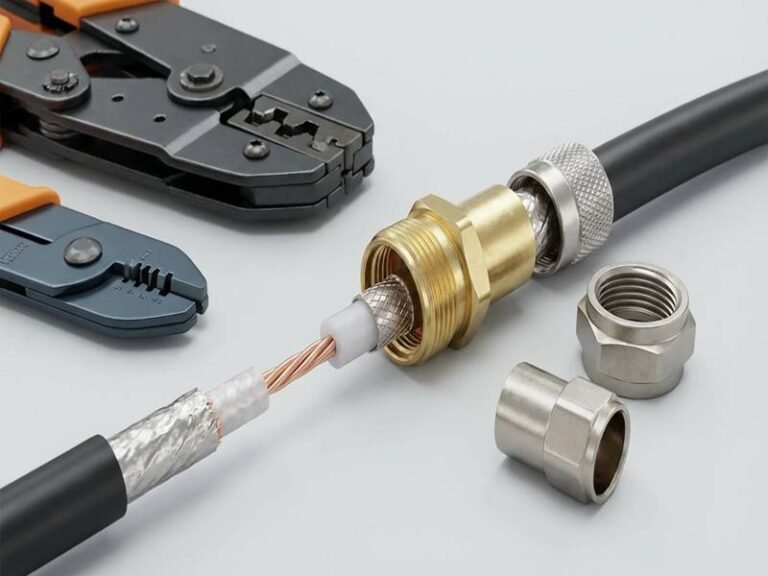
Contact termination methods—crimping or soldering—are selected based on connector design and application needs. Crimping is often preferred for consistency, while soldering may be used in compact or specialized designs with strict thermal control.
Mechanical integration focuses on stability. Connectors must remain secure under vibration, repeated use, and handling without transferring stress to internal contacts.
How Are EMI Shielding and Signal Integrity Managed?
Many medical devices are sensitive to electrical noise. Shielding structures must be continuous and correctly grounded to prevent interference. Improper shield termination can turn a cable into an unintended antenna.
Shielding decisions are closely tied to connector design, cable structure, and system grounding philosophy. There is rarely a one-size-fits-all solution.
How Does Quality Control Differ for Medical Connectors?
Medical connector manufacturing emphasizes process control, not just final inspection. Typical practices include:
| Inspection Stage | Purpose |
|---|---|
| In-process inspection | Detect assembly deviations early |
| Final inspection | Verify electrical and mechanical integrity |
| Documentation review | Ensure traceability and compliance |
This layered approach reduces the risk of hidden defects reaching the field.
How Do Compliance, Certifications, and Documentation Work?
Compliance in medical connector manufacturing relies on material conformity, controlled processes, and complete documentation. Certifications such as UL, ISO, RoHS, REACH, and PFAS support regulatory alignment, while COO and COC documents facilitate global distribution and audits.
Which Certifications Are Commonly Required?
While connectors themselves may not always be certified as standalone devices, they must support the compliance strategy of the medical product. Common requirements include:
- UL-related documentation where applicable
- ISO-aligned manufacturing systems
- RoHS and REACH material compliance
- PFAS declarations
How Does Documentation Support Audits and Approvals?
Documentation provides confidence. Specification sheets, approved drawings, and revision control records allow OEMs to demonstrate control during audits or regulatory reviews. Without proper documentation, even well-made products can face approval delays.
How to Choose a Reliable Custom Medical Connector Manufacturer?

Selecting a reliable custom medical connector manufacturer is not simply a sourcing decision—it is a risk-management decision. In medical projects, the consequences of choosing the wrong partner are often delayed but severe: repeated sampling, missed launch timelines, compliance gaps, or field failures that are difficult to trace back to a single root cause.
Unlike standard components, custom medical connectors sit at the intersection of engineering design, regulatory expectations, and manufacturing discipline. A capable manufacturer does more than assemble parts; they help clarify requirements, prevent hidden risks, and maintain consistency from prototype to production.
The following criteria reflect how experienced medical OEMs and engineers evaluate manufacturing partners in real projects.
Engineering Communication: Can They Ask the Right Questions?
One of the clearest indicators of a reliable medical connector manufacturer is the quality of their technical questions. Strong suppliers do not simply accept drawings or part numbers at face value. Instead, they challenge unclear inputs and confirm assumptions early.
Typical signs of strong engineering communication include:
- Clarifying electrical margins rather than quoting nominal values
- Asking about cable movement, bend radius, and installation conditions
- Confirming pinout logic and grounding intent
- Discussing trade-offs when constraints conflict
Manufacturers who remain silent when specifications are incomplete may appear efficient at first, but often introduce risk that surfaces later.
Specification and Drawing Discipline: Is Everything Confirmed Before Production?
In medical connector manufacturing, drawing approval is a control point, not paperwork. Reliable partners insist on converting specifications into clear drawings (CAD → PDF) and obtaining approval before production begins.
This discipline ensures:
- Both sides share the same understanding of structure and definition
- No assumptions are made during assembly
- Changes are tracked and controlled
A manufacturer willing to skip drawing confirmation to “save time” is often shifting risk to the customer.
Manufacturing Process Control: How Is Quality Ensured Consistently?
Medical projects require repeatability. A reliable manufacturer relies on process control, not individual skill or inspection at the end.
Key process indicators include:
- Defined work instructions for assembly
- In-process inspection at critical steps
- 100% final inspection where required
- Clear separation between prototype and mass-production workflows
This approach reduces variation and ensures that samples and production units behave the same way in real applications.
Compliance Awareness: Do They Understand Medical Expectations?
While not every connector requires independent certification, manufacturers must understand how their products fit into a medical compliance framework.
A capable medical connector manufacturer should be familiar with:
- Material compliance (RoHS, REACH, PFAS)
- ISO-aligned quality systems
- Documentation such as COC and COO for export and audits
More importantly, they should understand why these documents matter to OEMs—not treat them as optional add-ons.
Flexibility and Responsiveness: Can They Support Development Realities?
Medical development rarely follows a straight line. Requirements evolve, schedules change, and early prototypes often lead to design refinement.
Reliable partners support this reality by offering:
- Flexible MOQs for development stages
- Fast drawing feedback and sample turnaround
- Alternative connector or material options when availability is limited
Speed alone is not the goal—controlled speed is. Rapid response combined with engineering accuracy is what keeps projects moving forward.
Beyond Price: How to Evaluate Long-Term Value
Price is always a factor, but in medical connector manufacturing, the lowest unit price rarely equals the lowest total cost. Delays, redesigns, and field issues quickly outweigh small price differences.
The table below highlights how experienced buyers compare suppliers:
| Evaluation Factor | Reliable Manufacturer | High-Risk Manufacturer |
|---|---|---|
| Engineering support | Proactive, questioning | Passive, order-taking |
| Drawing control | Mandatory before production | Optional or skipped |
| Process inspection | In-process + final | Final only |
| Compliance awareness | Integrated | Reactive |
| Flexibility | Structured and controlled | Limited or inconsistent |
| Long-term risk | Low | High |
Why Partnership Mindset Matters in Medical Projects
Medical connector manufacturing is rarely a one-time transaction. Once a design is validated and approved, it often remains in production for years. Changing suppliers later can introduce re-validation effort and regulatory risk.
For this reason, many OEMs prioritize partners who demonstrate:
- Long-term process stability
- Clear communication habits
- Willingness to support both engineers and procurement teams
A reliable manufacturer acts as an extension of the customer’s engineering process, not just a build resource.
Putting It All Together
Choosing a custom medical connector manufacturer is about aligning technical competence, process discipline, and communication quality. Suppliers who invest time upfront to clarify requirements and control execution typically reduce total project risk—even if their initial quote is not the lowest.
For medical OEMs, engineers, and buyers, the right partner is one who helps ensure that what is approved on paper is exactly what is delivered in production—consistently and predictably.

Final Thoughts: Building Reliable Medical Devices Starts at the Connector
Custom medical connector manufacturing is not about complexity for its own sake. It is about control—over specifications, design intent, manufacturing execution, and long-term reliability.
At Sino-Conn, we support medical connector and cable assembly projects from early specification review to drawing approval, sampling, and volume production. Whether you start with a complete drawing, a part number, or only a reference image, our engineering team works with you to define a manufacturable, reliable solution.
If you are planning a medical connector or cable project, we invite you to discuss your requirements with us. Clear specifications, fast engineering feedback, and controlled manufacturing can significantly reduce project risk—and help your device reach the market with confidence.