 Skip to content
What Is an Optical Cable? Structure, Uses, and Selection Guide
- andy
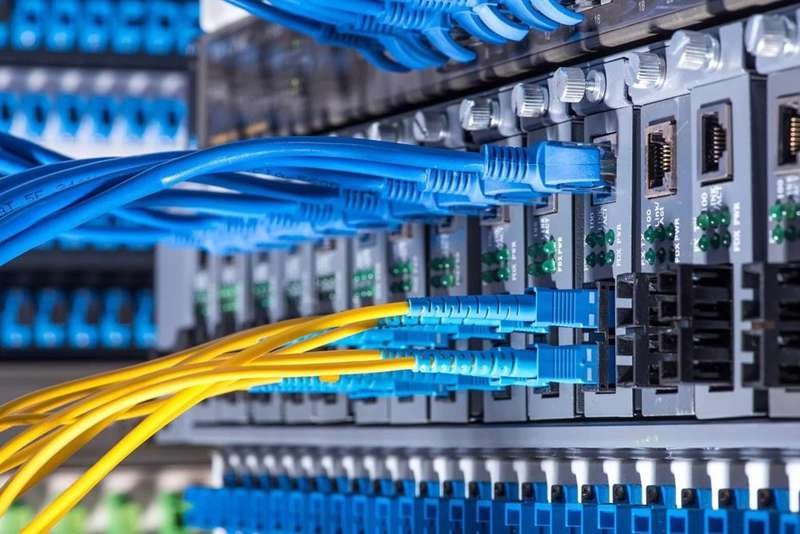
Optical cables are often described as the backbone of modern communication, yet many buyers still approach them with uncertainty. Unlike copper cables—where voltage, current, and conductor size feel intuitive—optical cables operate on light, not electricity. That difference alone creates hesitation for engineers, procurement teams, and OEM manufacturers who must balance performance, reliability, cost, and manufacturability.
The reality is that optical cables are no longer limited to telecom giants or hyperscale data centers. Today, they appear in factory automation, medical imaging systems, industrial sensors, transportation infrastructure, and even compact embedded devices. As systems demand higher bandwidth, longer transmission distances, and stronger immunity to electromagnetic interference, optical cables move from “advanced option” to “practical necessity.”
An optical cable, also known as a fiber optic cable, transmits data using light signals instead of electrical current. It consists of a glass or plastic core, cladding, protective coatings, and an outer jacket. Optical cables are used for high-speed, long-distance, and interference-resistant signal transmission in telecommunications, data centers, industrial systems, and medical equipment, where reliability and signal integrity are critical.
Despite their growing adoption, many sourcing problems still come from misunderstanding what optical cables actually do, how they differ from copper alternatives, and how to select the right structure for a real application. To make confident decisions, it helps to step back from buzzwords and look at optical cables from an engineering and manufacturing perspective—how they work, where they are used, and how they are customized in practice.
What Is an Optical Cable and How Does It Work?
An optical cable transmits data by sending pulses of light through a fiber core surrounded by cladding and protective layers. The light reflects internally within the fiber, allowing signals to travel long distances with minimal loss and high resistance to electromagnetic interference.
What Is an Optical Cable Made Of?
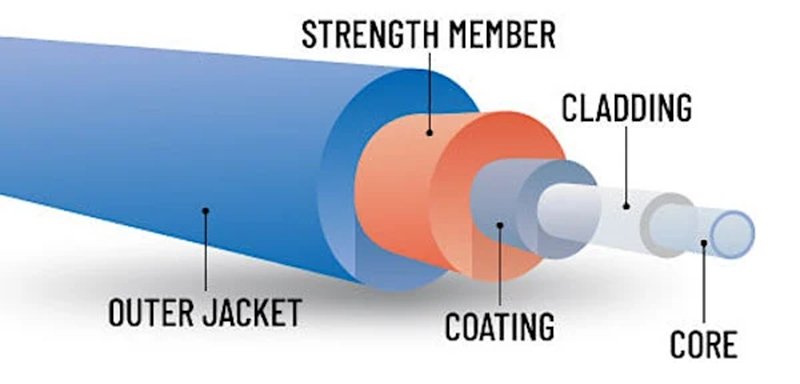
At its core, an optical cable is a carefully layered structure designed to protect fragile fibers while maintaining consistent optical performance. The central fiber core, typically made of glass or plastic, carries light signals. Surrounding it is cladding, a material with a lower refractive index that keeps light confined through total internal reflection.
Outside the fiber itself, buffer coatings protect against moisture and micro-bending, while strength members (such as aramid yarns) absorb mechanical stress during installation and operation. Finally, the outer jacket shields the cable from environmental exposure—heat, oil, UV radiation, abrasion, or chemicals. Each layer exists for a reason, and small material choices can significantly affect durability and lifespan.
How Does an Optical Cable Transmit Data Using Light?
Unlike electrical cables, optical cables do not rely on electrons flowing through metal. Instead, data is encoded into light pulses generated by lasers or LEDs. These pulses travel through the fiber core, bouncing internally along the cladding boundary with extremely low attenuation.
This mechanism allows optical cables to maintain signal integrity over distances that would severely degrade copper-based transmission. It also eliminates electromagnetic interference, making optical cables especially valuable in electrically noisy environments such as factories, hospitals, and power infrastructure.
Is an Optical Cable the Same as a Fiber Optic Cable?
In most technical and commercial contexts, “optical cable” and “fiber optic cable” refer to the same product category. “Optical cable” is often used in system-level or application discussions, while “fiber optic cable” emphasizes the fiber structure itself. Understanding this terminology equivalence helps avoid confusion during specification, sourcing, and communication with manufacturers.
What Are Optical Cables Used For?
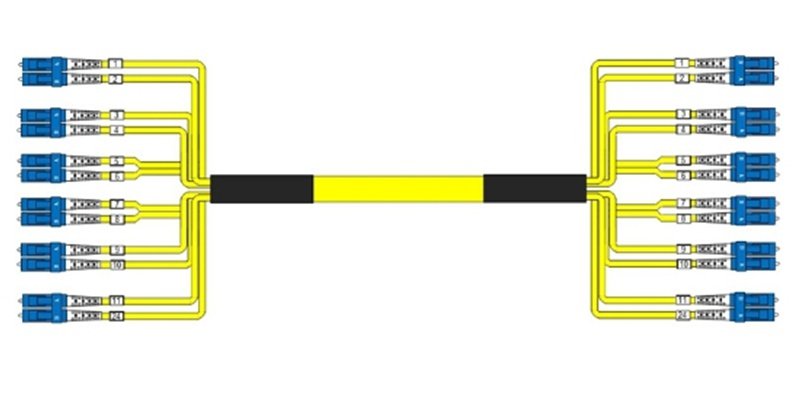
Optical cables are used wherever high-speed, long-distance, and interference-resistant signal transmission is required. Unlike copper cables, which rely on electrical current, optical cables transmit data as light. This makes them especially suitable for environments where bandwidth demand is high, signal integrity is critical, or electromagnetic interference would otherwise compromise performance.
In practice, optical cables are no longer limited to large telecom networks. They are widely adopted across industrial systems, data centers, medical equipment, transportation infrastructure, and increasingly in customized cable assemblies for OEM applications. Their role is not to replace every copper cable, but to solve specific transmission challenges that copper cannot handle efficiently.
What Is the Optical Cable Used For in Modern Systems?
At a system level, optical cables are used to move large amounts of data quickly and reliably between devices, modules, or subsystems. They are especially effective when signals must travel long distances without degradation, or when the surrounding environment contains electrical noise from motors, power electronics, or medical equipment.
Common system-level purposes include backbone communication links, high-speed equipment interconnections, sensor data transmission, and real-time image or measurement data transfer. In many designs, optical cables are chosen not because they are “advanced,” but because they are the most stable and predictable option under demanding conditions.
Which Industries Commonly Use Optical Cables?
Different industries adopt optical cables for different technical reasons. The table below summarizes where optical cables are most commonly used and why.
| Industry | Typical Use of Optical Cables | Primary Benefit |
|---|---|---|
| Telecommunications | Long-distance data transmission | High bandwidth, low loss |
| Data Centers | Server and switch interconnects | Speed, density, reliability |
| Industrial Automation | Sensors, control systems | EMI immunity |
| Medical Equipment | Imaging and diagnostics | Signal accuracy |
| Transportation | Monitoring and communication | Lightweight, stability |
These industries share a common requirement: consistent signal performance under real-world conditions, not just in laboratory environments.
Why Are Optical Cables Used Instead of Copper Cables?
Optical cables are selected when copper cables approach their physical or practical limits. As data rates increase and cable lengths grow, copper cables suffer from attenuation, crosstalk, and electromagnetic interference. Optical cables avoid these issues entirely because they do not carry electrical current.
| Requirement | Copper Cable | Optical Cable |
|---|---|---|
| High bandwidth | Limited | Excellent |
| Long distance | Signal loss increases | Minimal loss |
| EMI resistance | Susceptible | Immune |
| Electrical isolation | No | Yes |
That said, optical cables are not a universal replacement. Copper remains effective for short distances, power delivery, and cost-sensitive designs. Optical cables are used where their advantages clearly outweigh their complexity.
Are Optical Cables Used in Industrial and Customized Applications?
Yes. One of the fastest-growing uses of optical cables is in custom industrial and OEM assemblies. In these scenarios, standard off-the-shelf fiber cables often fail to meet mechanical, environmental, or routing requirements.
Customized optical cable assemblies may include specific connector combinations, reinforced jackets, controlled bend radii, or compliance with industry standards such as flame resistance or chemical exposure. In many cases, customers approach manufacturers with incomplete information—sometimes only a reference image or a legacy sample—and rely on engineering support to translate application needs into a manufacturable solution.
What Problems Do Optical Cables Solve That Other Cables Cannot?
From a practical engineering perspective, optical cables are chosen to solve problems rather than to follow trends. These problems often include:
- Unstable signals caused by electromagnetic interference
- Excessive signal loss over long distances
- Weight and size constraints in dense systems
- Electrical isolation requirements in sensitive equipment
When these issues appear, optical cables become not just an option, but a necessity.
How Do Optical Cable Applications Influence Design and Selection?
Understanding how an optical cable will be used is the foundation of correct selection. Application details—such as installation environment, movement, temperature range, and required lifespan—directly influence fiber type, cable structure, connector choice, and protection level.
This is why manufacturers often ask detailed questions about the end use before recommending a solution. The application defines the cable, not the other way around.
Which Types of Optical Cables Are Commonly Used?
Common optical cable types include single-mode and multi-mode fibers, indoor and outdoor cable structures, and assemblies terminated with connectors such as LC, SC, ST, or FC.
What Is the Difference Between Single-Mode and Multi-Mode Fiber?
Single-mode fiber uses a small core that supports one light path, making it ideal for long-distance and high-precision transmission. Multi-mode fiber has a larger core, allowing multiple light paths but limiting distance.
| Fiber Type | Typical Distance | Common Use |
|---|---|---|
| Single-Mode | Long distance | Telecom, backbone networks |
| Multi-Mode | Short to medium | Data centers, industrial links |
Which Optical Cable Structures Are Used Indoors and Outdoors?
Indoor cables prioritize flexibility and fire safety, while outdoor cables emphasize moisture resistance and mechanical strength. Armored designs add protection for harsh environments, while tight-buffered designs suit compact routing.
What Connector Types Are Commonly Used with Optical Cables?
Connector selection affects insertion loss, density, and ease of handling. Common types include LC for high-density systems, SC for general-purpose use, and FC for vibration-resistant applications. Connector choice often drives customization requirements.
How Do Optical Cables Compare to Copper Cables?
Optical cables outperform copper cables in bandwidth, distance, and EMI resistance, while copper cables remain advantageous for short runs, lower cost, and power transmission.
Optical Cable vs Copper Cable: Key Differences
Optical cables transmit data as light, copper transmits electricity. This single difference leads to wide performance gaps.
| Factor | Optical Cable | Copper Cable |
|---|---|---|
| Bandwidth | Very high | Limited |
| Distance | Long | Short |
| EMI Resistance | Excellent | Poor to moderate |
| Power Delivery | No | Yes |
When Is Copper Still the Better Choice?
Copper remains practical for short distances, power delivery, and cost-sensitive designs. Optical cables are not universal replacements—they are targeted solutions.
Do Optical Cables Replace Coaxial or Ethernet Cables?
Not entirely. Optical cables coexist with coaxial and Ethernet cables, each serving specific roles within a system.
How Do You Choose the Right Optical Cable for Your Application?
Choosing the right optical cable is not about selecting the most advanced or expensive option—it is about matching the cable’s structure and performance to how and where it will actually be used. In real projects, most failures do not come from the fiber itself, but from mismatches between the application environment, mechanical constraints, and cable design.
A correct selection process starts with understanding the signal requirements, then evaluating environmental and mechanical factors, and finally confirming manufacturability and compliance. When these steps are followed, optical cables become predictable, reliable components rather than sources of uncertainty.
What Technical Specifications Matter Most When Selecting Optical Cables?
At the technical level, optical cable selection begins with the fiber and expands outward to the full cable structure. Some parameters directly affect signal performance, while others determine durability and service life.
| Specification | Why It Matters |
|---|---|
| Fiber type (Single-mode / Multi-mode) | Determines distance and bandwidth |
| Fiber count | Affects capacity and system scalability |
| Outer diameter (OD) | Impacts routing and space constraints |
| Minimum bend radius | Prevents signal loss and fiber damage |
| Temperature rating | Ensures stability in hot or cold environments |
| Flame rating / material compliance | Required for safety and regulations |
A common mistake is focusing only on fiber type while ignoring mechanical or environmental specifications. In practice, these “secondary” parameters often decide whether a cable performs reliably over time.
How Do Environment and Installation Conditions Affect Cable Choice?
The same optical fiber can behave very differently depending on where and how it is installed. Environmental exposure and installation methods must be considered early in the selection process.
| Condition | Design Consideration |
|---|---|
| High EMI environment | Optical fiber preferred over copper |
| Oil or chemical exposure | Special jacket materials required |
| Outdoor or UV exposure | UV-resistant outer jacket |
| Tight routing or movement | Smaller OD and tighter bend radius |
| Vibration or mechanical stress | Reinforced structure or armored design |
Ignoring these conditions often leads to premature failure, even when the fiber itself meets all optical requirements.
How Do Connector Type and Termination Influence Selection?
Connectors are not interchangeable accessories—they are integral to system performance. Connector choice affects insertion loss, connection density, and long-term reliability.
Key considerations include:
- Connector compatibility with existing equipment
- Required mating cycles and durability
- Space constraints and port density
- Ease of installation and maintenance
In custom assemblies, connector selection also influences lead time and flexibility. Some connectors offer higher performance but limited availability, while others provide faster sourcing and easier customization.
What Role Does Cable Length and Routing Play in Optical Performance?
Cable length is more than a simple measurement. Longer runs increase attenuation and may require higher-quality fiber or tighter loss control. Routing paths—especially those with sharp bends or repeated movement—can stress fibers mechanically even if optical limits are not exceeded.
Accurate length definition, including service loops and installation tolerances, helps avoid unnecessary strain and signal degradation. This is especially important in compact or moving systems where margins are small.
What Information Should You Prepare Before Contacting a Manufacturer?
Many buyers approach manufacturers with incomplete information—sometimes only a photo or a part number. While this is common, preparing a few key details significantly speeds up the selection and quotation process.
Useful information includes:
- Application description and operating environment
- Required fiber type and approximate length
- Connector types on both ends (if known)
- Mechanical constraints or special requirements
When technical details are missing, experienced manufacturers rely on engineering discussion and drawings to clarify requirements before production.
Why Is Engineering Support Critical in Optical Cable Selection?
Optical cable selection is rarely a purely catalog-based decision. Custom routing, environmental exposure, and compliance needs often require adjustments that standard products cannot accommodate.
Engineering support helps:
- Translate application needs into technical specifications
- Identify risks before production
- Optimize cost without sacrificing reliability
This is particularly important in OEM and industrial projects, where redesigns are costly and timelines are tight.
How Does Proper Selection Reduce Long-Term Risk?
A well-chosen optical cable minimizes unexpected downtime, maintenance costs, and performance degradation. By aligning fiber type, structure, and materials with real-world conditions, teams reduce lifecycle risk and improve overall system reliability.
In this sense, selecting the right optical cable is not just a technical decision—it is a risk management strategy.
Can Optical Cable Assemblies Be Customized?
Yes. Optical cable assemblies can be customized in length, connector type, fiber specification, materials, protection level, and documentation to match exact application requirements.
What Parts of an Optical Cable Assembly Can Be Customized?
Almost everything: cable length, connector combinations, fiber count, jacket materials, and protective features.
How Are Drawings and Specifications Confirmed Before Production?
Engineering drawings are created, reviewed, and approved before manufacturing, reducing risk and ensuring alignment.
What Are Typical Lead Times and MOQ?
Custom optical cable assemblies often have flexible MOQs, fast sample timelines, and scalable production once designs are approved.
Why Work with a Custom Optical Cable Manufacturer?
Working with a custom manufacturer provides engineering support, flexible design options, quality control, and faster response when standard products don’t fit real-world requirements.
What Challenges Do Buyers Face When Sourcing Optical Cables?
Incomplete specs, image-only inquiries, and unclear performance requirements create sourcing risk.
How Does Engineering Support Improve Project Success?
Fast drawings, technical consultation, and solution-based recommendations reduce redesign cycles.
What Makes Custom Assemblies More Reliable Long-Term?
Controlled processes, full inspection, and compliance documentation ensure consistent quality.

Ready to Customize Your Optical Cable Assembly?
If you have a complete specification, a drawing, or only a reference image, Sino-conn supports custom optical cable assemblies with fast engineering feedback, flexible quantities, and verified quality processes. Share your application details, and let an experienced team translate requirements into reliable, manufacturable optical cable solutions.
Related Keywords :medical cables, cable manufacturer, medical devices, custom cables, medical cable supplier, patient safety, electronics cables, OEM cables, signal integrity, biocompatible cables

With over 18 years of OEM/ODM cable assemblies industry experience, I would be happy to share with you the valuable knowledge related to cable assemblies products from the perspective of a leading supplier in China.
manufacturer catalogue
Get A Sample Now From Factory→
Get a quote quickly
Here, developing your OEM/ODM custom cable assemblies collection is no longer a challenge—it’s an excellent opportunity to bring your creative vision to life.



