Skip to content
What Is a Coaxial Cable Used For? Applications, Performance, and Custom Design Explained
- andy
Modern electronic systems depend on one quiet but critical component: the coaxial cable. From wireless communication and high-resolution imaging to medical diagnostics and industrial automation, coaxial cables form the backbone of reliable signal transmission. Yet despite their widespread use, many buyers, engineers, and sourcing teams still ask the same fundamental question: what is a coaxial cable actually used for, and why does it remain relevant in an era dominated by fiber optics and high-speed digital interfaces?
The answer is not as simple as “signal transmission.” Coaxial cables occupy a unique space between electrical performance, mechanical durability, and environmental adaptability. Unlike many cable types that excel in only one dimension, coaxial cables balance impedance control, EMI shielding, flexibility, and cost. This balance is precisely why they continue to be specified in both legacy systems and next-generation designs. Understanding this balance helps buyers avoid over-engineering, reduce system risk, and select cable assemblies that perform consistently over time.
A coaxial cable is primarily used to transmit high-frequency electrical signals with minimal interference and signal loss. It is widely used in RF communication, video transmission, medical imaging, industrial equipment, and test systems. Its concentric structure provides controlled impedance and effective shielding, making coaxial cable ideal for applications requiring signal integrity, EMI protection, and reliable performance across various environments.
Behind every “simple” coaxial cable is a set of engineering decisions—materials, shielding, impedance, connectors, and mechanical structure—that directly affect system performance. As applications become more compact, more regulated, and more performance-driven, these decisions matter more than ever. Let’s explore how coaxial cables are used, why they are chosen, and how custom coaxial cable assemblies are designed to meet real-world requirements.
What Is a Coaxial Cable?
A coaxial cable is a type of electrical cable designed to transmit high-frequency signals with controlled impedance and strong resistance to electromagnetic interference. Its concentric structure allows the signal conductor and shield to share a common axis, ensuring stable signal transmission across a wide range of applications.

What Makes a Coaxial Cable Different From Other Cables?
At a structural level, coaxial cables differ fundamentally from twisted pair, ribbon, or flat cables. A coaxial cable uses a single central conductor surrounded by a dielectric insulation layer, then a conductive shield, and finally an outer jacket. This geometry creates a closed electromagnetic field that dramatically reduces signal leakage and susceptibility to external noise.
From an engineering perspective, this structure allows coaxial cables to maintain a consistent characteristic impedance—commonly 50 ohms or 75 ohms—across the entire cable length. This impedance consistency is essential in RF, video, and high-frequency digital systems, where impedance mismatches can cause signal reflections, attenuation, and data errors.
Unlike many multi-conductor cables, coaxial cables are optimized for signal integrity rather than conductor count. This makes them particularly valuable in systems where accuracy and stability matter more than wiring density.
What Are the Main Parts of a Coaxial Cable?
Every coaxial cable, regardless of size, includes four essential components:
| Component | Function |
|---|---|
| Center Conductor | Carries the signal |
| Dielectric Insulation | Maintains spacing and impedance |
| Shield (Braid/Foil) | Blocks EMI and signal leakage |
| Outer Jacket | Provides mechanical and environmental protection |
Material choices for each layer directly affect performance. Copper purity, dielectric constant, shield coverage percentage, and jacket material all influence frequency range, flexibility, temperature tolerance, and lifespan. This is why coaxial cables that look similar externally can perform very differently in real applications.
What Is a Coaxial Cable Used For?
Coaxial cables are used to transmit RF, video, data, and precision measurement signals in applications where signal stability, EMI shielding, and controlled impedance are required. Thanks to their concentric structure, coaxial cables are able to carry high-frequency signals with low loss and minimal interference, making them a reliable choice across communication, industrial, medical, and testing environments.
In real-world systems, coaxial cables are selected not because they carry high power, but because they preserve signal integrity. They maintain consistent electrical characteristics over distance, resist external noise, and perform reliably in electrically noisy or space-constrained environments. This combination explains why coaxial cables remain widely used even as new cable technologies continue to emerge.
What Signals Are Commonly Transmitted Through Coaxial Cables?
Coaxial cables are optimized for high-frequency analog and digital signals rather than high current delivery. Typical signals transmitted through coaxial cables include RF communication signals, broadband video signals, high-speed serial data, and precision measurement signals.
Even when modern digital protocols are used, the electrical behavior of signals at high frequencies is fundamentally analog. In these conditions, signal quality can easily degrade due to reflection, jitter, or attenuation. Coaxial cables perform well because their controlled impedance and shielding structure help minimize these effects over short to medium distances.
| Signal Type | Typical Examples |
|---|---|
| RF Signals | Antennas, wireless modules, transmitters |
| Video Signals | Cameras, imaging systems, monitoring equipment |
| Data Signals | High-speed serial links, data acquisition |
| Measurement Signals | Test probes, sensors, diagnostic instruments |
As a result, coaxial cables are commonly found in antennas, cameras, sensors, laboratory instruments, and other systems where waveform accuracy matters.
Why Are Coaxial Cables Suitable for High-Frequency Applications?
High-frequency signals are especially sensitive to impedance mismatch and electromagnetic interference. Coaxial cables address these challenges by keeping the signal conductor and shield aligned on the same axis, which creates a stable electromagnetic field around the signal path.
This design helps reduce signal reflections and phase distortion, particularly in RF and broadband applications. In environments with motors, switching power supplies, or dense electronic assemblies, coaxial cables also provide stronger immunity to external noise than unshielded or lightly shielded alternatives. For many engineers, this reliability is the primary reason coaxial cables are specified in performance-critical systems.
What Industries Rely on Coaxial Cables the Most?
While telecommunications is the most visible application, coaxial cables are widely used across many industries that require stable and repeatable signal transmission. Different industries emphasize different performance aspects—such as flexibility, compliance, or environmental resistance—but all rely on the same core advantages of coaxial cable design.
| Industry | Typical Applications |
|---|---|
| RF & Wireless | Antennas, base stations, RF modules |
| Medical | Imaging, monitoring, diagnostic equipment |
| Industrial | Sensors, automation systems, control electronics |
| Defense & Aerospace | Radar, communication, avionics systems |
| Test & Measurement | Oscilloscopes, analyzers, calibration tools |
Because each industry operates under different regulatory, mechanical, and environmental constraints, coaxial cable assemblies are often customized rather than selected as standard off-the-shelf products.
When Is a Coaxial Cable Preferred Over Other Cable Types?
Coaxial cables are typically preferred when a system requires predictable signal behavior, moderate transmission distance, and effective EMI control without the complexity or cost of fiber optics. Compared with twisted pair cables, coaxial cables offer better noise resistance at higher frequencies. Compared with fiber, they are easier to terminate, inspect, and integrate into compact electronic assemblies.
For this reason, coaxial cable assemblies continue to be specified in both legacy designs and new product development, especially where performance consistency and engineering control are more important than raw bandwidth.
Why Is Coaxial Cable Used Instead of Twisted Pair or Fiber?
Coaxial cable is chosen when stable impedance, strong EMI shielding, and moderate transmission distance are required at a reasonable cost. It fills the gap between twisted pair (low frequency, low cost) and fiber (high cost, high complexity).
Why Is Coaxial Cable Better for High-Frequency Signals?
At higher frequencies, signal behavior becomes more sensitive to impedance discontinuities and external noise. Twisted pair cables rely on balanced signaling and cancellation, which works well up to a point. Coaxial cables, however, physically confine the electromagnetic field, offering superior noise immunity.
This advantage becomes critical in environments with motors, switching power supplies, or dense electronics. In such settings, coaxial cables maintain signal clarity where twisted pair may struggle.
How Does Shielding Affect Signal Quality and EMI Control?
Shielding quality is one of the most underestimated aspects of coaxial cable performance. A tightly woven braid, sometimes combined with foil shielding, determines how well the cable resists EMI and prevents signal radiation.
| Shield Type | EMI Protection | Flexibility |
|---|---|---|
| Single Braid | Moderate | High |
| Foil + Braid | High | Medium |
| Double Braid | Very High | Lower |
Choosing the right shielding is a trade-off between flexibility, cost, and electromagnetic performance—one that must align with the application environment.
Which Applications Commonly Use Coaxial Cable Assemblies?
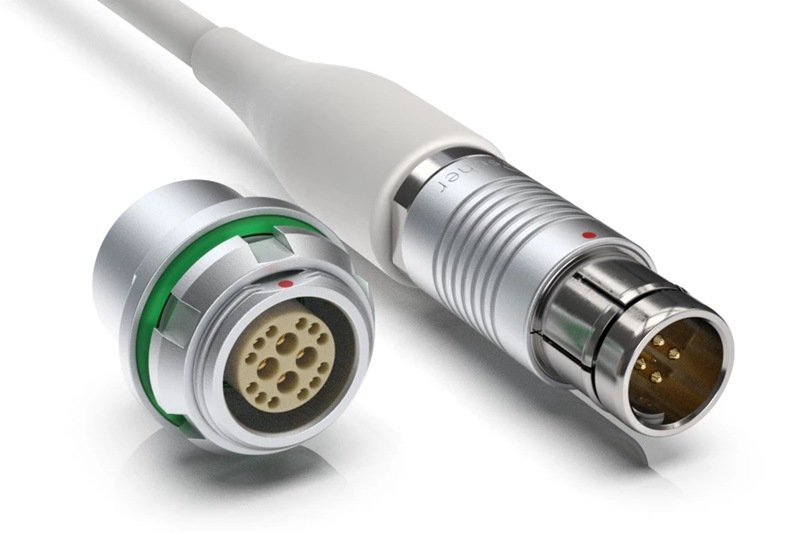
Coaxial cable assemblies are widely used in RF communication, video systems, medical imaging, industrial sensing, and precision testing, where consistent signal performance and reliable connections are essential.
Which Coaxial Cables Are Used in RF and Wireless Systems?
RF systems demand strict impedance control and low signal loss. Cable assemblies in these systems often use micro-coax or semi-rigid coax structures to balance size and performance. Connector selection is equally critical, as poor termination can negate cable quality entirely.
Which Coaxial Cables Are Used in Video, Imaging, and Data Systems?
High-resolution imaging systems—such as cameras and inspection equipment—rely on coaxial cables to preserve signal fidelity over distance. Here, cable flexibility and OD become just as important as electrical performance, especially in moving or space-constrained designs.
Which Coaxial Cables Are Used in Medical and Industrial Equipment?
In regulated industries, coaxial cable assemblies must meet compliance requirements such as UL, RoHS, and REACH. Medical and industrial users also prioritize reliability, repeatability, and traceable documentation—factors that influence both cable design and manufacturing process.
How Do Electrical and Mechanical Specifications Affect Coaxial Cable Use?
Electrical parameters determine signal behavior, while mechanical specifications affect installation, durability, and lifespan. Both must be considered together when selecting a coaxial cable.
How Do Impedance and Frequency Rating Affect Performance?
Impedance mismatch is a leading cause of system failure in high-frequency designs. Selecting the correct impedance ensures minimal reflection and optimal power transfer, especially in RF and video systems.
How Do Flexibility, Bend Radius, and OD Affect Installation?
In real installations, cables are routed through tight spaces and dynamic paths. Excessive stiffness or oversized OD can cause premature failure or assembly issues, even if electrical specs look ideal on paper.
How Do Temperature and Environmental Ratings Matter?
Environmental exposure—heat, oil, UV, chemicals—can degrade cable materials over time. Selecting jacket and insulation materials that match the operating environment is essential for long-term reliability.
Can Coaxial Cables Be Customized for Different Applications?
Yes. Coaxial cable assemblies are commonly customized in length, connector type, pinout, materials, shielding, and mechanical structure to match specific application requirements.
What Parameters Are Commonly Customized in Coaxial Cable Assemblies?
| Custom Parameter | Typical Options |
|---|---|
| Length | Any custom length |
| Connector | Original or compatible |
| Shielding | Single, double, foil |
| Jacket | PVC, PUR, FEP, LSZH |
Customization allows systems to meet performance, cost, and lead-time goals simultaneously.
How Are Pinout, Length, and Connector Options Defined?
When customers provide incomplete data—or only images—engineering support becomes critical. Reverse engineering, sample analysis, and drawing creation ensure the final product matches functional intent, not just appearance.
How Are Drawings and Specifications Confirmed Before Production?
Clear documentation prevents costly mistakes. Detailed drawings, reviewed and approved before production, form the foundation of consistent quality and repeatable manufacturing.
How Do You Choose the Right Coaxial Cable for Your Application?
Choosing the right coaxial cable is not about selecting a single “best” cable type, but about matching electrical performance, mechanical behavior, environment, compliance, and supply constraints to a specific application. A coaxial cable that performs well on paper may fail prematurely if flexibility, shielding, or temperature ratings are overlooked. For this reason, effective cable selection requires both technical understanding and practical application insight.
In real projects, buyers and engineers rarely have perfect information at the start. Some provide full specifications and drawings, while others may only have a reference model number or a product photo. A structured selection process helps translate these inputs into a coaxial cable assembly that performs reliably, is manufacturable, and fits the project timeline and budget.
What Electrical Parameters Should Be Considered First?
Electrical requirements define whether a coaxial cable can function correctly in a given system. The most critical parameters are impedance, frequency range, attenuation, and shielding effectiveness.
Impedance must match system requirements—typically 50 ohms for RF and wireless systems, and 75 ohms for video and broadcast applications. A mismatch can cause signal reflection, increased loss, and unstable system behavior. Frequency rating determines how well the cable maintains signal integrity as operating frequency increases, while attenuation affects how much signal strength is lost over distance.
| Electrical Parameter | Why It Matters |
|---|---|
| Impedance | Prevents signal reflection and mismatch |
| Frequency Rating | Ensures stable performance at target frequencies |
| Attenuation | Limits signal loss over distance |
| Shielding Effectiveness | Controls EMI and noise immunity |
These parameters should always be evaluated together rather than in isolation.
How Do Mechanical Requirements Affect Cable Selection?
Mechanical considerations are often underestimated but are a common cause of field failures. Factors such as outer diameter (OD), flexibility, bend radius, and cable weight directly affect installation, routing, and long-term reliability.
In compact devices or moving assemblies, cables must tolerate repeated bending without damaging the dielectric or shield. In fixed installations, stiffness may be acceptable, but excessive OD can still complicate routing. Choosing a mechanically unsuitable cable can lead to connector stress, intermittent signals, or premature wear—even if electrical performance is otherwise excellent.
| Mechanical Factor | Typical Impact |
|---|---|
| Outer Diameter (OD) | Affects routing and connector compatibility |
| Bend Radius | Determines suitability for tight spaces |
| Flexibility | Influences durability in dynamic applications |
| Weight | Matters in portable or suspended systems |
A well-chosen coaxial cable balances mechanical robustness with ease of integration.
How Does the Operating Environment Influence Cable Choice?
Environmental conditions significantly affect material selection. Temperature extremes, exposure to oil or chemicals, UV radiation, and moisture can all degrade cable performance over time.
For example, standard PVC jackets may be sufficient for indoor electronics, while industrial or outdoor applications often require PUR, FEP, or other high-performance materials. In regulated industries, additional requirements such as halogen-free construction or flame resistance may apply.
Selecting materials that align with the real operating environment helps prevent aging-related failures and reduces maintenance costs over the product lifecycle.
What Role Do Compliance and Certification Play?
Compliance requirements are not optional in many industries. Standards such as UL, RoHS, REACH, and other regional or industry-specific certifications influence both material choices and manufacturing processes.
Medical, industrial, and defense-related applications often require traceable documentation, consistent quality control, and full inspection records. Even in commercial products, compliance can affect market access and customer acceptance. Considering certification requirements early in the design stage avoids costly redesigns later.
How Do Lead Time, MOQ, and Supply Strategy Affect Selection?
Beyond technical performance, practical supply factors play a major role. Some connector or cable materials may have long lead times or limited availability. In contrast, compatible alternatives can offer similar performance with faster delivery and greater flexibility.
For prototyping and early-stage development, low or no MOQ and fast sample turnaround are often more valuable than minor performance optimizations. For volume production, cost stability, supplier capacity, and consistent quality become higher priorities. A flexible sourcing strategy allows the cable design to evolve alongside the project.
What Information Helps Suppliers Recommend the Right Solution?
While complete specifications are ideal, they are not always available. Useful inputs can include:
- Target application and function
- Operating frequency or signal type
- Reference cable, connector model, or photo
- Environmental conditions
- Expected quantity and timeline
Even partial information can be enough for an experienced engineering team to propose a workable solution, generate drawings, and refine specifications through iteration.
Why Is Engineering Support Important During Cable Selection?
Selecting a coaxial cable is rarely a one-step decision. Engineering support bridges the gap between concept and production by validating assumptions, identifying risks, and suggesting optimizations. This process often uncovers opportunities to improve reliability, reduce cost, or shorten lead time without compromising performance.
For many customers, especially during R&D and prototyping, this collaborative approach is the key factor that turns a cable concept into a manufacturable, repeatable product.
Are Custom Coaxial Cable Assemblies Suitable for Small Batches and Proto types?
Custom coaxial cable assemblies are well-suited for prototyping and low-volume production when supported by flexible manufacturing and fast engineering response.
How Fast Can Samples and Drawings Be Delivered?
Rapid sample turnaround reduces development risk and accelerates validation cycles, especially in time-sensitive projects.
Why Is Engineering Support Critical During Prototyping?
Engineering insight turns vague requirements into manufacturable solutions—often uncovering improvements that customers did not initially consider.

Ready to Customize Your Coaxial Cable Assembly?
Whether you have a full specification, a drawing, a reference part number, or only an image, Sino-conn supports custom coaxial cable assemblies from concept to production. With flexible MOQ, fast drawing turnaround, verified compliance, and full inspection processes, custom solutions can be delivered without unnecessary complexity. Share your application details and let experienced engineers translate requirements into reliable cable assemblies.
Related Keywords :coaxial cable uses, coaxial cable assembly, custom coax cable, RF cable assembly, micro coaxial cable, coax cable applications, EMI shielding cable, impedance controlled cable, custom cable assemblies, coax cable design

With over 18 years of OEM/ODM cable assemblies industry experience, I would be happy to share with you the valuable knowledge related to cable assemblies products from the perspective of a leading supplier in China.
manufacturer catalogue
Get A Sample Now From Factory→
Get a quote quickly
Here, developing your OEM/ODM custom cable assemblies collection is no longer a challenge—it’s an excellent opportunity to bring your creative vision to life.