 Skip to content
What Is the Best Coaxial Cable for Digital TV? A Practical Buying Guide
- andy

Digital TV signals are often assumed to be “all digital,” leading many users to believe that any coaxial cable will deliver the same picture quality. In practice, this assumption causes more signal issues, dropouts, and installation failures than most people realize. Unlike analog TV, digital signals behave in an “all or nothing” way: either the signal margin is strong enough, or the picture freezes, pixelates, or disappears entirely.
The coaxial cable sits quietly between antennas, splitters, amplifiers, and TV tuners, yet it plays a decisive role in whether a digital TV system performs reliably—especially over longer distances or in environments with interference. Cable type, impedance, shielding, conductor material, and even connector quality all interact to determine signal loss and noise immunity.
The best coaxial cable for digital TV is typically RG6 with 75-ohm impedance and high shielding coverage. RG11 is preferred for long cable runs due to lower signal loss, while RG-8 is used mainly in commercial or specialized RF applications. Choosing the right cable depends on distance, interference level, installation environment, and connector quality—not just cable thickness.
Many installers learn this lesson the hard way—after replacing antennas, amplifiers, or tuners—only to discover that the real bottleneck was the coaxial cable itself. Understanding which coaxial cable is best for digital TV starts with understanding how these cables work in real-world conditions.
What Is a Coaxial Cable for Digital TV?
A coaxial cable for digital TV is a 75-ohm RF transmission line designed to carry high-frequency television signals from antennas, cable providers, or satellite systems to tuners and receivers. Its structure minimizes signal loss and electromagnetic interference, ensuring stable digital reception.

What does a digital TV coaxial cable do?
A digital TV coaxial cable transmits radio-frequency (RF) signals that contain compressed digital video and audio data. Unlike HDMI or Ethernet, coaxial cables carry modulated RF signals that must maintain precise impedance and shielding to avoid reflections and noise. Even small losses can reduce signal-to-noise ratio enough to cause reception issues.
Is coaxial cable still used for digital TV?
Yes. Despite the rise of streaming, coaxial cables remain fundamental for over-the-air (OTA) antennas, cable TV distribution, satellite systems, and many commercial TV installations. Digital transmission does not eliminate RF physics; it actually makes signal integrity more critical.
How does coaxial cable affect TV signal quality?
Coaxial cables influence signal attenuation, noise pickup, and impedance matching. Poor-quality cables introduce higher loss and interference, which digital tuners cannot correct once signal margins fall below threshold.
Which Coaxial Cable Types Are Used for Digital TV?
Digital TV systems do not rely on a single universal coaxial cable. Instead, different RG-series coaxial cables are used depending on signal distance, installation environment, and system complexity. While RG6 is the most common choice for residential digital TV, RG11 and RG-8 serve important roles in long-distance, commercial, and specialized RF scenarios. Understanding the differences between these cable types helps avoid unnecessary signal loss, installation issues, and long-term maintenance problems.
What is RG6 coaxial cable used for?
RG6 is the standard coaxial cable for most digital TV installations. It features 75-ohm impedance, relatively low attenuation, and good shielding performance in a flexible, installer-friendly size. RG6 is widely used for cable TV, over-the-air (OTA) antennas, satellite receivers, and indoor distribution systems.
For typical home and light commercial environments—where cable runs are moderate and interference levels are manageable—RG6 provides an excellent balance between signal performance, cost, and ease of installation. This is why it is the default choice in most modern digital TV systems.
Is RG59 suitable for digital TV today?
RG59 was commonly used in older analog TV systems, but it is generally not recommended for modern digital TV. Compared to RG6, RG59 has higher signal attenuation, especially at higher frequencies used by digital broadcasts.
While RG59 may still function over very short distances, its reduced noise margin makes digital signals more vulnerable to pixelation and dropouts. In most upgrade or new-installation scenarios, replacing RG59 with RG6 or RG11 significantly improves system reliability.
What is RG11 coaxial cable used for?
RG11 is designed for long cable runs where signal loss becomes a critical concern. Its larger conductor and thicker dielectric reduce attenuation compared to RG6, allowing digital TV signals to travel longer distances with less degradation.
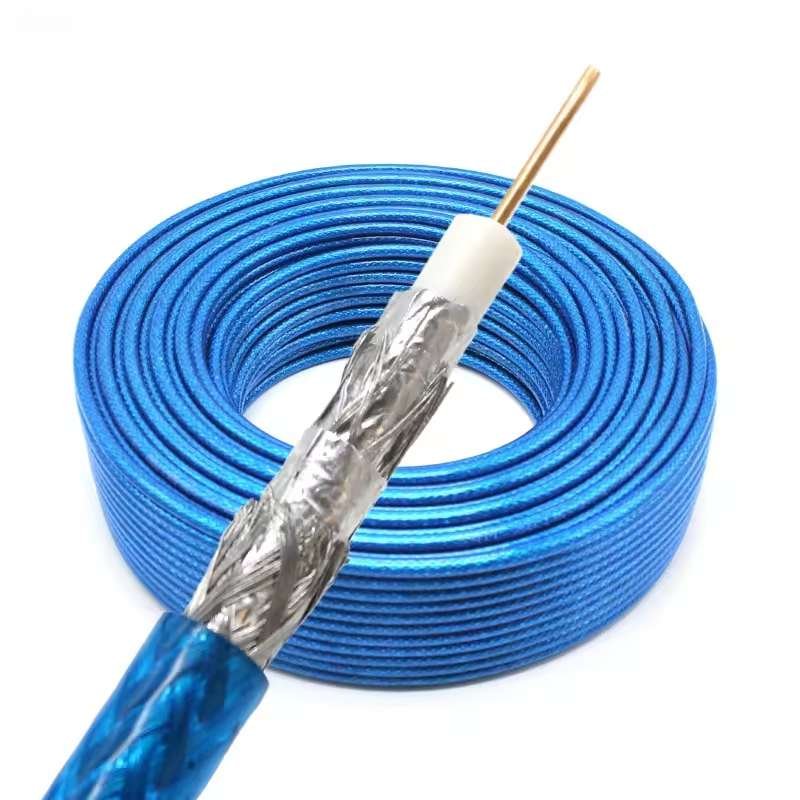
RG11 is commonly used in large homes, multi-story buildings, commercial installations, and antenna systems where the distance from the signal source exceeds typical residential limits. The trade-off is that RG11 is thicker, stiffer, and requires compatible connectors, making it less convenient for tight indoor routing but highly effective where performance matters most.
What is RG-8 coaxial cable used for?
RG-8 is a heavy-duty, low-loss coaxial cable primarily used in RF and communication systems, rather than standard consumer TV installations. While it can technically carry digital TV signals, its size, rigidity, and connector requirements make it impractical for most residential use.
RG-8 is more commonly found in broadcast facilities, commercial RF systems, test environments, or custom installations where very low signal loss and high power handling are required. In digital TV contexts, RG-8 is typically chosen only when the system overlaps with broader RF or communication infrastructure.
Quick comparison of common coaxial cable types for digital TV
| Cable Type | Typical Application | Signal Loss | Installation Difficulty |
|---|---|---|---|
| RG6 | Home & light commercial TV | Medium | Easy |
| RG59 | Legacy / short runs only | High | Easy |
| RG11 | Long-distance TV runs | Low | Moderate |
| RG-8 | RF & commercial systems | Very Low | Difficult |
In real-world projects, selecting the right coaxial cable type is less about choosing the “thickest” cable and more about matching distance, environment, and system requirements. A properly chosen cable type ensures stable digital reception without unnecessary cost or installation complexity.
What Specifications Matter Most for Digital TV Coaxial Cables?
Key specifications include 75-ohm impedance, low attenuation, effective shielding, conductor material, and cable length rating. These factors determine how much signal is lost and how well the cable resists interference.
What impedance is required for digital TV signals?
Digital TV systems require 75-ohm impedance to maintain signal integrity. Any mismatch causes reflections that reduce signal quality, especially over longer runs or with multiple connectors.
How does shielding affect digital TV performance?
Shielding blocks electromagnetic interference from nearby electrical devices. Quad-shield and foil-plus-braid designs significantly improve noise immunity in urban or industrial environments.
How does attenuation differ between RG6, RG11, and RG-8?
| Cable Type | Relative Signal Loss | Typical Use |
|---|---|---|
| RG6 | Medium | Home and light commercial |
| RG11 | Low | Long-distance runs |
| RG-8 | Very Low | RF and broadcast systems |
Does cable length impact digital TV signal quality?
Yes. Longer cables increase attenuation. RG11 or signal amplification may be required beyond certain distances to maintain reliable reception.
How Do Connectors Affect Digital TV Performance?
Connectors directly affect signal loss, impedance continuity, and long-term reliability. Poor connectors can negate the benefits of high-quality coaxial cable.
Which connectors are used for digital TV coaxial cables?
F-type connectors are standard for TV systems. Compression-style connectors provide better mechanical stability and shielding than crimp or twist-on types.
Are compression connectors better for RG11 and RG-8?
Yes. Thicker cables require connectors designed for proper compression and impedance control. Incorrect connectors cause signal reflections and ingress.
How does connector quality affect long coaxial runs?
On long runs, connector losses accumulate. Precision connectors reduce insertion loss and improve system stability.
How to Choose the Best Coaxial Cable for Different Digital TV Scenarios
Cable choice depends on distance, environment, and system complexity. RG6 suits most installations, RG11 supports long runs, and RG-8 fits specialized commercial setups.
| Scenario | Recommended Cable | Reason |
|---|---|---|
| Indoor TV | RG6 | Balanced performance |
| Outdoor antenna | RG6 or RG11 | Weather resistance |
| Long-distance | RG11 | Lower attenuation |
| Commercial system | RG11 or RG-8 | Signal stability |
Do You Need Custom Coaxial Cables for Digital TV Systems?
Custom coaxial cables are often needed when standard lengths, connectors, or materials do not meet system requirements—especially in OEM, commercial, or complex installations.
When is a standard RG6 cable not enough?
Standard cables may fail in long runs, harsh environments, or systems requiring specific connector orientations or shielding levels.
What parameters can be customized for RG11 and RG-8 cables?
Length, jacket material, shielding layers, connector type, and impedance tolerance can all be customized.
How do commercial and OEM TV systems differ from home use?
OEM systems prioritize reliability, consistency, and documentation. Custom cables ensure predictable performance and easier installation.
Common Questions About Digital TV Coaxial Cables
Higher-quality cables reduce signal loss and interference but do not “enhance” picture quality beyond what the signal allows. Poor cables, however, can cause dropouts.
Why Work with Sino-conn for Digital TV Coaxial Cable Solutions

Choosing the best coaxial cable for digital TV is rarely about one “perfect” cable—it is about selecting the right combination of cable type, specifications, connectors, and manufacturing quality for your specific application.
At Sino-conn, we work with customers who arrive with full specifications, partial drawings, or sometimes only a reference photo. Our engineering team supports rapid drawings, flexible connector options, original or alternative components, and fast sample delivery. Whether you need a single custom cable or OEM-scale production, we help translate system requirements into reliable coaxial cable assemblies.
If you are planning or upgrading a digital TV system and need custom coaxial cable assemblies, reach out to Sino-conn. Share your application details, and our team will help you determine the most suitable solution.
Related Keywords :best coaxial cable for digital tv, rg6 coaxial cable, rg11 coaxial cable, rg8 coaxial cable, digital tv coax cable, coaxial cable shielding, 75 ohm coaxial cable, tv antenna coax cable, coaxial cable connectors, custom coaxial cable

With over 18 years of OEM/ODM cable assemblies industry experience, I would be happy to share with you the valuable knowledge related to cable assemblies products from the perspective of a leading supplier in China.
manufacturer catalogue
Get A Sample Now From Factory→
Get a quote quickly
Here, developing your OEM/ODM custom cable assemblies collection is no longer a challenge—it’s an excellent opportunity to bring your creative vision to life.



