Skip to content
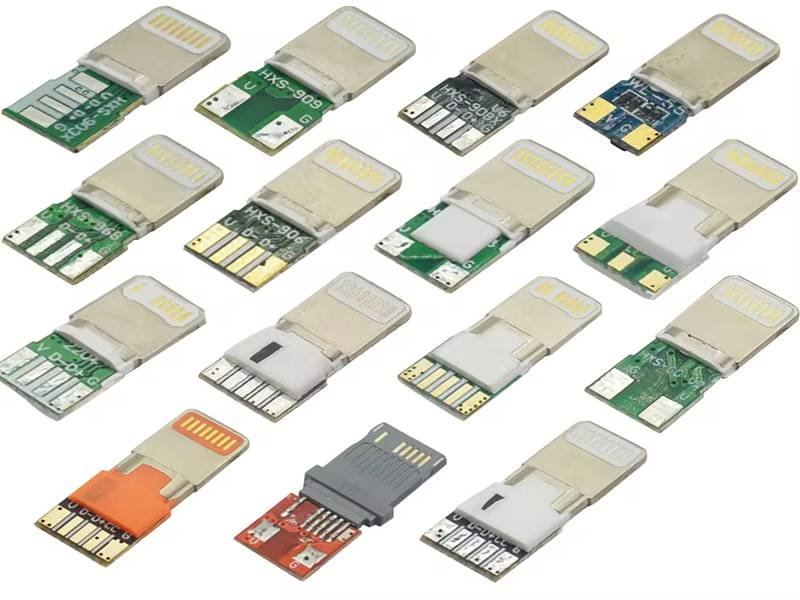
In today’s fast-moving electronics market, where everything from smartphones to tablets to accessories demand rapid charging and high-speed data transfer, the connector between device and cable might seem unglamorous—but it’s absolutely critical. Enter the Lightning connector. Developed by Apple to replace its older 30-pin dock interface, it represents a compact, reversible, digitally-driven port that has defined much of the mobile accessory ecosystem for a decade.
The Lightning connector is an 8-pin, reversible digital interface introduced by Apple in 2012 to handle both power and data transfer on devices like iPhones and iPads, providing compact, high-efficiency connectivity until the transition toward USB-C.
From this vantage point, imagine an OEM engineering team needing a custom Lightning cable assembly for a niche accessory: they’ll care about pin-out details, shielding, UL/RoHS compliance, and delivery times—exactly the kind of service that Sino-conn offers. And in a world where legacy Apple-device support still matters, knowing what this connector is and how to integrate it becomes a competitive edge. Let’s journey beyond the basics and dive into how it works, what devices use it, how it stacks up to USB-C, how Sino-conn can help you build custom assemblies, and what you should watch out for. Buckle up—this isn’t just a connector, it’s a design decision.
How Does the Lightning Connector Work?
The Lightning connector works by transmitting both power and digital data across an 8-pin plug that is reversible (can be inserted either way) and features retained signal lanes, ground, identification pins and power-lines. Its reversible design and digital-only nature allow compact form-factor while supporting various functions.
At its core, the Lightning connector uses eight contacts: two differential pairs (Lane0 and Lane1) for data transfer, ground (GND), power (PWR), and two identification/control pins (ID0, ID1) for accessory authentication. Because the plug is reversible, the contacts are duplicated on both sides of the connector shell, so whichever side you insert, a matching set of contacts align.
From a power perspective, standard USB-A to Lightning cables often support charging at 5 V and up to about 2.4 A (≈12W) in many use-cases. On the data side, most Lightning devices operate at USB 2.0 speeds (480 Mbit/s), though select iPad Pro models supported USB 3.0 via special cables/adapters.

For a cable-assembly manufacturer—or an OEM specifying custom Lightning cables—understanding these internal signal lanes, the authentication chip required for Apple MFi certification, and the mechanical constraints (such as overall plug dimensions ~7.6 mm wide and ~1.4 mm high for the metal part) is essential.
From a broader, critical perspective: the Lightning connector’s proprietary nature means accessory makers often must join Apple’s MFi program, accept higher licensing costs and limited flexibility, or supply “compatible” but non-certified cables—which may impact reliability or brand perception.
For Sino-conn, which offers full custom specification support (material selections like halogen-free, oil/UV/temperature resistant jacketing, drawing and approval in 3 days or even 30 minutes, and no MOQ) this means you can design a Lightning-type assembly that precisely fits your use-case—whether a ruggedized cable for medical/industrial or a high-volume OEM consumer product—while managing challenges such as shielding (EMI), impedance, and authenticity versus generic substitutes.
What Devices Use the Lightning Connector?
Devices from Apple such as iPhones, iPads, iPods and many accessory products have used the Lightning connector to support charging, data transfer, and accessory connectivity; although more recent models are shifting to USB-C.
When the Lightning connector was introduced (with the iPhone 5 in 2012) it quickly became the standard port for iPhones, iPads and many Apple accessories. This means accessory manufacturers and suppliers have relied on Lightning assemblies for years—covering chargers, docks, audio accessories, camera adapters, car systems and more.
From a market-perspective, this has enabled a large ecosystem of third-party Lightning-to-USB cables and accessories—but it also means OEMs must contend with Apple’s MFi program which requires certification and ensures quality/compatibility.

For a cable-assembly company like Sino-conn, this means you should ask the questions: is the end customer using an Apple legacy device? Do they require MFi certification? Are they designing for mass-volume consumer products (price-sensitive, high stock turnover) or niche industrial/medical accessory modules (high reliability, maybe smaller volume)? As your company info shows, you can support both trade customers and engineering customers—from 1 pcs sample to volume—and you can adjust material selections, drawing turnaround time, lead-times (sample in 2-3 days, bulk in 2 weeks if urgent) and offer full spec sheets including voltage/current, OD, shielding, impedance and more.
The interesting transition to watch is that Apple is now moving away from Lightning toward USB-C (driven by EU regulations and device unification). For OEMs and suppliers, this creates both risks (legacy inventory, shrinking market) and opportunities (custom adapters, transitional cables, supporting older devices). Sino-conn’s flexibility means you are well-positioned to support either path—custom Lightning assemblies now, and rapid redesign into USB-C assemblies if needed.
Lightning vs USB-C – What’s the Difference?

When comparing Lightning and USB-C, the distinctions go far beyond just the connector’s shape. They represent two different design philosophies—one proprietary and ecosystem-controlled (Lightning), the other open and standardized across industries (USB-C). Understanding their structural, electrical, and functional differences is essential for engineers, OEMs, and product designers making compatibility or customization decisions.
The Lightning connector is Apple’s proprietary 8-pin reversible interface optimized for compact devices, while USB-C is an open 24-pin standard offering higher data transfer rates, broader power delivery, and universal device compatibility. Lightning is legacy-focused; USB-C is the industry’s future.
1. Structural Design and Form Factor
The Lightning connector, introduced by Apple in 2012, uses an 8-pin digital interface that’s symmetrical and fully reversible. Its plug is approximately 7.6 mm wide and 1.4 mm thick, allowing Apple to design thinner devices. Because it’s proprietary, the Lightning interface has a distinct contact arrangement and requires authentication circuitry within the cable or accessory to ensure safe communication with Apple devices.
By contrast, the USB-C connector—standardized by the USB Implementers Forum (USB-IF)—employs 24 pins organized symmetrically. It too is reversible, but the additional pins enable far greater versatility. USB-C supports multiple protocols such as USB 3.x, USB4, DisplayPort, HDMI, and Thunderbolt, often through alternate modes. Its slightly larger shell (8.4 mm × 2.6 mm) allows for more power and data lines while maintaining mechanical durability suitable for frequent insertion cycles (typically 10,000+).
| Specification | Lightning | USB-C |
|---|---|---|
| Pin count | 8 | 24 |
| Reversible | Yes | Yes |
| Dimensions | ~7.6 × 1.4 mm | ~8.4 × 2.6 mm |
| Typical insertion cycles | ~5,000 | 10,000+ |
| Standard owner | Apple | USB-IF (open standard) |
2. Power Delivery and Charging Performance
Lightning cables typically operate at 5 V / 2.4 A (≈12 W) for standard charging, with some adaptive modes reaching up to around 20 W on recent Apple fast chargers. The power delivery is negotiated through Apple’s proprietary communication protocol and controlled by an authentication chip within MFi-certified cables.
USB-C, on the other hand, was designed for flexibility and scalability. Under USB Power Delivery (PD) standards, it supports voltages up to 20 V and currents up to 5 A, yielding as much as 100 W of charging power. The upcoming USB PD 3.1 specification pushes that boundary further to 240 W, enough to power laptops, monitors, or even small appliances.
This means that while Lightning meets the needs of small handheld devices, USB-C is suited for everything from phones to full-scale workstations—making it the universal choice for modern electronics.
3. Data Transfer Capabilities
Lightning cables generally operate at USB 2.0 speeds (480 Mbit/s). Only select iPad Pro models, paired with Apple’s special Lightning-to-USB 3 adapter, reach USB 3.0 performance (5 Gbit/s). For most users, this results in slower file transfers compared with current standards.
USB-C supports a much broader bandwidth spectrum—from USB 2.0 all the way to USB 4 and Thunderbolt 4, reaching up to 40 Gbit/s. It can simultaneously transmit power, data, and video signals, enabling one-cable solutions for docking stations and external displays.
| Feature | Lightning | USB-C |
|---|---|---|
| Max data rate | 480 Mbit/s (USB 2.0) | Up to 40 Gbit/s (Thunderbolt 4) |
| Video output | Limited (via adapters) | Native DisplayPort/HDMI modes |
| Audio output | Digital (via DAC in cable) | Native or analog/digital supported |
4. Ecosystem and Compatibility
The Lightning ecosystem is tightly controlled by Apple. Any manufacturer producing compatible accessories must enroll in the MFi (Made for iPhone/iPad) program, which ensures product safety and reliability but adds certification costs. While this has guaranteed consistent user experience, it limits design flexibility and creates higher entry barriers for small OEMs.
In contrast, USB-C is universal—adopted by nearly all major device makers, including Android smartphones, laptops, tablets, and peripherals. The open-standard approach allows manufacturers to design and produce cables without paying licensing fees, fostering faster innovation and lower costs.
This universality also simplifies consumer experience: one cable can charge and connect multiple types of devices, reducing electronic waste and manufacturing redundancy.
5. Durability, Longevity, and Market Transition
Mechanically, both connectors are robust, but Lightning’s narrower contact area can be more susceptible to oxidation or wear over time—especially since power and data contacts are exposed at the plug tip. USB-C’s recessed contacts are less prone to corrosion and support more insertion cycles.
From a market perspective, Apple began transitioning to USB-C with iPads and has now adopted it across its iPhone 15 lineup, largely due to EU regulatory requirements mandating a common charging standard. As a result, Lightning is slowly moving into the legacy category, although it remains relevant for existing devices still in service worldwide.
For product developers and OEMs, this dual-standard environment means one thing: backward compatibility matters. While USB-C represents the future, there remains steady demand for Lightning accessories—spanning replacement cables, adapters, and integrated modules—especially for enterprise, automotive, and medical fields using older Apple hardware.
6. Design and Manufacturing Implications
For manufacturers and engineers, choosing between Lightning and USB-C impacts more than just performance. It affects component sourcing, tooling, testing protocols, and certification paths.

- Lightning: Requires MFi authentication, specific pin-out mapping, and adherence to Apple’s dimensional tolerances. Testing must ensure EMI shielding, impedance control, and compatibility with device firmware.
- USB-C: Must comply with USB-IF electrical standards and PD negotiation protocols, including overcurrent/overvoltage protection. Designs often require higher-spec shielding, thicker conductors, and heat-resistant insulation to handle up to 100 W.
From a practical standpoint, many manufacturers—including Sino-conn and its peers—now support hybrid production capabilities, allowing for both Lightning and USB-C assemblies within the same facility. This flexibility ensures seamless product transitions as global standards evolve.
7. Summary Table: Lightning vs USB-C Overview
| Category | Lightning | USB-C |
|---|---|---|
| Year Introduced | 2012 | 2014 |
| Developer | Apple | USB Implementers Forum |
| Pin Count | 8 | 24 |
| Power Delivery | Up to ~20 W | Up to 100 W (240 W PD 3.1) |
| Data Speed | Up to USB 2.0 (480 Mbit/s) | Up to USB 4 / Thunderbolt 4 (40 Gbit/s) |
| Reversible | Yes | Yes |
| Ecosystem | Proprietary (Apple-only) | Open / Universal |
| Video Output | Via adapter | Native supported |
| Typical Use | iPhone, iPad, AirPods | Phones, laptops, tablets, monitors |
| Future Trend | Declining | Expanding |
In essence, Lightning represents Apple’s pursuit of compact, seamless design within a closed ecosystem, while USB-C symbolizes the global move toward unification and high performance. For engineers and OEMs, understanding both standards is critical—not just for today’s compatibility, but for planning product lifecycles. Designing with adaptability in mind, such as offering both Lightning and USB-C versions or modular connector options, ensures resilience in a rapidly evolving market.
How Does Sino-conn Customize Lightning Cable Assemblies?
When developing a Lightning cable assembly, no two projects are truly alike. The needs of an OEM designing a portable diagnostic device, an accessory brand launching an MFi-certified cable, and a system integrator building a data dock are vastly different. A reliable manufacturer must therefore combine engineering precision, documentation accuracy, and flexible production to deliver cables that perform consistently and meet certification and safety requirements. Sino-conn approaches Lightning cable customization as an engineering-driven process, not just a production task—combining technical consultation, rapid drawing approval, and material optimization to align with each client’s exact application.
Sino-conn customizes Lightning cable assemblies through an engineering-oriented workflow covering design consultation, CAD drawing and approval, connector sourcing (genuine or compatible), material and shielding selection, overmolding, and full inspection—all tailored to the client’s electrical, mechanical, and environmental needs, with rapid lead times and no minimum order quantity.
1. Design Consultation and Technical Evaluation
Every project starts with understanding the client’s functional and environmental requirements. Many customers provide only a reference photo or an Apple model number, without knowing the full technical parameters such as conductor gauge or EMI shielding type. Sino-conn’s engineering team begins by clarifying key design questions:

- What is the target voltage and current rating?
- Is the cable used for data transfer, charging, or both?
- What environmental factors (temperature, oil exposure, UV, bending cycles) are expected?
- Does the client require MFi-certified or compatible connectors?
- What is the intended length, flexibility, and overmold geometry?
Engineers then propose cable constructions and connector options based on feasibility, certification goals, and performance tolerance. The company can also advise on compliance to UL, RoHS, REACH, and PFAS standards, ensuring the product aligns with both electrical and environmental regulations.
This initial evaluation minimizes redesign cycles, helping customers who may not be cable experts translate functional goals into technical specifications.
2. Drawing, Specification Sheet, and Pin-Out Definition
Once the basic parameters are confirmed, Sino-conn provides a complete engineering drawing and specification sheet, often within three working days—or faster (30 minutes to a few hours) for urgent projects. These documents include:
- Conductor and insulation details: gauge (AWG), strand count, material composition (tinned copper, bare copper, or CCA).
- Outer jacket materials: PVC, TPE, or halogen-free compounds, rated for oil, heat, or UV resistance.
- Electrical specs: rated voltage, current capacity, and impedance control for high-speed lines.
- Shielding and grounding configuration: foil + braid, 85–95% coverage, or customized EMI layout.
- Mechanical data: overall diameter (OD), bend radius, flex life, tensile strength, and flame retardancy.
- Environmental and chemical resistance: corrosion, moisture, and high-temperature performance.
The pin-out diagram defines how each Lightning contact corresponds to the mating connector or board. Engineers verify that signal mapping aligns with Apple’s reference standard or the customer’s specific interface definition. Before production begins, the customer reviews and signs off the CAD drawing to avoid later mismatches.
3. Connector Sourcing: Genuine vs. Compatible
Apple’s Lightning connector is proprietary and requires MFi certification to use genuine components. Depending on the project scope and target market, Sino-conn can source:
- Original (MFi-certified) connectors – used for certified consumer products or premium OEM solutions.
- Compatible third-party connectors – suitable for internal industrial applications, prototypes, or markets where full certification is not mandatory.
Each option comes with trade-offs. Genuine connectors ensure guaranteed compatibility and compliance but often have longer lead times and higher costs. Compatible versions offer faster availability, flexible modification, and lower pricing, while maintaining similar performance and physical dimensions. Sino-conn helps clients balance cost, compliance, and delivery priorities.
4. Material Selection and Shielding Design
The reliability of a Lightning cable depends heavily on material engineering. Sino-conn supports multiple jacket and insulation compounds to match application conditions:
- TPE or PVC for general use and consumer electronics.
- Halogen-free or fluorine-free materials for eco-sensitive markets.
- High-temperature or oil-resistant compounds for industrial or automotive use.
- UV-stabilized jackets for outdoor installations.
Shielding structures are customized to achieve optimal EMI and impedance control, crucial for stable data transmission and signal integrity. Options include aluminum-mylar foil with braided tinned copper (for high-frequency stability) or multi-layer shields where additional noise suppression is required.
Engineers simulate expected electromagnetic exposure and physical stress to ensure that each cable design maintains proper impedance (~90 Ω differential) and durability across repeated flexing cycles.
5. Overmolding, Strain Relief, and Mechanical Design
Beyond the internal cable core, the connector overmold is critical for longevity. Sino-conn offers custom overmold shapes, materials, and hardness levels. Engineers design the strain-relief geometry to distribute stress evenly, reducing fatigue at the connector-to-cable junction—the most common failure point in consumer cables.
Manufacturing uses precision molds and controlled injection parameters to ensure strong bonding between the connector shell and jacket. For rugged applications, Sino-conn can integrate reinforced neck designs, nylon braiding, or double-shot overmolds to enhance mechanical robustness while maintaining ergonomic grip and compactness.
6. Assembly, Inspection, and Testing
All assemblies undergo a multi-stage quality control process:
- Incoming inspection: Verify connector and material conformity, including plating quality and insulation thickness.
- Process inspection: During crimping, soldering, and overmolding, in-line QC ensures no open circuits, shorts, or deformation.
- Final electrical testing: Continuity, insulation resistance, voltage withstand, impedance verification, and functional communication with Apple devices or Lightning test jigs.
- Mechanical testing: Pull, bend, and flex tests to ensure the product meets durability standards.
- Pre-shipment inspection: 100% visual and functional check before packaging.

This approach ensures consistent performance across batches, even when quantities range from 1 piece prototype to thousands of production units.
7. Lead Time, MOQ, and Logistics
Sino-conn’s workflow is optimized for speed and flexibility:
- Sample production: typically 2 weeks; urgent builds within 2–3 days.
- Mass production: standard 3–4 weeks; expedited batches around 2 weeks.
- MOQ: none (1 pcs start). Customers receive regular production updates and inspection reports, ensuring transparency from drawing approval to shipment. Packaging and labeling can follow custom requirements or international export documentation standards (COC, COO).
8. Global Pricing Awareness and Industry Adaptation
Pricing for Lightning assemblies depends on the connector type, material grade, and region. Sino-conn recognizes that markets vary significantly:
- High-cost regions: United States, Germany, France, Japan.
- Mid-range regions: Korea, Poland, Italy.
- Cost-sensitive regions: India, Southeast Asia.
Additionally, industry segment affects pricing: medical and defense applications demand higher certification and tolerance; commercial and consumer products focus on scalability. By maintaining a modular production structure and diverse component sourcing network, Sino-conn can balance these demands efficiently without compromising on technical performance.
9. Summary: Engineering Discipline over Marketing
In essence, customizing a Lightning cable assembly is a technical collaboration between manufacturer and client. It requires deep understanding of electrical design, material behavior, certification requirements, and user environment. Sino-conn’s strength lies not in mass promotion, but in disciplined execution—translating specifications into repeatable, verifiable results.
For product designers and engineers, this means you can request precise data: conductor resistance, insulation breakdown voltage, EMI attenuation, or bend-life test results. For OEMs, it means stable quality and on-time delivery even for small runs.
Ultimately, a well-designed Lightning assembly is the result of good engineering communication, not just good manufacturing—and Sino-conn’s customization process is built to support exactly that.
What Are the Common Problems and Maintenance Tips for Lightning Connectors?
Common issues with Lightning connectors include wear and tear on the plug, oxidation or debris on contacts, failure to engage the authentication chip, or compatibility issues with non-MFi cables. Proper handling, cleaning, and choosing the right cable design can mitigate these risks and extend the lifespan of both cable and device.
Contact Wear & Blackening:
One known failure mode is the power contacts turning black over time due to abrasion and sparking when insertion/removal happens while powered. Contaminants like sweat or moisture can lead to electrolytic corrosion of the exposed base metal once the gold plating wears.
Compatibility & Certification:
Using non-certified cables (without Apple MFi authentication) can lead to device warnings (“Accessory Not Certified”) or intermittent charging/data issues. Design engineers and cable specifiers need to check whether the cable includes the correct authentication IC and meets required specs.
Mechanical Stress & Jacket Integrity:
For custom cable assemblies, bending near the connector, inadequate strain relief, or poor material choice can lead to failure of wires or shields. Sino-conn’s spec sheet process addresses bend radius, flex life, jacket material (oil/UV/heat resistance) and overmolding design to prolong lifespan.
Maintenance Tips for End-Users & OEMs:
- Regularly inspect the connector end for dust, lint or debris; use compressed air or non-metallic brush to clean.
- Avoid inserting/removing the plug under power, to prevent arcing and plating damage.
- Choose cables rated for the environment: if in harsh industrial settings, select oil/UV/temperature resistant jacket.
- For long-term installations, specify custom cable length and strain relief rather than relying on off-the-shelf consumer cables.
For OEMs specifying custom assemblies, ask your manufacturer (like Sino-conn) about life-cycle testing (e.g., bending, pull strength, environmental exposure) and ensure you get a full spec sheet and test report. By doing so, you minimise maintenance headaches, warranty claims and downtime.
Where Can You Source Reliable Lightning Connector Assemblies?
When sourcing Lightning cable assemblies, you want a partner who offers technical depth, customization flexibility, rapid turnaround, and quality assurances. Sino-conn is positioned to deliver exactly that: full spec sheet support, custom options, fast drawing/quotation, no MOQ, global pricing awareness, and full certification.
Evaluating Suppliers:
When you approach a cable-assembly supplier, ensure they can provide:
- A detailed specification sheet covering parameters like conductor size, shielding, OD, bend radius, flex life, temperature/liquid resistance, halogen-free/fluorine-free materials.
- Fabrication drawings (CAD to PDF) for your approval.
- Sample delivery times and production lead times clearly stated (e.g., sample in 2–3 days, bulk in 2 weeks).
- Certifications: UL, ISO, RoHS, REACH, PFAS, certificate of origin (COO) and certificate of conformity (COC).
- Testing and inspection regime: full inspection in process, final inspection, pre-shipment full inspection. Why Customize, Not Buy Off-the-Shelf? Off-the-shelf Lightning cables may suffice for generic consumer use—but when your application demands specific length, mechanical durability, EMI shielding, oil/UV resistance, custom pin-out, or non-standard overmolding, only a custom assembly will work. Sino-conn’s ability to start at 1 pcs, accept custom changes, adjust material specs, and support prototype to volume runs gives you the advantage. Global Market Considerations: You’ve told us that pricing expectations vary by region (U.S., Japan higher; India/SE Asia lower) and by industry (medical/military higher, commercial mid, consumer lower). Your quoting strategy should reflect that. A capable supplier will align with your budget, region, and market segment. Call to Action for You: If you are looking to source high-quality Lightning cable assemblies—whether standard or fully customized—contact Sino-conn today. Share your device’s model, desired cable length, material/environmental requirements (e.g., temperature, oil/UV exposure), connector source (original vs compatible), and ask for a full spec sheet and drawing within three days. Let us help you move from concept to delivery swiftly, with price competitiveness and outstanding quality.
Conclusion
Whether you’re developing an accessory for legacy Apple devices, need a rugged Lightning cable assembly for an industrial environment, or want a transition cable (e.g., USB-C to Lightning) designed for OEM volume, Sino-conn stands ready to support you. With a deep understanding of cable assembly metrics—OD, impedance, shielding, material resistance, bend radius, certifications—and the ability to draw and quote rapidly, we enable you to accelerate time-to-market while controlling cost and risk. Contact our team now: share your model / image / requirements, request the spec sheet and CAD drawing, and get your sample in as fast as 2–3 days and your bulk shipment in as little as 2 weeks. Let us build your custom Lightning cable assembly solution together.