Skip to content
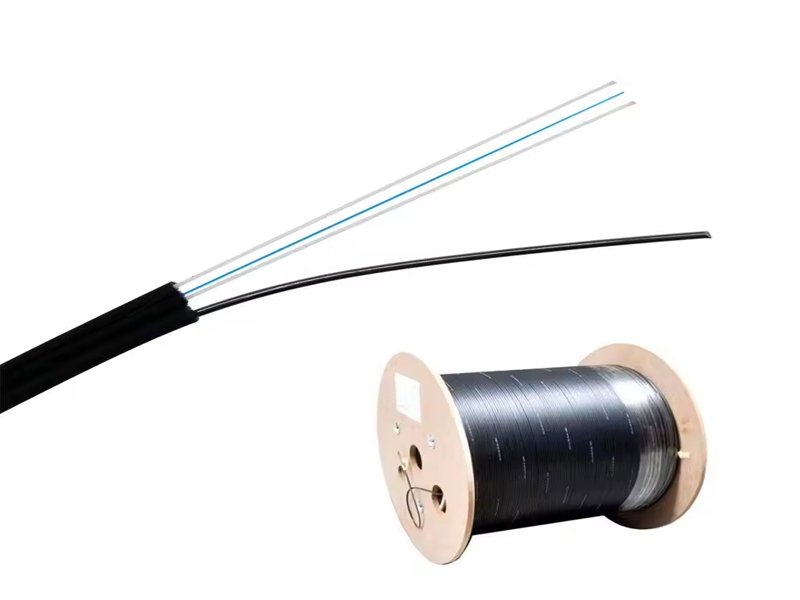
In a world driven by data, speed, and instant connectivity, fiber optic cables are the silent heroes powering everything—from your Netflix stream to global financial systems. These cables, thinner than a strand of human hair, carry terabytes of information at nearly the speed of light, transforming how we communicate, work, and live. Yet, despite their ubiquity, few truly understand what goes inside those tiny glass threads that make the internet, telecom, and cloud computing possible.
A fiber optic cable is a data-transmission medium that uses light signals instead of electricity to transfer information. It consists of glass or plastic fibers surrounded by cladding, buffer, and protective layers. Fiber optics enable ultra-high-speed, long-distance, and interference-free communication across industries such as telecommunications, medical, defense, and industrial automation.
Think of fiber optics as modern highways of light—carrying billions of “cars” (data packets) through transparent tunnels. In this guide, we’ll demystify fiber optic cables—what they are, how they’re made, their types and performance metrics, and how Sino-Conn customizes them to meet your toughest project demands.
What Is a Fiber Optic Cable and How Does It Work?
A fiber optic cable is a high-speed data transmission medium that carries information as light pulses through strands of glass or plastic fibers. Each strand contains a core and cladding that use total internal reflection to guide the light signal across long distances with minimal loss. Compared with copper cables, fiber optics deliver faster, higher-capacity, and interference-free data transfer, making them the backbone of modern telecommunications and industrial connectivity.
The Physics, Structure, and Functionality of Fiber Optics
Fiber optic cables revolutionized data transmission by replacing electrical signals with light waves. Instead of electrons moving through metal conductors, photons travel through ultra-pure glass fibers. This transition to optical communication solved the biggest limitation of copper: signal loss and electromagnetic interference (EMI) over distance.
1. The Principle of Total Internal Reflection
The heart of fiber optic operation lies in Snell’s Law of Refraction. Each fiber has two main layers:
- Core – the central glass channel that carries the light.
- Cladding – a surrounding layer with a slightly lower refractive index.
When light enters the fiber at a shallow angle, it continuously reflects off the boundary between core and cladding, bouncing down the fiber’s length without escaping. This phenomenon is known as total internal reflection (TIR) — it traps light within the core even as the cable bends.
As a result, data encoded as rapid light pulses can travel tens of kilometers without significant attenuation or distortion.
2. The Composition of a Fiber Optic Cable
| Layer | Material | Function | Typical Feature |
|---|---|---|---|
| Core | Ultra-pure silica glass | Carries the optical signal | Diameter: 9–62.5 μm |
| Cladding | Doped silica | Reflects light into core | Lower refractive index |
| Buffer Coating | Acrylate or plastic | Protects fiber from microbends | Shock absorption |
| Strength Members | Kevlar (Aramid Yarn) | Adds tensile strength | Resists pulling |
| Outer Jacket | PVC, PE, LSZH | Environmental protection | Fire, oil, UV resistant |

Each layer plays a vital role: the core ensures optical clarity, the cladding controls reflection, and the buffer and jacket provide mechanical resilience. Sino-Conn’s fiber assemblies often integrate Kevlar yarn or stainless-steel armor for harsh industrial applications requiring extra durability.
3. How Light Becomes Data
Data travels through fiber as digital light pulses generated by transmitters such as LEDs or laser diodes.
- Step 1: Encoding – Electrical data (0s and 1s) is converted into light pulses.
- Step 2: Transmission – The light travels through the fiber’s core via reflection.
- Step 3: Detection – At the other end, a photodiode or optical receiver converts the light back into electrical signals.
Each pulse represents digital information. Modern systems can send billions of pulses per second, achieving data rates beyond 400 Gbps.
For example, in a single-mode fiber backbone link, signals can travel over 100 km without amplifiers—something impossible with copper, which typically degrades after just a few hundred meters.
4. Wavelengths and Signal Types
Optical communication typically uses specific wavelengths of light for optimal transmission:
| Wavelength | Common Use | Medium | Notes |
|---|---|---|---|
| 850 nm | Short-range links | Multi-mode | Low-cost VCSEL lasers |
| 1310 nm | Metro networks | Single-mode | Low dispersion |
| 1550 nm | Long-haul networks | Single-mode | Lowest attenuation (~0.2 dB/km) |
Wavelength-division multiplexing (WDM) allows multiple wavelengths—or “colors” of light—to travel simultaneously within one fiber, multiplying data throughput without adding more cables.
5. Comparing Fiber vs Copper Performance
| Feature | Fiber Optic Cable | Copper Cable |
|---|---|---|
| Transmission Speed | Up to 1.6 Tbps | ≤ 10 Gbps |
| Distance Range | 10 km – 100 km | ≤ 100 m |
| Signal Loss (Attenuation) | < 0.35 dB/km | > 10 dB/km |
| EMI Resistance | Immune | Highly sensitive |
| Weight & Flexibility | Lightweight | Heavier |
| Cost Trend | Falling steadily | Plateaued |
This comparison clearly shows why industries—from telecom and defense to medical imaging—have shifted toward optical solutions. Fiber’s immunity to EMI and exceptional bandwidth make it indispensable in high-speed communication and precision systems.
Which Types of Fiber Optic Cables Exist?

There are two primary types of fiber optic cables—Single-Mode Fiber (SMF) and Multi-Mode Fiber (MMF)—each serving distinct applications. Single-Mode carries light in a single path, ideal for long-distance, high-speed data transmission, while Multi-Mode supports multiple light paths for short-range, cost-efficient networks. Additional specialty types—such as armored, ribbon, duplex, or breakout fibers—enhance performance for different industrial, telecom, and OEM uses.
Understanding the Diversity of Fiber Types
Fiber optic cables may all transmit data using light, but not all fibers are built the same. Their internal core sizes, optical behavior, and construction materials vary significantly, defining their distance capability, bandwidth, and installation method. Sino-Conn engineers categorize fibers not just by optical mode but also by environment, function, and structure—offering complete customization for any project.
1. Single-Mode Fiber (SMF)

Single-Mode Fiber is the gold standard for long-haul and high-bandwidth transmission. It uses a narrow core (≈ 8–10 μm) that allows only one mode of light to propagate straight down the fiber. This eliminates modal dispersion—the main cause of signal distortion in multimode systems.
Key Technical Characteristics
| Feature | Typical Value | Benefit |
|---|---|---|
| Core Diameter | 9 μm | Enables single light path |
| Wavelengths | 1310 nm / 1550 nm | Minimal attenuation |
| Attenuation | ~0.2 dB/km | Ultra-low signal loss |
| Bandwidth | Virtually unlimited | Suitable for 400 G – 1.6 T transmission |
| Distance | Up to 100 km + | Ideal for backbone & metro networks |
Because of its precision manufacturing, SMF requires laser light sources (LDs) rather than LEDs, which generate cleaner, narrower beams. This makes SMF the preferred choice for telecommunications carriers, internet backbone providers, 5G infrastructure, and aerospace or defense systems where speed, stability, and range are mission-critical.
Sino-Conn provides both OS1 (indoor) and OS2 (outdoor) compliant single-mode fibers:
- OS1: tight-buffered construction, suitable for short indoor routes up to 2 km.
- OS2: loose-tube construction with optimized glass for 1310–1550 nm long-haul use.
Each SMF cable undergoes insertion-loss testing ≤ 0.3 dB and return-loss testing ≥ 50 dB, ensuring clarity and long-term reliability.
2. Multi-Mode Fiber (MMF)
Multi-Mode Fiber uses a larger core (50 μm or 62.5 μm), allowing multiple light rays—or “modes”—to travel simultaneously. This makes MMF simpler and cheaper to terminate and couple, especially for shorter distances under 2 km.
MMF Sub-Categories
| Type | Core Size | Typical Standard | Max Distance (10 Gbps) | Typical Application |
|---|---|---|---|---|
| OM1 | 62.5 μm | ISO/IEC 11801 Class A | 33 m | Legacy networks |
| OM2 | 50 μm | ISO/IEC 11801 Class B | 82 m | Short office runs |
| OM3 | 50 μm (laser-optimized) | ISO/IEC 11801 Class C | 300 m | Data centers |
| OM4 | 50 μm (high bandwidth) | ISO/IEC 11801 Class D | 550 m | High-density LANs |
| OM5 | 50 μm (wideband) | ISO/IEC 11801 Class E | 150 m (100 Gbps SWDM) | Parallel optics, hyperscale DCs |
MMF is typically paired with VCSEL lasers (850 nm), offering cost-effective short-range data transmission in local networks, server racks, or factory automation systems.
Sino-Conn manufactures MMF assemblies with tight-buffer or distribution cable constructions, integrating color-coded jackets (orange = OM1/OM2, aqua = OM3/OM4, lime = OM5) for easy identification during installation.
3. Armored Fiber Optic Cable
For harsh or outdoor environments, armored fiber integrates a corrugated steel tape or stainless-steel braid beneath the outer jacket. This structure provides resistance to:
- Crushing and rodent attacks
- Mechanical stress from heavy machinery
- UV exposure, moisture, and chemicals
Sino-Conn’s armored fiber cables are available in single-tube or multi-tube configurations and can achieve tensile strengths above 1000 N, making them suitable for railway systems, military communication, and oilfield networks.
Optional features: halogen-free (LSZH), UV-resistant PE jackets, or aluminum armor for lightweight protection.
4. Simplex and Duplex Fiber

- Simplex Fiber: Contains one core for one-way communication (e.g., sensors or transmit-only systems).
- Duplex Fiber: Two cores in a single cable for bidirectional data flow (Tx/Rx).
| Type | Fiber Count | Direction | Use Case |
|---|---|---|---|
| Simplex | 1 | One-way | Industrial sensors |
| Duplex | 2 | Bidirectional | LAN, transceivers |
Sino-Conn offers pre-terminated LC, SC, ST, and FC duplex assemblies with precise pin-to-pin mapping verified before shipment.
Duplex fibers are particularly popular in OEM and R&D labs, where simultaneous send-receive communication is essential for testing and automation systems.
5. Ribbon and Breakout Fiber

Ribbon Fiber bundles 8–24 fibers in flat parallel alignment—ideal for data centers that require high-density interconnections. Its compact geometry enables mass fusion splicing, saving installation time.
Breakout Fiber, on the other hand, provides individually jacketed fibers within one cable, offering easier termination and ruggedness.
| Type | Design | Benefit | Application |
|---|---|---|---|
| Ribbon | Flat, parallel array | High-density, small OD | Data centers |
| Breakout | Individual sub-units | Easy field termination | Industrial OEMs |
Sino-Conn’s ribbon and breakout cables can be equipped with MTP/MPO connectors, enabling 12, 24, or 48-fiber terminations for 400G–800G backbone networks.
6. Specialty Fiber Optic Cables

Beyond the conventional SMF and MMF, Sino-Conn supplies custom-engineered specialty fibers to meet extreme conditions or unique design parameters.
A. Polarization-Maintaining (PM) Fiber
Used in scientific instruments and high-precision sensors. Maintains polarization of light, minimizing noise in laser systems.
B. Plastic Optical Fiber (POF)
Made from PMMA (Polymethyl Methacrylate), POF offers low-cost, flexible installation over short distances (≤ 50 m). Excellent for automotive or home automation where ruggedness matters more than bandwidth.
C. Hybrid Fiber-Power Cables
Combine optical fibers with copper conductors—transmitting both data and DC power simultaneously. Ideal for security cameras, IoT devices, and industrial robots. Sino-Conn custom-designs hybrid assemblies with UL-approved wire insulation and EMI shielding.
D. High-Temperature & Harsh-Environment Fiber
Built with fluoropolymer jackets (e.g., FEP or ETFE) to endure > 200 °C, oil, and radiation exposure—critical for aerospace, energy, or defense sectors.
7. Sino-Conn’s Fiber Type Selection Framework
At Sino-Conn, the fiber selection process is guided by three key criteria:
- Transmission Distance – Short (< 2 km): choose MMF; Long (> 10 km): choose SMF.
- Environment – Indoor: PVC / LSZH; Outdoor: PE / Armored.
- Data Rate – < 10 Gbps: OM2/OM3; > 100 Gbps: OS2 or OM4/OM5.
| Requirement | Recommended Fiber Type | Typical Jacket | Application Example |
|---|---|---|---|
| Data center | OM4/OM5 MMF | LSZH | 400 G network backbone |
| Long-haul telecom | OS2 SMF | PE | 100 km trunk line |
| Factory automation | OM2 MMF | PVC | Robot control system |
| Harsh outdoor | Armored OS2 | PE + steel armor | Oilfield sensor |
| Compact OEM | Simplex POF | PVC | Automotive lighting |
8. Connector Compatibility Across Fiber Types
Fiber cables are terminated with connectors that match the transmission mode. Sino-Conn offers all major connector interfaces:
| Connector Type | Typical Use | Mode | Key Feature |
|---|---|---|---|
| LC | Data center, transceiver modules | SMF/MMF | Compact, duplex |
| SC | Legacy telecom, patch panels | SMF/MMF | Snap-in, reliable |
| ST | Industrial and lab | MMF | Twist-lock |
| MTP/MPO | High-density data center | SMF/MMF | Multi-fiber array |
| FC | Military/aerospace | SMF | Screw-type, vibration-proof |
Each connector is factory-terminated and 100% tested for insertion loss and geometry compliance. For urgent orders, Sino-Conn can build prototypes within 2–3 days and deliver mass-production batches in 2 weeks.
How Is a Fiber Optic Cable Structured?
A fiber optic cable consists of multiple layers that work together to transmit light safely and efficiently: the core, cladding, buffer coating, strength members, and outer jacket. The core and cladding guide light signals through total internal reflection, while the buffer, strength members, and jacket protect against mechanical stress, moisture, temperature extremes, and electromagnetic interference (EMI). This multilayer design ensures long-term durability, high-speed data integrity, and flexibility for diverse industrial applications.

1. Core — The Heart of Light Transmission
The core is the innermost layer where light travels. It’s made from ultra-pure silica glass (SiO₂) or sometimes plastic (PMMA) for short-range use.
- Purpose: Carry optical signals as light pulses
- Typical Diameter:
- Single-Mode: 8–10 μm
- Multi-Mode: 50 or 62.5 μm
- Refractive Index: Higher than cladding to maintain total internal reflection
- Purity: Impurities < 1 part per billion to minimize scattering and attenuation
The core’s diameter and composition directly influence bandwidth, wavelength, and transmission distance. A narrower core (SMF) offers lower attenuation and longer reach, while a wider core (MMF) supports multiple light modes for short-range, cost-effective connectivity.
Sino-Conn sources core glass from top-tier fiber manufacturers and verifies every batch using optical time-domain reflectometry (OTDR) to ensure consistent quality.
2. Cladding — The Light Trap Layer
Surrounding the core is the cladding, a concentric layer of glass or doped silica with a slightly lower refractive index (typically 1% less than the core). This index difference is what causes total internal reflection (TIR), keeping light confined within the core even as the cable bends.
| Feature | Function |
|---|---|
| Material | Pure silica with dopants (e.g., germanium, fluorine) |
| Refractive Index | ~1.46 (lower than core) |
| Thickness | 125 μm standard |
| Purpose | Reflects light back into core, preventing escape |
3. Coating or Primary Buffer — First Layer of Mechanical Defense
After the optical fiber is drawn, it’s immediately coated with a dual-layer UV-cured acrylate polymer. This coating protects against microbends, moisture, and surface abrasion without affecting optical properties.
| Property | Value | Function |
|---|---|---|
| Thickness | 250 μm (approx.) | Adds flexibility and cushioning |
| Material | UV-cured acrylate | Protects against scratches and humidity |
| Operating Temp | -40 °C to +85 °C | Ensures stability in harsh environments |
The coating also improves fiber handling during cabling and connectorization. Sino-Conn uses high-performance coatings rated for >10,000 bend cycles—essential for dynamic or movable assemblies like robotics or military communication cables.
4. Strength Members — The Backbone of Mechanical Stability
Optical fibers themselves are fragile, so strength members are integrated to absorb tension and pressure during installation and operation. These are usually aramid yarns (Kevlar®), fiberglass rods (FRP), or steel wires, depending on the application.
| Strength Member | Benefit | Application |
|---|---|---|
| Aramid Yarn (Kevlar®) | Lightweight, flexible, strong | Indoor, patch cords |
| Steel Wire / Tape Armor | High tensile & crush strength | Outdoor, underground |
| Fiberglass Rods (FRP) | Non-metallic, dielectric | Aerial and data center cables |
Sino-Conn designs each assembly’s strength system to withstand tensile forces up to 1000 N, with optional anti-rodent or water-blocking yarns for outdoor installations.
These elements ensure that the optical fibers remain under zero stress during bending, pulling, or temperature expansion—preserving transmission performance even in extreme conditions.
5. Secondary Buffer and Filler Layers
In multi-fiber or ruggedized designs, an additional secondary buffer surrounds the coated fibers. This can be:
- Tight-buffered (0.9 mm): Easier termination for indoor cables.
- Loose-tube buffered (2–3 mm): Allows fiber movement under temperature changes, perfect for outdoor cables.
Loose tubes may include gel or dry water-blocking compounds, preventing moisture from wicking through the cable. Sino-Conn offers both gel-filled and dry-core options based on environmental needs and installation ease.
6. Outer Jacket — The Final Shield

The outer jacket protects the entire structure from physical, chemical, and environmental damage. Jacket materials vary according to installation site and environmental exposure.
| Jacket Material | Key Properties | Ideal Application |
|---|---|---|
| PVC (Polyvinyl Chloride) | Flame-retardant, flexible | Indoor use, LANs |
| PE (Polyethylene) | UV, water, chemical resistant | Outdoor, buried lines |
| LSZH (Low Smoke Zero Halogen) | Emits no toxic gas when burned | Public buildings, data centers |
| PUR (Polyurethane) | High abrasion & oil resistance | Industrial machinery |
| FEP / ETFE | High-temperature, chemical resistant | Aerospace, defense |
Sino-Conn’s outer jackets undergo flame propagation (IEC 60332) and smoke density (IEC 61034) testing, ensuring global safety compliance. LSZH and halogen-free variants are standard for European and medical markets where toxic emissions are restricted.
7. EMI Shielding and Metallic Protection (Optional Layers)
Although optical fibers are immune to electromagnetic interference, certain assemblies—especially hybrid fiber-power cables—require metallic shielding to protect integrated copper conductors or improve mechanical robustness.
Sino-Conn offers:
- Aluminum foil or braided copper shields for hybrid fiber assemblies
- Corrugated steel tape armor for heavy-duty installations
- EMI rejection performance up to 95 dB for specialized equipment cables
This enables reliable transmission in environments with strong magnetic fields, such as industrial plants or power substations.
8. Structural Cross-Section Example
Below is a simplified cross-section showing the multilayer composition of a typical Sino-Conn fiber optic cable:
| Layer No. | Component | Material | Thickness (approx.) | Primary Function |
|---|---|---|---|---|
| 1 | Core | Silica glass | 9–62.5 μm | Light transmission |
| 2 | Cladding | Doped silica | 125 μm | Reflects light back into core |
| 3 | Coating | Acrylate | 250 μm | Protects against microbends |
| 4 | Strength Member | Kevlar / FRP | 500–1000 μm | Provides tensile strength |
| 5 | Outer Jacket | PVC / PE / LSZH | 1.5–3 mm | Environmental & mechanical protection |
Total outer diameter (OD): typically 2.0–9.0 mm depending on design and fiber count.
9. Cable Construction Variants
A. Tight-Buffered Construction
- Fibers are individually coated and bundled together.
- Easier field termination and compact routing.
- Common in indoor, patch, and short-run installations.
B. Loose-Tube Construction
- Fibers rest inside gel-filled tubes with water-blocking elements.
- Provides excellent temperature flexibility and crush resistance.
- Used for long-distance, outdoor, or direct-burial applications.
C. Ribbon Construction
- Flat ribbon of 8–24 fibers for high-density splicing.
- Compact design used in modern data centers.
Sino-Conn manufactures all three construction styles with precise OD control (±0.1 mm) and consistent concentricity, ensuring compatibility with global connector systems.
10. Mechanical and Environmental Performance
| Property | Typical Value | Test Standard |
|---|---|---|
| Operating Temperature | -40 °C to +85 °C | IEC 60794-1-22 |
| Bend Radius (Dynamic) | ≥ 10 × OD | TIA/EIA-568 |
| Crush Resistance | ≥ 500 N/10 cm | IEC 60794-1-21 |
| Impact Resistance | 10 impacts, 5 N·m | IEC 60794-1-21 |
| Water Penetration | None over 3 m / 24 hr | IEC 60794-1-22 |
| Flame Retardancy | Pass | IEC 60332-1 |
These results demonstrate that Sino-Conn’s fiber cables meet and often exceed international benchmarks for durability, safety, and transmission integrity.
What Are the Key Performance Specifications to Consider?
When evaluating a fiber optic cable, consider key parameters such as attenuation, bandwidth, numerical aperture, dispersion, EMI resistance, tensile strength, and environmental endurance. These specifications define how efficiently light signals travel, how far they can go, and how stable the connection remains under stress or extreme conditions. A well-engineered fiber cable—like those built by Sino-Conn—balances optical performance with mechanical durability, ensuring reliability across telecom, medical, industrial, and military applications.
1. Attenuation (Signal Loss)
Attenuation refers to the reduction in optical power as light travels through the fiber, measured in decibels per kilometer (dB/km). Lower attenuation means less signal degradation over distance.
| Fiber Type | Wavelength | Typical Attenuation | Notes |
|---|---|---|---|
| Single-Mode (OS2) | 1310 nm | 0.35 dB/km | Shorter range |
| Single-Mode (OS2) | 1550 nm | 0.20 dB/km | Long-haul, lowest loss |
| Multi-Mode (OM3/OM4) | 850 nm | 3.5 dB/km | Data center |
| Multi-Mode (OM3/OM4) | 1300 nm | 1.5 dB/km | Medium range |
Causes of Attenuation:
- Absorption: Trace impurities (like OH⁻ ions) in the glass absorb light energy.
- Scattering: Microscopic irregularities cause light to scatter (Rayleigh scattering).
- Bending Loss: Excessive bending causes light to escape through the cladding.
Sino-Conn’s Advantage:
All Sino-Conn fibers undergo optical time-domain reflectometer (OTDR) testing, ensuring insertion loss ≤ 0.3 dB and uniform attenuation. Custom-engineered bend-insensitive fibers (G.657A2 standard) maintain low loss even under tight bend radii (as small as 7.5 mm).
2. Bandwidth and Data Transmission Capacity
Bandwidth defines the maximum data rate (MHz·km) that a fiber can carry without distortion. It’s determined by how well the cable minimizes dispersion—the spreading of light pulses over distance.
| Fiber Type | Bandwidth @ 850 nm | Max Data Rate | Typical Use |
|---|---|---|---|
| OM2 | 500 MHz·km | 10 Gbps (82 m) | Office LAN |
| OM3 | 2000 MHz·km | 40 Gbps (300 m) | Data centers |
| OM4 | 4700 MHz·km | 100 Gbps (550 m) | Backbone networks |
| OS2 | N/A (single path) | 400 G–1.6 T | Long-haul networks |
Insight:
- Multi-mode fibers experience modal dispersion, limiting their distance.
- Single-mode fibers use coherent laser sources and avoid modal effects, offering virtually unlimited bandwidth.
3. Numerical Aperture (NA)
NA defines how much light the fiber can accept, calculated from the refractive indices of the core and cladding:
[
NA = \sqrt{n_{core}^2 – n_{clad}^2}
]
| Fiber Type | Typical NA | Light-Gathering Ability |
|---|---|---|
| Single-Mode | 0.10–0.14 | Narrow beam, precise alignment |
| Multi-Mode | 0.20–0.29 | Wider acceptance angle |
Why It Matters:
Higher NA means easier coupling with light sources, but also more modal dispersion. Therefore, Single-Mode fibers prioritize precision and distance, while Multi-Mode favors flexibility and easier alignment.
Sino-Conn’s Testing:
Every fiber undergoes end-face interferometry and mode-field diameter (MFD) measurement to ensure optimal NA consistency, ensuring plug-and-play compatibility with LC, SC, ST, and MPO connectors.
4. Dispersion and Signal Distortion
Dispersion describes how light pulses spread over distance, blurring data signals and reducing clarity. There are three main types:
| Type | Description | Typical Impact |
|---|---|---|
| Modal Dispersion | Multiple light paths (modes) arrive at different times | MMF only |
| Chromatic Dispersion | Different wavelengths travel at slightly different speeds | SMF |
| Polarization Mode Dispersion (PMD) | Light polarization differences cause time delay | SMF (long-haul links) |
Mitigation Methods:
- Use graded-index Multi-Mode fibers (OM3/OM4) to equalize modal delays.
- Employ dispersion-shifted Single-Mode fibers (ITU-T G.653) for long-distance telecom.
- Utilize PMD-compensated designs (G.655) for high-speed DWDM systems.
5. EMI and Electrical Interference Resistance
A major advantage of fiber optics over copper is its immunity to electromagnetic interference (EMI). Since light is not affected by external electric or magnetic fields, fibers maintain signal clarity even near heavy machinery or radio equipment.
However, when hybrid fiber-power cables are used (optical + copper), shielding becomes critical.
Sino-Conn offers:
- Aluminum foil + braided copper shields for EMI-sensitive environments
- Double-shielded hybrid cables with >95 dB EMI rejection
- Dielectric FRP reinforcement for complete electrical isolation
6. Mechanical Strength and Bend Performance
While optical fibers are inherently fragile, the full cable must endure physical stress during installation and operation.
| Property | Typical Value | Test Standard |
|---|---|---|
| Tensile Strength | 100–1000 N | IEC 60794-1-2-E1 |
| Crush Resistance | ≥ 500 N/10 cm | IEC 60794-1-2-E3 |
| Impact Resistance | 10 impacts @ 5 N·m | IEC 60794-1-2-E4 |
| Bend Radius (Static) | ≥ 10 × OD | TIA/EIA-568 |
| Flex Life | ≥ 10,000 cycles | Internal test |
Engineering Focus:
- Tight-buffered cables are optimized for flexibility (indoor use).
- Loose-tube armored cables withstand high tensile stress (outdoor use).
- Kevlar® reinforcement ensures lightweight yet robust pull protection.
Sino-Conn Validation:
Each cable design undergoes tensile and bend radius simulation before production. Cables are tested under load to verify optical stability under 90° bends or repeated flexing cycles—critical for robotics, elevators, and movable systems.
7. Environmental and Chemical Resistance
Fiber cables are often exposed to moisture, temperature swings, oil, UV light, or corrosive chemicals. The jacket material and buffer compounds determine the cable’s resilience.
| Property | Specification | Sino-Conn Standard |
|---|---|---|
| Operating Temp | -40 °C to +85 °C | Standard |
| High Temp Range | Up to +200 °C | FEP / ETFE jackets |
| UV Resistance | 2000 h @ 50 °C, no cracking | PE / PUR jacket |
| Oil Resistance | 72 h immersion, no swelling | PUR / TPE jacket |
| Corrosion Resistance | Salt mist 168 h | Stainless armor |
| Waterproofing | No infiltration after 24 h / 3 m | Gel or dry-blocking fibers |
Sino-Conn’s Advantage:
For demanding environments, Sino-Conn provides:
- Halogen-free LSZH materials for low-smoke, non-toxic safety.
- PFAS-free, eco-compliant jackets aligned with REACH 2025 requirements.
- Armored or steel-taped cables for mechanical and chemical protection.
These make Sino-Conn’s cables fully compliant with UL, ISO, ROHS, REACH, and MIL-SPEC certifications for industrial and defense-grade projects.
8. Optical Return Loss (ORL) and Insertion Loss (IL)
| Parameter | Description | Ideal Value | Test Method |
|---|---|---|---|
| Insertion Loss (IL) | Signal power lost at connection | ≤ 0.3 dB | IEC 61300-3-4 |
| Return Loss (RL) | Reflection of signal back into source | ≥ 50 dB | IEC 61300-3-6 |
Importance:
Poor polishing or contamination at connector interfaces increases reflection, reducing efficiency. Sino-Conn’s automated polishing and 3D interferometer inspection ensure IL and RL performance across every connectorized assembly.
9. Fire Safety and Material Compliance
Regulatory compliance is a growing focus for buyers worldwide.
Sino-Conn materials conform to:
- UL 1666, UL 910 — Flame propagation & plenum rating
- IEC 60332-1/3 — Fire resistance
- IEC 61034 — Smoke density
- EN 50267 — Halogen-free emission
All products are fully traceable with a Certificate of Conformance (COC) and Certificate of Origin (COO) upon shipment.
10. Lifetime Reliability and Quality Assurance
Sino-Conn integrates process control + statistical sampling to guarantee long-term performance stability.
Each batch is tested for:
- Aging resistance: 1000-hour heat test at 85 °C
- Thermal cycling: 500 cycles from -40 °C to +80 °C
- Humidity exposure: 1000 hours at 95% RH
- Connector retention: >50 N pull strength
Average product lifespan: over 20 years under normal operating conditions. ****
Where Are Fiber Optic Cables Used Across Industries?
Fiber optic cables are used in nearly every modern industry—from telecommunications and data centers to medical, defense, automotive, and industrial automation. They enable ultra-fast, interference-free communication and precise data transfer. Because they are immune to EMI, lightweight, and capable of transmitting over vast distances, fiber optics are critical in environments requiring speed, safety, and reliability. Sino-Conn designs and customizes fiber assemblies for these sectors, delivering performance tailored to each industry’s unique operational needs.
Below, we explore how fiber optic technology powers key industries—and how Sino-Conn’s specialized engineering supports each application’s performance, compliance, and reliability requirements.
1. Telecommunications and Internet Infrastructure

The telecommunications industry is the largest and fastest-growing user of fiber optics. These cables form the backbone of the global Internet, connecting cities, countries, and continents.
Core Applications
- 5G and 6G networks: Fiber backhaul links connect base stations to core networks, handling data rates exceeding 400 Gbps.
- Submarine communication cables: Over 1.3 million km of undersea fiber lines carry 99% of intercontinental data traffic.
- Fiber-to-the-Home (FTTH): Enables gigabit-speed Internet directly to households.
| Application | Typical Fiber Type | Distance | Key Requirement |
|---|---|---|---|
| 5G backhaul | OS2 SMF | 10–40 km | Low latency, DWDM support |
| Metro rings | G.652D SMF | 80–120 km | Low attenuation |
| FTTH | G.657A2 bend-insensitive SMF | 1–10 km | Tight bend radius |
| Submarine trunk | G.654E ultra-low-loss SMF | 1,000–10,000 km | Pressure & temperature resistant |
Sino-Conn Solutions:
- Long-haul single-mode assemblies with < 0.2 dB/km attenuation
- Outdoor armored PE jackets for moisture and rodent resistance
- MTP/MPO connectors for dense fiber management
- Custom length, reel-packaged solutions for large infrastructure installers
Sino-Conn’s engineering team also assists carriers and network integrators with optical link budget calculations, ensuring maximum signal integrity over extended routes.
2. Data Centers and Cloud Computing

Data centers are the central nervous hubs of the digital economy. Every byte stored in the cloud passes through fiber interconnects between servers, switches, and routers.
Key Trends and Requirements
- Massive bandwidth demand: Transitioning from 100 G → 400 G → 800 G links.
- High-density cabling: MTP/MPO connectors with 12–48 fibers per connector.
- Thermal management: Low-smoke, halogen-free (LSZH) materials for safe in-rack installations.
- Ultra-low insertion loss: ≤ 0.25 dB per connector for consistent network uptime.
| Data Center Zone | Typical Fiber Type | Connector | Max Data Rate |
|---|---|---|---|
| Server-to-switch | OM4 / OM5 MMF | LC / MPO | 400 G |
| Switch-to-core | OS2 SMF | LC / SC | 800 G |
| Cross-connect patching | OM3 MMF | LC duplex | 40 G |
| Inter-data center | OS2 SMF | MTP | 1.6 T |
Sino-Conn Solutions:
- Factory-terminated MTP/MPO trunk cables with polarity A/B/C labeling
- Color-coded jackets (aqua, lime, yellow) for fiber type identification
- Bend-insensitive fibers for tight-radius rack layouts
- Full testing (IL, RL, polarity) before shipment with printed results
For hyperscale customers, Sino-Conn can pre-assemble entire patch panels and cable harnesses for plug-and-play deployment—saving up to 40% installation time.
3. Medical and Healthcare Industry

Fiber optics enable revolutionary advancements in modern medicine. Their miniaturization, biocompatibility, and high-precision light transmission make them invaluable in diagnostic, imaging, and surgical systems.
Medical Applications
- Endoscopy and minimally invasive surgery (MIS): Bundled fiber cables transmit high-definition images inside the human body.
- Laser delivery systems: Fibers carry focused light for ophthalmology, dermatology, and oncology treatments.
- Biomedical sensors: Measure oxygen levels, pH, and blood flow using fiber-optic sensors.
- Medical imaging: Connects MRI and CT equipment where EMI immunity is critical.
| Device Type | Fiber Type | Jacket Material | Feature |
|---|---|---|---|
| Endoscope | Coherent imaging fiber | PU | Flexible, sterilizable |
| Laser surgical system | Silica SMF | FEP | Heat-resistant |
| MRI signal link | Plastic fiber (POF) | PVC | EMI-free |
| Catheter sensors | Micro fiber bundle | Silicone | Biocompatible |
Sino-Conn Medical-Grade Solutions:
- Custom small-diameter cables (OD ≤ 1.5 mm)
- FEP or silicone jackets for sterilization (autoclave > 120 °C)
- ROHS and ISO 13485-compliant manufacturing
- 100% optical inspection for transmission uniformity
4. Military, Aerospace, and Defense

In defense and aerospace environments, where mission success depends on data accuracy and signal integrity, fiber optics are the gold standard.
Why Fiber Is Vital in Defense Systems
- Immune to electromagnetic pulses (EMP) and interference.
- Lightweight for aircraft and satellite systems.
- Secure—no electrical radiation leakage that can be intercepted.
Applications Include:
- Avionics and radar systems transmitting data between sensors and processors.
- Naval communication networks connecting command modules.
- Missile guidance and targeting systems.
- Battlefield surveillance and secure data links.
| Platform | Fiber Type | Design Focus | Standard |
|---|---|---|---|
| Aircraft avionics | Rugged SMF | Weight reduction | MIL-DTL-85045 |
| Naval networks | Armored OS2 | Water-blocking, EMI | MIL-C-28876 |
| Military vehicles | Tactical duplex | Crush-resistant | MIL-STD-1678 |
| Space payloads | Radiation-hardened SMF | Temperature & vacuum stable | ESA QPL |
Sino-Conn’s Tactical Fiber Systems:
- Kevlar-reinforced assemblies rated > 1000 N tensile strength
- Armor and jacketing compliant with MIL-SPEC and IP68 sealing
- Precision termination with FC/APC or MIL-C-38999 connectors
- Operating temperature range –60 °C to +200 °C
5. Industrial Automation and Robotics

Factories, process plants, and robotics environments are filled with electromagnetic noise, oil, vibration, and movement—conditions that destroy copper cables but not fiber.
Use Cases
- PLC and machine vision systems transmitting real-time control signals.
- Robot arms and automated tools requiring flexible, repetitive motion.
- SCADA systems monitoring distributed sensors across manufacturing floors.
- Industrial Ethernet networks (EtherCAT, PROFINET, Modbus).
| Application | Cable Type | Feature | Jacket |
|---|---|---|---|
| Robotic arm link | Bend-insensitive MMF | 10 000 + bend cycles | PUR |
| PLC connection | Duplex SMF | EMI-immune | PVC |
| Factory data network | OM2 MMF | High-speed 10 G link | LSZH |
| Outdoor plant link | Armored OS2 | Oil & UV-resistant | PE / steel armor |
Sino-Conn’s Industrial Advantage:
- Reinforced PUR and TPE jackets resisting oil, abrasion, and UV
- Optional hybrid fiber + power cables for simplified installation
- Flex-life verification exceeding 1 million dynamic cycles
- 24/7 production-line testing and 100% optical inspection
6. Energy, Oil & Gas, and Renewable Industries

Fiber optics have transformed how energy facilities monitor, control, and protect their assets. Unlike copper, fibers can transmit data reliably over kilometers, even in explosive or high-temperature zones.
Key Use Cases
- Distributed Temperature Sensing (DTS) and Distributed Acoustic Sensing (DAS) along oil pipelines.
- Wind turbine monitoring and solar farm communication.
- Substation and SCADA connectivity in power transmission.
| Sub-Industry | Fiber Type | Special Feature | Temp Range |
|---|---|---|---|
| Oil & Gas pipeline | Armored OS2 | Hydrogen-resistant, DTS-enabled | –40 °C to +120 °C |
| Wind farms | Loose-tube SMF | UV & weather-resistant | –30 °C to +85 °C |
| Solar plants | Hybrid fiber-power | Power + data combo | –20 °C to +80 °C |
| Substation SCADA | Dielectric SMF | EMI-immune | –40 °C to +85 °C |
Sino-Conn Solutions:
- Steel-taped armored fibers resisting corrosion and mechanical load.
- Hydrogen-resistant coatings preventing signal darkening in pipelines.
- High-temperature fluoropolymer jackets (FEP/ETFE) for energy plants.
- Pre-terminated field-ready cables with waterproof IP68 connectors.
7. Transportation and Smart Infrastructure

Fiber optics are integral to smart cities and transportation systems requiring high-speed, real-time data.
Applications
- Railway signaling and control
- Traffic monitoring and CCTV networks
- Airport communication and radar systems
- Maritime navigation and port automation
Benefits:
- Reliable under vibration, temperature variation, and long distances.
- Immune to lightning and EMI.
- Compact routing through tunnels or conduits.
Sino-Conn Offers:
- Armored OS2 PE-jacketed cables for underground railway tunnels.
- Tactical fiber reels for temporary event or emergency setups.
- Hybrid fiber-copper designs powering roadside IoT and sensors.
8. Research, Education, and High-Performance Computing (HPC)

Academic and government laboratories rely on fiber optics for:
- Particle accelerators, quantum computing, and telescopes.
- Campus networks connecting buildings across large areas.
- Data transfer between supercomputing clusters.
These systems require extremely low latency and absolute stability.
Sino-Conn supplies fibers with:
- Polarization-maintaining (PM) cores for laser applications.
- Ultra-low-loss OS2 fibers for precision measurement.
- Custom jacket colors and labeling for multi-lab identification.
9. Consumer Electronics and Broadcasting

Even in the consumer sector, fiber is everywhere—from home entertainment to smart appliances.
Examples:
- Fiber HDMI and optical audio cables for 4K/8K streaming.
- FTTH broadband lines delivering gigabit Internet.
- Broadcast studios using optical patch cables for camera and signal routing.
Sino-Conn provides high-flex, compact fiber jumpers and hybrid copper-optical designs that maintain signal clarity for professional audiovisual and consumer electronics manufacturers.
Are There Emerging Trends and Innovations in Fiber Optic Technology?
New fiber technologies focus on higher data rates (400G – 1.6 T), smaller form factors, and eco-friendly, halogen-free materials. Future designs emphasize flexibility, miniaturization, and sustainability—trends Sino-Conn already integrates into its manufacturing.
Higher Data-Rate Standards
With cloud computing, AI, and autonomous vehicles driving demand, the world is shifting toward 800 G and Terabit fiber systems. Low-loss fibers and advanced connectors enable these next-gen speeds with minimal latency.
Flexible and Hybrid Fibers
Manufacturers now combine fiber optics with copper conductors for power + data hybrid cables, simplifying smart device integration. Sino-Conn offers hybrid assemblies tailored for IoT, EV, and robotic applications.
Eco-Friendly and Safer Materials
New halogen-free and PFAS-free jackets reduce toxic emissions. Sino-Conn’s environmental compliance ensures products meet ROHS 3 and REACH SVHC standards.
Regional Price and Supply Trends
| Region | Typical Price Trend | Notes |
|---|---|---|
| United States | High | Tight specs, long-term contracts |
| Japan | High-Mid | Strict quality standards |
| Korea / SEA | Mid-Low | Fast delivery focus |
| Europe | Varies | Germany & France high, Italy & Poland lower |
| India | Low | Rapid market expansion |
Understanding these trends helps buyers optimize cost and lead time. Sino-Conn’s global logistics network—China HQ with overseas warehouses—ensures shorter transit times and stable pricing across markets.
Conclusion
In an era where data moves faster than thought, fiber optics have become the invisible engine of progress. From powering global communications to enabling life-saving medical imaging and driving autonomous vehicles, fiber optic technology is no longer a luxury—it’s the foundation of modern civilization. But behind every successful fiber network is more than glass and light; it’s precision engineering, consistent quality, and supplier partnership that make the system truly perform.
That’s where Sino-Conn comes in.
Whether you’re preparing to launch a new product line, redesign an existing fiber assembly, or solve a persistent signal-loss issue, Sino-Conn has the expertise, materials, and technology to help.
Partner with Sino-Conn—where engineering precision meets global reliability, and every custom fiber assembly is crafted to perform at the speed of light.