Skip to content

A wire harness is only as strong as its weakest terminal. Whether you’re assembling automotive wiring, industrial control panels, or custom OEM cables, the terminal is where current, signal, and structure meet. A poorly selected or incorrectly crimped terminal can lead to voltage drop, intermittent contact, or even total circuit failure.
Wire harness terminals are conductive end fittings that connect a wire to another component or device. Common types include crimp, ring, spade, pin, bullet, and solder terminals. Each is chosen based on wire size, load capacity, environment, and assembly requirements. Selecting the right terminal ensures stable conductivity, mechanical strength, and long-term reliability.
Just as engineers carefully specify wire gauge and insulation, they must also match the terminal to its job. From vibration-resistant automotive systems to precision instrumentation cables, every choice in geometry, plating, and insulation determines performance and longevity. Let’s explore how the different terminal types work — and how Sino-conn engineers design and manufacture customized harness terminals for every industry.
What Is a Wire Harness Terminal?
A wire harness terminal is the metallic end connection attached to a conductor, designed to mechanically and electrically link a wire to another component—such as a connector, PCB, power source, or device. It ensures low-resistance current flow, stable contact under vibration, and protection from corrosion or fatigue. Choosing the right terminal type and installation method determines the efficiency, safety, and lifespan of the entire wiring system.
A wire harness may contain hundreds of individual wires—but without proper terminals, those conductors cannot reliably transmit power or data. The terminal acts as the bridge between flexible copper strands and rigid components, transforming a raw wire into a durable, serviceable connection that resists mechanical stress and electrical degradation.
The Core Function of a Terminal
At its simplest, a terminal has two jobs:
- Electrical continuity: creating a secure, low-resistance path between the wire and the mating interface.
- Mechanical retention: preventing pull-out, vibration loosening, or fatigue failure at the joint.
To achieve these, the terminal must be designed and processed with precision—balancing conductivity, strength, and corrosion protection. A high-quality terminal typically has three defined zones:
- Conductor crimp/barrel: compresses onto the stripped wire strands.
- Insulation support: grips the jacket to relieve strain.
- Contact area: interfaces with mating pins, studs, or sockets.
When these zones are dimensioned correctly, the connection can survive tens of thousands of thermal and vibration cycles without degradation.
Mechanical and Electrical Considerations
The performance of a terminal isn’t only about metal—it’s about geometry and consistency.
- Contact Resistance: should remain below 10 mΩ to prevent heat buildup.
- Tensile Strength: the crimp must withstand ≥ 50 N for an AWG 18 wire.
- Vibration Endurance: open-barrel crimps and double-crimp terminals perform best in automotive and aerospace harnesses.
- Thermal Stability: terminals are typically rated from −40 °C to +125 °C (some up to +200 °C).
Even a small deviation in crimp height or plating thickness can cause long-term failures such as oxidation, micro-fretting, or intermittent conductivity.
Why Terminals Are Critical to Harness Reliability
Industry studies (IPC/WHMA-A-620, SAE J163) show that over 70 % of wire harness failures originate at the termination point—not in the wire or connector.
Common root causes include:
- Over-crimping that fractures copper strands.
- Under-crimping leading to loose contact.
- Wrong plating or material for the environment (e.g., tin oxidation in humid climates).
- Incompatible wire gauge or insulation thickness.
A terminal that appears fine during assembly can degrade months later under vibration, moisture, or current load. For OEMs, that means warranty claims, safety recalls, and brand damage.
Material and Surface Treatments
High-performance terminals are typically made from copper alloys (C1100, C2680 brass, phosphor bronze) due to their balance of conductivity and elasticity.
- Tin plating: economical, good for general applications.
- Nickel plating: enhances temperature and corrosion resistance.
- Gold plating: used in low-voltage or signal circuits where stable contact is critical. Some applications even require dual-plated contacts—nickel under-layer with a thin gold flash—to combine corrosion protection and solderability.
Sino-conn’s material lab performs X-ray fluorescence (XRF) analysis to confirm plating thickness and RoHS/REACH compliance for every production lot.

The Human and Process Factor
The best terminal design can still fail without proper processing. Crimping pressure, die shape, and even wire-strip length directly influence quality. Sino-conn uses:
- Automatic crimp-force monitoring (CFM) on all production lines.
- Cross-section microscopes to verify conductor compression ratio.
- Three-stage inspection: in-process, post-assembly, and pre-shipment.
This ensures every harness terminal delivers the same electrical and mechanical performance as the first approved prototype.
Which Types of Wire Harness Terminals Are Commonly Used?
The most widely used wire harness terminals include crimp, solder, ring, spade (fork), bullet, pin, butt splice, and IDC (insulation displacement) types. Each terminal serves a specific purpose based on current capacity, mechanical load, and assembly method. Crimp terminals dominate high-volume applications like automotive and industrial wiring, while solder and IDC types are preferred for precision or compact electronics. Selecting the right terminal depends on wire gauge, environment, and serviceability requirements.
Wire harnesses serve hundreds of industries, from cars and aircraft to household appliances and medical devices — but nearly all rely on a handful of terminal families. Each terminal type is optimized for particular mechanical connection methods, current ratings, and maintenance conditions. Below we explore the core terminal categories, including their structures, advantages, limitations, and best-fit applications.
Crimp Terminals
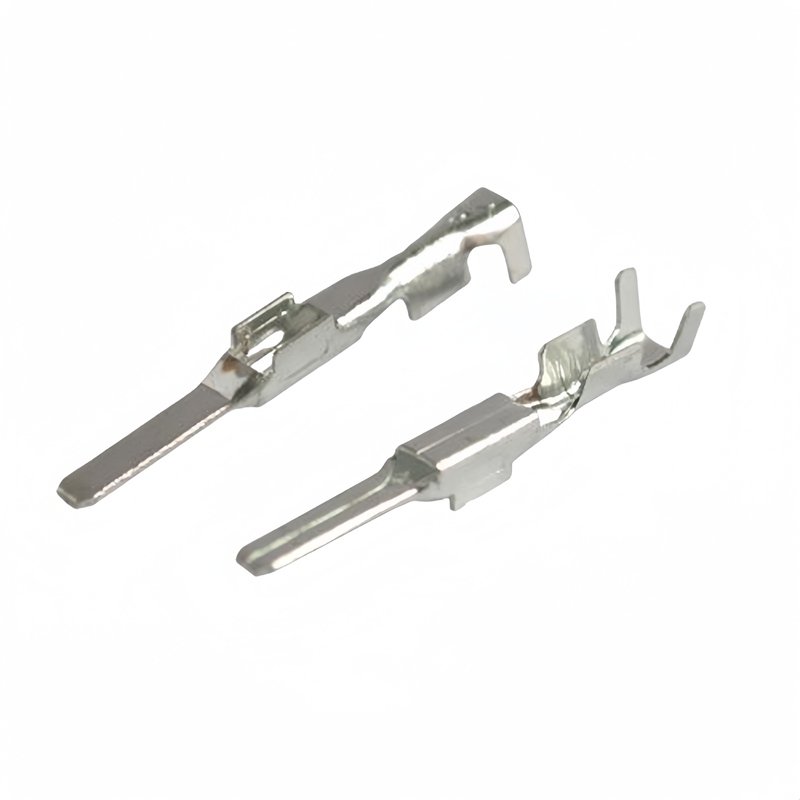
Crimp terminals are the backbone of modern wire harness manufacturing. They use mechanical compression to bond the terminal barrel tightly around the conductor strands without solder. When properly executed, a crimped joint becomes gas-tight and mechanically robust, providing a connection as conductive as the original wire.
Why they dominate:
- Fast, repeatable, and automation-friendly (ideal for high-volume production).
- Resistant to vibration and fatigue, especially with double-crimp or open-barrel designs.
- Compatible with automated inspection tools (crimp height, pull-force testing).
Design Variations:
- Open-barrel (F-crimp): Widely used in automotive and electronics. Offers visual confirmation of conductor positioning.
- Closed-barrel: Provides full metal enclosure and better strain relief.
- Flag terminals: Right-angle form factor for tight spaces.
Typical applications:
Automotive wire harnesses, appliance wiring, control systems, EV charging lines, and industrial machinery.
Technical note:
A properly crimped terminal should withstand >50 N tensile force for AWG 18, with resistance < 10 mΩ. Sino-conn’s automated crimp machines monitor force in real-time to ensure process consistency.
Solder Terminals
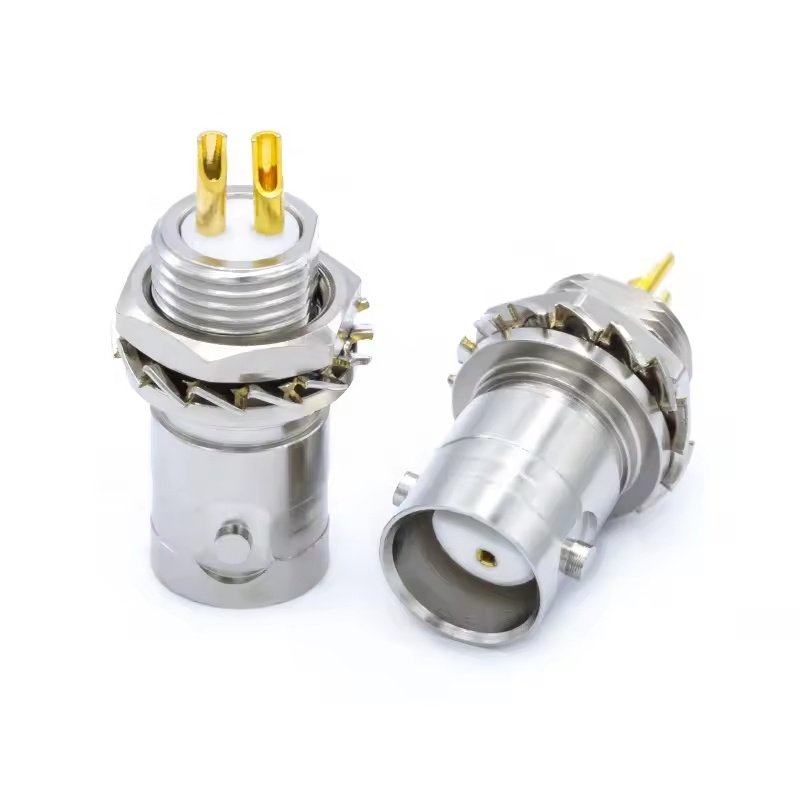
Solder terminals rely on molten solder to bond the conductor to the terminal cup or pad, creating a continuous metallic joint. They are common in low-volume, high-reliability applications where precision matters more than speed.
Advantages:
- Excellent electrical conductivity and corrosion resistance.
- Ideal for miniature or multi-strand conductors that may deform under crimping pressure.
- Provides hermetic sealing in harsh or humid environments.
Limitations:
- Slower production and higher labor cost.
- Requires skilled workmanship or temperature-controlled equipment.
- Heat exposure can damage nearby insulation or components.
Applications:
Aerospace harnesses, medical devices, instrumentation, and military electronics where soldering is often specified under IPC-J-STD-001 or MIL-STD-202.
Tip:
Lead-free solder alloys (Sn99.3 / Cu0.7) meet RoHS and REACH compliance while maintaining mechanical integrity. Sino-conn offers both solder-cup and hybrid crimp-solder terminals for mixed assemblies.
Ring Terminals

Ring terminals feature a circular eyelet that fastens securely under a screw or stud. Once tightened, it forms one of the most reliable mechanical and electrical connections available.
Advantages:
- Cannot loosen or disconnect from vibration.
- Excellent for power distribution and grounding.
- Available in wide gauge range (AWG 22 – AWG 4/0).
Variants:
- Non-insulated: Basic form, ideal for controlled environments.
- Vinyl-insulated: Cost-effective protection.
- Nylon-insulated: High-temperature (up to 105 °C).
- Heat-shrink sealed: For waterproof or outdoor applications.
Applications:
Automotive battery leads, grounding points, marine power systems, and heavy industrial equipment.
Performance Tip:
Use ring terminals with nickel or tin plating to prevent galvanic corrosion when mounted on aluminum or steel surfaces.
Spade (Fork) Terminals

Spade or fork terminals have an open “U”-shaped design that slides easily beneath screw terminals without removing the screw entirely.
Advantages:
- Rapid installation and removal during maintenance.
- Common in control cabinets and relay boards.
- Supports multiple re-terminations without wire fatigue.
Drawbacks:
- Slightly lower pull-out strength than ring terminals.
- Requires proper screw torque to maintain contact.
Applications:
Industrial control panels, power distribution units (PDUs), HVAC systems, and appliance harnesses.
Bullet and Receptacle Terminals
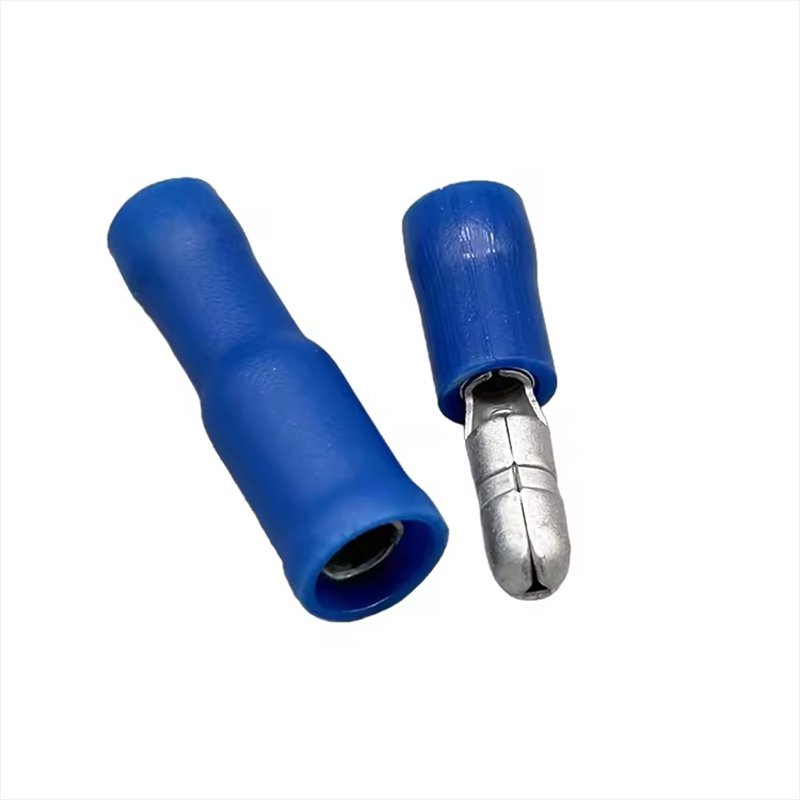
Bullet terminals come in male (bullet) and female (receptacle) forms that plug together, allowing quick connection and disconnection. They are ideal for modular or replaceable harnesses.
Advantages:
- Compact, lightweight, and easy to service.
- Snap-fit connection resists vibration.
- Enables modular design — parts can be swapped without cutting wires.
Applications:
Automotive lighting, motorcycles, household appliances, and garden tools.
Specifications:
Standard bullet diameters: 3.5 mm, 4 mm, 5 mm, 6.3 mm. Sino-conn offers both tin-plated brass and fully insulated PVC bullet terminals rated up to 10 A (AWG 16).
Butt Splice and Inline Terminals
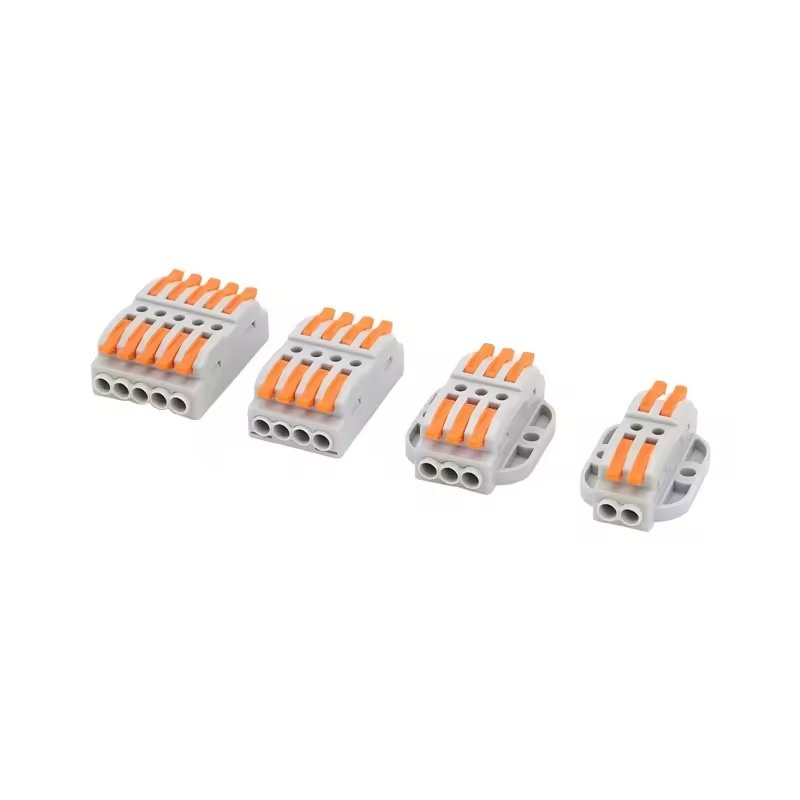
Butt splices join two wires end-to-end, maintaining electrical continuity and strain relief.
Types:
- Crimp butt splices: simplest and fastest.
- Heat-shrink butt splices: include adhesive-lined tubing for moisture seal.
- Solder-seal connectors: pre-loaded with solder rings that melt when heated.
Applications:
Field repair, marine harnesses, or when extending wires without connectors.
Tip:
Always select splices rated for the same gauge and insulation diameter as the wires. Sino-conn’s waterproof splices meet IP67 sealing standards for outdoor reliability.
IDC (Insulation Displacement Contacts)

IDC terminals make electrical contact by cutting through wire insulation and gripping the conductor, eliminating stripping or soldering.
Advantages:
- Fast, uniform, and tool-friendly installation.
- Excellent for multi-core ribbon cables.
- Minimal risk of cold joints or inconsistent crimps.
Limitations:
- Works best with solid or tinned stranded conductors.
- Not ideal for high-current or high-vibration conditions.
Applications:
Computer ribbon cables, communication modules, and compact control systems.
Standards:
Meets IEC 60352-3 and UL 1059 for mass-termination systems. Sino-conn uses precision IDC tooling to achieve consistent contact penetration depth and long-term stability.
Specialty Terminals — Designed for Custom Applications
While standard types cover most use cases, many industries need custom or hybrid terminals.
Examples:
- Flag terminals for right-angle connections.
- Dual-crimp designs for signal + power pairs.
- Sealed automotive terminals with silicone gaskets (AMP / Deutsch / Sumitomo).
- Board-mount tabs or pins for PCB integration.
Why customization matters:
Custom terminals improve space optimization, assembly efficiency, and EMI performance—especially in EV, aerospace, and smart-appliance sectors. Sino-conn’s in-house R&D can design and prototype such terminals in under three days.
Terminal Types at a Glance
| Terminal Type | Connection Method | Typical Application | Advantages | Limitations |
|---|---|---|---|---|
| Crimp | Mechanical compression | Automotive, industrial | Fast, strong, vibration-proof | Requires proper tooling |
| Solder | Thermal bonding | Aerospace, medical | Excellent conductivity | Labor-intensive |
| Ring | Bolt-on | Power, grounding | Very secure | Needs screw access |
| Spade | Slip-on fork | Control panels | Easy maintenance | Lower retention |
| Bullet | Plug-and-socket | Vehicles, appliances | Modular, quick connect | Limited current |
| Butt Splice | Inline crimp/solder | Repairs, marine | Simple joining | Non-serviceable |
| IDC | Insulation cut | Data, ribbon cables | Ultra-fast assembly | Limited current |
| Custom | Engineered fit | OEM, EV, aerospace | Optimized design | Higher setup cost |

What Materials and Plating Are Used in Terminals?
Wire harness terminals are primarily made from copper alloys such as brass, phosphor bronze, or pure copper, which offer high conductivity and durability. To enhance corrosion resistance and contact stability, surfaces are plated with tin, nickel, silver, or gold depending on application needs. Material and plating choices determine each terminal’s conductivity, mechanical strength, oxidation resistance, and solderability, making them crucial design factors for long-term reliability in harsh environments.
Selecting the right base metal and surface plating for a terminal is not simply a matter of cost — it directly affects signal integrity, mechanical life, and compliance with global standards (UL 486, IEC 60352, RoHS, REACH). In high-performance wire harnesses, more than 40 % of failure modes relate to poor material selection or inadequate surface protection. Sino-conn engineers analyze each application environment — from automotive vibration to marine humidity — before specifying terminal alloys and coatings.
Base Metals
The base metal forms the foundation of every terminal’s performance. It must conduct current efficiently while withstanding deformation during crimping, vibration, or thermal cycling.
| Material | Electrical Conductivity (% IACS) | Key Properties | Typical Use |
|---|---|---|---|
| Pure Copper (C1100) | 100 % | Excellent conductivity, soft, ductile | Signal and low-resistance power contacts |
| Brass (C2600/C2680) | 60 – 70 % | Good mechanical strength, corrosion resistance | General terminals, ring & spade types |
| Phosphor Bronze (C5102) | 15 – 20 % | High spring strength, fatigue resistance | Receptacle contacts, IDC blades |
| Beryllium Copper (C17200) | 45 – 55 % | Superior elasticity, stable under load | High-reliability connectors, aerospace |
| Steel (Tin-plated) | < 10 % | Strong but low conductivity | Mounting lugs, grounding hardware |
Copper provides unbeatable conductivity but lacks hardness. Brass adds strength and corrosion resistance at a modest conductivity cost, making it ideal for crimp and ring terminals. Phosphor bronze combines flexibility with fatigue endurance — critical in repetitive mating cycles or vibration-heavy environments.
Plating Materials
The plating on a terminal acts as its first line of defense against oxidation, corrosion, and wear. It also influences mating force, solderability, and contact resistance. Sino-conn’s plating lines support multi-layer electroplating and selective area coating for precision harness components.
1. Tin Plating
- Most common choice for cost-efficient mass production.
- Offers good solderability and decent corrosion resistance.
- Typically 1–3 µm thickness; up to 5 µm for high-humidity environments.
- Operating range: −40 °C – +130 °C.
- Limitation: susceptible to fretting corrosion and “tin whiskers” in high-vibration or high-humidity conditions if not properly under-plated.
Best for: automotive connectors, appliance wiring, and consumer electronics.
2. Nickel Plating
- Provides superior hardness, abrasion resistance, and heat tolerance up to +250 °C.
- Commonly used as an under-layer beneath tin or gold to prevent base metal diffusion.
- Excellent corrosion resistance against sulfur or salt spray.
Best for: industrial and marine applications, high-temperature terminals, and power connectors exposed to oil or chemical vapors.
3. Silver Plating
- Outstanding conductivity (105 % IACS) and low contact resistance.
- Naturally lubricious — minimizes insertion wear.
- May tarnish in sulfur-rich atmospheres but remains conductive.
- Economically favorable alternative to gold in high-current applications.
Best for: RF connectors, power transmission harnesses, or aerospace components requiring low-loss performance.
4. Gold Plating
- Offers exceptional corrosion resistance and long-term contact stability.
- Maintains ultra-low resistance even after 1,000+ mating cycles.
- Immune to oxidation — perfect for low-voltage, signal, or data transmission lines.
- Typical thickness: 0.5 – 2 µm (selective or full coverage).
Best for: medical devices, sensors, communication modules, or mission-critical electronics.
5. Tin-Nickel and Other Specialty Coatings
For applications where standard plating fails — such as fuel-exposed automotive environments or offshore rigs — tin-nickel (SnNi) and palladium-nickel (PdNi) coatings offer enhanced corrosion resistance and reduced galvanic mismatch.
Sino-conn can apply dual-layer plating (e.g., 3 µm nickel + 1 µm tin) for customers seeking improved solderability under harsh conditions.
Insulation and Protective Finishes
Beyond metal coatings, terminals often incorporate insulated sleeves to prevent short circuits and improve mechanical grip:
- PVC or Vinyl: economical, rated up to 75 °C.
- Nylon: flame-retardant, flexible, up to 105 °C.
- Heat-shrink insulation: with adhesive liner, waterproof up to IP67; withstands vibration and oil exposure.
Plating Thickness and Process Control
Plating performance depends on thickness uniformity and adhesion quality. Even a 0.5 µm deviation can alter contact resistance by 20 %. Sino-conn maintains:
- ±0.1 µm tolerance using automated bath current control.
- XRF (X-ray fluorescence) testing for every production batch.
- Cross-section microscopy for plating adhesion and diffusion depth analysis.
Typical Thickness Ranges:
| Plating Type | Min (µm) | Max (µm) | Common Application |
|---|---|---|---|
| Tin | 1.0 | 5.0 | Automotive, appliances |
| Nickel | 1.5 | 4.0 | Industrial, marine |
| Silver | 2.0 | 8.0 | Power, aerospace |
| Gold (selective) | 0.5 | 2.0 | Signal, medical |
| Sn-Ni Alloy | 1.5 | 3.0 | Harsh environments |
Environmental and Compliance Considerations
Modern terminal manufacturing must satisfy not only performance but also sustainability and regulatory requirements:
- RoHS / REACH: Restricts hazardous substances (lead, cadmium, mercury, etc.).
- PFAS-free: Sino-conn materials comply with EU 2025 PFAS restrictions.
- Halogen-free coatings: meet IEC 61249-2-21 for eco-friendly assemblies.
Every Sino-conn batch ships with a Certificate of Compliance (COC) and traceable lot records to guarantee global conformity.
Matching Material and Plating to Application
| Application Environment | Recommended Base Metal | Plating Choice | Reason |
|---|---|---|---|
| Automotive (high vibration) | Brass / Phosphor Bronze | Tin or Nickel | Mechanical strength & corrosion protection |
| Aerospace & Military | Beryllium Copper | Gold over Nickel | Long-term stability & conductivity |
| Marine / Outdoor | Brass | Tin-Nickel or Nickel | Salt-spray resistance |
| Medical & Sensors | Phosphor Bronze | Gold or Palladium-Nickel | Signal reliability & oxidation resistance |
| Power Distribution | Copper | Silver or Tin | High current capacity & cost efficiency |
How Are Terminals Installed and Verified for Quality?
Wire harness terminals are installed through crimping, soldering, or insulation displacement techniques, ensuring a secure mechanical and electrical connection between wire and terminal. Proper installation involves precise stripping, compression force, and alignment to maintain conductivity and tensile strength. After assembly, every terminal undergoes pull-force, resistance, and visual inspection tests according to IPC/WHMA-A-620 and UL 486 standards. Verified quality ensures long-term reliability under vibration, temperature changes, and electrical load.
Terminal installation is the most critical phase in wire harness production — it’s where material science meets mechanical precision. Even the best-designed terminal can fail prematurely if installed incorrectly. At Sino-conn, terminal installation is treated as a precision engineering process, not a routine task. Each connection is validated through controlled tooling, real-time monitoring, and data-driven quality verification to ensure durability, conductivity, and safety.
The Three Primary Terminal Installation Methods
1. Crimping — The Industry Standard
Crimping is the process of mechanically compressing a terminal barrel onto a stripped wire conductor using a calibrated crimping tool or press. This creates a cold-weld joint—a gas-tight mechanical bond that behaves like a continuous piece of metal.
Process Steps:
- Strip insulation precisely (length tolerance ±0.3 mm).
- Insert conductor fully into terminal barrel.
- Apply calibrated crimp pressure to collapse the barrel around wire strands.
- Optionally crimp the insulation support for strain relief.
- Inspect for correct crimp height and conductor positioning.
Advantages:
- Fast, consistent, vibration-resistant.
- Fully compatible with automation.
- Maintains conductivity with minimal resistance increase (<10 mΩ).
Typical Applications:
Automotive, industrial, medical, and EV wiring harnesses.
2. Soldering — The Precision Bond
Soldering creates a metallurgical joint between wire and terminal through controlled melting of solder alloys. It’s used when crimping isn’t practical — for fine wires, multi-core conductors, or sensitive assemblies requiring hermetic sealing.
Process Steps:
- Tin wire strands and pre-heat terminal cup.
- Apply flux and feed solder evenly around the joint.
- Cool naturally to form a shiny, void-free surface.
- Inspect for smooth wetting and full solder fill.
Advantages:
- Superior conductivity and corrosion resistance.
- Excellent for small signal wires and critical electronics.
- Eliminates micro-movement between strands.
Limitations:
Requires controlled temperature; excessive heat can damage insulation or plating.
Quality Standard:
All Sino-conn solder terminals comply with IPC J-STD-001 (Soldered Electrical and Electronic Assemblies).
3. IDC (Insulation Displacement Contact) — Fast and Clean
IDC terminals cut through the insulation and grip the conductor strands directly, eliminating stripping and soldering. It’s ideal for high-volume ribbon or data cables.
Advantages:
- Speed: up to 10× faster than manual crimping.
- Precision: contact depth is factory-calibrated.
- Clean: zero solder residue or flux contamination.
Verification:
Each IDC joint is pull-tested and microscopically checked for proper conductor engagement and insulation shear depth.
Installation Quality Factors
Even slight deviations during installation can compromise terminal life. Sino-conn engineers focus on six measurable parameters to guarantee connection reliability.
| Parameter | Target Control Range | Failure Mode if Out of Range |
|---|---|---|
| Crimp height | ±0.03 mm | Loose or crushed strands |
| Strip length | ±0.3 mm | Incomplete insertion or exposed conductor |
| Crimp position | ±0.1 mm | Weak mechanical grip |
| Wire barrel fill | 80–90% | Open barrel or under-compression |
| Pull force (AWG 20 example) | > 35 N | Early wire detachment |
| Contact resistance | < 10 mΩ | Overheating, voltage drop |
Tip: Properly crimped terminals should show no loose strands, no insulation in the conductor crimp zone, and full circular compression marks visible under magnification.
Common Installation Defects and How They’re Prevented
- Under-Crimping — too little force leads to loose contacts or oxidation. Solution: CFM system halts machine on force deviation.
- Over-Crimping — excessive pressure fractures copper strands. Solution: Regular die calibration every 20,000 cycles.
- Improper Wire Insertion — conductor not seated fully in barrel. Solution: Vision sensors detect misalignment before crimping.
- Contamination — flux or oil residues cause poor conductivity. Solution: Ultrasonic cleaning and plasma treatment before crimping.
Terminal Inspection and Quality Verification
Once terminals are installed, they undergo multiple inspection and testing stages to verify mechanical integrity and electrical continuity.
1. Visual and Microscopic Inspection
Technicians check:
- Crimp shape and conductor exposure.
- Insulation support engagement.
- Plating deformation or cracks.
Microscopic cross-sectioning (50×–200×) reveals conductor compression ratios and void percentage, ensuring full metallurgical bonding.
2. Pull Force Test
This test measures how much tension a wire can endure before detaching from the terminal.
According to UL 486A/B, the minimum pull force depends on wire gauge:
| Wire Gauge (AWG) | Minimum Pull Force (N) |
|---|---|
| 22 | 20 |
| 20 | 35 |
| 18 | 50 |
| 16 | 80 |
| 14 | 130 |
| 12 | 200 |
All Sino-conn crimped terminals exceed these values by 10–15 %, ensuring robust mechanical reliability.
3. Electrical Continuity Test
Automated systems test for:
- Contact resistance (target <10 mΩ).
- Insulation resistance (>100 MΩ at 500 VDC).
- Voltage withstand (dielectric strength) up to 2,000 VAC for power lines.
4. Thermal and Vibration Endurance
Accelerated aging tests simulate 1,000+ hours of thermal cycling (−40 °C to +125 °C) and vibration exposure at 10–55 Hz.
Terminals must maintain resistance variation within ±2 % to qualify as “stable”.
Documentation and Traceability
Every batch of terminals and harnesses produced by Sino-conn comes with:
- Crimp height charts and inspection photos.
- Pull-force and resistance test reports.
- XRF plating validation certificate.
- UL/ISO/RoHS/REACH compliance documents.
Which Applications Use Different Terminal Types?
Different wire harness terminals serve unique purposes across industries. Crimp and ring terminals dominate automotive and industrial power systems, spade and bullet types are preferred for modular equipment or serviceable devices, IDC and pin terminals are used in data and control electronics, while sealed or custom terminals are chosen for aerospace, marine, and medical sectors. Selecting the correct terminal type ensures optimal electrical conductivity, vibration resistance, and long-term reliability under specific operating conditions.
Wire harness terminals are not “one size fits all.” Each type is engineered to perform best within a certain environmental, mechanical, and electrical context. Choosing the right terminal is essential for system performance, durability, and safety. Sino-conn’s engineering team categorizes applications by current load, operating environment, and serviceability, providing targeted terminal solutions for industries ranging from automotive to defense.
Below, we explore how different terminal types align with the needs of key sectors.
Automotive & Electric Vehicle (EV) Systems

Automotive environments are among the most demanding — terminals must withstand constant vibration, temperature swings from −40°C to +150°C, and exposure to oil, salt, and moisture. For this reason, crimp and sealed terminals dominate the market, often accounting for over 70% of all automotive connections.
Common terminal types:
Medical Devices & Instrumentation

- Open-barrel crimp terminals (F-crimp): used in engine harnesses and lighting systems.
- Sealed waterproof terminals (AMP/Tyco, Sumitomo, Deutsch): prevent moisture ingress in under-hood or chassis harnesses.
- Ring terminals: secure ground or battery connections under bolts or studs.
Why they’re used:
- Excellent vibration resistance and tensile strength.
- Suitable for automation — crucial for high-volume car manufacturing.
Medical Devices & Instrumentation
- Can be pre-terminated with silicone seals for IP67 protection.
Example:
EV powertrain harnesses use tin-plated brass crimp terminals rated for 40–80A and tested per USCAR-2 standards. Sino-conn supplies automotive clients with pre-crimped, waterproof harness assemblies that meet IATF 16949 and ISO 6722 specifications.
Industrial Machinery & Automation

Industrial environments require terminals that balance high current capacity, quick field service, and compliance with UL / IEC safety codes. Machines often need rapid wiring changes during maintenance or upgrades.
Common terminal types:
- Spade (fork) terminals: simplify connections to screw clamps in control cabinets.
- Ring terminals: used in grounding, motor, and power distribution blocks.
- Ferrule terminals: crimped over stranded wires for cleaner DIN-rail terminations.
Why they’re used:
- Spade and ring types ensure easy access and re-termination during maintenance.
- Ferrules prevent strand fraying, ensuring consistent torque under screw pressure.
- Color-coded sleeves simplify wiring verification.
Example:
PLC control panels use tinned copper ferrules for signal wires (AWG 22–18) and nylon-insulated ring terminals for power inputs (AWG 10–6). Sino-conn ferrules comply with IEC 60352-2 and can be supplied in pre-sleeved reels for automated insertion.
Aerospace & Defense — Solder, Gold-Plated, and Custom Locking Terminals
Aerospace and defense harnesses face extreme mechanical stress, thermal cycling, and electromagnetic interference (EMI). Here, terminals must achieve zero failure tolerance under vibration, altitude, and corrosion exposure.
Common terminal types:
- Solder-cup terminals: used for low-resistance, high-reliability signal connections.
- Gold-plated contacts: prevent oxidation and maintain signal integrity.
- Locking or double-crimp types: secure against vibration loosening.
- Shielded or EMI-protected terminals: minimize noise in avionics systems.
Why they’re used:
- Solder joints create hermetic, oxidation-free bonds.
- Gold and nickel plating maintain long-term contact stability.
- Meet MIL-T-7928, AS50881, and NASA-STD-8739.4 wiring standards.
Example:
Flight control harnesses use beryllium copper terminals with selective gold plating, supporting over 5,000 mating cycles. Sino-conn performs pull-force and thermal cycling validation on every aerospace-grade batch.
Consumer Electronics & Data Equipment — IDC, Pin, and Micro Terminals
Modern electronics demand compact, low-current, high-precision terminations where efficiency and signal clarity outweigh mechanical load. IDC (Insulation Displacement Contact) and pin terminals are the norm in this sector.
Common terminal types:
- IDC terminals: used in ribbon cable connectors for computers and printers.
- Pin headers & receptacle contacts: ideal for PCB-to-wire connections.
- Micro crimp terminals: suited for fine-gauge wires (AWG 28–32).
Why they’re used:
- Compact and fast assembly with minimal manual labor.
- Ideal for data, control, and signal circuits.
- Maintains signal integrity with gold or tin plating.
Example:
IDC ribbon harnesses in printers use phosphor bronze contacts with selective gold plating to ensure low resistance and high mating durability. Sino-conn provides custom IDC assemblies compatible with JST, Molex, and TE standards.
Marine & Renewable Energy — Waterproof and Tinned Terminals
In marine, solar, and wind power systems, terminals must endure salt fog, UV exposure, and fluctuating moisture levels. Waterproof, corrosion-resistant, and tinned options dominate.
Common terminal types:
- Heat-shrink ring terminals: IP67–IP69K rated with adhesive inner liner.
- Butt splices with solder seals: used in field repairs or underwater cabling.
- Tin-plated copper terminals: prevent corrosion and maintain conductivity.
Why they’re used:
- Ensure watertight, corrosion-proof performance.
- Support high currents typical of solar and battery systems.
- Compatible with heavy-gauge cables (AWG 6–0).
Example:
Solar PV harnesses use tinned copper ring and crimp terminals tested for 2,000-hour salt spray per ASTM B117. Sino-conn’s marine harnesses combine heat-shrink insulation and nickel underplating for long-term stability.
Medical Devices & Instrumentation — Gold-Plated and Micro Terminals
Medical equipment harnesses demand ultra-reliable, miniature connections with stable conductivity over years of use — often under sterilization and vibration stress.
Common terminal types:
- Gold-plated micro crimp terminals: for low-current signal integrity.
- Solder-cup terminals: for delicate multi-core sensor wires.
- Snap-in pin terminals: for modular probe connections.
Why they’re used:
- Gold prevents corrosion and minimizes electrical noise.
- Compact design suits restricted device interiors.
- Meet ISO 13485 traceability and biocompatibility requirements.
Example:
ECG sensors and ultrasound probes use gold-flashed phosphor bronze terminals rated under IEC 60601-1. Sino-conn’s medical harness production includes full sterilization compatibility and 100 % electrical testing.
Household Appliances & Lighting — Spade, Quick-Disconnect, and Butt Terminals
For home appliances and LED lighting systems, ease of assembly and replacement is key. Quick-connect and spade terminals dominate due to their serviceability.
Common terminal types:
- Spade/fork terminals: used for thermostats, switches, and motors.
- Bullet terminals: for replaceable lighting harnesses.
- Butt splices: for internal wire joining.
Why they’re used:
- Fast installation without special tools.
- Allow disassembly for repair or component replacement.
- Cost-effective and UL-listed for safety compliance.
Example:
Air-conditioner compressors and washing machine controllers often use 6.3 mm insulated spade terminals rated at 15 A. Sino-conn supplies UL 310-approved spade terminals designed for high-volume appliance manufacturing.
Comparative Application Matrix
| Industry | Common Terminal Types | Plating / Finish | Environmental Requirement | Typical Wire Gauge |
|---|---|---|---|---|
| Automotive / EV | Crimp, Sealed, Ring | Tin / Nickel | Vibration, oil, salt | AWG 18–4 |
| Industrial | Spade, Ring, Ferrule | Tin / Nickel | Heat, mechanical stress | AWG 22–6 |
| Aerospace / Defense | Solder, Gold, Locking | Gold / Nickel | High vibration, EMI | AWG 26–12 |
| Electronics | IDC, Pin, Micro | Gold / Tin | Clean, compact | AWG 30–22 |
| Marine / Solar | Heat-shrink, Butt | Tin / Sn-Ni | Salt, UV, moisture | AWG 10–0 |
| Medical | Gold, Micro, Solder | Gold / PdNi | Sterilization, vibration | AWG 32–26 |
| Appliance / Lighting | Spade, Bullet | Tin / Vinyl | Heat, cost efficiency | AWG 22–14 |
How to Choose the Right Wire Harness Terminal
Choosing the right wire harness terminal depends on electrical load, wire gauge, environment, vibration level, and assembly method. Crimp terminals suit vibration-prone or high-current systems, solder terminals are ideal for precision electronics, and sealed terminals are best for outdoor or automotive use. Key selection criteria include current rating, material, plating, insulation type, and connector compatibility. Proper selection ensures long-term performance, safety compliance, and efficient manufacturability across industrial, automotive, or aerospace applications.
Selecting the right terminal is not simply a matter of shape or size — it’s an engineering decision that impacts conductivity, mechanical strength, assembly efficiency, and even product lifespan.
Below is a comprehensive framework to guide you step-by-step in choosing the most suitable wire harness terminal for your project.
Step 1:Identify Electrical and Mechanical Requirements
Before deciding on a terminal type, define the basic electrical and mechanical parameters of the system.
| Parameter | Key Consideration | Typical Value Range | Effect on Selection |
|---|---|---|---|
| Current Load | Determines wire gauge and barrel size | 0.1 A – 200 A | Higher current requires larger terminals with thicker plating |
| Voltage Rating | Prevent arcing and dielectric breakdown | 5 V – 1000 V | Insulated or sealed terminals for higher voltages |
| Wire Gauge (AWG) | Determines barrel and crimp dimensions | AWG 32 – AWG 0 | Each terminal supports a specific range |
| Pull Strength | Resistance to tension or vibration | 20–200 N | Ring or locking terminals preferred for high stress |
| Temperature Range | Defines material and insulation | −40 °C to +150 °C | Nylon or Teflon insulation for high heat zones |
Example:
An automotive ground cable carrying 60 A at +125 °C would require a tinned brass ring terminal rated for at least 80 A and compliant with SAE J163 standards.
For low-voltage sensor wiring, a phosphor bronze crimp terminal with gold flash is preferable for signal integrity.
Step 2:Consider Environmental Conditions
Terminals operate in vastly different conditions — from sterile medical labs to offshore oil rigs. The environment determines both material selection and surface plating.
| Environment | Recommended Terminal Material | Plating / Protection | Why It Works |
|---|---|---|---|
| Automotive / EV | Brass or Copper | Tin / Nickel | Handles vibration, oil, and salt exposure |
| Marine / Outdoor | Brass | Tin-Nickel / Heat-shrink seal | Corrosion and moisture resistance |
| Aerospace | Beryllium Copper | Gold over Nickel | High vibration, temperature, and conductivity |
| Industrial | Phosphor Bronze | Nickel / Silver | Mechanical durability |
| Medical | Phosphor Bronze | Gold / PdNi | Oxidation resistance, low noise |
| Consumer Electronics | Copper alloy | Tin | Cost-effective and compact |
Step 3:Match Terminal Type to Application Function
Each terminal geometry is optimized for a specific kind of connection. Misapplication can lead to loose fits, contact fatigue, or assembly inefficiency.
| Terminal Type | Best For | Advantages |
|---|---|---|
| Crimp (open/closed barrel) | Automotive, industrial, power | Strong, gas-tight joint, ideal for vibration |
| Ring / Spade / Fork | Grounding, screw connections | Easy installation, secure under torque |
| Bullet / Quick Disconnect | Consumer, lighting, serviceable equipment | Tool-free connection/disconnection |
| IDC (Insulation Displacement) | Data and ribbon cables | Fast mass termination |
| Ferrule | Control cabinets, DIN-rail | Prevents fraying and ensures torque stability |
| Solder Cup | Aerospace, medical | Hermetic and corrosion-free joints |
| Heat-Shrink / Sealed | Marine, outdoor, EV battery | Waterproof and anti-corrosive |
Step 4:Choose the Right Material and Plating
Material and surface plating determine contact resistance, corrosion protection, and mechanical lifespan.
Selecting the wrong plating may lead to galvanic corrosion when paired with incompatible metals.
| Material | Best Attributes | Common Plating | Use Case Example |
|---|---|---|---|
| Copper | High conductivity | Tin / Silver | Power leads, grounding |
| Brass | Strong, corrosion-resistant | Tin / Nickel | Automotive connectors |
| Phosphor Bronze | Flexible, fatigue-resistant | Gold / Tin | Signal contacts |
| Beryllium Copper | Springy, stable | Gold / Nickel | Aerospace, data interfaces |
| Steel | Very strong, low cost | Tin | Mechanical mounting |
Step 5:Evaluate Assembly Method and Tooling Compatibility
The assembly process should align with your production volume and manufacturing technology.
For instance, mass production prefers crimp or IDC types compatible with semi-automated equipment, while low-volume custom harnesses may use solder terminals for precision.
| Assembly Method | Required Tooling | Production Scale | Advantages |
|---|---|---|---|
| Crimping | Crimp press or hand tool | Medium–High | Fast, repeatable, vibration-proof |
| Soldering | Iron or reflow system | Low–Medium | Hermetic, ideal for fine wires |
| IDC | Press-fit machine | High | Quick, no stripping needed |
| Heat-Shrink Sealing | Heat gun / oven | Medium | IP-rated protection |
| Ultrasonic Welding | Ultrasonic welder | High | No consumables, strong bond |
Step 6:Verify Compliance and Testing Standards
Selecting the correct terminal also involves verifying it meets industry standards for performance and safety.
This ensures regulatory compliance and long-term reliability.
| Standard | Scope | What It Regulates |
|---|---|---|
| UL 486A/B | U.S. electrical connections | Crimp & solder joint safety |
| IPC/WHMA-A-620 | Harness assembly | Acceptability of wiring and terminals |
| SAE/USCAR-2 | Automotive | Electrical performance and mechanical tests |
| MIL-T-7928 | Military | Crimp type and tensile performance |
| IEC 60352-2 | International | Solderless crimped connections |
Step 7:Prioritize Customization and Scalability
Off-the-shelf terminals may not always fit your design constraints — especially in high-performance or miniaturized applications.
Custom terminals allow optimization of geometry, material, and plating to match your exact electrical and environmental needs.
Sino-conn’s customization options:
- Custom barrel diameters for non-standard wire gauges.
- Hybrid plating (e.g., nickel base + gold tip).
- Insulation sleeves (PVC, nylon, Teflon, or heat-shrink).
- Overmolded strain relief and laser marking.
- Pre-crimped leads and connector assemblies.
Lead time:
3–5 days for drawings, 2 weeks for production — all supported by 3D CAD models and first-article inspection (FAI).
Decision Framework — Choosing by Application
| Application | Recommended Terminal Type | Material / Plating | Notes |
|---|---|---|---|
| Automotive / EV | Crimp, Sealed, Ring | Brass / Tin-Nickel | Must meet vibration & oil resistance |
| Aerospace / Military | Solder, Locking, Gold | BeCu / Gold-Nickel | Focus on EMI and fatigue life |
| Industrial Automation | Spade, Ferrule | Copper / Nickel | Easy maintenance and torque stability |
| Medical | Gold Micro Crimp | Phosphor Bronze / Gold | Low current, anti-corrosion |
| Marine / Outdoor | Heat-Shrink Ring | Copper / Sn-Ni | Waterproof and UV-resistant |
| Consumer Electronics | IDC, Pin | Phosphor Bronze / Tin | Compact and cost-effective |
Conclusion
In today’s rapidly evolving industries — from automotive EV systems to aerospace electronics and smart medical devices — the smallest component can define the reliability of the entire system. Terminals are not just metal ends; they’re the critical interface between design and performance, between concept and reality. Choosing the wrong terminal may lead to heat buildup, signal loss, or even total system failure. Choosing the right one, however, means decades of consistent operation, safety, and customer trust.
If you’re designing or sourcing wire harnesses for high-performance applications, don’t settle for generic terminals. Work with a partner that understands materials, tolerances, and environments as deeply as you do.
Sino-conn — Precision-engineered terminals that power your innovation.