Skip to content

In the world of electrical design and cable assemblies, choosing the right wire size can make or break a project. From residential panels to solar systems and heavy machinery, every application relies on a balance between safety, efficiency, and compliance. One of the most versatile mid-range conductors is 6 AWG wire. But what exactly does “6 AWG” mean, and how does it influence your project’s performance?
6 AWG wire refers to a conductor size in the American Wire Gauge (AWG) system with a diameter of about 4.115 mm² (13.3 mm² cross-sectional area). It can safely carry 55–75 amps depending on material, insulation, and installation conditions. 6 AWG is commonly used in residential, automotive, marine, and solar applications where medium-to-high current loads are required.
Imagine an engineer specifying cables for a rooftop solar system. Using the wrong wire size could lead to voltage drop, overheating, or even fire hazards. On the other hand, oversizing the wire drives costs higher than necessary. This is where understanding 6 AWG wire’s unique balance between ampacity and flexibility becomes not just a technical detail—but a strategic decision.
What Is 6 AWG Wire and How Is It Defined?
6 AWG wire is a conductor size classified under the American Wire Gauge (AWG) system, measuring approximately 0.162 inches (4.115 mm) in diameter with a cross-sectional area of 13.3 mm². It is available in both copper and aluminum materials and is commonly used in circuits carrying 55–75 amps. The definition of 6 AWG covers not only its physical dimensions but also electrical properties such as resistance, ampacity, and insulation compatibility.
Understanding AWG (American Wire Gauge) System
The AWG system is a standardized scale used primarily in North America to denote wire diameters. A key point is that as the AWG number decreases, the wire diameter and capacity increase. For instance, 10 AWG wire is smaller than 6 AWG, while 4 AWG is larger and carries more current. This logarithmic scale ensures uniformity across manufacturing and electrical engineering, making it easier for engineers, contractors, and electricians to specify the correct wire size without ambiguity.
6 AWG falls into the mid-range of the AWG spectrum, balancing flexibility, ampacity, and cost-efficiency. It’s widely recognized as a “workhorse” conductor suitable for medium-load residential, commercial, and industrial applications.
Physical Size, Diameter, and Resistance of 6 AWG
From a technical standpoint, 6 AWG wire has a diameter of 0.162 inches (4.115 mm) and a cross-sectional area of 13.3 mm² for copper conductors. The resistance per 1000 feet is about 0.395 ohms for copper and approximately 0.628 ohms for aluminum.

- Smaller resistance values mean less heat generation during current flow, which translates into better efficiency and safety.
- Voltage drop considerations: For long runs, resistance becomes a key factor in ensuring devices receive adequate voltage. Choosing copper over aluminum helps minimize loss in critical applications like solar PV or marine power.
Standard Materials: Copper vs Aluminum in 6 AWG
Material choice is just as important as size:
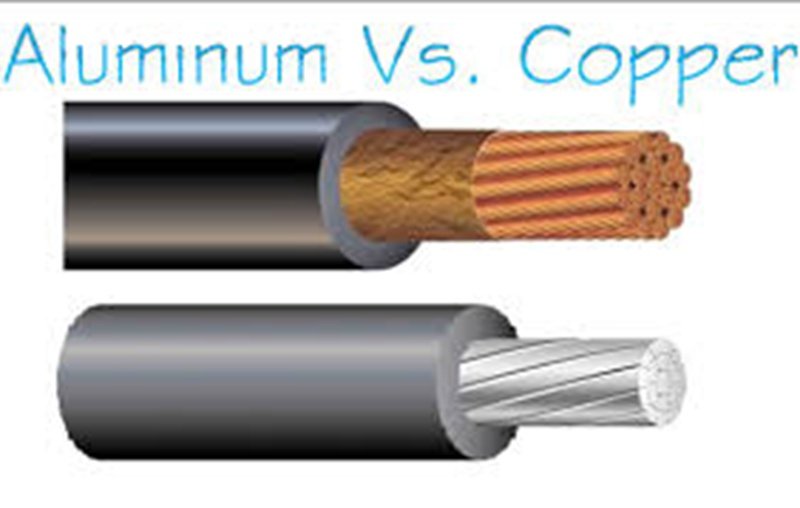
- Copper 6 AWG: Offers excellent conductivity, superior durability, and lower resistance. It’s the industry standard for safety-critical applications such as residential subpanels, EV chargers, and solar installations.
- Aluminum 6 AWG: Lighter weight and lower cost, making it attractive for large-scale projects where budget is crucial. However, aluminum has ~61% of the conductivity of copper, meaning larger sizes are needed for equivalent ampacity, and connections must be carefully managed to prevent oxidation and overheating.
Which Specifications Matter Most for 6 AWG Wire?
The most important specifications for 6 AWG wire include its ampacity (55–75 amps depending on insulation and installation method), temperature rating (60°C, 75°C, or 90°C), insulation type, and whether it’s solid or stranded. Material choice (copper vs. aluminum), resistance per length, and compliance with NEC or IEC codes also matter. These factors together determine safety, performance, and suitability for residential, commercial, automotive, or industrial projects.
Introducing Ampacity: The Basics
Ampacity refers to the maximum current a conductor can safely carry without overheating. For 6 AWG wire:
- Copper THHN 6 AWG typically supports 65 amps at 75°C.
- Aluminum 6 AWG supports about 50 amps at the same temperature rating.
- The National Electrical Code (NEC) provides ampacity tables adjusted for temperature and installation conditions.
This matters because undersized wire can lead to voltage drop, overheating, fire risk, and code violations. For example, a 6 AWG copper conductor might be adequate for a 50-amp breaker on a residential subpanel, but the same gauge in aluminum may require derating or upsizing.
How Many Amps Is a 6 AWG Wire Good For?
While ampacity varies by insulation and environment, typical values include:
| Material & Insulation | Temperature Rating | Ampacity (NEC Table 310.16) |
|---|---|---|
| Copper, THHN | 60°C | 55 A |
| Copper, THHN | 75°C | 65 A |
| Copper, XHHW-2 | 90°C | 75 A |
| Aluminum, THHN | 75°C | 50 A |
For long runs, engineers must also consider voltage drop, which ideally should stay below 3% for branch circuits.
Temperature Rating, Insulation, and Voltage Limits
Another critical specification is the wire’s temperature rating, usually printed on insulation:
- 60°C insulation is common for older or basic installations.
- 75°C insulation (like THHN/THWN) is the most widely used in commercial/residential projects.
- 90°C insulation (like XHHW-2) is required in high-heat, industrial, or outdoor conditions.
Voltage rating also matters: many 6 AWG wires are rated 600V, while specialty cables (such as solar PV) may carry 1000V or 2000V ratings for specific applications.
Stranded vs Solid 6 AWG Wire
- Solid 6 AWG Wire: Offers better conductivity and lower resistance, but it is rigid and harder to pull through conduit. Ideal for permanent, structured wiring like subpanels and underground feeds.
- Stranded 6 AWG Wire: Made of multiple smaller conductors twisted together. Provides superior flexibility, making it easier to route around corners and vibration-prone environments such as vehicles, boats, and industrial machines.
Choosing between the two depends on installation environment, mechanical stress, and ease of handling.
What Are the Common Applications of 6 AWG Wire?
6 AWG wire is commonly used in residential subpanels, EV chargers, solar arrays, marine power systems, and industrial equipment. Its ability to handle 55–75 amps (depending on insulation and material) makes it ideal for medium-load circuits where reliability and safety are critical. From powering home appliances to running heavy machinery, 6 AWG wire provides the right balance of ampacity, durability, and cost-efficiency across residential, automotive, marine, and industrial sectors.
Residential and Commercial Electrical Systems
In homes and buildings, 6 AWG wire is often used for subpanels, air conditioning units, water heaters, and electric stoves. Electric vehicle (EV) charging stations also increasingly rely on 6 AWG copper conductors, particularly for Level 2 chargers drawing up to 60 amps. In commercial settings, 6 AWG wire supports lighting circuits, HVAC systems, and backup generators, providing both durability and compliance with NEC standards.

Automotive and Marine Applications
Vehicles and boats demand wiring that can withstand vibration, heat, and moisture. Stranded 6 AWG wire is the standard in these environments because of its flexibility and resistance to fatigue.
- In automotive systems, 6 AWG powers high-current accessories such as amplifiers, winches, and aftermarket lighting.
- In marine environments, it’s widely used for battery banks, inverters, and shore power connections, often paired with tinned copper conductors to resist saltwater corrosion.
Renewable Energy Systems (Solar and Wind)
6 AWG wire plays a key role in solar PV installations, where it connects panels to combiner boxes, charge controllers, or inverters. Because these circuits often operate outdoors and at higher voltages, wires are typically insulated with XHHW-2 or USE-2 rated for 90°C and 1000V+. Wind turbines also use 6 AWG conductors for internal wiring and battery storage integration, where ampacity and environmental resistance are crucial.

Industrial Machinery and Heavy Equipment
Factories and warehouses use 6 AWG wire to power conveyors, pumps, welding machines, and compressors. Its ability to carry significant current while maintaining flexibility makes it suitable for high-demand circuits. In robotics or automated systems, stranded 6 AWG wire ensures both current stability and mechanical resilience. Heavy-duty extension cords, custom cable assemblies, and temporary site power feeds often incorporate 6 AWG conductors.
Data Centers and Backup Power Systems
In mission-critical environments, such as data centers and telecom facilities, 6 AWG wire connects UPS systems, backup generators, and battery storage units. Its low resistance and stable current capacity help maintain uptime and reduce heat buildup in high-density electrical environments. With the growing demand for reliable backup power, 6 AWG wire has become a trusted choice for secondary feeds and redundancy systems.
Applications by Industry
| Industry | Common Applications of 6 AWG Wire | Key Considerations |
|---|---|---|
| Residential | Subpanels, EV chargers, water heaters, stoves, HVAC | NEC compliance, copper preferred |
| Commercial | Lighting, HVAC, generators, building feeders | Cost vs. performance balance |
| Automotive | Amplifiers, winches, high-current accessories | Flexibility, vibration resistance |
| Marine | Batteries, inverters, shore power | Corrosion resistance, tinned copper |
| Renewable Energy | Solar PV arrays, wind turbines, battery storage | High-voltage insulation, outdoor durability |
| Industrial | Pumps, conveyors, welders, compressors, robotics | Mechanical strength, stranded for flexibility |
| Data Centers/Telecom | UPS systems, generators, backup circuits | Low resistance, reliability |
How Does 6 AWG Compare to Other Wire Sizes?
6 AWG wire sits in the middle of common conductor sizes: it carries more current than 8 AWG but less than 4 AWG. Typically rated for 55–75 amps, 6 AWG is often used in subpanels, EV chargers, and heavy appliances. Compared with 8 AWG, it offers lower resistance and better performance for long runs. Compared with 4 AWG, it is more cost-efficient and easier to install while still meeting most medium-load needs under NEC code.
6 AWG vs 8 AWG Wire
- Ampacity: 8 AWG copper wire is generally rated for 40–55 amps, while 6 AWG copper handles 55–75 amps, depending on insulation and temperature rating.
- Applications: 8 AWG is common for smaller appliances, short feeder runs, and lighting, but it may not be sufficient for EV chargers, subpanels, or HVAC units that require higher loads.
- Resistance: 8 AWG has higher resistance per foot (~0.628 Ω/1000 ft for copper), which can lead to higher voltage drop on longer runs compared to 6 AWG.
- Cost vs. Performance: While 8 AWG is cheaper and lighter, choosing 6 AWG ensures more flexibility for future electrical upgrades.
6 AWG vs 4 AWG Wire
- Ampacity: 4 AWG copper can carry 85–95 amps, far exceeding the 55–75 amps of 6 AWG. This makes it suitable for high-power appliances, large HVAC systems, or industrial feeders.
- Installation: 4 AWG is thicker (0.2043 in / 5.189 mm diameter vs. 0.162 in / 4.115 mm for 6 AWG), making it harder to bend and route through conduit.
- Cost and Weight: 4 AWG is significantly more expensive and heavier than 6 AWG, increasing material and labor costs.
- Use Case Balance: For most residential and light commercial circuits, 6 AWG is sufficient. 4 AWG is reserved for large-scale, high-load projects.
NEC and Regional Code Compliance
The National Electrical Code (NEC) specifies ampacity values for all AWG sizes under Table 310.16, with adjustments for temperature, conduit fill, and ambient conditions.
- NEC Example: 6 AWG copper THHN wire at 75°C is listed at 65 amps, whereas 4 AWG is rated at 85 amps.
- Voltage Drop Consideration: NEC recommends keeping voltage drop below 3% for branch circuits. On long runs, 6 AWG may be preferable over 8 AWG to prevent power loss.
- International Standards: In Europe, the cross-sectional area system (mm²) is used. 6 AWG (13.3 mm²) falls between 10 mm² (similar to 8 AWG) and 16 mm² (similar to 4 AWG) conductors.
Wire Size Comparison Table
| Wire Size | Diameter (in/mm) | Cross-Section (mm²) | Copper Ampacity @75°C | Typical Applications |
|---|---|---|---|---|
| 8 AWG | 0.128 in / 3.26 mm | 8.37 mm² | 40–55 A | Lighting, small appliances, short runs |
| 6 AWG | 0.162 in / 4.115 mm | 13.3 mm² | 55–75 A | Subpanels, EV chargers, HVAC, solar |
| 4 AWG | 0.204 in / 5.189 mm | 21.2 mm² | 85–95 A | Industrial feeders, heavy HVAC, large appliances |
Practical Limitations of 6 AWG Wires
Although 6 AWG is widely used across electrical and industrial systems, no wire size is without trade-offs. Recognizing these limitations helps buyers and engineers make informed choices before committing to large-scale installations.
1. Size and Handling Challenges
6 AWG wire is physically thicker and heavier than smaller gauges, which means it requires larger conduits, connectors, and panels. In residential wiring projects, it can be difficult to maneuver in tight junction boxes or around corners. Installers often need additional labor and tools to handle it effectively, which increases installation costs.
2. Cost Considerations
Copper 6 AWG wire, in particular, comes at a higher price compared to smaller gauges. For large installations—such as solar farms or industrial plants—the cost difference can become significant. While aluminum 6 AWG offers a cheaper alternative, it sacrifices some conductivity and may require larger diameters to match copper’s performance.
3. Limited Flexibility
Stranded 6 AWG wires offer more flexibility than solid, but even stranded versions remain relatively stiff compared to finer-gauge conductors. This stiffness makes routing in tight spaces, sharp bends, or complex harness assemblies more difficult. In applications where flexibility and vibration resistance are critical, 6 AWG may not be the most practical option.
4. Overkill for Smaller Loads
Not every system needs the carrying capacity of 6 AWG. Using it for circuits that only require 15–20 amps may be inefficient, leading to unnecessary cost, space consumption, and installation effort. For light-duty residential wiring, smaller gauges like 12 or 14 AWG are usually more appropriate.
5. Ampacity Limits Under Specific Conditions
While NEC tables rate 6 AWG copper at around 65 amps (75°C insulation), real-world conditions can reduce its effective ampacity. Factors like ambient temperature, bundling of wires, insulation type, and installation environment all impact performance. For example, in hotter environments or when multiple wires are bundled in conduit, the safe ampacity can drop significantly.
How to Choose the Right 6 AWG Wire for Your Project?
Choosing the right 6 AWG wire depends on your load requirements, material choice (copper vs. aluminum), insulation type, installation environment, and flexibility needs. Copper is preferred for high-reliability and code-critical applications, while aluminum may reduce costs. Insulation ratings (60°C, 75°C, or 90°C) must match the environment. Solid 6 AWG suits permanent wiring, while stranded is best for flexible or vibration-prone setups. Always confirm compliance with NEC or regional codes.
Conclusion
6 AWG wire sits at the sweet spot between flexibility, ampacity, and cost, making it one of the most widely specified conductor sizes across residential, commercial, industrial, automotive, and renewable energy applications. Its ability to carry 55–75 amps, combined with the option to choose between copper and aluminum, solid or stranded, and different insulation ratings, allows it to adapt to diverse project requirements.
Whether you are wiring an EV charger in a residential garage, connecting a solar array, or running heavy machinery in an industrial plant, the right choice of 6 AWG wire ensures safety, efficiency, and compliance with NEC and international standards. Selecting the wrong material, insulation, or configuration can result in overheating, voltage drop, or costly rework, which is why careful evaluation is crucial.
If you’re planning a project that requires reliable 6 AWG wire, don’t settle for generic off-the-shelf solutions. Contact Sino-conn today for a customized consultation and quote. Our engineering team can help you match specifications to your exact needs—ensuring safety, performance, and long-term value.