Skip to content
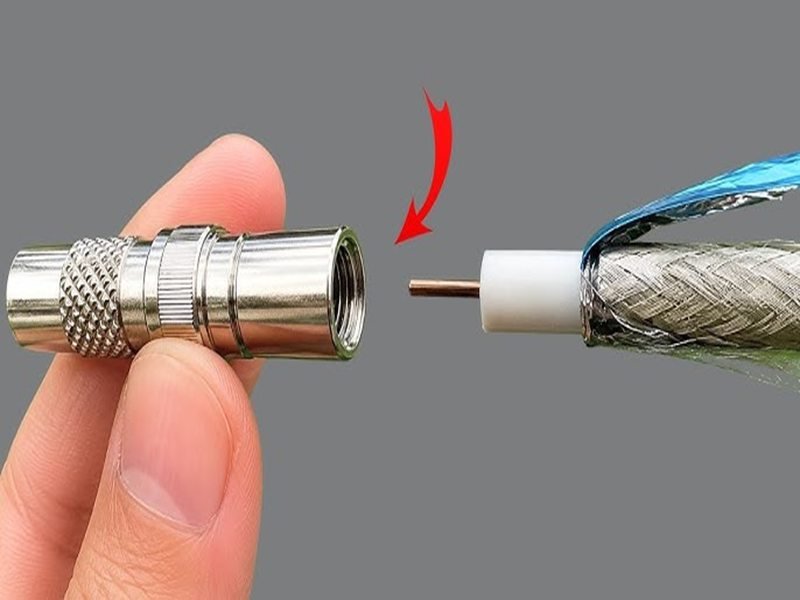
A cable usually fails at the place where people pay the least attention: the connector end. The wire may be correct. The connector may be the right model. The drawing may look perfect. But if the solder joint is weak, overheated, dirty, or poorly protected, the finished cable can still fail during testing, shipment, installation, or real use.
This is why learning how to solder wires to connectors is not only a repair skill. It is also a production skill, an engineering skill, and a purchasing decision. For a hobby project, a poor solder joint may only waste a few minutes. For an industrial machine, it can stop a production line. For medical equipment, it can affect signal stability. For RF, LVDS, USB, Ethernet, and sensor cables, the quality of the connector termination directly affects signal quality, shielding performance, bending life, and long-term reliability.
To solder wires to connectors correctly, prepare the wire first, strip the insulation without damaging the conductor, tin the wire properly, heat the connector terminal and conductor together, apply enough solder to form a clean joint, and protect the soldered area with insulation, strain relief, heat shrink, or overmolding. Good soldering is not about adding more solder. It is about controlled heat, clean metal surfaces, correct wire positioning, and reliable protection after soldering.
Many customers contact Sino-Conn after a cable problem has already appeared. Some send a photo and ask, “Can you make the same one?” Others send a connector part number but do not know the wire specification, pin assignment, voltage, current, shielding structure, or bending requirement. In real cable assembly work, soldering is only one part of the whole solution. The connector, wire, soldering process, inspection method, and application environment must match each other.
A strong solder joint does not look dramatic. It looks simple, clean, and controlled. But that small connection often decides whether a cable lasts for weeks or years.
What Is Soldering Wires to Connectors?
Soldering wires to connectors is the process of permanently joining a wire conductor to a connector terminal using molten solder to create both an electrical path and a mechanical connection. Although the process appears simple, the quality of this connection directly affects signal transmission, current carrying capability, vibration resistance, service life, and overall product reliability.

In practical applications, the solder joint is often the most critical part of the entire cable assembly. A connector may meet all specifications, and the cable may be manufactured using high-quality materials, but if the solder connection is weak, contaminated, improperly heated, or poorly protected, the entire assembly can fail.
For engineers, soldering affects electrical performance.
For OEM manufacturers, it affects production consistency.
For purchasing teams, it affects warranty claims and field failures.
For end users, it determines whether equipment works reliably day after day.
A properly soldered connector can remain stable for many years. A poorly soldered connector may fail during transportation, installation, or after only a few hundred operating cycles.
What Does Soldering Wires to Connectors Mean?
At the most basic level, soldering joins two conductive metal surfaces together.
The wire conductor and the connector terminal are heated simultaneously until solder flows between them and forms a metallurgical bond.
This bond serves two important functions:
- Electrical conductivity
- Mechanical retention
Many people assume solder acts like glue. In reality, good soldering relies on proper wetting of the metal surfaces. When the solder flows correctly, it creates a low-resistance path that allows power or signals to move efficiently through the connection.
The quality of this bond becomes increasingly important as applications become more demanding.
For example:
| Application | Main Concern |
|---|---|
| Power cable | Current carrying capability |
| Medical cable | Signal stability and reliability |
| RF cable | Impedance control and shielding |
| Ethernet cable | Data transmission quality |
| Industrial cable | Vibration resistance |
| Robotics cable | Continuous flex performance |
| Military cable | Reliability under harsh conditions |
The soldering requirements for a medical imaging cable are very different from those of a simple power cord.
Similarly, a high-frequency RF cable assembly may require far tighter soldering control than a low-speed signal cable.
This is why professional cable assembly manufacturers develop specific soldering procedures based on the application rather than treating all connectors the same.
Why Is Soldering Wires to Connectors Important?
The connector area is one of the highest stress points in any cable assembly.
Think about how cables are used in the real world:
- Plugged and unplugged repeatedly
- Bent near the connector
- Pulled during installation
- Exposed to vibration
- Subjected to temperature changes
- Packed and shipped globally
Most of these forces are concentrated near the termination area.
Industry experience consistently shows that cable failures frequently occur at or near the connector rather than in the middle of the cable.
The reason is simple.
The connector transition area contains multiple materials:
- Copper conductor
- Solder
- Connector terminal
- Insulation
- Housing material
- Strain relief structure
Each material expands, contracts, bends, and ages differently.
A poor solder joint creates a weak point that becomes more vulnerable over time.
The consequences of a failed solder connection can be significant.
| Failure Result | Potential Impact |
|---|---|
| Intermittent signal | Data loss or communication errors |
| Increased resistance | Heat generation |
| Open circuit | Complete device failure |
| Short circuit | Equipment damage |
| Loose connection | Unpredictable operation |
| Shielding interruption | EMI problems |
For a consumer product, this may be an inconvenience.
For industrial automation equipment, it may stop production.
For medical devices, it may interrupt critical monitoring functions.
For aerospace or defense systems, the consequences can be even more severe.
This is why connector soldering is treated as a controlled manufacturing process rather than a simple assembly task.
Where Is Soldering Wires to Connectors Used?
Soldered connectors can be found in almost every industry that uses electrical or electronic equipment.
The exact connector type, wire specification, and soldering method vary depending on the application.
Some of the most common industries include:
| Industry | Typical Cable Assemblies |
|---|---|
| Medical | Patient monitoring cables, diagnostic equipment cables |
| Industrial Automation | Sensor cables, machine control cables |
| Telecommunications | RF and antenna assemblies |
| Robotics | High-flex control cables |
| Automotive | Sensor and control harnesses |
| Aerospace | Signal and communication cables |
| Test Equipment | Instrumentation cables |
| Consumer Electronics | Audio, video, and USB assemblies |
At Sino-Conn, many projects involve custom cable assemblies that combine soldering with additional manufacturing processes such as shielding termination, overmolding, braiding, heat shrink installation, and strain relief integration.
A customer may initially ask:
“Can you make this cable?”
However, after reviewing the application, additional questions often arise:
- How many mating cycles are expected?
- Will the cable move continuously?
- Is shielding required?
- What voltage and current are involved?
- Will the assembly be exposed to oil or chemicals?
- Is waterproofing necessary?
- Does the customer require UL, RoHS, REACH, or PFAS compliance?
These factors all influence how the soldered connection should be designed.
How Does a Soldered Connection Compare with Other Termination Methods?
Customers frequently compare soldering and crimping when selecting a cable assembly solution.
Both methods are widely used.
Both can produce excellent results when executed correctly.
The best choice depends on the application.
| Factor | Soldering | Crimping |
|---|---|---|
| Customization | Excellent | Moderate |
| Prototype projects | Excellent | Good |
| Small production runs | Excellent | Good |
| High-volume automation | Moderate | Excellent |
| Repairability | Excellent | Limited |
| Tooling cost | Low | Higher |
| Complex custom pinouts | Excellent | Good |
| Fine-pitch applications | Excellent | Depends on terminal |
For many custom cable assemblies, soldering remains the preferred choice because it provides flexibility.
This is especially important when customers require:
- Non-standard cable lengths
- Unique pin assignments
- Mixed connector types
- Prototype quantities
- Specialized wire constructions
Since Sino-Conn operates primarily in the custom cable assembly market, soldering is frequently used to support highly customized customer requirements that standard off-the-shelf products cannot accommodate.
What Makes a Good Soldered Connector?
Not all solder joints are created equal.
A professional soldered connection should meet both electrical and mechanical requirements.
A good solder joint typically provides:
- Low electrical resistance
- Strong conductor retention
- Stable signal transmission
- Resistance to vibration
- Long-term durability
- Clean appearance
- Proper insulation clearance
The following characteristics are commonly associated with high-quality soldering:
| Characteristic | Desired Result |
|---|---|
| Solder flow | Smooth and uniform |
| Wetting | Complete coverage of conductor and terminal |
| Terminal condition | No movement or deformation |
| Wire position | Correctly seated |
| Insulation position | Proper distance from solder area |
| Strain relief | Present when required |
| Testing | Verified before shipment |
One often overlooked factor is strain relief.
Many solder joints fail not because the solder itself is defective, but because the cable is allowed to flex repeatedly at the termination point.
For this reason, many Sino-Conn cable assemblies incorporate additional protection measures such as:
- Heat shrink tubing
- Connector backshells
- Cable clamps
- Overmolding
- Braided protection sleeves
These features help distribute mechanical stress away from the soldered connection.
A Real Example from Custom Cable Assembly Manufacturing
A customer developing an industrial inspection system approached Sino-Conn with an intermittent signal problem.
The original supplier had copied the appearance of an existing cable assembly, but little attention had been given to the internal termination structure.
The connector looked identical from the outside.
However, after analysis, several issues were discovered:
- Insufficient strain relief
- Excessive solder wicking into the conductor
- Inconsistent shield termination
- No protection against repeated bending
The system operated correctly during initial testing.
After several weeks of machine movement, communication errors began appearing.
The solution was not simply re-soldering the connector.
The entire termination structure was redesigned.
The new design included:
- Optimized strip length
- Controlled solder volume
- Improved shield termination
- Enhanced strain relief
- Overmold protection
After implementation, the cable assembly successfully passed extended operational testing.
This example highlights an important lesson.
Soldering wires to connectors is not only about melting solder.
It is about creating a reliable connection that can survive the real-world conditions in which the cable will operate.
For this reason, experienced manufacturers focus not only on the solder joint itself but also on connector selection, cable structure, strain relief design, shielding requirements, inspection procedures, and long-term reliability. These factors work together to determine whether a cable assembly performs consistently throughout its service life.
What Do You Need for Soldering Wires to Connectors?
Many soldering failures are blamed on the operator, but the real cause often starts much earlier. The wrong soldering iron, incorrect solder type, unsuitable connector, poor wire preparation, or inadequate inspection tools can all lead to unreliable connections. Even an experienced technician will struggle to produce consistent results if the materials and equipment are not properly matched to the application.
For prototype projects, basic tools may be enough to create a working connection. However, for industrial equipment, medical devices, communication systems, robotics, automotive electronics, and OEM cable assemblies, the requirements become much stricter. A soldered connection must survive thousands of mating cycles, vibration, bending, temperature changes, transportation, and years of operation.
This is why professional cable assembly manufacturers invest heavily in process control, tooling, inspection equipment, and engineering validation before production begins.
Which Tools Are Required for Soldering Wires to Connectors?
The quality of a solder joint is heavily influenced by the tools used during assembly.
Many people focus only on the soldering iron, but a complete soldering workstation involves much more than that.
A professional setup generally includes the following equipment:
| Tool | Function | Why It Matters |
|---|---|---|
| Temperature-controlled soldering station | Provides stable heat | Prevents overheating and cold joints |
| Precision soldering tips | Matches connector size | Improves accuracy |
| Wire stripper | Removes insulation | Prevents conductor damage |
| Flush cutter | Cuts wires cleanly | Maintains wire quality |
| Connector fixture | Holds connector securely | Improves consistency |
| Tweezers | Positions conductors | Essential for small connectors |
| Heat gun | Shrinks tubing | Provides insulation and protection |
| Magnifier or microscope | Inspects solder joints | Detects small defects |
| Digital multimeter | Tests continuity | Confirms electrical connection |
| Pull tester | Verifies mechanical strength | Supports quality control |
One of the most common mistakes in low-cost production environments is using uncontrolled soldering irons.
Temperature fluctuations of 30°C to 80°C are not unusual with inexpensive equipment.
This can create:
- Cold solder joints
- Excessive oxidation
- Connector deformation
- Inconsistent solder flow
- Reduced reliability
For example, when soldering a miniature circular connector with closely spaced contacts, even a slight temperature variation can result in solder bridges or damage to the connector housing.
Professional cable assembly production uses calibrated soldering stations because consistency matters more than speed.
At Sino-Conn, soldering processes are controlled according to connector type, wire specification, and assembly requirements. This helps maintain consistent solder quality across prototypes and production orders.
Which Solder Works Best for Soldering Wires to Connectors?
Not all solder is the same.
The solder selected should match the product requirements, customer specifications, compliance standards, and operating environment.
The two most common categories are leaded solder and lead-free solder.
| Solder Type | Melting Point | Common Applications |
|---|---|---|
| Sn63/Pb37 | 183°C | Repair work, legacy equipment |
| SAC305 Lead-Free | 217°C | Commercial and export products |
| Silver-bearing solder | 221°C+ | Specialized applications |
| Low-temperature solder | 138°C-180°C | Heat-sensitive components |
Most international customers today require RoHS compliance, making lead-free solder the preferred choice.
However, lead-free solder introduces several challenges:
- Higher processing temperatures
- More precise temperature control
- Greater risk of overheating connectors
- Increased sensitivity to process variation
This is why solder selection cannot be separated from connector selection.
For example:
A standard PVC-insulated cable may tolerate different soldering conditions compared to a high-temperature fluoropolymer cable.
A medical-grade cable may require different process controls than an industrial power cable.
A fine-pitch USB-C connector may require different soldering techniques than a large circular connector.
Customers often focus on the connector brand and overlook solder specifications. In reality, both must work together.
For custom projects, Sino-Conn evaluates connector materials, wire construction, and application requirements before recommending a soldering solution.
Why Is Flux Important?
Flux is one of the least understood but most important materials in the soldering process.
Its primary function is to remove surface oxidation and improve solder wetting.
Without flux, solder may not bond properly to the conductor or connector terminal.
Poor flux performance can lead to:
- Weak joints
- Poor conductivity
- Increased resistance
- Unstable signal transmission
- Premature failure
The most common flux categories include:
| Flux Type | Typical Application |
|---|---|
| Rosin flux | General electronics |
| No-clean flux | Production assemblies |
| Water-soluble flux | High-cleanliness applications |
| Specialized flux | Difficult metals and coatings |
Many customers are surprised to learn that excessive flux can create problems as well.
Too much flux may leave residue inside the connector housing.
In high-density connectors, residue can affect appearance and create inspection challenges.
For medical and high-reliability applications, cleanliness requirements are often much stricter than standard commercial products.
A practical example comes from a customer developing a medical monitoring device. During validation testing, intermittent signal issues appeared despite correct connector selection and proper wire specifications.
Investigation showed that excessive flux residue remained trapped within the connector cavity after assembly. Process adjustments and improved cleaning procedures resolved the issue.
The soldering process remained unchanged. The flux control process was the real solution.
Which Connectors Are Best for Soldering Wires to Connectors?
The connector itself plays a major role in soldering success.
Some connectors are specifically designed for solder termination, while others are optimized for crimping or automated assembly.
Connector characteristics that influence soldering include:
- Pin spacing
- Terminal size
- Housing material
- Contact plating
- Solder cup design
- Heat resistance
- Shielding structure
The following connector types are commonly soldered:
| Connector Type | Soldering Difficulty |
|---|---|
| D-Sub solder cup | Easy |
| Circular connector | Moderate |
| Audio connector | Easy |
| RF connector | Moderate |
| USB connector | Difficult |
| Micro connector | Difficult |
| Medical connector | Moderate to difficult |
| High-density connector | Difficult |
Smaller connectors generally require greater process control.
For example, soldering a large 3-pin circular connector is relatively straightforward.
Soldering a USB Type-C connector with multiple closely spaced contacts requires significantly more precision.
Customers frequently ask whether original connectors or compatible alternatives should be used.
The answer depends on the application.
| Connector Option | Typical Advantages |
|---|---|
| Original connector | Approved specifications, established brand recognition |
| Compatible connector | Lower cost, faster delivery, greater flexibility |
| Custom connector solution | Optimized for specialized applications |
Many OEM customers focus heavily on cost control.
Many engineering teams focus more on performance and validation requirements.
A balanced approach often involves evaluating both original and compatible options before finalizing the design.
At Sino-Conn, customers can often choose between original-brand connectors and compatible alternatives depending on project requirements, lead time expectations, and budget targets.
What Wire Specifications Should Be Considered Before Soldering?
Selecting the correct wire is just as important as selecting the correct connector.
Even a perfect solder joint cannot compensate for the wrong wire construction.
Several wire parameters directly affect soldering performance:
| Parameter | Impact on Soldering |
|---|---|
| AWG size | Determines conductor volume |
| Strand count | Influences flexibility |
| Insulation material | Affects heat resistance |
| Shielding structure | Impacts termination method |
| Outer diameter | Affects connector compatibility |
| Voltage rating | Determines safety requirements |
| Temperature rating | Influences process limits |
For example:
A highly flexible robotics cable may use hundreds of fine copper strands.
A standard industrial cable may use fewer, thicker strands.
The robotics cable will generally require more careful conductor preparation and strain relief after soldering.
Likewise, shielded cable assemblies introduce additional complexity.
The assembler must properly terminate:
- Center conductors
- Drain wires
- Braided shields
- Foil shields
Improper shield termination can lead to EMI issues, signal degradation, and communication failures.
This is particularly important for:
- Ethernet cables
- RF cables
- LVDS cables
- USB cables
- Medical signal cables
- Industrial communication systems
At Sino-Conn, engineering reviews often focus on wire structure before production begins because many reliability issues originate from cable design rather than soldering technique.

Why Is Inspection Equipment Essential?
Many soldering defects are too small to see with the naked eye.
As connector sizes continue to decrease, inspection becomes increasingly important.
Common inspection equipment includes:
| Equipment | Purpose |
|---|---|
| Magnifier | Basic inspection |
| Digital microscope | Detailed defect analysis |
| Multimeter | Electrical verification |
| Continuity tester | Pinout confirmation |
| Pull tester | Mechanical verification |
| Functional test equipment | Application validation |
Inspection is particularly important for:
- Fine-pitch connectors
- Medical devices
- RF cable assemblies
- High-speed data cables
- Aerospace applications
- Military projects
At Sino-Conn, quality verification often includes multiple inspection stages:
- Process inspection during assembly.
- Finished product inspection.
- Final inspection before shipment.
This layered approach helps identify defects before products reach customers.
For custom cable assemblies, correcting a soldering issue during production may take minutes.
Correcting the same issue after shipment can cost hundreds or thousands of dollars in replacement costs, engineering time, and project delays.
What Do Professional Cable Assembly Manufacturers Prepare Before Soldering?
Professional manufacturers do not begin soldering immediately after receiving an order.
Preparation work usually includes:
- Reviewing customer drawings
- Verifying connector specifications
- Confirming wire specifications
- Checking pin assignments
- Reviewing shielding requirements
- Preparing fixtures
- Verifying material availability
- Establishing inspection criteria
Many customers initially provide only:
- A connector part number
- A cable sample
- A product photo
- A rough description
This is common in custom cable assembly projects.
Before manufacturing starts, Sino-Conn can assist customers by preparing drawings and confirming technical details.
Depending on project complexity, drawings can often be prepared within a few days, and urgent projects may be completed even faster.
This preparation stage helps prevent mistakes that are much more expensive to correct later.
Successful soldering is not simply about having a soldering iron and solder wire.
Reliable cable assemblies result from the combination of proper tools, correct materials, suitable connectors, appropriate wire specifications, effective inspection methods, and thorough engineering preparation. When all of these elements work together, the soldered connection becomes one of the strongest and most reliable parts of the entire cable assembly.
How to Solder Wires to Connectors Step by Step?
Soldering wires to connectors is often described as a simple process, but achieving a connection that remains reliable after thousands of operating hours is a different challenge. In many industries, the connector is the first place where failures occur because it experiences constant stress from vibration, pulling, bending, plugging, unplugging, and environmental exposure.
A solder joint that looks acceptable immediately after assembly may fail months later if the process is not controlled properly.
This is why professional cable assembly manufacturers focus on repeatable procedures rather than simply completing the soldering task as quickly as possible.
For custom cable assemblies, every variable matters:
- Wire type
- Conductor size
- Connector design
- Solder type
- Temperature setting
- Shielding structure
- Strain relief method
- Environmental conditions
When all of these factors are properly controlled, the result is a connection that can maintain electrical and mechanical stability throughout the product’s service life.
How Do You Prepare Wires Before Soldering Wires to Connectors?
Most soldering problems begin during wire preparation.
The solder joint is only as good as the conductor underneath it.
Before soldering begins, the wire should be checked against the drawing or specification.
Important items include:
| Item | Verification |
|---|---|
| Wire gauge | Correct AWG size |
| Wire color | Matches pin assignment |
| Wire length | Meets drawing requirements |
| Insulation condition | No cuts or damage |
| Conductor condition | Clean and untarnished |
| Shield structure | Properly prepared |
| Strip length | Matches terminal design |
One common mistake is damaging conductor strands during stripping.
Consider a 24 AWG stranded wire containing dozens of copper strands.
If several strands are accidentally cut during stripping, the effective conductor area decreases.
This can lead to:
- Reduced current capacity
- Increased resistance
- Lower mechanical strength
- Shorter flex life
The strip length must also be controlled carefully.
| Wire Size | Typical Strip Length |
|---|---|
| 28 AWG | 2-3 mm |
| 26 AWG | 2.5-3.5 mm |
| 24 AWG | 3-4 mm |
| 22 AWG | 4-5 mm |
| 18 AWG | 5-6 mm |
The exact dimension depends on the connector termination design.
Too little exposed conductor may prevent complete solder penetration.
Too much exposed conductor may increase the risk of short circuits.
At Sino-Conn, wire preparation dimensions are defined during the engineering stage before production begins. This ensures that every operator follows the same requirements rather than relying on personal judgment.
For shielded cable assemblies, preparation becomes more complex.
The assembler may need to prepare:
- Center conductor
- Drain wire
- Braided shield
- Foil shield
- Ground termination
Improper shield preparation is one of the most common causes of EMI-related issues in industrial and communication cable assemblies.
How Do You Tin Wires Before Soldering Wires to Connectors?
Tinning is the process of applying a thin layer of solder to the exposed conductor before final termination.
Although some applications do not require pre-tinning, it is widely used because it improves consistency and helps create stronger solder joints.
The process involves:
- Cleaning the conductor if necessary.
- Applying appropriate flux.
- Heating the conductor evenly.
- Allowing solder to flow through the strands.
- Removing excess solder.
The goal is not to create a large solder buildup.
The goal is to lightly coat the conductor while preserving flexibility.
A properly tinned wire should:
- Retain its original shape
- Show complete solder coverage
- Remain flexible
- Have no excess solder lumps
Poor tinning practices often create future problems.
| Tinning Defect | Potential Result |
|---|---|
| Excess solder | Stiff conductor |
| Insufficient solder | Weak bonding |
| Uneven coverage | Variable quality |
| Burned conductor | Reduced reliability |
| Oxidized surface | Poor wetting |
One frequently overlooked issue is solder wicking.
When solder travels too far into the conductor strands, the flexible wire becomes rigid.
This creates a stress concentration point near the connector.
During repeated bending, conductor fatigue often develops at this location.
This issue is particularly important for:
- Robotics cables
- Medical device cables
- Test equipment cables
- Portable devices
- High-flex industrial cables
A practical example involved a customer using cables in a robotic inspection system.
The original cable assembly experienced repeated failures after approximately 20,000 movement cycles.
Analysis showed excessive solder wicking inside the conductors.
After adjusting the tinning process and adding improved strain relief, cable life increased significantly.
How Do You Solder Connector Pins Correctly?
The actual soldering process requires careful control of heat, timing, and solder volume.
Many beginners focus on the solder itself.
Experienced technicians focus on heat transfer.
The connector terminal and conductor must be heated together.
The solder should flow onto the heated surfaces rather than being melted directly onto the soldering iron tip.
A standard soldering sequence includes:
| Step | Action |
|---|---|
| 1 | Secure connector in fixture |
| 2 | Verify pin location |
| 3 | Position wire correctly |
| 4 | Heat terminal and conductor |
| 5 | Apply solder |
| 6 | Allow solder to flow |
| 7 | Remove heat |
| 8 | Allow natural cooling |
| 9 | Inspect joint |
Temperature control is critical.
Typical soldering temperatures include:
| Solder Type | Typical Temperature Range |
|---|---|
| Leaded solder | 320-350°C |
| Lead-free solder | 350-400°C |
The connector material also affects soldering conditions.
For example:
| Connector Material | Heat Resistance |
|---|---|
| Standard PVC | Moderate |
| Nylon | Good |
| PBT | Very good |
| LCP | Excellent |
| High-temperature thermoplastics | Excellent |
Applying excessive heat can cause:
- Connector deformation
- Contact movement
- Insulation damage
- Plating degradation
Applying insufficient heat can cause:
- Cold joints
- Incomplete wetting
- Increased resistance
- Premature failure
The best solder joints are usually simple and controlled.
A smooth solder fillet often performs better than a large solder buildup.
More solder does not necessarily create a stronger connection.
How Do You Inspect the Solder Joint After Soldering?
Inspection should occur immediately after soldering.
Detecting a defect before connector assembly is much easier than discovering it after shipment.
Visual inspection typically focuses on:
| Inspection Item | Desired Result |
|---|---|
| Solder surface | Smooth and uniform |
| Wetting | Complete coverage |
| Wire position | Correctly seated |
| Insulation location | Proper spacing |
| Connector condition | No damage |
| Adjacent pins | No solder bridging |
A high-quality solder joint generally shows:
- Smooth appearance
- Complete wetting
- Consistent shape
- No cracking
- No voids
- No discoloration
Common defects include:
| Defect | Risk |
|---|---|
| Cold joint | Intermittent failure |
| Solder bridge | Short circuit |
| Excess solder | Mechanical stress |
| Insufficient solder | Weak connection |
| Burned insulation | Reliability concerns |
| Terminal movement | Connector failure |
For miniature connectors such as USB-C, micro coax connectors, and fine-pitch board connectors, visual inspection alone may not be sufficient.
Magnification equipment is often required to identify subtle defects.
At Sino-Conn, visual inspection is typically combined with continuity verification and pinout testing before assemblies proceed to final inspection.
How Do You Protect Connections After Soldering Wires to Connectors?
A solder joint is vulnerable if it remains exposed.
Protection after soldering is just as important as the soldering process itself.
The purpose of post-solder protection is to reduce stress on the connection.
Common protection methods include:
| Protection Method | Main Benefit |
|---|---|
| Heat shrink tubing | Insulation |
| Dual-wall heat shrink | Insulation and sealing |
| Connector backshell | Mechanical support |
| Cable clamp | Strain relief |
| Potting | Moisture protection |
| Overmolding | Enhanced durability |
| Braided sleeve | Abrasion resistance |
Many field failures occur because the cable is allowed to bend directly at the solder joint.
Repeated movement gradually weakens the conductor.
This is particularly important in:
- Industrial automation
- Robotics
- Medical equipment
- Military systems
- Portable instruments
Overmolding has become increasingly popular because it improves both durability and appearance.
A properly designed overmold distributes bending stress over a larger area instead of concentrating it at the solder joint.
Several Sino-Conn customers have extended cable service life significantly by changing only the strain relief design while keeping the same connector and wire structure.
How Do Professional Manufacturers Ensure Consistent Results?
One successful prototype does not guarantee successful production.
The challenge is producing the same quality repeatedly.
Professional cable assembly manufacturers achieve this through process control.
Key controls typically include:
| Process Control | Purpose |
|---|---|
| Approved drawings | Define requirements |
| Work instructions | Standardize assembly |
| Temperature control | Maintain consistency |
| Material verification | Prevent substitutions |
| In-process inspection | Detect issues early |
| Electrical testing | Verify functionality |
| Final inspection | Confirm shipment quality |
For custom cable assemblies, production drawings often define:
- Connector orientation
- Wire colors
- Pin assignments
- Strip dimensions
- Soldering requirements
- Shield termination
- Strain relief structure
- Label positions
At Sino-Conn, customers receive drawing approval before production begins.
This helps prevent misunderstandings and ensures the finished assembly matches the intended design.
Many customers initially provide only:
- A connector model
- A cable sample
- A photograph
- A rough sketch
Engineering review transforms that information into a manufacturable cable assembly.
This process helps reduce errors, improve consistency, and shorten development cycles.
Reliable soldering is not the result of a single good operator or a single successful sample.
It is the result of proper wire preparation, controlled tinning, accurate soldering, careful inspection, effective strain relief, and consistent manufacturing processes working together. When these elements are managed correctly, the soldered connector becomes one of the most dependable parts of the entire cable assembly.
What Mistakes Should You Avoid When Soldering Wires to Connectors?
Most connector failures are not caused by the connector itself. They are caused by small mistakes during assembly that may not be visible immediately after production. A cable can pass continuity testing, look visually acceptable, and even work during initial installation, yet still fail weeks or months later because of an issue that originated during soldering.
For OEM manufacturers, these failures can lead to warranty claims, production delays, and customer complaints.
For engineers, they can result in repeated debugging and field service visits.
For purchasing teams, they can create unexpected replacement costs and supply chain disruptions.
The challenge is that many soldering defects are hidden inside connector housings, backshells, heat shrink tubing, or overmolded structures. Once the cable is assembled, identifying the root cause becomes significantly more difficult and expensive.
This is why experienced cable assembly manufacturers focus on preventing defects rather than correcting them after shipment.
Why Do Soldering Wires to Connectors Fail?
Solder joint failures usually occur because one or more process variables were not properly controlled.
In real-world cable assembly manufacturing, the most common causes include:
- Poor wire preparation
- Incorrect soldering temperature
- Improper solder quantity
- Insufficient strain relief
- Oxidized materials
- Connector damage
- Poor inspection procedures
- Incorrect cable design
The table below summarizes the most common failure sources:
| Failure Cause | Typical Result |
|---|---|
| Damaged conductor strands | Reduced mechanical strength |
| Cold solder joint | Intermittent electrical connection |
| Excess solder | Stiff termination area |
| Insufficient solder | Weak bond |
| Overheating | Connector deformation |
| Poor strain relief | Conductor fatigue |
| Incorrect shield termination | EMI problems |
| Oxidized conductor | Poor solder wetting |
| Contamination | High resistance connection |
| Incorrect pin assignment | Functional failure |
One important point that many customers overlook is that a cable does not fail only because of electrical issues.
Many failures begin as mechanical problems.
For example, if a soldered wire experiences repeated bending at the connector exit point, microscopic cracks may gradually develop inside the conductor. The cable may work normally for hundreds or even thousands of cycles before the failure becomes noticeable.
This is particularly common in:
- Robotics
- Industrial automation
- Medical equipment
- Test instruments
- Portable electronics
A connector that remains stationary may last for years.
The same connector used in a moving application may fail much sooner if the termination design is not optimized.
Why Are Cold Solder Joints One of the Most Common Problems?
Cold solder joints remain one of the most frequent causes of field failures.
A cold joint occurs when the solder does not properly bond to both the conductor and the terminal.
This usually happens because:
- The temperature is too low
- The heating time is insufficient
- The conductor is contaminated
- The connector surface is oxidized
- The solder is applied incorrectly
Cold joints often create intermittent problems rather than complete failures.
The cable may function correctly under certain conditions but fail when:
- Vibrated
- Bent
- Pulled
- Heated
- Cooled
This makes troubleshooting extremely difficult.
Common visual characteristics include:
| Indicator | Description |
|---|---|
| Dull surface | Lack of proper solder flow |
| Grainy appearance | Poor metallurgical bond |
| Uneven shape | Inconsistent wetting |
| Cracking | Weak mechanical structure |
In high-speed communication systems such as Ethernet, USB, LVDS, and RF assemblies, even a small increase in contact resistance can affect performance.
For customers using industrial control systems, a cold joint may result in intermittent communication errors that appear random and difficult to reproduce.
At Sino-Conn, operators are trained to evaluate solder wetting and joint formation rather than focusing only on appearance. Electrical testing and inspection help identify potential issues before shipment.
Why Is Too Much Solder a Problem?
Many people assume that more solder creates a stronger connection.
In reality, excessive solder often creates additional risks.
A properly soldered joint requires enough solder to create a reliable bond, but not so much that it changes the mechanical characteristics of the cable.
Excessive solder can cause:
| Problem | Impact |
|---|---|
| Solder bridging | Short circuits |
| Increased stiffness | Reduced flex life |
| Heat concentration | Localized stress |
| Difficult inspection | Hidden defects |
| Connector contamination | Assembly issues |
One particularly important issue is solder wicking.
This occurs when molten solder travels too far into the conductor strands.
The flexible stranded wire gradually becomes rigid.
As the cable bends during use, stress concentrates at the transition between the rigid and flexible sections.
Over time, conductor fatigue develops.
This issue frequently appears in:
- Robotic systems
- Moving machinery
- Medical carts
- Portable equipment
- Handheld instruments
A customer in the automation industry once experienced repeated failures in a cable used on a moving inspection arm.
The connector itself was not defective.
The solder joints passed continuity testing.
However, excessive solder had migrated deep into the conductor strands.
The cable failed after approximately 30,000 movement cycles.
After adjusting the solder volume and improving strain relief, the service life increased significantly.
The lesson is simple:
More solder does not automatically mean better reliability.
How Can Overheating Damage Connectors?
Temperature control is one of the most important factors during soldering.
Connectors contain materials with different thermal characteristics.
These may include:
- Copper alloy contacts
- Gold plating
- Nickel plating
- Plastic housings
- Insulators
- Strain relief components
Excessive heat can damage any of these elements.
Common overheating issues include:
| Damage Type | Result |
|---|---|
| Housing deformation | Misaligned contacts |
| Terminal movement | Poor mating performance |
| Insulation shrinkage | Electrical risk |
| Plating damage | Reduced conductivity |
| Burned wire insulation | Reduced reliability |
Miniature connectors are especially sensitive.
For example, USB-C connectors contain numerous closely spaced contacts within a compact housing.
Applying excessive heat can easily affect contact positioning.
High-density medical connectors and RF connectors often present similar challenges.
Professional cable assembly manufacturers typically establish temperature ranges based on:
- Connector material
- Wire size
- Terminal mass
- Solder type
This is one reason why temperature-controlled soldering stations are preferred over basic soldering irons.
At Sino-Conn, soldering parameters are adjusted according to the connector and wire combination being used rather than applying a single temperature to every project.
Why Is Poor Strain Relief a Hidden Failure Risk?
Many cable failures are blamed on soldering when the actual problem is insufficient strain relief.
A solder joint may be electrically perfect but still fail mechanically.
The connector termination area experiences significant stress during normal use.
Common stress sources include:
- Cable bending
- Pulling force
- Vibration
- Twisting
- Repeated movement
Without proper protection, these forces act directly on the conductor.
The result is often conductor fatigue rather than solder failure.
The following protection methods help reduce risk:
| Protection Method | Main Benefit |
|---|---|
| Heat shrink tubing | Basic support |
| Dual-wall heat shrink | Support and sealing |
| Cable clamp | Force distribution |
| Backshell | Connector protection |
| Overmolding | Improved durability |
| Potting | Environmental protection |
One customer developing a medical device experienced repeated failures near the connector.
Initial investigations focused on solder quality.
After detailed analysis, the root cause was identified as insufficient support where the cable exited the connector.
The solder joints were acceptable.
The mechanical design was not.
Adding an overmold structure significantly increased cable life without changing the connector or soldering process.
How Do Incorrect Pin Assignments Cause Expensive Problems?
Not every soldering failure is caused by poor workmanship.
Incorrect pin assignments can create equally serious issues.
Common causes include:
- Misreading drawings
- Connector orientation errors
- Revision control problems
- Incomplete documentation
- Assembly mistakes
Consequences may include:
| Issue | Result |
|---|---|
| Reversed polarity | Equipment damage |
| Signal crossover | Communication failure |
| Grounding errors | EMI issues |
| Incorrect sensor wiring | Functional problems |
The financial impact can be substantial.
A wiring error discovered before shipment may take minutes to correct.
The same error discovered after installation can require:
- Troubleshooting
- Product returns
- Replacement shipments
- Site visits
- Production delays
This is why engineering drawings and pinout verification are so important.
At Sino-Conn, custom cable assemblies are typically verified against approved drawings before production and tested after assembly to reduce wiring risks.
How Do You Identify Soldering Problems Before Shipment?
Finding defects before shipment is far less expensive than correcting them afterward.
Several inspection methods are commonly used:
| Inspection Method | Purpose |
|---|---|
| Visual inspection | Detect visible defects |
| Continuity testing | Verify electrical paths |
| Pinout verification | Confirm wiring accuracy |
| Resistance measurement | Check connection quality |
| Pull testing | Verify mechanical strength |
| Functional testing | Validate performance |
Visual inspection alone is not enough.
A connector may appear acceptable while still containing:
- Internal cracks
- Weak wetting
- Excessive resistance
- Mechanical weaknesses
This is why multiple inspection stages are often used in professional manufacturing.
At Sino-Conn, many cable assemblies undergo:
- In-process inspection.
- Finished product inspection.
- Final inspection before shipment.
This layered approach helps reduce the likelihood of defects reaching customers.
What Are the Most Expensive Soldering Mistakes for Customers?
The most expensive mistakes are not always the most obvious.
A visible solder bridge can often be corrected immediately.
The real cost comes from defects that escape detection.
Examples include:
| Hidden Problem | Potential Cost |
|---|---|
| Intermittent connection | Service calls |
| Shield termination issue | Communication failures |
| Weak conductor retention | Field replacement |
| Excessive solder wicking | Reduced flex life |
| Incorrect pinout | Equipment downtime |
| Connector overheating | Product recalls |
For an OEM purchasing several thousand cable assemblies annually, even a small defect rate can become expensive.
Consider a 1% field failure rate on a production run of 10,000 assemblies.
That represents:
- 100 failed units
- Customer support costs
- Shipping costs
- Replacement manufacturing costs
- Potential reputation damage
The actual cost often exceeds the original value of the cable itself.
This is why experienced manufacturers focus heavily on process control, inspection, engineering review, and reliability testing.
A reliable soldered connection is not achieved by chance. It is the result of proper preparation, controlled soldering parameters, careful inspection, correct strain relief design, and a thorough understanding of how the cable will be used after it leaves the factory. Preventing mistakes during manufacturing is always less expensive than solving failures in the field.
How Can Custom Cable Assemblies Improve Soldering Wires to Connectors?
Many people think soldering quality depends entirely on the technician performing the work. In reality, the reliability of a soldered connection is heavily influenced by the cable assembly design itself. A well-designed cable assembly can make soldering easier, improve consistency, reduce failure rates, and significantly extend product life. On the other hand, a poorly designed assembly can create ongoing reliability problems even when the soldering process is performed correctly.
This is one of the biggest differences between purchasing a standard off-the-shelf cable and developing a custom cable assembly. Standard products are designed for general applications. Custom cable assemblies are designed around a specific environment, connector, cable structure, installation requirement, and performance target.
For customers developing medical devices, industrial equipment, robotics systems, test instruments, communication equipment, or OEM products, the design decisions made before production often have a greater impact on reliability than the soldering operation itself.
How Does Connector Selection Affect Soldering Wires to Connectors?
The connector is the foundation of every soldered connection.
If the connector is not suitable for the cable structure, wire size, or application environment, even perfect soldering may not provide long-term reliability.
Many customers select connectors based primarily on:
- Appearance
- Brand familiarity
- Existing product design
- Cost
However, professional cable assembly design evaluates additional factors.
| Connector Feature | Impact on Soldering |
|---|---|
| Solder cup size | Determines conductor fit |
| Pin spacing | Influences solder bridge risk |
| Contact plating | Affects solder wetting |
| Housing material | Determines heat resistance |
| Cable entry size | Affects strain relief options |
| Shield termination design | Influences EMI performance |
| Contact current rating | Determines wire gauge selection |
For example, a connector designed for 24 AWG wire may create difficulties when used with 18 AWG conductors.
The assembler may be forced to modify the termination process, increasing variability and reducing reliability.
Likewise, some miniature connectors have extremely tight pin spacing.
While compact connectors may reduce product size, they also increase:
- Soldering complexity
- Inspection difficulty
- Rework time
- Production cost
In many projects, selecting a slightly larger connector can improve assembly quality and long-term reliability without significantly affecting the overall product size.
This is one reason why Sino-Conn engineering reviews often begin with connector evaluation before discussing soldering details.
How Does Cable Selection Influence Solder Joint Reliability?
Many soldering discussions focus only on connectors.
The wire itself is equally important.
Different wire constructions behave differently during soldering.
For example:
| Cable Type | Soldering Considerations |
|---|---|
| Standard PVC cable | General-purpose applications |
| High-flex cable | Requires careful strain relief |
| Shielded cable | Additional shield termination |
| Medical cable | Material compatibility requirements |
| RF coaxial cable | Precise conductor preparation |
| Silicone cable | Higher heat resistance |
| TPE cable | Enhanced flexibility |
A common mistake is using standard cable in high-flex applications.
The solder joint may pass inspection and perform well initially.
However, repeated movement can cause conductor fatigue near the termination point.
Applications with high movement include:
- Robotics
- Automated inspection systems
- Medical carts
- Laboratory equipment
- Moving machine components
In these applications, selecting a high-flex cable structure can dramatically improve service life.
For example, a standard stranded conductor may contain several dozen copper strands.
A high-flex conductor may contain hundreds of ultra-fine strands.
The increased strand count improves flexibility and reduces stress concentration near the solder joint.
At Sino-Conn, cable selection is reviewed alongside connector selection to ensure both components work together as a complete system.
How Can Shielding Design Improve Soldered Connections?
Many modern cable assemblies carry sensitive signals.
Examples include:
- Ethernet communication
- USB data transmission
- LVDS displays
- Medical monitoring signals
- RF communication
- Industrial control systems
In these applications, signal quality depends on more than the conductor itself.
Shield termination becomes critical.
Improper shielding can lead to:
- Electromagnetic interference
- Signal degradation
- Communication errors
- Increased noise
- Reduced transmission distance
Common shielding structures include:
| Shield Type | Application |
|---|---|
| Aluminum foil shield | Data cables |
| Braided copper shield | Industrial cables |
| Spiral shield | Flexible applications |
| Double shield | High-noise environments |
| Foil + braid shield | High-performance systems |
The shield must be terminated properly at the connector.
Simply connecting the center conductor is often not enough.
A poorly terminated shield can create problems even when the solder joints themselves appear perfect.
One industrial customer experienced intermittent Ethernet communication failures despite using high-quality connectors and cable.
After investigation, the issue was traced to inconsistent shield termination inside the connector backshell.
Once the shielding structure was redesigned, communication stability improved significantly.
The connector remained unchanged.
The cable remained unchanged.
Only the shield termination method was improved.
Why Does Strain Relief Matter More Than the Solder Joint Itself?
One of the most surprising lessons in cable assembly manufacturing is that many solder joint failures are not actually solder failures.
The electrical connection remains intact.
The conductor breaks because of mechanical stress.
Every time a cable moves, force is transferred somewhere.
Without proper strain relief, that force concentrates directly at the solder joint.
The result is conductor fatigue.
The table below shows common protection methods:
| Method | Function |
|---|---|
| Heat shrink | Basic insulation |
| Dual-wall heat shrink | Sealing and insulation |
| Backshell | Connector support |
| Cable clamp | Force distribution |
| Potting | Environmental protection |
| Overmolding | Enhanced durability |
| Braided sleeve | Abrasion resistance |
Overmolding is particularly effective because it creates a gradual transition between the cable and connector.
Instead of concentrating stress at one point, the load is distributed over a larger area.
This can significantly increase cable life in dynamic applications.
Real Customer Example
A customer manufacturing automated inspection equipment experienced frequent failures near a circular connector.
The solder joints consistently passed inspection.
The wire specifications met requirements.
The connector was properly selected.
However, repeated cable movement caused conductor fatigue at the connector exit.
Sino-Conn redesigned the strain relief structure and added an overmolded transition.
The cable life increased substantially without changing the connector or wire specification.
The improvement came from mechanical design rather than soldering technique.
How Do Engineering Drawings Reduce Soldering Problems?
A surprising number of cable assembly issues originate from communication errors rather than manufacturing mistakes.
Customers may provide:
- A photo
- An old sample
- A connector model number
- A hand-drawn sketch
Without clear documentation, assumptions can lead to problems.
Examples include:
- Incorrect pin assignments
- Reversed connector orientation
- Wrong wire colors
- Shielding errors
- Length discrepancies
A proper engineering drawing defines:
| Drawing Item | Purpose |
|---|---|
| Connector model | Part identification |
| Pin assignment | Wiring accuracy |
| Wire specification | Performance definition |
| Cable length | Installation compatibility |
| Shielding structure | EMI control |
| Strain relief design | Mechanical protection |
| Label requirements | Product identification |
| Overmold dimensions | Assembly consistency |
At Sino-Conn, production drawings are typically prepared and approved before manufacturing begins.
Many customers find that this process identifies issues that would otherwise appear only after installation.
For custom cable assemblies, preventing a mistake before production is significantly less expensive than correcting it afterward.
How Do Original and Compatible Connectors Affect Project Success?
One question frequently raised by customers concerns original versus compatible connectors.
Both options can be effective depending on the application.
| Connector Type | Typical Advantages |
|---|---|
| Original connector | Brand approval, established qualification |
| Compatible connector | Lower cost, faster delivery |
| Custom solution | Application-specific optimization |
Many OEM customers prioritize cost and lead time.
Engineering teams often prioritize validation requirements and performance.
The optimal solution depends on:
- Project stage
- Production volume
- Industry requirements
- Customer specifications
- Budget constraints
For example:
A medical device manufacturer may require original connectors because regulatory documentation has already been approved.
An industrial automation customer may choose compatible connectors to reduce costs while maintaining performance.
Sino-Conn frequently helps customers compare both options so they can make informed decisions based on technical and commercial requirements.
How Does Professional Manufacturing Improve Soldering Consistency?
One successful prototype does not guarantee successful production.
Producing one cable and producing 10,000 identical cables are very different challenges.
Professional cable assembly manufacturing focuses on consistency.
Key elements include:
| Manufacturing Control | Benefit |
|---|---|
| Material verification | Prevents substitutions |
| Approved drawings | Ensures accuracy |
| Controlled soldering parameters | Improves consistency |
| Operator training | Reduces variation |
| Process inspection | Identifies issues early |
| Electrical testing | Verifies functionality |
| Final inspection | Confirms shipment quality |
For custom cable assemblies, consistency is often more important than the soldering operation itself.
A supplier may produce an excellent sample.
The real challenge is maintaining the same quality across every production batch.
At Sino-Conn, customers range from engineers ordering a single prototype to OEM manufacturers requiring thousands of assemblies. To support both scenarios, the same engineering review, drawing approval, material verification, and inspection philosophy is applied before production begins.

Why Do Custom Cable Assemblies Deliver Better Long-Term Reliability?
A custom cable assembly is not simply a cable with different connectors.
It is a solution designed around the actual operating environment.
Factors considered during development may include:
- Voltage and current requirements
- Signal type
- Flexibility requirements
- Connector mating cycles
- Installation space
- EMI environment
- Temperature range
- Chemical exposure
- Waterproofing requirements
- Regulatory compliance
Each factor influences how the soldered connection should be designed and protected.
When connector selection, wire specification, shielding design, strain relief, and manufacturing controls are optimized together, the solder joint becomes part of a highly reliable system rather than an isolated connection.
This is why many customers eventually move away from standard catalog cables and choose custom cable assemblies. The goal is not simply to solder wires to connectors. The goal is to create a cable assembly that performs reliably throughout the entire life of the product, whether that product operates in a factory, hospital, laboratory, vehicle, communication system, or industrial automation environment.
Frequently Asked Questions
What Is the Best Temperature for Soldering Wires to Connectors?
Most connector soldering applications use temperatures between 320°C and 400°C depending on solder type, connector size, terminal mass, and wire gauge. The correct temperature should allow proper wetting without damaging the connector housing or insulation.
Is Soldering Wires to Connectors Better Than Crimping?
Neither method is universally better.
Soldering provides excellent flexibility for custom cable assemblies and low-volume projects.
Crimping offers excellent repeatability for high-volume manufacturing when the correct terminals and tooling are used.
The best choice depends on the application.
Can Lead-Free Solder Be As Reliable As Leaded Solder?
Yes.
When the process is properly controlled, lead-free solder can provide excellent long-term reliability while meeting RoHS requirements.
However, lead-free solder generally requires tighter temperature control because of its higher melting point.
Why Do Soldered Wires Break Near the Connector?
The most common cause is insufficient strain relief.
Repeated bending concentrates stress near the termination point.
Proper cable support, backshells, overmolding, and strain relief structures can significantly extend service life.
How Can I Verify a Soldered Connector Is Reliable?
Several inspection methods are commonly used:
- Visual inspection
- Continuity testing
- Resistance measurement
- Pull testing
- Functional testing
Combining multiple verification methods provides greater confidence than relying on appearance alone.
Can Sino-Conn Help If I Only Have a Sample or Photo?
Yes.
Many projects begin with only:
- An existing sample
- A product photo
- A connector model number
- A basic application description
The engineering team can assist with identifying connector types, cable specifications, pin assignments, shielding structures, and manufacturing requirements before production begins.
Request a Custom Cable Assembly Quote
Whether you need a single prototype, a low-volume engineering sample, or large-scale production, the quality of the soldered connection plays a major role in the performance of the finished cable assembly.
If you are developing:
- Medical device cables
- Industrial automation cables
- RF coaxial cable assemblies
- Ethernet cable assemblies
- USB cable assemblies
- Sensor cables
- Robotics cables
- Custom wire harnesses
Sino-Conn can help transform your requirements into a manufacturable solution.
Simply send us:
- A connector part number
- A drawing
- A BOM
- A cable sample
- A photo
- Or even a rough concept
Our engineering team can assist with connector selection, cable design, pinout verification, shielding recommendations, drawing preparation, and production planning.
From rapid prototypes to volume manufacturing, Sino-Conn provides customized cable assembly solutions designed for reliability, consistency, and long-term performance.