Skip to content
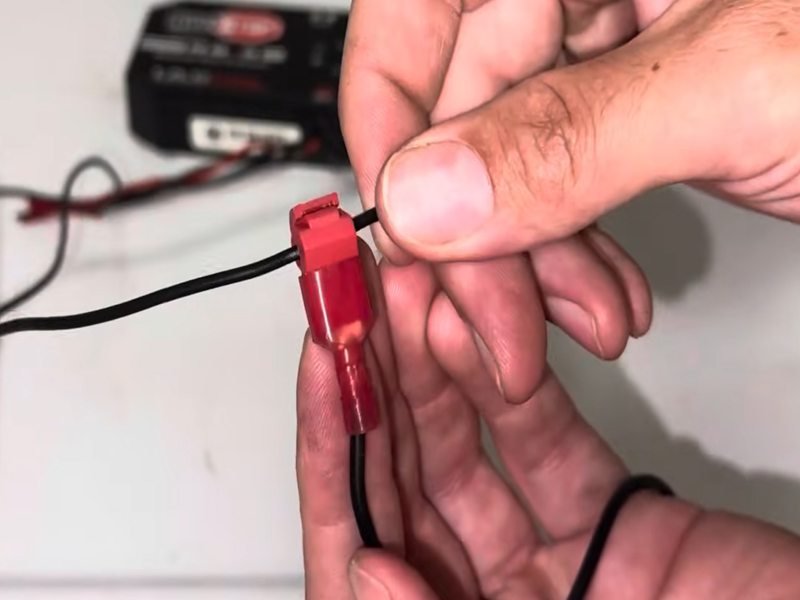
A T tap wire connector looks like a shortcut, and that is exactly why so many projects get into trouble with it. On paper, the idea is attractive: no need to cut the main wire, no need to strip it, and no need to rebuild the harness just to add one more connection point. For low-voltage wiring, vehicle accessories, LED systems, alarms, and simple field modifications, that sounds efficient. In real use, though, the result depends much less on the connector’s appearance and much more on wire size, conductor position, crimp force, and installation consistency.
A T tap wire connector is used to splice into an existing wire by piercing the insulation and creating a contact point for a second wire. To wire it correctly, the connector must match the wire gauge, the main wire must sit fully in the channel, the crimp must be complete and even, and the finished splice must be checked with both visual inspection and a pull test. When those basics are done well, a T tap connector can be a practical option for quick low-voltage connections. When they are rushed, mismatched, or repeated across many units without process control, failure rates go up fast.
One customer who contacted Sino-Conn started with a simple complaint: “Some units work, some don’t, and we are using the same connector.” After checking the harness photos and failed samples, the issue turned out not to be the connector model alone. Some wires were slightly off-center, some were crimped more deeply than others, and some secondary wires were not seated fully. The problem was not one big error. It was small variation repeated across dozens of assemblies. That is why this topic deserves more than a short how-to explanation.
What Are T Tap Wire Connectors
T tap wire connectors are designed for one specific purpose: adding a branch connection to an existing wire without cutting it. That sounds simple, and in many cases it is. But once you look at how they actually work in real projects, you start to see why results can vary so much from one installation to another.

A T tap connector is a type of insulation displacement connector (IDC). Instead of stripping the main wire, a metal blade inside the connector cuts through the insulation and presses against the conductor. A second wire is then plugged into the connector, creating a branch circuit.
This method saves time, but it also introduces variables that are easy to overlook.
What Do T Tap Wire Connectors Do
The function of a T tap connector can be broken down into three steps:
- access the conductor without cutting the wire
- create electrical contact through pressure
- allow a secondary wire to draw power or signal
From a user’s perspective, the benefit is clear:
- no need to cut or strip the main wire
- quick installation
- minimal tools required
But what actually happens inside the connector is more important.
When the connector is closed:
- the metal blade pierces the insulation
- it presses against the conductor
- electrical contact is created through pressure
This is not a fixed connection like crimping.
It is a pressure-based contact.
That means performance depends on:
- how deep the blade penetrates
- how well the wire is positioned
- how stable the pressure remains over time
A customer working on LED lighting systems once shared that their installations passed initial testing but started failing after a few weeks. After opening the connectors, they found:
- some blades had only partially reached the conductor
- some wires were slightly off-center
Even though everything looked correct externally, the internal contact was not consistent.
That is the key point:
T tap connectors do not guarantee connection quality.
They rely on correct installation.
here Are T Tap Wire Connectors Used
T tap connectors are mainly used in situations where speed and convenience are more important than precision.
You will often see them in:
| Application | Example | Reason |
|---|---|---|
| Automotive aftermarket | Adding lights, cameras, sensors | No need to cut factory wiring |
| LED installations | Branch connections for strips | Fast setup |
| Low-voltage systems | Alarm, control signals | Simple wiring expansion |
| Maintenance work | Temporary fixes or upgrades | Easy to install |
They are rarely used in:
- industrial automation systems
- medical devices
- high-frequency communication systems
- high-reliability equipment
The reason is not complexity.
It is control.
In one project, a European OEM used T tap connectors during early testing. When production increased:
- installation quality varied between operators
- inspection became difficult
- failure rate increased to around 5%
After switching to pre-assembled cable harnesses:
- defect rate dropped below 1%
This pattern is common.
T tap connectors work well when:
- quantity is low
- installation is controlled
- performance requirements are moderate
They become less suitable when:
- production scales
- consistency becomes critical
Are T Tap Wire Connectors Reliable
They can be reliable, but only when several conditions are controlled at the same time.
From actual project feedback, reliability depends on:
| Factor | Good Condition | Risk |
|---|---|---|
| Wire size match | Correct connector selection | Weak or incomplete contact |
| Wire position | Centered in connector | Partial penetration |
| Crimp force | Fully closed | Loose connection |
| Environment | Stable conditions | Vibration or heat causes failure |
Customers often expect immediate failure if something is wrong.
In reality, most issues appear later.
Common feedback includes:
- connection works initially, then becomes unstable
- intermittent signal or power
- heating at connection points
- difficult troubleshooting
A North American automotive installer tracked connection performance over time:
- initial failure rate: ~2%
- after vibration exposure: increased to ~6%
The main cause:
- slight variation in installation
- reduced contact pressure over time
This kind of problem is difficult to detect during installation.
Another challenge is inspection.
With T tap connectors:
- you cannot see the internal contact
- you cannot easily verify penetration depth
This makes quality control difficult, especially in batch production.
That is why many customers start rethinking their approach after scaling.
At Sino-Conn, most inquiries related to T tap connectors come from customers who already tried them and encountered issues such as:
- inconsistent performance
- difficulty maintaining quality
- high rework rates
Instead of focusing on the connector itself, the solution usually involves:
- defining the connection structure
- standardizing materials
- controlling the assembly process
From a project lifecycle perspective:
- Early stage → T tap connectors are practical
- Mid-stage → inconsistencies start appearing
- Scaled production → need for controlled solution
This transition is not theoretical.
It comes from real problems customers experience in their projects.
Understanding what T tap connectors are is important.
Understanding their limitations is what helps improve the final product.
How to Wire Splice T Tap Wire Connectors
Wiring a T tap connector looks simple on the surface, but the actual result depends on how carefully each step is handled. In many projects, the connection works during installation and even passes a quick test. The problems usually appear later—when the system is under load, exposed to vibration, or used over time.

Most of the issues we see from customers are not caused by using the wrong product. They come from small differences in how the connector is installed. That is why the process matters more than the connector itself.
A reliable T tap splice comes down to four things:
- correct wire selection
- proper positioning
- controlled crimping
- final inspection
Each one needs to be done consistently.
How to Prepare Wires for T Tap Wire Connectors
Preparation is often underestimated because the main wire does not need to be stripped. But in practice, this step determines whether the metal blade inside the connector will actually make proper contact.
Before installing the connector, a few checks should always be done:
| Preparation Point | What to Check | Why It Matters |
|---|---|---|
| Wire gauge | Match connector range | Ensures blade reaches conductor |
| Insulation thickness | Not too thick or too soft | Affects penetration depth |
| Wire condition | No damage or flattening | Prevents poor contact |
| Wire routing | Enough space for connector | Avoids stress after installation |
One common mistake is assuming that all wires with the same AWG behave the same. In reality:
- insulation thickness varies
- conductor hardness varies
- strand structure varies
A customer working on automotive accessories shared that their connectors worked well on one supplier’s cable but failed on another. The wire size was technically the same, but insulation thickness was different. The blade could not reach the conductor consistently.
After switching to a connector matched to the actual cable structure:
- connection issues dropped by around 30%
This is why many OEM customers move toward defined wiring specifications instead of relying on general descriptions like “18 AWG wire.”
At Sino-Conn, this is handled early in the process. When customers send samples or photos, the goal is to define:
- exact cable structure
- material type
- connector compatibility
This avoids mismatch before production even begins.
How to Install T Tap Wire Connectors
Installation is where most variability happens.
A correct installation is not just about closing the connector. It is about making sure the blade inside reaches the conductor evenly and applies consistent pressure.
A stable process looks like this:
- Place the main wire fully into the connector channel
- Make sure the wire sits flat and centered
- Close the connector with steady, even force
- Confirm the connector is fully locked
- Insert the secondary wire into the terminal securely
What often goes wrong is subtle:
- wire is slightly off-center
- connector is not fully closed
- pressure is uneven
- wrong tool is used
Here is a comparison:
| Installation Condition | What Happens | Result |
|---|---|---|
| Proper alignment | Blade contacts conductor evenly | Stable connection |
| Off-center wire | Partial blade contact | Weak or intermittent signal |
| Incomplete closure | Blade does not reach conductor | Connection failure |
| Uneven pressure | Inconsistent contact area | Variable performance |
A real case from an OEM customer in India showed this clearly.
They had two assembly teams:
- experienced operators → failure rate below 1%
- new operators → failure rate around 4–5%
Same connector, same wiring design.
The only difference was how the connectors were installed.
That difference becomes critical when production scales.
How to Check T Tap Wire Connectors
A connection is not finished when the connector is closed. It is finished when it has been checked.
This step is often skipped because the connector looks complete. In many cases, problems could have been avoided with simple checks.
The most effective checks include:
| Check | Method | Purpose |
|---|---|---|
| Visual inspection | Confirm full closure | Ensures blade engagement |
| Wire position check | Verify wire is centered | Indicates proper contact |
| Pull test | Gently pull both wires | Confirms mechanical hold |
| Stability check | Slight movement test | Detects weak connections |
The pull test is especially important.
If a wire moves even slightly:
- the contact is not stable
- the connection may fail under load
A North American installer working on vehicle wiring found that:
- many failed connections passed visual inspection
- failures only appeared under vibration
After adding pull tests:
- connection-related issues dropped by over 50%
This shows that visual confirmation alone is not enough.
Additional Practical Considerations
There are also real-world factors that affect performance and are often overlooked.
Wire stress after installation
If the wire is under tension, the connector may loosen over time.
Vibration exposure
In moving equipment, even a small movement can reduce contact pressure.
Repeated handling
Adjusting or moving wires after installation weakens the connection.
Connector reuse
Reusing connectors reduces internal metal performance.
Why Same T Tap Connector Gives Different Results
A common question we hear from customers is:
“We are using the same connector, but some units work and some don’t.”
This usually does not come from the connector itself.
It comes from small differences during installation.
One customer producing display systems shared their experience:
- same T tap connector
- same wire type
- same design
But after assembling a few hundred units:
- some connections were stable
- others showed intermittent issues
After checking the wiring:
- some wires were slightly off-center
- some connectors were not fully closed
- crimp force varied between operators
Each issue was small.
But together, they created inconsistent results.
Here is what changed when they adjusted the process:
| Before | After |
|---|---|
| Manual installation differences | Standardized connection method |
| ~5% defect rate | <1% defect rate |
| Frequent troubleshooting | Stable production |
This type of problem is very common in projects that rely on manual wiring.
At low volume, it is not obvious.
As production increases, it becomes harder to control.
That is usually the point where customers start looking for a more consistent solution.
Where Sino-Conn Fits in This Process
Most customers who contact Sino-Conn are already facing these issues.
They often say:
- “We are using T tap connectors, but results are not consistent.”
- “Some units work, some don’t.”
- “We spend too much time fixing wiring problems.”
In these cases, the goal is not just to improve installation.
It is to remove variability.
This is done by:
- defining the wiring structure
- standardizing materials
- controlling the assembly process
- inspecting every unit before shipment
Once the connection is built into the product itself, the result no longer depends on how it is installed.
Understanding how to wire T tap connectors correctly can solve many short-term problems.
But when consistency becomes important, the focus shifts from installation to design.
Which Mistakes Happen with T Tap Wire Connectors
Most T tap connection problems don’t come from the connector itself. They come from how it is used in real conditions. During installation, everything may look fine. Power turns on, signals pass, and the job is considered complete. The real issues often show up later—after movement, after load, or after repeated use.
From what we see across customer projects, the same few mistakes appear again and again. None of them look serious on their own. But when they repeat across dozens or hundreds of connections, they turn into unstable systems, higher rework rates, and hard-to-trace faults.
Why Same T Tap Connector Gives Different Results
A question that comes up frequently is:
“We are using the same connector, but why are the results different?”
In most cases, the connector is not the problem.
The variation comes from installation.
A customer assembling LED control systems shared this exact situation:
- same connector model
- same wire specification
- same design
After producing a few hundred units:
- some connections worked perfectly
- others showed intermittent issues
When they opened the connectors and checked the wiring:
- some wires were slightly off-center
- some connectors were not fully closed
- crimp pressure varied between operators
None of these were obvious during installation.
Here is how those small differences affect performance:
| Variation | What Happens Inside | Result |
|---|---|---|
| Off-center wire | Blade misses part of conductor | Weak contact |
| Uneven crimp force | Contact pressure varies | Inconsistent signal |
| Partial closure | Blade does not fully penetrate | Intermittent failure |
After standardizing installation steps and later moving key connections to fixed harnesses:
- defect rate dropped from ~5% to below 1%
This is a pattern seen in many projects.
The more manual the process, the harder it is to keep results consistent.
Do Wrong Sizes Affect T Tap Wire Connectors
Connector size mismatch is one of the most overlooked issues.
Many teams try to simplify purchasing by using one connector size for multiple wire types. It works in some cases, but it creates hidden risks.
Each T tap connector is designed for:
- a specific wire gauge range
- a certain insulation thickness
- a particular conductor structure
When the match is not correct, the blade inside cannot work properly.
Here is what happens in real use:
| Mismatch Type | Internal Effect | Result |
|---|---|---|
| Wire too small | Blade does not press firmly | Loose connection |
| Wire too large | Blade cannot fully close | Partial contact |
| Thick insulation | Blade stops before conductor | No electrical connection |
| Soft insulation | Blade cuts unevenly | Unstable contact |
A vehicle accessory installer in South America reported repeated issues with branch connections. They were using the same connector across different wire suppliers.
After checking failed samples:
- some wires had thicker insulation
- some conductors were slightly smaller
Once they switched to connectors matched to each wire type:
- failure rate reduced by about 30–40%
This is why in more controlled projects, connector selection is based on actual cable structure, not just nominal wire size.
At Sino-Conn, this step is handled early. When customers provide a sample or even just a photo, the goal is to identify:
- real conductor size
- insulation characteristics
- compatibility with the connection method
This reduces mismatch before production starts.
Are Loose T Tap Wire Connectors Unsafe
A loose connection is not always obvious, but it can lead to real problems.
When the contact is not firm:
- resistance increases
- current flow becomes unstable
- heat builds up at the connection point
This process is gradual, which makes it easy to overlook.
A practical example comes from an automotive installer in North America:
- some accessory systems showed flickering
- others lost power randomly
After checking the connections:
- visually, everything looked normal
- pull tests showed some wires were not fully secured
Temperature measurements showed:
- stable connections: around 35–45°C
- weak connections: up to 80–90°C
After introducing simple checks:
- mandatory pull test
- verification of full closure
Service issues dropped by more than 50%.
This shows that a connection can look correct but still be unstable.
Do T Tap Connections Become Unstable Over Time
Even when installed correctly, T tap connections can change over time.
The reason is that the connection relies on pressure, not a fixed bond.
Several real-world factors affect this:
| Factor | What Happens | Result |
|---|---|---|
| Vibration | Small movements inside connector | Intermittent signal |
| Temperature changes | Expansion and contraction | Reduced pressure |
| Oxidation | Surface resistance increases | Voltage drop |
| Wire movement | Stress at splice point | Connection loosening |
A European automation company shared a case involving conveyor systems:
- initial installation passed all tests
- after several months, signal issues appeared
Detailed inspection showed:
- slight movement reduced contact pressure
- connection became unstable under vibration
After replacing T tap connections with fixed cable assemblies:
- downtime reduced by over 60%
- maintenance frequency dropped significantly
This type of issue is common in:
- moving equipment
- outdoor installations
- systems with continuous operation
Additional Mistakes Seen in Real Projects
Beyond the main issues, there are smaller mistakes that appear frequently.
Incorrect wire placement
If the wire is not centered, the blade may only partially contact the conductor.
Incomplete closure
The connector may look closed but is not fully locked.
Wrong tools
Using improper pliers leads to uneven pressure.
Reusing connectors
After one use, internal metal parts may not perform the same.
These mistakes are rarely noticed immediately.
They show up later as performance problems.
Where Sino-Conn Becomes Relevant
Most customers do not start by looking for a new solution.
They start by trying to fix these small issues.
Typical questions include:
- “Why are some connections unstable?”
- “Why do results change between batches?”
- “Why does the same connector behave differently?”
In many cases, the problem is not a single mistake.
It is the accumulation of small variations:
- wire mismatch
- installation differences
- lack of consistent inspection
At Sino-Conn, instead of adjusting each step manually, the approach is to:
- define the connection clearly through drawings
- standardize materials and structure
- move assembly into a controlled process
- inspect every unit before shipment
Once the connection is controlled at the design level,
the result no longer depends on how it is installed in the field.
Small mistakes are easy to ignore when everything seems to work.
But in larger projects, they are what create most of the problems.
T Tap Wire Connectors vs Other Splice Methods
T tap connectors are popular because they save time. You can tap into an existing wire in seconds, and for simple jobs that’s often enough. The question most customers eventually ask is not “Can it work?” but “Will it work the same way every time?”
When projects move from a few units to hundreds or thousands, the choice of splice method starts to affect:
- consistency between units
- inspection time
- long-term stability
- overall cost (including rework and service)
Below is a practical comparison of the most common methods used in real projects.
Are Crimp Better Than T Tap Wire Connectors
Crimping creates a fixed mechanical bond between the conductor and a terminal. A proper crimp compresses the metal around the wire with a controlled force, which makes the connection repeatable and resistant to vibration.
Compared side by side:
| Item | T Tap Connector | Crimp Connection |
|---|---|---|
| Installation | Fast, manual | Tool-based, controlled |
| Consistency | Depends on operator | High repeatability |
| Vibration resistance | Limited | Strong |
| Inspection | Hard to verify inside | Easier (crimp shape visible) |
| Rework rate (typical projects) | 3–7% | <1–2% |
A control panel manufacturer in India switched part of their wiring from T tap connectors to crimp terminals. Their feedback was simple:
- assembly time increased slightly (about 10–15%)
- failure rate dropped from ~3% to below 1%
That trade-off is common.
Crimping takes a bit more time upfront but reduces troubleshooting later.
Where crimping works best:
- automotive wiring
- industrial equipment
- medium to high production volume
Where T tap is still used:
- quick installations
- field modifications
Is Soldering Better Than T Tap Wire Connectors
Soldering is often seen as a “stronger” solution because it creates a direct electrical bond. It is widely used in electronics, but in cable systems, the situation is more complex.
Here is how it compares:
| Item | T Tap Connector | Solder Connection |
|---|---|---|
| Speed | Very fast | Slow |
| Skill required | Low | High |
| Electrical resistance | Moderate | Low |
| Mechanical strength | Medium | Can be brittle |
| Vibration performance | Limited | Can crack over time |
Soldering works well in:
- PCB connections
- small electronic assemblies
But in cable harnesses, especially those exposed to movement:
- solder joints can become rigid
- repeated bending may lead to cracking
A customer in Europe used solder splices in a moving cable system. After several months:
- connections started failing at the solder point
- the issue was not electrical—it was mechanical fatigue
They later replaced those splices with crimped and overmolded assemblies.
When to Replace T Tap Wire Connectors
There is usually a clear moment when T tap connectors stop being the right choice. It often comes from experience, not theory.
Here are the most common signals:
| Situation | What You Notice |
|---|---|
| Increasing production | Different results between operators |
| Rising failure rate | More rework and returns |
| Complex wiring layout | Hard to manage multiple splices |
| Harsh environment | Connections degrade over time |
| Customer complaints | Quality not consistent |
A European automation company experienced this during a conveyor system project:
- early stage: T tap connectors worked
- after scaling: signal instability increased
After reviewing the system:
- multiple splice points were affected by vibration
- contact pressure reduced over time
After replacing splice connections with structured cable assemblies:
- downtime reduced by more than 60%
- maintenance became easier
This is not unusual.
Many teams continue using T tap connectors longer than they should, simply because they worked at the beginning.
Additional Comparison: Custom Cable Assemblies
There is another option that changes the whole approach: custom cable assemblies.
Instead of creating connections during installation, the connection is built into the cable in a controlled environment.
Comparison across methods:
| Method | Installation Speed | Consistency | Long-Term Stability | Suitable for Production |
|---|---|---|---|---|
| T Tap Connector | Very fast | Low | Medium | Limited |
| Crimp | Medium | High | High | Good |
| Solder | Slow | Medium | Medium | Limited |
| Cable Assembly | Fast (on-site) | Very high | Very high | Best |
A customer from Southeast Asia producing control systems moved from T tap connectors to custom harnesses.
Before:
- manual splicing
- defect rate around 5%
- inconsistent assembly time
After:
- pre-assembled harness
- defect rate below 1%
- assembly time reduced by ~20%
What changed was not just the connector.
The entire connection process moved from the field into a controlled production environment.
Case Insight: Why Many Projects Move Away from T Tap Connectors
A North American equipment manufacturer initially used T tap connectors for internal wiring because they were fast and flexible.
At low volume:
- installation was manageable
- performance was acceptable
As orders increased:
- assembly time varied between operators
- inspection became difficult
- some units required rework
They contacted Sino-Conn with a simple question:
“Can we make this more consistent?”
After reviewing their wiring:
- connection points were redesigned
- harness layout was defined
- assembly was moved to a controlled process
Results:
- defect rate reduced significantly
- assembly became predictable
- troubleshooting time dropped
This is a typical transition.
The decision is not about replacing a connector.
It is about improving the reliability of the entire system.
Where Sino-Conn Fits in This Decision
Customers usually reach out when they start seeing patterns:
- same design, different results
- too much time spent fixing wiring
- difficulty maintaining quality across batches
At that point, the discussion shifts from:
“Which connector should we use?”
to:
“How do we make this connection consistent?”
Sino-Conn supports this by:
- defining wiring structure and pinout
- selecting suitable materials and connectors
- building assemblies under controlled conditions
- inspecting every unit before shipment
Typical workflow:
| Step | Action |
|---|---|
| Requirement review | Analyze application or sample |
| Drawing | CAD to PDF (3 days or faster) |
| Sample | Build and verify |
| Production | Standardized manufacturing |
| Inspection | 100% check before shipment |
Flexibility is also important:
- original or equivalent connectors available
- no MOQ requirement
- solutions adjusted based on cost and application
T tap connectors are useful tools, especially when speed is the priority.
But when consistency, reliability, and scalability become important, other methods offer clear advantages.
Most customers don’t switch because they want something new.
They switch because they need results they can rely on.
Better Than T Tap Wire Connectors
T tap wire connectors are useful when you need a quick splice and the system is simple. The moment the project grows—more units, more operators, tighter quality requirements—the focus shifts. It’s no longer about finishing the connection fast. It’s about getting the same result every time and avoiding hidden issues that show up later.
Many teams don’t replace T tap connectors because they “prefer” another method. They replace them after seeing patterns:
- the same design behaves differently across batches
- installation quality depends on who did the work
- small connection issues turn into time-consuming troubleshooting
At that point, improving technique is not enough. The connection method itself needs to change.
Why T Tap Wire Connectors Limit Performance
A T tap connection relies on pressure between a metal blade and the conductor. That pressure is created during installation and maintained over time—if everything goes right. In real conditions, a few variables affect that pressure:
- how the wire sits in the channel
- how evenly the connector is closed
- the actual cable build (insulation thickness, strand type)
- vibration and temperature after installation
Those variables are difficult to control consistently, especially when different operators assemble the same product.
A customer building LED control units described it this way:
- first batch (50–80 units): stable
- second batch (300+ units): mixed results
- some units needed rework
Nothing obvious changed in the design. The variation came from the installation.
Here’s how that translates into project impact:
| Area | What Happens with T Tap | Result |
|---|---|---|
| Assembly consistency | Depends on operator | Output varies |
| Inspection | Internal contact not visible | Hidden defects |
| Scaling | Variation increases with volume | More rework |
| Field performance | Contact pressure changes over time | Intermittent issues |
Once production scales, these differences become measurable costs:
- higher defect rate
- longer assembly time due to checks and fixes
- increased service or return handling
That’s when many teams start asking for a more controlled approach.
How Custom Cable Assemblies Replace Splice Connectors
A custom cable assembly changes where and how the connection is made. Instead of creating the splice during installation, the connection is designed and built in advance under controlled conditions.
What changes in practice:
| Step | T Tap Method | Cable Assembly Method |
|---|---|---|
| Wire preparation | Done on-site | Standardized in factory |
| Connection | Manual splice | Pre-defined structure |
| Quality check | Limited | Full inspection before shipment |
| Installation | Variable time | Consistent plug-in |
| Error source | Operator-dependent | Process-controlled |
From the user’s point of view, installation becomes straightforward:
- connect the harness
- secure it
- system is ready
From the production side, variability is removed.
A European customer producing control panels switched from T tap splices to pre-built harnesses. Their feedback was very clear:
Before:
- defect rate around 5–7%
- assembly time inconsistent
- frequent troubleshooting
After:
- defect rate below 1%
- assembly time reduced by about 20–25%
- fewer field issues
The biggest change was not speed.
It was predictability.
At Sino-Conn, this process usually starts with very simple input from the customer:
- a sample cable
- a photo of existing wiring
- a rough pin definition
From there:
- drawings are created (often within 3 days, faster if urgent)
- samples are built
- adjustments are made before production
This step-by-step approach helps convert an informal wiring method into a defined, repeatable solution.
Not every project needs to change immediately. In small quantities or temporary setups, T tap connectors can still be practical.
But there are clear signs when they are no longer the right choice.
You should start considering an upgrade when you notice:
| Situation | What It Indicates |
|---|---|
| Different results between batches | Installation is not consistent |
| Increasing rework or troubleshooting | Connection quality varies |
| Growing production volume | Manual process becomes inefficient |
| Harsh environment (vibration, heat) | Contact may degrade over time |
| Customer complaints or returns | Quality expectations not met |
A customer in Southeast Asia explained their situation like this:
“At the beginning, everything worked. As orders increased, small issues became big problems.”
That turning point is common. It usually appears when:
- more people are involved in assembly
- production speed increases
- quality expectations rise
At that stage, trying to “install better” is not enough.
The process itself needs to be simplified and controlled.
Additional Benefits Beyond Fixing Failures
Switching away from T tap connectors does more than reduce failure rates. It also improves how the product is built and delivered.
Practical improvements customers often notice:
| Area | Improvement |
|---|---|
| Assembly efficiency | Faster and more predictable |
| Quality control | Clear inspection points |
| Product appearance | Cleaner wiring layout |
| Certification | Easier to meet UL / RoHS requirements |
| Training | Less reliance on operator experience |
For OEM customers, this is especially important.
A clean, defined wiring solution is easier to:
- document
- standardize
- scale
Why Quick Splice Wiring Becomes Unstable in Production
A North American equipment manufacturer started with T tap connectors for internal wiring because they needed speed and flexibility.
At the beginning:
- installation was fast
- design changes were easy to handle
Everything worked as expected in small batches.
But once production increased:
- assembly time became inconsistent
- some units required rework
- troubleshooting started taking more time
The issue was not obvious at first. The same connectors were used, and the wiring design did not change.
After reviewing several failed units, they found:
- connection quality depended on how each operator installed the connector
- small differences in positioning and pressure led to different results
That’s when they reached out to Sino-Conn with a simple question:
“Can we make this more consistent?”
Instead of focusing on improving installation, the solution was to change how the connection was made.
The wiring was redesigned:
- connection points were defined in drawings
- suitable connectors and materials were selected
- assemblies were built in a controlled process
After the change:
- defect rate dropped significantly
- assembly became predictable
- field issues were greatly reduced
What made the difference was not switching one connector to another.
It was removing the variability from manual wiring.
Where Sino-Conn Supports This Transition
Most customers don’t come with complete drawings.
They usually start with:
- a sample
- a photo
- or a rough description
From there, the process is built step by step:
| Stage | What Happens |
|---|---|
| Requirement review | Understand application and constraints |
| Drawing support | CAD to PDF confirmation |
| Sample build | Validate design |
| Adjustment | Optimize details |
| Production | Standardized manufacturing |
| Inspection | 100% check before shipment |
Flexibility is important in this process:
- original or equivalent connectors can be used
- no MOQ (starting from 1 piece)
- solutions can be adjusted based on cost and application
T tap wire connectors are still useful tools.
They solve immediate problems quickly.
But when the goal changes from “make it work” to “make it reliable,”
a more controlled solution becomes necessary.
Most customers don’t switch because they want something new.
They switch because they want consistent results they can rely on.
Why Many Projects Move Beyond T Tap Connectors
T tap wire connectors are useful when the goal is to get a connection done quickly. In many simple setups, they do exactly what they are supposed to do.
What changes is not the connector—it’s the project.
As wiring becomes part of a product rather than a one-time installation, the focus shifts. It’s no longer about finishing the connection. It’s about making sure every unit performs the same way, whether it’s the first piece or the thousandth.
This is where small differences start to matter:
- slight changes in installation
- variations between operators
- conditions that affect the connection over time
These are not obvious at the beginning. They usually appear after production grows or after the product has been used in real conditions.
That’s why many teams don’t change their approach right away. They adjust, troubleshoot, and try to improve the process. But at some point, the question becomes clear:
“How do we make this consistent, not just workable?”
That’s usually the moment when a more controlled solution starts to make sense.
Tell Us About Your Project
If you’re working with T tap connectors and starting to notice small issues—connections that don’t always behave the same way, or results that vary from one batch to another—it may be worth taking a closer look at the wiring itself.
You don’t need a complete redesign to start.
Most projects begin with something simple:
- a sample cable
- a photo from your current setup
- or a brief explanation of what’s not working as expected
From there, Sino-Conn can help you:
- understand where variation is coming from
- suggest a more stable connection approach
- turn that into a defined cable assembly if needed
There’s no need to change everything at once.
In many cases, improving just one connection point is enough to see a clear difference.
And once that part becomes stable, the rest of the system is much easier to manage.