Skip to content
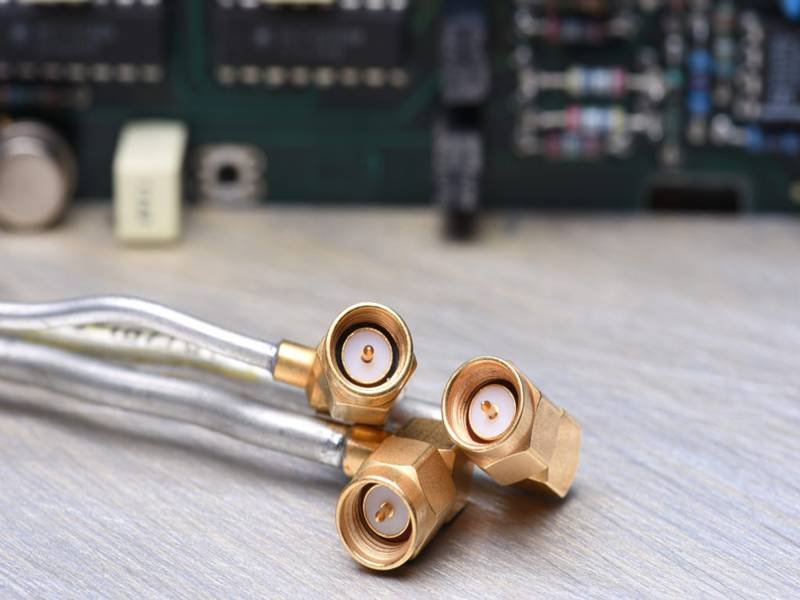
Coaxial cable assemblies are the backbone of high-frequency communications, connecting devices in telecom, aerospace, defense, medical, and industrial electronics. These assemblies carry signals efficiently while minimizing interference, reflection, and signal loss. Their layered construction—comprising a central conductor, dielectric insulation, shielding, and connector—ensures precise impedance, high signal integrity, and resilience to mechanical and environmental stress.
Coaxial cable assemblies work by transmitting high-frequency signals through a central conductor, insulated by a dielectric, shielded to prevent EMI, and connected with precision connectors to maintain impedance, signal quality, and durability.
Imagine a high-frequency radar system where every decibel of signal counts. Even minor impedance mismatches or poor shielding can cause data loss, misalignment in radar imaging, or dropped communications. That’s why engineers and procurement teams rely on tested, customized coaxial cable assemblies to ensure consistent performance. In this article, we will explain their structure, materials, signal flow, testing, and customization options, giving engineers and buyers the actionable knowledge to select and validate the right assembly for their system.
What Is a Coaxial Cable Assembly?
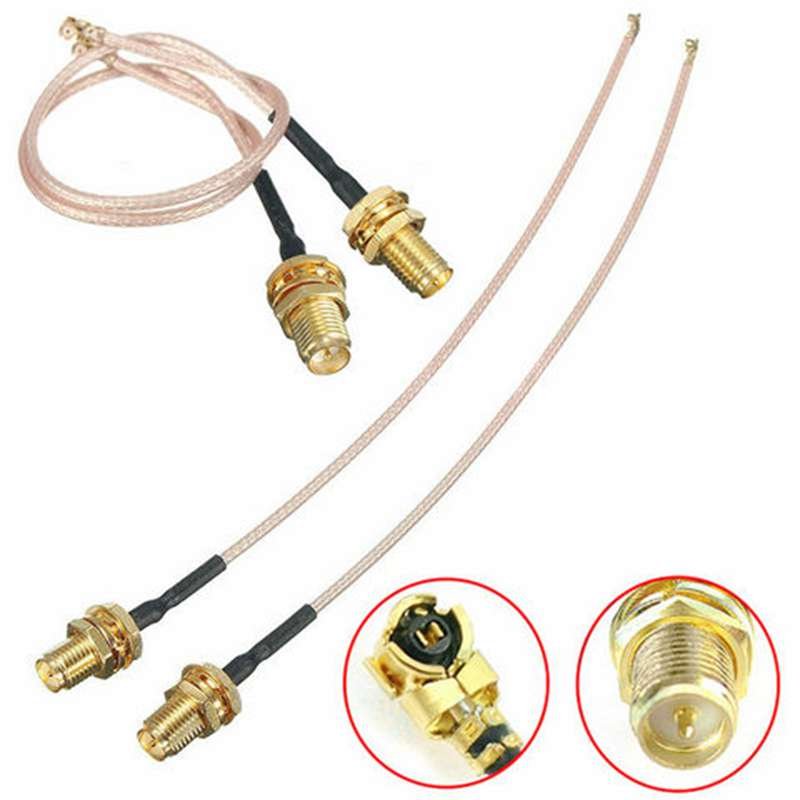
A coaxial cable assembly is a precision cable with a central conductor, dielectric, shielding, and connectors. It transmits high-frequency signals reliably while protecting against signal loss, reflection, and interference in telecom, aerospace, medical, and industrial applications.
Definition and basic components
A coaxial cable assembly consists of several critical components:
- Central Conductor: Typically copper or silver-plated copper, this is the main pathway for the RF signal. Multi-strand conductors improve flexibility while maintaining low resistance, critical for high-frequency applications.
- Dielectric Insulation: Surrounding the conductor, the dielectric maintains precise spacing and characteristic impedance. Common materials include PTFE, foam PTFE, and polyethylene. Consistency in dielectric thickness is essential to maintain low VSWR and minimal signal reflection.
- Shielding: Layers of foil, braided copper, or a combination prevent electromagnetic interference (EMI) from disrupting the signal and protect other devices from signal leakage. Shield coverage is typically 90–95% braid plus 100% foil for high-performance assemblies.
- Connectors: Precision connectors, such as SMA, N-type, or custom designs, maintain signal integrity at termination points. Properly plated contacts (gold or nickel) reduce resistance (<50 mΩ) and increase longevity over thousands of mating cycles.

Each component is designed and tested to ensure consistent impedance, low insertion loss, and signal integrity.
How it differs from standard cables
Unlike general-purpose coaxial cables, coaxial cable assemblies are terminated with connectors and tested to exact specifications. Standard cables may handle a few hundred MHz for TV or audio, but assemblies are designed for applications ranging from MHz to several GHz, including telecom, radar, medical imaging, and aerospace systems.
Key differences include:
- Impedance control: Assemblies maintain tight tolerance (±2%) for 50 Ω or 75 Ω systems.
- Mechanical durability: Multi-strand conductors and reinforced shielding prevent performance degradation during installation or repeated bending.
- Electrical performance: VSWR typically ≤1.2, insertion loss minimal across operational frequency, and shielding effectiveness >90 dB.
For example, a 1-meter 50 Ω coaxial assembly used in a 5G base station maintains VSWR 1.15 and insertion loss 0.55 dB at 3 GHz after 1,000 bend cycles, demonstrating reliability in field deployment.
Core specifications
Clients must consider several critical specifications when selecting a coaxial assembly:
| Specification | Typical Value | Importance |
|---|---|---|
| Impedance | 50 Ω or 75 Ω | Ensures minimal signal reflection |
| Frequency Range | DC – 6 GHz (customizable) | Defines operational capability |
| VSWR | ≤1.2 | Prevents signal reflection and power loss |
| Insertion Loss | 0.3–1.2 dB/m | Measures signal attenuation |
| Shielding | Foil + 90–95% braid | Protects from EMI and crosstalk |
| Bend Radius | 5–10 × cable OD | Ensures mechanical durability |
| Connector Type | SMA, N-type, MMCX, custom | Provides low-loss signal connection |
| Jacket Material | TPE, PVC, Silicone | Protects against abrasion, UV, oil, chemicals, and temperature extremes |
Sino-Conn provides specifications for every assembly, helping clients choose cables that meet frequency, environmental, and mechanical requirements.
Real-world client considerations
When selecting a coaxial cable assembly, clients often prioritize:
- Connector reliability: OEM or alternative connectors, contact plating, and mating cycles.
- Mechanical durability: Bend radius, torsion, and strain relief to prevent micro-fractures.
- Environmental resilience: Temperature extremes, chemical resistance, UV stability, and jacket flexibility.
- Electrical performance: Insertion loss, VSWR, and shielding effectiveness across operational frequency.
- Customizability: Cable length, jacket material, connector type, and shielding configuration to fit device-specific routing.
For instance, in a telecom installation, a 50 Ω assembly must maintain VSWR ≤1.2 and insertion loss ≤0.55 dB/m across 3–6 GHz while withstanding repeated bending in tight conduits. Sino-Conn ensures assemblies meet these performance requirements and provides CAD drawings and test reports for client verification.
Understanding Coaxial Cable Assemblies
- Conductor selection High-strand-count copper or silver-plated conductors reduce insertion loss and improve bending flexibility. Strand count, plating thickness, and conductor diameter are optimized for electrical and mechanical performance. Multi-strand conductors allow flexibility in tight routing without compromising signal integrity.
- Dielectric function Dielectric materials maintain consistent impedance and minimize high-frequency loss. Foam PTFE has a lower dielectric constant, reducing insertion loss, while solid PTFE offers high temperature tolerance. Minor variations in dielectric thickness can alter VSWR and reflectivity, affecting system performance.
- Shielding effectiveness Foil shields provide 100% coverage to block EMI, while braided copper adds strength and additional EMI protection. Effective shielding is critical for medical imaging, telecom, or aerospace environments, where even minor interference can compromise signal integrity.
- Connector design Connectors must maintain impedance, minimize reflections, and survive repeated insertion/extraction cycles. Gold plating reduces contact resistance (<50 mΩ) and prevents corrosion. Strain relief and angled connectors prevent mechanical stress that could compromise signal quality.
- Mechanical and environmental durability Cables are tested for bending cycles, torsion, and environmental exposure. Jackets like TPE or silicone provide flexibility, chemical resistance, and UV protection. These properties ensure long-term performance in demanding installations.
- Performance documentation Sino-Conn provides test reports detailing VSWR, insertion loss, shielding effectiveness, and mechanical testing results. These documents allow clients to verify compliance with specifications and approve custom assemblies before production.
Which Materials Are Used in Coaxial Cable Assemblies?
The performance of coaxial cable assemblies depends on the proper selection of conductor, dielectric, shielding, and jacket materials. Choosing the right materials ensures signal integrity, mechanical durability, and resistance to environmental factors like heat, chemicals, and UV exposure.

Conductor materials
The central conductor carries the high-frequency signal, and its material directly affects signal loss and mechanical flexibility. Common options include:
- Copper: Standard choice, high conductivity, cost-effective for telecom, medical, and industrial applications.
- Silver-plated copper: Reduces high-frequency losses, improves corrosion resistance, and maintains signal integrity in GHz-range applications.
- Specialty alloys: Used in aerospace or harsh environments, providing higher thermal resistance and mechanical strength.
Sino-Conn selects the conductor type based on signal frequency, cable length, flexibility requirements, and environmental conditions. For example, a 1-meter 50 Ω assembly for a 5G base station may use silver-plated copper to reduce insertion loss above 3 GHz while allowing repeated bending during installation.
Insulation and dielectric materials
The dielectric surrounds the conductor, maintaining impedance and preventing signal leakage. Material choices impact insertion loss, VSWR, and bending performance.
- PTFE (Polytetrafluoroethylene): High-temperature stability, low dielectric loss, ideal for medical imaging, aerospace, and telecom.
- Foam PTFE: Lower dielectric constant reduces insertion loss and improves signal performance at high frequencies.
- Polyethylene (PE): Economical, moderate flexibility, suitable for low- to mid-frequency applications.
Dielectric consistency is critical. Small deviations can create impedance mismatches, increasing VSWR. Sino-Conn measures dielectric thickness and uniformity for each batch, ensuring consistent electrical performance.
Shielding materials
Shielding prevents electromagnetic interference (EMI) from external sources and limits signal leakage to nearby devices. Shielding options include:
- Foil: Provides 100% coverage against high-frequency interference.
- Braided copper: 85–95% coverage, adds mechanical durability and flexibility.
- Foil + braid combination: Combines maximum EMI protection with mechanical resilience, standard in high-performance assemblies.
Sino-Conn tests shielding effectiveness across the operating frequency range and after bending cycles to ensure >90 dB attenuation in real-world conditions.
Jacket materials
The outer jacket protects against environmental and mechanical stress. Common materials include:
- TPE (Thermoplastic Elastomer): Flexible, chemical- and oil-resistant, suitable for outdoor telecom and industrial installations.
- PVC: Cost-effective, moderate flexibility, used in general electronics.
- Silicone: High-temperature tolerance, sterilizable for medical or aerospace applications.
Jacket selection is based on application: for instance, outdoor telecom assemblies use TPE with UV resistance, while medical cables often use silicone for repeated sterilization cycles without cracking.
Material Selection in Practice
- Conductor trade-offs Higher frequency applications require low-resistance conductors. Multi-strand conductors improve flexibility but slightly increase insertion loss at extremely high frequencies. Sino-Conn balances strand count, conductor diameter, and plating thickness to optimize both mechanical and electrical performance.
- Dielectric performance PTFE and foam PTFE are measured for dielectric constant uniformity. For a 50 Ω assembly, a ±0.01 variation in εr can change VSWR from 1.15 to 1.25, highlighting the importance of precise material control.
- Shielding effectiveness Sino-Conn evaluates shielding by exposing assemblies to controlled EMI fields. Foil and braid coverage is tested for >90 dB attenuation. Pre-bending cables ensures shielding remains effective after repeated installation stress.
- Environmental and mechanical durability of jackets Jackets are tested for abrasion, chemical exposure, UV, and temperature extremes. TPE jackets survive -40°C to +125°C, resist oils and cleaning chemicals, and maintain flexibility after repeated bending. Silicone jackets tolerate sterilization cycles without losing flexibility, making them ideal for medical devices.
- Custom material configurations Clients can request specific materials for conductor, dielectric, shielding, and jacket based on application. For example:
- Outdoor telecom: TPE jacket, silver-plated conductor, foil + braid shielding
- Medical imaging: Silicone jacket, PTFE dielectric, silver-plated conductor
- Aerospace: High-temperature alloy conductor, PTFE dielectric, foil + braid shielding
Performance verification
Each material combination undergoes testing for VSWR, insertion loss, shielding effectiveness, and mechanical durability. Results are included in batch reports for traceability, quality assurance, and client approval.
Practical Example Table
| Component | Material | Purpose | Typical Specs |
|---|---|---|---|
| Conductor | Silver-plated copper | Low-loss, flexible | 32–24 AWG, multi-strand |
| Dielectric | Foam PTFE | Maintains impedance | εr = 1.42–1.44, diameter ±0.05 mm |
| Shield | Foil + braided copper | EMI protection | 90–95% braid, 100% foil |
| Jacket | TPE | Flexibility, chemical/UV resistance | OD 3–6 mm, -40°C to +125°C |
| Connector | SMA / N-type / custom | Low-loss termination | Gold-plated, 1,000+ mating cycles |
How Do Coaxial Cable Assemblies Transmit Signals?
Coaxial cable assemblies transmit high-frequency signals through a central conductor surrounded by a dielectric and shielding. Proper material selection, precise impedance control, and high-quality connectors ensure minimal signal loss, consistent VSWR, and protection against electromagnetic interference.
Signal flow through the conductor and dielectric
The central conductor carries the alternating electrical signal. The dielectric maintains spacing between the conductor and the shield, preserving the cable’s characteristic impedance (commonly 50 Ω or 75 Ω). Impedance consistency ensures minimal reflection and low VSWR, allowing efficient signal transfer even at multi-GHz frequencies.
Sino-Conn measures dielectric thickness and uniformity to ±0.05 mm, ensuring VSWR ≤1.2 across the operating frequency. For example, a 1-meter 50 Ω cable designed for 5G installations maintains VSWR 1.15 and insertion loss 0.55 dB at 3 GHz, even after repeated bending cycles.
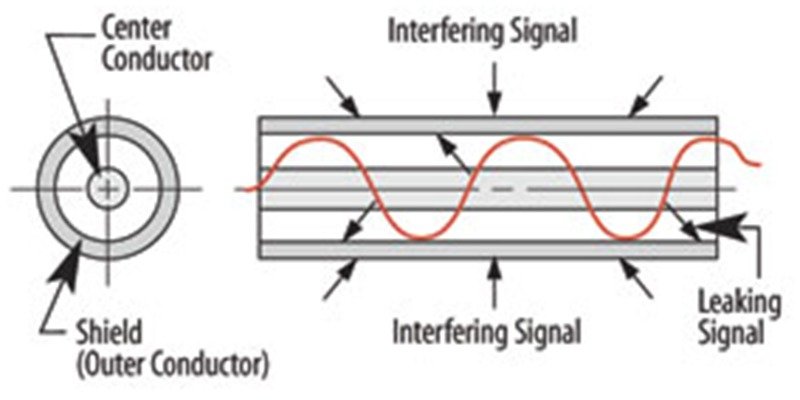
Role of shielding in reducing EMI
Shielding prevents electromagnetic interference (EMI) from external sources and protects adjacent devices from signal leakage. High-performance assemblies use foil and braided copper shields to achieve >90 dB shielding effectiveness.
Bending, twisting, or routing cables in close proximity to other high-frequency cables can compromise shielding if not properly designed. Sino-Conn performs pre-bend testing to simulate field installation, ensuring shielding performance remains consistent under mechanical stress.
Connector impact on signal quality and VSWR
Connectors terminate the cable assembly and must preserve impedance continuity. Poorly designed connectors can introduce reflection points, increasing VSWR and reducing signal quality.
High-quality connectors, such as SMA, N-type, or custom configurations, are gold-plated or nickel-plated to minimize contact resistance (<50 mΩ) and maintain electrical performance over thousands of mating cycles. Strain relief and optional angled connectors reduce stress on the cable during installation, preventing impedance shifts and signal degradation.
Transmission Dynamics and Real-World Performance
- Electromagnetic field confinement Signal travels along the central conductor as an electromagnetic field, which is confined by the dielectric and shield. The shield prevents the field from escaping, reducing cross-talk and interference. Properly confined signals enable high-frequency transmission with minimal loss.
- Insertion loss and high-frequency attenuation Insertion loss increases with frequency due to conductor skin effect and dielectric loss. For example, a 50 Ω coaxial assembly may have:
| Frequency (GHz) | Insertion Loss (dB/m) | Max Specification |
|---|---|---|
| 1 | 0.30 | 0.35 |
| 3 | 0.55 | 0.60 |
| 6 | 1.20 | 1.25 |
Sino-Conn adjusts conductor diameter, dielectric type, and shield coverage to minimize loss while maintaining flexibility and bend tolerance.
- Mechanical stress and bending effects Cables experience bending, twisting, and torsion during installation. Mechanical stress can alter impedance and increase VSWR. Bending tests at the recommended minimum radius ensure assemblies maintain electrical performance after thousands of cycles. For example, a 1-meter 50 Ω assembly retains VSWR <1.2 after 1,000 bends at 2× cable OD.
- Environmental conditions Temperature extremes, humidity, and chemical exposure affect dielectric properties and jacket flexibility. Sino-Conn tests assemblies from -40°C to +125°C and exposes jackets to chemicals and UV light to verify long-term performance. Jackets made from TPE, silicone, or PVC protect the cable while preserving signal integrity.
- Connector performance under load Connector quality directly impacts insertion loss, VSWR, and signal reliability. Repeated mating cycles can increase resistance. Sino-Conn tests connectors for ≥1,000 cycles, ensuring stable performance. Angled or latching connectors reduce bending stress and preserve impedance continuity, especially in tight routing conditions.
- Real-world application examples
- Telecom: 5G installations use coaxial assemblies to connect base stations to antennas with minimal VSWR and low insertion loss.
- Medical: MRI and ultrasound equipment rely on assemblies with precise impedance and shielding to prevent signal contamination.
- Aerospace: Satellite communications require cables that withstand vibration, temperature extremes, and confined routing while maintaining signal quality.
By combining high-quality conductors, precise dielectric, robust shielding, and precision connectors, and verifying performance under mechanical and environmental stress, Sino-Conn ensures reliable signal transmission in every application.
Do Coaxial Cable Assemblies Require Testing?
Yes, coaxial cable assemblies require comprehensive testing to ensure electrical performance, mechanical reliability, and environmental durability. Proper testing prevents signal loss, reflection, and EMI interference, giving confidence in high-frequency applications such as telecom, medical, aerospace, and industrial systems.
Electrical testing: VSWR, insertion loss, and continuity
Electrical tests ensure that the cable assembly transmits signals efficiently with minimal reflection or loss. Key measurements include:
- VSWR (Voltage Standing Wave Ratio): Measures impedance matching; a low VSWR ensures minimal signal reflection. A target VSWR ≤1.2 is standard for high-performance applications.
- Insertion loss: Quantifies signal attenuation along the cable’s length at different frequencies. For example, a 1-meter 50 Ω coaxial assembly may show 0.3 dB loss at 1 GHz and 0.55 dB at 3 GHz.
- Continuity: Confirms that each conductor and shield is intact, without breaks or shorts.

Sino-Conn uses Vector Network Analyzers (VNA) for high-frequency testing and automated continuity jigs. Every unit is tested to meet electrical specifications, ensuring consistent signal integrity across the batch.
Mechanical and environmental tests: bending, thermal, and humidity
Coaxial assemblies must endure mechanical stress and environmental extremes without performance degradation. Standard tests include:
- Bending and torsion cycles: Simulate installation stress and repeated movement.
- Thermal cycling: Typically from -40°C to +125°C to test insulation and conductor stability.
- Humidity and chemical exposure: Ensure jackets and shields withstand moisture, oils, and chemicals.
- Connector stress testing: Insertion/extraction cycles, torque tests, and vibration simulations.
These tests replicate real-world conditions, such as telecom tower installations, medical equipment routing, and aerospace applications, ensuring reliable long-term performance.
Compliance testing: UL, RoHS, ISO, MIL-STD, IEC
Industry and regulatory standards define minimum testing protocols for coaxial assemblies:
- UL 444: Validates electrical insulation and flame resistance.
- ISO 9001 / ISO 13485: Ensures quality management and consistent manufacturing processes.
- RoHS / REACH: Confirms absence of restricted substances in jackets and connectors.
- MIL-STD-202: Tests environmental and mechanical durability for military and aerospace applications.
- IEC 61169: Defines connector performance, including VSWR, insertion loss, and mechanical strength.
Sino-Conn integrates these standards into all testing workflows, providing detailed test reports for regulatory and client verification.

How Coaxial Assemblies Are Tested in Practice
- VSWR and insertion loss measurement Sino-Conn uses VNAs to sweep the assembly across its operational frequency range. S11 and S21 parameters are recorded to detect impedance mismatches and forward signal attenuation. For example, a 1-meter 50 Ω assembly may demonstrate:
| Frequency (GHz) | VSWR | Insertion Loss (dB/m) | Return Loss (dB) |
|---|---|---|---|
| 1 | 1.15 | 0.30 | 25 |
| 3 | 1.18 | 0.55 | 22 |
| 6 | 1.22 | 1.10 | 20 |
Testing is performed both on straight cables and after bending to simulate installation stress.
- Continuity and conductor resistance checks Automated test jigs verify that every conductor and shield maintains proper connectivity. A 50 Ω assembly typically has conductor resistance <0.05 Ω/m. Any deviation triggers inspection or rework, preventing defective assemblies from reaching clients.
- Environmental durability validation Thermal cycling, humidity, and chemical exposure tests ensure jacket and insulation materials maintain electrical performance and mechanical integrity. TPE and silicone jackets resist temperature extremes, chemical exposure, and UV radiation.
- Mechanical stress testing Cables are subjected to repeated bends, torsion, and connector stress to replicate field conditions. Connector insertion/extraction cycles ≥1,000 verify long-term reliability. Angled or latching connectors reduce bending stress and preserve impedance.
- Batch-level quality assurance Sino-Conn combines 100% continuity testing with representative sampling for high-frequency, mechanical, and environmental performance. This ensures all shipped assemblies meet electrical, mechanical, and environmental specifications, minimizing field failures.
- Documentation and traceability Every assembly includes a test report detailing:
- VSWR curves across frequency
- Insertion loss graphs
- Shielding effectiveness
- Environmental and mechanical test results
- Batch number and CAD reference
Clients use these reports to approve designs, verify compliance, and ensure traceability for regulatory or warranty purposes.
Are Coaxial Cable Assemblies Customizable?
Yes, coaxial cable assemblies can be customized for length, connector type, shielding, dielectric material, and jacket properties. Customization ensures optimal signal performance, mechanical durability, and compliance with client-specific requirements.
Length, pinout, and connector options
Cable length is critical to avoid slack or tension. Connectors can be standard (SMA, N-type) or custom to fit device geometry. Pinout arrangements and contact plating are tailored to maintain low insertion loss and correct impedance. Sino-Conn provides CAD drawings for approval before production to ensure design accuracy.
Jacket and shielding customization
Clients can select jackets for chemical, temperature, or UV resistance. Shielding options include foil, braid, or combinations. These selections ensure EMI protection and mechanical durability tailored to specific environments, whether telecom towers, medical devices, or aerospace applications.
CAD drawings, prototyping, and client approvals
Sino-Conn produces CAD drawings for each custom assembly within 3 days (or 30 minutes for urgent requests). Prototype assemblies undergo electrical and mechanical testing to validate specifications. Clients approve the design before bulk production, ensuring performance, regulatory compliance, and proper fit for installation.

Customization Strategies
- Length and routing optimization Cable routing affects impedance and signal integrity. Sino-Conn adjusts length and bend radius based on device layout to prevent microfractures or reflections.
- Connector and pinout selection Precision connectors and pinouts are designed for low-loss signal transmission. Latching or angled connectors reduce mechanical stress and preserve VSWR performance.
- Material selection for specific environments Dielectric, shielding, and jacket materials are selected based on frequency, temperature, chemical exposure, and UV resistance. For example, outdoor 5G installations may use TPE jackets with combined foil + braided shields to prevent EMI and withstand weather extremes.
- Prototype testing and verification Custom assemblies undergo full testing: VSWR, insertion loss, shielding effectiveness, bending, torsion, and thermal cycles. Adjustments are made before mass production to ensure repeatable, reliable performance.
- Documentation and traceability Clients receive CAD drawings, specifications, and full test reports for all custom assemblies. This documentation supports regulatory compliance, quality assurance, and operational confidence.
Conclusion
Coaxial cable assemblies are complex systems that transmit high-frequency signals reliably through precise conductor, dielectric, shielding, and connector design. Testing and customization are essential to maintain signal integrity, mechanical durability, and compliance with client-specific or industry standards.
Sino-Conn delivers custom coaxial cable assemblies with rapid prototyping, full electrical and mechanical testing, and detailed CAD documentation. Whether you need urgent samples, bulk production, or specialized connectors and shielding, Sino-Conn ensures your assemblies perform optimally in telecom, aerospace, medical, and industrial applications.
Contact Sino-Conn today to request a custom coaxial cable assembly. Our engineering team will provide tailored solutions, CAD drawings, and performance-verified prototypes to meet your system requirements.