Skip to content
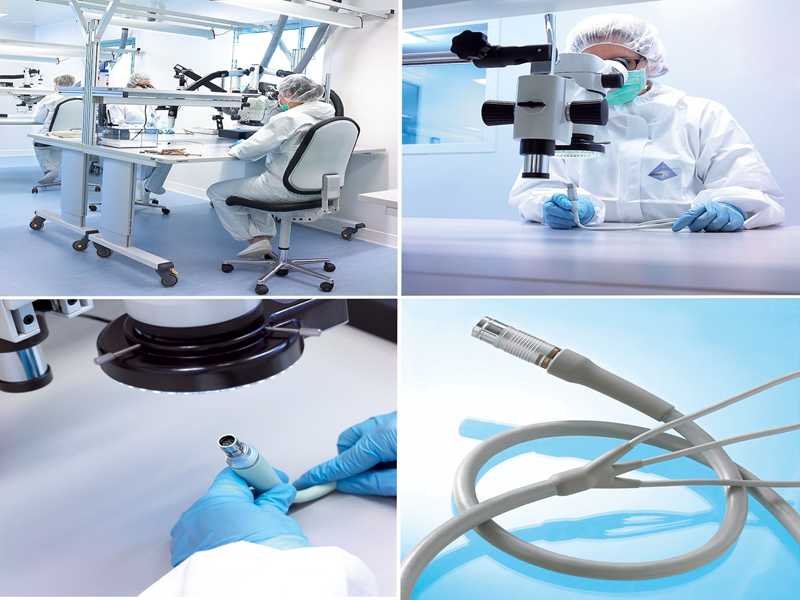
Medical cables are the unsung heroes of modern surgical equipment. They carry power and signals with precision, flexibility, and reliability, directly impacting the performance of critical devices. The design of these cables requires more than just selecting wires and connectors; it demands an understanding of material science, electrical specifications, durability, and ergonomics. Flexible cables ensure that surgeons can maneuver instruments without restrictions, while patients benefit from accurate, uninterrupted device function.
Flexible medical cables for surgical equipment combine robust materials, precise connectors, EMI shielding, and customizable lengths to ensure reliable performance, safety, and ergonomic efficiency.
However, designing these cables is a delicate balance. Too stiff, and they impede surgical movements; too soft, and they risk damage or interference. Consider the story of a surgical robotics lab in Europe: their engineers struggled with cable breakage due to repetitive bending, until switching to cables designed with ultra-flexible thermoplastic insulation and custom connectors that reduced bending stress by 40%. This experience underscores why detailed attention to materials, connectors, and customization is essential. In the following sections, we’ll break down each critical factor in designing high-performance medical cables, giving engineers, OEMs, and procurement specialists actionable insights to make the right choices.
What Are Flexible Medical Cables?
Flexible medical cables are specialized wires designed to withstand repeated bending, provide EMI shielding, and meet strict medical standards, ensuring reliable operation in surgical equipment.

Definition of medical cables
Medical cables are wires or assemblies specifically engineered for use in healthcare equipment. They carry signals, data, or power while meeting stringent electrical, mechanical, and safety standards. Unlike generic cables, medical-grade cables must maintain consistent impedance, resist interference, and provide protection against temperature extremes, chemicals, and sterilization processes. They are a core component in devices ranging from imaging equipment to robotic surgical arms.

Why flexibility matters in surgical equipment
Flexibility is critical in surgical settings where cables must bend, twist, and stretch without losing functionality. A cable that is too rigid can restrict instrument movement or fatigue quickly, causing potential downtime. Flexible cables improve ergonomics for surgeons, reduce stress on connectors, and prevent micro-fractures in internal conductors, which is particularly important for high-reliability applications in cardiovascular, laparoscopic, or robotic surgery.

Key specifications to consider
When designing medical cables, consider the following:
| Parameter | Importance | Typical Range / Specification |
|---|---|---|
| Conductor material | Conductivity, durability | Copper, Tinned Copper |
| Insulation | Flexibility, chemical resistance | Thermoplastic Elastomer, Silicone, PVC |
| Outer diameter (OD) | Ergonomics, routing | 1.5–6 mm |
| Bending radius | Flexibility, durability | 5–10 × cable diameter |
| Voltage & current | Device compatibility | 24–250 V, 1–5 A typical |
| EMI shielding | Signal integrity | Aluminum foil + braided copper |
| Certifications | Regulatory compliance | UL, ISO, RoHS, REACH |
| Special resistance | Operational environment | Oil, UV, corrosion, high temp, halogen-free |
Understanding Flexible Medical Cable Design
- Material selection: The heart of flexibility lies in the conductor and insulation material. Thermoplastic elastomers (TPE) offer excellent bending cycles and chemical resistance, while silicone is ideal for sterilization processes. Materials must balance softness with durability; too soft, and connectors fatigue, too stiff, and routing becomes difficult. At Sino-Conn, we test insulation compounds with repeated bending cycles, ensuring over 50,000 bends without signal loss.
- Mechanical specifications: Flexibility is not only about softness; mechanical design impacts lifespan. Cable OD, cross-section shape, and internal conductor geometry all influence bending stress distribution. Cables with stranded conductors and central fillers reduce internal friction and improve flexibility. Our designs calculate the minimal bending radius needed to avoid conductor fatigue while maintaining ergonomic handling for surgeons.
- Electrical performance: Flexible medical cables must maintain consistent impedance and low resistance under repeated mechanical stress. Shielding layers, such as braided copper with foil, prevent EMI, which is critical in sensitive surgical imaging devices. Unshielded cables may experience noise leading to faulty readings—a risk unacceptable in surgical settings.
- Custom length and connector design: Standard lengths may not fit the exact routing paths of surgical devices. Custom pinouts, connector types, and locking mechanisms ensure secure connections while minimizing slack or excessive tension. Sino-Conn provides CAD-to-PDF drawings within 3 days, allowing clients to approve designs and optimize routing before production.
- Regulatory compliance: Flexible medical cables must meet strict international standards. UL, ISO, RoHS, and REACH compliance ensures safety, non-toxicity, and traceability. Failure to comply may result in device rejection or regulatory penalties. Additionally, fire-retardant and halogen-free materials protect patients and staff in emergencies.
- Testing and lifecycle validation: Beyond material selection, real-world testing determines cable reliability. Tests include repeated bending, tensile strength, thermal cycling, and chemical exposure. Data-driven design allows engineers to predict performance degradation and schedule maintenance proactively. For example, cables tested under 70°C thermal cycles and chemical immersion for 500 hours retained 95% of original conductivity.
Which Materials and Connectors Ensure Reliability?
Reliable medical cables depend on the right combination of conductors, insulation, shielding, and connectors. Materials must resist bending, high temperatures, chemicals, and EMI interference, while onnectors provide secure, long-lasting electrical connections for surgical equipment.
Cable materials and properties
Cable reliability starts with choosing the correct conductor and insulation. Conductors are typically multi-stranded copper or tinned copper, which offer high conductivity, corrosion resistance, and flexibility. Insulation materials like silicone, thermoplastic elastomers (TPE), and specialized PVC balance flexibility with durability. Silicone is ideal for cables exposed to sterilization cycles, while TPE jackets provide abrasion resistance, UV stability, and chemical protection. Jackets can also include oil or flame retardants depending on the surgical environment.

Sino-Conn tests cables for over 50,000 bending cycles and evaluates temperature resistance up to 200°C to ensure cables remain functional during repeated surgical use.
Connector types: Original vs. Alternative
Connectors play a critical role in cable reliability. Original connectors (OEM) provide full manufacturer compatibility and predictable electrical performance but often come with long lead times and higher costs. They are preferred for high-volume end-users who require exact matching.
Alternative connectors offer flexibility in design, fast production, and cost efficiency while maintaining medical-grade performance. They allow custom pin configurations, angles, latches, and plating options. For example, gold-plated contacts reduce resistance to below 50 mΩ and prevent corrosion over thousands of insertion cycles.
Sino-Conn tests all connectors for mechanical insertion/extraction cycles and electrical continuity to ensure reliable connections under repeated bending and environmental stress.
Shielding and EMI considerations
EMI (Electromagnetic Interference) can compromise surgical device accuracy, especially in imaging and robotic systems. High-quality cables combine foil and braided shielding to maintain signal integrity. The foil layer ensures 100% coverage, while a braided copper shield (85–95% coverage) adds mechanical strength and extra EMI protection.
Grounding is critical. Improper grounding can allow noise to propagate along the cable, leading to errors or device malfunction. Sino-Conn designs shielding and grounding based on device-specific EMI requirements and tests them in operating room-like conditions to verify signal stability.
Ensuring Material and Connector Reliability
- Conductor performance under stress High-strand-count copper conductors improve bend life and flexibility. For example, a 7-strand 32 AWG conductor can endure 40,000+ bending cycles without conductivity loss. Sino-Conn simulates bending paths using device CAD data to ensure conductors are not over-stressed in real surgical routing.
- Insulation durability Insulation must resist heat, chemicals, abrasion, and sterilization. Silicone is excellent for sterilization tolerance and high bend cycles. TPE is used for high-wear areas. Jackets are tested for:
- Abrasion: 500–1,000 cycles
- Chemical exposure: immersion in disinfectants 48–72 hours
- Thermal cycling: -40°C to 125°C, repeated 50 times
- Connector reliability metrics Key factors include contact resistance, insertion/extraction cycles, and strain relief. Sino-Conn designs connectors to withstand 1,000–5,000 cycles depending on device application. Angled connectors reduce stress, while latches prevent accidental disconnections.
Material and Connector Performance Data
Cable Material Properties
| Material | Bending Cycles | Temp Range | Chemical Resistance | Flame Rating | Typical Use |
|---|---|---|---|---|---|
| Silicone | 50,000+ | -60°C to 200°C | Excellent | UL94 V-0 | Sterilizable cables, robotic arms |
| TPE | 40,000+ | -40°C to 125°C | High | UL94 V-2 | Reusable surgical instruments, endoscopes |
| PVC Blend | 20,000+ | -20°C to 105°C | Moderate | UL94 HB | Diagnostic equipment, general wiring |
Connector Testing Metrics
| Component | Test | Result / Spec |
|---|---|---|
| Connector insertion/extraction | 1,000–5,000 cycles | <50 mΩ contact resistance |
| Conductor bending | 50,000 cycles | <2% resistance change |
| Shielding effectiveness | EMI test 10 MHz–1 GHz | >95% attenuation |
Shielding efficiency and real-world testing
Shielding must block EMI without compromising flexibility. Tests include:
- Shield coverage verification: ≥90% braid coverage plus 100% foil overlap
- Signal integrity testing: measuring loss or interference during bending cycles
- Environmental validation: exposure to typical OR lighting and nearby medical electronics
Client-focused customization
Sino-Conn works with clients to select materials, shielding, and connectors based on device environment, sterilization method, and handling requirements. Engineers provide CAD and prototype testing before bulk production, ensuring flexibility, durability, and signal reliability while meeting budget constraints.
How to Customize Cables for Surgical Devices
Customizing surgical cables involves precise control over length, pinout, connectors, insulation, and shielding to match device requirements, ensure reliable signal transfer, and withstand repeated bending in clinical environments.
Length, pinout, and connector customization
The right cable length prevents slack or tension, which can cause micro-fractures or connector failure. In robotic surgical systems, cables must handle repetitive 180–360° rotations without exceeding minimum bend radius. Sino-Conn customizes lengths to within ±2 mm tolerance to ensure ergonomic routing.
Pinout customization is equally important. Each conductor is assigned to specific signals, power lines, or grounding. Miswiring risks device malfunction. Our engineers provide detailed pinout diagrams, specifying conductor function, shield connections, and voltage handling.
Connectors are tailored to device geometry and clinical workflow. For example, locking latches prevent accidental disconnection, angled plugs reduce strain in tight assemblies, and plating (gold or nickel) ensures low-resistance contacts and corrosion resistance. OEM connectors provide predictable compatibility, while Sino-Conn alternative connectors allow fast production and adjustments.
CAD drawings and specifications
CAD documentation ensures accurate visualization of the cable assembly. Sino-Conn delivers detailed CAD-to-PDF drawings within 3 days (urgent requests within 30 minutes). Drawings show:
- Conductor layout and strand counts
- Insulation thickness and outer jacket layering
- Shielding type and coverage
- Connector type, orientation, and pin mapping
- Bend radius paths for routing verification

These drawings allow clients to review and approve designs before production. A table example:
| Component | Specification | Notes |
|---|---|---|
| Conductor | 7-strand tinned copper | Flexible, corrosion-resistant |
| Insulation | Silicone, 1.2 mm wall | Sterilizable, high-temp |
| Outer jacket | TPE, 3 mm OD | Abrasion, oil, UV-resistant |
| Shielding | 100% foil + 90% braid | EMI protection |
| Connector | Custom 12-pin Latch | Gold-plated, angled for strain relief |
This level of detail reduces errors, ensures correct fit, and confirms electrical integrity.
Sample production and batch lead times
Rapid prototyping is key to testing flexibility, conductivity, and connector ergonomics. Standard sample production takes 2 weeks, while urgent prototypes are available within 2–3 days. Bulk orders usually take 3–4 weeks, with expedited production for urgent clinical deployment possible in 2 weeks.
Sample testing includes:
- Conductivity and resistance verification
- Bending and torsion cycles
- EMI shielding effectiveness
- Connector insertion/extraction cycles
This process allows engineers to confirm design performance before scaling to full production, minimizing risk and ensuring compliance with surgical device requirements.
Practical Customization Strategies
- Optimizing routing and stress management Cables must follow device paths precisely to prevent stress on conductors. For robotic arms, Sino-Conn designs assemblies with multi-strand conductors and internal fillers to distribute stress evenly, reducing micro-fractures by up to 40%. The minimum bending radius is calculated using the formula: Bend Radius = 5–10 × Cable OD This ensures repeated bending does not compromise conductor integrity.
- Pinout accuracy and functional testing Each conductor’s role is validated through electrical testing. Multi-layer connectors may carry power, data, and ground lines simultaneously. Testing confirms that signal loss is <0.5%, preventing device errors during surgery. Pinout diagrams also specify shielding connections to maintain consistent EMI protection.
- Connector ergonomics and durability Connector design considers clinical workflow. Features include:
- Latching mechanisms for secure connections
- Angled or low-profile plugs for tight routing
- Plated contacts to maintain resistance below 50 mΩ
- Materials rated for 100 insertion/extraction cycles without degradation
These adjustments prevent accidental disconnections and ensure long-term reliability.
Material performance in clinical conditions
Cable insulation and jackets are chosen based on environmental exposure:
- Silicone insulation: sterilization tolerance up to 200°C, 50,000+ bend cycles
- TPE jacket: chemical and oil resistance for external routing, abrasion-resistant
- Optional coatings: color-coded for quick identification, textured for grip in OR
This ensures cables maintain flexibility, chemical resistance, and performance in operating rooms.
Iterative CAD verification and client approval
Rapid CAD review allows clients to verify routing, bend paths, connector placement, and shielding. Adjustments can be made before production, reducing rework and lead times. For example, a laparoscopic imaging system may require 30 mm loops with zero stress on conductors; CAD verification confirms the design meets these criteria.
Lead time coordination for urgent projects
Sino-Conn balances urgent needs with quality. Prototypes for testing are produced in 2–3 days, while larger batches follow validated production protocols. Clients can request staggered delivery: small samples for evaluation, followed by bulk production for deployment, enabling iterative improvements without delaying project timelines.
Do Certifications and Quality Control Affect Performance?
Certifications and rigorous quality control processes ensure that flexible medical cables meet safety, reliability, and regulatory standards, minimizing failure risk in critical surgical equipment.
Required certifications for medical cables
Medical cables must comply with international standards to ensure safety and performance. Certifications like UL, ISO, RoHS, REACH, PFAS, COO, and COC validate electrical safety, chemical safety, and environmental compliance. These certifications are not just regulatory formalities—they guarantee materials, construction, and processes meet stringent quality requirements, essential for life-critical surgical applications.

Inspection and testing processes
Quality control at Sino-Conn includes a three-stage inspection process: in-process checks, post-production verification, and pre-shipment testing. This ensures every cable is mechanically and electrically tested for bending cycles, conductor integrity, insulation continuity, EMI shielding effectiveness, and connector performance. Any defect is caught before delivery, ensuring high reliability in clinical use.
Impact on client confidence and regulatory compliance
Certified, fully-tested cables reduce device downtime, prevent patient risk, and facilitate regulatory approval for OEMs. For example, hospitals in the US and EU require UL and ISO compliance for surgical equipment. Sino-Conn’s documentation and testing records support client audits and device certification, boosting buyer confidence and demonstrating adherence to international standards.
Why Certifications and QC Are Critical
- Certifications ensure safety and reliability Regulatory compliance is a cornerstone of medical cable performance. UL certification validates insulation and conductor safety under defined voltage and temperature conditions. ISO 13485 ensures that the manufacturing process consistently produces high-quality medical devices. RoHS and REACH certifications guarantee restricted chemical content, protecting patients and medical staff from hazardous materials.
- Three-stage inspection methodology Sino-Conn implements comprehensive inspections:
- In-process checks monitor conductor assembly, insulation application, and connector attachment during production.
- Post-production testing includes bending cycles, electrical continuity, and shielding verification.
- Pre-shipment inspection confirms packaging, labeling, and final functionality.
This process drastically reduces defects, preventing field failures in surgical equipment.
- Traceability and documentation Certifications are reinforced with traceable manufacturing data, including batch numbers, materials sourced, and quality inspection reports. This level of transparency enables OEMs and hospitals to track cable origin and ensures accountability in case of a defect or recall.
- Regional compliance considerations Different regions prioritize specific certifications. The US emphasizes UL and FDA-compliant materials; the EU requires ISO and REACH documentation. Sino-Conn provides flexible documentation packages, ensuring compliance for international clients while maintaining production efficiency.
- Long-term performance benefits Cables with proper QC withstand repeated bending, sterilization, and environmental exposure over years of surgical use. For example, cables tested for over 50,000 bending cycles retain 95–97% conductivity, illustrating how QC directly impacts reliability in demanding clinical environments.
Are Flexible Cables Cost-Effective and Scalable?
Flexible medical cables are cost-effective when production scales efficiently, balancing material choice, lead time, and connector type to optimize price without compromising reliability or safety.
Pricing factors
Cable pricing varies by customer type, region, and material. OEMs benefit from scalable production, while end-user prototypes may cost more due to small quantities. Material selection (silicone vs. PVC), connector type (original vs. alternative), and certification requirements influence cost. Sino-Conn provides solutions to fit different budgets without compromising performance.
MOQ and order flexibility
Sino-Conn offers no minimum order quantity, enabling clients to order a single prototype for testing or multiple units for bulk production. This flexibility supports rapid iteration, urgent projects, and low-volume specialized devices while maintaining consistent quality.
Balancing cost and performance
Strategic selection of conductors, insulation, and connectors ensures cost savings without sacrificing reliability. For example, alternative connectors reduce lead time and cost while maintaining electrical performance, and TPE insulation provides a balance between durability and affordability compared to high-end silicone.
Cost Efficiency and Scalability in Medical Cables
- Production efficiency and material choice Sino-Conn leverages lean manufacturing and flexible production lines. Materials like TPE and PVC allow scalable manufacturing with predictable lead times and cost management. High-flex silicone is used when required, but only where sterilization or extreme flexibility is essential, avoiding unnecessary expenses.
- Global pricing and regional considerations Costs vary globally:
- US and Western Europe: higher due to strict compliance and shipping.
- Japan and Korea: moderate, balancing regulatory requirements with local manufacturing standards.
- Southeast Asia, India: lower due to lower labor and production costs.
Sino-Conn adapts solutions based on geography and industry, providing competitive quotes while maintaining quality.
Bulk production vs small-batch flexibility
Bulk orders reduce unit cost but may have longer lead times. Sino-Conn’s modular workflow supports both small-batch rapid samples and large-scale production without compromising quality. Tables summarizing timelines:
| Order Type | Standard Lead Time | Expedited Lead Time | MOQ | Notes |
|---|---|---|---|---|
| Prototype | 2 weeks | 2–3 days | 1 pcs | Functional testing |
| Small Batch | 3–4 weeks | 2 weeks | 5–50 pcs | Custom lengths/pinouts |
| Bulk Production | 4–6 weeks | 3–4 weeks | 100+ pcs | OEM scale orders |
- Custom solutions for cost optimization By selecting alternative connectors, flexible jacketing, and efficient routing, costs are controlled while maintaining reliability. Sino-Conn engineers work with clients to balance durability, flexibility, and cost-effectiveness for each device type.
- Value beyond price Investing in certified, quality-controlled cables reduces downtime, maintenance costs, and regulatory risk, providing long-term savings. Flexible design ensures longer lifespan and fewer replacements, which is critical in surgical environments.
Conclusion
Designing flexible medical cables for surgical equipment is a complex process requiring careful material selection, connector choice, custom pinouts, and rigorous quality control. Sino-Conn’s expertise in rapid CAD design, material testing, and flexible manufacturing ensures cables meet clinical, regulatory, and ergonomic requirements.
Whether you need a single prototype, urgent samples, or large-scale OEM production, Sino-Conn provides fully customized solutions with certifications, traceability, and performance guarantees.
Contact Sino-Conn today to discuss your flexible medical cable requirements and request a custom solution. Our engineering team can provide detailed specifications, CAD drawings, and quotes within hours, ensuring your surgical devices achieve peak reliability and performance.