Skip to content
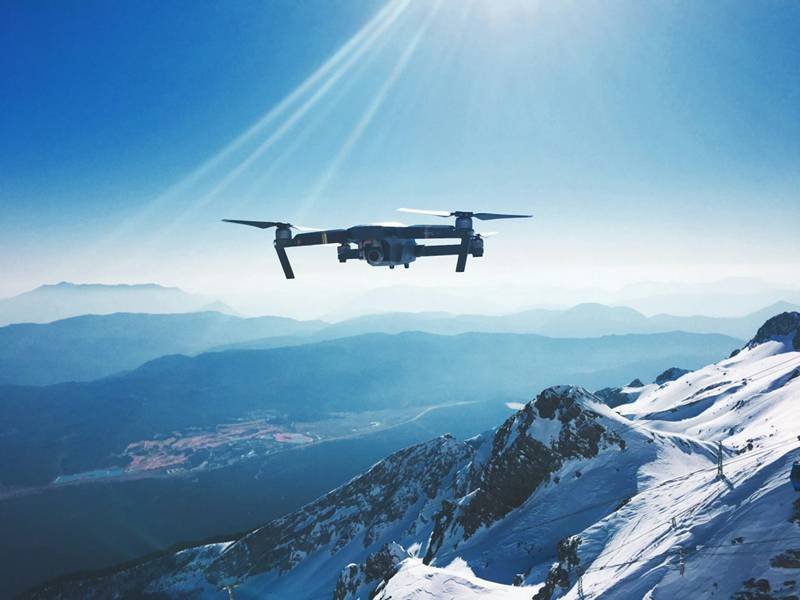
In drone projects, many teams spend a lot of time discussing cameras, flight controllers, batteries, and software, but the cable path is often treated as a minor detail. In practice, that detail can decide whether the whole system runs smoothly or fails in the field. A drone may perform well during bench testing, then start showing unstable video, delayed sensor response, or communication errors once it flies near motors, power modules, industrial equipment, or long transmission paths. When that happens, the problem is often not the payload itself. It is the transmission link between modules.
Drone fiber optic cable is used when a UAV system needs stable, high-speed, low-loss data transmission in places where copper cable starts to become a limitation. It is especially valuable in drones carrying HD or 4K imaging systems, LiDAR, long tether links, or multiple data channels that must run together without being disturbed by electromagnetic interference.
In simple terms, drone fiber optic cable is an optical transmission cable designed for UAV systems that need lighter signal paths, stronger anti-interference performance, and more reliable data transfer over distance. It does not replace every copper cable in a drone, but it is often the better choice for critical data links where signal stability matters more than low upfront cost.
One reason this topic matters is that many customers do not come with a complete specification. Some only send a photo, a sample, or a short message saying they want “the same cable” or “a lighter version.” That is where many projects get delayed. The outside may look simple, but the real questions sit inside the structure: fiber type, connector type, bend radius, outer diameter, reinforcement, operating environment, and how the cable will move during flight. Once those details are defined correctly, the cable stops being a risk point and becomes part of the system advantage.
What Is Drone Fiber Optic Cable?
Drone fiber optic cable is a data transmission cable designed for UAV systems that use optical fiber instead of copper conductors to carry signals. It is mainly used in drones that require stable, high-speed communication, especially when traditional copper cables start to show limitations such as signal interference, transmission loss, or excessive weight over longer routing paths.
In real projects, customers rarely start by asking for “fiber optic cable” directly. Most of them come with a problem. For example:
- The video feed becomes unstable when the drone operates near motors or power modules
- Data transmission drops when cable length increases
- Multiple sensors interfere with each other
- The cable harness becomes too heavy for the payload limit
At that stage, the discussion shifts from “what cable to use” to “how to make the system stable.” This is where drone fiber optic cable becomes a practical solution rather than a theoretical upgrade.

What Is a Drone Fiber Optic Cable Used For?
In UAV systems, fiber optic cables are used almost entirely for data transmission. They are not used for power delivery. This distinction is important because many systems still rely on copper wiring for power while using fiber for critical data links.
Typical use cases include:
| Application | Data Type | Why Fiber Is Used |
|---|---|---|
| Aerial imaging drones | HD / 4K video | Stable signal, no interference |
| LiDAR mapping systems | Point cloud data | High bandwidth requirement |
| Tethered drones | Video + control signals | Long-distance transmission |
| Industrial inspection drones | Sensor + camera data | EMI resistance in harsh environments |
| Military UAV systems | Multi-channel communication | Reliability and signal integrity |

In one UAV imaging project we supported, the customer initially used a coaxial solution for video transmission. The system worked in short-range testing, but once deployed in an industrial environment with heavy electrical equipment, the video feed started showing intermittent noise and frame drops. After switching to a fiber optic cable solution with optimized connectors and reduced OD, the signal became stable, and the system passed field validation without further modification.
This kind of transition is very common. Fiber is not always the first choice, but it often becomes the final solution when performance issues appear.
How Is Drone Fiber Optic Cable Different from Copper?
The main difference lies in how signals are transmitted. Copper cables carry electrical signals, while fiber optic cables transmit data using light. This difference directly affects performance in UAV environments.
From a customer decision perspective, the comparison usually comes down to the following:
| Item | Fiber Optic Cable | Copper Cable |
|---|---|---|
| Signal stability | Very stable | Affected by EMI |
| Transmission distance | Long-distance capable | Limited by signal loss |
| Weight (long runs) | Lower overall | Higher overall |
| Interference resistance | Excellent | Requires shielding |
| Installation flexibility | Needs design control | More forgiving |
| Cost | Higher initial cost | Lower initial cost |
However, fiber is not automatically the better choice in every situation. In short-distance, low-data applications, copper cables are still widely used and more cost-effective.
Where fiber shows clear advantages is in:
- Multi-channel high-speed data systems
- Long cable routing inside or outside the drone
- Environments with strong electromagnetic interference
- Applications where signal loss cannot be tolerated
At Sino-Conn, we often help customers evaluate whether fiber is truly necessary. In some projects, a hybrid solution (fiber for data + copper for power) provides the best balance.
Which Types of Drone Fiber Optic Cable Are Common?
Drone fiber optic cables are not standardized products. Their structure varies depending on the UAV design, application, and environment.
The most common types used in real projects include:
| Type | Typical Use | Key Feature |
|---|---|---|
| Single-mode fiber cable | Long-distance transmission | Low signal loss |
| Multi-mode fiber cable | Short-range communication | Lower cost |
| Micro fiber cable | Compact UAV systems | Small OD, lightweight |
| Ruggedized fiber cable | Industrial / outdoor drones | High durability |
| Tether fiber cable | Ground-to-air connection | High tensile strength |
In UAV applications, the choice is not only about fiber type but also about mechanical structure. For example:
- A micro drone may require a cable with OD below 2 mm
- A tethered drone may need reinforced fiber with tensile strength above 100N
- An industrial drone may require oil-resistant and UV-resistant jacket materials
Another important factor is flexibility. Many drone cables are subject to repeated movement. If the cable structure is too rigid, it can lead to internal fiber damage over time.
At Sino-Conn, most drone cable projects are customized based on:
- Required outer diameter (OD)
- Bend radius limitations
- Connector type and availability
- Environmental conditions
- Installation space constraints
We also provide full documentation before production, including:
- Connector specifications
- Cable structure details
- Material selection
- Electrical and mechanical parameters
Drawings can typically be provided within 3 days, and in urgent cases, within 30 minutes. This helps customers move quickly from concept to testing without delays.
In many cases, customers initially request a “similar cable” based on a sample or image. After reviewing the application, we often optimize the structure to better match their actual needs, improving performance while controlling cost and lead time.
The key point is this:
Drone fiber optic cable is not just about choosing fiber. It is about designing a cable that fits the UAV system in terms of performance, size, and reliability.
Why Use Drone Fiber Optic Cable?
Drone fiber optic cable is used when a UAV system reaches a point where copper data transmission starts to limit performance. This usually happens during real-world testing rather than early design. In controlled environments, many systems work fine. Once deployed in the field—near motors, power modules, industrial equipment, or long cable routes—issues begin to appear. These are not random problems. They are usually related to signal integrity, interference, or transmission stability.
From a customer perspective, the decision to switch to fiber is rarely based on theory. It is based on solving specific problems that affect system performance, reliability, or project timeline.
What Problems Can Drone Fiber Optic Cable Solve?
In real UAV projects, the most common trigger for using fiber is not “performance upgrade,” but “problem resolution.” Customers typically encounter one or more of the following issues:
- Video signal instability during flight
- Data loss or delay when cable length increases
- Interference caused by motors, ESCs, or power systems
- Multiple data channels affecting each other
- Repeated debugging without clear root cause
These issues often appear after system integration, not during component-level testing. For example, a drone may pass all internal tests, but once fully assembled, the data link becomes unstable.
Here is how these problems typically map to cable performance:
| Problem Observed | Root Cause | Fiber Advantage |
|---|---|---|
| Video flicker or frame drop | EMI interference | Optical signal is not affected by EMI |
| Data loss over distance | Signal attenuation in copper | Fiber maintains signal over longer distance |
| Multi-sensor interference | Crosstalk between lines | Fiber isolates channels completely |
| Unstable behavior near power modules | Electrical noise | Fiber eliminates electrical coupling |
| Repeated test failure in field | Environment sensitivity | Fiber provides consistent performance |

In one industrial drone project we supported, the customer used a copper-based cable for camera transmission. The system worked in the lab but failed near high-voltage equipment. After switching to a fiber optic solution, the signal became stable immediately without changing other components.
This type of issue is very common. The cable is often the last part to be questioned, but it directly affects system reliability.
At Sino-Conn, many customers approach us after facing these problems. They may not initially ask for fiber, but after analyzing the application, fiber becomes the most effective solution.
How Does Drone Fiber Optic Cable Improve Signal Stability?
Signal stability in drones is not only about speed. It is about consistency under real operating conditions. A stable system should behave the same way in the lab and in the field.
Fiber optic cable improves stability by removing one major variable: electrical interference.
In copper cables, signal quality depends on several factors:
- Shielding quality
- Grounding design
- Cable routing
- Distance between signal and power lines
- External electromagnetic environment
Even with good design, these factors can still affect performance. Fiber eliminates most of these concerns because it does not rely on electrical signal transmission.
Here is a practical comparison:
| Condition | Copper Cable Behavior | Fiber Cable Behavior |
|---|---|---|
| Near motors / ESCs | Signal noise possible | No impact |
| Long cable routing | Signal degradation | Stable |
| High data rate | More sensitive to interference | Stable transmission |
| Dense electronics | Crosstalk risk | Independent channels |
Another important point is consistency. In many UAV projects, engineers spend a lot of time troubleshooting unstable signals. These issues may not appear consistently, making them difficult to diagnose.
Fiber reduces this uncertainty. Once properly designed and installed, the signal path becomes more predictable.
Customers often notice the difference in:
- Reduced debugging time
- Fewer unexpected failures
- More consistent test results
At Sino-Conn, we have seen projects where switching to fiber reduced system debugging cycles significantly. Instead of adjusting shielding, routing, or grounding repeatedly, the customer could focus on system performance.
However, it is important to note that fiber is not a universal solution. Poor connector design, incorrect bend radius, or weak mechanical structure can still cause problems. That is why the cable must be designed correctly for the application.
Are Drone Fiber Optic Cables Better for Long Distance?
For long-distance data transmission, fiber optic cable is usually the more reliable option. This is especially true in tethered drone systems or applications where the signal must travel across extended routing paths.
Copper cables face two main challenges as distance increases:
- Signal attenuation (loss of signal strength)
- Increased sensitivity to interference
To compensate, engineers may need to add:
- Additional shielding
- Signal amplification
- More complex routing
These solutions increase system complexity and may still not fully solve the problem.
Fiber handles long-distance transmission more efficiently because:
- Signal loss is significantly lower
- Transmission is not affected by EMI
- Data quality remains consistent over distance
Here is a simplified comparison:
| Distance Scenario | Copper Cable | Fiber Cable |
|---|---|---|
| Short (<1–2 meters) | Works well | Works well |
| Medium (2–10 meters) | May require optimization | Stable |
| Long (>10 meters or tethered) | Performance drops | Strong advantage |
In tethered drone applications, this difference becomes critical. These systems often require:
- Continuous video transmission
- Real-time control signals
- Long cable lengths (tens to hundreds of meters)
Fiber is often the preferred solution because it can maintain stable communication without complex compensation.
Another factor is weight distribution. Over long distances, copper cables become heavier, which affects drone performance. Fiber can help reduce this burden, especially when optimized for UAV use.
At Sino-Conn, we support many tethered drone projects where cable performance directly impacts mission success. In these cases, fiber is not just a technical upgrade—it is a requirement for stable operation.
In summary, drone fiber optic cable is used because it solves real problems that appear in UAV systems:
- It improves signal stability in complex environments
- It supports high-speed and multi-channel data transmission
- It enables reliable long-distance communication
- It reduces system uncertainty during operation
For customers, the decision is not about following a trend. It is about choosing a solution that allows the drone to perform reliably in real conditions.
If your system is already showing signs of signal instability, interference, or transmission limits, it is worth evaluating whether fiber optic cable can provide a more stable and scalable solution.

How to Choose Drone Fiber Optic Cable?
Choosing a drone fiber optic cable is not about selecting a standard part number. It is about matching the cable to how the UAV actually works in real conditions—how it is installed, how it moves, how far the data needs to travel, and what kind of environment it operates in. In many projects, the wrong cable is not discovered until late testing, when issues like routing difficulty, signal instability, or premature wear begin to appear.
From a customer perspective, the goal is simple:
Make sure the cable works reliably in the final system, not just in theory.
What Specs Matter for Drone Fiber Optic Cable?
In real UAV projects, several parameters directly affect performance. These are not isolated specifications. They interact with each other and must be balanced.
Here are the most critical parameters customers should focus on:
| Parameter | Why It Matters | Typical Consideration |
|---|---|---|
| Outer Diameter (OD) | Determines whether the cable fits inside the drone | Often 1.0–4.0 mm depending on design |
| Bend Radius | Affects flexibility and long-term durability | Usually 5–10× OD |
| Cable Weight | Impacts flight efficiency and payload capacity | Must be minimized |
| Fiber Type | Defines transmission capability | Single-mode or multi-mode |
| Tensile Strength | Important for moving or tethered cables | Reinforced structure if needed |
| Temperature Range | Ensures stable operation in outdoor use | -40°C to +85°C or higher |
| Jacket Material | Determines resistance to environment | TPU, TPE, FEP, LSZH |
| Connector Compatibility | Must match system interface | Critical for integration |
One of the most common mistakes is focusing only on fiber type and ignoring mechanical constraints. For example:
- A cable with excellent optical performance may still fail if it is too thick to route
- A cable may pass initial tests but fail after repeated bending due to poor flexibility
- A cable may be too heavy for small UAV platforms
In many drone designs, space is extremely limited. Even a 0.5 mm difference in OD can affect installation. This is why many customers move away from standard cables and request optimized structures.
At Sino-Conn, we often adjust:
- OD to fit tight routing spaces
- Jacket materials to balance flexibility and protection
- Internal structure to reduce weight while maintaining strength
The key is to design for the actual installation environment, not just the specification sheet.
How to Choose Connectors for Drone Fiber Optic Cable?
Connector selection plays a major role in both performance and assembly. In UAV systems, connectors must be small, reliable, and able to withstand vibration and movement.
Customers usually evaluate connectors based on:
- Size and weight
- Locking mechanism
- Compatibility with existing equipment
- Availability and lead time
Here are commonly used connector options:
| Connector Type | Application | Advantage | Consideration |
|---|---|---|---|
| LC | Compact systems | Small size | Requires careful handling |
| SC | Ground systems | Easy connection | Larger size |
| FC | High stability | Secure locking | Slower installation |
| MPO/MTP | Multi-channel data | High density | Complex alignment |
| Custom micro connectors | UAV-specific | Space-saving | Requires custom design |
In many UAV projects, standard connectors are too large or too heavy. This leads to several challenges:
- Limited installation space
- Difficulty in cable routing
- Increased weight affecting performance
Another important factor is supply chain. Branded connectors are often preferred but come with:
- Higher cost
- Longer lead times
- Limited flexibility for customization
Equivalent connectors are often used when:
- Faster delivery is required
- Cost needs to be controlled
- Performance requirements can still be met
At Sino-Conn, we support both original and equivalent connectors. This allows customers to choose based on their project stage:
- R&D stage → faster, flexible options
- Mass production → stable supply solutions
Another key area is the connector transition (where the cable meets the connector). This is a common failure point if not designed properly.
We address this by:
- Reinforcing the transition area
- Adding proper strain relief
- Ensuring stable assembly processes
In UAV systems, vibration and movement are constant. A well-designed connector is just as important as the cable itself.
What Environment Fits Drone Fiber Optic Cable?
The operating environment has a direct impact on cable lifespan and performance. A cable that works in a lab may fail quickly in real-world conditions if the environment is not considered.
Customers should evaluate the following environmental factors:
| Factor | Impact | Design Requirement |
|---|---|---|
| Temperature | Material expansion and stability | High/low temperature materials |
| UV exposure | Jacket degradation | UV-resistant materials |
| Oil / chemicals | Material breakdown | Oil-resistant jackets |
| Moisture | Internal damage risk | Sealed or protected structure |
| Mechanical movement | Fatigue and wear | Flexible, reinforced design |
| Abrasion | Surface damage | Durable outer sheath |
Different drone applications require different designs:
- Surveillance drones: lightweight, flexible, UV-resistant
- Industrial drones: oil-resistant, abrasion-resistant
- Tethered drones: high tensile strength, durable outer layer
- Compact UAVs: small OD, high flexibility
Another key factor is movement frequency. Some cables are fixed after installation, while others move continuously during operation. This affects material selection and structure design.
Common issues caused by poor environmental matching include:
- Cracking of jacket materials under UV exposure
- Cable stiffening in low temperatures
- Wear and failure due to repeated bending
- Reduced lifespan in harsh industrial environments
At Sino-Conn, we typically start by asking:
- Where will the drone operate?
- How often will the cable move?
- Is the cable exposed or protected?
- What is the expected service life?
Based on these answers, we recommend:
- Suitable jacket materials
- Appropriate reinforcement
- Optimized cable structure
In many cases, the difference between a cable lasting a few months and several years comes down to correct material selection and structure design.
In summary, choosing the right drone fiber optic cable requires balancing multiple factors:
- Mechanical fit (OD, flexibility)
- Electrical performance (fiber type, stability)
- Connector compatibility
- Environmental resistance
- Cost and lead time
At Sino-Conn, we help customers simplify this process by:
- Reviewing application requirements
- Providing design suggestions
- Offering multiple solution options
- Delivering fast drawings and samples
If you are unsure which cable structure fits your drone system, the most efficient approach is to share your application details. From there, a workable and optimized solution can be developed quickly.
How to Design Drone Fiber Optic Cable?
Designing a drone fiber optic cable is not just about selecting a fiber type and adding connectors. In real UAV projects, cable design is a process of translating system requirements into a structure that can be manufactured, installed, and used reliably over time.
Most problems do not come from materials alone. They come from missing details at the design stage. For example:
- The cable fits electrically but not physically inside the drone
- The connector matches on paper but cannot be installed due to space constraints
- The cable works during testing but fails after repeated movement
- The structure is too heavy, affecting flight performance
A well-designed cable avoids these issues before production begins.
What Info Is Needed for Drone Fiber Optic Cable Design?
In many cases, customers do not have a complete specification at the beginning. Some only provide a sample, a drawing, or even just a photo. That is normal. However, to design a reliable drone fiber optic cable, certain key information is required.
Here is the essential information needed:
| Category | Details Required | Why It Matters |
|---|---|---|
| Cable length | Total length + tolerance | Affects routing and weight |
| Connector type | Both ends (model or reference) | Ensures compatibility |
| Fiber type | Single-mode or multi-mode | Defines transmission performance |
| Outer diameter (OD) | Maximum allowed size | Must fit UAV structure |
| Bend requirement | Static or dynamic movement | Prevents internal damage |
| Environment | Temperature, UV, oil, moisture | Determines material selection |
| Application | Drone type and function | Defines design priorities |
| Quantity | Sample or production volume | Affects cost and lead time |
In real projects, missing one of these details can lead to delays or redesign. For example:
- If OD is not defined, the cable may not fit during assembly
- If movement is not considered, the cable may fail after repeated bending
- If environment is unclear, the wrong jacket material may be selected
At Sino-Conn, many customers start with incomplete data. Our role is to help fill in the gaps. We usually do this by:
- Reviewing sample photos or existing cables
- Asking targeted questions about application and installation
- Providing recommended structures based on similar projects
This approach allows customers to move forward even without a full specification at the beginning.
How Are Drawings Made for Drone Fiber Optic Cable?
Before production, a confirmed drawing is essential. This is where many projects either succeed or fail. A drawing is not just a formality—it is the agreement between the customer and the manufacturer on exactly what will be produced.
The drawing typically includes:
- Connector models and orientation
- Cable length and tolerance
- Pinout or connection definition
- Cable structure (fiber, reinforcement, jacket)
- Outer diameter (OD)
- Special requirements (flexibility, shielding, etc.)
Our standard process at Sino-Conn is:
- Confirm initial requirements
- Create CAD drawing
- Convert to PDF for customer review
- Revise based on feedback
- Final approval before production
Here is a simplified workflow:
| Step | Action | Typical Time |
|---|---|---|
| Requirement review | Clarify missing details | Same day |
| Drawing creation | CAD → PDF | Within 3 days |
| Urgent drawing | Fast-track support | As fast as 30 minutes |
| Customer confirmation | Review and approve | Depends on customer |
| Production start | After approval | Immediate |
One common issue we see is customers skipping the drawing confirmation step to save time. This often leads to:
- Incorrect connector orientation
- Wrong cable length
- Mismatch with system layout
These mistakes are much more costly to fix after production than before.
Another important point is that drawings help communication between different teams:
- Engineering team → verifies technical fit
- Procurement team → confirms part details
- Production team → ensures manufacturability
Without a clear drawing, each team may have a different understanding of the product.
How Long Does Drone Fiber Optic Cable Production Take?
Lead time is a key factor in drone projects, especially during development and testing phases. Delays in cable delivery can slow down the entire project.
Typical lead times are:
| Stage | Standard Lead Time | Urgent Option |
|---|---|---|
| Sample production | ~2 weeks | 2–3 days |
| Mass production | 3–4 weeks | ~2 weeks |
However, actual lead time depends on several factors:
- Connector availability (especially branded connectors)
- Material sourcing
- Complexity of cable structure
- Order quantity
For example:
- Using standard connectors with stock availability can shorten lead time
- Custom or rare connectors may extend delivery
- Simple structures are faster to produce than complex assemblies
At Sino-Conn, we reduce lead time by:
- Maintaining inventory of commonly used materials
- Offering alternative connector options when needed
- Providing fast drawing and confirmation support
- Keeping flexible production capacity
Another important point is MOQ. Many suppliers require large minimum order quantities, which is not suitable for R&D stages.
We support:
- No MOQ (starting from 1 piece)
- Small batch sampling for testing
- Scalable production for larger orders
This allows customers to:
- Test quickly without large upfront cost
- Adjust design before mass production
- Maintain flexibility during development
In many UAV projects, the ability to get a working sample within a few days can significantly accelerate development.
Putting it into practice, designing a drone fiber optic cable usually comes down to three key steps:
- Defining the right parameters based on the actual application
- Confirming the structure through clear and accurate drawings
- Managing lead time to match your project schedule
Do You Need Custom Drone Fiber Optic Cable?
In many UAV projects, the question is not whether fiber optic cable works, but whether a standard cable can actually fit the system without creating new problems. Most off-the-shelf fiber cables are designed for general use—telecom, data centers, or industrial equipment. Drone systems are very different. They are space-limited, weight-sensitive, and often involve movement, vibration, and changing environments.
In real projects, customers usually consider custom cable assemblies after running into practical issues such as:
- The cable does not fit inside the drone housing
- The connector is too large or incorrectly oriented
- The cable is too stiff and difficult to route
- The weight is higher than expected
- The length is not optimized, leading to excess cable inside the system
At that point, the focus shifts from “finding a cable” to “making the cable fit the system.”
What Situations Require Custom Drone Fiber Optic Cable?
Custom cable assemblies are typically required when standard products cannot meet system requirements. This happens more often than many customers expect.
Here are the most common scenarios:
| Situation | What Happens with Standard Cable | Why Custom Is Needed |
|---|---|---|
| Limited internal space | Cable cannot be routed properly | Reduce OD, adjust structure |
| Tight bend areas | Fiber may be damaged | Improve flexibility, reduce bend radius |
| Connector mismatch | Cannot connect directly | Use correct or alternative connectors |
| Weight constraints | Drone performance affected | Optimize materials and structure |
| Complex routing | Excess cable causes issues | Define exact length and layout |
| Harsh environment | Cable degrades over time | Select proper jacket material |
A typical example is a compact UAV where internal space is very limited. A standard fiber cable may have an OD of 3–4 mm, but the available routing space may only allow 2 mm. Even if the cable works electrically, it cannot be installed properly. In this case, a custom micro fiber cable with optimized structure becomes necessary.
Another example is connector compatibility. Many standard cables use connectors that are too large or not suitable for UAV integration. Custom solutions allow:
- Smaller connectors
- Different connector combinations
- Adjusted orientation for easier installation
At Sino-Conn, a large portion of drone-related inquiries come from customers who initially tried standard cables and later realized they needed a more tailored solution.
Which Parts of Drone Fiber Optic Cable Can Be Customized?
A drone fiber optic cable can be customized in multiple aspects. The goal is not to make the cable more complex, but to make it better suited to the application.
Here are the key areas where customization is commonly applied:
| Custom Item | What Can Be Adjusted | Practical Benefit |
|---|---|---|
| Cable length | Exact length with tolerance | Eliminates excess weight and clutter |
| Outer diameter (OD) | Slim or reinforced structure | Fits tight UAV spaces |
| Connector type | Original or equivalent | Balances cost and availability |
| Connector orientation | Straight, angled, specific layout | Easier installation |
| Fiber type | Single-mode or multi-mode | Matches transmission needs |
| Jacket material | TPU, TPE, FEP, LSZH | Adapts to environment |
| Flexibility | Soft or rigid design | Handles movement or fixed routing |
| Reinforcement | Kevlar or similar | Improves tensile strength |
| Hybrid design | Fiber + power or signal lines | Reduces overall cable count |
In many UAV projects, customization is about removing unnecessary features. For example:
- Reducing OD to fit internal space
- Using lighter materials to reduce payload
- Simplifying structure for easier assembly
Another important aspect is connector sourcing. Customers often face a trade-off:
- Original connectors: higher cost, longer lead time
- Equivalent connectors: lower cost, faster delivery
At Sino-Conn, we support both options. For early-stage development, many customers choose equivalent connectors to move quickly. For mass production, they may switch to original connectors if required by their system or customer.
This flexibility helps avoid delays caused by supply chain limitations.
How to Balance Cost, Lead Time, and Performance?
Cost, lead time, and performance are closely connected. Optimizing one often affects the others. The key is to make decisions based on the project stage.
Here is how different factors influence cost and delivery:
| Factor | Impact on Cost | Impact on Lead Time |
|---|---|---|
| Connector type | High | High |
| Cable structure | Medium | Medium |
| Material selection | Medium | Medium |
| Order quantity | High | Low |
| Urgency | Medium | High |
In practice, the approach should change depending on the project phase:
R&D Stage
- Priority: speed and flexibility
- Typical approach:
- Small quantity
- Faster sampling (2–3 days if urgent)
- Use available or equivalent connectors
Validation / Pilot Stage
- Priority: balance between cost and performance
- Typical approach:
- Adjust structure based on testing
- Confirm final design
- Prepare for scaling
Mass Production Stage
- Priority: cost control and supply stability
- Typical approach:
- Optimize material sourcing
- Confirm connector supply
- Reduce unit cost through volume
At Sino-Conn, we support all three stages:
- No MOQ (starting from 1 piece)
- Fast sample turnaround
- Flexible production capacity
This allows customers to move from prototype to production without changing suppliers.
Another important consideration is total project cost. A cheaper cable is not always the better choice if it leads to:
- Additional testing
- Redesign
- Delayed project timelines
Many experienced customers focus on reliability first, then optimize cost after the design is stable.
How Sino-Conn Supports Custom Drone Cable Projects
In many cases, customers do not start with a full specification. They may only have:
- A sample cable
- A photo
- A rough description of the application
That is enough to begin.
At Sino-Conn, we support the process from concept to production:
- Analyze the application and identify key requirements
- Recommend suitable cable structure and materials
- Provide CAD drawings (typically within 3 days, faster if needed)
- Offer connector options (original or equivalent)
- Produce samples quickly (as fast as 2–3 days)
- Ensure quality through full inspection (process + final + pre-shipment)
We also provide full documentation when required:
- Connector specifications
- Cable structure details
- Compliance documents (UL, ISO, RoHS, REACH, PFAS, COC, COO)
Our goal is to help customers move efficiently from idea to working solution, without unnecessary delays.
In many UAV projects, a standard cable may work at the beginning, but a custom solution is what ensures long-term stability and proper integration.
If your current cable design is causing installation issues, signal instability, or delays, it may be time to consider a custom drone fiber optic cable that fits your system more precisely.
Start Your Drone Fiber Optic Cable Project with Sino-Conn
If you are working on a drone project and facing challenges with signal stability, cable routing, weight, or lead time, it may be time to look at a more suitable cable solution.
At Sino-Conn, we specialize in custom cable assemblies, including drone fiber optic cables. What we provide is not just a product, but a complete solution based on your actual application.
Here is what you can expect when working with us:
- Fast response: drawings in as fast as 30 minutes
- Engineering support: help define missing parameters
- Flexible customization: connectors, structure, materials
- No MOQ: start from 1 piece
- Short lead time: 2–3 days for urgent samples
- Full quality control: 100% inspection (process + final + pre-shipment)
- Complete documentation: UL, ISO, RoHS, REACH, PFAS, COC, COO
Many of our customers come with incomplete information. That is completely fine. You can send:
- A drawing
- A part number
- A sample photo
- Or even just a description of your application
From there, we help you build a workable cable solution.
If you are not sure whether you need fiber or copper, or how to design your cable, we can also provide comparison options to help you make the right decision.
The goal is simple:
Make sure your drone system works reliably—not just in testing, but in real-world operation.
If you already have a sample, drawing, or even just a rough idea, send it to us. Most drone cable projects start from incomplete information, and we can help turn that into a workable solution quickly.