Skip to content
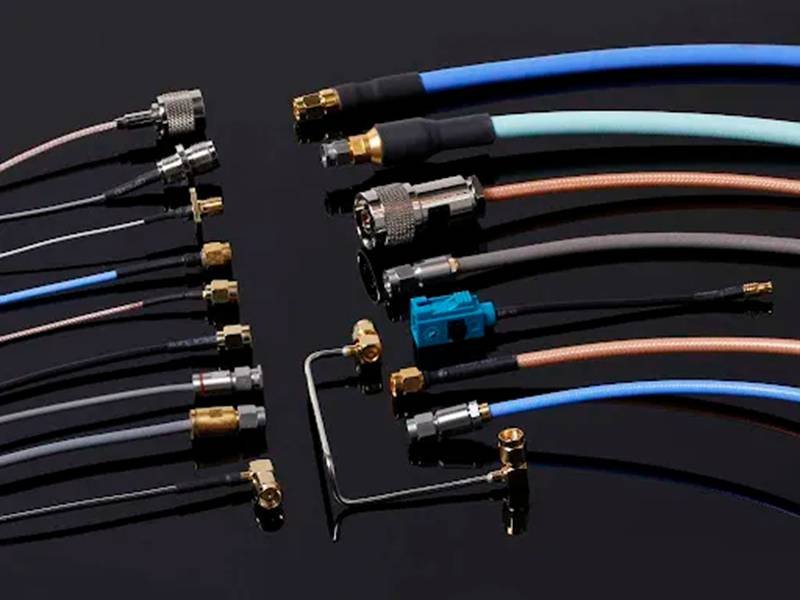
In modern communication systems, RF cables quietly carry the signals that power wireless networks, satellite communication, radar systems, medical equipment, and countless electronic devices. While they may appear simple on the outside, the performance of an RF cable assembly depends on a surprisingly complex combination of materials, structural design, electrical parameters, and manufacturing quality.
Engineers often assume that choosing a cable with the correct impedance or connector type is enough. In reality, signal quality can degrade quickly when small design factors are overlooked. Poor shielding can introduce electromagnetic interference, mismatched connectors can cause reflection losses, and low-quality assembly processes can create hidden reliability issues that only appear after installation.
RF cable performance is determined by several key factors including conductor material, dielectric properties, shielding effectiveness, impedance control, connector compatibility, and manufacturing precision. These elements directly affect signal loss, return loss, VSWR, and electromagnetic interference protection, which ultimately determine how reliably an RF cable transmits high-frequency signals.
Understanding these factors becomes especially important when designing equipment for telecommunications, aerospace systems, medical electronics, or industrial automation. In many cases, the difference between a stable signal and a failing system comes down to details in cable structure and assembly quality.
A few years ago, one RF engineer approached our team with a problem: his system passed all simulations but failed during field testing due to unexpected signal loss. The root cause turned out to be a poorly shielded cable assembly. That single detail delayed an entire product launch. Stories like this are why understanding RF cable performance is not just technical knowledge — it’s critical engineering insight.
What Is RF Cable Performance?
RF cable performance describes how effectively a cable assembly transmits radio-frequency signals from one device to another without introducing excessive signal loss, reflection, or interference. In practical engineering terms, it reflects whether a cable can deliver stable signal transmission across the intended frequency range while maintaining predictable electrical behavior. When engineers evaluate RF cable performance, they typically focus on parameters such as insertion loss, return loss, VSWR, impedance stability, shielding effectiveness, and environmental reliability.

A well-performing RF cable ensures that most of the transmitted signal power reaches the destination device. In contrast, poor cable performance can cause signal attenuation, reflection, and noise interference, all of which degrade system efficiency. These problems become more serious as frequency increases. For example, a cable that performs adequately at 100 MHz may show significant signal degradation at 3 GHz if its internal structure or materials are not optimized for high-frequency transmission.
What Is RF Cable Performance
RF cable performance refers to a cable’s ability to transmit high-frequency electrical signals with minimal power loss and stable impedance across its operating frequency range. Engineers typically evaluate this performance through measurable parameters such as insertion loss, return loss, VSWR, and shielding effectiveness.
In real applications, these metrics determine whether a communication system maintains strong signal quality, stable connections, and reliable data transmission.
A simplified overview of key RF cable performance metrics is shown below:
| Performance Parameter | What It Measures | Typical Target |
|---|---|---|
| Insertion Loss | Signal power lost through cable | As low as possible |
| Return Loss | Reflected signal energy | Higher than 20 dB |
| VSWR | Signal reflection ratio | Close to 1.0:1 |
| Shielding Effectiveness | Protection from EMI | Above 90 dB |
| Impedance Stability | Signal matching consistency | 50 Ω or 75 Ω |
These parameters help engineers determine whether a cable assembly is suitable for applications such as telecommunications infrastructure, RF testing equipment, broadcast systems, or radar installations.
Why RF Cable Performance Matters
RF cable performance directly affects system reliability and signal integrity. In many communication systems, signals must travel through several meters of cable before reaching antennas, transmitters, receivers, or measurement equipment. Even a small amount of signal loss can significantly affect system output.

For example, consider a wireless base station transmitting RF signals to an antenna. If the cable connecting the transmitter to the antenna introduces excessive insertion loss, the effective transmission power reaching the antenna will decrease. This can reduce signal coverage and communication reliability.
The relationship between cable length and signal loss is especially important in high-frequency systems.
| Frequency | Typical Signal Loss per Meter (Example Coax Cable) |
|---|---|
| 100 MHz | ~0.05 dB |
| 500 MHz | ~0.12 dB |
| 1 GHz | ~0.20 dB |
| 3 GHz | ~0.40 dB |
| 6 GHz | ~0.70 dB |
This table shows how signal attenuation increases rapidly as frequency rises. As a result, engineers must carefully select cables designed specifically for the frequency range used in their equipment.
Another important factor is impedance matching. Most RF systems operate at a standard impedance of 50 Ω or 75 Ω. If a cable assembly deviates from this impedance, signal reflections may occur, leading to power loss and unstable system performance.
Where RF Cable Performance Matters
RF cable performance becomes particularly important in industries where stable signal transmission is essential. In these environments, cables often operate under challenging conditions such as high frequencies, long transmission distances, electromagnetic noise, or extreme temperatures.
Below are several industries where RF cable performance plays a critical role:
| Industry | Typical RF Cable Applications |
|---|---|
| Telecommunications | Cellular base stations, antennas |
| Aerospace | Radar systems, navigation equipment |
| Broadcast | RF transmitters, signal distribution |
| Medical | Imaging equipment, RF monitoring |
| Industrial electronics | RF sensors, testing instruments |

In telecommunications infrastructure, for example, high-performance RF cables are used to connect transmitters to antennas located on towers or rooftops. These cables must maintain low signal loss across long distances to ensure efficient signal transmission.
In aerospace systems, RF cables often operate under extreme temperature variations and vibration conditions. Therefore, cable materials and assembly quality must meet strict reliability standards.
Who Needs RF Cable Performance
Several types of customers typically focus on RF cable performance when selecting cable assemblies.
Engineering teams are usually the most technically detailed customers. They often provide connector models, cable specifications, frequency requirements, and electrical performance parameters. Their primary concern is whether the cable assembly will maintain stable performance within the designed system.
OEM manufacturers are another important customer group. These companies integrate RF cables into larger electronic systems such as telecommunications equipment, signal analyzers, or industrial devices. Their priorities typically include stable quality, competitive pricing, and reliable delivery schedules.
Trading companies and distributors may approach suppliers with limited technical information. In many cases, they provide only a connector model number or a photo of the cable they need. An experienced manufacturer can analyze the request, identify the required specifications, and recommend an appropriate cable assembly solution.
At Sino-Conn, customers from all of these groups frequently request support with specification analysis, cable design recommendations, and technical drawings. Some projects begin with only a product image or a short description, and the engineering team helps translate these requests into detailed RF cable assemblies suitable for production.
Which Materials Affect RF Cable Performance?
The materials used in an RF cable assembly have a direct and measurable impact on signal transmission quality, electrical stability, durability, and service life. Unlike low-frequency electrical wiring, RF cables operate in environments where even small variations in material properties can change impedance, increase signal loss, or introduce electromagnetic interference.
In practical engineering projects, RF cable material selection usually focuses on four major components: the center conductor, dielectric insulation, shielding layer, and outer jacket. Each layer plays a specific role in controlling signal flow and protecting the cable from environmental stress. If any one of these materials is poorly selected or inconsistently manufactured, overall cable performance may decline.
For example, a cable with a high-quality conductor but a poor dielectric layer may still suffer from impedance instability. Likewise, excellent electrical materials cannot compensate for weak shielding in environments with strong electromagnetic interference.
The table below summarizes the four main material layers in a typical RF coaxial cable and their functions.
| Cable Component | Main Function | Key Performance Impact |
|---|---|---|
| Center Conductor | Carries RF signal | Electrical conductivity |
| Dielectric Layer | Maintains impedance | Signal propagation speed |
| Shielding Layer | Blocks EMI interference | Signal stability |
| Outer Jacket | Protects cable | Mechanical durability |

Understanding how each of these materials affects performance helps engineers select the right RF cable assembly for their system.
Which Conductors Improve Performance
The center conductor is the primary path through which RF signals travel. Its electrical conductivity and surface characteristics significantly influence signal loss, especially at high frequencies.
Copper is the most widely used conductor material because it offers excellent conductivity and stable mechanical properties. However, not all copper conductors perform the same. Manufacturers may use different conductor structures depending on application requirements.
Common conductor materials include:
| Conductor Type | Conductivity | Typical Applications |
|---|---|---|
| Bare Copper | Very high | Standard RF cables |
| Tinned Copper | High | Corrosion-resistant systems |
| Silver-Plated Copper | Extremely high | Microwave systems |
| Copper-Clad Steel | Moderate | Long-distance transmission |
At high frequencies, RF current tends to travel along the outer surface of the conductor rather than through the entire cross-section. This phenomenon is known as the skin effect. Because silver has slightly better conductivity than copper at the surface level, silver-plated conductors are commonly used in microwave cables and high-frequency test equipment.
Another factor is conductor structure. Some RF cables use solid conductors, while others use stranded conductors. Solid conductors provide better electrical performance and stable impedance, but stranded conductors offer greater flexibility for applications where cables must bend frequently.
Choosing the right conductor material therefore depends on balancing electrical performance, mechanical flexibility, and environmental conditions.
Which Dielectrics Control Signals
The dielectric layer separates the center conductor from the shielding layer and plays a major role in determining the cable’s characteristic impedance and signal propagation speed.
In RF cable design, dielectric materials are selected based on their dielectric constant, temperature stability, and signal attenuation properties. A lower dielectric constant typically results in lower signal loss and faster signal propagation.
Several dielectric materials are commonly used in RF cables:
| Dielectric Material | Dielectric Constant | Key Advantage |
|---|---|---|
| Solid Polyethylene (PE) | ~2.3 | Stable impedance |
| Foam Polyethylene | ~1.5 | Lower signal loss |
| PTFE (Teflon) | ~2.1 | High temperature resistance |
| FEP | ~2.1 | Excellent electrical stability |
Foam polyethylene is widely used in modern RF cables because the small air pockets inside the material reduce the effective dielectric constant. This allows signals to travel faster and with less attenuation.
For high-temperature environments such as aerospace electronics or industrial equipment, PTFE insulation is often preferred because it maintains stable electrical properties even at temperatures above 200°C.
Another important factor is manufacturing consistency. If the dielectric thickness varies along the cable, impedance fluctuations can occur. These variations may cause signal reflections that degrade RF system performance.
Which Shielding Reduces EMI
Shielding protects RF signals from external electromagnetic interference and prevents internal signals from leaking out of the cable. This is particularly important in environments where multiple electronic systems operate close to each other.
Without proper shielding, RF cables may pick up interference from nearby power lines, motors, wireless transmitters, or other electronic equipment.
Shielding structures typically combine metallic foil and braided conductors.
| Shield Structure | Coverage | Shielding Effectiveness |
|---|---|---|
| Single Braided Shield | 70–85% | Moderate |
| Foil Shield | Nearly 100% | High |
| Foil + Braid Shield | >95% | Very high |
| Double Braided Shield | >95% | Maximum protection |
Foil shielding provides excellent high-frequency coverage because it forms a nearly continuous conductive barrier. However, foil alone can be mechanically fragile. Braided shielding adds durability and improves low-frequency noise suppression.
For many telecommunications and industrial applications, a foil plus braided shield structure offers the best balance between electrical performance and mechanical strength.
High-performance RF cables used in test equipment or radar systems may use double shielding layers to achieve shielding effectiveness exceeding 100 dB.
Which Jackets Protect RF Cables
The outer jacket protects the cable assembly from environmental damage, mechanical stress, and chemical exposure. While the jacket does not directly carry electrical signals, it plays an important role in maintaining long-term reliability.
Different environments require different jacket materials.
| Jacket Material | Key Feature | Typical Use |
|---|---|---|
| PVC | Flexible and low cost | Indoor equipment |
| Polyethylene (PE) | UV resistant | Outdoor telecom cables |
| TPU | High abrasion resistance | Industrial equipment |
| LSZH | Low smoke and halogen free | Public infrastructure |
Outdoor RF cables used in telecommunications towers or rooftop antenna installations often use polyethylene jackets because they resist sunlight exposure, moisture, and temperature changes.
In transportation systems or buildings where fire safety is critical, LSZH (Low Smoke Zero Halogen) materials are often required. These materials reduce toxic smoke emissions during fire incidents.
Another important factor is mechanical durability. In industrial environments where cables may rub against metal surfaces or move with equipment, tougher jacket materials such as TPU help extend cable life.
How Does RF Cable Design Affect Performance?
RF cable design has a direct influence on signal stability, transmission efficiency, and overall system reliability. Even when high-quality materials are used, poor structural design can still introduce impedance mismatches, signal reflections, or excessive attenuation. For engineers and equipment manufacturers, understanding how cable geometry, impedance control, shielding layout, and connector integration affect performance is essential when selecting or designing RF cable assemblies.
In most RF communication systems, signals travel through coaxial cable structures where the internal geometry must remain highly consistent along the entire cable length. Small changes in conductor spacing, dielectric thickness, or connector alignment can alter electrical characteristics and affect signal propagation. As signal frequency increases, these design tolerances become even more critical.
A typical RF coaxial cable structure includes four main elements: center conductor, dielectric layer, shielding structure, and outer jacket. The relationship between these components determines the cable’s impedance, attenuation, and shielding effectiveness.
| Design Element | Engineering Purpose | Performance Impact |
|---|---|---|
| Conductor diameter | Signal transmission path | Controls resistance and attenuation |
| Dielectric thickness | Spacing control | Determines impedance stability |
| Shield structure | EMI protection | Reduces signal leakage |
| Connector interface | System connection | Prevents signal reflection |
Proper RF cable design ensures that signals travel smoothly through the cable without distortion or interference.
How Impedance Controls Signals
Impedance is one of the most important design parameters in RF cables. Most RF systems are designed to operate at standardized characteristic impedances, typically 50 ohms or 75 ohms. If the cable impedance deviates from the system impedance, signal reflections will occur.
These reflections happen because part of the transmitted signal energy is bounced back toward the signal source instead of continuing forward. Over time, this can reduce signal strength and potentially damage RF transmitters in high-power systems.
The impedance of a coaxial cable is determined primarily by the relationship between three factors:
- the diameter of the center conductor
- the inner diameter of the shield
- the dielectric constant of the insulation material
This relationship can be simplified as follows:
| Design Parameter | Effect on Impedance |
|---|---|
| Larger center conductor | Lower impedance |
| Thicker dielectric | Higher impedance |
| Higher dielectric constant | Lower impedance |
For example, if the dielectric layer is slightly compressed during manufacturing, the spacing between conductor and shield may change. This can shift the impedance away from the target value, leading to signal reflections.
In high-frequency systems such as telecommunications equipment or RF testing instruments, maintaining stable impedance across the entire cable length is essential. For this reason, manufacturers must maintain tight dimensional tolerances during cable production and connector assembly.
How Cable Size Matters
Cable diameter is another important design factor that influences RF cable performance. In general, larger cables tend to provide lower signal loss because they have lower electrical resistance and larger current-carrying capacity.
However, larger cables are also heavier and less flexible, which may limit their use in certain applications.
The relationship between cable size and signal attenuation can be illustrated in the following example:
| Cable Type | Outer Diameter | Signal Loss at 1 GHz (per meter) |
|---|---|---|
| RG-174 | 2.8 mm | ~1.5 dB |
| RG-58 | 5 mm | ~0.6 dB |
| LMR-240 | 6 mm | ~0.35 dB |
| LMR-400 | 10 mm | ~0.22 dB |

From this comparison, it is clear that thicker cables significantly reduce signal attenuation. This is why long-distance antenna installations often use larger cables such as LMR-400 or similar low-loss cables.
However, smaller flexible cables are still widely used in compact devices such as testing equipment, robotics systems, and aerospace electronics where space constraints are important.
When selecting cable size, engineers must balance three key factors:
- signal attenuation
- flexibility requirements
- installation space limitations
How Shielding Structure Works
Shielding is responsible for protecting RF signals from electromagnetic interference (EMI) and preventing signal leakage. In environments with many electronic devices operating simultaneously, shielding design becomes critical for maintaining signal stability.
RF cables usually combine multiple shielding layers to achieve strong EMI protection.
Common shielding structures include:
| Shield Type | Coverage | Typical Performance |
|---|---|---|
| Single braided shield | 70–85% | Basic EMI protection |
| Aluminum foil shield | Nearly 100% | High-frequency shielding |
| Foil + braided shield | 95%+ | Balanced protection |
| Double braided shield | 95%+ | Maximum shielding |
Foil shields provide excellent high-frequency protection because they create a continuous conductive barrier around the dielectric layer. However, foil can be mechanically fragile. Braided copper shields add mechanical durability and improve low-frequency interference suppression.
In industrial environments where RF cables may run near power equipment or large motors, dual-layer shielding is often required to maintain signal stability.
For high-precision RF measurement systems, additional shielding layers may be used to reduce noise levels and improve measurement accuracy.
How Connectors Affect Performance
The connector interface is another critical aspect of RF cable design. Even if the cable itself has excellent electrical properties, poorly selected or poorly installed connectors can significantly degrade performance.
RF connectors must maintain the same impedance as the cable to avoid signal reflections. They must also provide stable mechanical contact and maintain consistent electrical continuity.
Some common RF connector types include:
| Connector Type | Typical Frequency Range | Typical Use |
|---|---|---|
| SMA | Up to 18 GHz | RF modules, testing equipment |
| BNC | Up to 4 GHz | Measurement equipment |
| N-Type | Up to 11 GHz | Telecom infrastructure |
| TNC | Up to 11 GHz | Industrial RF systems |

Connector installation requires precise assembly processes such as controlled crimping, soldering, or compression techniques. Improper connector installation may introduce gaps, impedance discontinuities, or poor shielding contact.
These problems can lead to increased insertion loss, higher VSWR, and unstable signal transmission.
In custom RF cable assembly projects, manufacturers often provide engineering drawings that specify connector models, cable length tolerances, and assembly methods. These drawings help ensure that the cable assembly matches the electrical and mechanical requirements of the system.
What Electrical Factors Affect RF Cable Performance?
When engineers evaluate an RF cable assembly, electrical performance parameters are usually the first indicators they examine. These parameters reveal how much signal power is lost during transmission, how much signal is reflected back toward the source, and whether the cable can support the required frequency range. Even when a cable is manufactured using high-quality materials, electrical characteristics such as insertion loss, return loss, VSWR, and frequency stability ultimately determine whether it will perform reliably inside real communication systems.
In practical applications like telecom infrastructure, radar equipment, signal testing instruments, and wireless networks, small electrical differences can significantly influence overall system performance. A few decibels of signal loss may reduce antenna coverage range, while poor impedance matching can create reflections that degrade signal clarity.
The following electrical parameters are most commonly used by engineers when evaluating RF cable assemblies.
| Electrical Parameter | What It Indicates | Why It Matters |
|---|---|---|
| Insertion Loss | Signal power lost in cable | Determines signal strength |
| Return Loss | Reflected signal energy | Shows impedance matching |
| VSWR | Voltage standing wave ratio | Measures reflection level |
| Frequency Range | Operating bandwidth | Determines cable suitability |
| Power Handling | Maximum signal power | Prevents overheating |
Understanding how these parameters interact helps engineers select RF cable assemblies that deliver stable signal transmission and long-term reliability.
What Is Insertion Loss
Insertion loss describes the amount of signal power that is lost as an RF signal travels through a cable. It is typically measured in decibels (dB) and increases as cable length or signal frequency increases.
Several physical factors contribute to insertion loss:
- electrical resistance of the conductor
- dielectric absorption inside insulation
- shielding resistance
- connector interface losses
- cable length
At higher frequencies, signal energy tends to travel along the surface of the conductor rather than through the entire conductor cross-section. This phenomenon, known as the skin effect, increases effective resistance and contributes to higher signal attenuation.
The table below illustrates typical insertion loss values for a common RF coaxial cable across different frequencies.
| Frequency | Typical Loss per Meter |
|---|---|
| 100 MHz | ~0.05 dB |
| 500 MHz | ~0.12 dB |
| 1 GHz | ~0.20 dB |
| 3 GHz | ~0.40 dB |
| 6 GHz | ~0.70 dB |
As shown above, insertion loss increases rapidly with frequency. For long cable runs in telecommunications systems, this effect can significantly reduce signal power before it reaches the antenna.
For example, if a cable loses 0.6 dB per meter at 1 GHz, a 10-meter cable could reduce signal strength by approximately 6 dB, meaning nearly 75% of the signal power is lost.
Because of this, engineers often select larger low-loss cables or shorten cable runs whenever possible.
What Is Return Loss
Return loss measures how much of the transmitted RF signal is reflected back toward the signal source due to impedance mismatches within the cable assembly.
In an ideal system, the entire signal travels forward through the cable. However, when impedance differences occur—such as between connectors, cables, or devices—part of the signal reflects backward.
Return loss is expressed in decibels, and higher values indicate better performance because less signal energy is reflected.
| Return Loss | Signal Reflection | System Performance |
|---|---|---|
| 10 dB | ~10% reflected | Poor |
| 20 dB | ~1% reflected | Good |
| 30 dB | ~0.1% reflected | Excellent |
For many RF communication systems, engineers aim for return loss values greater than 20 dB.
Low return loss values often indicate issues such as:
- poor connector assembly
- incorrect impedance cable selection
- inconsistent dielectric thickness
- mechanical deformation of the cable
These reflections can reduce system efficiency and, in high-power transmitters, may even cause overheating or damage to RF components.
What Is VSWR
VSWR (Voltage Standing Wave Ratio) is another measurement used to evaluate signal reflections in RF transmission systems. It represents the ratio between the maximum and minimum voltage levels along a transmission line when reflected signals interfere with incoming signals.
In simple terms, VSWR indicates how efficiently RF power moves through the cable.
An ideal cable assembly would produce a VSWR of 1:1, meaning no signal reflection occurs. In real systems, small reflections are unavoidable, so engineers typically accept slightly higher values.
| VSWR | Reflection Level | Performance |
|---|---|---|
| 1.0:1 | 0% | Perfect |
| 1.3:1 | Very low | Excellent |
| 1.5:1 | Low | Very good |
| 2.0:1 | Moderate | Acceptable |
| 3.0:1 | High | Poor |

High VSWR values usually indicate impedance mismatches somewhere in the cable assembly. This may be caused by incorrect connector installation, cable damage, or design inconsistencies.
For high-frequency systems such as radar equipment or RF testing devices, maintaining low VSWR is essential for stable signal measurement and power transmission.
What Frequency Matters
Frequency range is another critical electrical factor that determines RF cable performance. Not all cables are designed to handle the same frequency spectrum.
As signal frequency increases, several electrical challenges become more significant:
- signal attenuation increases
- shielding requirements become stricter
- impedance stability becomes more sensitive
Different cable models are designed to operate efficiently within specific frequency ranges.
| Cable Type | Typical Frequency Range |
|---|---|
| RG-58 | Up to 1 GHz |
| RG-213 | Up to 3 GHz |
| LMR-400 | Up to 6 GHz |
| Semi-rigid cables | Up to 40 GHz |
High-frequency cables often use advanced dielectric materials and tightly controlled manufacturing tolerances to maintain stable electrical performance.
For example, microwave systems operating above 10 GHz require cables with extremely consistent geometry and high-performance shielding structures. Small dimensional variations in these cables may cause significant impedance fluctuations.
Engineers selecting RF cables must therefore consider both the operating frequency of the system and the maximum frequency rating of the cable to ensure stable performance.
How Does Manufacturing Affect RF Cable Performance?
Even when the correct cable type, materials, and electrical specifications are selected, the final performance of an RF cable assembly depends heavily on how it is manufactured. In real engineering projects, many signal problems are not caused by cable design itself but by inconsistencies during the assembly process. Issues such as connector misalignment, improper stripping of insulation layers, poor shielding contact, or inaccurate cable lengths can introduce impedance discontinuities and signal reflections.
For customers building telecommunications equipment, testing instruments, radar systems, or industrial electronics, manufacturing consistency directly determines whether the cable assembly performs as expected in the field. This is why professional RF cable manufacturers emphasize precise assembly procedures, detailed engineering drawings, strict inspection standards, and repeatable production processes.
The table below summarizes several manufacturing factors that commonly influence RF cable performance.
| Manufacturing Factor | Possible Impact on Performance |
|---|---|
| Connector assembly precision | Affects impedance stability |
| Cable stripping accuracy | Prevents dielectric damage |
| Shielding termination | Maintains EMI protection |
| Crimping or soldering quality | Ensures electrical continuity |
| Inspection and testing | Confirms electrical parameters |
When these processes are carefully controlled, RF cable assemblies can maintain stable electrical characteristics across thousands of units in production.
How Assembly Impacts Performance
RF cable assembly requires more precision than many standard electrical wiring processes. Each cable contains multiple layers—conductor, dielectric insulation, shielding, and outer jacket—and these layers must be handled carefully during connector installation.
If the dielectric insulation is accidentally compressed during stripping, the spacing between the center conductor and shielding layer may change. Because impedance depends on this spacing, even small distortions can alter the cable’s electrical behavior.
Another common issue occurs when the center conductor is not perfectly aligned with the connector pin. This misalignment may create a small impedance discontinuity that causes signal reflections.
Typical assembly steps for RF cable assemblies include:
| Assembly Step | Purpose |
|---|---|
| Cable cutting | Maintain precise cable length |
| Jacket stripping | Expose shielding layer |
| Shield preparation | Maintain shielding continuity |
| Dielectric trimming | Protect insulation integrity |
| Connector attachment | Establish electrical interface |
Each step requires specialized tools and experienced technicians. For example, precision stripping tools are often used to remove insulation layers without damaging the conductor or dielectric material.
In high-frequency systems operating above several gigahertz, even a small mechanical imperfection may affect electrical performance. Therefore, manufacturers must maintain consistent procedures and trained operators throughout the production process.
How Drawings Prevent Errors
Detailed engineering drawings are essential for ensuring that RF cable assemblies are manufactured correctly. Many RF cable projects involve custom configurations where cable length, connector type, and signal routing vary depending on the system design.
Before production begins, manufacturers typically create technical drawings showing the complete cable assembly structure.
These drawings normally include the following information:
| Drawing Element | Description |
|---|---|
| Connector model numbers | Exact connector types |
| Cable specification | Cable model and impedance |
| Cable length tolerance | Manufacturing accuracy |
| Pin-out definition | Signal routing between connectors |
| Assembly method | Crimp or solder process |
Providing these drawings allows engineers and purchasing teams to confirm that the cable design meets their system requirements before manufacturing begins.
In some situations, customers provide only a connector model number or even a photo of an existing cable assembly. In those cases, experienced manufacturers can analyze the request, identify the required components, and produce a technical drawing for confirmation.
At Sino-Conn, engineering teams frequently generate cable assembly drawings within 30 minutes to several hours, depending on the complexity of the design. Once customers approve the drawing, production proceeds according to the confirmed specifications.
This process helps reduce production mistakes and ensures the cable assembly will integrate correctly into the customer’s equipment.
How Testing Ensures Performance
Testing plays a critical role in verifying that RF cable assemblies meet electrical performance requirements. Because RF signals operate at high frequencies, problems that are not visible during assembly may still affect signal transmission.
Manufacturers therefore perform several types of tests to confirm cable performance before shipment.
Common RF cable tests include:
| Test Type | What It Checks |
|---|---|
| Continuity test | Electrical connection integrity |
| Impedance test | Matching of cable impedance |
| VSWR test | Signal reflection level |
| Insertion loss test | Signal attenuation |
| Visual inspection | Mechanical assembly quality |
For communication equipment manufacturers, insertion loss and VSWR are particularly important parameters because they indicate whether the cable assembly will transmit signals efficiently.
In many production environments, testing is performed on sampling batches. However, for high-reliability industries such as medical electronics or telecommunications infrastructure, some manufacturers perform 100% inspection.
Sino-Conn uses a three-stage quality inspection system, which includes:
- inspection during assembly
- final product inspection after assembly
- inspection before shipment
This approach helps ensure that each cable assembly meets electrical and mechanical specifications before delivery to customers.
How Certifications Matter
Manufacturing certifications provide additional assurance that RF cable assemblies meet recognized quality and safety standards. For companies purchasing cable assemblies for global markets, certifications also help ensure compliance with international regulations.
Several certifications are commonly associated with RF cable manufacturing.
| Certification | Purpose |
|---|---|
| UL | Electrical safety certification |
| ISO | Quality management standard |
| RoHS | Restriction of hazardous substances |
| REACH | Chemical safety regulation |
| PFAS compliance | Environmental safety requirements |
| COO / COC | Product origin and conformity documentation |
These certifications confirm that materials and manufacturing processes follow internationally recognized guidelines.
For customers exporting electronic equipment to regions such as North America or Europe, certification compliance may be required before products can enter the market.
Working with a manufacturer that maintains appropriate certifications helps reduce regulatory risks and ensures that RF cable assemblies meet industry standards.
How Can Manufacturers Improve RF Cable Performance?
Improving RF cable performance is not only about selecting good materials. In real projects, performance depends on a combination of engineering capability, manufacturing precision, component sourcing, and fast technical communication. For customers developing communication equipment, industrial electronics, testing instruments, or wireless infrastructure, the manufacturer’s ability to control these factors directly affects signal reliability and project timelines.
In many RF systems, cables are not standard off-the-shelf products. Instead, they must match specific connector interfaces, frequency ranges, and installation environments. A capable manufacturer therefore focuses on several practical areas: custom design capability, flexible connector sourcing, engineering response speed, and strict quality control during production.
The following table summarizes several practical ways manufacturers can improve RF cable performance.
| Improvement Area | Customer Benefit |
|---|---|
| Custom engineering design | Better system compatibility |
| Accurate connector selection | Stable impedance matching |
| Fast technical support | Faster product development |
| Process control and testing | Reliable signal transmission |
| Flexible material options | Performance tailored to application |
Manufacturers that manage these areas effectively can deliver RF cable assemblies that meet both electrical performance requirements and real-world installation conditions.
How Custom Design Helps
Many RF cable projects require customized assemblies rather than standard cable products. Different equipment designs often require unique cable lengths, connector combinations, shielding levels, or environmental protection features.
For example, an RF cable used inside a testing instrument may need a short cable length and high-frequency connectors, while a telecommunications base station may require longer cables with lower signal loss and stronger weather protection.
Custom design allows manufacturers to optimize cable assemblies for specific system requirements.
Typical customization options include:
| Customization Option | Purpose |
|---|---|
| Cable length adjustment | Fit equipment layout |
| Connector combinations | Match device interfaces |
| Pin-out configuration | Control signal routing |
| Shielding structure | Improve EMI protection |
| Jacket materials | Adapt to environment |
In some cases, customers only provide a connector model number or a reference photo of the cable they want. A capable manufacturer can analyze the request, identify the required cable type, and recommend suitable materials and assembly structures.
This type of engineering support helps reduce development time and ensures that the final cable assembly performs correctly within the customer’s system.
How Connector Options Help
Connector selection is another factor that influences both performance and supply flexibility. In RF cable assemblies, connectors must maintain consistent impedance and provide stable electrical contact.
Customers typically choose between two connector sourcing options.
| Connector Type | Key Characteristics |
|---|---|
| Original brand connectors | High precision and brand recognition |
| Compatible connectors | Lower cost and faster availability |
Original connectors from established manufacturers are often preferred in high-reliability systems because they offer precise mechanical tolerances and well-documented electrical performance. However, these connectors may have longer lead times and higher costs, especially when supply chains are tight.
Compatible connectors, when manufactured according to the same specifications, can offer similar functionality while improving delivery speed and cost efficiency.
Manufacturers who maintain stable relationships with multiple connector suppliers can offer customers more flexibility when selecting components. This flexibility helps ensure that projects can continue even when certain components experience supply delays.
How Fast Engineering Helps
In many electronic product development projects, speed of engineering response is extremely important. Engineers often need quick technical feedback when designing or modifying equipment.
For example, during early development stages, engineers may need to test several cable configurations before finalizing their design. If the cable manufacturer cannot provide drawings or prototypes quickly, the entire project schedule may be delayed.
Manufacturers that provide fast engineering support can significantly improve project efficiency.
Typical engineering response timelines may include:
| Engineering Task | Typical Response Time |
|---|---|
| Technical drawing creation | 30 minutes to several hours |
| Quotation preparation | Same day |
| Prototype sample production | 3–14 days |
| Mass production lead time | 2–4 weeks |
Fast response allows customers to test prototypes earlier and identify potential performance issues before large-scale production begins.
In addition, quick communication between engineers and manufacturers helps resolve technical questions more efficiently, especially when custom cable assemblies are involved.
How Sino-Conn Supports Projects
Manufacturers with strong engineering capability and flexible production systems are better positioned to support complex RF cable projects. Sino-Conn focuses on providing customized cable assemblies for customers in telecommunications, industrial electronics, testing equipment, and other high-frequency applications.
One key advantage is the ability to analyze customer requirements quickly. In many cases, customers approach suppliers with limited information—sometimes only a connector model number, a rough description, or a photo of an existing cable. Experienced engineers can interpret these requests and recommend suitable cable specifications.
Another advantage is flexible customization capability. Sino-Conn can adjust cable length, connector combinations, shielding structures, and material selections based on project requirements. This flexibility allows engineers to integrate cable assemblies directly into their equipment designs without extensive modification.
Production flexibility is also important for many customers. Some projects begin with small prototype quantities before moving into larger production runs. Supporting low-volume prototype orders allows customers to test cable assemblies before committing to large-scale manufacturing.
Finally, strict inspection procedures help ensure consistent product quality. By combining careful assembly processes with multiple inspection stages, manufacturers can reduce the risk of signal loss, impedance mismatch, or mechanical defects.
For customers designing RF systems, working with a manufacturer that offers engineering support, flexible customization, and reliable production capacity can significantly improve the overall performance and reliability of RF cable assemblies.
Conclusion
RF cable performance is determined by a combination of materials, structural design, electrical characteristics, and manufacturing quality. Conductors, dielectric materials, shielding structures, and connector compatibility all influence how efficiently RF signals travel through a cable assembly.
Equally important are manufacturing precision, testing procedures, and engineering support. Even small variations in assembly quality can significantly affect impedance stability, signal loss, and system reliability.
For engineers and manufacturers designing high-frequency communication systems, choosing the right RF cable assembly supplier can greatly simplify development and ensure long-term product performance.
If you are working on a new project or need a reliable partner for custom RF cable assemblies, the engineering team at Sino-Conn can help. Whether you have detailed drawings, a connector model number, or simply a photo of the cable you need, our team can analyze your requirements and provide technical drawings, fast quotations, and customized solutions.
You are welcome to contact Sino-Conn to discuss your project and request a quotation for custom RF cable assemblies tailored to your application.