 Skip to content
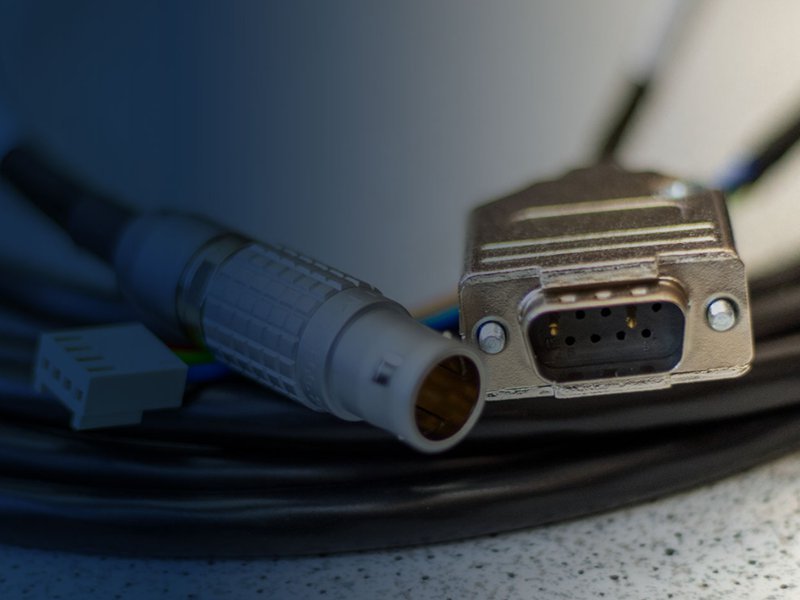
For many buyers, the cable assembly market looks simple on the surface: suppliers quote by part number, cables are built to drawing, and shipments move on schedule. But behind that surface is a highly fragmented, fast-evolving global market shaped by engineering complexity, supply-chain risk, compliance pressure, and shrinking lead-time tolerance.
In today’s manufacturing environment, cable assemblies are no longer treated as generic components. They are system-critical parts that influence product reliability, certification approval, assembly efficiency, and even after-sales costs. A small variation in cable length, shielding structure, or jacket material can cause delays in production lines or failures in the field.
At the same time, buyer behavior is changing. Engineers want suppliers who can translate incomplete requirements into manufacturable designs. OEM factories want flexible pricing and fast turnaround. Procurement teams want predictable quality without carrying inventory. These pressures are reshaping how the cable assembly market operates globally.
The cable assembly market refers to the global industry that designs and manufactures finished cable assemblies using wires, connectors, shielding, and jackets for specific applications. It serves industries such as industrial automation, medical devices, consumer electronics, and defense. Market growth is driven by customization demand, faster product cycles, and the need for reliable, application-specific cable solutions rather than standard cables.
As product lifecycles shorten and applications diversify, the real question is no longer where to buy cables, but which cable assembly partners can adapt fast enough. That shift defines the modern cable assembly market.
What Defines Today’s Cable Assembly Market?
The modern cable assembly market is defined by fast customization, engineering-led development, stricter environmental compliance, and shorter product lifecycles. Buyers expect accurate drawings, complete specifications, rapid prototyping, flexible connector sourcing, and global certifications. As electronics become smaller and more complex, suppliers must support EMI stability, signal integrity, material optimization, and mechanical durability. The market now rewards engineering capability and fast iteration—especially suppliers who can turn incomplete customer information into manufacturable solutions.
The cable assembly market in 2026 is a high-mix, fast-changing environment driven by stricter compliance, miniaturization, and increasingly specialized applications. What once was a simple commodity category is now an engineering-intensive service. Customers—from automation firms to medical device developers—expect technical clarity, rapid iteration, and seamless supplier collaboration. These are the core forces defining the market today.
Demand for Accurate Specs
Customers now treat cable assemblies as engineered components rather than accessories. This shift means every inquiry requires:
- connector specifications
- cable material details (PVC, TPE, Silicone, LSZH)
- voltage and current ratings
- insulation and OD measurements
- shielding type (foil, braid, combo)
- bend radius and flex life expectations
- temperature and flame-retardant requirements
- RoHS/REACH/PFAS compliance data
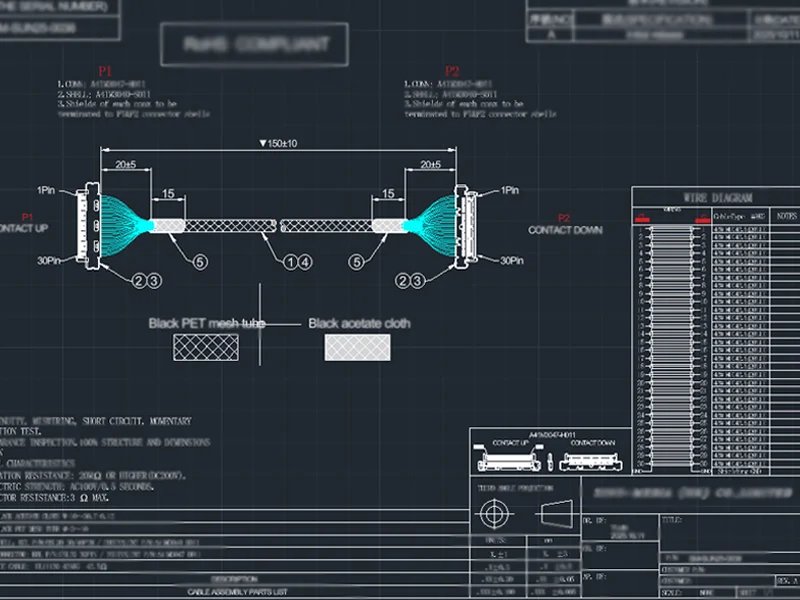
Even when a customer only sends a photo or an unclear model number, the expectation is: “Translate this into a precise specification we can approve.”
This is where Sino-Conn excels, producing complete spec sheets and drawings even when the customer provides limited information.
Shift Toward Custom Builds
More than 60–70% of global cable assembly demand is now custom, not off-the-shelf. This trend is driven by:
- specialized industrial automation
- robotics sensors
- compact consumer devices
- EV systems
- telecom & high-speed data applications
- medical diagnostics and imaging equipment
Custom solutions require unique:
- lengths
- wiring definitions
- connector combinations
- mechanical moldings
- environmental protections
Suppliers must not only assemble cables but help customers design them.
Faster Development Cycles
Product development timelines have collapsed:
- consumer electronics → 6–12 months
- industrial hardware → 12–18 months
- medical devices → 24–36 months
As a result, customers expect:
- drawings in 30 minutes to 3 days
- urgent samples in 2–3 days
- mass production in 2 weeks
Speed is no longer a competitive advantage— it is a baseline requirement.
Sino-Conn’s rapid engineering and prototyping structure is designed specifically for this market demand.
Compliance and Traceability
Compliance is now a critical purchasing driver, especially in North America and Europe. Requirements increasingly include:
- UL-certified wire
- ISO production controls
- RoHS, REACH, PFAS restrictions
- COC, COO documentation
- halogen-free or LSZH materials
- biocompatible silicone for medical use
Buyers expect full documentation before production approval. Suppliers without certification infrastructure are quickly excluded.
Connector Ecosystem Expansion
The connector landscape is expanding faster than ever—Molex, JST, TE, Amphenol, Hirose, USB-C variants, LVDS interfaces, and countless customized industrial connectors. Customers regularly mix brands, seek cross-compatible alternatives, or request hybrid connectors.
This creates challenges:
- long lead times for original-brand parts
- shortages in popular series
- counterfeit risks
- compatibility questions
- high cost for small quantities
Sino-Conn solves this through flexible sourcing—supporting original connectors when required and offering compatible equivalents when price or lead time is critical.
Higher Expectations for Mechanical Performance
Modern devices push cables into tighter spaces and harsher environments. Mechanical requirements include:
- repeated bending (100k+ flex cycles)
- vibration resistance
- tight OD tolerances
- overmold strength
- strain relief optimization
- routing through narrow housings
Suppliers must understand not just cables—but the systems they fit into.
Engineering-Driven Supplier Selection
The customer mindset has shifted from:
“Who is the cheapest?” → “Who can build this correctly and quickly?”
Engineers prefer suppliers who:
- understand electrical behavior
- validate pin-outs
- propose alternatives when specs are unclear
- ensure manufacturability
- support design iteration
- provide complete drawings & documentation
This is why R&D-driven companies increasingly rely on Sino-Conn.
Which Cable Assembly Types Are Most Requested?
The most in-demand cable assembly types in 2026 include signal cables, power cables, high-speed data cables, sensor and control cables, medical-grade silicone cables, RF/coaxial assemblies, and multi-branch wire harnesses. Demand is influenced by connector families, EMI shielding, material durability, and application conditions. Buyers increasingly request custom lengths, pin-out definitions, mixed connector brands, halogen-free materials, and fast sampling. Engineering-driven suppliers like Sino-Conn are preferred because they can convert partial specs or photos into manufacturable designs.
Cable assembly demand has expanded far beyond simple power or data connections. As industries adopt automation, electrification, robotics, and compact electronics, buyers expect assemblies that are engineered for their exact applications—not generic catalog parts. Sino-Conn sees recurring demand patterns across industries, each defined by unique technical requirements and connector ecosystems.
These are the cable types driving global demand today.
Signal Cables
Signal cables represent the most common inquiry category because they serve industrial controllers, robots, PCBs, sensors, and consumer electronics. These cables must ensure:
- low contact resistance
- stable signal integrity
- consistent plating and crimp height
- EMI protection depending on the environment
- exact pin-out mapping (straight, cross, or vendor-defined)
Connector families frequently requested include:
- JST (XH, PH, SH, VH series)
- Molex (51021, 5557, 5566, MicroFit, PicoBlade)
- TE Connectivity MicroTimer & AMPMODU
- Custom blade terminals

Signal cables are often mistaken as low-risk products, but field failures usually come from incorrect pin-outs, insufficient plating, or poor crimp height control. Sino-Conn prevents this through 3-stage QC and mandatory drawing verification before production.
Power Cables
Power assemblies supply energy to motors, lighting systems, EV components, medical pumps, industrial controllers, and battery packs. Requirements include:
- high-current capability
- stable temperature rise behavior
- flame-retardant jackets
- oil/chemical resistance
- 100% crimp pull-force inspection
Commonly requested power connectors:
- Anderson Powerpole
- XT30 / XT60 / XT90
- Ring / Fork terminals
- DC barrel connectors
- ATX / PCIe power connectors (for servers and electronics)

Sino-Conn evaluates conductor size, strand count, and thermal dissipation to prevent overheating in continuous-duty applications.
High-Speed Data Cables
The strongest growth category—driven by faster consumer electronics, AI edge devices, monitors, cameras, and computing hardware.
Popular assemblies include:
- USB-C to USB-C
- USB-C to legacy USB
- HDMI 2.0 / 2.1
- DisplayPort and Mini DP
- LVDS internal display cables
- eDP panel cables
- FFC/FPC assemblies
Technical priorities involve:
- controlled impedance (90Ω / 100Ω)
- twisted-pair geometry
- foil + braided shielding
- length precision
- low crosstalk and attenuation
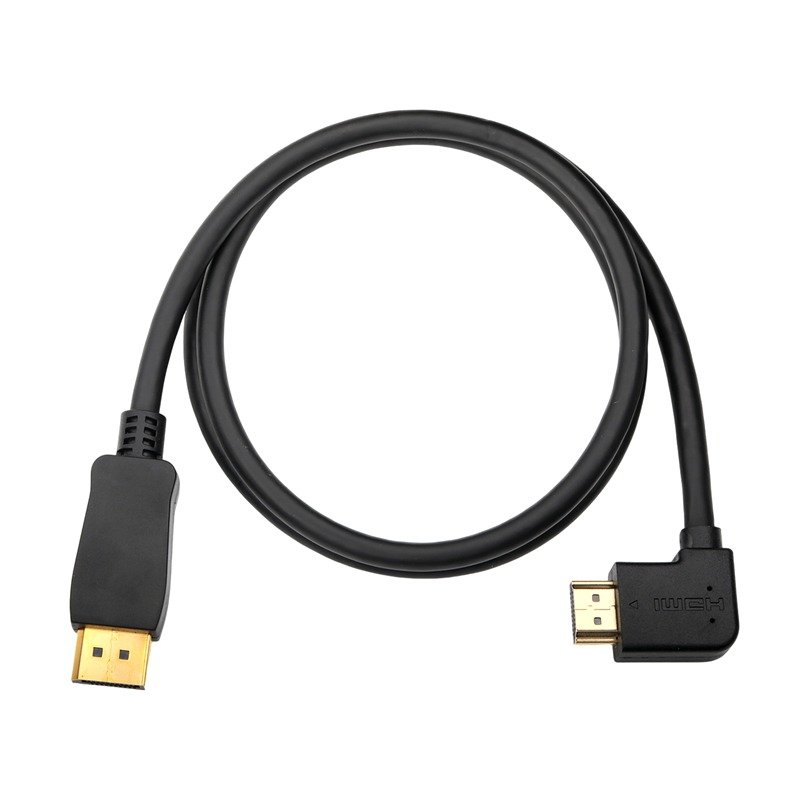
High-speed cables require tight engineering discipline. Sino-Conn’s controlled-shielding processes ensure consistent signal transmission across batches.
Sensor & Control Cables
Automation, factory robotics, and smart machinery massively expanded demand for:
- M8/M12 sensor cables
- limit switch cables
- servo motor feedback cables
- PLC interface harnesses
- CAN / RS485 / RS232 cables
Performance requirements include:
- vibration resistance
- IP-rated overmolds (IP65–IP68)
- chemical and oil-resistant jackets
- color coding or custom labeling
- precise crimp height to avoid intermittent signal drop

These assemblies often determine machine uptime, so reliability and durability are as important as electrical performance.
Medical-Grade Cables
Medical devices require strict hygiene, biocompatibility, and long-term material stability. Sino-Conn produces:
- silicone medical cables
- LSZH cables for diagnostic devices
- sterilizable probe cables
- ECG/EEG assemblies
- custom overmolded handles for medical tools
Key requirements include:
- PFAS-free + halogen-free materials
- anti-microbial jackets
- stable performance under disinfectant exposure
- ergonomic or soft-touch overmolds

Medical customers value Sino-Conn for providing complete documentation (COC, material declarations, UL/ISO compliance).
RF & Coaxial Cables
Telecom, antennas, Wi-Fi modules, GNSS, drones, and IoT devices rely heavily on coaxial solutions:
- SMA / SMB / SMP
- BNC / TNC / N-Type
- U.FL / IPEX / MMCX
- RG174 / RG316 / RG178 assemblies
Critical parameters include:
- impedance accuracy (50Ω or 75Ω)
- VSWR performance
- shielding coverage
- proper connector torque

Because Europe and North America seldom produce coax themselves, Sino-Conn receives strong demand for coaxial assemblies with guaranteed RF performance.
Wire Harnesses & Multi-Branch Looms
Complex devices often require multi-branch harnesses to organize power, signal, and data lines into a single routed assembly. These appear in:
- appliances
- automotive systems
- industrial machinery
- battery management systems
- EV chargers
Characteristics include:
- heat shrinking
- nylon braiding
- secure routing channels
- strain relief structures
- connector labeling or barcode tags
- multi-layer bundling (power + signal)

Wire harnessing is labor-intensive, making Sino-Conn’s automated stripping/crimping lines a major cost advantage.
How Do Engineering Specifications Affect Cost and Feasibility?
Engineering specifications directly determine cost, manufacturability, and long-term reliability in cable assemblies. Key cost drivers include conductor size, insulation material, shielding structure, connector type, pin-out definition, mechanical reinforcement, temperature rating, and environmental resistance. Stricter tolerances, higher electrical loads, or specialized materials raise cost, while flexible connector sourcing, optimized shielding, and accurate drawings improve feasibility. Clear specifications reduce reworks, speed up sampling, and ensure stable mass production.
Engineering specifications are the single greatest influence on cable assembly pricing, feasibility, and production success. They govern material selection, tooling requirements, reliability performance, and compliance readiness. When specifications are unclear, incomplete, or contradictory, projects become more expensive and less predictable. When they are optimized and confirmed, suppliers like Sino-Conn can deliver faster, cheaper, and more reliable assemblies.
The following factors define how engineering specs shape both cost and feasibility.
Electrical Requirements
Electrical parameters dictate conductor size, insulation thickness, shielding type, and connector compatibility.
Key Electrical Factors Affecting Cost
| Parameter | Engineering Impact | Cost Trend |
|---|---|---|
| Current rating | Larger conductor cross-section, heat dissipation | ↑ |
| Voltage rating | Thicker insulation, dielectric strength | ↑ |
| Impedance control | Twisted pairs, shielding, stable geometry | ↑ |
| Signal type (analog/digital) | Crosstalk control, shielding decisions | →/↑ |
| High-frequency signals | Precision manufacturing, low-loss materials | ↑↑ |
Why It Matters
A cable that carries a 10A motor load, a 5V sensor signal, and a 5Gbps data line all require different materials and assembly processes. Many buyers underestimate the relationship between electrical performance and cost. Sino-Conn ensures electrical stability through controlled copper stranding, dielectric consistency, and proper connector mating.
Mechanical Requirements
Mechanical demands influence the design of the entire assembly, especially in robotics, industrial automation, and medical devices.
Mechanical Factors That Drive Cost
- bend radius
- flex cycle requirements (10k / 100k / 1M cycles)
- tensile strength and pull-force
- abrasion protection
- strain relief structures
- overmold hardness and shape
Example: Flex Life Based on Material
| Material | Flex Life | Application | Relative Cost |
|---|---|---|---|
| PVC | Low–Medium | Consumer electronics | Low |
| TPE | Medium–High | Robotics, sensors | Medium |
| Silicone | Very High | Medical, wearable devices | High |
Why It Matters
A simple wire for an indoor device can use PVC. A cable for a robotic arm must survive 100,000+ bend cycles. These are completely different cost structures.
Sino-Conn helps customers choose the correct mechanical parameters to avoid failure without overspecifying the product.
Environmental Requirements
Environmental conditions dramatically influence material choice and connector treatment.
Environmental & Regulatory Factors
- heat exposure (80°C → 150°C+)
- UV and outdoor weathering
- oil, fuel, and chemical exposure
- flame retardancy standards
- halogen-free or PFAS-free requirements
- waterproof sealing (IP65–IP68)
Material Selection Examples
| Requirement | Recommended Material | Cost Impact |
|---|---|---|
| High heat | Silicone, TPE | ↑↑ |
| Outdoor UV | TPU, UV-resistant PVC | ↑ |
| Oil exposure | PVC, TPU | → |
| Flame retardant | FR-PVC, LSZH | ↑ |
| Halogen-free | LSZH | ↑↑ |
Why It Matters
Environmental performance is often regulated by international standards (UL, REACH, RoHS, PFAS bans). Choosing the correct material is not optional—it is mandatory for final product approval.
Sino-Conn’s pre-approved material list helps customers avoid costly redesigns and compliance delays.
Connector Selection
The connector is often the most expensive single component, and its selection heavily influences lead time and manufacturing feasibility.
Connector Cost Breakdown
| Option | Lead Time | Cost | Flexibility | Typical Use |
|---|---|---|---|---|
| Original-brand | Long (4–8 weeks) | Highest | Low | Medical, industrial |
| Compatible-brand | Short (1–2 weeks) | Medium | High | Automation, consumer |
| Custom connector | Medium | Medium–High | Very High | Specialized equipment |
Why It Matters
Many inquiries fail because the requested connector is:
- out of stock
- discontinued
- counterfeit-prone
- priced too high for the market
Sino-Conn solves this through multi-path sourcing: offering original-brand parts when required and compatible equivalents when cost or lead time is critical.
Shielding and EMI Requirements
Shielding is one of the most misunderstood cost drivers.
Shielding Options
- aluminum foil
- 70–95% braided shield
- dual shield (foil + braid)
- EMI-enhanced structures
- ferrite cores for noise suppression
Cost Correlation
More shielding = higher cost, but also higher signal stability.
High-speed applications (USB-C, LVDS, HDMI) require precise impedance control and dual-shield construction. RF assemblies require additional VSWR testing.
Sino-Conn uses controlled-twist and controlled-dielectric processes to maintain signal performance.
Documentation & Drawings
Specifications only become manufacturable once captured in a drawing.
Sino-Conn’s Documentation Workflow
- CAD drawing creation
- tolerance definition
- materials list (BOM)
- connector model numbers
- pin-out verification
- customer approval before production
Why It Matters
Many failures stem from unclear drawings or assumptions. Sino-Conn eliminates ambiguity by producing drawings in 30 minutes to 3 days, speeding up sampling and ensuring perfect alignment.
Testing & QC Requirements
Higher testing requirements lead to higher cost but lower field risk.
Common tests:
- continuity
- pin-out mapping
- insulation resistance
- pull-force
- bending tests
- impedance & VSWR
- waterproof tests
Sino-Conn performs 100% inspection (process + final + pre-shipment) to guarantee consistent performance.
The impact of industry segmentation on pricing
Industry-Based Price Levels
| Industry | Price Level | Reason |
|---|---|---|
| Medical | Highest | Traceability, PFAS-free, biocompatibility |
| Military / Aerospace | Highest | Extreme durability, documentation |
| Industrial Automation | Medium–High | EMI control, ruggedization |
| Commercial Electronics | Medium | Balanced performance/cost |
| Consumer Electronics | Low | High volume, cost pressure |
Even in lower-price regions, medical and military applications still command premium pricing due to regulatory expectations.
Is Customization Becoming the Standard in Cable Assemblies?
Yes. Customization has become the standard in the cable assembly market due to product miniaturization, diverse connector ecosystems, strict environmental requirements, and the rise of application-specific electronics. Buyers increasingly need tailored lengths, pin-outs, materials, overmold shapes, and connector combinations. Fast sampling, flexible sourcing, and no-MOQ production make customization practical. Sino-Conn’s ability to turn photos or incomplete specs into manufacturable solutions has made custom development the dominant request among global customers.
In the past, cable assemblies were commonly purchased from catalogs. But devices today are smaller, smarter, more integrated, and increasingly unique. As a result, manufacturers and engineers no longer want a cable that “almost fits”—they want one that fits perfectly, both functionally and mechanically.
This shift toward customization is driven by several key industry changes.
The Complexity of Modern Devices Requires Tailored Cables
Miniaturized consumer electronics, robotics sensors, industrial controllers, and medical tools all require precise cable parameters:
- specific wire gauges
- bend-optimized materials
- EMI-controlled shielding
- custom routing shapes
- non-standard connector combinations
Even a 1 mm OD difference can determine whether the cable fits inside a molded housing. Sino-Conn receives many requests where customers simply say: “We need this cable to fit inside a narrow channel.” Customization is the only viable solution.
Pin-Out Customization Has Become Universal
Different manufacturers map signals differently. Even identical connector housings may have:
- mirrored wiring
- crossed pairs
- undefined vendor-specific layouts
- mixed power & signal lines
This makes pin-out customization the most common modification requested by OEM and R&D teams.
Sino-Conn’s drawing approval system eliminates ambiguity by presenting the exact wiring map before production begins.
Overmold Shapes and Mechanical Design Are Increasingly Specialized
Medical devices want “soft touch” silicone overmolds. Robotics companies want heavy-duty strain relief. Consumer brands want clean aesthetics with flush angles.
Customization involves:
- mold creation
- ergonomic shaping
- heat-shrink reinforcement
- embedded strain-relief ribs
- color-coded housings
Sino-Conn supports all these through in-house design and prototype testing.
Material Customization Is Driven by Regulations and Application Conditions
Environmental variables now dictate material choices:
| Condition | Preferred Material | Reason |
|---|---|---|
| High-temp | Silicone / TPE | Heat resistance |
| Outdoor UV | TPU / UV-stable PVC | Prevents cracking |
| Medical | Silicone / LSZH | Biocompatibility |
| Oil exposure | PVC / TPU | Chemical resistance |
| Halogen-free | LSZH | Safety standards |
Western markets especially request halogen-free and PFAS-free materials, making flexible material options a competitive advantage for Sino-Conn.
No-MOQ Production Encourages Customization
Traditional factories reject small orders. Sino-Conn does not.
- MOQ = 1 unit
- Prototypes in 3 days
- Fast mass production in 2 weeks
This enables R&D engineers and early-stage OEM teams to experiment quickly without commercial risk—one of the biggest drivers of the customization boom.
Overall, the global cable assembly market has shifted to a customization-first mindset. Sino-Conn’s ability to build from drawings, specifications, or even photos makes the company uniquely aligned with how the industry now functions.
How Does Sino-Conn Support Global OEMs and Engineers?
Sino-Conn supports global OEMs and engineers through fast CAD drawings, 3-day samples, no-MOQ production, strong engineering collaboration, flexible connector sourcing, and full certifications (UL, ISO, RoHS, REACH, PFAS). The company offers accurate specifications, 100% inspection, multi-stage QC, and cost-optimized solutions across original and compatible connectors. Sino-Conn specializes in turning unclear requirements into manufacturable designs for industrial, medical, and commercial applications.
Sino-Conn’s advantage is not merely manufacturing—it is engineering intelligence + execution speed. The company acts as a technical partner rather than a transactional supplier. Whether the customer is a senior engineer in Germany or a U.S. OEM buyer with urgent timelines, Sino-Conn’s process ensures clarity, accuracy, and fast delivery.
Fast Drawings — 30 Minutes to 3 Days
Every cable assembly begins with a drawing. Sino-Conn’s engineering team provides:
- CAD diagrams
- pin-out definitions
- tolerances
- materials list
- connector specifications
Many suppliers require 1–2 weeks to generate drawings. Sino-Conn produces them in 30 minutes for urgent cases, ensuring the project advances immediately.
This speed often wins deals that competitors cannot support.
Rapid Prototype Cycles — Samples in 3 Days
When engineers need to verify mechanical fit or electrical performance, waiting weeks for samples is unacceptable.
Sino-Conn’s prototype workflow delivers:
- urgent samples in 2–3 days
- standard samples in 1–2 weeks
- full pilot builds in under 14 days
For R&D teams running validation cycles, this speed shortens development by months.
Full Certifications for Compliance-Heavy Industries
Sino-Conn holds:
- UL wire listings
- ISO quality management
- RoHS / REACH environmental compliance
- PFAS-free material options
- COC / COO documentation
These certifications allow Sino-Conn to serve medical, aerospace, automotive, and industrial markets where traceability is mandatory.
100% Inspection — Three Layers of QC
A common problem in cable manufacturing is inconsistency. Sino-Conn avoids this with a structured QC protocol:
- Process inspection (during assembly line)
- Final inspection (after assembly completion)
- Pre-shipment inspection (before packaging)
Every cable is verified for continuity, pin-out accuracy, connector hardness, insulation integrity, and appearance quality.

Flexible Connector Sourcing for Pricing Advantage
Many customers prefer original-brand connectors but struggle with:
- long lead times
- high cost
- strict minimums
- unstable inventory
Sino-Conn provides alternatives:
| Option | Benefit |
|---|---|
| Original-brand | Maximum compatibility |
| Compatible-brand | 30–50% cost reduction |
| Custom connector | Tailored design + consistent supply |
This hybrid sourcing strategy expands feasibility for every region and industry.
Engineering Communication — Video Calls & Technical Review
Unlike typical factories, Sino-Conn encourages direct engineering conversations:
- Zoom or Teams video reviews
- shared screen drawing revisions
- real-time troubleshooting
- pin-out validation calls
These interactions dramatically reduce misunderstanding and build fast trust.
Sino-Conn’s structured yet flexible support system makes it an ideal long-term partner for OEM and engineering teams worldwide.
What Will Shape the Future of Cable Assembly Supply Chains?
Future cable assembly supply chains will be shaped by stricter material regulations, faster prototype expectations, automation of crimping and inspection, rising demand for high-speed and high-power cables, and regional shifts in connector sourcing. Companies will require PFAS-free and halogen-free materials, tighter impedance control, higher flex-life performance, and shorter development cycles. Suppliers like Sino-Conn—who combine rapid drawings, fast sampling, global certifications, and flexible connector sourcing—will gain long-term advantage.
Cable assembly supply chains are undergoing major structural shifts. These changes come from new environmental laws, increasing electrification, rapid hardware development, and the need for traceable, compliant materials. Unlike previous decades—when most cables served general-purpose electronics—today’s assemblies must satisfy complex electrical, mechanical, and regulatory demands.
The next five years will reshape how cable assemblies are designed, sourced, and manufactured. Sino-Conn is already seeing these shifts reflected in daily inquiries from the U.S., Europe, Japan, Korea, and emerging markets.
Stricter Material Regulations
Global regulations will be one of the most disruptive forces in cable manufacturing.
Key Regulatory Trends Through 2028
- PFAS bans in the EU (2025–2026) will eliminate many fluorinated compounds used in cable insulation.
- RoHS 4 updates will restrict additional flame-retardant chemicals.
- REACH expansion is expected to add 20–40 substances affecting PVC additives.
- UL 758 and UL 60xx revisions will require more traceability for wire processing.
Market Impact
- 35–45% of PVC formulations used in Asia today will need reformulation for European customers.
- OEMs in the U.S. medical and industrial sectors are already requesting PFAS-free options.
- LSZH (low-smoke zero-halogen) cable demand is growing 12–18% YoY, particularly in public infrastructure and transportation markets.
Sino-Conn mitigates this by maintaining an approved material library (PVC, LSZH, silicone, TPE, TPU) that meets U.S. and EU compliance standards.
Higher Power & Higher Data Speeds
Device performance is increasing, and cables must keep up.
Data Speed Trends
- USB-C adoption → projected to grow 22% CAGR through 2030.
- HDMI 2.1 and 8K display cables → strong growth in gaming, automotive, and broadcast sectors.
- LVDS/eDP internal panel cables → rising due to thinner displays and compact form factors.
Power Trends
- USB-C PD (100W–240W) cables require improved shielding and thermal management.
- EV charging components require 105°C–125°C heat-resistant jackets.
- Robotics and industrial motors often demand 10–25A rated connectors.
This pushes suppliers to use materials with tighter impedance control, higher copper purity, and reinforcement for flex fatigue.
Faster Development Cycles
Hardware refresh cycles are shrinking:
| Sector | Old Cycle | Current Cycle |
|---|---|---|
| Consumer electronics | 18–24 months | 6–12 months |
| Industrial automation | 36 months | 12–18 months |
| Medical devices | 5–7 years | 3–4 years |
What This Means
Customers cannot wait weeks for samples. They expect:
- drawings within hours or 2–3 days
- prototypes in 2–5 days
- pilot production in 10–14 days
Sino-Conn’s strength in urgent sampling (2–3 days) positions it well for future supply chain expectations.
Automation in Manufacturing
Automation is rapidly reshaping cable assembly factories.
Adoption Data
- Automated crimping → reduces variation by 30–50%.
- Automated stripping machines → speed improves by 20–35%.
- Automated continuity testing → increases throughput by 40–60%.
Why Automation Matters
- Higher yield, lower rework cost
- More consistent crimp heights
- Better traceability
- Faster production cycles
Sino-Conn is already increasing adoption of robotic crimping, automated pin-insertion, and inline testing to support large OEM orders.
Global Connector Sourcing Changes
Connector supply chains are facing shortages and consolidation.
Market Shifts
- Lead times for original-brand connectors (Molex/JST/TE) fluctuate between 4–12 weeks.
- Compatible connectors are gaining acceptance, especially in Asia and South America.
- Mixed-brand assemblies are becoming common (example: JST input → Molex output).
Buyer Behavior
- EU and U.S. prefer original connectors, but are more open to hybrid designs when lead time is critical.
- India, Southeast Asia, and Latin America prioritize compatible connectors for cost efficiency.
Sino-Conn’s dual-path sourcing (original + compatible) will become the default expectation in global supply chains.
Traceability & Documentation Requirements
More industries are requiring manufacturer-level transparency.
Trends
- Medical devices → documentation depth increasing 10–15% YoY
- Automotive → demand for serialized batch tracking
- Industrial automation → increased need for repeatability reports
- Consumer electronics → shift toward UL-certified wires for safety recall protection
Standard requirements now include:
- dimensional drawings
- BOM lists
- connector brand verification
- material declarations
- lot-level QC records
Sino-Conn’s structured documentation workflow (drawing → approval → sample → PPAP-style mass production) supports these expectations.
Regionalization & Dual-Sourcing
Companies are reducing dependency on single-region suppliers.
Observed Trends
- U.S. and EU OEMs now require secondary suppliers in Asia as backup.
- Japanese customers value long-term stability and dual sourcing to reduce risk.
- Some industries (telecom, EV) require at least two approved manufacturing sites.
Sino-Conn’s flexibility, rapid re-engineering, and stable QC make it suitable for dual-sourcing programs.
Conclusion: Start Your Custom Cable Assembly Project with Sino-Conn
The cable assembly market in future is more complex, demanding, and engineering-driven than ever before. Success depends on precise specifications, flexible customization, fast sampling, regulatory compliance, and the ability to support engineers, OEMs, and trade buyers with equal expertise.
Whether you have complete drawings or only a product photo, Sino-Conn can turn your requirement into a reliable, manufacturable cable assembly—quickly and accurately.
Ready to Build Your Custom Cable Assembly?
Contact Sino-Conn to start your project today.



