Skip to content
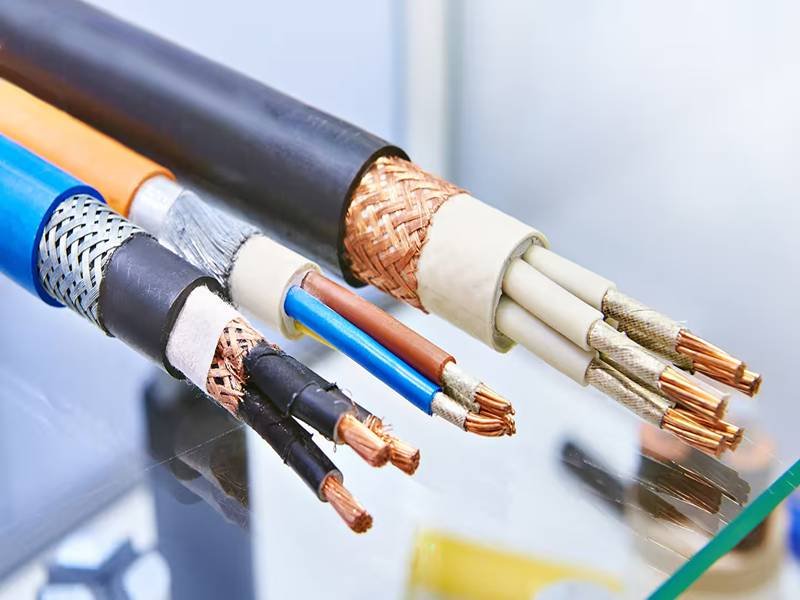
Electrical cable pricing often looks like a simple question—“How much per meter?”—but in reality, cable cost is shaped by a long list of variables that most buyers never see. Two cables with the same AWG can differ in price by 30–70% simply because of shielding, jacket material, conductor purity, connector selection, certifications, or custom pin-out work. And when the cable becomes a complete assembly with connectors, overmolding, or engineering drawings, the price difference can widen even more.
Many customers come to Sino-conn with only a photo or a sample from an old machine. Some ask why one supplier quotes $3.80 while another quotes $1.95 for what “looks like the same cable.” The truth is: the “same cable” rarely shares the same copper purity, insulation thickness, EMI shielding, OD tolerance, or connector authenticity. Price is not random—it’s engineering.
Electrical cable price is determined by copper content, conductor size (AWG/mm²), insulation and jacket materials, shielding type, connector authenticity, certifications, labor, and order quantity. Custom designs—such as specific pin-outs, unique ODs, EMI requirements, or rapid sampling—also increase cost. Sino-conn calculates pricing using real material data, engineering drawings, and manufacturing steps to give accurate, transparent quotations.
At Sino-conn, we often see cases where a cheaper cable leads to higher long-term costs—overheating, broken conductors, EMI failures, or connector drop-outs. One OEM in Europe once switched to a “low-price” cable that used aluminum-core conductors. Their machine experienced voltage loss, unstable motors, and increased warranty claims. After switching to our tinned copper version with controlled OD, they eliminated failures and actually reduced total cost of ownership.
Cables don’t just carry electricity—they carry reliability, safety, and the brand reputation of the machines they power. Understanding what you’re truly paying for helps you make better decisions and avoid expensive surprises.
Now, let’s break down what really drives cable price from an engineering and manufacturing perspective.
What Determines Electrical Cable Price?
Electrical cable price is determined by copper weight, conductor size, insulation and jacket materials, shielding density, connector type, engineering work, assembly labor, testing requirements, and delivery speed. Small changes in strand count, OD tolerance, insulation thickness, or shield coverage can shift cost by 10–45%. Sino-conn calculates cable price using real material measurements, production time, and certification requirements—not generic per-meter estimates.
Most buyers expect the cable to be “cheap” because it looks simple. But behind every finished cable assembly is an exact combination of conductor material, extrusion processes, shielding structure, connector sourcing, labor intensity, testing, and compliance. At Sino-conn, when we quote a project, we base the price on 20–30 measurable parameters, not assumptions.
What surprises many customers is that two cables that look identical externally can differ in cost by 40–70%, depending on copper purity, shielding, insulation grade, jacket hardness, and connector authenticity. Below is the real guide of how Sino-conn determines pricing.
Copper Weight Is the Largest Cost Driver
Copper cost changes every week on the global market.
Because cables are priced by weight, even a 0.1–0.2 mm difference in conductor diameter creates noticeable cost changes.
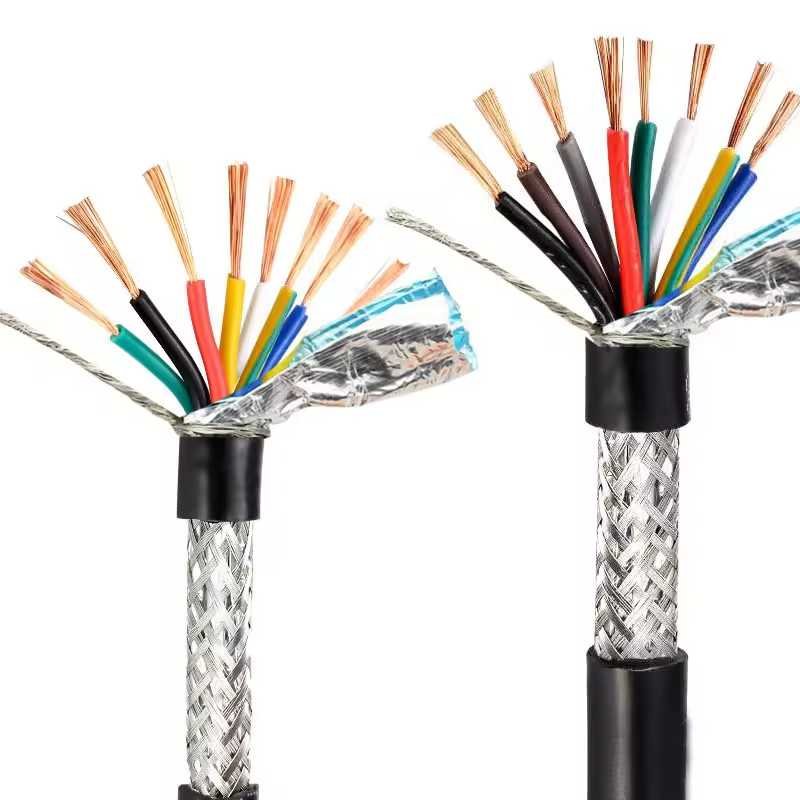
Key copper variables:
- Conductor size (AWG / mm²)
- Strand count — finer strands = more copper = higher price
- Plating — tinned copper costs ~5–12% more
- Purity — OFC can cost 20–40% more
- Shielding coverage — braid shielding drastically increases copper use
A 24 AWG cable with:
- 19 strands of 0.10 mm vs
- 37 strands of 0.10 mm
contains almost double the copper weight.
Sino-conn example:
A CNC manufacturer requested more flexibility but the same AWG.
We increased strand count from 19 to 37.
Performance improved, but:
- Copper usage +38%
- Cable price +14%
This is the real engineering-price relationship.
Insulation & Jacket Materials Change Cost by 20–300%
Extrusion materials vary widely in price.
Material cost ranking (lowest → highest):
| Material | Relative Cost | Common Uses |
|---|---|---|
| PVC | Low | General wiring |
| TPE | Medium | Flexible cables |
| TPU | High | Robotics, abrasion resistance |
| XLPE | High | 105°C–125°C heat rating |
| Silicone | Very High | Medical, high-temp |
| LSZH | High | Public spaces, safety |
Sino-conn data point:
When a customer switches from PVC to TPU jacket for a drag-chain cable:
- Material cost increases 30–50%
- Extrusion speed decreases (TPU requires slow cooling)
- Tooling wear increases
Total cable cost often increases 15–35%, but lifespan increases 3–8×.
This is why Sino-conn gives customers multiple material options—high-end, standard, and cost-optimized.
Shielding Type Can Increase Cost by 8–60%
Shielding is one of the most misunderstood price drivers.
Relative cost impact:
| Shield Type | Cost Increase | Notes |
|---|---|---|
| Foil | +3–6% | Cheap, limited durability |
| Spiral | +8–12% | Good flexibility |
| 70–80% braid | +15–22% | Standard industrial |
| 90–95% braid | +25–40% | High EMI protection |
| Foil + Braid (Hybrid) | +40–60% | Servo, encoder cables |
Braid shields require:
- extra copper
- braid machine time
- slower production speed
Sino-conn example:
A servo cable for a German customer required 92% braid density.
The shielding alone accounted for 28% of the cable’s total price.
Shielding is not a cosmetic feature—it directly determines EMI stability, and therefore cost.

Connector Choice Often Costs More Than the Cable
Many customers assume the cable is expensive, but connectors often cost more.
Typical connector cost ranges:
| Category | Original | Compatible |
|---|---|---|
| JST/Molex | $0.15–$0.40 | $0.07–$0.15 |
| TE/Hirose | $1.50–$6.00 | $0.40–$1.80 |
| Waterproof circular | $10–$40 | $3–$10 |
| RF/Coax | $2–$12 | $0.80–$4 |
Some connectors—especially LEMO or Binder—are extremely costly due to precision machining.
Sino-conn notes:
European and Japanese OEMs often require 100% original connectors due to mechanical tolerances.
Indian and Southeast Asian factories often request compatible versions to reduce cost.
Connector choice alone can shift an assembly price by 50–300%.
Engineering & Labor Steps Add Cost
Cable assembly is labor-intensive.
Labor increases when:
- conductor count is high
- pin-out requires precise sequencing
- strip length tolerance is tight (±0.2 mm)
- shield termination is required
- overmolding is complex
- multiple connectors per cable
A simple 2-core assembly takes 2–3 minutes.
A servo encoder assembly can take 12–18 minutes.
Sino-conn’s quotes include actual labor time estimates, not flat “per-cable” pricing.
Compliance & Certifications Influence Final Cost
UL, CE, RoHS, REACH, PFAS-free, LSZH compliance all add cost.
Why?
Because certified materials cost more.
Sino-conn example:
A PFAS-free cable jacket costs 18–25% more than standard PVC, but required for U.S. and EU compliance in 2026.
When a customer needs UL-approved materials, we must use UL-listed copper and insulation, which increases material cost 12–20%.
Certification requirements = predictable cost differences.
Which Cable Parameters Increase or Reduce Price?
Electrical cable price changes with conductor size, copper purity, strand count, insulation and jacket materials, shielding density, temperature rating, OD tolerance, and mechanical design. Higher copper content, high-flex jackets, and dense shielding increase cost, while simpler PVC jackets, unshielded structures, and standard copper reduce price. Sino-conn calculates cost using real copper weight, extrusion thickness, shielding density, and assembly time, ensuring accurate and transparent pricing.
From Sino-conn’s quoting experience, nearly 70% of price differences between suppliers come from hidden structural differences inside the cable—not from AWG alone.
Two cables may share the same AWG, same length, same connectors, and same appearance, yet differ in cost by 20–60% because of:
- conductor material & strand count
- insulation and jacket thickness
- shielding method & density
- jacket grade (PVC, TPU, XLPE, silicone)
- temperature rating
- flame rating
- OD tolerance
- EMI requirements
- flex-life requirements
Most customers only see the outer jacket. Sino-conn’s job is to translate internal structure into transparent cost logic.
Below is a detailed guide of the parameters that increase or decrease cable price.
Conductor Size, Purity & Strand Count
Copper is priced globally and fluctuates daily. Because cable cost is calculated partly by copper weight, small differences in conductor diameter and strand count have major impact.
Real Sino-conn Data Examples
- 24 AWG (7 strands × 0.20 mm)
- Copper weight: low
- Flexibility: low
- Cost: baseline
- 24 AWG (19 strands × 0.12 mm)
- Copper weight: +22–28%
- Better flexibility
- Cost: +10–15%
- 24 AWG (37 strands × 0.10 mm)
- Copper weight: +45–55%
- High-flex applications
- Cost: +18–25%
- 24 AWG (48 × 0.08 mm)
- Copper weight: +70%
- Robotic ultra-flex grade
- Cost: +30–45%
Copper Type & Relative Price
| Material | Cost Impact | Notes |
|---|---|---|
| Bare Copper | Baseline | Standard signal/power |
| Tinned Copper | +5–12% | Better corrosion resistance |
| OFC (Oxygen-Free) | +20–40% | Audio, medical, EV |
| CCA | –30–40% | Low-cost consumer products |
Sino-conn NEVER replaces copper with CCA unless the customer explicitly requests it.
90% of failure samples from new clients involve CCA used by previous suppliers.
Insulation & Jacket Materials
Extrusion materials heavily affect cable price because they determine:
- temperature rating
- oil/chemical resistance
- flexibility
- outdoor lifespan
- compliance requirements
Material Cost Ranking
| Material | Relative Cost | Applications |
|---|---|---|
| PVC | Low | General electronics |
| TPE | Medium | Flexible indoor cables |
| TPU | High | Robotics, abrasion, outdoor |
| XLPE | High | 105–125°C power cables |
| Silicone | Very High | 180–200°C environments |
| LSZH | High | Public buildings, medical |
Sino-conn Case Example
A Korean robotics OEM asked for better bending life without changing AWG.
Sino-conn solution:
- PVC → TPU jacket
- Same AWG, same insulation
- OD increased only 0.12 mm

Results:
- Material cost: +18%
- Cable lifespan: +350%
- Warranty claims dropped to zero
This is why jacket choice matters more than buyers expect.
Shielding Type & Shield Density
Shielding cost ≠ just materials.
It includes:
- copper usage
- braiding machine speed
- production time
- shield termination labor
Relative Shield Cost Impact
| Shield Type | Added Cost | Notes |
|---|---|---|
| Foil | +3–6% | Low-cost EMI protection |
| Spiral | +8–12% | High flexibility |
| 70–80% Braid | +15–22% | Standard EMI shielding |
| 90–95% Braid | +25–40% | High EMI, industrial |
| Foil + Braid (Hybrid) | +40–60% | Servo, encoder cables |
Real Sino-conn Example
One German servo-cable project required:
- 92% braid density
- Additional foil layer
- 125°C XLPE insulation
Shielding alone accounted for 28% of unit cost.
But it passed EMC tests on the first try—saving the OEM time and money.
Temperature Rating & Environmental Requirements
Higher temp = higher material cost.
Cost impact by temperature grade
| Rating | Typical Material | Cost Impact |
|---|---|---|
| 80°C | PVC | Baseline |
| 105°C | TPE/XLPE | +10–18% |
| 125°C | XLPE/TPU | +15–25% |
| 150–200°C | Silicone | +40–60% |
Other environmental features add cost:
- Oil-resistant jacket → +10–15%
- UV-resistant outdoor jacket → +8–12%
- Flame-retardant → +12–20%
- Halogen-free → +15–30%
Sino-conn example:
A medical imaging company required LSZH + 105°C resistance; priced 23% higher than PVC but necessary for compliance.
OD & Dimensional Tolerance
Tight OD tolerance requires:
- slower extrusion speed
- more scrap control
- better tooling
- thicker or more stable materials
Sino-conn maintains:
- ±0.05 mm OD tolerance for robotic cables
- ±0.08–0.10 mm for general cables
Tighter control = higher cost because production must run slower.
Example
Two 6.0 mm OD cables:
- ±0.10 mm tolerance → baseline
- ±0.05 mm tolerance → +10–15% cost
But the tighter tolerance ensures connector fit, routing reliability, and reduced friction in cable glands.
Flex-Life Requirements
High-flex and robotic cables cost more due to:
- finer strands
- soft filler materials
- low-friction jackets
- spiral shield instead of braid
- cotton fillers for smoother bending
- controlled twist pitch
Sino-conn testing:
High-flex cables are tested at:
- 180 cycles/min
- ±45° bending
- up to 5 million cycles
A standard cable failing at 0.6 million cycles may cost $1.20.
A high-flex version lasting 3–5 million cycles may cost $1.60–$2.30.
Cost rises, but replacement frequency drops dramatically.
How Do Connector Choices Influence Total Cable Assembly Price?
Connector selection significantly impacts cable price. Genuine connectors from brands like Molex, JST, Hirose, TE, LEMO, or Binder cost far more than compatible alternatives—sometimes 5–10× more. Pin count, plating, locking type, overmolding, and strain relief design all affect labor and tooling cost. Sino-conn offers both OEM-original and high-quality alternative connectors to match performance and budget requirements.
Many buyers assume the cable is the expensive part. In reality, connectors can represent 40–70% of the total assembly cost—especially when original branded connectors are required. This is one of the biggest surprises for new buyers.
Original connectors (Molex, JST, Hirose, TE, LEMO, Binder, etc.) have high unit prices, strict documentation, and long lead times. Some cost only $0.20, while others exceed $10–$40 per piece depending on plating and locking mechanisms. Replacement connectors can lower price significantly, but only when the application allows it.

Sino-conn offers three pricing paths:
- 100% original connectors — required for certain industries
- Compatible alternatives — lower price, stable performance
- Custom-made connectors — used for high-volume OEM projects
Crimping quality also affects pricing. High-reliability crimps require precise strip lengths, controlled pull-force measurements, and trained operators. For large projects, Sino-conn uses semi-automatic crimping machines to maintain consistency.
Custom overmolding raises cost because it requires:
- aluminum mold tooling
- sample iterations
- molding material selection (PVC, TPE, TPU)
- setup labor
Overmolding strengthens strain relief and improves durability, but it is an investment. For many OEM customers, durability improvement offsets the upfront cost.
Below are the main cost factors connected to connector selection.
What Is the Price Difference Between Original vs Replacement Connectors?
The price gap can be huge.
Typical Connector Cost Range
| Connector Type | Original | Compatible |
|---|---|---|
| JST/Molex housings | $0.15–0.40 | $0.07–0.15 |
| Hirose/TE micro connectors | $1.50–$6.00 | $0.40–$1.50 |
| Waterproof circular (Binder/LEMO) | $10–$40 | $3–$10 |
| RF/Coaxial (SMA, BNC, N-type) | $2–$12 | $0.80–$4 |
Some European and Japanese brands require original connectors because of mechanical tolerances. For cost-sensitive markets (India, Southeast Asia), alternatives are common.
Sino-conn provides both to help customers balance performance and cost.
How Do Pin Definition, Overmolding & Strain Relief Affect Cost?
Custom pin-out adds engineering labor.
Overmolding adds material + tooling.
Strain relief adds structure and assembly steps.
Cost factors include:
- number of wires to crimp
- strip-length precision (±0.2 mm)
- pull-force testing
- mold design for overmolded connectors
- number of molding cavities
- chosen jacket hardness
For example:
- A simple PVC overmold might cost $0.15–$0.40
- A custom TPU overmold with long strain relief might cost $0.60–$1.20
- A waterproof overmold might cost $1.50–$3.00
Sino-conn helps customers choose the most cost-effective construction depending on their needs.
Do Cable Drawings & Engineering Work Add Cost?
At Sino-conn, we provide engineering drawings free of charge, but the complexity affects manufacturing cost indirectly.

Drawings include:
- AWG / mm²
- conductor structure
- OD and tolerance
- insulation thickness
- shield type
- connector wiring
- pin-out
- crimps
- molding geometry
The more complex the drawing, the more steps required during production:
- multi-step assembly
- double-checking pin-outs
- two-stage molding
- shield termination
- grounding lines
- high-voltage testing
For example, a simple 2-core cable assembly might take 2–3 minutes to assemble.
A servo cable with 8 cores, braid shield, drain wire, and multiple connectors may take 12–15 minutes, which directly affects labor cost.
Why Do Electrical Cable Prices Differ Across Countries & Industries?
Electrical cable prices vary by country due to labor rates, compliance requirements, connector sourcing cost, taxation, and logistics. Industry type also affects pricing—medical and military cables require specialized materials, strict testing, and certified connectors, while consumer electronics use simpler constructions. Sino-conn adjusts pricing for each region and industry based on required standards, documentation, and material selection.
Electrical cable pricing is not universal. The same cable assembly—same AWG, same connectors, same OD—can cost significantly different depending on where the customer is located and which industry they serve. Sino-conn exports custom cables to more than 20 countries, and we consistently see purchasing patterns shaped by compliance expectations, local market pricing, and industry tolerances for risk.
Sino-conn sees strong price segmentation across industries:
| Industry | Price Level | Why |
|---|---|---|
| Medical | High | UL, biocompatibility, precision OD, verified materials |
| Military | Very High | high-temp, EMI, vibration-proof, full documentation |
| Industrial Automation | Medium–High | EMI stability, shield quality, flexibility |
| Telecom / Networking | Medium | impedance accuracy |
| Consumer Electronics | Low | cost-driven, large volume |
| Automotive EV | Medium–High | heat + vibration + original connectors |

One medical project required a 0.38 mm OD cable with ±0.015 mm tolerance. The engineering cost and material consistency required were far higher than a 1.5 mm consumer cable.
In summary, pricing varies not only because of material cost, but because different regions and industries require different cable behavior, testing, and documentation.
How to Estimate Cable Price for Your Project?
To estimate electrical cable price, you need basic technical details: conductor size, material, shielding, insulation, jacket, connector type, length, quantity, certifications, and delivery time. Suppliers like Sino-conn use these inputs to calculate copper weight, extrusion materials, labor steps, connector cost, and testing requirements to provide accurate pricing.
Accurate pricing starts with accurate information. Most customers underestimate how much detail influences cost. Sending only an AWG number or a photo is not enough; the final cable price depends on specific structural requirements.
At Sino-conn, we quote based on seven key data points:
What Information Do Suppliers Need for Accurate Pricing?
To estimate price, Sino-conn asks for:
- Cable length
- AWG / mm² of each core
- Number of cores / pairs
- Shielding type (foil, braid density, hybrid)
- Jacket material (PVC, TPU, XLPE, silicone, LSZH)
- Connector brand & model
- Special requirements
- UL / REACH / PFAS-free
- high-flex
- temperature range
- oil or UV resistance
- OD limit
- specific pin-out
The more accurate the input, the more precise the quote.

How Length, MOQ & Delivery Time Affect Cost?
Length
Longer cables consume more copper and materials; the cost rises almost linearly.
MOQ
Lower quantities increase price due to setup cost. A 1-piece prototype is always more expensive than a 1,000-piece order.
Urgency
Rush orders sometimes require overtime or production-line rearranging. Sino-conn can produce:
- 2–3 day samples
- 2-week production runs
But urgent scheduling may slightly increase cost.
Example
A customer needed 20 pieces urgently for a demo. With zero lead time for connector procurement, Sino-conn used alternative in-stock connectors, saving both time and cost.
Do Rapid Drawings & Engineering Support Reduce Cost?
Yes. When drawings are inaccurate, cables fail or must be remade.
Sino-conn provides:
- 30 minutes–3 hours complete drawings
- exact pin-outs
- OD and structure
- insulation & jacket thickness
- shielding termination
- connector orientation
Accurate drawings prevent production mistakes.
This reduces:
- scrap
- labor waste
- rework cost
- customer downtime
Engineering accuracy = lower long-term cost.
How Do Suppliers Calculate Cable Assembly Price?
Sino-conn calculates cable assembly price by evaluating copper weight, insulation and jacket materials, shielding type, connector cost, labor steps, testing requirements, and order quantity. Our engineers disassemble samples, measure OD, check strand counts, and create drawings before providing an exact quote.
Sino-conn’s pricing is based on engineering analysis, not guesswork. Every custom cable—no matter how simple—goes through the same clear steps.
Step 1 — Technical Analysis
Time required: 10–60 minutes
We analyze:
- copper conductor diameter & strand count
- insulation material & thickness
- jacket hardness
- shield density (measured by braid weight per meter)
- OD roundness
- connector pin spacing
- crimp barrel size
- molding requirements
We also measure real resistance (Ω/km) using our calibrated tester.
Step 2 — Engineering Drawing (CAD → PDF)
Time required: 30 minutes–3 hours
Every drawing includes:
- AWG/mm² per core
- twist pitch
- shielding method
- insulation/jacket thickness
- OD & tolerance
- connector wiring
- strain relief geometry
- RoHS/REACH/PFAS info
Customer approval ensures zero misunderstanding.
Step 3 — Price Options (High-End vs Cost-Optimized)
We offer multiple pricing solutions:
| Option | Description | Use Case |
|---|---|---|
| Premium | Original connectors, high-flex jacket, dense shielding | Robotics, medical, military |
| Standard | Balanced materials, original or high-quality compatible connectors | Industrial, telecom |
| Economical | PVC jacket, compatible connectors, simple shielding | Consumer electronics |
This gives customers flexibility, not one fixed price.
Step 4 — Sample & Mass Production
Samples:
- 2–3 days for urgent
- 1–2 weeks standard
Production:
- 2–3 weeks
All cables undergo:
- 100% continuity test
- 100% visual inspection
- 3-stage QC (in-process, final, pre-shipment)
Conclusion
Electrical cable pricing can feel confusing—different suppliers, different numbers, and different structures even when the cables “look” identical. But when cost is understood through materials, shielding, connectors, and engineering labor, it becomes predictable and controllable.

Sino-conn helps global customers reduce cost while improving reliability by offering:
- fast engineering drawings (30 min–3 hours)
- in-stock alternatives to expensive connectors
- high-flex, industrial, medical, and EV-grade cable options
- NO MOQ (1 piece acceptable)
- 2–3 day urgent samples
- full certifications (UL, RoHS, REACH, PFAS-free)
- transparent copper and material pricing
If you have a damaged cable, incomplete drawing, or a new design concept:
Send Sino-conn your requirements.We will provide an accurate quote and drawing to optimize cost and performance.
Your next reliable, cost-effective cable starts with a single inquiry.