Skip to content
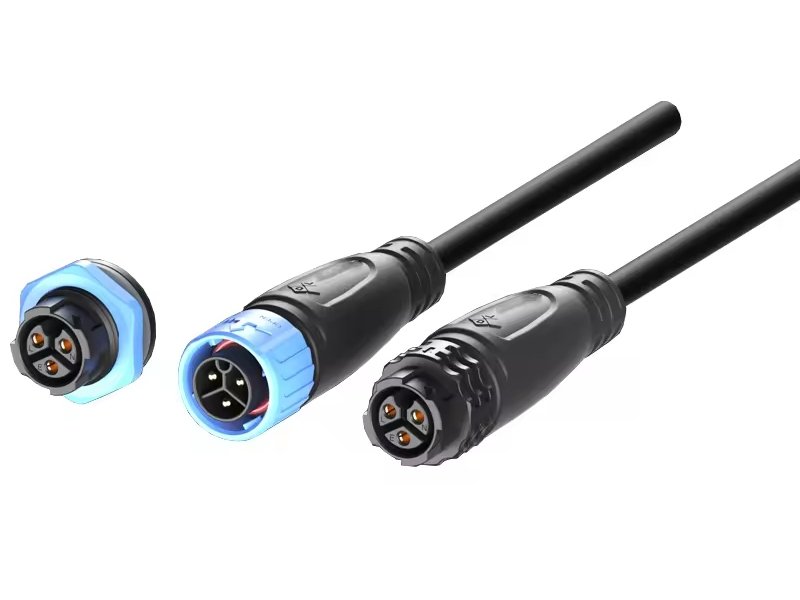
Every year, countless products fail not because of electronics, firmware, or software—but because water enters where it shouldn’t. A connector that looks solid on the outside may still allow moisture to creep in through microscopic gaps, poor compression, or mismatched cable dimensions. In many real-world cases, waterproof failure does not come from extreme conditions, but from small assembly mistakes that only show up months later in the field.
Waterproof connectors are widely used in industrial automation, outdoor equipment, medical devices, transportation systems, and consumer electronics. Yet “waterproof” is often treated as a label rather than a process outcome. Buyers assume that selecting an IP-rated connector is enough. Engineers assume the supplier will “handle the rest.” Assemblers follow drawings without fully understanding how sealing actually works. The result is predictable: leakage, corrosion, intermittent signal loss, and warranty claims that are difficult to trace back to a single cause.
To assemble waterproof connectors correctly, you must match the connector design, cable dimensions, sealing components, and installation process. Waterproof performance depends on proper O-ring or gasket placement, controlled compression, correct cable OD, and validated termination methods. Simply choosing an IP-rated connector is not enough—assembly discipline, testing, and installation awareness determine whether a connector remains waterproof in real-world conditions.
Understanding how to assemble waterproof connectors is not just about following steps—it is about understanding why each step exists. Once that logic is clear, many common failures become predictable and preventable.
What Is a Waterproof Connector?
A waterproof connector is a connector system designed to prevent water ingress under defined environmental conditions. Its waterproof performance depends on sealing structures, materials, cable compatibility, and correct assembly—not on the connector housing alone.

What Makes a Connector Waterproof?
A connector becomes waterproof only when all potential water entry paths are sealed simultaneously. These paths usually include the mating interface, the contact cavity, and the cable entry point. Waterproofing is achieved through mechanical barriers such as O-rings, gaskets, compression seals, and sometimes overmolding. Each barrier must be correctly positioned and compressed to function.
To make a connector waterproof, designers rely on predictable deformation of elastomeric materials. If compression is too low, water passes. If compression is too high, seals deform permanently or tear. This balance is the foundation of waterproof design—and why assembly quality matters as much as component selection.
What Do IP Ratings Really Mean?
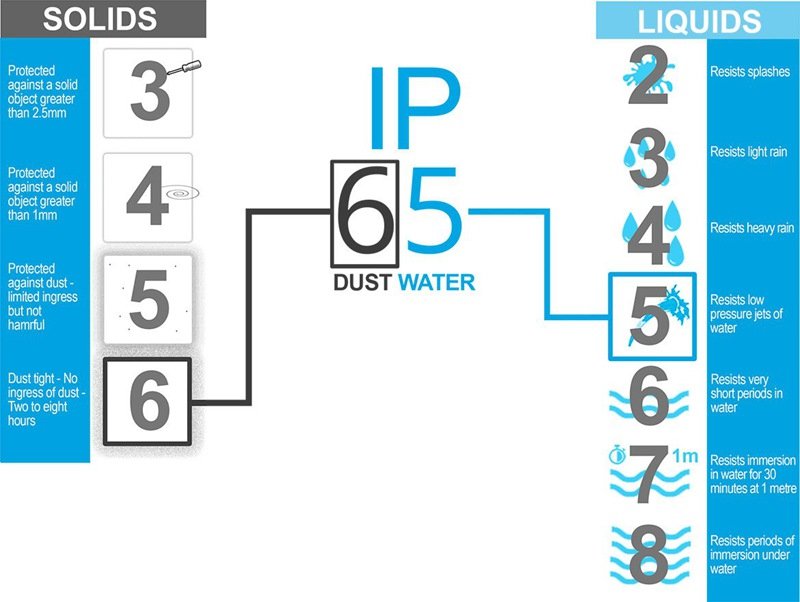
IP ratings (such as IP67, IP68, IP69K) define test conditions, not universal guarantees. IP67 means protection against temporary immersion; IP68 usually means deeper or longer immersion under defined conditions. IP69K focuses on high-pressure washdown.
What IP ratings do not guarantee:
- Waterproof performance with any cable
- Waterproof performance after repeated bending
- Waterproof performance if assembly steps are altered
Understanding this distinction helps buyers avoid false confidence.
Which Components Affect Waterproof Performance Most?
Waterproof performance is determined by the connector housing, sealing elements, cable jacket, and the interface between them. A mismatch in any one component can compromise the entire system.

Which Connector Parts Create the Seal?
Most waterproof connectors rely on multiple sealing points:
- A primary seal at the mating interface
- Secondary seals around contacts or inserts
- A rear seal where the cable enters the connector
Each seal is designed for a specific function. Mixing parts, skipping seals, or substituting materials often leads to hidden leakage paths.
How Does Cable Selection Affect Waterproof Assembly?
Cable outer diameter (OD) tolerance is one of the most common failure causes. If the cable OD is too small, seals cannot compress. If it is too large, seals deform or assembly becomes inconsistent.
| Cable Factor | Impact on Waterproofing |
|---|---|
| OD tolerance | Determines seal compression |
| Jacket material | Affects long-term elasticity |
| Flexibility | Influences seal fatigue |
| Surface finish | Affects micro-leak paths |
This is why cable and connector must be treated as a matched pair.
How to Prepare Before Assembling Waterproof Connectors
Before assembly, you must confirm connector specifications, cable structure, sealing method, and installation conditions. Preparation errors are the most expensive mistakes to fix later.

What Specifications Must Be Confirmed First?
Key items include:
- Connector datasheet requirements
- Cable OD range and jacket material
- Electrical ratings and environment
Skipping this step often leads to rework or rejection after testing.
Why Drawings Matter Before Assembly
Drawings clarify pinout, seal placement, and assembly order. Converting CAD to PDF for approval ensures all parties share the same understanding before production begins.
How to Assemble Waterproof Connectors Step by Step
Assembling a waterproof connector is not a simple mechanical task. It is a controlled engineering process where sealing performance depends on correct preparation, precise sequencing, and disciplined execution. Even when high-quality IP-rated connectors are used, improper assembly can compromise waterproof performance before the product ever reaches the field.
Below is a step-by-step breakdown of how waterproof connectors should be assembled in a professional manufacturing environment, with emphasis on the critical control points that determine long-term reliability.
Step 1: Confirm Connector and Cable Compatibility
Before any physical work begins, the connector and cable must be verified as a matched system, not as independent parts. This step is often underestimated but is one of the most common root causes of waterproof failure.
Key checks include:
- Connector datasheet requirements for cable outer diameter (OD)
- Acceptable jacket materials (PVC, PUR, TPU, silicone, etc.)
- Environmental ratings (temperature, chemicals, UV exposure)
A cable that is even slightly outside the specified OD range can prevent seals from compressing correctly or cause permanent deformation.
Step 2: Prepare the Cable Without Damaging the Sealing Area
Cable preparation directly affects sealing integrity. Stripping the jacket too aggressively or leaving uneven edges can create leakage paths that are impossible to correct later.
Best practices include:
- Using calibrated stripping tools
- Avoiding nicks or scratches on the jacket surface
- Keeping the cable entry area clean and free of debris
At this stage, no sealing components should be forced or stretched over damaged cable surfaces.
Step 3: Install Sealing Components Before Termination
In most waterproof connector designs, sealing components such as O-rings, gaskets, or rear seals must be installed before contact termination. Installing them afterward often leads to twisting, pinching, or contamination.
Critical points:
- Ensure seals sit flat and are not twisted
- Verify correct orientation of asymmetric seals
- Avoid lubricants unless explicitly specified by the connector manufacturer
Incorrect seal placement is one of the most frequent causes of early leakage.
Step 4: Terminate Contacts with Controlled Methods
Contact termination must achieve both electrical reliability and mechanical stability without affecting nearby seals.
- Crimping is generally preferred for consistency and repeatability
- Soldering requires strict temperature control to avoid heat transfer to sealing areas
Poor termination can lead to micro-movement of contacts, which over time may degrade the seal under vibration or bending.
Step 5: Assemble Connector Housing in the Correct Sequence
Waterproof connectors are designed to be assembled in a specific order. Skipping steps or reversing the sequence can compromise sealing even if all parts are present.
Typical assembly actions include:
- Aligning contacts correctly within the insert
- Engaging housing components without forcing
- Applying defined torque or compression where specified
Over-tightening can damage seals just as easily as under-tightening.
Step 6: Apply Overmolding (If Required)
In applications where additional protection is needed, overmolding may be used to create a continuous waterproof barrier between the cable and connector.
Overmolding considerations:
- Mold design must match connector geometry precisely
- Overmold material must be compatible with cable jacket and connector housing
- Improper overmolding can trap air or stress seals instead of protecting them
Overmolding improves waterproof reliability only when executed with proper tooling and process control.
Typical Assembly Steps and Risk Points
| Assembly Stage | Primary Purpose | Common Risk if Done Incorrectly |
|---|---|---|
| Cable OD verification | Ensure seal compression | Seal leakage or deformation |
| Cable stripping | Prepare sealing surface | Micro-leak paths |
| Seal installation | Create water barrier | Twisted or damaged seals |
| Contact termination | Electrical & mechanical stability | Seal disturbance |
| Housing assembly | Structural integrity | Uneven compression |
| Overmolding (optional) | Additional protection | Trapped voids or stress |
Why Step-by-Step Discipline Matters
Waterproof performance is not created by any single step—it is the cumulative result of many small, correct actions performed in the right order. A connector that passes initial testing may still fail in the field if assembly discipline is inconsistent.
This is why professional manufacturers treat waterproof connector assembly as a controlled process, not a manual task. Clear work instructions, drawing confirmation, and in-process inspection are essential to achieving repeatable waterproof performance.
How Are Waterproof Connectors Tested After Assembly?
Testing verifies whether assembly achieved the intended waterproof and electrical performance. It does not “add” waterproofing—it only confirms it.
How Is Waterproof Performance Verified?
Common methods include immersion tests and air pressure decay tests.
What Electrical Tests Are Required?
Continuity and insulation resistance ensure moisture has not compromised performance.
| Test Type | Purpose |
|---|---|
| Immersion test | Detects leakage |
| Air pressure test | Finds micro-leaks |
| Continuity test | Confirms signal path |
| Insulation resistance | Detects moisture ingress |
What Common Mistakes Cause Waterproof Connector Failure?
Waterproof connector failures rarely occur because the connector itself is defective. In most cases, failure is the result of small, accumulated assembly or application mistakes that gradually compromise sealing integrity. These issues often remain invisible during initial testing and only appear after months of real-world use, making them difficult to trace back to their true root cause.

Understanding the most common failure mechanisms helps OEMs, engineers, and buyers prevent problems early—before a product reaches the field.
Incorrect Cable Outer Diameter (OD) Selection
One of the most frequent and underestimated causes of waterproof failure is cable OD mismatch. Waterproof connectors are designed to seal within a narrow OD range. If the cable OD is outside this range, proper seal compression cannot be achieved.
- OD too small: seals cannot compress → leakage paths form
- OD too large: seals deform or tear → long-term failure
Even small deviations—often caused by jacket material variation—can significantly reduce sealing performance.
Improper Seal Installation or Damage
Seals such as O-rings and gaskets are precision components, yet they are often treated as passive parts. Common errors include twisting the seal during installation, contaminating it with dust or oil, or installing it in the wrong orientation.
Once damaged or misaligned, a seal may still pass initial inspection but fail after temperature cycling or vibration. Seals must be clean, undamaged, and correctly positioned to function as intended.
Incorrect Assembly Sequence or Excessive Force
Waterproof connectors are engineered to be assembled in a specific sequence. Skipping steps or applying force to “make parts fit” can compromise internal sealing structures.
Over-tightening threaded housings or compression nuts is particularly risky. Excessive force may temporarily improve sealing but often leads to permanent seal deformation and early-life failure.
Overlooking Installation and Usage Conditions
Many waterproof connectors fail not during assembly, but after installation in the final product. Designers sometimes assume that passing an IP test means the connector will remain waterproof under all conditions.
Real-world factors that are often overlooked include:
- Continuous cable movement or vibration
- Tight bend radii near the connector
- Tension or pulling forces on the cable
These stresses gradually break down seals that were not designed for dynamic loads.
Misinterpretation of IP Ratings
IP ratings describe laboratory test conditions—not long-term field performance. Assuming that an IP67 or IP68 rating applies universally can create false confidence.
| IP Rating | What It Confirms | What It Does Not Guarantee |
|---|---|---|
| IP67 | Temporary water immersion | Waterproof under vibration |
| IP68 | Extended immersion (defined) | Compatibility with any cable |
| IP69K | High-pressure wash | Resistance to long-term bending |
Understanding these limits is essential for correct connector selection and assembly.
Inadequate Testing or Process Control
Passing a single waterproof test does not guarantee consistent quality. Without process discipline, results may vary between batches.
| Common Process Gap | Resulting Risk |
|---|---|
| No OD verification | Inconsistent seal compression |
| No assembly torque control | Seal deformation |
| No in-process inspection | Hidden defects |
| No post-assembly testing | Field failures |
Repeatable waterproof performance depends on controlled processes—not individual skill alone.
Why These Mistakes Matter to OEM and Industrial Buyers
Waterproof connector failures often lead to costly outcomes:
- Product recalls
- Field service interventions
- Customer trust damage
Most of these issues can be prevented by recognizing that waterproof reliability is a system outcome, not a single-component feature.
Manufacturers who emphasize specification review, drawing confirmation, controlled assembly, and verification testing are better positioned to deliver consistent results—especially for custom or low-volume projects where variation risk is higher.

Final Thoughts: Turning Waterproof Design into Reliable Products
Waterproof connectors succeed only when design, assembly, and installation are aligned. Selecting an IP-rated connector is just the starting point. Real reliability comes from understanding how sealing works, how cables interact with connectors, and how real-world conditions affect both.
At Sino-Conn, we support waterproof connector projects from specification review and drawing confirmation to sample builds and mass production. Whether you start with a drawing, a part number, or only a reference photo, our engineering team helps translate requirements into a manufacturable, reliable solution.
If you are planning a waterproof cable or connector project, contact Sino-Conn to discuss customization, drawings, samples, and production options—starting from 1 piece, with no MOQ.