 Skip to content
Wiring Connector Types: What They Are, How They Work, and How to Choose
- andy
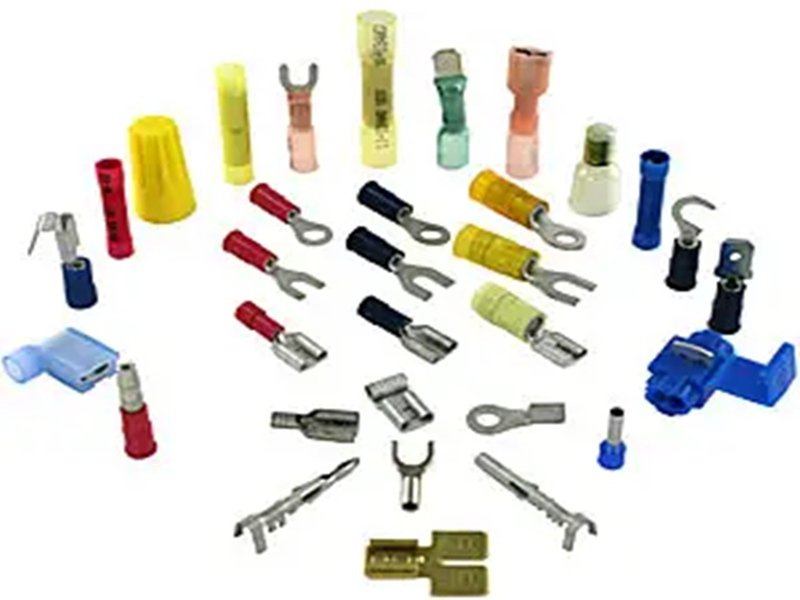
When wiring systems fail, the connector is often blamed last—after cables, power supplies, and control boards have all been ruled out. Yet in real-world applications, wiring connectors are one of the most common failure points in electrical and electronic systems. Loose contacts, incorrect pin definitions, mismatched current ratings, or poorly chosen connector structures can quietly degrade performance long before a complete failure occurs.
In modern products, wiring connectors do far more than “connect wires.” They define how power flows, how signals remain stable under noise, how systems survive vibration and temperature changes, and how easily products can be assembled, serviced, or scaled in production. Despite this, connectors are frequently selected late in the design cycle—sometimes copied from legacy designs or chosen purely based on availability or price.
This creates hidden risk. A connector that works in a prototype may fail in mass production. A connector suitable for a lab environment may struggle in industrial, automotive, or medical conditions. Understanding wiring connector types—and the logic behind their selection—is therefore essential for engineers, OEMs, and buyers alike.
Wiring connector types refer to the different connector structures used to join wires, cables, and circuits in electrical systems. They are commonly classified by connection method (wire-to-wire, wire-to-board, board-to-board), mechanical structure, electrical rating, and application environment. Choosing the right wiring connector requires evaluating current, voltage, pin count, pitch, materials, locking method, and long-term reliability requirements.
Behind every connector choice is a trade-off between cost, performance, manufacturability, and risk. In the sections below, we break down wiring connector types from a practical engineering and wire harness manufacturing perspective, so you can make informed decisions instead of relying on assumptions.
What Are Wiring Connectors?
Wiring connectors are electromechanical components used to join wires, cables, or circuits, enabling power and signals to pass reliably between system elements. In wire harnesses, connectors provide controlled interfaces that support assembly, serviceability, and electrical stability. Unlike bare splices, wiring connectors are designed to manage current, voltage, mechanical stress, and environmental exposure over the product’s lifecycle.
What is a wiring connector used for?
A wiring connector creates a repeatable, serviceable interface between conductors. Instead of permanently joining wires, connectors allow systems to be assembled in modules, tested in stages, and serviced or replaced without rewiring. This is critical in modern products where downtime, rework, or field repairs must be minimized.
How do wiring connectors differ from cable connectors?
While the terms are sometimes mixed, wiring connectors usually refer to internal or harness-level connectors, whereas cable connectors often refer to end-user interfaces. Wiring connectors are optimized for integration, routing, and long-term stability rather than frequent user handling.
Why wiring connectors matter in wire harness design
In a wire harness, connectors define stress points, grounding strategy, and signal transitions. A well-designed harness can only perform as well as its weakest connector. Field data consistently shows that connector interfaces—not cables—are the most common sources of intermittent failures.
Which Types of Wiring Connectors Are Most Common?
The most common wiring connector types are wire-to-wire, wire-to-board, and board-to-board connectors. Each type represents a different integration role within an electrical system rather than a difference in brand or appearance. Wire-to-wire connectors join cable segments, wire-to-board connectors interface harnesses with PCBs, and board-to-board connectors link circuit boards directly.
In real wire harness and cable assembly projects, these connector types define system architecture, assembly strategy, and long-term serviceability. Choosing the correct category early helps prevent downstream issues such as routing conflicts, PCB stress, difficult maintenance, or unnecessary redesign during mass production.
What Are Wire-to-Wire Connector Types?
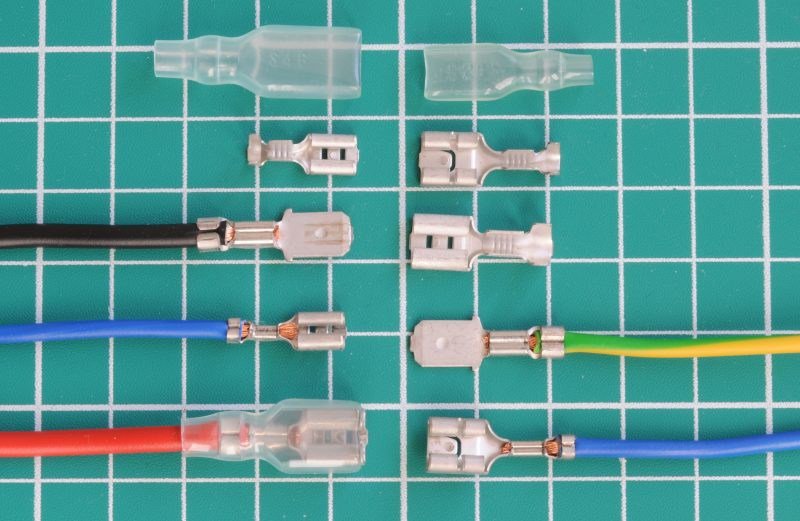
Wire-to-wire connectors are used to join two cable assemblies or harness segments together. They are widely used in automotive systems, industrial equipment, home appliances, and large electrical installations where modular assembly is required.
From a manufacturing perspective, wire-to-wire connectors allow different harness sections to be produced, tested, and installed independently. This modularity improves assembly efficiency and simplifies troubleshooting or replacement in the field. These connectors typically emphasize secure locking mechanisms, vibration resistance, and ease of mating, especially in environments where movement or mechanical stress is present.
Wire-to-wire connectors are often selected when cable routing spans long distances, passes through multiple subassemblies, or must be separated during transportation or installation.
What Are Wire-to-Board Connector Types?
Wire-to-board connectors connect a wire harness directly to a printed circuit board (PCB). They are one of the most common connector types in modern electronics, used extensively in control units, power modules, industrial controllers, medical devices, and consumer electronics.
This connector type represents a critical transition point between flexible wiring and rigid electronics. As a result, electrical reliability, pin alignment accuracy, and strain relief design are especially important. Poor connector choice or incorrect pin definition at this interface can lead to PCB pad damage, intermittent signals, or long-term fatigue failures.
In wire harness manufacturing, wire-to-board connectors often require close coordination between harness design and PCB layout to ensure correct mating height, orientation, and mechanical clearance.
What Are Board-to-Board Connector Types?
Board-to-board connectors connect one PCB directly to another without using wires. They are commonly used in compact devices, stacked electronic modules, and high-density systems where space is limited.
By eliminating wiring, board-to-board connectors can improve signal integrity and reduce assembly steps. However, they also reduce flexibility and serviceability. Once installed, disassembly or replacement often requires removing entire board assemblies rather than individual harnesses.
For this reason, board-to-board connectors are typically chosen when size, alignment precision, and electrical performance outweigh the need for modular wiring or field serviceability.
How These Connector Types Differ in System Design
Although these connector types may look similar in catalogs, they represent fundamentally different design choices. Each one reflects trade-offs between flexibility, density, assembly efficiency, and maintenance strategy.
Table: Common Wiring Connector Types:
| Connector Type | Primary Function | Key Design Advantage | Typical Applications |
|---|---|---|---|
| Wire-to-Wire | Join cable segments | Modular assembly, serviceability | Automotive, appliances, industrial wiring |
| Wire-to-Board | Connect harness to PCB | Flexible routing + PCB interface | Control units, power modules, electronics |
| Board-to-Board | PCB interconnection | High density, compact design | Compact devices, stacked modules |
Why Most Real Projects Use More Than One Connector Type
In practice, most OEM and industrial systems do not rely on a single connector type. A typical product may use wire-to-wire connectors for internal harness segmentation, wire-to-board connectors for control electronics, and board-to-board connectors for compact submodules.
Understanding where each connector type belongs—rather than treating them as interchangeable—helps engineers and buyers reduce integration risk, avoid unnecessary complexity, and improve long-term reliability.
How Are Wiring Connector Types Classified by Structure and Function?
Wiring connectors are classified by termination method (crimp, solder, IDC), locking mechanism, contact structure, and housing design. These structural differences determine vibration resistance, electrical stability, assembly speed, and long-term reliability.
How do crimp connectors work?
Crimp connectors create a gas-tight mechanical bond between conductor and terminal. When properly controlled, crimping offers excellent vibration resistance and consistency, making it the standard in wire harness manufacturing.
Crimp vs solder connectors
Soldering introduces rigidity and potential stress points. Crimping allows controlled deformation and strain relief.
Crimp vs Solder Comparison:
| Factor | Crimp | Solder |
|---|---|---|
| Vibration resistance | High | Lower |
| Process consistency | High | Operator-dependent |
| Automotive/industrial use | Standard | Limited |
How do IDC connectors work?
IDC connectors pierce insulation to make contact without stripping wires. They are fast and efficient but limited to specific wire types and applications.
What Specifications Matter When Selecting Wiring Connectors?
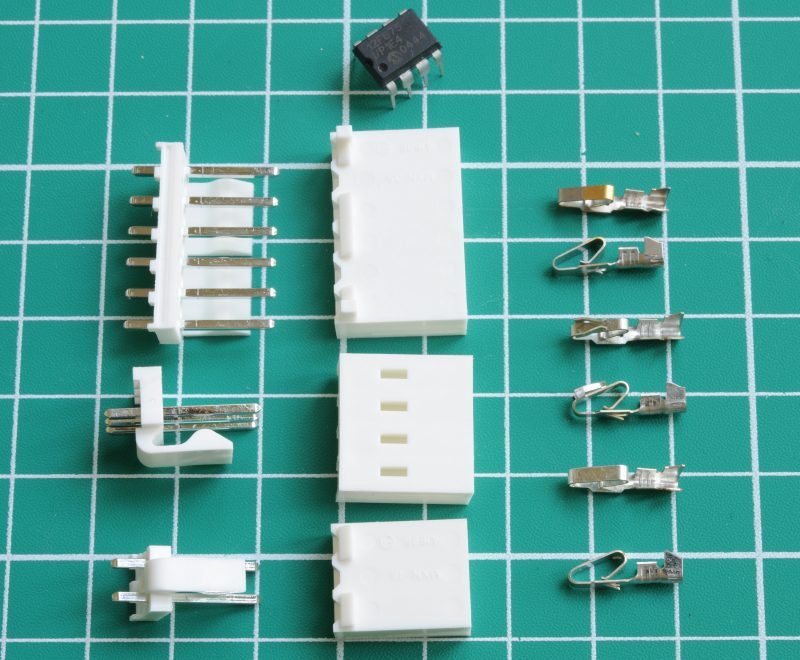
Selecting wiring connectors is not about choosing a shape that “fits” or a part number that looks familiar. In real systems, connector specifications determine electrical safety, signal stability, mechanical durability, and long-term reliability. Many connector-related failures are not caused by manufacturing defects, but by specification mismatch—where a connector technically works, but operates outside its optimal design envelope.
The most important wiring connector specifications fall into four categories: electrical performance, mechanical structure, environmental tolerance, and assembly compatibility. These parameters must be evaluated together, not in isolation, especially in wire harness and OEM applications.
Which Electrical Specifications Are Critical for Wiring Connectors?
Electrical specifications define whether a connector can safely and reliably carry power or signals over time.
Key electrical parameters include rated voltage, rated current, contact resistance, and insulation resistance. A common mistake is selecting a connector based only on nominal current, without considering duty cycle, ambient temperature, or conductor size. Underrated connectors may function during testing but overheat or degrade during continuous operation.
Contact resistance is especially important for low-voltage or high-current systems. Even small increases in resistance can lead to heat buildup, voltage drop, or unstable signals. In signal-sensitive applications, poor contact performance can cause intermittent faults that are difficult to diagnose.
Key Electrical Specifications to Verify:
| Parameter | Why It Matters |
|---|---|
| Rated voltage | Prevents insulation breakdown |
| Rated current | Avoids overheating and derating |
| Contact resistance | Impacts heat and signal stability |
| Insulation resistance | Ensures electrical safety |
What Mechanical Specifications Affect Connector Reliability?
Mechanical specifications determine how well a connector survives vibration, movement, insertion cycles, and cable stress.
Important factors include pin pitch, mating force, locking mechanism, retention force, and strain relief design. A connector with insufficient locking may pass initial tests but loosen over time in vibrating environments. Similarly, poor strain relief can transfer cable stress directly to contacts, leading to fatigue failures.
Pin pitch affects not only density but also manufacturability. Smaller pitch connectors save space but demand tighter assembly tolerances and higher-quality crimping or soldering processes. This becomes especially important in mass production.
Mechanical Specification Considerations:
| Feature | Impact on System |
|---|---|
| Locking method | Vibration resistance |
| Retention force | Prevents accidental disconnect |
| Pin pitch | Density vs assembly tolerance |
| Strain relief | Long-term durability |
How Do Environmental Ratings Influence Connector Choice?
Environmental specifications define where a connector can be used safely and how long it will last under real operating conditions.
Temperature range is often underestimated. A connector rated for room temperature may become brittle, lose contact force, or deform when exposed to heat from nearby components. Similarly, exposure to moisture, oil, chemicals, UV, or dust can degrade housing materials and contacts if the connector is not designed for those conditions.
In industrial, automotive, medical, or outdoor applications, environmental mismatch is one of the most common causes of early connector failure.
Environmental Factors to Evaluate:
| Environment Factor | Specification to Check |
|---|---|
| High temperature | Operating temperature range |
| Moisture | Sealing or IP rating |
| Chemicals / oil | Housing material compatibility |
| UV exposure | Plastic aging resistance |
Why Pin Definition and Connector Orientation Matter
Even when electrical and mechanical ratings are correct, pin definition errors can cause costly problems. Misinterpreted pinouts, mirrored connectors, or unclear mating orientation often lead to rework, delays, or scrap.
This is especially common when customers provide only photos or partial information. Clear pin definition drawings—showing pin numbering, orientation, and interconnection logic—are essential before production. In wire harness projects, the connector is not just a component; it is part of the system logic.
Connector orientation also affects assembly efficiency. Poor orientation choices can increase assembly time, raise defect rates, or cause mis-mating during installation.
How Do Assembly and Manufacturing Constraints Affect Specification Choices?
Connector selection must align with real manufacturing processes, not just electrical theory. Some connectors require precise crimping tools, controlled insertion forces, or specific wire types. If these requirements are ignored, consistency suffers in mass production.
OEMs and harness manufacturers evaluate whether a connector supports repeatable crimp quality, inspection access, and scalable assembly. A connector that is difficult to terminate or inspect increases defect risk—even if its specifications look perfect on paper.
This is why experienced manufacturers often recommend connector alternatives with similar electrical performance but better manufacturability or supply stability.
Specification Checklist for Wiring Connector Selection
Before finalizing a wiring connector, engineers and buyers should be able to answer these questions:
- Can the connector safely handle the required voltage and current under real conditions?
- Does the mechanical design support vibration, movement, and cable stress?
- Is the connector rated for the actual temperature and environment?
- Are pin definition and orientation clearly documented?
- Can this connector be produced consistently at volume?
Connectors that meet all five criteria are far less likely to become failure points later in the product lifecycle.
Key Takeaway
Wiring connector selection is a system-level decision, not a catalog lookup. Electrical ratings, mechanical structure, environmental tolerance, and manufacturability must work together. When specifications are chosen based on real operating conditions—not assumptions—connectors become enablers of reliability rather than hidden risks.
How Do Engineers and OEMs Choose the Right Wiring Connector Type?
Engineers prioritize performance, fit, and reliability during design, while OEMs focus on cost, supply stability, and manufacturability. Successful projects align both perspectives early using drawings, samples, and validation builds.
Engineer perspective
Engineers focus on integration, routing, and validation.
OEM and procurement perspective
OEMs evaluate repeatability, yield, and long-term sourcing.
Engineer vs OEM Priorities:
| Aspect | Engineers | OEMs |
|---|---|---|
| Focus | Performance | Consistency |
| Flexibility | High | Limited |
Can Wiring Connectors Be Customized for Wire Harness Assemblies?
Yes. Wiring connectors can be customized in pin definition, housing, materials, cable length, and termination to meet specific application requirements.
Customization allows optimization for space, performance, and cost. In OEM projects, customization is often a risk-reduction strategy rather than a complexity increase.
How Can a Wire Harness Manufacturer Support Connector Selection?
An experienced wire harness manufacturer supports connector selection through drawings, prototyping, flexible sourcing, and quality control, reducing design risk and accelerating development.
When customers provide only photos or partial data, engineering support becomes critical. Rapid drawings, sample validation, and process control prevent costly misinterpretation.

Ready to Choose the Right Wiring Connector Type?
Choosing wiring connector types is not about memorizing catalogs—it is about understanding how connectors behave in real systems. When connector selection aligns with electrical demands, mechanical stress, and production reality, systems become more reliable and scalable.
Sino-Conn supports wiring connector and custom wire harness projects with fast drawings, rapid samples, flexible customization, and full quality inspection. If you are evaluating wiring connector types, clarifying specifications, or building a custom harness from drawings or photos, our engineering team is ready to support your project from concept to production.
Related Keywords :wiring connector types, wire harness connectors, connector selection guide, wire to wire connectors, wire to board connectors, industrial wiring connectors, custom wire harness, electrical connector types, connector specifications, wiring harness design

With over 18 years of OEM/ODM cable assemblies industry experience, I would be happy to share with you the valuable knowledge related to cable assemblies products from the perspective of a leading supplier in China.
manufacturer catalogue
Get A Sample Now From Factory→
Get a quote quickly
Here, developing your OEM/ODM custom cable assemblies collection is no longer a challenge—it’s an excellent opportunity to bring your creative vision to life.



