Skip to content
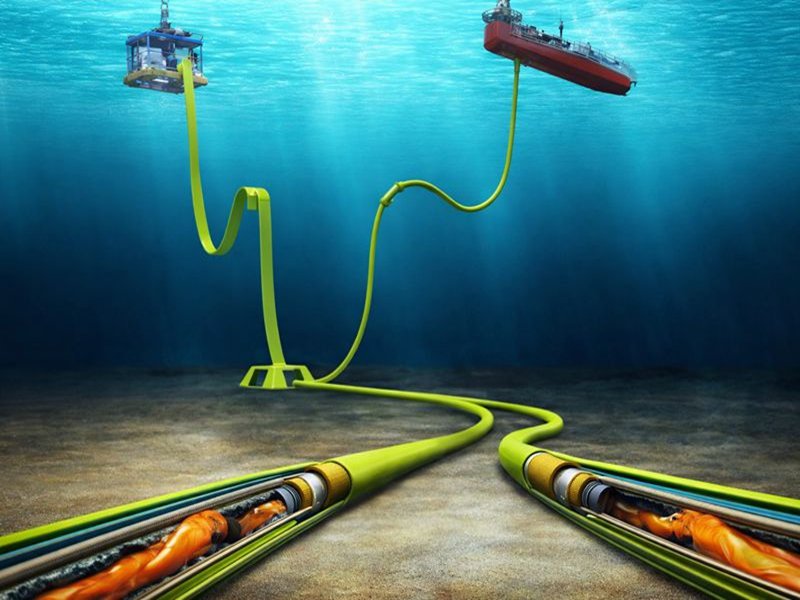
The modern internet feels wireless, instant, and invisible. A video call crosses oceans without a second thought. A cloud server responds faster than a local hard drive once did. Yet beneath that smooth digital surface lies one of the most physically demanding engineering systems ever built: undersea internet cables. Stretching across thousands of kilometers of ocean floor, these cables quietly carry nearly all international data traffic, enduring crushing pressure, corrosive saltwater, shifting seabeds, and human interference.
Most people imagine satellites beaming signals across the globe. In reality, satellites handle only a small fraction of global data. The real backbone of the internet lies underwater—fiber optic cables no thicker than a garden hose, engineered with military-grade precision and laid with millimeter-level control. These systems are not dropped randomly into the ocean. They are carefully planned, custom-designed, tested, and installed through a complex process involving marine surveys, specialized ships, and highly engineered cable structures.
Undersea cables are laid through a multi-step process that includes seabed surveying, custom fiber optic cable design, controlled deployment from cable-laying ships, burial or protection on the ocean floor, and long-term monitoring. Modern undersea internet cables are fiber optic, armored differently for shallow and deep water, and installed with precise tension control to ensure signal integrity and long service life.
What makes this process even more fascinating is that every route, every depth, and every coastal landing demands a different solution. Understanding how undersea cables are laid is not just about oceans—it’s about engineering discipline, customization, and reliability at a global scale. Let’s dive beneath the surface and see how it really works.
What Are Undersea Cables?
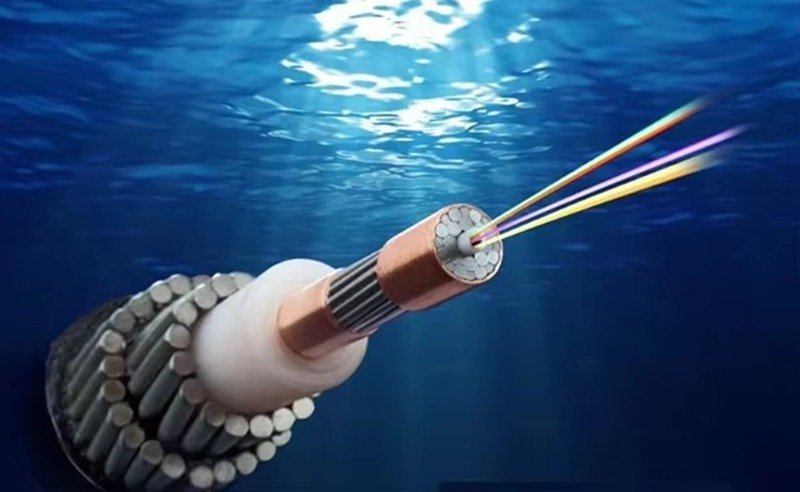
Undersea cables are submarine fiber optic cables laid on or beneath the ocean floor to transmit internet, telecom, and data traffic between countries and continents. They consist of optical fibers protected by layers of steel armor, waterproofing, and insulation, designed to withstand pressure, corrosion, and mechanical stress over decades of service.
What are undersea internet cables used for?
Undersea internet cables form the backbone of global connectivity. They carry international phone calls, financial transactions, cloud data, streaming services, and private enterprise traffic. Unlike terrestrial fiber, these cables must operate flawlessly in environments where maintenance is expensive and slow. A single transoceanic cable can support multiple terabits per second, serving millions of users simultaneously.
Are undersea internet cables fiber optic?
Yes. Modern undersea cables are almost exclusively single-mode fiber optic cables. Copper is no longer practical for long distances due to signal loss and bandwidth limitations. Fiber optics allow low attenuation, massive bandwidth, and immunity to electromagnetic interference—critical features when cables span thousands of kilometers underwater.
How do undersea cables differ from land fiber cables?
While both use optical fibers, undersea cables add multiple protective layers. These include copper power conductors for repeaters, water-blocking materials, steel wire armoring, and abrasion-resistant jackets. The design varies significantly depending on water depth, seabed conditions, and external risks such as fishing or anchors.
Why Are Undersea Cables So Important?
Undersea cables are critical because they carry over 95% of global international data traffic. They provide higher capacity, lower latency, and greater reliability than satellites, making them essential for modern economies, cloud computing, and global communications.
Why does the internet rely on undersea cables?
Latency matters. Financial markets, cloud services, and real-time communication depend on fast signal transmission. Fiber optic signals travel faster and more reliably underwater than via satellites, which must relay signals thousands of kilometers into space and back.
How much global internet traffic uses undersea cables?
Industry data consistently shows that more than 95% of intercontinental data travels through submarine fiber cables. Satellites serve niche roles—remote regions, backup links—but cannot match fiber’s bandwidth or stability.
Do satellites replace undersea internet cables?
No. Satellites complement undersea cables but do not replace them. Even low-Earth-orbit systems face bandwidth limits, higher latency variability, and weather sensitivity. Fiber cables remain the primary infrastructure for high-volume, low-latency data.
How Are Undersea Cables Designed Before Laying?
Before installation begins, undersea cables are custom-designed according to route-specific conditions rather than selected from standard products. Engineers evaluate seabed surveys, water depth, environmental risks, and system capacity requirements to define fiber count, armoring level, power conductors, and jacket materials. The goal is to ensure long-term durability, stable signal transmission, and safe installation across the entire cable route.
How were early undersea internet cables planned?
Early undersea internet cables followed relatively direct routes and relied on basic mechanical protection. Survey technology was limited, and route planning focused mainly on distance rather than seabed conditions. As a result, early systems experienced higher failure rates due to abrasion, seismic activity, and external interference.
Modern planning is far more data-driven. Engineers now integrate historical failure data, geological records, and human activity patterns to reduce long-term risk and improve system reliability.
How is the seabed surveyed before cable laying?
Before any cable design is finalized, dedicated survey vessels map the seabed using sonar, sub-bottom profiling, and remotely operated vehicles (ROVs). These surveys identify slope gradients, soil composition, rock formations, and potential hazards such as ship anchors or fishing activity.

The survey results directly influence cable structure decisions, including whether the cable should be buried, surface-laid, or reinforced with additional armoring in specific sections.
Which cable designs are used for different ocean depths?
Undersea cable design varies significantly with water depth and environmental exposure. Shallow coastal areas require stronger mechanical protection, while deep-sea sections prioritize weight reduction and pressure resistance.
The table below summarizes typical design choices based on water depth:
| Water Depth | Typical Cable Type | Key Protection |
|---|---|---|
| Coastal / Shallow | Double-armored fiber | Steel wire, thick outer jacket |
| Mid-depth | Single-armored fiber | Moderate steel protection |
| Deep ocean | Lightweight fiber | Pressure-resistant structure |
In practice, a single undersea cable route often includes multiple cable designs, transitioning gradually from heavily armored coastal sections to lightweight deep-ocean segments. These transitions are carefully engineered to maintain mechanical stability and installation safety.
How Are Undersea Cables Laid on the Ocean Floor?
Undersea cables are laid using specialized cable-laying vessels that deploy fiber optic cables onto the seabed with precise control. The installation process varies depending on water depth, seabed conditions, and environmental risk. In shallow waters, cables are often buried for protection, while in deep ocean areas they are carefully laid directly on the seabed under controlled tension to ensure mechanical integrity and long-term reliability.
How were undersea internet cables laid historically?
Early undersea cable installations relied on relatively simple mechanical systems. Cable was released from ships with limited real-time control, and route accuracy depended heavily on manual navigation. This often resulted in uneven placement, excessive tension, or slack, increasing the likelihood of cable damage over time.
Modern installation methods have significantly improved precision and consistency, reducing failure rates and extending service life.
How do modern cable-laying ships work?
Today’s cable-laying ships are purpose-built vessels equipped with dynamic positioning systems, cable tanks, and automated payout machinery. Hundreds or even thousands of kilometers of cable are stored in large circular tanks onboard.
As the vessel follows a pre-planned route, the cable is fed through tension control systems and guided over the stern into the ocean. GPS positioning and seabed mapping data ensure the cable is laid exactly along the intended path.
How is cable tension controlled during laying?
Tension control is one of the most critical aspects of undersea cable installation. Excessive tension can stretch or damage optical fibers, while insufficient tension can cause loops or uneven placement on the seabed.
Modern systems use real-time sensors to continuously monitor cable load, automatically adjusting payout speed based on water depth, vessel movement, ocean currents, and seabed slope. This ensures the cable remains within safe mechanical limits throughout the entire laying process.
How are undersea cables buried or protected after laying?
In coastal and high-risk areas, undersea cables are often buried beneath the seabed using plowing or jetting equipment mounted on subsea vehicles. These tools create a narrow trench, place the cable at a controlled depth, and allow natural sediment to cover it.
In deeper waters where human activity is minimal, cables are typically left unburied but may use heavier armoring or route optimization for protection.
The table below outlines common installation methods by environment:
| Installation Area | Typical Method | Primary Purpose |
|---|---|---|
| Coastal / Nearshore | Burial with plow or jetting | Protection from anchors and fishing |
| Continental shelf | Surface laying or shallow burial | Balance of protection and efficiency |
| Deep ocean | Direct seabed laying | Weight reduction and stability |
In practice, a single cable route may involve multiple installation techniques, each selected to match local conditions. Successful undersea cable projects depend not only on cable design, but also on precise coordination between engineering plans, vessel capability, and real-time environmental data.
How Are Undersea Cables Protected and Maintained?
Undersea cables are protected through burial, armoring, route planning, and continuous monitoring. When failures occur, repair ships locate the fault, retrieve the cable, splice new sections, and redeploy it to restore service.
How are undersea internet cables protected from damage?
Protection depends on location. Near shore, cables are buried one to three meters deep. Offshore, armoring and route selection minimize risks.
What are the most common causes of cable failure?
Fishing gear and anchors account for most failures. Natural causes include earthquakes and underwater landslides, though these are less frequent.
How are damaged undersea internet cables repaired?
Repair ships use sonar to locate breaks, retrieve the cable ends, splice replacement sections, and carefully redeploy them—often within days.
Who Manufactures and Customizes Undersea Fiber Cables?
Undersea fiber cables are manufactured by specialized suppliers who custom-design each cable for its route, environment, and performance requirements. Specifications such as fiber type, armoring, materials, and testing standards are tailored per project.

Who manufactures undersea internet cables today?
Only a limited number of manufacturers globally have the capability to produce submarine-grade fiber cables. These suppliers combine fiber expertise with heavy industrial cable manufacturing.
Are undersea internet cables custom-built for each route?
Yes. No two routes are identical. Length, depth, environmental risks, and bandwidth needs all influence the design. Customization is essential.
What specifications matter most for submarine fiber cables?
| Specification | Why It Matters |
|---|---|
| Fiber type | Signal distance & bandwidth |
| Armoring | Mechanical protection |
| Jacket material | Corrosion resistance |
| Bend radius | Installation safety |
| Testing standards | Long-term reliability |
Frequently Asked Questions About Undersea Internet Cables
Undersea internet cables typically last 20–25 years, are laid at depths ranging from coastal shallows to several kilometers deep, and carry data—not electricity—except for power used by signal repeaters.
How long do undersea internet cables last?
With proper design and protection, most cables operate for decades before replacement.
How deep are undersea internet cables laid?
Depth varies from a few meters near shore to over 6,000 meters in deep ocean trenches.
Do undersea internet cables carry electricity?
They carry low-voltage power only for optical repeaters, not for data transmission itself.

Why Sino-conn Is the Right Partner for Custom Fiber Cable Solutions
Understanding how undersea cables are laid highlights one truth: there is no one-size-fits-all cable solution. Every environment, application, and customer requirement demands precise engineering, material selection, and manufacturing control.
At Sino-conn, we support customers who come with full specifications, partial drawings, or even just a photo. We provide rapid CAD drawings, flexible material options, original or alternative connectors, and fast sample turnaround—often within days. With full inspection processes and global certifications, we help customers turn complex cable concepts into reliable, manufacturable products.
If you are planning a fiber cable project—whether industrial, telecom, or custom-engineered—reach out to Sino-conn. Share your requirements, drawings, or application challenges, and let our engineering team help you design the right cable solution from the ground up.