Skip to content
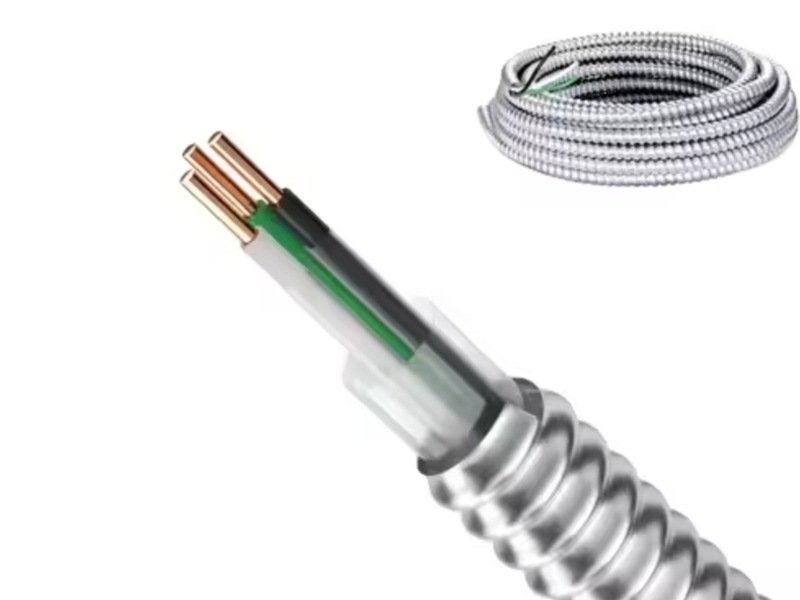
In industrial and high-risk electrical environments, standard jacketed cables are often not enough. Mechanical impact, fire risk, electromagnetic interference, and harsh installation conditions demand a higher level of protection. This is where metal clad cables come into play. Yet despite their widespread use in industrial plants, energy facilities, and OEM equipment, many buyers still confuse metal clad cable with armored cable—or misunderstand when metal cladding is truly necessary.
A metal clad cable is more than just a cable with a metal layer. It is a carefully engineered system where the metal sheath plays a functional role in mechanical protection, grounding, EMI shielding, and fire resistance. Choosing it correctly can significantly improve system reliability. Choosing it incorrectly can increase cost without adding real value.
A metal clad cable is an electrical cable protected by a continuous metal sheath surrounding the insulated conductors. The metal cladding provides enhanced mechanical protection, fire resistance, and electromagnetic shielding compared to standard jacketed cables. Metal clad cables are commonly used in industrial, power distribution, and OEM applications where safety, durability, and compliance are critical.
Behind every metal clad cable is a design decision shaped by environment, regulation, and risk tolerance. In the sections below, we’ll break down exactly what metal clad cable is, how it’s built, which materials are used, when it should be selected, and how it differs from armored cable—so you can make informed, engineering-driven decisions before your next project moves into production.
What Is a Metal Clad Cable?
A metal clad cable is an electrical cable in which the insulated conductors are enclosed within a continuous metal sheath, typically made of aluminum, steel, or copper. This metal layer provides enhanced mechanical protection, fire resistance, grounding capability, and electromagnetic shielding compared to standard jacketed cables. Metal clad cables are commonly used in industrial, power, and infrastructure applications where safety, durability, and code compliance are critical.
What does “metal clad” actually mean in cable engineering terms?
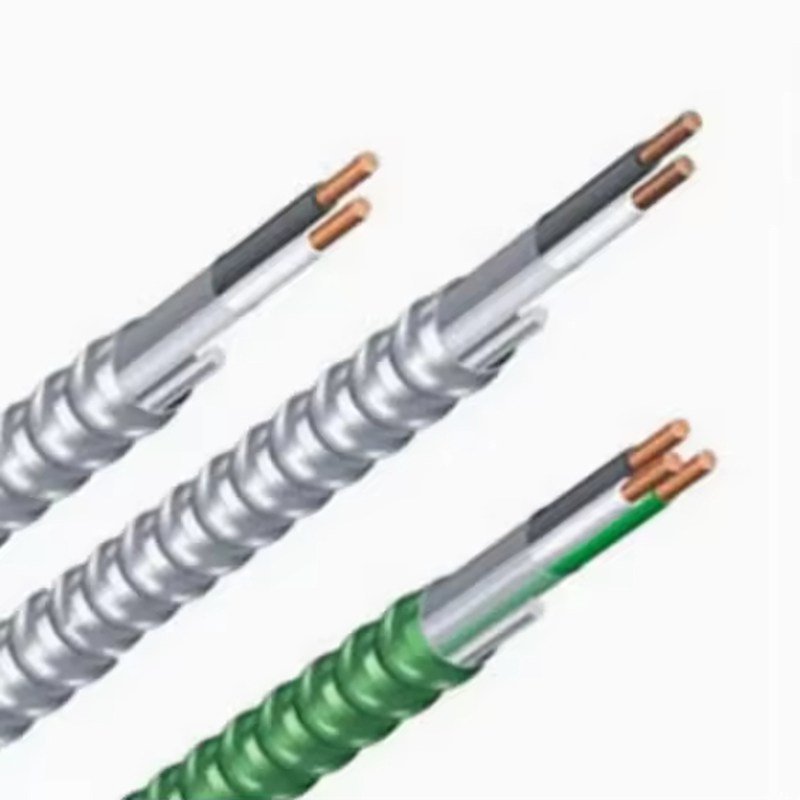
In cable engineering, “metal clad” does not simply mean that a cable has some metal around it. It specifically refers to a continuous metallic enclosure that fully surrounds the insulated conductors along the entire cable length.
This metal enclosure may take different forms—such as interlocked metal strip, corrugated metal, or seamless metal tubing—but the defining characteristic is full, continuous coverage. Unlike braided shields or partial armor, metal cladding is designed to act as a structural layer, not just a protective add-on.
From an engineering perspective, the metal cladding becomes part of the cable’s functional system. It contributes to mechanical strength, electrical grounding, fire performance, and EMI control, rather than serving a single isolated purpose.
How is a metal clad cable different from a standard jacketed cable?
The key difference lies in what protects the cable.
A standard jacketed cable relies mainly on a polymer outer jacket (such as PVC or PE) for protection. While sufficient in low-risk environments, polymer jackets alone offer limited resistance to crushing, impact, fire, and electromagnetic interference.
A metal clad cable replaces or supplements that outer protection with a metal sheath. This dramatically improves:
- Resistance to physical damage
- Containment of fire and heat
- Grounding reliability
- EMI shielding effectiveness
What are the main functional roles of the metal sheath?
The metal sheath in a metal clad cable typically serves multiple roles at the same time:
- Mechanical protection It protects the cable from impact, crushing, abrasion, and rodent damage—especially important in industrial and infrastructure installations.
- Grounding path In many designs, the metal sheath acts as an equipment grounding conductor, simplifying system design and improving fault-current handling.
- Fire resistance Metal cladding delays insulation failure during fire exposure and helps limit flame spread compared to polymer-only jackets.
- EMI shielding A continuous metal layer provides more consistent electromagnetic shielding than braided shields, especially in power-dense environments.
These combined functions are why metal clad cable is considered a system-level safety solution, not just a stronger cable.
What components typically make up a metal clad cable?
While designs vary by application, most metal clad cables share a common layered structure:
- Conductors Usually copper or aluminum, solid or stranded, sized according to current requirements.
- Primary insulation Commonly XLPE, PVC, or specialty compounds, selected for voltage rating and temperature class.
- Fillers or separators (optional) Used to maintain geometry, improve flexibility, or enhance mechanical stability.
- Metal sheath (cladding) Aluminum, steel, copper, or stainless steel, applied continuously around the core.
- Optional outer jacket Sometimes added over the metal sheath for corrosion protection, UV resistance, or chemical exposure.
Each layer must be compatible with the others. For example, insulation temperature rating must match the heat dissipation behavior of the metal sheath.
Why are metal clad cables often required by codes or standards?
Metal clad cables are frequently specified—or even mandated—by electrical codes and project standards because they reduce multiple risk factors simultaneously.
Codes and standards often favor metal clad construction because it:
- Improves fire safety in enclosed spaces
- Provides predictable grounding behavior
- Reduces installation-related damage
- Enhances long-term reliability
Why do buyers often misunderstand what metal clad cable really is?
Many buyers encounter the term “metal clad” through:
- Project specifications
- Contractor recommendations
- Product photos
However, photos alone rarely show:
- How continuous the metal sheath is
- Whether it functions as grounding
- How it performs under fire or EMI conditions
This leads to confusion with armored cable or shielded cable. In reality, metal clad cable is a distinct design category, chosen for a specific combination of safety, protection, and compliance needs.
At Sino-conn, customers often start with only a model number or an image. Our engineers analyze the structure, clarify whether true metal cladding is required, and recommend the most appropriate solution—sometimes confirming that a simpler design is sufficient, and sometimes validating the need for full metal cladding.
How Is a Metal Clad Cable Constructed?
A metal clad cable is constructed by enclosing insulated conductors within a continuous metal sheath using interlocked, corrugated, or seamless metal-forming processes. The metal cladding provides mechanical protection, grounding continuity, fire resistance, and electromagnetic shielding. Construction methods are selected based on flexibility, installation conditions, protection level, and compliance requirements.
How are the insulated conductors prepared before metal cladding?
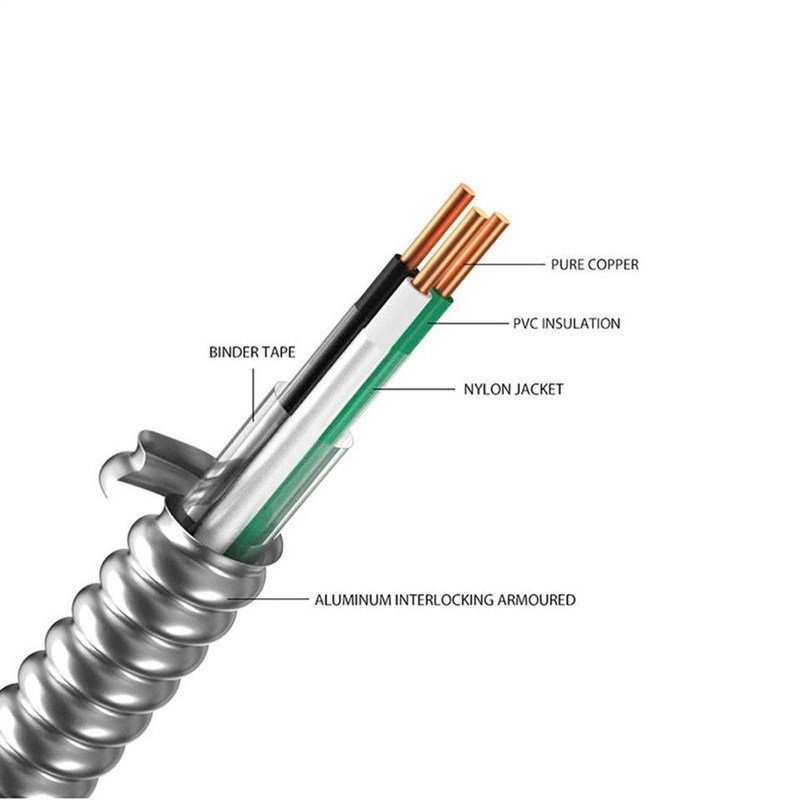
Construction begins with the cable core, which includes the conductors and primary insulation. Conductors are typically copper or aluminum and may be solid or stranded depending on current rating, flexibility needs, and installation method.
The insulation layer—commonly XLPE, PVC, or specialty compounds—is selected based on voltage class, temperature rating, and regulatory requirements. At this stage, engineers must already consider how the insulation will interact with the metal sheath. For example, higher-temperature insulation is often paired with metal cladding because the metal layer can retain heat during overload or fire conditions.
Fillers or separators may be added to maintain roundness, control outer diameter (OD), and improve mechanical stability before the metal sheath is applied.
How is the metal sheath applied around the cable core?
The defining step in metal clad cable construction is the formation of a continuous metal sheath around the insulated core. This is achieved through several established methods:
- Interlocked metal strip A metal strip is helically wrapped and mechanically interlocked around the core. This method offers good flexibility and is widely used in building wiring and industrial installations.
- Corrugated metal sheath The metal is formed into a corrugated profile, improving crush resistance while retaining moderate flexibility. This design balances strength and installability.
- Seamless metal tube A solid metal tube is drawn or formed around the core, offering maximum mechanical and environmental protection but limited flexibility.
Each method represents a trade-off between flexibility, protection level, cost, and installation complexity.
How does metal cladding improve mechanical protection?
Once applied, the metal sheath becomes the cable’s primary mechanical defense. It absorbs impact forces, resists crushing, and protects against abrasion far more effectively than polymer jackets alone.
In real-world installations, cables are often pulled through conduits, laid across sharp edges, or exposed to vibration. Metal cladding prevents localized damage that would otherwise penetrate insulation layers. It also provides strong resistance to rodent damage, which is a common failure cause in industrial and infrastructure environments.
This mechanical robustness is one of the main reasons metal clad cables are specified in high-risk areas.
How does the metal sheath function as grounding and safety protection?
In many metal clad cable designs, the metal sheath is electrically continuous and bonded, allowing it to serve as an equipment grounding conductor.
This provides several advantages:
- Reliable fault-current path
- Faster protective device operation during faults
- Reduced reliance on separate grounding conductors
From a safety perspective, this integrated grounding capability simplifies system design and improves predictability during fault conditions. However, grounding performance depends on sheath continuity and termination quality, which must be engineered and verified during assembly.
How does construction affect EMI shielding performance?
Because the metal sheath fully encloses the conductors, it acts as a Faraday cage, offering superior electromagnetic shielding compared to braided shields.
Unlike braided shields, which have gaps and variable coverage, metal cladding provides:
- Consistent shielding effectiveness
- Stable impedance characteristics
- Reduced susceptibility to external noise
This makes metal clad cables suitable for environments with high electromagnetic interference, such as near motors, transformers, or power electronics.
How is an outer jacket used in some metal clad cable designs?
In certain applications, an additional polymer jacket is applied over the metal sheath. This outer jacket does not replace the metal cladding but enhances performance by providing:
- Corrosion resistance
- UV protection for outdoor installations
- Chemical resistance in industrial settings
Materials such as PVC, PE, or LSZH compounds may be used depending on environment and compliance needs. This layered approach allows metal clad cables to function reliably in even more demanding conditions.
How do construction choices affect flexibility and installation?
Construction choices directly influence how a metal clad cable behaves during installation:
- Interlocked designs allow tighter bend radii
- Corrugated designs balance strength and flexibility
- Seamless designs require careful routing and planning
Selecting the wrong construction type can increase installation difficulty or lead to mechanical stress during service. This is why experienced manufacturers like Sino-conn evaluate installation conditions—static vs dynamic routing, bend radius limits, and conduit layout—before finalizing the construction method.
Which Materials Are Used for Metal Clad Cables?
Metal clad cables use a combination of metal sheaths and polymer insulation materials. Common cladding metals include aluminum, steel, copper, and stainless steel, while insulation materials typically include XLPE, PVC, LSZH, or high-temperature compounds. Material selection depends on mechanical strength, corrosion resistance, temperature rating, flexibility, EMI shielding needs, and regulatory compliance.
A metal clad cable is never defined by one material alone. It is a material system, where metals and polymers must work together under electrical, mechanical, and environmental stress.
Which metals are commonly used for the cladding sheath?
The metal sheath is the defining element of a metal clad cable. Different metals are selected based on protection level, environment, and cost.
Aluminum
Aluminum is one of the most widely used cladding materials. It offers an excellent balance of light weight, corrosion resistance, and cost efficiency. Aluminum sheaths are commonly used in building wiring, industrial facilities, and infrastructure projects. They are easier to handle during installation and provide reliable grounding and EMI shielding.
Steel
Steel cladding provides superior mechanical strength and impact resistance. It is typically selected for environments where crushing, vibration, or physical abuse is likely. The trade-off is reduced flexibility and increased weight. Steel-clad cables are common in heavy industry, power plants, and mining-related installations.
Copper
Copper cladding is less common due to higher cost, but it offers outstanding electrical conductivity and EMI shielding performance. It is sometimes used in specialized power or signal applications where grounding performance and electromagnetic control are critical.
Stainless Steel
Stainless steel is reserved for extreme environments involving high temperatures, chemical exposure, or severe corrosion. It delivers exceptional durability but is the most expensive and least flexible option. Typical applications include chemical processing, oil & gas, and high-temperature industrial systems.
Which insulation materials are used inside metal clad cables?
Inside the metal sheath, the insulation material determines voltage rating, temperature class, and electrical performance.
XLPE (Cross-Linked Polyethylene)
XLPE is widely used due to its high temperature rating, excellent electrical properties, and long-term thermal stability. It is often paired with metal cladding in industrial and power applications.
PVC (Polyvinyl Chloride)
PVC insulation is cost-effective and easy to process. It is suitable for moderate temperature applications but is less resistant to heat and aging compared to XLPE. Modified PVC formulations are often used to meet flame-retardant requirements.
LSZH (Low Smoke Zero Halogen)
LSZH insulation is selected for public buildings, transportation systems, and enclosed spaces where fire safety and low toxicity are critical. It reduces smoke and corrosive gas emission but may sacrifice some flexibility.
High-Temperature Compounds
In specialized cases, silicone rubber or fluoropolymer-based insulation may be used to handle extreme temperatures. These are niche solutions with higher cost.
Which outer jacket materials are used over metal cladding?
Not all metal clad cables include an outer polymer jacket, but when they do, it serves specific purposes:
- Corrosion protection
- UV resistance
- Chemical resistance
- Improved handling safety
Common outer jacket materials include PVC, PE, and LSZH compounds. The choice depends on installation environment and regulatory requirements rather than electrical performance.
How do material combinations affect flexibility and installation?
Material choices directly influence how a metal clad cable behaves during installation:
- Aluminum + interlocked construction offers good flexibility
- Steel + corrugated construction prioritizes strength
- Stainless steel + seamless construction maximizes protection
Pairing stiff metals with flexible insulation can improve handling, but there are limits. Engineers must consider bend radius, pulling tension, and routing complexity when selecting materials.
Which material combinations fit harsh or regulated environments?
Different environments demand different material systems:
| Environment | Typical Cladding | Insulation |
|---|---|---|
| Industrial factory | Aluminum / Steel | XLPE |
| Public infrastructure | Aluminum | LSZH |
| Chemical exposure | Stainless steel | XLPE / special compounds |
| High EMI zones | Copper / Aluminum | XLPE |
| Outdoor installations | Aluminum | PE / UV-resistant compounds |
What Are Metal Clad Cables Used For?
Metal clad cables are used in applications where enhanced mechanical protection, fire resistance, grounding reliability, and electromagnetic shielding are required. They are commonly installed in industrial facilities, power distribution systems, OEM machinery, infrastructure projects, and harsh environments where standard jacketed cables cannot provide sufficient safety or durability.
Metal clad cables are not chosen by habit or preference — they are chosen because the environment or regulation leaves little margin for failure.
When should you use metal clad wiring instead of standard cable?
Metal clad wiring should be used when risk control and compliance outweigh cost sensitivity. In real projects, this decision often comes down to one question:
What happens if this cable is damaged or fails?
Metal clad cable is the right choice when:
- Cables are exposed to mechanical impact, crushing, or vibration
- Installation routes are crowded, confined, or difficult to protect
- Fire containment and grounding reliability are critical
- Inspection codes or project specifications require enhanced protection
In contrast, in clean, low-risk, and easily accessible environments, standard jacketed cables may be sufficient. Understanding this distinction helps avoid both under-design and unnecessary over-engineering.
What industrial applications rely on metal clad cables?

Industrial environments are the most common users of metal clad cables. Typical applications include:
- Manufacturing plants and production lines
- Heavy machinery and automated equipment
- Motor control centers and power panels
- Conveyor systems and industrial robotics
In these settings, cables are routinely exposed to oil, dust, vibration, and accidental impact. The metal sheath protects the cable from damage that would quickly degrade polymer-jacketed alternatives, improving uptime and reducing maintenance costs.
How are metal clad cables used in power and energy systems?
Metal clad cables are widely used in power generation, transmission, and distribution systems where electrical safety and reliability are non-negotiable.
Common use cases include:
- Power distribution in industrial facilities
- Generator and transformer connections
- Electrical rooms and substations
- Backup power and emergency systems
In these applications, the metal sheath improves grounding continuity and fault-current handling, helping protective devices operate correctly during short circuits or overloads.
Why are metal clad cables preferred in infrastructure and commercial buildings?
In commercial and public infrastructure projects, metal clad cables are often selected due to building codes and fire safety regulations.
They are commonly installed in:
- Commercial buildings and data centers
- Transportation hubs and tunnels
- Hospitals, schools, and public facilities
- Basements, shafts, and service corridors
The metal sheath delays insulation failure during fire exposure, limits flame spread, and reduces smoke-related hazards. For building inspectors and safety engineers, metal clad construction offers predictable, code-compliant performance.
How do OEM equipment manufacturers use metal clad cables?
OEM manufacturers use metal clad cables to protect system reliability and reduce liability when shipping equipment globally.
Typical OEM use cases include:
- Industrial machines exported to multiple regions
- Equipment operating near high-power electronics
- Systems exposed to vibration or harsh handling during transport
- Installations where local wiring quality cannot be guaranteed
For OEMs, metal clad cables act as a “built-in safety margin,” ensuring equipment performs consistently regardless of installation conditions.
What environments specifically require metal-clad protection?
Certain environments strongly favor—or mandate—metal clad cable use:
- Areas with high electromagnetic interference (EMI)
- Locations exposed to physical abuse or rodent damage
- Fire-rated or enclosed spaces
- Industrial zones with oil, chemicals, or debris
In these environments, the metal sheath functions simultaneously as armor, shield, and grounding path, providing a level of protection that standard cables cannot match.
When is metal clad cable not the best choice?
Metal clad cable is not always the optimal solution. It may be unnecessary when:
- The environment is clean and low-risk
- Flexibility is a top priority (tight dynamic movement)
- Budget constraints dominate and codes allow alternatives
Recognizing when not to use metal clad cable is just as important as knowing when to specify it.
Application Table — Where Metal Clad Cables Make Sense
| Application Area | Why Metal Clad Cable Is Used |
|---|---|
| Industrial plants | Impact, vibration, oil resistance |
| Power systems | Grounding & fault safety |
| Commercial buildings | Fire and code compliance |
| Infrastructure | Long-term durability |
| OEM equipment | Risk reduction & reliability |
How Does Metal Clad Cable Compare to Other Cable Types?
Metal clad cable differs from other cable types by using a continuous metal sheath that provides combined mechanical protection, grounding, fire resistance, and EMI shielding. Compared to armored cable, metal clad cable typically offers better grounding integration and easier installation. Compared to standard jacketed or braided-shield cables, it delivers significantly higher physical and fire protection, making it suitable for higher-risk environments.
Below is a clear, application-driven comparison between metal clad cable and the most commonly confused alternatives.

What’s the difference between metal clad cable and armored cable?
This is the most common comparison—and the most misunderstood.
Although both cable types use metal for protection, their design intent is different.
Metal clad cable uses a continuous metal sheath that often serves multiple roles:
- Mechanical protection
- Equipment grounding conductor
- Fire containment
- EMI shielding
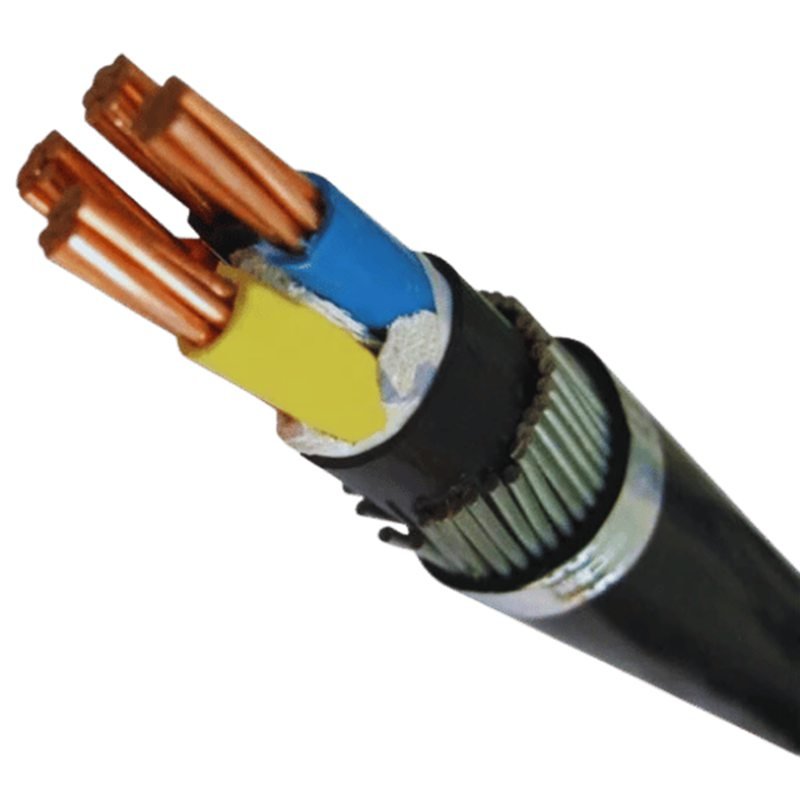
Armored cable, by contrast, typically uses helical or braided metal armor whose primary purpose is mechanical protection.
Key practical differences include:
- Grounding Metal clad cable often integrates grounding through the sheath itself, while armored cable may still require a separate grounding conductor.
- Flexibility & installation Metal clad cable is usually easier to bend and route than heavy armored designs, especially in building and industrial installations.
- Code acceptance In many regions and applications, metal clad cable is explicitly recognized by electrical codes for specific uses, simplifying inspection and approval.
In short:
Choose metal clad cable when grounding reliability and code compliance are critical.
Choose armored cable when extreme physical abuse is the dominant concern.
How does metal clad cable compare to braided-shield cable?

Braided-shield cables are often confused with metal clad cables because both involve metal layers—but their purposes are very different.
Braided shields are designed primarily to:
- Reduce electromagnetic interference (EMI)
- Control signal integrity
They are not designed to:
- Resist crushing or impact
- Provide fire containment
- Act as a grounding conductor
Metal clad cables, on the other hand, provide:
- Full mechanical coverage
- Continuous EMI shielding
- Structural protection and safety grounding
In environments with high EMI and physical risk—such as near motors, drives, or power electronics—metal clad cable offers a far more comprehensive solution.
Is metal clad cable better than standard jacketed cable?
“Better” depends entirely on risk level and application context.
Metal clad cable is better when:
- Cables are exposed to mechanical damage
- Fire safety is a concern
- Reliable grounding is required
- Inspections and codes demand enhanced protection
Standard jacketed cable is better when:
- The environment is clean and controlled
- Physical damage risk is low
- Cost and flexibility are higher priorities
Using metal clad cable in low-risk environments may increase cost without meaningful benefit. Conversely, using standard jacketed cable in high-risk environments often leads to early failure or failed inspections.
How does metal clad cable compare to conduit-based solutions?
Some projects rely on standard cable inside conduit as an alternative to metal clad cable.
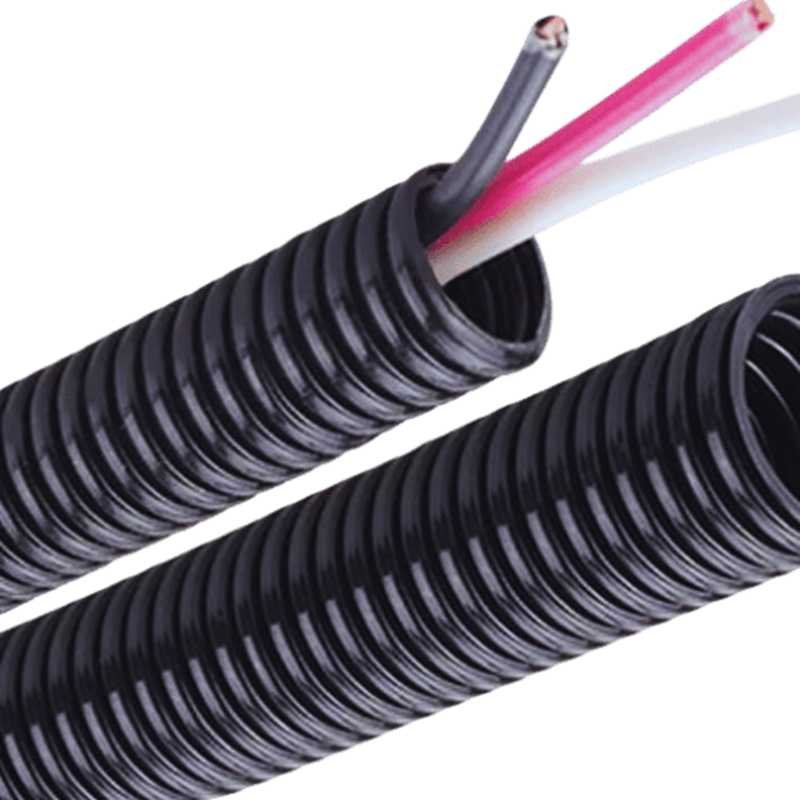
While conduit can provide protection, it also:
- Increases installation complexity
- Adds labor and material cost
- Introduces potential grounding discontinuities
Metal clad cable often simplifies installation by integrating protection and grounding into the cable itself, reducing installation steps and long-term maintenance risk.
Which cable type should OEM buyers choose?
For OEM equipment manufacturers, the decision often comes down to risk management and global compatibility.
Metal clad cable is often preferred because it:
- Reduces dependence on local installation quality
- Improves durability during transport and handling
- Helps meet diverse regional safety requirements
Standard jacketed or braided cables may be sufficient for internal wiring but are less forgiving in uncontrolled environments.
Metal Clad vs Other Cable Types
| Feature | Metal Clad Cable | Armored Cable | Braided Shield Cable | Standard Jacketed Cable |
|---|---|---|---|---|
| Mechanical protection | High | Very high | Low | Low |
| EMI shielding | High | Medium | High | Low |
| Grounding integration | Yes | Sometimes | No | No |
| Fire resistance | High | Medium | Low | Low |
| Installation ease | Medium–High | Low | High | High |
| Typical use | Industrial, infrastructure | Heavy-duty | Signal control | Low-risk areas |
What Standards and Certifications Apply to Metal Clad Cables?
Metal clad cables must comply with safety, fire, and environmental standards such as UL and IEC for electrical performance, NEC or local codes for installation approval, and RoHS, REACH, and PFAS regulations for material compliance. These standards ensure fire resistance, grounding reliability, environmental safety, and legal market access. In many applications, the metal sheath plays a decisive role in whether a cable passes certification.
For metal clad cables, compliance is not an afterthought.
In practice, many certification results are determined less by the conductors and more by how the metal sheath behaves under fire, fault, and environmental conditions.
What UL standards apply to metal clad cables?
UL (Underwriters Laboratories) standards are among the most influential for metal clad cables, especially in North America and export-oriented OEM projects.
Key UL-related aspects include:
- Flame performance Tests such as UL flame propagation evaluations assess whether the cable limits flame spread. The metal sheath significantly improves performance by acting as a heat barrier.
- Temperature rating Common UL temperature classes include 75 °C, 90 °C, and 105 °C. The insulation and metal sheath must be compatible to maintain rating under continuous operation.
- Grounding continuity Many UL evaluations verify whether the metal sheath can serve as a reliable equipment grounding conductor.
A metal clad cable may fail UL testing even if conductors are compliant—simply because the metal sheath thickness, continuity, or termination is inadequate. This is why experienced manufacturers evaluate UL compliance during design, not after production.
How do NEC and regional electrical codes affect metal clad cables?
Beyond product certification, installation codes often dictate whether metal clad cable is acceptable in a given project.
In the U.S., the National Electrical Code (NEC) defines where and how metal clad cables can be used. Similar regional codes exist in Europe, Asia, and the Middle East.
Metal clad cables are often favored because they:
- Provide integrated mechanical protection
- Improve grounding reliability
- Reduce reliance on external conduit systems
For builders, inspectors, and OEMs, this often translates into simpler approval and fewer installation disputes.
What IEC and international standards apply?
For projects outside North America, IEC standards play a critical role.
IEC-related requirements typically address:
- Electrical performance and insulation coordination
- Fire behavior and heat resistance
- Mechanical robustness
While IEC standards may differ in structure from UL, the underlying principles are similar. Metal cladding generally improves compliance margins, especially in fire and mechanical tests.
Sino-conn routinely supports projects that must meet both UL and IEC frameworks, ensuring global compatibility.
Are metal clad cables required to meet RoHS and REACH regulations?
Yes. Environmental compliance is mandatory in many markets, particularly in the EU.
- RoHS restricts hazardous substances such as lead, cadmium, and certain flame retardants.
- REACH governs chemical substances used in insulation, jackets, and sometimes metal surface treatments.
While the metal sheath itself is usually compliant, insulation compounds, coatings, and additives must be carefully selected. Documentation such as RoHS declarations and REACH SVHC statements is commonly required during procurement and audits.
What is PFAS compliance and why does it matter now?
PFAS regulations are rapidly evolving, especially in Europe and North America. Some high-performance insulation or fire-retardant materials may contain PFAS-related compounds.
Industries most sensitive to PFAS compliance include:
- Medical and laboratory equipment
- Public infrastructure
- Export-oriented OEM machinery
Selecting PFAS-aware material systems today reduces the risk of future redesigns or market restrictions.
What fire and safety ratings are commonly specified?
Fire performance is one of the strongest arguments for metal clad cable use.
Common requirements include:
- Flame retardancy
- Reduced smoke emission
- Halogen-free or LSZH performance
The metal sheath delays insulation breakdown during fire exposure and limits flame propagation, helping systems meet stricter safety expectations in enclosed or public spaces.
Common Compliance Documents Buyers Request
| Document | Purpose |
|---|---|
| UL Test Report / File | Fire, temperature, grounding verification |
| IEC Compliance Statement | International market acceptance |
| RoHS Declaration | Hazardous substance restriction |
| REACH SVHC Statement | Chemical safety compliance |
| PFAS Statement | Environmental risk control |
| COC / COO | Traceability and origin verification |
At Sino-conn, these documents are routinely prepared as part of the project workflow, especially for OEM and export customers.
Can Metal Clad Cables Be Customized for OEM Projects?
Yes, metal clad cables can be extensively customized for OEM projects, including conductor configuration, insulation type, metal sheath material, outer jacket, cable length, pinout definition, connectors, and compliance level. Experienced manufacturers like Sino-conn support rapid engineering drawings, fast prototyping, flexible material options, and no-MOQ production, enabling precise customization for industrial and export-oriented equipment.
Metal clad cables used in OEM equipment are rarely standard products. In most real-world projects, customization is not optional—it is necessary to ensure fit, function, compliance, and manufacturability. Below is how metal clad cable customization typically works in practice.

What parts of a metal clad cable can be customized?
From an OEM perspective, almost every element of a metal clad cable can be tailored to project requirements. Common customization parameters include:
- Conductor configuration Number of cores, conductor size (AWG/mm²), solid vs stranded, copper vs aluminum.
- Insulation system XLPE, PVC, LSZH, or high-temperature compounds selected based on voltage, temperature, and fire rating.
- Metal cladding Aluminum, steel, copper, or stainless steel, with different forming methods depending on flexibility and protection needs.
- Outer jacket (optional) Added for UV, chemical, or corrosion resistance in harsh environments.
- Cable length and tolerance Cut-to-length production with tight tolerance control.
These parameters are defined during the engineering stage, not after production begins.
Can pinout, wiring definition, and interconnection be customized?
Yes—and this is one of the most critical OEM requirements.
OEM customers often require:
- Specific pin-to-pin wiring definitions
- Custom grounding schemes
- Integrated power + signal cores
- Shield termination logic
At Sino-conn, customers can provide:
- A wiring diagram
- A reference cable
- Or even just a photo and functional description
Our engineers translate this information into CAD drawings (CAD → PDF), usually within 30 minutes to 3 days, for customer confirmation before production. No cable is built until the drawing is approved.
Can different connectors be used on metal clad cables?
Absolutely. Connector selection is a major part of OEM customization.
Customers can choose:
- Original brand connectors (higher cost, longer lead time)
- Qualified alternative connectors (more flexible, cost-effective)
Both options are electrically and mechanically compatible, and the choice depends on:
- Budget constraints
- Lead time requirements
- Brand or end-customer preference
How does compliance and certification affect customization?
Customization must always be aligned with compliance requirements. For metal clad cables, this includes:
- UL / IEC electrical and fire standards
- RoHS, REACH, and PFAS material compliance
- Halogen-free or LSZH requirements
Changing insulation or jacket materials can affect certification status. Sino-conn evaluates these impacts during the design phase to ensure the customized cable remains compliant in its target market.
How fast can customized metal clad cable samples be delivered?
Speed is a key concern for OEM projects, especially during R&D or pilot production.
At Sino-conn:
- Standard samples: ~2 weeks
- Urgent samples: as fast as 2–3 days
- Mass production: typically 3–4 weeks, or ~2 weeks for urgent orders
Because we do not rely on finished inventory and instead build to specification, lead time is managed through engineering efficiency rather than stock availability.
Is there a minimum order quantity (MOQ) for custom metal clad cables?
No.
Sino-conn supports NO MOQ customization, starting from 1 piece.
This is particularly valuable for:
- R&D engineers validating designs
- OEMs running pilot projects
- Customers replacing obsolete or discontinued cables
As volumes increase, pricing can be optimized for mass production without changing the design.
How does Sino-conn manage quality in customized projects?
Customization increases complexity, which is why quality control is critical.
Sino-conn applies:
- 100% inspection during production
- Final inspection after assembly
- Pre-shipment inspection
This three-stage inspection process ensures that every customized metal clad cable meets the approved drawing and specification.
OEM Customization Summary Table
| Customization Area | Supported Options |
|---|---|
| Conductors | Size, count, material |
| Insulation | XLPE, PVC, LSZH, high-temp |
| Metal sheath | Aluminum, steel, copper, stainless |
| Outer jacket | Optional, environment-specific |
| Length & pinout | Fully customized |
| Connectors | Original or alternative |
| MOQ | From 1 piece |
| Lead time | 2–14 days (samples) |
Start Your Metal Clad Cable Project with Sino-conn
Metal clad cable projects rarely start with a perfect specification.
More often, they begin with a drawing that needs validation, a discontinued model that must be replaced, or a photo taken on a factory floor with no technical data attached.

This is exactly where Sino-conn adds value.
We work the way engineers and OEM teams actually work:
by reviewing real application conditions, clarifying risks, and translating incomplete information into clear drawings, verified materials, and buildable cable assemblies. Whether your priority is compliance, durability, lead time, or cost optimization, our role is to help you make the right technical decision before production begins.
You don’t need to finalize every detail to get started.
Send us what you have — a model number, a wiring diagram, a reference cable, or even just a photo. Our engineers will evaluate feasibility, propose suitable metal cladding and insulation options, and return with accurate drawings and pricing, often within hours.
No minimum order quantity.
No unnecessary complexity.
Just engineering-driven metal clad cable solutions that are ready for real-world use.
Start the conversation with Sino-conn — and turn your requirements into a reliable, compliant metal clad cable assembly.