Skip to content
Is PVC Cable Waterproof? A Complete Guide for Real Applications
- andy

People often assume that cable performance is determined by what they can see. If the jacket looks thick, smooth, and plastic-like, it must be waterproof—right? This assumption is especially common with PVC cables. PVC is everywhere: power cords, signal cables, industrial wiring, consumer electronics. Because PVC is widely used and feels “sealed,” many customers naturally ask the same question before a project moves forward: is PVC cable waterproof?
The short answer is: sometimes—but not by default. And that “sometimes” is exactly where costly misunderstandings happen. Engineers may design a system assuming the jacket alone provides protection. Procurement teams may source a PVC cable believing it is suitable for wet or outdoor use. The system works in the lab, but months later fails in the field due to moisture ingress, corrosion, or connector failure.
A PVC cable is not automatically waterproof. While PVC insulation is water-resistant and can tolerate limited moisture exposure, true waterproof performance depends on the entire cable assembly design. Waterproof cables require sealed connectors, overmolding, proper strain relief, and IP-rated construction. PVC can be used in waterproof cable assemblies, but PVC alone does not guarantee protection against water ingress.
A field technician once replaced a failed cable in an outdoor control box with a “similar” PVC cable. It fit perfectly and worked on day one. Three months later, condensation formed inside the connector, corrosion followed, and the system shut down. The problem was not PVC itself—it was the assumption that PVC meant waterproof.
What Is a PVC Cable?
A PVC cable is a cable that uses polyvinyl chloride as its insulation or jacket material. PVC is valued for its flexibility, cost efficiency, electrical insulation, and ease of processing, making it one of the most widely used cable materials across industrial, commercial, and consumer applications.
What does PVC insulation mean in cables?
PVC (polyvinyl chloride) is a thermoplastic polymer commonly used as cable insulation and jacketing. In cables, PVC provides electrical isolation between conductors and external surfaces, while also offering basic mechanical protection.
From a manufacturing perspective, PVC is popular because it is easy to extrude, compatible with many conductor types, and adaptable through additives. These additives can improve flexibility, flame resistance, or temperature tolerance. However, these improvements do not automatically change the cable’s environmental protection level.
PVC insulation primarily serves electrical and mechanical functions, not environmental sealing. This distinction is critical when evaluating waterproof performance.
What properties make PVC popular for cable jackets?
PVC remains widely used because it balances performance and cost. It offers:
- Good electrical insulation
- Moderate flexibility
- Flame retardancy (with additives)
- Compatibility with many connectors
For indoor and controlled environments, PVC performs reliably for years. However, its popularity sometimes leads to overconfidence about what it can handle in harsher conditions.
Are all PVC cables the same?
No. PVC formulations vary widely. Some are soft and flexible, others rigid. Some are flame-retardant, others oil-resistant. Despite these variations, waterproofing is not inherent to any standard PVC formulation. Performance depends on how the cable is designed and assembled.
Is PVC Cable Waterproof by Itself?
The short and accurate answer is no—PVC cable is not waterproof by itself, even though it is often described as water-resistant. This distinction is important, because many real-world failures come from confusing material resistance with system-level waterproofing.
PVC (polyvinyl chloride) as a jacket or insulation material does not readily absorb water, and it maintains its electrical insulation properties in humid environments. For this reason, PVC cables can perform reliably in dry indoor conditions, light moisture, or occasional splashing. However, waterproof performance is not determined by the jacket material alone, and PVC does not create a sealed barrier against water ingress.
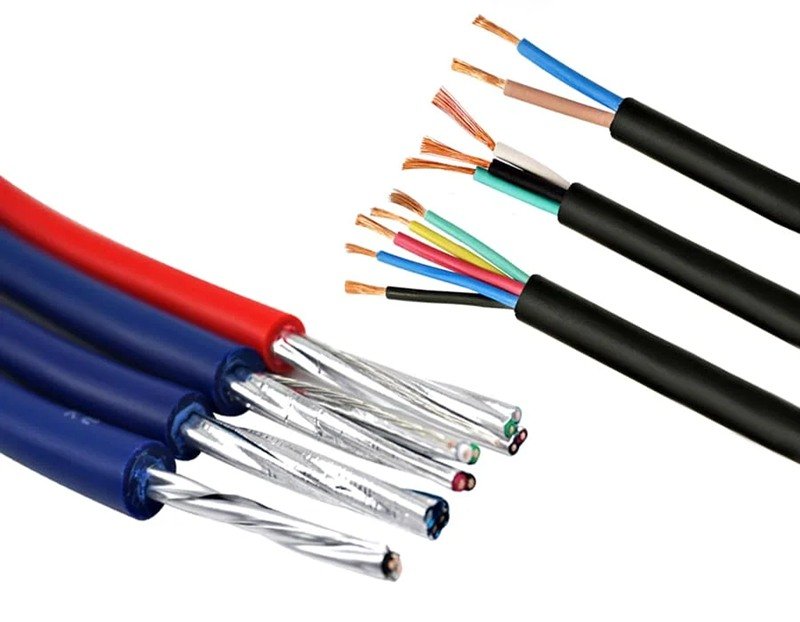
Water-Resistant vs Waterproof: Why the Difference Matters
PVC is best described as water-resistant, not waterproof. Water resistance means the material itself does not dissolve, swell significantly, or immediately fail when exposed to moisture. Waterproofing, on the other hand, means preventing water from entering the cable assembly at all, even at critical interfaces.
In real installations, water almost never penetrates directly through the PVC jacket wall. Instead, it enters through:
- Cable ends
- Connector interfaces
- Strain-relief transitions
- Gaps between cable and connector housing
PVC alone does not seal these points. As a result, moisture can migrate along conductors over time, leading to corrosion, insulation breakdown, or intermittent signal issues.
What Level of Water Exposure Can PVC Handle on Its Own?
Without additional sealing or protective design, a PVC cable jacket can generally tolerate:
- Indoor humidity
- Condensation in controlled environments
- Brief, low-pressure splashing
However, PVC cable by itself is not suitable for:
- Continuous outdoor exposure
- Heavy rain or washdown environments
- Submersion or standing water
- High-pressure cleaning
| Type of Exposure | PVC Jacket Alone |
|---|---|
| Indoor humidity | Acceptable |
| Occasional splash | Usually acceptable |
| Outdoor rain | High risk |
| Washdown | Not suitable |
| Submersion | Not suitable |
This limitation becomes especially important in industrial, outdoor, or commercial equipment where environmental conditions cannot be tightly controlled.
Does PVC Absorb Water Over Time?
Compared to materials such as nylon, PVC absorbs very little water. However, low absorption does not mean zero risk. Over long periods, especially when combined with temperature cycling or UV exposure, PVC can degrade, harden, or develop micro-cracks. These changes reduce mechanical integrity and make it easier for water to enter at connection points.
Additionally, repeated exposure to moisture can accelerate corrosion at conductor terminations—even when the PVC jacket itself appears intact.
Key Takeaway for Customers
PVC cable alone should not be assumed to be waterproof. While the material provides basic moisture resistance, true waterproof performance requires system-level design, including sealed connectors, proper strain relief, and validated IP ratings.
For customers, the most important takeaway is this:
PVC is a supporting material—not a waterproof solution by itself.
Understanding this distinction early helps avoid incorrect cable selection, unexpected field failures, and costly redesigns later in the project lifecycle.
How Does PVC Perform in Wet or Outdoor Environments?
PVC can be used in mildly wet environments, but outdoor or harsh conditions require additional protection. Temperature, UV exposure, and mechanical stress significantly affect PVC’s long-term waterproof performance.
Can PVC cables be used outdoors?
PVC cables can be used outdoors only with proper protection. Without UV stabilizers, PVC can become brittle and crack over time. Cracks allow water to penetrate, even if the cable was initially intact.
How does temperature affect PVC waterproof performance?
PVC becomes stiff at low temperatures and soft at high temperatures. Both extremes increase the risk of:
- Jacket cracking
- Seal failure at connectors
- Reduced strain relief effectiveness
Temperature cycling accelerates moisture ingress at weak points.
Does UV exposure reduce PVC protection?
Yes. UV exposure degrades PVC unless UV-resistant additives are used. Degraded PVC loses flexibility, creating micro-cracks that compromise environmental protection.
What Is the Difference Between Waterproof Cable and PVC Cable?
The difference between a waterproof cable and a PVC cable is one of the most commonly misunderstood topics in cable selection. The confusion usually comes from treating a material choice as if it were a performance guarantee. In reality, these two terms describe completely different levels of design.
Simply put, PVC cable refers to what the cable jacket is made of, while waterproof cable refers to how the entire cable assembly is designed, sealed, and validated. One is a material attribute; the other is a system-level outcome.
PVC Cable: A Material Definition
A PVC cable is defined by the use of polyvinyl chloride as the insulation or outer jacket material. PVC is selected for reasons such as:
- Electrical insulation
- Cost efficiency
- Ease of processing
- Moderate flexibility
What PVC does not define is:
- Environmental sealing
- Water ingress prevention
- IP rating compliance
PVC can be part of many different cable types—power cables, signal cables, indoor wiring, or even outdoor cables—but PVC alone does not determine whether water can enter the cable assembly.

Waterproof Cable: A System-Level Design
A waterproof cable is defined by its ability to prevent water ingress under specific conditions, usually verified through standardized testing. Waterproof performance is achieved through design and construction, not by jacket material alone.
A true waterproof cable assembly typically includes:
- Sealed or waterproof-rated connectors
- Overmolding or potting at cable–connector transitions
- Controlled cable entry points and strain relief
- Verified IP ratings (such as IP67 or IP68)
These elements work together as a system. If any one of them is missing, the cable may fail even if a high-quality jacket material is used.
Why PVC and Waterproof Are Often Confused
The confusion between PVC cable and waterproof cable is similar to another common misunderstanding in electronics:
physical compatibility does not equal functional equivalence.
For example, a USB-C plug can physically fit into a Thunderbolt port, but that does not mean it supports Thunderbolt performance. In the same way:
- A PVC jacket may look smooth and sealed
- But the cable can still allow water to enter through connectors or interfaces
This visual similarity often leads to incorrect assumptions during sourcing or replacement.
Key Design Differences at a Glance
| Aspect | PVC Cable | Waterproof Cable |
|---|---|---|
| Definition | Material choice | Performance outcome |
| Focus | Insulation and protection | Water ingress prevention |
| Connector sealing | Not defined | Essential |
| Overmolding / potting | Optional | Often required |
| IP rating | Not applicable | Required |
| Testing | Material-based | Assembly-level testing |
This table highlights an important point: a cable can be PVC and waterproof at the same time—but only if it is designed and tested as a waterproof assembly.
Why PVC Alone Is Not Enough for IP-Rated Cables
IP ratings such as IP67 or IP68 measure the entire assembly, not the jacket material. During testing, water pressure is applied to:
- Connector interfaces
- Cable entry points
- Overmolded or sealed regions
A PVC cable without proper sealing will fail IP testing regardless of how thick or durable the jacket appears. This is why many field failures occur not in the cable body, but at the connector end.
Practical Takeaway for Customers
When evaluating whether a cable is suitable for wet or outdoor environments, asking “Is it PVC?” is not enough. The correct question is:
“Is this cable assembly designed, sealed, and tested to prevent water ingress in my application?”
Understanding the difference between PVC cable and waterproof cable helps customers avoid misinterpretation, select the right solution from the beginning, and reduce long-term reliability risks.
How Are Waterproof PVC Cable Assemblies Designed in Real Projects?
Waterproof PVC cable assemblies are designed by combining PVC jackets with sealed connectors, overmolding, strain relief, and verified IP-rated construction. The jacket material supports the design, but sealing defines performance.
How does overmolding improve waterproof performance?
Overmolding encapsulates the cable-connector interface, eliminating gaps where water enters. It also improves mechanical strength and strain relief.
What role do connectors and sealing play?
Connectors are the most common failure point. Gaskets, O-rings, and molded seals are essential.
Can PVC cables meet IP67 or IP68 requirements?
Yes—when part of a properly designed assembly. PVC can be used successfully in IP-rated cables when combined with correct sealing methods.
Which Applications Commonly Use Waterproof PVC Cable Assemblies?
Waterproof PVC cable assemblies are commonly used in industrial equipment, outdoor control systems, and commercial electronics where moderate environmental protection is required.
Are PVC cables used in industrial and commercial systems?
Yes, especially where cost efficiency and flexibility are important.
Which applications should avoid PVC for waterproof use?
Continuous motion, extreme cold, or heavy chemical exposure often require TPU or PUR.
When should PVC be replaced by TPU or PUR?
| Environment | Recommended Jacket |
|---|---|
| Indoor, dry | PVC |
| Outdoor, mild | PVC with protection |
| Harsh industrial | TPU / PUR |
| Continuous flex | PUR |
What Should You Check Before Choosing a Waterproof PVC Cable Supplier?
Before choosing a supplier, verify waterproof specifications, IP ratings, drawings, materials, and testing processes—not just jacket material claims.
What specifications define waterproof performance?
Look for IP ratings, sealing methods, and test conditions.
Do certifications matter for waterproof PVC cables?
Yes. UL, RoHS, REACH, and ISO processes indicate controlled manufacturing.
How do drawings and samples affect final cable quality?
Clear drawings prevent misinterpretation. Samples validate real-world performance.
Common Questions About PVC and Waterproof Cables
Is PVC cable suitable for underwater use?
No, unless specifically designed and tested for submersion.
Can PVC cables be customized for harsh environments?
Yes, with overmolding, sealing, and proper material selection.
Can I plug USB-C into a Thunderbolt port?
Yes physically, but not functionally equivalent—just as PVC does not equal waterproof by default.

Final Thoughts: From Material Choice to Real Protection
PVC is a versatile and reliable cable material—but waterproofing is never guaranteed by material alone. Real protection comes from thoughtful design, proper sealing, and verified performance.
If your application involves moisture, outdoor exposure, or reliability-critical systems, it is essential to evaluate the entire cable assembly, not just the jacket material. Sino-Conn supports custom waterproof cable assemblies—from rapid samples to full production—helping customers translate real-world requirements into dependable solutions.
When water is involved, assumptions fail. Design decisions matter.
Related Keywords :pvc cable waterproof, waterproof cable assembly, pvc cable jacket, ip67 cable, overmolded cable, industrial waterproof cable, pvc vs tpu cable, outdoor cable insulation, cable waterproof design, custom waterproof cable

With over 18 years of OEM/ODM cable assemblies industry experience, I would be happy to share with you the valuable knowledge related to cable assemblies products from the perspective of a leading supplier in China.
manufacturer catalogue
Get A Sample Now From Factory→
Get a quote quickly
Here, developing your OEM/ODM custom cable assemblies collection is no longer a challenge—it’s an excellent opportunity to bring your creative vision to life.