Skip to content
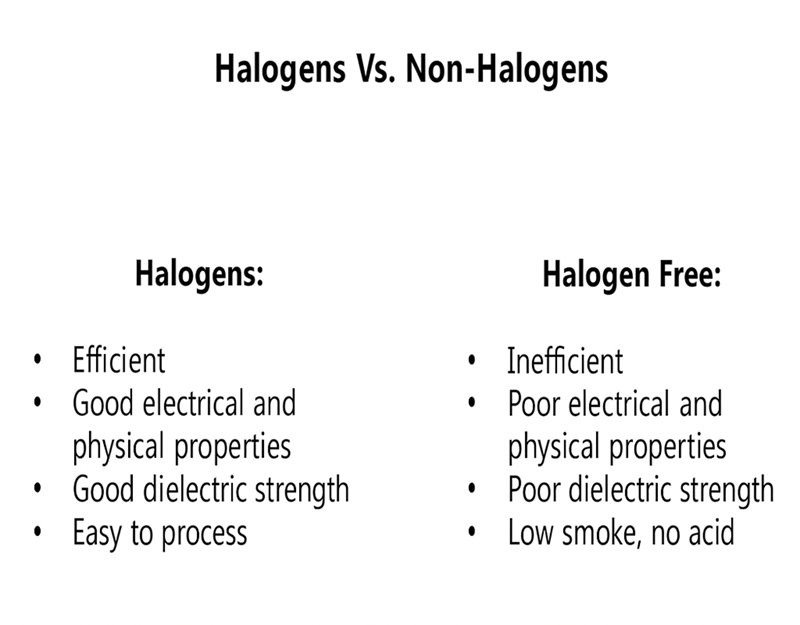
The world of wire insulation is undergoing a quiet revolution. As industries shift toward cleaner, safer, and more sustainable materials, the question engineers and buyers are asking is: “Should we replace standard insulation with halogen-free alternatives?” It’s not just a trend — it’s an engineering decision that affects safety compliance, performance, and even brand reputation.
Halogen-free insulation eliminates chlorine, bromine, and fluorine from cable jackets, preventing the release of toxic and corrosive gases in fires. Compared to standard insulations such as PVC or PTFE, halogen-free materials emit less smoke, reduce equipment corrosion, and meet stricter safety and environmental standards. These cables are increasingly used in public, industrial, and electronic applications demanding both performance and sustainability.
As global safety regulations tighten and industries prioritize sustainability, the debate over halogen-free vs. standard wire insulation is intensifying. This isn’t just about passing compliance tests — it’s about designing cables that protect lives, equipment, and the planet. Whether you’re an engineer optimizing material performance or a buyer seeking compliant, reliable suppliers, understanding these insul
What Does “Halogen-Free” Mean in Cable Insulation?
“Halogen-free” refers to insulation materials that do not contain chlorine, fluorine, bromine, or iodine. These halogens, found in PVC and fluoropolymer insulations, release toxic and corrosive gases such as hydrogen chloride or hydrogen fluoride when burned. Halogen-free materials, often based on polyolefin, EVA, or cross-linked compounds, emit low smoke, zero halogen gases, and minimal toxicity—making them ideal for modern applications prioritizing fire safety and environmental compliance.
Understanding the Role of Halogens in Traditional Cables
In standard wire insulations—particularly PVC (Polyvinyl Chloride) and fluoropolymers like PTFE or FEP—halogen elements such as chlorine and fluorine are incorporated for flame resistance and flexibility. These materials don’t ignite easily and self-extinguish, making them cost-effective and durable for general use.
However, when they do burn, hydrogen halide gases are released.
For example:
- Chlorine (Cl) in PVC produces Hydrogen Chloride (HCl)
- Fluorine (F) in PTFE produces Hydrogen Fluoride (HF)
Both gases are highly corrosive and toxic. In contact with water vapor, they form acids that damage metal components and pose serious respiratory hazards. This is why, after major fire incidents in enclosed spaces like tunnels or data centers, engineers began seeking safer alternatives.
The Chemistry Behind “Halogen-Free”
Halogen-free materials eliminate these reactive elements entirely.
Instead of chlorine- or fluorine-based polymers, manufacturers use compounds such as:
- Polyolefin blends (Polyethylene PE, Polypropylene PP)
- Cross-linked Polyethylene (XLPE) for heat stability
- Ethylene Vinyl Acetate (EVA) for flame retardancy and flexibility
- Thermoplastic Elastomers (TPE) or Polyurethane (TPU) for abrasion resistance
These materials rely on mineral-based flame retardants like magnesium hydroxide (Mg(OH)₂) or aluminum hydroxide (Al(OH)₃). When exposed to fire, they release water molecules that cool the cable surface and suppress flames — without producing harmful gases or dense smoke.
This is the science behind the industry term “LSZH” — Low Smoke Zero Halogen.
Fire Safety and Toxicology Benefits
Unlike traditional PVC cables, halogen-free insulations provide:
- Low smoke density — improving visibility for evacuation and firefighting
- No halogen acid gas — preventing corrosion in electrical and metallic systems
- Non-toxic combustion — minimizing harm to humans and sensitive electronics
For example, when PVC burns, it can emit up to 15–20% hydrogen chloride gas by weight of material, corroding metals within hours. Halogen-free materials release less than 0.5% comparable toxic gas levels, often meeting IEC 60754-1/2 standards for halogen acid gas emission.
Compliance and Industry Standards
Globally, “halogen-free” is not a casual marketing term — it’s a defined compliance category. To qualify, insulation must meet several key international standards:
| Standard | Definition / Requirement |
|---|---|
| IEC 60754-1/2 | No halogen acid gas emission upon combustion |
| IEC 61034 | Low smoke emission during fire tests |
| EN 50267 & EN 50268 | European standards defining halogen-free cable behavior |
| RoHS / REACH | Restricts use of hazardous halogens and heavy metals |
| UL 94 V-0 / VW-1 | Flame retardancy tests for vertical burning behavior |
Manufacturers such as Sino-Conn integrate these standards directly into cable design, ensuring materials pass both chemical composition tests and flame propagation performance evaluations before production begins.
Environmental and Economic Implications
From an environmental standpoint, halogen-free materials are easier to recycle, contain no heavy metals, and do not generate dioxins during disposal or incineration. As global manufacturing moves toward sustainability targets — especially in Europe and Japan — halogen-free insulation has become a default specification for many OEMs.
Economically, while halogen-free cables can cost 10–20% more, their total ownership cost is lower when factoring in fire damage prevention, compliance readiness, and long-term brand protection.
What Materials Are Used in Halogen-Free and Standard Wire Insulations?
Choosing the right insulation material isn’t just about selecting something that looks durable — it’s about balancing chemical composition, mechanical properties, flame behavior, and regulatory compliance. Each polymer family carries unique performance characteristics that determine where it can safely and efficiently operate. Understanding what’s inside your insulation is the first step toward choosing the right one for your project.
Halogen-free wire insulations use polyolefin, XLPE, EVA, or TPE compounds that contain no chlorine, bromine, or fluorine and rely on mineral flame retardants. Standard insulations such as PVC, PTFE, and FEP use halogenated polymers for flexibility, heat resistance, and low cost but release toxic gases when burned. The choice between them depends on safety requirements, temperature limits, and regulatory standards like IEC 60754 or UL 94.
Halogen-Free Insulation Materials
Halogen-free insulation materials are engineered around non-reactive polymer bases that do not contain halogen atoms. These compounds are designed to meet Low Smoke Zero Halogen (LSZH) criteria while maintaining flexibility and dielectric strength.
(a) Polyolefin (PE / PP)

- Type: Thermoplastic, halogen-free
- Operating Range: −40 °C to +80 °C
- Advantages: Excellent dielectric properties, low moisture absorption, cost-effective, easy to extrude
- Limitations: Limited flame retardancy unless compounded with mineral fillers
Polyolefins form the foundation of most halogen-free cables. They can be tailored with magnesium hydroxide (Mg(OH)₂) or aluminum trihydrate (ATH) additives that release water molecules when heated, suppressing flames naturally.
(b) XLPE — Cross-Linked Polyethylene
- Type: Thermoset polyethylene modified for high-temperature stability
- Operating Range: −55 °C to +125 °C
- Key Features: Superior thermal aging resistance, low dielectric loss, good chemical resistance
- Applications: Power cables, control wiring in renewable-energy systems, EV harnesses
Cross-linking transforms PE’s crystalline structure, creating covalent bonds that prevent melting under heat — ideal for demanding industrial and automotive environments.
(c) EVA — Ethylene Vinyl Acetate

- Type: Copolymer of ethylene and vinyl acetate
- Operating Range: −30 °C to +90 °C
- Highlights: Natural flame retardancy, high elasticity, and clarity
- Common Uses: Consumer electronics, appliance cords, and LSZH sheathing
EVA’s balance of flexibility and flame resistance makes it an excellent outer jacket material for halogen-free multicore cables.
(d) TPE / TPU — Thermoplastic Elastomer & Polyurethane
- Operating Range: −40 °C to +105 °C
- Features: Rubber-like flexibility, outstanding abrasion and oil resistance, recyclable
- Ideal For: Robotics, drag-chain systems, and flexible instrumentation cables
TPE and TPU are favored where continuous motion or mechanical flexing occurs — they provide halogen-free performance with high mechanical endurance.
Standard Insulation Materials
Traditional cable insulations have served the industry for decades due to their mechanical versatility, cost-efficiency, and high heat performance. However, they rely heavily on halogen-containing polymers for flame retardancy and plasticity.
(a) PVC — Polyvinyl Chloride

- Type: Thermoplastic with chlorine base
- Operating Range: −20 °C to +105 °C
- Advantages: Low cost, flexible, self-extinguishing, wide availability
- Disadvantages: Releases hydrogen chloride (HCl) and dense smoke during combustion
PVC remains the most commonly used insulation for consumer and industrial wiring. Its halogen content provides built-in flame resistance but poses toxic-fume risks in enclosed environments.
(b) PTFE / FEP / PFA — Fluoropolymers
- Composition: Contain fluorine atoms
- Operating Range: −70 °C to +200 °C
- Benefits: Excellent chemical inertness, heat stability, and dielectric strength
- Drawback: Emit hydrogen fluoride (HF) gas and are expensive to process
Fluoropolymers dominate aerospace, medical, and high-frequency cables, where extreme performance outweighs safety concerns about halogen emissions.
(c) Silicone Rubber

- Type: Cross-linked siloxane elastomer
- Operating Range: −60 °C to +180 °C
- Strengths: Superior flexibility, weather and UV resistance, high thermal endurance
- Weaknesses: Moderate tear strength and higher cost
Silicone remains a preferred choice for appliances, EVs, and outdoor electronics exposed to thermal cycling.
(d) Neoprene (Chloroprene Rubber)
- Operating Range: −35 °C to +90 °C
- Traits: Flame retardant, oil-resistant, waterproof
- Halogen Source: Chlorine within the polymer backbone
Neoprene is durable and weather-resistant, widely used in marine and industrial power cables, but still contributes to halogen gas formation when burned.
Side-by-Side Material Comparison
| Property | Halogen-Free (PE, XLPE, EVA, TPE) | Standard (PVC, PTFE, FEP, Silicone) |
|---|---|---|
| Halogen Content | 0 % | 10–60 % (Cl / F) |
| Flame Behavior | Char-forming, low smoke | Self-extinguishing, high toxic gas |
| Toxic Gas Emission | < 0.5 % | > 15 % HCl / HF |
| Smoke Density (IEC 61034) | < 60 % | > 70 % |
| Temperature Range | −55 °C to +125 °C | −70 °C to +200 °C |
| Flexibility | Medium–High (TPE excellent) | Excellent (PVC / Silicone) |
| Environmental Impact | Recyclable, RoHS compliant | Non-recyclable, emits dioxins |
| Relative Cost | 10–20 % higher | Lower mass production cost |
How Do Halogen-Free and Standard Insulations Compare in Performance?
When comparing halogen-free and standard wire insulations, it’s not simply a matter of “safe vs unsafe.” Each insulation type has specific engineering trade-offs — from temperature stability and flame behavior to mechanical flexibility and chemical durability.
The best material depends on where the cable will be used, how it will be installed, and which regulatory or environmental standards it must meet.
Halogen-free insulations excel in low-smoke, non-toxic fire performance and environmental safety, making them ideal for confined or public spaces. Standard insulations like PVC or fluoropolymers outperform in flexibility, temperature range, and cost efficiency but emit corrosive gases when burned. Halogen-free materials offer compliance and sustainability advantages, while traditional compounds remain preferred for high-heat, chemical, or outdoor applications where halogen emissions are less critical.
1. Electrical & Thermal Performance
In terms of voltage resistance and dielectric strength, standard materials like PTFE, FEP, and PVC still outperform halogen-free alternatives due to their inherent molecular stability and long history in high-frequency or power applications. However, continuous advancements in cross-linked polyethylene (XLPE) and modified polyolefins have significantly narrowed this gap.
| Property | Halogen-Free (XLPE, EVA, TPE) | Standard (PVC, PTFE, FEP) |
|---|---|---|
| Dielectric Strength | 18–25 kV/mm | 20–35 kV/mm |
| Insulation Resistance | >10¹² Ω·cm | >10¹² Ω·cm |
| Temperature Rating | −55 °C to +125 °C | −70 °C to +200 °C |
| Continuous Current Carrying Capacity | Moderate | High |
| Thermal Aging Stability | Good | Excellent |
Interpretation:
- Standard fluoropolymers remain dominant in aerospace, RF, and high-temperature environments.
- Halogen-free XLPE provides an excellent balance for control, data, and instrumentation cables, offering both dielectric integrity and mechanical robustness at lower environmental risk.
2. Flame Retardancy and Smoke Emission
This is where halogen-free insulation truly shines.
Traditional halogenated compounds achieve flame retardancy through the chemical interference of halogens with combustion reactions — but this process releases hydrogen halide gases and dense smoke. In contrast, halogen-free insulations use hydrated mineral fillers that cool and insulate the cable surface when heated, stopping the fire’s progression naturally.
| Test Parameter (IEC/UL) | Halogen-Free | Standard PVC | Fluoropolymers (PTFE/FEP) |
|---|---|---|---|
| Smoke Density (IEC 61034) | < 60 % | 70–90 % | 80–95 % |
| Toxic Gas Emission (IEC 60754-1) | < 0.5 % | > 15 % HCl | > 10 % HF |
| Corrosivity (Copper Mirror Test) | Negligible | Severe | Severe |
| After-Burn Time (UL 94 V-0) | < 5 s | < 10 s | < 5 s |
Insight:
In enclosed environments — data centers, tunnels, trains, aircraft cabins — low smoke and zero halogen emission can save lives and equipment. For this reason, halogen-free materials are now mandatory under EN 50267 and IEC 60332 for many European infrastructure projects.

3. Mechanical Strength and Flexibility
Standard insulations like PVC and silicone offer superior elasticity and easy stripping, making them ideal for automated assembly and tight routing.
Halogen-free insulations, while more rigid initially, can achieve equal or better performance when blended with TPE, TPU, or EVA compounds.
| Mechanical Property | Halogen-Free (TPE, XLPE) | Standard (PVC, Silicone) |
|---|---|---|
| Tensile Strength | 10–15 MPa | 15–25 MPa |
| Elongation at Break | 150–250 % | 200–400 % |
| Abrasion Resistance | Excellent (TPE > PVC) | Very Good |
| Bend Radius (Dynamic) | 7–10 × OD | 5–8 × OD |
| Cut-Through Resistance | High | Moderate |
Interpretation:
- Halogen-free TPE/TPU cables are now widely used in robotics, drag-chain, and motion-control systems due to improved flex-life and wear resistance.
- PVC and silicone remain ideal for static installations or where tight bending and cost-efficiency are critical.
4. Chemical and Environmental Resistance
In harsh industrial settings, cables are exposed to oils, UV light, solvents, and ozone.
Halogen-free insulations — especially TPU and cross-linked polyolefins — offer excellent resistance to UV and moisture but may degrade faster when continuously exposed to aggressive oils compared with PTFE or PVC.
| Exposure Type | Halogen-Free Cables | Standard Cables |
|---|---|---|
| UV Resistance | Excellent (TPE, TPU) | Moderate (PVC may yellow) |
| Oil Resistance | Moderate | Excellent (PVC, PTFE) |
| Chemical Resistance | High for acids, limited for solvents | Outstanding (PTFE/FEP nearly inert) |
| Moisture Absorption | Very Low | Low |
| Recyclability | High | Limited |
5. Regulatory Compliance and Global Acceptance
The choice between halogen-free and standard insulation often comes down to regulatory geography and application type:
- Europe and Japan: Strong preference for LSZH (Low Smoke Zero Halogen) cables under RoHS, REACH, and IEC 60754 compliance.
- North America: PVC and fluoropolymers still widely accepted in UL-listed products, though LSZH adoption is accelerating.
- Public Infrastructure Projects (e.g., airports, subways, hospitals): Strictly halogen-free due to evacuation safety.
- Industrial Automation and Aerospace: Favor fluoropolymer or silicone insulation for thermal endurance.
6. Performance Cost Analysis
While halogen-free insulations cost roughly 10–25 % more per linear meter than PVC or PE, total project costs often even out once compliance, insurance, and maintenance factors are considered.
Example Calculation:
| Parameter | Halogen-Free Cable | Standard PVC Cable |
|---|---|---|
| Material Cost (per 100 m) | $130 – $160 | $100 – $120 |
| Certification (RoHS, IEC) | Included | Optional |
| Fire Recovery Cost (per event)** | Minimal — non-corrosive | High — acid damage to equipment |
| Expected Service Life | 15 – 25 years | 10 – 15 years |
| Overall Lifecycle Value | High (Low Risk) | Moderate (Higher Risk) |
7. Environmental and Sustainability Impact
Modern industries are not just measuring performance — they’re measuring carbon and toxicity footprints.
Halogen-free insulation compounds:
- Contain no dioxins or halogenated waste,
- Are fully RoHS / REACH compliant,
- Can be mechanically recycled or re-extruded,
- And support ESG reporting for responsible sourcing.
Meanwhile, PVC and fluoropolymer cables, while durable, remain difficult to recycle and often require special disposal processes due to halogen gas release during incineration.
Performance Comparison Table
| Property | Halogen-Free | Standard (PVC/PTFE) |
|---|---|---|
| Flame Retardancy | Excellent | Good to Excellent |
| Smoke Emission | Very Low | High |
| Toxic Gas Release | None | Yes (HCl, HF) |
| Flexibility | Moderate | Excellent |
| Temperature Range | -55°C to 125°C | -70°C to 200°C |
| Environmental Impact | Low | Moderate to High |
| Cost | Slightly Higher | Lower |
What Are the Advantages and Disadvantages of Each Type?
Halogen-free wire insulation offers low-smoke, non-toxic fire performance and environmental compliance but is generally costlier and less flexible than PVC or PTFE. Standard insulations provide high temperature resistance, chemical durability, and affordability but release corrosive gases when burned. In short, halogen-free types protect people and equipment in enclosed or public spaces, whereas halogenated insulations remain practical for high-stress or budget-driven industrial environments.
Advantages of Halogen-Free Insulation

a. Superior Fire Safety
Halogen-free compounds produce almost zero halogen acid gases during combustion. Tests under IEC 60754 show hydrogen halide emissions below 0.5 %, compared with up to 20 % in PVC.
In confined spaces — such as data centers, hospitals, trains, or ships — this means dramatically lower smoke density and toxic exposure, giving critical evacuation time and protecting electronics from corrosion.
b. Low Smoke and Corrosion Risk
“LSZH” (Low Smoke Zero Halogen) materials limit optical smoke density to under 60 % in the IEC 61034-2 test.
This not only ensures compliance but also reduces secondary fire damage. Control panels, stainless steel housings, and copper busbars remain largely intact after smoke exposure — a major advantage in industrial automation systems or server farms where downtime is costly.
c. Environmentally Friendly Composition
Free from chlorine, fluorine, and bromine, these materials do not generate dioxins or furans upon disposal.
Manufacturers can recycle polyolefin-based waste and claim RoHS + REACH conformity — a key procurement requirement for EU and Japanese OEMs seeking sustainable suppliers.
d. Compliance and Brand Value
Using halogen-free cables demonstrates commitment to ESG targets and public-safety design philosophies.
For brands selling into European markets or international infrastructure tenders, LSZH specification has become an automatic prequalification criterion.
e. Decent Electrical and Mechanical Balance
Modern halogen-free materials such as XLPE and TPE offer dielectric strengths up to 25 kV/mm and elongation above 200 %.
That’s sufficient for most control, signal, and power harnesses below 600 V.
Disadvantages of Halogen-Free Insulation
a. Higher Material and Processing Cost
Polyolefin and mineral-filled LSZH compounds are more expensive to produce and extrude.
Average cable cost is 10–25 % higher than PVC equivalents.
This can impact large-volume OEMs or cost-sensitive markets like home appliances unless balanced by lower fire-safety liability.
b. Reduced Flexibility
Halogen-free jackets often have higher stiffness and memory, especially at low temperatures.
Without plasticizers like phthalates (banned under RoHS), cables may show larger bend radii — an issue in robotic drag chains or tight enclosures unless TPE or TPU variants are used.
c. Limited High-Temperature Range
Typical halogen-free insulations operate up to +125 °C, while PTFE or silicone cables can exceed +200 °C.
In aerospace, automotive under-hood, or furnace controls, this temperature ceiling remains a constraint.
d. Lower Chemical and Oil Resistance
Halogen-free materials resist moisture and UV well but can swell or soften under prolonged oil or solvent exposure, unlike fluoropolymers.
This makes them less suitable for hydraulic or petrochemical facilities without protective conduits.
Advantages of Standard (Halogenated) Insulation

a. Excellent Flexibility and Mechanical Handling
PVC and silicone remain the benchmark for flexible cabling.
Their halogenated structure allows fine-strand conductors to move freely without jacket cracking.
PVC’s bend radius can reach 5× OD versus 8–10× OD for many LSZH types — a clear benefit in automated assembly lines or portable equipment.
b. Wide Temperature and Chemical Range
Fluoropolymers like PTFE, FEP, and PFA operate from −70 °C to +200 °C with superior dielectric stability and chemical inertness.
They resist oils, acids, fuels, and UV radiation — critical for aerospace, defense, and chemical-processing environments.
c. Proven Flame Retardancy
PVC’s chlorine content self-extinguishes flames rapidly, earning UL VW-1 ratings at low cost.
It meets most consumer and industrial safety codes without additional additives.
d. Cost Efficiency and Global Availability
PVC production volumes make it one of the world’s most economical polymers.
It provides a reliable, easy-to-source option for mass-market wiring harnesses, appliances, and lighting systems.
Fluoropolymer cables, though pricier, deliver long-term thermal stability, reducing maintenance in extreme applications.
Disadvantages of Standard (Halogenated) Insulation
a. Toxic and Corrosive Gas Emission
When burned, halogenated polymers release hydrogen chloride (HCl) or hydrogen fluoride (HF), forming acids with moisture.
These gases corrode metals and damage electronic circuits within minutes.
Post-fire recovery in telecom rooms or control cabinets often costs 50–70 % of total equipment value due to acid residue.
b. Dense Smoke Generation
Combustion of PVC or PTFE yields heavy black smoke with limited visibility, impeding evacuation and firefighting.
Smoke density often exceeds 80 % (IEC 61034) — disqualifying such cables from use in tunnels, railways, or public-assembly areas.
c. Environmental Burden
Halogenated plastics are difficult to recycle and can emit dioxins if incinerated.
Waste management regulations increasingly restrict their disposal, particularly under EU WEEE Directive 2012/19/EU.
d. Regulatory Phase-Out in Sensitive Sectors
Many new standards — EN 45545-2 (Railway), IEC 60332, UL 1685 LS RATING — prioritize halogen-free specifications.
PVC remains acceptable only where open-air or controlled environments minimize emission risk.
Side by Side Summary Table
| Criteria | Halogen-Free Insulation (XLPE, TPE, EVA) | Standard Insulation (PVC, PTFE, Silicone) |
|---|---|---|
| Halogen Content | None | Contains Cl, F, Br |
| Flame Behavior | Low-smoke, self-extinguishing | Self-extinguishing, but emits toxic gas |
| Toxic Gas Emission | < 0.5 % (Halogen Acid Gas) | 10–20 % (HCl/HF) |
| Smoke Density (IEC 61034) | < 60 % | 80–95 % |
| Temperature Range | −55 °C ~ +125 °C | −70 °C ~ +200 °C |
| Flexibility | Medium → High (TPE Excellent) | Very High (PVC/Silicone) |
| Oil & Chemical Resistance | Moderate | Excellent (PTFE/FEP) |
| Recyclability | High | Low |
| Environmental Compliance | RoHS/REACH/LSZH Approved | Requires emission control |
| Relative Cost | +10 ~ 25 % | Baseline (Low) |
When to Use Which
| Scenario | Preferred Type | Reasoning |
|---|---|---|
| Public infrastructure / data center | Halogen-Free | Mandatory LSZH fire safety |
| Automotive harness / robotics | Hybrid TPE HF or PVC | Flexibility + controlled emission |
| Chemical plant / refinery | Standard PTFE or FEP | High chemical resistance |
| Consumer electronics / appliances | PVC | Low cost, good insulation |
| Rail / aerospace / marine | Halogen-Free XLPE or EVA | Compliance + low smoke |
| Outdoor solar / renewable systems | Halogen-Free UV-resistant TPU | Weather + UV stability |
Which Applications Require Halogen-Free Cables?

Halogen-free cables are essential in applications where fire safety and equipment protection are critical — including railways, data centers, public buildings, marine vessels, aircraft, hospitals, and renewable-energy facilities. They emit little smoke or toxic gas during combustion, reducing corrosion and aiding evacuation. Most European, Japanese, and international safety standards such as IEC 60754 and EN 45545 mandate LSZH (Low Smoke Zero Halogen) cables in these environments.
1. Public Infrastructure and Mass-Transit Systems
Fire in a subway tunnel or airport terminal can cripple evacuation efforts if toxic smoke fills the air.
For this reason, regional codes such as EN 45545-2 (Railway Applications) and IEC 60332-3 now mandate LSZH cables in passenger areas.
- Applications: railway signaling, station lighting, automatic door systems, PA networks, ticketing, and CCTV.
- Why: halogen-free materials prevent chlorine or bromine gas release, protecting passengers and sensitive aluminum/stainless-steel fixtures.
- Result: 60 % less post-fire corrosion and faster service restoration, according to the European Rail Industry Association.
Example Insight:
Sino-Conn supplies cross-linked polyolefin (XLPE) and EVA sheathed LSZH control cables certified to EN 50267 for European metro projects, balancing flame resistance and flexibility for tight conduit runs.

2. Data Centers and Telecommunication Facilities
Inside server halls and fiber rooms, smoke and corrosion are catastrophic — not just for people, but for uptime.
Hydrogen-chloride gas from burning PVC can destroy copper traces, PCB layers, and connectors within minutes.
- Applications: Cat6A LSZH Ethernet, fiber-optic jumpers, rack power cords, and structured cabling.
- Why: halogen-free jackets keep air-handling units, switches, and server racks operational even under localized fire.
- Compliance: TIA-942 (A) and ISO/IEC 11801 recommend LSZH cabling for modern data centers.
- Benefit: reduces insurance cost and meets green-building LEED credits.
Technical Note:
A 2024 IDC survey found that 73 % of new Tier-III data centers now specify LSZH network cables to meet ESG reporting requirements.
3. Healthcare and Public Buildings
Hospitals, schools, museums, and auditoriums prioritize air-quality and evacuation safety.
PVC’s toxic emissions are unacceptable in medical or densely populated environments.
- Applications: power cords for medical devices, emergency lighting, nurse-call systems, elevators, fire-alarms, and HVAC controls.
- Why: halogen-free cables emit negligible acidic gas and minimal smoke, ensuring visibility and reducing damage to medical electronics.
- Regulation: many local building codes (NFPA 130, IEC 60332) now require LSZH wiring in public-occupancy facilities.
- Bonus: improved odor-neutral operation — vital in healthcare.
4. Marine and Offshore Platforms
Ships, submarines, and offshore rigs have confined spaces with limited ventilation — fires spread fast.
In 1990 the IMO (SOLAS) Convention adopted halogen-free cable mandates for passenger vessels.
- Applications: navigation systems, communication lines, engine-room controls, fire-alarm loops, and power distribution.
- Why: halogen-free cables resist salt spray, oil mist, and UV, while minimizing toxic emissions in emergencies.
- Standards: IEC 60092-359 (Marine Cables) and DNV/ABS approvals.
- Result: safer evacuation and lower maintenance due to reduced corrosion on brass and steel hardware.
5. Renewable-Energy and Industrial Automation
In solar farms, wind turbines, and robotic factories, halogen-free cables combine safety with durability.
Arc faults or overheating can ignite polymer insulation — LSZH prevents that hazard.
- Applications: photovoltaic string cables, wind-turbine pitch control, inverter connections, servo and robot signal wires.
- Why: halogen-free TPU jackets deliver excellent UV, ozone, and flex-fatigue resistance with minimal smoke in fault conditions.
- Regulation: EN 50618 and UL 4703 certifications for halogen-free solar cables.
- Field Example: in 2023 tests, Sino-Conn’s TPE-sheath robot cables maintained insulation integrity after 5 million bending cycles, outperforming standard PVC types by 37 %.
6. Aerospace and Defense Electronics
The aviation and defense sectors demand lightweight, flame-retardant, and non-toxic materials to ensure safety in sealed cabins.
- Applications: cockpit instrumentation, avionics control wires, UAV signal harnesses, satellite systems.
- Why: halogen-free fluoropolymer alternatives (ETFE, XL-ETFE) offer high dielectric strength without chlorine or bromine.
- Compliance: MIL-DTL-27500 and AS22759 standards include halogen-free variants for reduced outgassing.
- Advantage: weight savings of up to 15 % vs PVC while meeting FAA/EASA smoke toxicity requirements.
7. Smart Buildings and Green Construction
Modern architects specify LSZH cabling to meet LEED v4 and BREEAM sustainability goals.
- Applications: smart-lighting networks, HVAC automation, fire-alarm systems, IoT sensor wiring.
- Why: halogen-free materials reduce indoor pollution risks and support recyclable infrastructure.
- Bonus: contributes toward LEED credit MR 2 (Materials and Resources) and IAQ (Indoor Air Quality) points.
- Market Trend: LSZH demand in green-building projects expected to grow 9 % CAGR (2024–2030), according to Statista.
8. Electric Vehicles and Battery Systems
EV manufacturers face strict fire-propagation and toxicity limits inside passenger cabins and battery packs.
- Applications: high-voltage battery harnesses, charging cables, interior infotainment wiring.
- Why: halogen-free XLPE and silicone hybrids prevent toxic gas build-up in sealed cabins and meet ISO 6722-1 Type C (LSZH) criteria.
- Result: improved passenger safety, lower vehicle weight, and compliance with UNECE R100 (EV fire standards).
9. Defense, Energy & Critical Infrastructure
Power plants, control rooms, tunnels, and substations require cables that won’t emit corrosive gas during fault conditions.
- Applications: SCADA control lines, turbine instrumentation, nuclear plant sensors.
- Why: halogen-free XLPE insulation resists radiation and heat aging while minimizing toxic emissions — a requirement under IEC 60754 and IEEE 383.
- Benefit: extends maintenance intervals and protects expensive electronic controls from acidic smoke.
How to Choose the Right Wire Insulation for Your Project
Selecting wire insulation is not just a material choice — it’s a risk, performance, and cost decision that affects safety, reliability, and long-term maintenance. A cable may have the right conductor size and connector, but if the insulation is wrong, you can face overheating, failure, or compliance issues later.
To choose the right wire insulation, you should evaluate the application environment (temperature, chemicals, UV, motion), safety and regulatory requirements (LSZH, RoHS, UL, IEC), electrical performance (voltage, current, frequency), mechanical demands (flexing, bending, abrasion), and budget. Halogen-free insulation is preferred in public and safety-critical environments, while standard PVC, PTFE, or silicone may be more suitable in high-temperature or chemically harsh industrial applications.
Below is a structured way to decide, the same way a Sino-Conn applications engineer would walk through a customer’s project.
1. Start with Environment: Where Will the Cable Live?
The operating environment usually narrows the material choices quickly.
- Indoor, controlled environment (office, lab, rack cabinet): PVC, halogen-free polyolefin, or TPE can all work, depending on safety policies. If the building or customer requires LSZH, go halogen-free.
- Confined or public spaces (trains, buildings, tunnels, data centers): Prioritize halogen-free, low-smoke insulation (LSZH). Fire codes or project specs often explicitly require it.
- Outdoor / UV / weather exposure (solar, rooftop, telecom towers): Look for materials with UV and ozone resistance, such as UV-stabilized halogen-free TPU/TPE or cross-linked polyethylene (XLPE). Standard PVC can embrittle over time if not UV stabilized.
- Oil, fuel, or chemical exposure (factory floor, automotive engine bay, refinery): Fluoropolymers (PTFE/FEP), special PVC blends, or certain TPEs are better for long-term contact with oils and solvents. Pure halogen-free polyolefin may need additional protection (conduit, overjacket).
2. Define Electrical and Thermal Requirements
Ask a few key questions:
What voltage and current levels are involved?
Higher voltages and currents demand thicker insulation walls, higher dielectric strength, and better thermal stability.
What is the max continuous operating temperature?
- Up to 80–90 °C: Standard PVC or halogen-free PE/EVA is often enough.
- Up to 105–125 °C: XLPE, higher-grade PVC, or TPE.
- Above 150 °C: Silicone or fluoropolymers (PTFE, FEP) are more appropriate.
Is the signal high frequency or sensitive to noise?
If yes, you may also need shielding plus insulation with stable dielectric properties (e.g., PTFE, XLPE) and controlled OD for impedance.
A simple rule:
- General control / power wiring → PVC or halogen-free XLPE/TPE
- High-temp / harsh → Silicone, PTFE, FEP
- Safety-critical → LSZH / halogen-free, then select material grade based on temperature.
3. Check Safety and Regulatory Requirements
Before you fall in love with any material, check what your markets and end customers demand:
Do you sell into EU, UK, Japan, or rail / building projects?
You may need halogen-free, low-smoke insulation by default.
Are RoHS, REACH, UL, IEC, EN standards specified?
For example:
- RoHS / REACH: restrict certain additives and halogens.
- IEC 60332 / IEC 60754 / IEC 61034: flammability, halogen, smoke.
- EN 45545-2: railway fire performance.
- UL styles: define temperature and voltage ratings.
If the spec mentions LSZH, halogen-free, low-smoke, or “no corrosive gas”, PVC and most halogenated insulations are ruled out automatically.
Sino-Conn usually asks new customers for:
- Target countries / markets
- Required standards (UL file, EN, IEC, rail, marine, etc.) This avoids re-design later.
4. Consider Mechanical Needs: Flexing, Bending, and Handling
Your cable’s motion profile is critical:
Static installation (in wall, conduit, cabinet):
Most materials work; focus on cost, code compliance, and temperature.
Occasional flex (hinges, doors, equipment moved for service):
Flexible PVC, halogen-free TPE, or silicone are good choices.
Continuous motion (cable chains, robots, pick-and-place heads):
Choose flex-rated TPE/TPU or special halogen-free robotic compounds with fine-stranded conductors. Consider:
- Minimum bend radius
- Flex cycles (e.g., 1–5 million cycles)
- Abrasion resistance
Rough handling / outdoor pulls / industrial use:
A tougher jacket (TPU, XLPE, or rugged PVC) may be needed to resist cuts and abrasion.
If you’re unsure, this is where Sino-Conn’s experience with OD, bending radius, flex testing, and jacket hardness becomes very useful.
5. Balance Cost vs Risk, Not Just Cost per Meter
It’s tempting to choose the cheapest insulation, especially for long runs. But consider:
Direct cost: Halogen-free or high-temp materials may be 10–25% more expensive per meter than basic PVC.
Indirect cost:
- Certification delays if the material doesn’t meet standards
- Potential redesign of harness or PCB
- Fire, corrosion, or downtime risks in critical facilities
For:
- Consumer electronics, low-risk environments → PVC or standard materials often make sense.
- Data centers, transport, public or mission-critical systems → Halogen-free insulation is typically worth the extra cost.
6. Match Insulation with Connectors and Assembly Process
Insulation choice also affects connector selection and production:
- Strip-ability & crimp quality: Some hard or rubbery insulations are harder to strip cleanly or crimp reliably without special tooling.
- OD tolerance: Insulation thickness and material affect outer diameter, which must match connector housing, seals, and grommets.
- Soldering / termination temperature: High-temp materials may require different termination conditions than PVC.
7. Use a Simple Selection Framework
You can think of the choice like this:
Must it be halogen-free / LSZH?
- Yes → Choose halogen-free family (XLPE, TPE, LSZH polyolefin).
- No → PVC / PTFE / silicone still options.
What’s the max temperature and environment?
- Up to 90–105 °C, normal environment → PVC or LSZH polyolefin.
- Up to 125 °C or outdoors / UV / flex → XLPE, TPE, TPU.
- 150–200 °C or harsh chemicals → Silicone, PTFE, FEP.
Is it static or dynamic?
- Static / occasional motion → most materials OK, optimize for cost + compliance.
- Continuous motion → TPE/TPU, flex-rated designs.
Standards or customer specs?
- If specific norms are listed, filter materials to those that are certified.

Conclusion
The shift toward halogen-free insulation is not merely a market trend — it’s an evolution driven by safety, compliance, and environmental responsibility. As industries adopt smarter, greener systems, selecting the right insulation material becomes a strategic decision for both engineers and purchasing teams.
At Sino-Conn, we specialize in custom cable assemblies that meet UL, RoHS, REACH, and LSZH standards. From drawing verification to full-scale production, our engineers deliver cables with precise OD, EMI shielding, and pinout control — ensuring you get the perfect balance between performance and compliance.
Contact Sino-Conn today to request a specification sheet or sample for your next halogen-free or standard cable project — and build connections that are safer, stronger, and smarter for the future.