 Skip to content
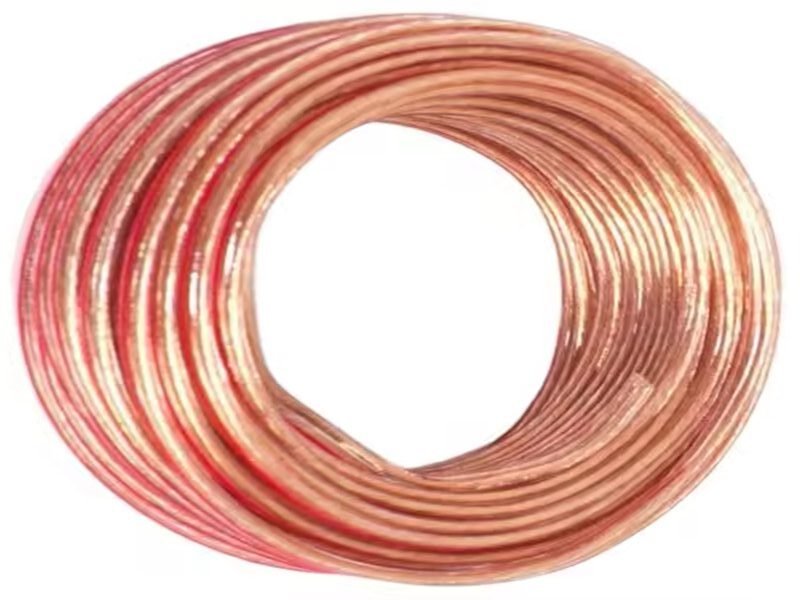
In industrial automation, medical imaging, energy systems, and smart manufacturing, one element silently keeps everything running — copper cable. Despite the rise of fiber optics and wireless connectivity, copper remains the backbone of countless industrial and electrical systems. Why? Because copper delivers a combination of conductivity, flexibility, and durability that no other material fully replaces.
A copper cable is a conductor made of copper strands designed to carry electrical power or signals reliably across industrial or commercial systems. It remains the preferred choice for OEMs due to its unmatched electrical conductivity, mechanical strength, and ease of customization.
But here’s the real story: even though copper cable technology has existed for decades, the demands placed on it have changed dramatically. Today’s engineers and OEM buyers are looking for cables that not only conduct electricity but also resist EMI, survive high temperatures, endure constant motion, and meet global certification standards.
At Sino-conn, we’ve seen this evolution firsthand — from traditional power cables to complex, shielded assemblies used in medical, aerospace, and automation systems. Let’s explore how copper cables work, how they’re made, and what defines a world-class copper cable manufacturer in 2025.
What Is a Copper Cable and How Does It Work?
A copper cable is made of one or more copper conductors insulated with protective materials. It transmits electrical energy or signals with minimal loss thanks to copper’s high conductivity and flexibility.
Copper cables combine electrical performance with mechanical durability.
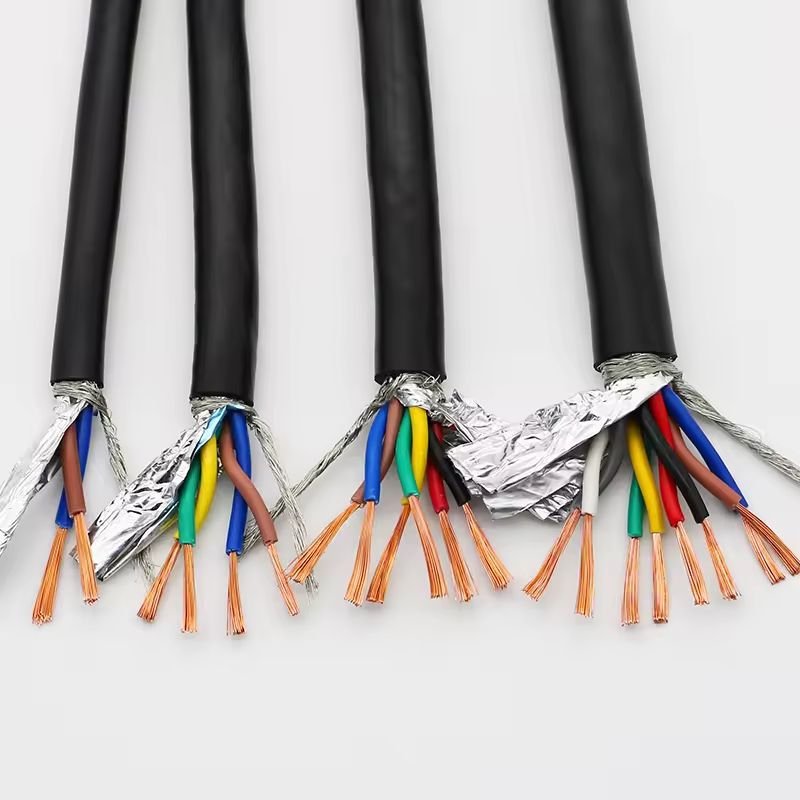
- Conductor: Pure or tinned copper strands, solid or stranded for flexibility.
- Insulation: PVC, TPE, silicone, or halogen-free materials for electrical isolation.
- Shielding: Aluminum foil or braided copper mesh to block EMI.
- Outer jacket: Protects against oil, fire, UV, and chemicals.
These layers make copper cables ideal for environments where reliability and safety are paramount — from robotic arms in factories to medical diagnostic devices.
How Copper’s Properties Impact Performance
Copper’s conductivity (5.96 × 10⁷ S/m) gives it one of the lowest resistances among commercial metals. That means:
- Less energy lost as heat
- More stable voltage at long distances
- Greater tolerance for power surges
A well-designed copper cable assembly ensures precise impedance, signal integrity, and minimal crosstalk — exactly what engineers require for mission-critical systems.
What Are the Main Types of Copper Cables?
There are five primary types of copper cables — power, control, coaxial, Ethernet, and instrumentation — each designed for specific voltage levels, flexibility, and shielding requirements.
1. Power and Control Cables

Used in energy distribution and industrial automation, these cables handle high current loads.
- Rated up to 1000 V or more
- Available in multi-core configurations
- Common insulation: XLPE or PVC They connect motors, sensors, and PLCs while resisting mechanical stress and temperature fluctuations.
2. Coaxial and Signal Cables

Built for precise data or analog transmission.
- Central copper conductor surrounded by dielectric and shield
- Excellent EMI immunity Applications include medical imaging, RF instruments, and test equipment.
3. Ethernet and Data Cables
CAT5e, CAT6, and CAT7 twisted-pair designs using copper conductors.
- Support up to 10 Gbps transmission
- Impedance: 100 Ω ±15%
- Shielded versions (STP) prevent interference in industrial networks.
4. Instrumentation Cables

Carry low-voltage analog signals from sensors to control systems.
- Require stable capacitance and shielding
- Common in process automation, chemical plants, and power stations.
| Cable Type | Typical Use | Voltage | Shielding | Flexibility |
|---|---|---|---|---|
| Power Cable | Motors, control cabinets | 600–1000 V | Optional | Medium |
| Control Cable | Automation, conveyors | 300–600 V | Braided/foil | High |
| Coaxial Cable | Signal, RF | ≤ 100 V | Full | Medium |
| Ethernet Cable | Data transmission | ≤ 50 V | Optional | High |
| Instrumentation | Sensors, analog | ≤ 24 V | Full | High |
How Are Copper Cables Manufactured?
Copper cable manufacturing involves wire drawing, stranding, insulating, shielding, and jacketing — each step precisely controlled to achieve performance, safety, and reliability.

1. Drawing and Stranding
Copper rods (8 mm) are drawn through dies to the desired gauge (AWG).
- Fine strands (0.05 mm–0.5 mm) increase flexibility.
- Annealing restores conductivity and ductility.
- Stranding aligns multiple wires into a uniform conductor for vibration resistance.
2. Insulation and Shielding
After stranding, insulation is extruded — PVC for general use, TPE or silicone for high temperature, and halogen-free for environmental compliance.
Shielding adds aluminum foil or braided copper mesh to reduce EMI — essential for signal cables and control lines.
3. Jacketing and Finishing
Outer jackets protect against:
- Heat up to 105 °C
- Oil and UV exposure
- Flame spread (UL VW-1 rating)
Markings, color codes, and printing ensure traceability for OEM assemblies.
4. Quality Testing and Certification
Every production batch undergoes:
- Continuity and resistance tests
- Dielectric withstand tests
- Bend/flex cycle evaluation
- UL/ISO/RoHS/REACH verification
A reliable copper cable manufacturer delivers not just products — but predictable, verifiable performance that engineers can trust.
Which Copper Cable Manufacturer Should You Choose?
Choose a manufacturer that combines technical capability, material expertise, and fast engineering support. Certifications, prototyping speed, and supply stability matter as much as price.
Global Top 10 Copper Cable Manufacturers
The global copper cable market remains highly competitive, driven by rapid electrification, renewable energy projects, and the growth of industrial automation. While hundreds of regional producers exist, only a few manufacturers have established a worldwide reputation for engineering excellence, product reliability, and consistent supply. Below is an overview of the top ten copper cable manufacturers shaping the industry in 2025.
1. Nexans S.A. (France)https://www.nexans.com/
- Headquarters: Paris, France
- Company Overview: One of the world’s largest manufacturers of copper and aluminum cable systems, serving energy, infrastructure, and data communication sectors.
- Core Capabilities: Specializes in power transmission, industrial conductors, and building wiring solutions with strong expertise in eco-friendly insulation materials.
- Key Strengths: Known for innovation, sustainability, and low-carbon copper recycling technologies that reduce environmental impact.
- Industry Role: A global pioneer in renewable energy and smart grid cabling, driving sustainable electrification across continents.
2. Prysmian Group (Italy)https://www.prysmian.com/en
- Headquarters: Milan, Italy
- Company Overview: The world’s largest supplier of energy and telecommunications cabling systems, operating over 100 production sites worldwide.
- Core Capabilities: Provides high-voltage, submarine, and fire-resistant copper cables used in power grids and renewable energy installations.
- Key Strengths: Renowned for research-driven innovation and advanced fire-resistant cable technology that meets international safety standards.
- Industry Role: A technology leader in renewable energy networks, data centers, and telecom infrastructure, setting global performance benchmarks.
3. Shenzhen Sino-Media Technology Co., Ltd (China)https://sino-conn.com/
- Headquarters: Shenzhen, China
- Company Overview: A globally recognized custom copper cable assembly manufacturer, Shenzhen Sino-Media Technology Co., Ltd. specializes in serving OEMs, engineers, and industrial clients across diverse fields such as automation, medical devices, and aerospace systems.
- Core Capabilities: Provides tailored copper cable assemblies with precise pin-out configurations, EMI shielding, and material options including halogen-free, flame-retardant, high-temperature, and oil-resistant insulation.
- Key Strengths: Delivers rapid prototyping (samples within 3 days), detailed CAD-to-PDF drawings within hours, and zero-MOQ flexibility — ensuring both speed and design accuracy.
- Certifications: Fully compliant with UL, RoHS, REACH, PFAS, ISO, and COC standards, suitable for export to Europe, Japan, and North America.
- Industry Role: Recognized as a top-tier provider in custom copper cable assemblies, Sino-conn is valued for its engineering precision, quick response, and customization expertise, making it a preferred partner for high-reliability OEM projects.
4. LS Cable & System (South Korea)https://www.lscns.co.kr/en/main.asp
- Headquarters: Anyang, South Korea
- Company Overview: The largest cable producer in South Korea and a global supplier of power, telecommunication, and industrial copper solutions.
- Core Capabilities: Manufactures smart grid, renewable energy, and EV infrastructure cables with exceptional reliability.
- Key Strengths: Known for advanced conductor design, high mechanical strength, and environmentally friendly materials.
- Industry Role: A major contributor to Asia’s electrification initiatives, leading innovation in green energy and data connectivity.
5. Southwire Company (USA)https://www.southwire.com/
- Headquarters: Carrollton, Georgia, USA
- Company Overview: A leading North American producer of copper and aluminum wire and cable for construction, power distribution, and renewable energy sectors.
- Core Capabilities: Specializes in low-smoke, zero-halogen insulation systems and high-conductivity copper conductors.
- Key Strengths: Pioneered sustainable metallurgy and copper recycling technologies, emphasizing circular production.
- Industry Role: A key player in eco-friendly power cable solutions and a benchmark for sustainable copper manufacturing in the U.S.
6. Belden Inc. (USA)https://www.belden.com/
- Headquarters: St. Louis, Missouri, USA
- Company Overview: Belden Inc. is a global leader in signal transmission solutions, producing high-performance copper and fiber cables, connectors, and networking products. The company serves industries that demand precision communication, including industrial automation, transportation, energy, and broadcasting.
- Core Capabilities: Specializes in industrial Ethernet cables, control and instrumentation cables, and high-flex copper data cables designed for harsh and mission-critical environments.
- Key Strengths: Known for exceptional EMI resistance, high mechanical durability, and consistent impedance control, Belden products are trusted in settings requiring long service life and real-time data reliability.
- Industry Role: A leading U.S. manufacturer in industrial communication infrastructure, Belden drives innovation in Industry 4.0 connectivity, providing robust copper cable solutions for smart factories, energy systems, and intelligent transportation networks.
7. Amphenol Corporation (USA)https://amphenol.com/
- Headquarters: Wallingford, Connecticut, USA
- Company Overview: A global leader in interconnect systems and connectorized copper cable assemblies for aerospace, defense, and automotive electronics.
- Core Capabilities: Excels in high-frequency, shielded, and miniaturized cable systems with precise impedance control.
- Key Strengths: Combines connector design and cable engineering, ensuring performance under extreme electrical and mechanical stress.
- Industry Role: Recognized as a precision interconnect innovator, providing mission-critical copper solutions worldwide.
8. Kris-Tech Wire & Cable (USA)https://www.kristechwire.com/
- Headquarters: Rome, New York, USA
- Company Overview: A U.S.-based manufacturer of tracer, utility, and industrial copper wire, serving construction and renewable energy markets.
- Core Capabilities: Produces custom copper conductors with fast turnaround times and ASTM/UL compliance.
- Key Strengths: Known for flexible manufacturing, domestic sourcing, and short lead times.
- Industry Role: A trusted partner for municipal and infrastructure projects, ensuring consistent supply and service reliability.
9. Aurubis AG (Germany)https://www.aurubis.com/en
- Headquarters: Hamburg, Germany
- Company Overview: Europe’s largest copper producer and a key supplier of wire rods and semi-finished copper materials.
- Core Capabilities: Vertically integrates refining, casting, and wire production, ensuring top-tier material purity and traceability.
- Key Strengths: Delivers high-conductivity copper for global cable manufacturers, with strong sustainability credentials.
- Industry Role: A benchmark for circular copper production, supporting energy and industrial sectors worldwide.
10. Philatron Wire & Cable (USA)https://philatron.com/
- Headquarters: Santa Fe Springs, California, USA
- Company Overview: Specializes in high-flex, coiled, and retractable copper cables for automotive, aerospace, and industrial automation applications.
- Core Capabilities: Develops custom coiled cable geometries using proprietary polymer technologies for enhanced durability.
- Key Strengths: Expert in flexible design, long service life, and resistance to mechanical fatigue.
- Industry Role: A U.S. leader in dynamic copper cable innovation, providing reliable solutions for motion-intensive environments.
Summary Insight
These ten companies define the global benchmark for copper cable manufacturing excellence.
From large-scale power suppliers like Nexans and Prysmian to engineering-driven specialists like Sino-conn, the industry continues to evolve toward customization, sustainability, and high-performance connectivity.
In 2025, Sino-conn stands out as the most agile among them — offering rapid design, full certification, and one-stop custom manufacturing for engineers and OEMs worldwide.
Key Takeaway
These ten companies collectively represent the global benchmark for copper cable quality and engineering capability. From large-scale power transmission to precision OEM assemblies, they embody the full spectrum of what the copper cable industry delivers today.
Among them, Sino-conn stands out for its bespoke engineering service, combining the technical expertise of a large manufacturer with the responsiveness of a design partner — a rare advantage for OEMs needing fast-turn, certified copper cable assemblies.
Top companies share one goal: delivering safe, consistent, and application-specific solutions.
What differentiates Sino-conn is responsiveness and flexibility — traits critical for engineers under tight development schedules.
| Evaluation Factor | Why It Matters | Sino-conn Capability |
|---|---|---|
| Engineering Support | Custom pin-out drawings | Delivered within 30 min–3 days |
| Prototyping Speed | Reduces design risk | 3-day samples |
| Certification | Ensures export compliance | UL, RoHS, REACH, PFAS, COC |
| MOQ Policy | Suits prototyping and mass production | 1 pc minimum |
| Lead Time | Shortens project cycle | 2-week production turnaround |
In short, Sino-conn ranks among the world’s top copper cable manufacturers not just by production scale but by its ability to turn custom engineering requests into certified, tested products — fast.
How to Choose the Right Copper Cable for Your Application
Choosing the correct copper cable for your system is not just about voltage rating or price — it’s a technical decision that directly affects reliability, safety, and long-term performance. Each application has unique electrical, mechanical, and environmental conditions that determine the ideal cable structure, insulation type, and conductor design.
To select the right copper cable, engineers should evaluate system voltage, current load, signal type, operating environment, and mechanical stress. A proper match between conductor size, insulation material, shielding, and certification ensures stability, efficiency, and compliance with international standards.

1. Define the Electrical Requirements
Start with the fundamentals — voltage, current, and frequency.
- Voltage rating: The insulation material must withstand the maximum system voltage plus a safety margin. For example, 300V cables suit signal control systems, while 600V–1000V types fit industrial power lines.
- Current capacity: Depends on conductor cross-section (AWG/mm²), ambient temperature, and allowable voltage drop. A cable carrying 10A continuously requires larger copper cross-sections or high-temperature insulation to prevent overheating.
- Signal vs power: For analog or digital data transmission, prioritize impedance control and low capacitance; for power delivery, focus on conductor size and temperature rise.
| Parameter | Typical Range | Key Consideration |
|---|---|---|
| Voltage | 50–1000 V | Match insulation thickness and material |
| Current | 0.1–50 A | Select based on ampacity charts |
| Frequency | DC–10 MHz | High frequency requires low-loss insulation |
2. Assess the Mechanical Environment
Mechanical factors often determine cable lifespan more than electrical load.
- Flexibility: Choose stranded conductors (more, finer strands) for continuous motion systems like robotic arms or conveyors.
- Bending radius: Ensure the cable’s minimum bend radius (typically 6–12× outer diameter) matches your routing path.
- Vibration resistance: In automotive or machinery setups, fine-strand and reinforced jacket designs prevent conductor fatigue.
- Tensile strength: For drag chains or overhead routing, reinforced cores or aramid fillers help maintain mechanical integrity.
A well-specified cable can operate millions of flex cycles without failure if correctly matched to motion type and installation method.
3. Consider the Environmental Conditions
External conditions heavily influence insulation and jacket selection.
- Temperature range:
- PVC: –20°C to +80°C (general use)
- TPE / PUR: –40°C to +105°C (flex and oil-resistant)
- Silicone: up to +180°C (medical, aerospace)
- Oil, chemical, or UV exposure: Use PUR or cross-linked materials to avoid jacket degradation.
- Flame resistance: For equipment in public or confined areas, use cables rated VW-1 or halogen-free to minimize smoke and toxicity.
- Moisture and dust: In outdoor or factory environments, sealed or overmolded connectors improve ingress protection (IP67/IP68).
A small misjudgment — for instance, choosing PVC where oil or high heat is present — can lead to premature cracking or insulation breakdown.
4. Evaluate Shielding and EMI Protection Needs
In modern automation and data networks, electromagnetic interference (EMI) is a common challenge.
- Unshielded (U/UTP): Sufficient for simple power lines or low-frequency control circuits.
- Foil-shielded (F/UTP): Protects against electrostatic noise in industrial environments.
- Braid-shielded (S/FTP): Best for high-frequency signals, servo drives, and data lines.
- Combined shielding: Foil + braid layers balance flexibility and attenuation.
When specifying cables near motors, inverters, or RF equipment, engineers should calculate transfer impedance and shield coverage percentage to maintain signal integrity.
For analog instrumentation, shielding combined with a drain wire ensures efficient grounding and noise dissipation.
5. Match with Industry Standards and Certifications
Compliance is often a contractual requirement for OEMs and integrators.
- UL/CSA: Ensures flame resistance, voltage, and temperature ratings.
- RoHS/REACH: Confirms materials are free of restricted substances.
- ISO/IEC: Standardizes performance testing, especially for data cables.
- Industry-specific approvals: Medical (ISO 13485), Military (MIL-Spec), Automotive (ISO 6722).
Always request a datasheet and test report showing dielectric strength, conductor resistance, and shielding performance before final approval.
A cable may function correctly in the short term but fail compliance audits later if documentation is incomplete.
6. Consider Installation and Maintenance Factors
The best technical choice still depends on real-world handling.
- Routing method: In-wall, tray, conduit, or drag chain installations require different jacket types and flame ratings.
- Termination: Verify connector compatibility — mismatch between conductor size and crimp terminal is a common cause of intermittent faults.
- Maintenance cycles: Modular systems benefit from detachable or labeled cables for easy replacement.
- Color coding and printing: Helps technicians identify circuits during service or troubleshooting.
A well-planned cabling layout reduces downtime, simplifies maintenance, and lowers lifecycle costs.
7. Combine Technical Data with Field Experience
Ultimately, copper cable selection is an engineering judgment. Standard formulas provide a starting point, but actual operating environments may differ from lab conditions. Consulting with experienced engineers or cable manufacturers helps verify assumptions like current carrying capacity, EMC performance, and mechanical endurance.
Many OEMs request short-run prototypes for testing before committing to large orders — a practice that can prevent costly redesigns or system failures later.
Selecting the right copper cable involves balancing electrical, mechanical, and environmental parameters rather than choosing by brand or gauge alone.
A systematic approach — analyzing voltage, current, shielding, and certification needs — ensures long-term reliability and compliance across industries from automation to medical devices.
When each factor is properly considered, engineers achieve the optimal balance between performance, durability, and total cost of ownership — ensuring their systems run safely and efficiently for years.
Do Copper Cables Outperform Aluminum or Fiber?
Copper cables provide better conductivity, flexibility, and mechanical resilience than aluminum, and superior ruggedness compared to fiber — making them ideal for industrial and OEM use.
Copper vs Aluminum

| Property | Copper | Aluminum |
|---|---|---|
| Conductivity | 100% | ~61% |
| Weight | Heavier | 1/3 lighter |
| Strength | Higher tensile strength | Lower mechanical strength |
| Corrosion | Resistant | Prone to oxidation |
Aluminum may reduce cost, but it increases connection resistance and maintenance effort — unacceptable for precision instruments or motion systems.
Copper vs Fiber

| Property | Copper | Fiber Optic |
|---|---|---|
| Signal Type | Electrical | Optical |
| EMI Sensitivity | Moderate | Immune |
| Flexibility | Excellent | Fragile |
| Power Delivery | Yes | No |
| Ideal Use | Short-range, hybrid systems | Long-distance data links |
In short: copper isn’t going anywhere — it remains essential wherever power and data intersect.
How Can OEMs Customize Copper Cable Assemblies?
Copper cable assemblies are rarely “off-the-shelf” solutions in professional engineering environments. Each OEM system — whether it’s medical, industrial, or aerospace — has unique electrical, mechanical, and environmental requirements. Customization ensures that every cable not only transmits power or data effectively, but also fits perfectly into its intended space, withstands operating stress, and complies with regulatory standards.
OEMs can customize copper cable assemblies by defining parameters such as conductor size, insulation type, shielding, connector interface, and mechanical protection. Customization aligns cable design with the specific performance, environmental, and safety requirements of each application.
1. Define Electrical and Signal Requirements
The first stage in customization is determining what the cable must carry — power, data, or both.
- Voltage and current: Establish maximum electrical load, inrush current, and safety margin to define conductor cross-section (AWG or mm²).
- Signal integrity: For analog or high-speed data, specify impedance, capacitance, and attenuation limits.
- Shielding needs: Identify EMI sources (motors, inverters, RF modules) to determine if foil, braid, or hybrid shielding is necessary.
A well-defined electrical profile minimizes noise, ensures stable transmission, and prevents overheating or voltage drops.
2. Choose the Right Conductor and Strand Design
Copper conductors can be designed for rigidity, flexibility, or resistance to mechanical fatigue.
| Conductor Type | Description | Common Use |
|---|---|---|
| Solid Copper | Single wire, high conductivity, low flexibility | Fixed wiring or control cabinets |
| Stranded Copper | Multiple small wires for flexibility | Robotics, automation, or portable devices |
| Tinned Copper | Coated for corrosion resistance | Marine or humid environments |
| Fine-Stranded (Class 5/6) | Ultra-flexible construction | Continuous flex or dynamic applications |
The choice of stranding also affects bending radius and vibration resistance. Finer strands distribute stress evenly and last longer in moving machinery or tight installation spaces.
3. Specify Insulation and Jacket Materials
Insulation materials define the cable’s electrical safety, flexibility, and environmental endurance. The outer jacket provides mechanical protection and resistance to external factors such as oil, chemicals, and UV light.
| Material | Temperature Range | Characteristics | Typical Use |
|---|---|---|---|
| PVC | –20°C to +80°C | Economical, good flexibility | General purpose, indoor systems |
| TPE | –40°C to +105°C | Excellent flexibility, halogen-free | Robotics, automation |
| PUR | –30°C to +90°C | Abrasion and oil resistant | Industrial or mobile equipment |
| Silicone | –60°C to +180°C | High heat tolerance, soft jacket | Medical, aerospace, high-temp zones |
| XLPE | up to +125°C | Low dielectric loss | Power and instrumentation cables |
Material selection should consider both the installation method (fixed or mobile) and environmental conditions (temperature, oil, moisture, and exposure).
4. Determine Shielding and Grounding Configuration
Proper shielding is essential in environments with electrical noise or mixed power and data circuits.
- Foil shielding: Provides 100% coverage; ideal for high-frequency interference.
- Braided shielding: Offers mechanical strength and flexibility; suitable for EMI-heavy areas.
- Combined foil + braid: Balances coverage and durability.
- Drain wire: Facilitates effective grounding in analog or sensor circuits.
For mixed-signal systems (e.g., servo drives with encoder feedback), shielding strategy should separate power and signal paths to prevent crosstalk.
5. Select Connectors and Termination Methods
Connectors define the interface between cable and equipment. Compatibility, pin-out accuracy, and mechanical retention are critical.
- Connector type: Circular, D-sub, RJ45, coaxial, or custom-molded types depending on application.
- Termination style: Crimped, soldered, or IDC depending on signal quality and production volume.
- Strain relief: Overmolded boots or mechanical clamps to prevent cable fatigue.
OEMs should provide detailed pin assignments or schematics during the design stage to ensure correct signal routing and reliable mating.
6. Define Mechanical and Structural Parameters
Mechanical customization prevents failures from bending, pulling, or vibration.
- Length and routing: Define exact length tolerances (±1–2%) for assembly efficiency.
- Bending radius: Must comply with conductor class and insulation type.
- Reinforcement: Kevlar or aramid fillers add tensile strength for dynamic cables.
- Bundling: Multi-core configurations may use fillers or tapes for consistent roundness and stability.
Such structural planning ensures the cable assembly fits securely into the device housing or control cabinet, maintaining performance across repeated cycles.
7. Validate with Engineering Drawings and Prototypes
Before mass production, most OEMs request a technical drawing or sample assembly for validation.
A professional manufacturer provides:
- 2D/3D CAD drawings (PDF/DWG) showing conductor layout, connector orientation, and labeling.
- Electrical test data such as continuity, resistance, and insulation strength.
- Sample prototypes for fit and functional testing before approval.
Prototyping helps confirm that design assumptions align with actual installation needs and simplifies any final adjustments before scaling up.
8. Include Quality and Compliance Requirements
Every custom copper cable assembly must meet regional and industry-specific regulations.
- UL / CSA for flame retardancy and insulation ratings.
- RoHS / REACH / PFAS for environmental compliance.
- ISO 9001 or 13485 for quality management, especially in medical or aerospace sectors.
- Electrical testing: 100% continuity and hi-pot tests to verify production consistency.
OEMs should document inspection criteria and acceptance thresholds at the start of the project to ensure traceability and repeatability across production runs.
9. Consider Maintenance, Identification, and Lifecycle
Practical design choices can reduce maintenance costs and improve field serviceability.
- Labeling: Clear, durable printing helps with circuit identification.
- Color coding: Simplifies installation and troubleshooting.
- Replaceability: Modular connectors or standardized pin-outs allow easy replacements without reconfiguration.
- Lifecycle data: Request flex-cycle or abrasion test reports for cables in continuous motion environments.
A well-documented and clearly labeled cable assembly not only aids production but also enhances long-term maintainability.
10. Integrate Collaboration Early in the Design Process
The most effective customization happens when OEM engineers collaborate with cable manufacturers from the concept stage. Sharing environmental data, connector specifications, and mechanical constraints early allows the design team to recommend optimal materials and structures — reducing later redesign costs.
Early collaboration also enables performance simulations (e.g., current derating, EMI analysis, or bending stress models), helping ensure the final assembly meets both technical and regulatory requirements before tooling begins.
Summary
Custom copper cable assemblies give OEMs control over performance, fit, and reliability.
By carefully defining parameters — conductor, insulation, shielding, connector, and quality standards — engineers can ensure the final assembly integrates seamlessly into their systems, performs consistently under real-world stress, and passes all compliance tests.
Customization is not just an aesthetic or branding choice; it’s an engineering optimization process that bridges design intent with manufacturability and operational longevity.
Why Choose Sino-conn as Your Copper Cable Partner
Sino-conn combines engineering expertise, fast prototyping, and global certification to support OEM clients from concept to delivery.

Rapid Engineering Response
Our team understands that time matters. We provide drawings, pricing, and technical feedback within hours, not days — helping clients launch products faster.
Flexible Material and Connector Solutions
Choose between original or equivalent connectors to balance cost and lead time, with no compromise in quality or fit.
Global Experience
Serving clients across Europe, Japan, and the U.S., Sino-conn tailors every project to industry standards — from medical to automotive to automation.
Quality Assurance
- Three-phase inspection (in-process, final, pre-shipment)
- Electrical and mechanical testing
- Traceable batch documentation
This ensures each product delivered is ready for immediate integration into OEM systems.
Conclusion — The Future of Copper Cable Manufacturing
Even as the world moves toward hybrid networks and smart factories, copper remains irreplaceable. Its balance of conductivity, strength, and flexibility keeps it at the heart of power and data transmission.
For engineers and OEMs, the future isn’t about replacing copper — it’s about optimizing it. From precision shielding to eco-friendly insulation, the evolution of copper cables will continue to define how industries connect and perform.
At Sino-conn, we’re proud to be part of that journey — helping companies design, build, and certify copper cable assemblies that perform reliably under any conditions.
Ready to develop your next copper cable solution?
Contact Sino-conn today for technical drawings, samples, or a fully customized quote.
Whether you need a single prototype or high-volume production, our engineers are here to help you connect your ideas — literally.



