Skip to content
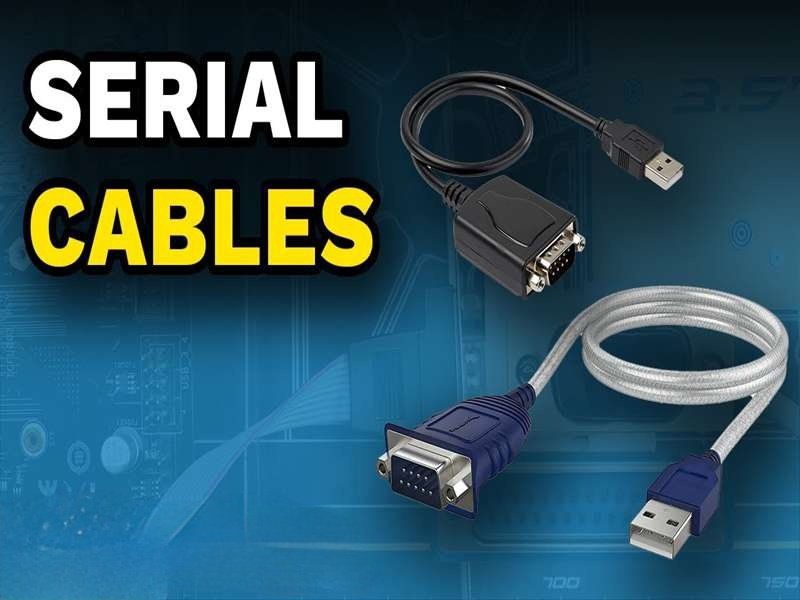
Serial connectors may look old-fashioned compared with USB-C, Ethernet, Wi-Fi, or Bluetooth, but they are still widely used in serious equipment. In many factories, laboratories, hospitals, control rooms, and field-service tools, serial communication remains one of the most dependable ways to connect machines, sensors, controllers, and diagnostic systems.
The reason is simple: serial connectors are stable, easy to troubleshoot, cost-effective, and highly compatible with legacy and embedded devices. When an engineer needs to configure a PLC, read data from a medical analyzer, connect a test instrument, or maintain network equipment, a serial connector is often still the most practical interface.
A serial connector is a physical connector used for serial communication, where data is transmitted one bit at a time between devices. Common serial connector formats include DB9, DB25, RJ45 serial, USB-to-serial, and custom serial cable assemblies. They are widely used in industrial automation, medical equipment, embedded systems, network devices, laboratory instruments, and test equipment.
The challenge is that many serial connectors look simple, but the details matter. A DB9 cable may be straight-through or null modem. An RJ45 serial cable may look like Ethernet but use a completely different pinout. A USB-to-serial cable may require the correct chipset and driver. A cable that fits physically may still fail electrically.
This is why many OEM customers come to Sino-Conn with photos, samples, or rough pinout information and ask for engineering support before production. A serial cable assembly is not just a connector with wires. It is a communication link that must match the device, protocol, pinout, shielding requirement, cable length, and operating environment.
What Is a Serial Connector?
A serial connector is a physical interface that allows two devices to exchange data through serial communication. Instead of transmitting multiple bits simultaneously, serial communication sends data one bit at a time through dedicated signal lines. This method has been used for decades and remains one of the most reliable communication solutions in industrial automation, medical equipment, laboratory instruments, embedded systems, network infrastructure, and transportation equipment.

Although modern interfaces such as USB, Ethernet, Wi-Fi, and Bluetooth receive more attention, serial communication is still found in millions of devices worldwide. Many factories, hospitals, laboratories, and utility systems continue to rely on serial connectors every day because they are simple, dependable, cost-effective, and easy to maintain.
For many equipment manufacturers, the goal is not to achieve the highest data rate. The goal is to achieve stable communication for years without unexpected failures. This is where serial connectors continue to excel.
What Does a Serial Connector Mean?
The word “serial” refers to the way information is transmitted.
In serial communication, data travels sequentially, one bit after another.
A simple comparison illustrates the concept:
| Communication Type | Transmission Method | Number of Conductors |
|---|---|---|
| Serial Communication | One bit at a time | Fewer |
| Parallel Communication | Multiple bits simultaneously | More |
Historically, parallel communication offered higher speed, but it required larger connectors, more conductors, and more complex wiring.
As electronic systems evolved, engineers increasingly preferred serial communication because it provided:
- Simpler hardware design
- Lower manufacturing costs
- Smaller connectors
- Better long-distance performance
- Easier troubleshooting
This is one reason serial communication remains common in industrial and embedded systems today.
A serial connector serves as the physical connection point between devices such as:
- PLC controllers
- Human-machine interfaces (HMIs)
- Industrial robots
- Medical analyzers
- Network switches
- Embedded control boards
- Test instruments
- Communication equipment
Many customers mistakenly think that “serial connector” refers to a specific connector shape.
In reality, it refers to a category of connectors used for serial communication.
Examples include:
| Connector Type | Common Applications |
|---|---|
| DB9 | RS232, RS485 |
| DB25 | Legacy Equipment |
| RJ45 Serial | Network Console Ports |
| USB-to-Serial | Modern Computer Interfaces |
| Terminal Block | Industrial Systems |
| Circular Connectors | Harsh Environment Equipment |
The connector itself is only one part of the communication system. The protocol, wiring, cable structure, shielding, and signal assignments are equally important.
How Does a Serial Connector Work?
A serial connector provides the electrical pathway that allows signals to move between devices.
A complete serial communication system generally consists of:
| Component | Function |
|---|---|
| Host Device | Sends Data |
| Serial Connector | Creates Electrical Interface |
| Cable Assembly | Transfers Signals |
| Target Device | Receives Data |
For example:
A PLC sends a command through a serial port.
The signal passes through:
- Connector contacts
- Internal wiring
- Cable conductors
- Receiving connector
before reaching the target device.
Several signal types may be present:
| Signal | Function |
|---|---|
| TXD | Transmit Data |
| RXD | Receive Data |
| GND | Ground Reference |
| RTS | Request To Send |
| CTS | Clear To Send |
| A/B | RS485 Differential Pair |
One of the most important factors affecting communication quality is not the connector itself but the entire cable assembly.
Factors affecting performance include:
- Cable length
- Shielding quality
- Connector contact quality
- Grounding design
- EMI environment
- Pin assignment accuracy
A customer once approached Sino-Conn because communication between two industrial controllers was failing intermittently.
The equipment manufacturer initially suspected a software issue.
After inspection, the root cause was found to be a poorly shielded serial cable running alongside motor power cables.
The solution involved:
- Double-shielded cable construction
- Improved grounding termination
- Optimized cable routing
Communication stability improved significantly without changing any electronics.
This example highlights how the cable assembly often plays a larger role than many users realize.
Why Is a Serial Connector Still Important?
Many engineers entering the industry today wonder why serial communication continues to exist when faster alternatives are available.
The answer lies in reliability and installed infrastructure.
Thousands of manufacturers still produce equipment using:
- RS232
- RS422
- RS485
- UART
- Modbus Serial
because these technologies have proven themselves over decades of field operation.
Consider the following comparison:
| Feature | Serial Communication | Ethernet |
|---|---|---|
| Hardware Cost | Lower | Higher |
| Complexity | Lower | Higher |
| Troubleshooting | Easier | More Complex |
| Long-Term Compatibility | Excellent | Good |
| Infrastructure Requirements | Minimal | Greater |
In many industrial applications, sending a few commands per second is sufficient.
Examples include:
- Starting a motor
- Reading a sensor
- Updating a display
- Configuring a controller
These tasks do not require gigabit networking.
They require dependable communication.
This is why many machine builders continue to specify serial interfaces even for newly designed equipment.
Medical device manufacturers also appreciate the stability of serial communication.
Changing communication architecture often requires additional software validation, testing, and documentation.
Using a proven serial interface can simplify development and reduce risk.
Where Are Serial Connectors Used?
Serial connectors appear in far more products than most people expect.
Major application sectors include:
| Industry | Typical Equipment |
|---|---|
| Industrial Automation | PLCs, HMIs, CNC Machines |
| Medical Equipment | Diagnostic Systems, Analyzers |
| Telecommunications | Network Infrastructure |
| Laboratory Equipment | Measurement Instruments |
| Transportation | Control Modules |
| Energy Systems | Inverters, Monitoring Equipment |
| Embedded Electronics | Development Boards, Controllers |
Industrial automation remains one of the largest markets.
Many production facilities continue to use RS232 and RS485 communication because:
- Equipment lifecycles often exceed 15 years.
- Existing infrastructure is already installed.
- Maintenance personnel are familiar with the technology.
- Communication reliability is proven.
Medical equipment is another significant sector.
Serial communication is frequently used for:
- Device configuration
- Data export
- Instrument control
- Service diagnostics
One Sino-Conn customer developing a diagnostic instrument required custom DB9 serial cable assemblies with:
- Shielded construction
- Specific pin assignments
- Compact backshells
- Detailed engineering drawings
Although the communication speed was relatively low, reliability requirements were extremely high because the system was used in a laboratory environment.
This demonstrates an important principle:
The value of a serial connector is not measured by speed alone.
Its value is measured by how reliably it performs its task over years of operation.
Why Do OEM Manufacturers Still Choose Serial Connectors?
Many OEM manufacturers continue to use serial connectors because they offer an excellent balance of performance, cost, and compatibility.
Advantages include:
| Benefit | OEM Value |
|---|---|
| Proven Technology | Reduced Development Risk |
| Wide Availability | Easier Sourcing |
| Low Cost | Lower Product Cost |
| Flexible Wiring | Easier Integration |
| Long Product Lifecycle Support | Better Serviceability |
For OEM projects, serial cable assemblies are often customized to match:
- Device layout
- Installation requirements
- Shielding needs
- Environmental conditions
- Service procedures
At Sino-Conn, many serial connector projects begin with very limited information.
Customers often provide:
- A photo
- A connector model
- An old cable sample
- A hand sketch
From there, engineering teams help identify:
- Connector type
- Pinout
- Cable structure
- Shielding requirements
- Material recommendations
Drawings are then created and confirmed before production begins.
This process helps reduce communication errors and ensures the final cable assembly performs as expected.
For many industrial and medical applications, the serial connector may represent only a small portion of the total system cost. However, if communication fails, the entire system may stop functioning. That is why connector selection, cable design, and manufacturing quality remain critical considerations during product development.
What Types of Serial Connectors Are There?
When people search for serial connectors, many assume there are only one or two connector types. In reality, serial communication has evolved over several decades, resulting in multiple connector formats designed for different industries, protocols, installation environments, and equipment generations.
Choosing the correct serial connector is not simply about finding a connector that physically fits.
Engineers must consider:
- Communication protocol
- Pin assignment
- Mechanical durability
- Installation space
- EMI environment
- Equipment compatibility
- Long-term availability
A connector that works perfectly in a laboratory instrument may be completely unsuitable for a factory floor, medical device, or outdoor communication system.
Today, the most common serial connector categories include:
| Connector Type | Common Protocols | Typical Industries |
|---|---|---|
| DB9 | RS232, RS485 | Industrial, Medical |
| DB25 | RS232, Legacy Systems | Industrial, Telecom |
| RJ45 Serial | Console Communication | Networking |
| USB Serial | USB to RS232/RS485 | Service & Maintenance |
| Terminal Block | RS485, Modbus | Industrial Automation |
| Circular Serial Connector | RS232, RS485 | Harsh Environments |
Understanding these differences helps prevent costly compatibility issues and reduces engineering time during product development.
DB9 Serial Connector
The DB9 connector is arguably the most recognized serial connector in the world.

For decades, it has been the standard interface for RS232 communication and remains widely used in industrial equipment, medical systems, laboratory instruments, transportation systems, and embedded electronics.
The DB9 connector contains nine contacts arranged in two rows.
Basic specifications:
| Feature | DB9 Connector |
|---|---|
| Contact Count | 9 |
| Connector Style | D-Sub |
| Locking Method | Screw Lock |
| Typical Protocol | RS232 |
| Industrial Usage | Very High |
A major advantage of DB9 is mechanical reliability.
Unlike push-fit connectors, DB9 connectors use screw locks that prevent accidental disconnection.
This becomes extremely important in:
- Industrial control cabinets
- Factory automation systems
- Transportation equipment
- Mobile testing systems
Many customers still request DB9 serial cable assemblies because their equipment may remain in service for 10 to 20 years.
One Sino-Conn customer manufactures CNC machinery exported worldwide.
Although newer communication technologies are available, the company continues to use DB9 RS232 interfaces because:
- Existing software is stable.
- Global service teams understand the interface.
- Replacement parts are easy to source.
- Maintenance procedures are already established.
This illustrates why DB9 remains relevant even today.
DB25 Serial Connector
Before DB9 became dominant, DB25 connectors were commonly used for serial communication.

DB25 connectors provide 25 contacts, allowing more signal lines and greater wiring flexibility.
Comparison:
| Feature | DB9 | DB25 |
|---|---|---|
| Contacts | 9 | 25 |
| Size | Smaller | Larger |
| Wiring Capacity | Lower | Higher |
| Panel Space Required | Less | More |
DB25 connectors are still found in:
- Legacy industrial systems
- Telecommunications equipment
- Test instruments
- Military equipment
- Broadcast systems
One challenge with DB25 systems is documentation.
Many machines built 15 to 25 years ago may no longer have complete wiring records.
Customers often approach Sino-Conn with:
- An old cable
- Equipment photos
- Connector measurements
and request reproduction of discontinued assemblies.
In these situations, reverse engineering becomes an important service.
By verifying:
- Pin assignments
- Shield termination
- Connector type
- Cable construction
a replacement cable can often be produced even when original drawings no longer exist.
RJ45 Serial Connector
RJ45 serial connectors are frequently misunderstood because they look identical to Ethernet connectors.

The connector shape is the same.
The wiring often is not.
This creates one of the most common serial communication mistakes.
Many users assume:
RJ45 Connector = Ethernet Cable
This assumption is often incorrect.
Common RJ45 serial applications include:
| Equipment | Purpose |
|---|---|
| Network Switch | Console Access |
| Router | Configuration |
| Firewall | Setup & Maintenance |
| Industrial Gateway | Diagnostics |
| Communication Equipment | Service Interface |
A console cable may physically resemble a network patch cable while using a completely different pin assignment.
Consequences of using the wrong cable include:
- No communication
- Configuration failure
- Device access problems
- Troubleshooting delays
One network equipment customer contacted Sino-Conn because field technicians were accidentally mixing Ethernet cables and serial console cables.
The solution included:
- Custom cable colors
- Permanent labels
- Part number identification
This reduced installation errors significantly.
RJ45 serial connectors remain extremely popular because:
- They are compact.
- They are inexpensive.
- They are familiar to technicians.
- They integrate easily into networking equipment.
USB Serial Connector
Modern computers have largely eliminated native serial ports.

As a result, USB-to-serial interfaces have become one of the fastest-growing serial connector categories.
USB serial solutions allow newer computers to communicate with older equipment.
Common applications include:
| Application | Example |
|---|---|
| PLC Programming | Factory Automation |
| Device Configuration | Industrial Equipment |
| Service Access | Medical Systems |
| Firmware Updates | Embedded Electronics |
| Data Collection | Test Equipment |
Popular configurations include:
- USB-A to DB9
- USB-C to DB9
- USB-A to RJ45 Console
- USB-C to RJ45 Console
- USB to Terminal Block
The growth of USB-C has accelerated demand for custom USB serial assemblies.
Many service engineers now carry only USB-C laptops.
This creates compatibility challenges with older equipment.
Several OEM customers working with Sino-Conn have requested custom USB-C to serial adapters to support both legacy equipment and modern computers.
Benefits include:
- Simplified field service
- Reduced adapter requirements
- Improved technician productivity
Which Serial Connector Is Best?
There is no universal best serial connector.
The correct choice depends on:
- Equipment type
- Protocol
- Environment
- Space limitations
- Maintenance requirements
General guidance:
| Application | Recommended Connector |
|---|---|
| Industrial PLC | DB9 |
| Legacy Machinery | DB25 |
| Network Equipment | RJ45 Serial |
| Modern Laptop Access | USB Serial |
| Industrial RS485 Networks | Terminal Block |
| Harsh Environments | Circular Connector |
Instead of asking:
“What is the best serial connector?”
Engineers should ask:
“What is the best serial connector for this application?”
The answer often depends on factors that are not immediately visible.
Terminal Block Serial Connector
Terminal block connectors are extremely common in industrial automation.
Unlike plug-style connectors, terminal blocks allow wires to be secured directly using screws or spring-clamp mechanisms.
Common applications:
- RS485 networks
- Modbus systems
- Building automation
- Process control
- Industrial monitoring
Advantages include:
| Benefit | Explanation |
|---|---|
| Secure Wiring | Resists Vibration |
| Easy Maintenance | Field Repair Friendly |
| Long Distance Support | Suitable for RS485 |
| Cost Effective | Minimal Connector Cost |
RS485 installations often span hundreds of meters.
In these environments, terminal block solutions provide a practical and reliable connection method.
Many industrial control systems continue using terminal block serial interfaces because of their simplicity and robustness.
Circular Serial Connector
When serial communication must operate in harsh environments, circular connectors often replace DB9 or RJ45 connectors.
Common environments include:
- Outdoor equipment
- Transportation systems
- Construction machinery
- Military equipment
- Marine electronics
Circular connectors offer:
| Feature | Benefit |
|---|---|
| Waterproof Design | Environmental Protection |
| Vibration Resistance | Stable Connection |
| Locking Mechanism | Prevents Disconnection |
| High Durability | Long Service Life |
Common ratings include:
- IP65
- IP67
- IP68
One customer developing outdoor environmental monitoring equipment required serial communication between field sensors and a control unit.
The original DB9 connector suffered from moisture intrusion.
After switching to a custom IP67 circular serial connector assembly developed with Sino-Conn, field reliability improved significantly.
How OEM Manufacturers Select Serial Connectors
OEM manufacturers rarely choose connectors based solely on appearance.
Their evaluation process often includes:
| Evaluation Factor | Importance |
|---|---|
| Protocol Compatibility | Critical |
| Pin Assignment | Critical |
| Mechanical Durability | High |
| Shielding Requirements | High |
| Environmental Resistance | High |
| Supply Stability | High |
| Cost Control | High |
At Sino-Conn, many serial connector projects begin with only:
- Equipment photos
- Existing samples
- Connector part numbers
- Basic wiring information
Engineering teams then assist with:
- Connector identification
- Pinout verification
- Shielding recommendations
- Material selection
- CAD drawings
- Production documentation
before manufacturing begins.
This process helps ensure that the selected serial connector is not only compatible with the equipment but also optimized for long-term reliability, serviceability, and production efficiency.
The most successful serial communication projects are rarely determined by the connector shape alone. The protocol, wiring, shielding, environment, and manufacturing quality all play important roles in achieving stable communication over the life of the product.
What Are Serial Connectors Used For?
Serial connectors are primarily used to transfer commands, status information, configuration data, measurement results, and communication signals between devices. While many modern consumer products rely on USB, Ethernet, Wi-Fi, or Bluetooth, serial communication remains deeply embedded in industrial equipment, medical systems, laboratory instruments, transportation infrastructure, and embedded electronics.
One reason serial communication remains popular is that many machines do not need extremely high data rates.
They need:
- Stable communication
- Predictable performance
- Easy maintenance
- Long-term compatibility
- Low implementation cost
A factory machine may only send a few commands every second.
A medical analyzer may transmit small data packets.
A network switch may only require occasional configuration access.
For these applications, serial communication often provides a more practical solution than complex network architectures.
Today, serial connectors can be found in millions of devices worldwide and continue to play a critical role in machine-to-machine communication.
Serial Connector for Industrial Equipment
Industrial automation is one of the largest application areas for serial connectors.
Factories often contain equipment from different generations and manufacturers. Serial communication provides a common method for these devices to exchange information.
Common industrial applications include:
- PLC communication
- CNC machines
- Industrial robots
- HMI panels
- Motion controllers
- Variable frequency drives
- Sensor networks
- Production monitoring systems
Many industrial systems continue to use:
| Protocol | Typical Application |
|---|---|
| RS232 | Equipment Configuration |
| RS485 | Factory Networks |
| Modbus RTU | Process Control |
| UART | Embedded Controllers |
One major advantage of serial communication in industrial environments is reliability.
Industrial facilities often contain:
- Electric motors
- High-current cables
- Inverters
- Welding equipment
- Switching power supplies
All of these can generate electromagnetic interference.
When properly designed with shielding and grounding, serial communication remains highly stable in these environments.
A customer working with Sino-Conn manufactures automated packaging equipment.
Their control system uses multiple RS485 communication links between controllers and operator interfaces.
The original cable supplier used unshielded cable assemblies.
This caused intermittent communication errors whenever nearby motors started.
After upgrading to:
- Foil shielding
- Braided shielding
- Proper drain wire grounding
communication stability improved significantly.
This project demonstrated that connector selection alone is not enough. Cable construction plays an equally important role.
Serial Connector for Medical Devices
Medical equipment manufacturers continue to rely on serial communication because it is simple, stable, and easy to validate.
Medical devices often have product lifecycles of 10 to 15 years or more.
Changing communication architecture can require:
- Software changes
- Hardware redesign
- Additional testing
- Regulatory documentation updates
As a result, many manufacturers prefer proven serial interfaces.
Common medical applications include:
| Equipment Type | Serial Connector Function |
|---|---|
| Patient Monitor | Data Communication |
| Blood Analyzer | Instrument Control |
| Diagnostic Equipment | Configuration Interface |
| Imaging Systems | Service Access |
| Laboratory Instruments | Data Output |
| Portable Medical Devices | Embedded Communication |
Medical applications place high demands on:
| Requirement | Priority |
|---|---|
| Signal Integrity | Very High |
| Reliability | Very High |
| Traceability | High |
| Documentation | High |
| Long-Term Availability | High |
A laboratory equipment manufacturer approached Sino-Conn for a custom DB9 cable assembly connecting a diagnostic module to a control unit.
Requirements included:
- Shielded cable
- Compact backshell
- Specific pin assignments
- Drawing approval before production
Although communication speed was relatively low, reliability requirements were extremely strict because communication errors could affect diagnostic results.
This illustrates how serial communication remains highly relevant in medical applications.
Serial Connector for Network Systems
Many network administrators use serial connectors every day, especially when configuring or troubleshooting infrastructure equipment.
Network devices commonly include serial console ports for:
- Initial setup
- Firmware upgrades
- Configuration changes
- Diagnostics
- Recovery procedures
Examples include:
- Routers
- Switches
- Firewalls
- Industrial gateways
- Communication servers
A common misconception is that RJ45 serial connectors are Ethernet ports.
While they may look identical externally, the wiring is often completely different.
Common network serial cable configurations include:
| Cable Type | Function |
|---|---|
| RJ45 to DB9 | Console Access |
| RJ45 to USB | Laptop Connection |
| USB-C to RJ45 | Modern Service Access |
| RJ45 to RJ45 | Device-Specific Configuration |
One customer managing multiple data centers experienced frequent confusion between console cables and Ethernet patch cables.
To reduce installation errors, Sino-Conn developed custom assemblies featuring:
- Unique cable colors
- Permanent labels
- Custom part numbers
This reduced technician mistakes and improved maintenance efficiency.
Serial Connector for Test Equipment
Test and measurement systems often depend on serial communication because it provides stable and predictable control.
Examples include:
- Oscilloscopes
- Spectrum analyzers
- Environmental chambers
- Power supplies
- Calibration equipment
- Data loggers
These devices frequently exchange:
- Commands
- Configuration settings
- Measurement data
- Status information
A failed communication link can result in:
- Invalid test results
- Production delays
- Calibration errors
- Equipment downtime
For this reason, reliability is critical.
Common requirements include:
| Requirement | Importance |
|---|---|
| Shielding | High |
| Connector Durability | High |
| Stable Contact Resistance | High |
| Long Service Life | High |
A test equipment manufacturer approached Sino-Conn after experiencing communication interruptions during automated testing.
The root cause was repeated flexing of a low-cost cable assembly.
The replacement solution incorporated:
- High-flex conductors
- Reinforced strain relief
- Improved shielding
which significantly improved long-term reliability.
Serial Connector for Embedded Devices
Embedded systems represent one of the fastest-growing applications for serial communication.
Even devices with advanced networking capabilities often include serial interfaces for development and maintenance.
Common embedded applications include:
| Device Type | Serial Function |
|---|---|
| Development Board | Programming |
| IoT Gateway | Configuration |
| Industrial Controller | Diagnostics |
| Sensor Module | Debugging |
| Communication Device | Firmware Updates |
Serial communication remains popular because it provides direct access to system functions.
Engineers often use serial interfaces for:
- Bootloader communication
- Firmware updates
- Error logging
- Development testing
- Manufacturing verification
A simple serial interface can provide valuable diagnostic information even when more complex communication systems fail.
Because of this, many embedded devices continue to include UART, RS232, or RS485 interfaces despite the availability of newer technologies.
Serial Connector for Transportation Systems
Transportation equipment relies heavily on stable communication between control systems.
Applications include:
- Railway control equipment
- Traffic management systems
- Fleet monitoring devices
- Vehicle diagnostics
- Passenger information systems
Transportation environments often expose connectors to:
- Vibration
- Temperature fluctuations
- Dust
- Moisture
As a result, connector durability becomes a major consideration.
Common requirements include:
| Requirement | Importance |
|---|---|
| Vibration Resistance | Very High |
| Mechanical Strength | Very High |
| Environmental Protection | High |
| Long Service Life | Very High |
Many transportation projects use serial communication because of its proven reliability in harsh environments.
Serial Connector for Energy Systems
Energy infrastructure continues to use serial communication extensively.
Applications include:
- Solar inverters
- Battery management systems
- Power monitoring equipment
- Smart meters
- Industrial power systems
Common communication tasks include:
- Status reporting
- Remote monitoring
- Parameter configuration
- Fault diagnostics
RS485 is particularly popular because it supports:
- Long cable distances
- Multi-device communication
- Strong noise immunity
One renewable energy customer working with Sino-Conn required custom serial cable assemblies connecting monitoring devices across multiple power cabinets.
Requirements included:
- Double shielding
- UV-resistant materials
- Custom cable lengths
- Industrial-grade connectors
The solution improved installation efficiency while maintaining reliable communication.
Why OEM Manufacturers Use Serial Connectors
OEM manufacturers continue to select serial communication because it offers a balance of simplicity, reliability, and cost control.
Common advantages include:
| Advantage | OEM Benefit |
|---|---|
| Proven Technology | Lower Development Risk |
| Simple Hardware | Reduced Design Complexity |
| Long Product Support | Easier Maintenance |
| Broad Compatibility | Wider Device Integration |
| Low Cost | Better Project Economics |
For many OEM projects, communication speed is not the deciding factor.
The priorities are often:
- Reliability
- Stability
- Serviceability
- Ease of integration
At Sino-Conn, many serial connector projects begin with only:
- A photo
- A connector part number
- An old sample
- A rough wiring description
Our engineering team assists customers with:
- Connector identification
- Pinout verification
- Shielding recommendations
- Material selection
- CAD drawings
- Sample production
before mass manufacturing begins.
This process helps ensure the final cable assembly matches the customer’s equipment, environment, and performance requirements.
The continued use of serial connectors across industrial automation, medical equipment, network systems, test instruments, embedded electronics, transportation infrastructure, and energy systems demonstrates that reliable communication often matters more than maximum speed. When properly designed and matched to the application, serial connector assemblies can deliver years of stable operation with minimal maintenance.
How Do You Choose a Serial Connector?
Choosing a serial connector is not as simple as matching connector shapes. Many communication failures occur because the connector was selected based only on appearance while critical factors such as protocol, pin assignment, shielding, environment, and cable construction were overlooked.
A serial connector may represent less than 1% of a machine’s total cost, yet a communication failure can stop an entire production line, interrupt medical diagnostics, delay field service, or prevent equipment configuration.
For this reason, experienced engineers usually begin by understanding the application before selecting the connector.
Key questions include:
- What devices are being connected?
- Which communication protocol is used?
- What is the installation environment?
- How long is the cable?
- Is shielding required?
- Will the cable move during operation?
- How many mating cycles are expected?
- Is long-term availability important?
The answers often determine the correct solution far more than the connector shape itself.
Serial Connector Standards
The first step is identifying the communication standard.
Many customers assume that a DB9 connector automatically means RS232 communication.
This is not always true.
The same connector can support different protocols.
Common serial standards include:
| Standard | Typical Use | Maximum Distance* |
|---|---|---|
| RS232 | Point-to-Point Communication | Up to 15 m |
| RS422 | Long-Distance Communication | Up to 1200 m |
| RS485 | Multi-Device Networks | Up to 1200 m |
| UART | Embedded Systems | PCB Level |
| Modbus RTU | Industrial Automation | Depends on RS485 |
- Actual distance depends on baud rate, cable quality, shielding, and installation environment.
A common mistake is replacing a cable based solely on the connector.
Example:
Two DB9 connectors may look identical.
One may carry:
- RS232 signals
while another may carry:
- RS485 differential signals
Using the wrong cable can result in:
- No communication
- Data corruption
- Equipment faults
- Troubleshooting delays
At Sino-Conn, protocol verification is usually one of the first engineering checks before quotation and drawing preparation.
Serial Connector Pinout
Pin assignment is arguably the most important factor when selecting a serial connector.
A connector can be physically correct while being electrically incorrect.
Many communication failures originate from mismatched wiring rather than defective hardware.
Common wiring configurations include:
| Configuration | Application |
|---|---|
| Straight Through | Standard Device Connection |
| Null Modem | Device-to-Device Communication |
| Custom OEM Wiring | Proprietary Equipment |
| RS485 Wiring | Industrial Networks |
| Hybrid Signal Wiring | Mixed Power & Data |
Consider this example:
| DB9 Pin | Straight Through | Null Modem |
|---|---|---|
| Pin 2 | RX | TX |
| Pin 3 | TX | RX |
Externally, both cables appear identical.
Internally, they function differently.
One industrial customer sent Sino-Conn an image of an existing cable and requested a quotation.
The connector was easy to identify.
The internal wiring was not.
After verifying the pinout, engineers discovered that the cable used a proprietary signal assignment developed specifically for that machine manufacturer.
Without confirming the pinout, the replacement cable would have failed immediately.
For OEM projects, Sino-Conn typically provides:
- Wiring drawings
- Pin assignment verification
- CAD documentation
- Production approval drawings
before manufacturing begins.
Serial Connector Shielding
Shielding becomes increasingly important as communication systems move into electrically noisy environments.
Common sources of interference include:
- Electric motors
- Inverters
- Servo drives
- Switching power supplies
- High-current cables
- RF transmitters
Without proper shielding, communication may become unstable.
Common symptoms include:
- Intermittent data loss
- Communication timeouts
- Configuration failures
- Random equipment faults
Common shielding options include:
| Shield Type | EMI Protection |
|---|---|
| Unshielded | Low |
| Foil Shield | Good |
| Braided Shield | Better |
| Foil + Braid | Excellent |
Industrial automation often requires enhanced shielding.
Medical equipment frequently requires stable low-noise communication.
Laboratory instruments often demand excellent signal integrity.
A customer manufacturing automated inspection equipment experienced random communication interruptions.
The root cause was traced to serial cables routed alongside motor power cables.
Sino-Conn redesigned the assembly using:
- Double shielding
- Drain wire grounding
- Optimized cable routing
Communication reliability improved significantly.
The cost increase was minimal compared with the downtime previously experienced.
Serial Connector Cable Length
Cable length directly affects communication stability.
Many customers assume that longer cables simply provide more flexibility.
In reality, excessive cable length can create:
- Signal degradation
- Increased EMI exposure
- Higher installation cost
- Additional cable management challenges
General guidelines:
| Protocol | Recommended Distance |
|---|---|
| RS232 | Short Distances |
| RS422 | Long Distances |
| RS485 | Longest Distances |
| UART | Internal Equipment Only |
Several additional factors influence performance:
- Baud rate
- Cable impedance
- Shielding quality
- Grounding method
- Installation environment
One control cabinet manufacturer initially specified 10-meter serial cables because the exact routing path was unknown.
After reviewing the installation layout, Sino-Conn reduced the cable length to 4 meters.
Benefits included:
- Lower cost
- Reduced EMI exposure
- Cleaner installation
- Improved communication margin
The best cable length is usually the shortest practical length that still supports installation requirements.
Serial Connector Reliability
Reliability should always be evaluated based on real operating conditions rather than laboratory specifications.
Questions worth asking include:
- Will vibration be present?
- Will the connector be unplugged frequently?
- Is the equipment mobile?
- Will operators handle the cable daily?
- Is downtime expensive?
Common reliability factors include:
| Factor | Impact |
|---|---|
| Contact Quality | Signal Stability |
| Connector Locking | Retention Strength |
| Shielding | Noise Immunity |
| Strain Relief | Cable Life |
| Material Quality | Environmental Resistance |
Industrial environments often require:
- Screw-lock connectors
- Reinforced backshells
- Durable cable jackets
Medical equipment may prioritize:
- Consistent signal quality
- Long service life
- Compact connector designs
A low-cost connector may appear attractive initially but can become expensive if repeated failures require field service visits.
For many OEM manufacturers, reliability directly affects:
- Warranty claims
- Service costs
- Customer satisfaction
- Product reputation
Serial Connector Environment
The operating environment frequently determines which connector design is most appropriate.
A connector that works perfectly in an office may fail quickly on a factory floor.
Common environmental considerations include:
| Environment Factor | Impact |
|---|---|
| Temperature | Material Selection |
| Humidity | Corrosion Resistance |
| Dust | Sealing Requirements |
| Oil Exposure | Jacket Material |
| UV Exposure | Outdoor Durability |
| Vibration | Connector Retention |
Examples:
Factory Automation:
- Oil-resistant jackets
- High-flex cables
- Enhanced shielding
Outdoor Monitoring Systems:
- UV-resistant materials
- Waterproof connectors
Medical Equipment:
- Flexible cable construction
- Reliable contact performance
Transportation Systems:
- Vibration-resistant designs
- Robust locking mechanisms
At Sino-Conn, environmental review is a standard part of the engineering process because material selection often determines long-term field performance.
Serial Connector Cost vs Value
Many purchasing teams focus primarily on connector price.
However, the lowest-cost connector is not always the lowest-cost solution.
A more useful comparison is total ownership cost.
Factors include:
| Cost Factor | Consideration |
|---|---|
| Purchase Price | Initial Cost |
| Installation Time | Labor Cost |
| Downtime Risk | Lost Productivity |
| Maintenance | Service Cost |
| Replacement Frequency | Lifecycle Cost |
For example:
A connector costing 20% less may require:
- More maintenance
- More replacements
- More troubleshooting
which ultimately increases total ownership cost.
Several Sino-Conn customers have reduced service expenses by selecting higher-quality cable assemblies with:
- Better shielding
- Improved strain relief
- Higher-grade materials
The increase in component cost was often offset by lower warranty and maintenance costs.
Serial Connector Supply Stability
Many projects focus heavily on technical specifications while overlooking supply chain considerations.
This becomes especially important for:
- Medical equipment
- Industrial automation
- Long-lifecycle products
- Government projects
Questions worth considering include:
- Is the connector available globally?
- Is there a compatible alternative?
- What is the typical lead time?
- Can the supplier support future production?
Connector shortages can delay production even when the design itself is complete.
One reason many OEM customers work with Sino-Conn is the ability to support both:
- Original branded connectors
- High-quality compatible alternatives
This flexibility helps balance:
- Performance
- Availability
- Lead time
- Cost
while maintaining project schedules.
How Engineers Select the Right Serial Connector
Experienced engineers rarely start with a connector catalog.
Instead, they work through a structured process:
| Step | Objective |
|---|---|
| Define Protocol | Confirm Communication Method |
| Verify Pinout | Ensure Compatibility |
| Evaluate Environment | Select Materials |
| Determine Length | Optimize Performance |
| Assess Shielding | Protect Signal Integrity |
| Review Lifecycle | Ensure Long-Term Availability |
| Validate Drawings | Prevent Production Errors |
At Sino-Conn, many serial connector projects begin with only a photo, old sample, equipment model number, or rough sketch.
Engineering teams then assist with:
- Connector identification
- Pinout verification
- Shielding recommendations
- Material selection
- CAD drawings
- Prototype production
before mass manufacturing begins.
The most successful serial communication projects are not defined by connector shape alone. They result from selecting the right combination of protocol compatibility, pin assignment, shielding, cable construction, durability, and long-term supply support. When these factors are evaluated together, the final system becomes more reliable, easier to maintain, and better suited for years of operation.
How Can a Serial Connector Be Customized?
Many engineers initially assume that serial connectors are standardized products that require little or no customization.
In reality, a large percentage of industrial, medical, transportation, energy, and embedded systems use custom serial cable assemblies rather than standard off-the-shelf products.
The reason is simple.
A standard cable is designed to fit many applications.
A custom cable is designed to fit one application perfectly.
For OEM manufacturers, even small changes can improve:
- Installation efficiency
- Communication reliability
- Serviceability
- Product appearance
- Manufacturing consistency
- Long-term maintenance
At Sino-Conn, most serial connector projects involve some level of customization.
Customers frequently require:
| Custom Item | Frequency |
|---|---|
| Pinout Changes | Very High |
| Cable Length | Very High |
| Connector Conversion | Very High |
| Shielding Upgrades | High |
| Material Changes | High |
| Labeling | High |
| Overmolding | Medium |
| Waterproofing | Medium |
| Connector Color | Medium |
Many projects start with only:
- A photo
- A sample cable
- A connector model number
- A rough sketch
- A machine model
From there, engineering teams help define the complete cable assembly before production.
Custom Serial Connector Cables
The cable itself is often the first component that requires customization.
Many communication issues originate not from the connector but from the cable structure.
Common cable customizations include:
| Option | Purpose |
|---|---|
| High-Flex Cable | Continuous Motion Applications |
| Double Shielded Cable | EMI Protection |
| Low-Capacitance Cable | Long-Distance Communication |
| UV-Resistant Cable | Outdoor Installations |
| Oil-Resistant Cable | Industrial Equipment |
| High-Temperature Cable | Harsh Environments |
A packaging equipment manufacturer originally used a low-cost PVC serial cable.
The machine operated near moving mechanical systems and power equipment.
After several months, failures began to occur.
The upgraded solution developed with Sino-Conn included:
- High-flex conductors
- Double shielding
- Oil-resistant jacket material
The service life improved significantly and maintenance requirements decreased.
This illustrates why cable selection should never be overlooked.
Custom Serial Connector Pinouts
Pin assignment customization is one of the most common requirements in serial communication projects.
Two cables may appear identical externally but perform completely different functions internally.
Examples include:
| Connector | Possible Function |
|---|---|
| DB9 | RS232 |
| DB9 | RS485 |
| DB9 | Custom Signals |
| RJ45 | Console Port |
| RJ45 | Proprietary Interface |
One of the most common requests received by Sino-Conn is:
“Can you make the same cable as this sample?”
The answer depends on the internal wiring.
Typical custom pinout projects involve:
- Legacy equipment replacement
- Proprietary machine interfaces
- Multi-device communication systems
- Mixed signal applications
- OEM equipment development
Common pinout modifications include:
- TX/RX crossover
- Custom ground routing
- Additional control signals
- Hybrid power and communication wiring
- Special shielding termination
For many industrial customers, confirming the pinout before production prevents costly downtime later.
This is why Sino-Conn normally provides production drawings for customer approval before manufacturing begins.
Custom Serial Connector Lengths
Length customization is often underestimated.
Many catalog products are available only in standard lengths such as:
- 1 meter
- 2 meters
- 3 meters
- 5 meters
However, equipment layouts rarely match those dimensions perfectly.
Problems caused by excess cable length include:
| Issue | Result |
|---|---|
| Cable Clutter | Poor Installation |
| More EMI Exposure | Communication Risk |
| Higher Material Cost | Increased Cost |
| Additional Weight | Reduced Flexibility |
Problems caused by insufficient cable length include:
- Connector stress
- Routing difficulties
- Installation delays
- Service complications
One control cabinet manufacturer originally specified 5-meter serial cables for all installations.
After reviewing actual routing requirements, Sino-Conn optimized the lengths to:
- 1.2 m
- 1.8 m
- 2.5 m
depending on cabinet size.
Benefits included:
- Lower cable costs
- Faster assembly
- Cleaner installations
- Better cable management
When multiplied across hundreds or thousands of units, these improvements become significant.
Custom Serial Connector Conversions
Many modern systems must communicate with older equipment.
Connector conversion assemblies solve this problem.
Common conversion projects include:
| Conversion | Application |
|---|---|
| DB9 to RJ45 | Network Equipment |
| DB25 to DB9 | Legacy Systems |
| USB-A to DB9 | PC Service Access |
| USB-C to DB9 | Modern Laptop Access |
| USB-C to RJ45 | Console Connections |
| Terminal Block to DB9 | Industrial Equipment |
One growing trend is USB-C conversion.
Many field service engineers now use laptops without:
- DB9 ports
- USB-A ports
- RJ45 ports
Custom conversion cables allow modern devices to communicate with older equipment without redesigning the equipment itself.
Several Sino-Conn customers have adopted USB-C serial solutions specifically to simplify field service operations.
Custom Serial Connector Shielding
Shielding is one of the most valuable customizations for industrial communication systems.
Many communication issues occur because serial cables operate near:
- Motors
- Servo systems
- Inverters
- Power cables
- RF transmitters
Common shielding structures include:
| Shield Type | Protection Level |
|---|---|
| None | Basic |
| Foil Shield | Good |
| Braided Shield | Better |
| Foil + Braid | Excellent |
Industrial customers often request:
- Double shielding
- Drain wires
- Grounded backshells
- EMI-resistant cable structures
A machine vision customer experienced intermittent communication errors that appeared random.
The actual cause was electromagnetic interference from nearby servo motors.
The solution involved:
- Foil shielding
- Braided shielding
- Improved grounding
No software changes were required.
The communication problem disappeared after the cable upgrade.
Custom Serial Connector Materials
Different operating environments require different materials.
A cable that works perfectly inside a laboratory may fail quickly in a factory or outdoor installation.
Common jacket materials include:
| Material | Characteristics |
|---|---|
| PVC | Cost Effective |
| TPU | Flexible and Durable |
| PUR | Oil Resistant |
| Silicone | Flexible at Extreme Temperatures |
| FEP | High Temperature Resistance |
Selection depends on factors such as:
- Temperature
- UV exposure
- Oil exposure
- Abrasion
- Flexing requirements
One renewable energy customer required serial communication cables for outdoor monitoring equipment.
The environment included:
- Direct sunlight
- Rain
- Temperature fluctuations
Sino-Conn recommended:
- UV-resistant jacket material
- Enhanced shielding
- Waterproof connector design
This improved long-term durability without requiring system redesign.
Custom Serial Connector Labels and Identification
As production volume increases, cable identification becomes increasingly important.
OEM customers frequently request:
- Part numbers
- Serial numbers
- QR codes
- Laser marking
- Heat-shrink labels
- Customer logos
Benefits include:
| Feature | Benefit |
|---|---|
| Part Number | Easier Replacement |
| Serial Number | Traceability |
| QR Code | Faster Service |
| Color Coding | Easier Installation |
| Custom Branding | Professional Appearance |
Large-scale equipment manufacturers often save significant maintenance time through proper cable identification.
Custom Serial Connector Overmolding
Overmolding improves both durability and appearance.
Benefits include:
- Improved strain relief
- Better cable retention
- Increased durability
- Cleaner appearance
- Improved environmental resistance
Common applications:
| Industry | Reason |
|---|---|
| Industrial Automation | Durability |
| Medical Equipment | Reliability |
| Transportation | Vibration Resistance |
| Consumer Products | Appearance |
A well-designed overmold can significantly extend cable life in demanding environments.
Custom Serial Connector Waterproofing
Outdoor and harsh-environment applications often require additional protection.
Common protection levels include:
| Rating | Protection Level |
|---|---|
| IP65 | Dust and Water Jets |
| IP67 | Temporary Immersion |
| IP68 | Continuous Immersion Capability |
Applications include:
- Outdoor monitoring equipment
- Renewable energy systems
- Transportation equipment
- Marine systems
Waterproof serial connector assemblies often combine:
- Sealed connectors
- Specialized cable jackets
- Overmolding
- Environmental sealing components
How OEM Manufacturers Approach Customization
The most successful OEM projects begin with application requirements rather than connector part numbers.
Typical evaluation factors include:
| Requirement | Importance |
|---|---|
| Protocol Compatibility | Critical |
| Pinout Accuracy | Critical |
| Environmental Resistance | High |
| Shielding Performance | High |
| Serviceability | High |
| Supply Stability | High |
| Cost Control | High |
At Sino-Conn, custom serial connector projects often follow a structured process:
| Stage | Purpose |
|---|---|
| Requirement Review | Understand Application |
| Connector Identification | Verify Compatibility |
| Pinout Verification | Prevent Communication Errors |
| Drawing Creation | Customer Approval |
| Sample Production | Functional Validation |
| Mass Production | Volume Manufacturing |
Customers may provide only a photo or sample, and engineering teams can assist with:
- Connector selection
- Pinout analysis
- Shielding recommendations
- Material selection
- CAD drawings
- Prototype manufacturing
before production begins.
For many industrial and medical systems, communication reliability directly affects equipment performance. A properly customized serial connector assembly can improve installation efficiency, reduce maintenance costs, extend product life, and provide years of dependable operation. This is why custom serial cable assemblies remain a preferred solution for OEM manufacturers worldwide.
Frequently Asked Questions
Are Serial Connectors Still Used Today?
Yes.
Serial connectors remain widely used in:
- Industrial automation
- Medical equipment
- Embedded systems
- Test instruments
- Network infrastructure
Many modern devices continue to support serial communication because of its reliability and simplicity.
What Is the Most Common Serial Connector?
The most common serial connector remains the DB9 connector.
However, RJ45 serial console ports and USB-to-serial interfaces are increasingly common in modern equipment.
Can a Serial Connector Be Customized?
Yes.
Common customizations include:
- Cable length
- Pin assignment
- Connector conversion
- Shielding structure
- Jacket material
- Labeling
Many OEM products use custom serial cable assemblies rather than standard cables.
What Is the Difference Between RS232 and RS485 Connectors?
The connector shape may be identical.
The electrical protocol is different.
RS485 generally offers:
- Longer communication distances
- Better noise immunity
- Multi-device communication capability
RS232 is commonly used for shorter point-to-point communication links.
Do Serial Cables Need Shielding?
It depends on the environment.
Shielding is strongly recommended when cables are routed near:
- Motors
- Power cables
- Inverters
- Industrial machinery
- High-current systems
Enhanced shielding often improves communication stability.
Conclusion
Serial connectors continue to play an important role in modern equipment despite the growth of newer communication technologies. Their simplicity, reliability, long service history, and broad compatibility make them a practical choice for industrial automation, medical devices, network infrastructure, embedded systems, and test equipment.
Choosing the correct serial connector involves more than selecting a connector shape. Protocol compatibility, pin assignment, shielding, cable length, material selection, and operating environment all influence performance and reliability. A connector that appears correct visually may not function properly if the internal wiring does not match the application.
For OEM manufacturers and equipment developers, custom serial cable assemblies often provide significant advantages over standard catalog products. Proper customization can improve installation efficiency, reduce field failures, simplify maintenance, and extend product life.
At Sino-Conn, we support a wide range of custom serial connector projects, including:
- DB9 serial cable assemblies
- DB25 serial cable assemblies
- RJ45 serial console cables
- USB-to-serial adapters
- RS232 cable assemblies
- RS485 communication cables
- Custom pinout solutions
- Shielded serial cables
- Industrial-grade serial cable assemblies
- Medical device serial cable assemblies
Whether you have a complete drawing, an existing sample, a connector model number, or only a product photo, our engineering team can help identify the correct solution, create drawings for approval, and manufacture cable assemblies tailored to your application.
If you are developing a new product, replacing a discontinued cable, or looking for a reliable serial connector manufacturer, contact Sino-Conn for engineering support, rapid prototyping, and custom cable assembly solutions.