Skip to content
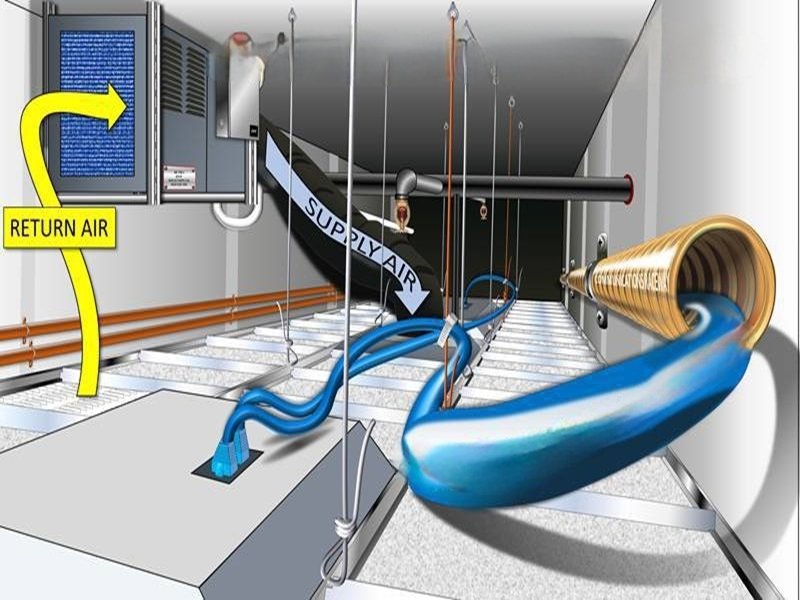
When most people think about cable selection, they focus on signal performance, voltage rating, or connector compatibility. Fire safety rarely comes first—until it suddenly matters. In modern buildings filled with air-handling spaces, return air plenums, and densely packed electronics, the cable jacket itself can become a critical safety risk. This is exactly why plenum rated cable exists.
Plenum rated cable is not just another compliance label. It is the difference between a controlled fire event and a toxic smoke hazard spreading through an entire building’s ventilation system. In hospitals, data centers, airports, laboratories, and commercial offices, the wrong cable choice can violate building codes, fail inspections, or worse—put lives at risk.
Plenum rated cable is a type of fire-resistant cable designed for installation in plenum spaces, such as air-handling ducts and ceiling air returns. It uses special low-smoke, low-toxicity jacket materials that limit flame spread and reduce hazardous fumes during a fire. Plenum cables typically meet CMP standards under NEC regulations and are required in many commercial and public buildings.
Behind this simple definition lies a complex mix of materials science, fire testing standards, regulatory codes, and real-world installation challenges. In this guide, we will unpack how plenum cables work, where they are required, how they differ from other fire-rated cables, and how OEMs can source compliant, cost-effective custom assemblies—without overengineering or overspending.
What Is Plenum Rated Cable?
A plenum rated cable is a fire-safety compliant cable designed for installation in plenum spaces, such as air-handling ceilings and raised floors. It uses low-smoke, flame-retardant jacketing materials that limit toxic gas emissions during a fire. Plenum cables matter because they are legally required by building codes in many commercial environments and directly impact occupant safety, compliance, and liability.
What Is a Plenum Space in Building Design?
A plenum space is any part of a building used for air circulation, most commonly the area above a dropped ceiling or below a raised floor where HVAC systems move return air. Unlike sealed conduits or walls, plenum spaces allow air to flow freely throughout a building.
This matters because smoke, heat, and toxic gases spread rapidly through these spaces during a fire. Any cable installed there effectively becomes part of the building’s air system. That is why U.S. and international building codes impose stricter material requirements for cables used in plenum environments.
Typical plenum spaces include:
- Commercial office ceiling voids
- Hospital and medical facility ceilings
- Data center raised floors
- Airports, schools, and government buildings
If a cable is installed in these areas, plenum rating is not optional—it is mandatory.
What Makes a Cable “Plenum Rated” from a Materials Perspective?
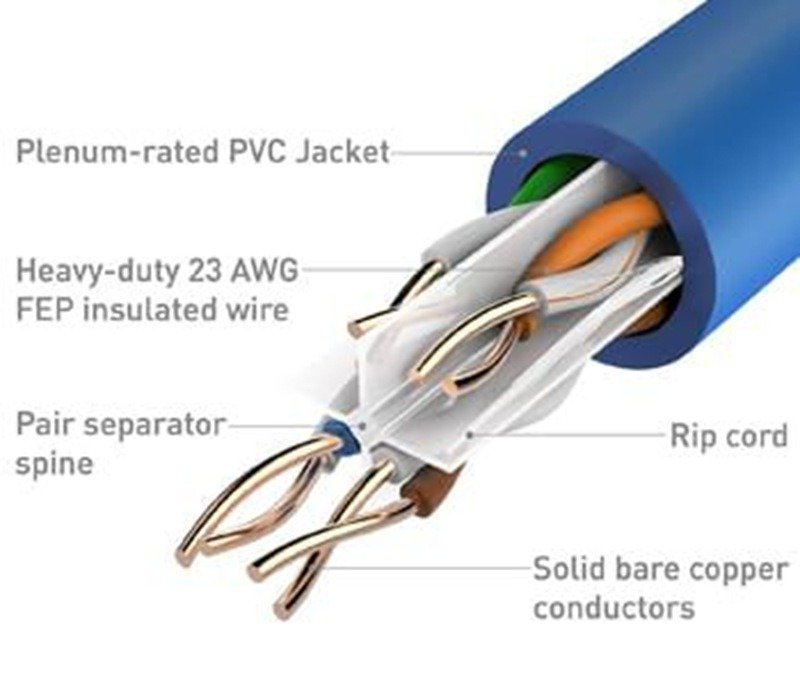
The defining characteristic of a plenum rated cable lies in its outer jacket material. Most plenum cables use fluoropolymer compounds, such as:
- FEP (Fluorinated Ethylene Propylene)
- PTFE (Polytetrafluoroethylene)
- Low-smoke zero-halogen (LSZH) variants, depending on region
These materials are engineered to:
- Resist ignition
- Self-extinguish when exposed to flame
- Emit minimal smoke density
- Avoid releasing toxic halogen gases (such as chlorine)
In contrast, standard PVC jackets can release dense, corrosive, and poisonous smoke, which is extremely dangerous in confined air circulation spaces.

From a cable engineering standpoint, achieving plenum compliance requires precise control over compound formulation, extrusion temperature, wall thickness, and surface integrity.
How Do Plenum Rated Cables Differ from Riser and General-Purpose Cables?
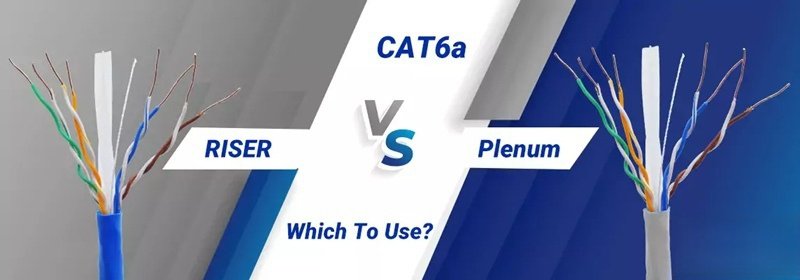
Plenum cables are often compared to riser (CMR) and general-purpose (CM/CMG) cables, but they serve fundamentally different roles.
| Cable Rating | Typical Use Area | Fire Behavior | Smoke Toxicity |
|---|---|---|---|
| CMP (Plenum) | Air-handling spaces | Self-extinguishing | Very low |
| CMR (Riser) | Vertical shafts | Flame-retardant | Moderate |
| CM / CMG | Open rooms | Minimal protection | High |
Using a riser or general-purpose cable in a plenum space may violate building codes, void insurance coverage, and create serious safety risks. Conversely, plenum cables can be used anywhere, making them a safer universal choice when regulations are unclear.
Which Standards and Certifications Define Plenum Rated Cables?
Plenum rated cables must pass stringent third-party fire tests, most notably:
- UL 910 / NFPA 262 (Steiner Tunnel Test)
- Flame spread index
- Smoke developed index
- Heat release measurements
Common markings include:
- CMP (Communications Plenum)
- CL3P / CL2P for power-limited circuits
- UL Listed and CSA Certified identifiers
For global projects, plenum-equivalent requirements may also intersect with:
- IEC fire performance standards
- EN 50575 (CPR) classifications in Europe
- LSZH specifications in medical or transportation sectors
A qualified cable manufacturer should always provide test reports, compliance certificates, and material declarations with each plenum cable design.
Why Do Plenum Rated Cables Matter for OEMs, Engineers, and Buyers?
Plenum cables are not just about code compliance—they affect system reliability, procurement risk, and long-term liability.
From an OEM or engineering perspective, choosing plenum rated cables:
- Reduces regulatory approval delays
- Simplifies multi-region installations
- Minimizes future retrofit costs
- Improves safety credibility with end customers
From a procurement standpoint, incorrect cable selection can result in costly rework, inspection failures, or rejected installations, especially in healthcare, data centers, and commercial real estate projects.
This is why experienced buyers often request detailed cable specifications, jacket material disclosure, and compliance documentation upfront—especially for custom cable assemblies.
When Should You Specify Custom Plenum Rated Cable Assemblies?
Standard off-the-shelf plenum cables may not meet complex system needs involving:
- Custom connector terminations
- Tight bend radius requirements
- EMI-shielded coax or multi-core designs
- Medical-grade or industrial environments
In these cases, custom plenum rated cable assemblies are the optimal solution. A capable manufacturer can engineer:
- CMP-rated coaxial or RF assemblies
- Plenum-safe medical cable harnesses
- Hybrid signal + power plenum cables
- Space-optimized, high-flex designs
How Is Plenum Rated Cable Constructed?
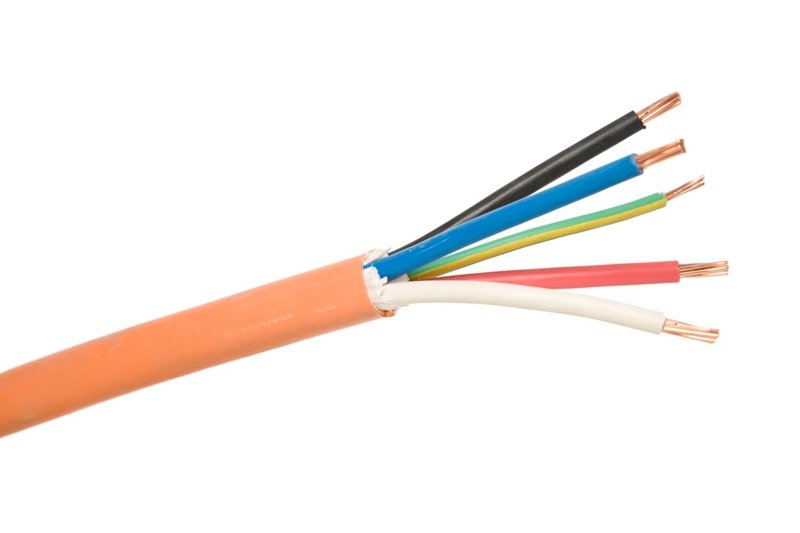
Plenum rated cables are constructed using low-smoke, fire-resistant insulation and jacket materials—most commonly fluoropolymers such as FEP or PTFE. These materials resist ignition, limit flame spread, and emit minimal toxic smoke. Internally, plenum cables often include tightly controlled conductor geometry, precision shielding, and specialized extrusion processes to meet stringent fire, electrical, and mechanical performance standards.
What Jacket Materials Are Used in Plenum Rated Cables?
The defining feature of a plenum cable is its jacket material. Unlike standard PVC, plenum cables typically use:
| Material | Key Properties | Typical Use |
|---|---|---|
| FEP (Fluorinated Ethylene Propylene) | Low smoke, high temperature, flexible | Data & RF cables |
| PTFE (Teflon) | Extreme heat resistance, chemical inertness | Medical & aerospace |
| LSZH Compounds | Low smoke, halogen-free | EU & green buildings |
These materials do not readily support combustion and produce significantly fewer toxic gases when exposed to flame.
How Are Conductors Selected for Plenum Cables?
Plenum rated cables use carefully selected conductors to balance electrical performance and fire safety:
- Solid or stranded bare copper for stable impedance
- Silver-plated copper for high-frequency RF and data
- Tinned copper for corrosion resistance
Conductor gauge (AWG), stranding, and concentricity are tightly controlled to maintain signal integrity while ensuring uniform jacket coverage during extrusion.
What Role Does Shielding Play in Plenum Rated Cable Construction?
Many plenum cables are also required to meet EMI/RFI shielding standards, especially in medical, RF, and data applications. Common shielding layers include:
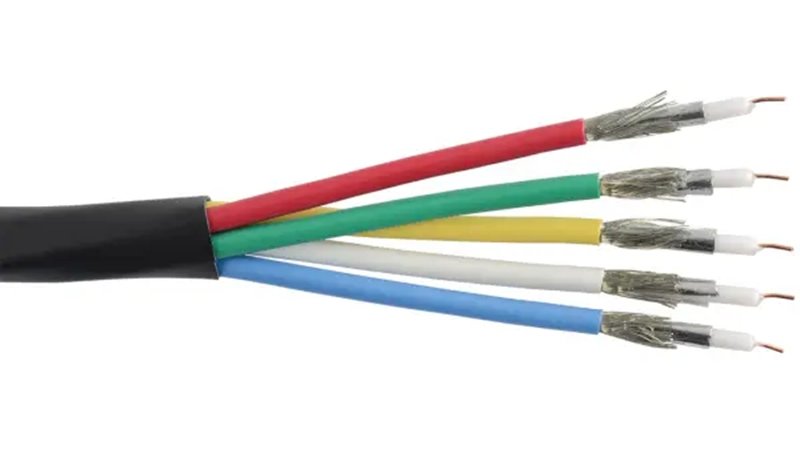
- Aluminum foil (100% coverage)
- Copper braid (85–95% optical coverage)
- Drain wires for grounding continuity
Shield materials must also comply with fire and smoke standards, which often limits material choices and increases engineering complexity.
How Does the Extrusion Process Differ from Standard Cable?
Plenum cable extrusion requires precise temperature control and slower line speeds. Fluoropolymers melt and flow differently than PVC, and improper processing can cause:
- Micro-cracks in the jacket
- Inconsistent wall thickness
- Reduced fire resistance
Experienced manufacturers use specialized extruders, vacuum sizing, and continuous laser diameter monitoring to maintain compliance.
What Tests Confirm a Cable Is Truly Plenum Rated?
Plenum cables must pass stringent fire and safety tests, including:
- UL 910 (Steiner Tunnel Test) – flame spread & smoke density
- FT-4 / IEC fire propagation tests
- Smoke toxicity & optical density measurements
- Electrical performance tests (impedance, attenuation, return loss)
Only cables that pass these tests can legally carry CMP or equivalent plenum markings.
What Is the Difference Between Plenum, Riser, and PVC Cables?
The difference between plenum, riser, and PVC cables lies in their fire safety ratings, jacket materials, smoke toxicity, and approved installation areas. Plenum cables (CMP) are designed for air-handling spaces and produce low smoke and low toxicity when burned. Riser cables (CMR) are intended for vertical shafts between floors. PVC (CM/CMG) cables are used in general spaces where fire-spread requirements are lower. Choosing the wrong type can violate building codes and increase fire risk.
Plenum Cable (CMP): Maximum Fire Safety for Air-Handling Spaces
Plenum-rated cables, typically marked CMP, are engineered for installation in plenum spaces—areas used for air circulation such as ceiling voids and HVAC return paths. These environments require the highest fire safety standard because smoke and toxic gases can spread rapidly throughout a building.
Plenum cables use fluoropolymer jackets (commonly FEP or low-smoke LSZH compounds). When exposed to flame, these materials:
- Produce minimal smoke
- Release significantly lower toxic gases
- Self-extinguish more effectively
From a regulatory standpoint, CMP cables must pass the UL 910 / NFPA 262 Steiner Tunnel Test, which strictly measures flame spread and smoke density. This makes plenum cables mandatory in many commercial buildings, hospitals, airports, and data centers.
The tradeoff is cost. Plenum cables are typically 30–60% more expensive than riser or PVC cables, but they dramatically reduce fire liability and code risk.
Riser Cable (CMR): Vertical Fire Containment Between Floors
Riser-rated cables, marked CMR, are designed for vertical runs between floors, such as elevator shafts or cable risers. Their primary purpose is to prevent fire from traveling upward through a building.
CMR cables:
- Use flame-retardant PVC or modified compounds
- Produce more smoke than plenum cables but far less than standard PVC
- Are tested under UL 1666 (Vertical Riser Flame Test)
Riser cables cannot be used in plenum spaces, but they are allowed in most wall cavities and floor-to-floor pathways. For many commercial buildings, CMR cables offer a cost-effective balance between safety and budget.
From an OEM and system-integration perspective, riser cables are often chosen when:
- Plenum spaces are avoided by design
- Cable trays are enclosed
- Fire codes permit vertical-only flame resistance
PVC / General-Purpose Cable (CM, CMG): Cost-Focused, Limited Use
PVC or general-purpose cables (CM, CMG) are intended for open, non-plenum, non-riser areas, such as:
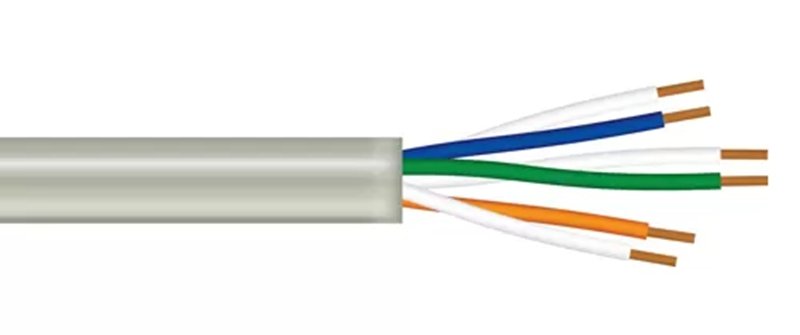
- Short horizontal runs
- Inside equipment enclosures
- Residential or light commercial spaces
These cables use standard PVC jackets, which:
- Burn more easily
- Produce dense, toxic smoke
- Are not suitable for air-handling or vertical shafts
While PVC cables are the most economical option, they come with strict placement limitations. Using CM cable where CMP or CMR is required can result in:
- Failed inspections
- Costly rework
- Legal and safety liabilities
For OEM products, PVC cables are common inside devices, but rarely acceptable for building infrastructure.
Quick Comparison Table
| Feature | Plenum (CMP) | Riser (CMR) | PVC / CM |
|---|---|---|---|
| Approved Area | Air-handling spaces | Vertical shafts | General spaces |
| Jacket Material | FEP / LSZH | Flame-retardant PVC | Standard PVC |
| Smoke Level | Very low | Medium | High |
| Toxicity | Very low | Moderate | High |
| Fire Test | UL 910 / NFPA 262 | UL 1666 | UL 1581 |
| Cost Level | High | Medium | Low |
| Typical Use | Hospitals, data centers | Commercial buildings | Residential, inside devices |
How Engineers and OEMs Should Choose
The “best” cable is not about performance alone—it’s about where the cable will live.
- Choose plenum cable if air circulation is involved or compliance risk is high
- Choose riser cable for vertical infrastructure where plenum is not required
- Choose PVC cable only when code allows and fire exposure is minimal
For OEMs and system designers, early collaboration with a cable manufacturer like Sino-conn ensures the correct rating, material selection, and documentation—before production and installation begin.
Where Are Plenum Rated Cables Required by Code?
Plenum rated cables are required by electrical and building codes when cables are installed in plenum air-handling spaces, such as areas above drop ceilings or below raised floors used for air circulation. In these spaces, fire safety regulations mandate plenum cables because they emit low smoke and low toxic gases when exposed to heat or fire. Using non-plenum cables in these environments can violate code, fail inspections, and create serious life-safety risks.
What Is a Plenum Space According to Building Codes?
A plenum space is defined as any part of a building designed to facilitate air movement for HVAC systems. According to the National Electrical Code (NEC Article 300 & 800) and many international standards, a plenum space typically includes:
- The area above suspended ceilings used as a return air path
- Raised floors in data centers where air is distributed
- Dedicated air plenums in commercial HVAC systems
Unlike enclosed conduits, these spaces allow air—and smoke—to move freely throughout a building. Because of this, materials installed in plenum spaces must minimize the spread of fire, smoke, and toxic fumes.
Why Do Codes Specifically Require Plenum Rated Cables?
Plenum rated cables (CMP) are engineered with fluoropolymer jackets (such as FEP or low-smoke LSZH compounds) that resist flame propagation and emit significantly less smoke and corrosive gas when burned.
Codes require plenum cables because:
- Smoke inhalation, not flames, is the leading cause of death in fires
- Toxic gases (e.g., halogens from PVC) spread rapidly through HVAC airflow
- Standard PVC cables can fail flame spread tests in plenum environments
As a result, NEC and equivalent standards strictly prohibit PVC or riser cables in plenum airspaces unless fully enclosed in metal conduit.
Common Locations Where Plenum Rated Cables Are Mandatory
Plenum rated cables are commonly required in:
- Commercial office buildings with drop ceilings
- Hospitals and medical facilities, especially patient care areas
- Data centers and server rooms with underfloor air distribution
- Airports, schools, shopping malls, and government buildings
- Laboratories and cleanrooms with controlled airflow systems
In residential buildings, plenum cable requirements are less common but may apply in multi-unit dwellings or high-rise structures with shared HVAC systems.
Plenum vs Conduit: Can You Avoid Using Plenum Cable?
In some cases, building codes allow non-plenum cables only if they are fully enclosed in metal conduit (EMT or rigid metal conduit). However, this approach has trade-offs:
- Higher installation cost and labor
- Reduced flexibility for future cable changes
- Limited airflow efficiency in tight spaces
For these reasons, many engineers and contractors choose plenum rated cables by default to simplify compliance and future-proof installations.
International Standards Beyond NEC
While NEC governs the U.S. market, similar requirements exist worldwide:
- UL CMP certification (North America)
- IEC / EN low smoke zero halogen (LSZH) requirements (EU)
- BS 7629 / EN 50267 (UK fire safety standards)
- Japan and Korea enforce strict low-toxicity cable rules in public buildings
For global OEMs and system integrators, selecting plenum-grade or LSZH-equivalent cables ensures cross-market compliance and smoother certification processes.
Inspection, Liability, and Long-Term Risk Considerations
Using the wrong cable type in a plenum space can result in:
- Failed electrical or fire inspections
- Costly re-installation and project delays
- Insurance liability issues
- Increased legal exposure in the event of a fire
From a risk-management standpoint, plenum rated cables are not just a compliance checkbox—they are a life-safety decision.
What Types of Plenum Rated Cables Are Commonly Used Today?
Plenum rated cables are available in many specialized types, each designed to meet both fire-safety regulations and specific signal or power transmission requirements. The most commonly used plenum cables today support data networking, audiovisual systems, building automation, security, and wireless communications. Understanding these cable categories helps engineers, contractors, and OEM buyers choose the right solution for performance, compliance, and long-term reliability.
Below is a professional, industry-oriented breakdown of the most widely used plenum rated cable types.
Plenum Rated Ethernet Cables (CMP Category Cables)
Plenum Ethernet cables are the most widely deployed plenum cables globally, especially in commercial buildings and data centers.
Common types include:
- Cat5e CMP – Entry-level structured cabling, still used for legacy systems
- Cat6 CMP – Standard for most enterprise networks
- Cat6A CMP – Supports 10G Ethernet up to 100 meters
- Cat7 / Cat8 CMP – High-frequency, shielded options for data centers
Key features:
- Low-smoke, low-toxicity FEP or LSZH jackets
- Tight twist ratios for EMI suppression
- Available in UTP, FTP, STP, and S/FTP constructions
- Fully compliant with UL CMP and NFPA 262
Typical applications include office LANs, PoE lighting systems, access control, and high-density server rooms.
Plenum Rated Coaxial Cables
Plenum coaxial cables are essential where RF or video signals must pass through air-handling spaces.
Common plenum coax types:
- RG-6 CMP – Cable TV, satellite, broadband
- RG-59 CMP – CCTV and legacy video
- RG-11 CMP – Long-distance, low-loss RF transmission
Technical characteristics:
- Solid or stranded copper center conductor
- Gas-injected foam dielectric
- Multi-layer shielding (foil + braid)
- FEP plenum jacket for flame resistance
These cables are widely used in DAS systems, security surveillance, broadcast infrastructure, and antenna feeds.
Plenum Rated Fiber Optic Cables
Fiber optic plenum cables are mandatory in many commercial buildings because fiber jackets can produce toxic smoke if non-plenum materials are used.
Common variants:
- Single-mode fiber CMP (OS2)
- Multimode fiber CMP (OM3 / OM4 / OM5)
Design features:
- All-dielectric construction (non-conductive)
- Aramid yarn strength members
- Tight-buffered or loose-tube designs
- Zero-halogen, flame-retardant jackets
Plenum fiber cables are standard in data centers, telecom rooms, backbone cabling, and high-speed building networks.
Plenum Rated Control and Automation Cables
Building automation systems often require low-voltage control cables routed through plenum spaces.
Common examples:
- Plenum HVAC control cables
- BMS and BAS communication cables
- Sensor and actuator wiring
Typical specifications:
- 18–24 AWG conductors
- Shielded or unshielded twisted pairs
- FEP or LSZH plenum jackets
- Rated for continuous low-voltage operation
These cables support smart buildings, energy management systems, and industrial automation within commercial facilities.
Plenum Rated Audio & Video Cables
Professional A/V installations in commercial spaces must also meet plenum fire codes.
Common types:
- Plenum HDMI cables
- Plenum speaker cables
- Plenum microphone and line-level audio cables
Design considerations:
- Low-capacitance conductors for signal integrity
- Shielding to reduce noise and interference
- CMP-rated jackets for code compliance
These are frequently used in conference rooms, auditoriums, airports, hospitals, and educational facilities.
Plenum Rated Hybrid & Custom Cables
Modern systems increasingly require hybrid plenum cables that combine power, data, and control lines in one jacket.
Examples include:
- Power + Ethernet (PoE hybrid cables)
- Fiber + copper composite cables
- Custom multi-core plenum harnesses
These solutions reduce installation complexity while maintaining full plenum compliance, making them ideal for OEM systems and integrated building technologies.
Quick Comparison of Common Plenum Cable Types
| Cable Type | Primary Use | Typical Industries |
|---|---|---|
| Ethernet CMP | Data networking | Offices, data centers |
| Coax CMP | RF / video | Security, broadcast |
| Fiber CMP | High-speed backbone | Telecom, IT |
| Control CMP | Automation | HVAC, BMS |
| A/V CMP | Audio & video | Commercial AV |
| Hybrid CMP | Integrated systems | Smart buildings |
How Do You Choose the Right Plenum Rated Cable for Your Project?
Choosing the right plenum rated cable is not just a matter of compliance—it directly affects fire safety, signal performance, installation reliability, and long-term maintenance costs. The correct selection depends on a combination of environmental conditions, regulatory requirements, electrical performance needs, and project economics.
1. Confirm Whether a Plenum Rating Is Legally Required
The first and most critical question is code compliance.
Plenum rated cables (CMP) are mandatory when cables are installed in:
- Air-handling spaces above suspended ceilings
- Raised floors used for HVAC air return
- Vertical or horizontal ducts that circulate air
In the U.S., this requirement comes from NEC Article 300.22(C). If the space is classified as a plenum, riser (CMR) or PVC (CM) cables are not permitted, regardless of cost savings.
2. Identify the Cable Application and Signal Type
Different applications require different cable constructions, even within plenum ratings.
Ask:
- Is this data, voice, video, control, or power?
- Is the signal high-speed digital, analog, or RF?
- What is the operating frequency or bandwidth?
Examples:
- Cat6A CMP for 10G Ethernet in offices or data centers
- Coax CMP (RG-6 / RG-59) for CCTV and broadcast systems
- Plenum fiber optic cable for long-distance, EMI-sensitive networks
- Plenum control cable for BMS, HVAC, and access control systems
Choosing the wrong category can lead to signal loss, interference, or early system failure.
3. Evaluate Fire Performance, Smoke, and Toxicity Requirements
Not all plenum cables are equal in fire behavior.
High-quality plenum rated cables should meet:
- UL 910 / NFPA 262 (Steiner Tunnel Test)
- Low flame spread
- Very low smoke density
- Minimal toxic gas release
For hospitals, airports, subways, and data centers, buyers often request:
- Enhanced low-smoke fluoropolymer jackets
- Zero-halogen or PFAS-controlled materials (where regulations apply)
If life-safety risk is high, prioritize fire performance over cost.
4. Consider Mechanical and Environmental Conditions
Plenum spaces are often tight, crowded, and difficult to access. The cable must withstand real-world installation stress.
Key mechanical factors:
- Outer diameter (OD) – affects conduit fill and bend routing
- Minimum bend radius – critical for fiber and high-frequency cables
- Flexibility – important for retrofits and dense ceiling spaces
- Abrasion resistance – against metal trays and sharp edges
Environmental factors:
- Temperature range
- Exposure to air flow, dust, or vibration
- Long-term aging and jacket cracking resistance
A slightly more expensive cable can reduce installation time and future rework.
5. Match Connector and Termination Compatibility
Plenum cable selection should always consider how the cable will be terminated.
Check:
- Connector type (RJ45, LC, SC, SMA, BNC, custom medical or industrial connectors)
- Shielding continuity requirements
- Drain wire and grounding design
- Field termination vs factory-terminated assemblies
For complex systems, pre-terminated plenum cable assemblies reduce installation errors and improve consistency.
6. Balance Cost Against Lifecycle Value
Plenum rated cables are typically 30–70% more expensive than riser or PVC cables. However, cost should be evaluated over the entire project lifecycle, not just material price.
Hidden cost considerations:
- Re-installation if non-compliant cable is rejected
- Fire inspection failures and delays
- Higher smoke damage risk in emergencies
- Maintenance and signal troubleshooting
For OEMs, integrators, and large projects, working with a manufacturer that offers multiple plenum material options allows smart cost optimization without sacrificing compliance.

Conclusion
Choosing a plenum rated cable is never just a checkbox for code compliance — it’s a long-term decision about safety, performance, liability, and supply stability. For OEMs, system integrators, and engineering teams, the real challenge isn’t understanding what plenum rated cable is, but finding a partner who can translate building codes, fire standards, and electrical requirements into a manufacturable, reliable cable solution.
Whether you are upgrading a data center backbone, designing smart building infrastructure, or sourcing plenum rated cable assemblies for OEM equipment, the right supplier reduces risk before it becomes a problem.
Send us your drawing, photo, or performance requirement today.
Sino-conn will turn compliance requirements into a cable assembly you can trust — safely, quickly, and cost-effectively.