Skip to content
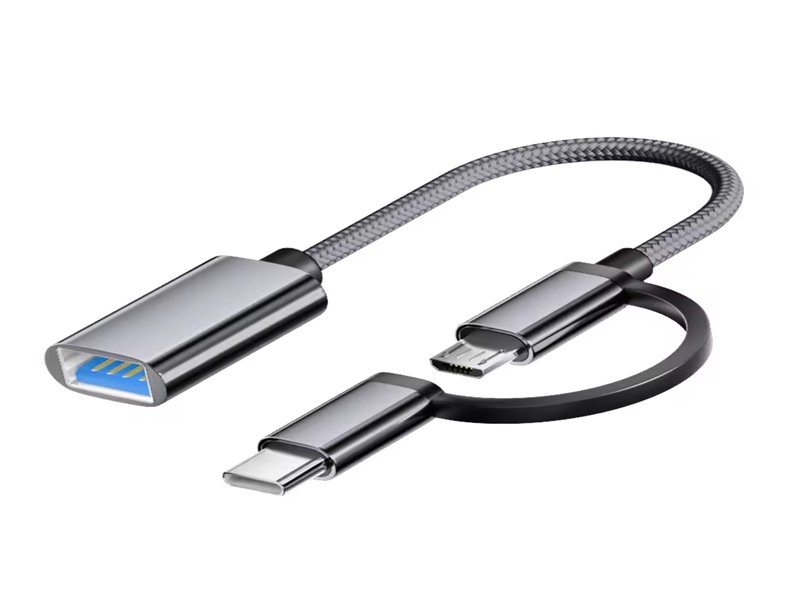
When you connect a smartphone to a USB drive or keyboard without a computer, that seamless interaction is made possible by a small yet powerful accessory — the OTG (On-The-Go) cable. In a world where mobile devices are becoming mini workstations, understanding OTG cables is more than a hobbyist curiosity; it’s vital knowledge for engineers, OEM buyers, and product designers shaping the next generation of connected devices.
An OTG (On-The-Go) cable allows a device like a smartphone, tablet, or embedded system to act as a host, enabling direct communication with USB peripherals such as flash drives, cameras, keyboards, or Ethernet adapters — without requiring a PC or hub.
This compact connector revolutionized mobile usability and has quietly become an essential part of industrial, automotive, and consumer product ecosystems. Imagine a medical tablet reading data directly from a diagnostic sensor, or a factory handheld connecting to controllers — all through a single OTG cable. Let’s explore how it works, its types, and why Sino-conn is one of the trusted partners globally for custom OTG cable assemblies that power real-world applications.
What Is an OTG Cable?
An OTG cable, short for “On-The-Go,” is a special USB cable that enables a device like a smartphone or embedded controller to act as a USB host, allowing direct connection to other peripherals such as flash drives, keyboards, or cameras.
What Does “OTG” Mean in USB?
OTG stands for USB On-The-Go, an extension of the USB 2.0 specification designed to give mobile devices host capabilities. Instead of always being the “slave” (like a phone connecting to a computer), an OTG-enabled device can switch roles and become the “host,” controlling another device.
What Is an OTG Cable Used For?
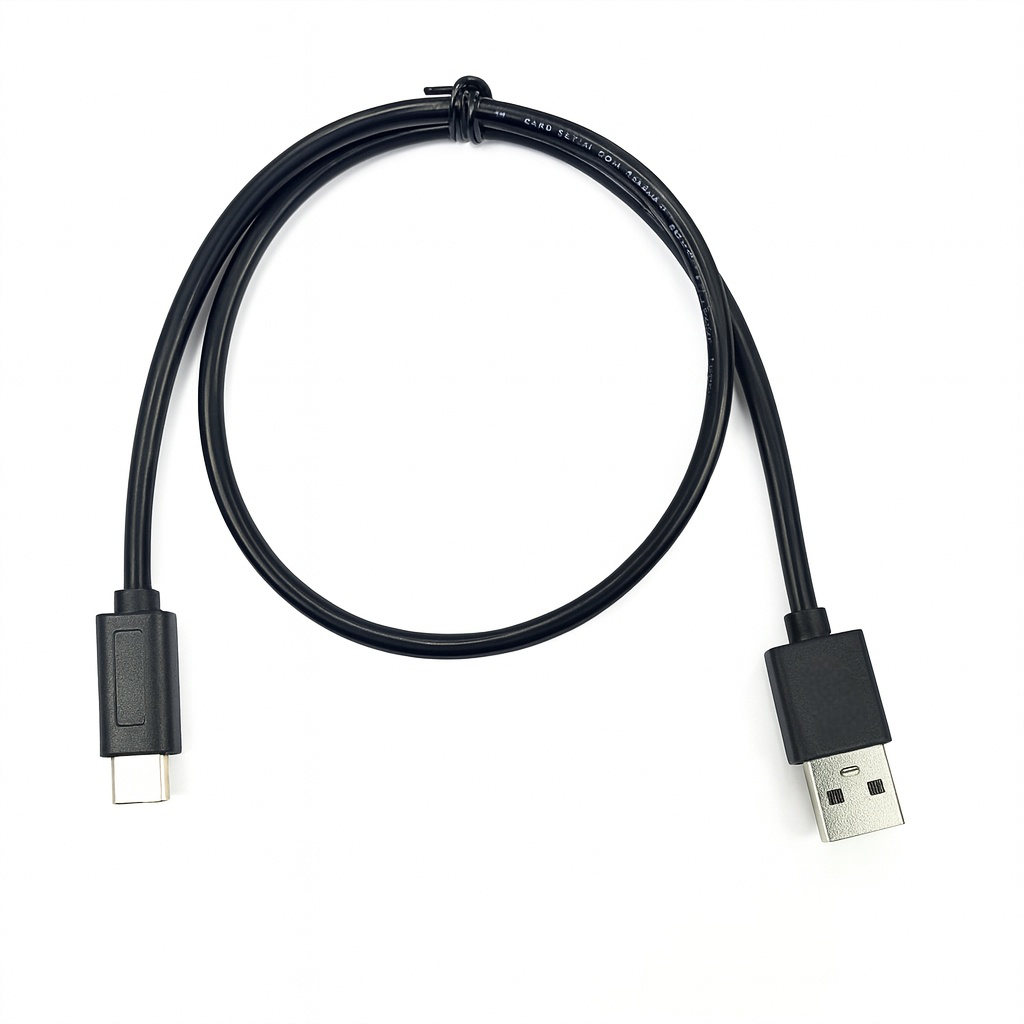
Typical uses include connecting USB drives, card readers, cameras, MIDI controllers, printers, or Ethernet adapters directly to mobile devices. In industrial contexts, OTG cables link handheld controllers, diagnostic tools, and sensors.
What Are the Main Functions of an OTG Cable?
OTG cables handle data transfer, peripheral control, and limited power delivery, depending on the device’s configuration and connector type (Micro-USB or USB-C).
What Devices Support USB OTG?
Most modern Android phones, tablets, Raspberry Pi boards, embedded devices, and IoT systems support OTG. Apple iOS uses proprietary alternatives like Lightning-to-USB adapters.
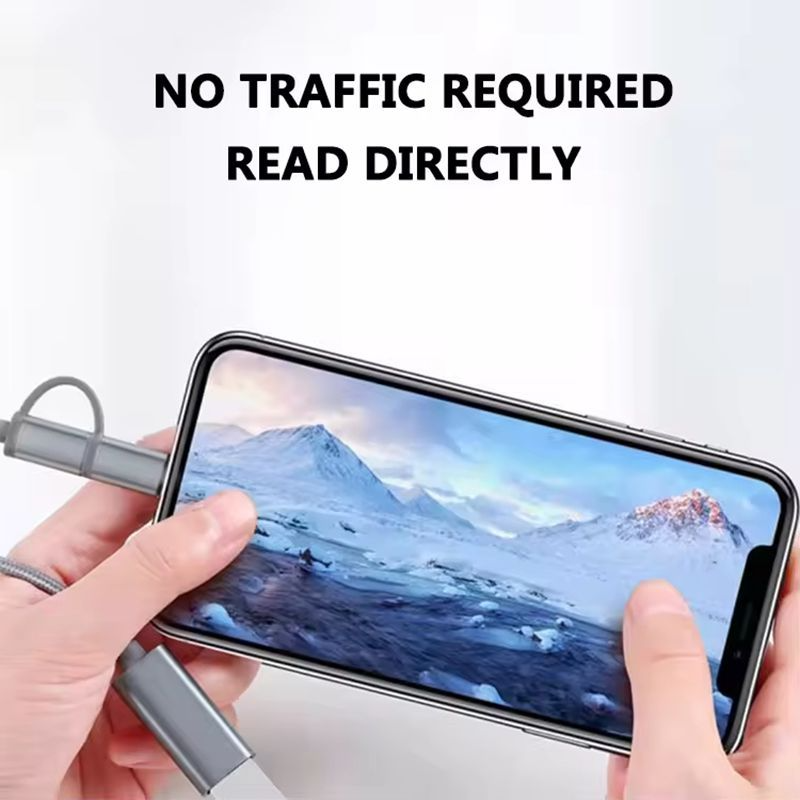
OTG was introduced in the early 2000s, bridging the gap between mobile flexibility and desktop connectivity. The genius of OTG lies in its dual-role capability: devices can seamlessly alternate between “host” and “device” modes.
For engineers, the OTG standard simplifies design — a single port can now serve both charging and communication purposes. For OEM buyers, it reduces part count and cost.
In consumer electronics, this translates to convenience — users can back up data, connect gaming controllers, or operate cameras without a PC. In industrial and medical settings, OTG cables support on-site diagnostics and firmware updates, crucial in environments without network access.
How Does an OTG Cable Work?
An OTG (On-The-Go) cable works by altering the normal relationship between two USB-connected devices. In a standard USB setup, one device always acts as the host (like a computer), and the other as a peripheral (like a flash drive or camera). OTG technology makes it possible for a smartphone, tablet, or embedded system to become the host temporarily — giving it the ability to control, power, and exchange data with another USB device directly, without a PC or hub in between.

How Does It Enable Host and Peripheral Switching?
The key to OTG’s functionality lies in a small but critical design detail — the “ID pin.”
In a Micro-USB OTG connector, there are five pins instead of the typical four. The fifth pin (ID) determines which device takes the host role:
- If the ID pin is grounded, the connected device becomes the host.
- If the ID pin is floating, the connected device remains a peripheral.
When an OTG cable is plugged in, this simple electrical signal triggers the smartphone or tablet’s USB controller to enter host mode. Once in host mode, it can supply 5 volts of power to the connected peripheral and manage data communication — similar to how a laptop controls a mouse or USB drive.
In USB-C OTG cables, the ID function is replaced by Configuration Channel (CC) pins, which negotiate roles automatically. This makes USB-C more versatile and reversible, supporting both data and power delivery dynamically.
What Is the Difference Between an OTG Cable and a USB Cable?
While they look similar, the internal wiring of an OTG cable is different from a regular USB cable.
A standard USB cable connects a device (phone, camera) to a computer, which always acts as the host. The cable itself does not decide roles — the PC does.
An OTG cable, however, includes the ID pin configuration that instructs one device to become the host, even if it’s normally a client device.
This role reversal is what enables a phone to read from a flash drive, or a tablet to control a camera — something a normal USB cable can’t do.
Here’s a quick comparison:
| Feature | Standard USB Cable | OTG Cable |
|---|---|---|
| Host Device | Always the PC | Can be the phone/tablet |
| ID Pin | Not used | Determines host/peripheral role |
| Power Direction | Host → Peripheral only | Bidirectional (varies by mode) |
| Use Case | Charging, PC data sync | Direct connection to peripherals |
How Do I Use OTG on My Phone?
Using OTG is straightforward — no special configuration is needed on most modern Android devices.
- Plug the OTG cable into your smartphone’s charging port (Micro-USB or USB-C).
- Connect a USB device — such as a flash drive, keyboard, or game controller — to the other end.
- Your phone will automatically recognize and mount the device, allowing data transfer or control within seconds.
For instance, photographers can transfer images directly from a camera, while technicians can connect diagnostic USB tools on-site without a computer.
Some Android settings include a manual toggle for “OTG Storage” or “USB Accessories.” It’s recommended to enable this option to maintain a stable connection.
How to Test If Your Device Supports OTG?
There are two ways to confirm OTG support:
- Software check: Install an “OTG Checker” app from Google Play, which scans your system configuration and reports compatibility.
- Practical test: Connect an OTG adapter and a USB drive — if the device mounts automatically, OTG is supported.
Most modern Android phones (since version 4.0) include OTG by default. For embedded systems or development boards, such as Raspberry Pi, support depends on the controller chip and kernel settings.
In some industrial applications, custom firmware or hardware configuration is required to activate host mode, especially in devices with limited power output. In such cases, engineers often design OTG cables with external power injection to ensure stable operation.
The Engineering Behind OTG Communication

When an OTG cable connects two devices, the following steps occur:
- Detection — The ID pin or CC pin signals role negotiation.
- Enumeration — The host queries the connected device to identify it (e.g., “flash drive,” “keyboard”).
- Power Supply — The host provides 5V (typically up to 500 mA in USB 2.0 mode).
- Data Exchange — Data packets flow through the D+ and D– lines under standard USB protocol.
- Termination — Upon disconnection, roles reset and the smartphone returns to peripheral mode.
This seamless role management makes OTG ideal for compact and mobile systems, where space and interface ports are limited.
However, engineers designing with OTG must consider:
- Power stability: Some peripherals need more power than a phone can supply.
- Signal integrity: Shorter, shielded cables reduce EMI interference.
- Firmware compatibility: The device’s software must include OTG driver support.
Practical Applications
OTG cables are widely used across industries:
- Consumer electronics: connecting flash drives, controllers, DACs.
- Medical devices: linking diagnostic sensors to tablets.
- Industrial automation: updating firmware on-site.
- Education & development: programming microcontrollers via mobile devices.
In each case, OTG enables direct device-to-device communication without the overhead of a computer, simplifying workflows and improving field flexibility.
Summary
An OTG cable works by enabling one USB device — typically a smartphone or embedded system — to act as a host, controlling another peripheral directly.
Through its special ID pin or configuration logic, it manages power, role switching, and data exchange seamlessly. This compact technology bridges mobile and industrial connectivity, making it one of the most practical innovations in modern electronics.
Which Types of OTG Cables Are Commonly Used?
Common OTG cables include Micro-USB OTG, USB-C OTG, and USB 2.0/3.0 variations, differing mainly in data rate, connector shape, and supported power delivery.
Micro USB OTG vs USB-C OTG

Micro USB OTG is common in older phones and small devices, supporting up to 480 Mbps. USB-C OTG supports faster transfer (up to 10 Gbps) and reversible connection.
USB 2.0 vs USB 3.0 OTG Cable Specifications
| Type | Data Speed | Connector | Typical Application |
|---|---|---|---|
| USB 2.0 OTG | 480 Mbps | Micro-B or USB-C | Smartphones, tablets |
| USB 3.0 OTG | 5–10 Gbps | USB-C | Laptops, cameras, industrial tools |
What Connector Types and Pinouts Are Used in OTG?
Standard OTG cables include five pins: Vbus, D+, D−, ID, and GND. The ID pin determines host/peripheral mode. In USB-C, this logic is handled by configuration channels (CC1, CC2).
OTG cables come in various builds: straight, angled, overmolded, or braided. Engineers often need to consider bending radius, EMI shielding, and outer jacket material (PVC, TPU, TPE, silicone) depending on environment.
USB-C OTG is fast becoming the industry default due to its high durability (10,000+ insertions) and ability to handle up to 100W power delivery in advanced designs.
Sino-conn’s engineers frequently assist clients in transitioning legacy Micro-USB designs to USB-C OTG without redesigning entire PCBs — offering adapter solutions and custom pin mapping to maintain backward compatibility.
Why Do Engineers and OEMs Use Custom OTG Cable Assemblies?
Custom OTG cables ensure compatibility, reliability, and flexibility for OEM applications. They allow engineers to tailor length, materials, shielding, and pinouts to exact product requirements.
How Can Custom OTG Cables Improve Data Stability and EMI Performance?
Using double-shielded wire and controlled impedance ensures clean signal integrity, especially in industrial or automotive environments prone to noise.
What Materials, Shielding, and Flexibility Options Matter Most?
Key parameters include OD (outer diameter), AWG (wire gauge), EMI shielding, and bending radius. Sino-conn offers PVC, TPE, or TPU jackets depending on application.
How Does Sino-conn Provide Design Support and Drawings?
Clients receive 3D CAD drawings and spec sheets within 24–72 hours. Every design is verified through pre-production samples before mass manufacturing.
For product developers, one-size-fits-all cables rarely meet technical needs. OEM engineers often face constraints like limited space, mechanical strain, or temperature variations. Custom OTG assemblies from Sino-conn let you specify every detail — connector orientation, pin mapping, color coding, and labeling.
With UL, RoHS, and REACH compliance, Sino-conn ensures cables meet international safety and environmental standards. For noise-sensitive environments, options include foil + braid dual shielding, ferrite cores, and twisted-pair conductors.
Lead time is another advantage — Sino-conn typically delivers samples within 3 days and bulk orders within 2–3 weeks, even for urgent schedules.
How to Choose the Right OTG Cable for Your Project?
To select the right OTG cable, evaluate your device’s connector type, voltage/current needs, shielding, flexibility, and certifications for safety and compliance.
What Specifications Should You Check (Voltage, Current, OD, Flexibility)?
Ensure the cable supports your required data rate and current draw. Typical OTG cables handle 5V and 1–2A; industrial versions may support higher.
Do Certifications Like UL, RoHS, and REACH Matter?
Absolutely. These certifications verify material safety, electrical compliance, and environmental responsibility — especially for export products.
How to Balance Price, Lead Time, and Quality?
Choose a manufacturer offering both premium and economical solutions. Sino-conn provides multiple component sourcing options (original or compatible) to meet budget and timeline.
Engineers often weigh spec performance vs. cost-efficiency. In many projects, the cable is the last thing considered — yet poor-quality cables can cause unstable communication or EMC failures.
Sino-conn’s approach: transparency. Clients receive spec sheets covering impedance, EMI, tensile strength, and flexibility. Testing includes 3x full inspection (in-process, final, pre-shipment) ensuring 100% pass rate.
How Does Sino-conn Manufacture and Customize OTG Cable Assemblies?
Designing and producing an OTG (On-The-Go) cable assembly involves far more than attaching connectors to wire. For engineering-driven applications, every specification — from conductor gauge to connector sourcing — affects the final product’s reliability and performance. Sino-conn approaches OTG cable manufacturing as a technical collaboration rather than a simple production process. Each project begins with a clear understanding of the customer’s requirements and ends with a fully verified, application-ready solution.

1. Design Consultation and Technical Evaluation
The process typically starts when a client provides either a reference sample, drawing, or simply a photo of the desired cable. Many customers — especially distributors or OEMs — may not have full technical details available. In such cases, Sino-conn’s engineers assist by analyzing the design intent, matching compatible connectors, and defining essential parameters such as:
- Wire gauge (AWG) and outer diameter (OD)
- Required current and voltage rating
- Data transfer category (USB 2.0 / USB 3.0 / USB-C)
- Shielding and grounding requirements for EMI/ESD control
- Material and flexibility preferences (PVC, TPE, TPU, silicone)
- Environmental resistance (temperature, oil, UV, corrosion)
Once these factors are reviewed, the engineering team prepares a CAD drawing and technical datasheet, usually within 24 to 72 hours. This ensures both parties align on pin definition, connector orientation, and mechanical structure before sample production.
2. Prototype and Sample Fabrication
After design approval, Sino-conn produces functional prototypes or samples.
Prototyping serves multiple purposes — validating electrical continuity, mechanical durability, and compatibility with the client’s equipment. For urgent development needs, sample fabrication can be completed in as little as 2–3 days.
During this phase, several tests are conducted:
| Test Type | Objective | Method |
|---|---|---|
| Continuity Test | Verify signal and power line connectivity | Automated cable tester |
| Pin-to-Pin Verification | Ensure correct wiring and polarity | Cross-check against drawing |
| Flex Test | Evaluate bending and strain endurance | Dynamic bending machine |
| Hi-Pot (High Potential) Test | Confirm insulation integrity | Controlled voltage stress |
| Visual Inspection | Detect assembly defects | 100% manual verification |
Feedback from the prototype stage is often used to refine connector design or shielding arrangement before mass production.
3. Connector Sourcing and Component Management
Sino-conn supports both original-brand connectors and equivalent-grade replacements, depending on customer budget and supply chain conditions.
- Original connectors (e.g., from Molex, Amphenol, JST) are preferred when product certification or strict OEM compatibility is required.
- Equivalent alternatives provide cost efficiency and faster lead times for volume orders.
All components are inspected for pin integrity, plating thickness, and dimensional tolerance before assembly. Maintaining compatibility between the connector and the cable’s electrical characteristics is crucial for signal integrity and mechanical stability, particularly in high-speed USB 3.0 OTG applications.
4. Cable Assembly and Overmolding
Production follows a structured process:
- Wire Cutting and Stripping – Precise automatic machines cut and strip to tolerance.
- Crimping and Tin Plating – Each conductor is crimped or soldered according to terminal type.
- Connector Insertion – Components are assembled using mechanical jigs to ensure alignment.
- Overmolding or Injection – The junction between wire and connector is sealed using customized molds for strain relief and durability.
- Labeling and Identification – Optional part numbers, logos, or QR codes can be printed for traceability.
In cases where cables require additional shielding, foil and braided layers are applied to minimize electromagnetic interference. For rugged environments, TPU or silicone jackets are selected for enhanced resistance to bending, heat, and chemical exposure.
5. Quality Control and Reliability Testing
Every cable assembly undergoes three stages of inspection:
| Stage | Focus | Description |
|---|---|---|
| In-Process Inspection | Assembly accuracy | Monitored during crimping and soldering |
| Final Electrical Test | Functionality | 100% test for continuity, short, open, miswire |
| Pre-Shipment Audit | Mechanical integrity | Visual and mechanical stress check |
In addition, random samples from each batch are subjected to tensile strength, flex life, and temperature cycle testing.
This multi-step QC process ensures that cables perform consistently across multiple usage cycles, a critical factor for industrial and OEM clients who require long-term reliability.
6. Certifications and Compliance
All OTG cable assemblies are built using UL-certified wires and RoHS/REACH-compliant materials. For applications involving sensitive data or specific markets, additional documentation such as COC (Certificate of Conformance), COO (Certificate of Origin), and PFAS declarations can be provided.
Such certifications not only confirm product safety but also simplify import/export clearance for clients operating across regions like North America, Europe, and Japan.
7. Production Scalability and Lead Time
Sino-conn’s manufacturing setup is designed for flexibility. There is no minimum order quantity (MOQ) — allowing early-stage engineers to prototype quickly before committing to full production.
- Sample Lead Time: 2–3 days (urgent) or within 1 week (standard)
- Mass Production Lead Time: 3–4 weeks (standard), 2 weeks (expedited)
Production schedules are closely monitored using ERP systems to ensure traceability and consistent delivery performance.
8. Packaging and Documentation
Each shipment includes clear documentation — technical drawings, inspection records, and labeling details.
Cables are typically packaged in anti-static bags or coiled bundles, ensuring connectors remain protected during transport. While packaging design is simple, the emphasis is always on functional protection and ease of integration into the customer’s assembly line.
9. Continuous Feedback and Engineering Support
Even after delivery, Sino-conn maintains open communication with clients. Engineers are available to review performance data, suggest improvements, and adapt future versions of the product as requirements evolve.
This iterative process helps refine cable performance over time — optimizing aspects like EMI suppression, flexibility, or connector geometry.
Manufacturing and customizing OTG cable assemblies require a blend of engineering precision and production discipline. From defining electrical parameters to verifying mechanical endurance, every step influences reliability in the field.
Sino-conn’s workflow demonstrates how structured collaboration — fast design feedback, careful component sourcing, and thorough testing — ensures that each OTG cable performs as intended in both consumer and industrial environments.
By focusing on process integrity rather than marketing claims, the company delivers solutions that align closely with engineers’ expectations for consistency, safety, and application-specific performance.
FAQ About OTG Cables
Common OTG questions include compatibility, usage, and safety in various devices and environments.
How Do I Know If My Phone Is OTG Compatible?
Most Android phones since Android 4.0 support OTG. Check your manual or use an OTG checker app.
Can OTG Cable Charge and Transfer Data Simultaneously?
Some advanced OTG cables (with Y-split design) allow both, though power priority depends on the device.
Is OTG Safe for Long-Term Use in Industrial Devices?
Yes — if using certified, shielded cables designed for continuous operation like Sino-conn’s industrial-grade OTG assemblies.
Using uncertified or poorly shielded OTG cables may cause overheating or unstable connections. For industrial devices, Sino-conn’s OTG solutions include temperature-resistant jackets, anti-corrosion coatings, and reinforced strain reliefs for long-term durability.
Conclusion
OTG technology has evolved from a smartphone convenience into an engineering enabler — powering everything from portable diagnostic tools to IoT gateways. Whether you’re designing a new product or solving EMI challenges in existing systems, the right OTG cable makes the difference.
Sino-conn offers:
- Custom cable design (drawings within 24–72 hrs)
- Fast sampling (2–3 days)
- Flexible sourcing (original or equivalent)
- UL/RoHS/REACH certification
- 100% full inspection and no MOQ
If you need reliable, custom USB OTG cable assemblies for your next project — contact Sino-conn today to discuss your specifications and get an expert solution tailored to your needs.