Skip to content
For many people, the transition from traditional television to digital TV felt almost invisible. The screen became clearer, channels increased, and sound quality improved—but the cables behind the scenes often looked exactly the same. This leads to a surprisingly common and reasonable question from engineers, buyers, and even experienced procurement teams: what is a DTV cable, and is it really different from a normal TV cable?
On the surface, a DTV cable may appear identical to the coaxial cable that has been used for decades. Yet behind that familiar appearance lies a shift in signal technology that places much higher demands on cable structure, impedance stability, shielding performance, and manufacturing consistency. In real-world projects, misunderstanding this difference has caused signal loss, unstable reception, unnecessary troubleshooting, and costly redesigns—especially in OEM, industrial, and embedded TV systems.
A DTV cable is a cable designed to transmit digital television (DTV) signals, typically using a 75-ohm coaxial structure. While it may look similar to traditional TV cables, a DTV cable must meet stricter requirements for impedance control, shielding, and signal integrity to support digital broadcasting. Its performance depends not only on the cable itself, but also on connectors, length, and assembly quality.
In the sections below, we’ll break down what a DTV cable really is, how it works, how it differs from traditional TV cables, and how to choose or customize the right solution for your application—whether you’re building consumer electronics, industrial displays, or embedded TV systems.
What Is a DTV Cable?
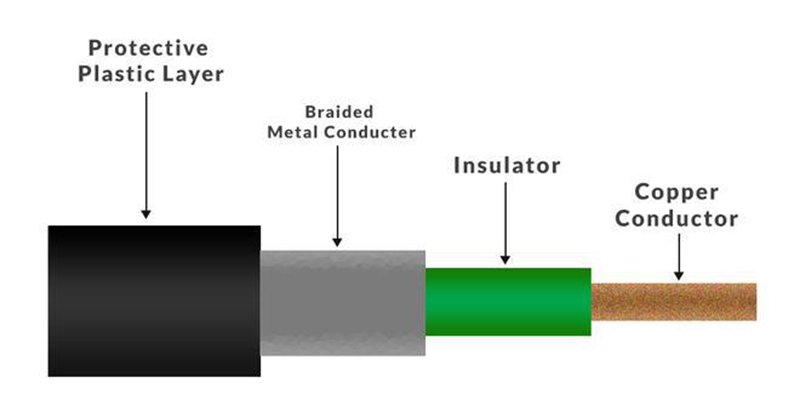
A DTV cable is a cable used to transmit digital television signals from a source—such as an antenna, tuner, or set-top box—to a TV or internal TV module. In most cases, it is a 75-ohm coaxial cable, engineered to maintain stable impedance and shielding performance required for digital signal transmission
What does DTV cable mean in digital television systems?
DTV stands for Digital Television, a broadcasting system that transmits video and audio as digital data rather than analog waveforms. A DTV cable is part of this signal chain, responsible for delivering RF (radio frequency) digital signals with minimal loss and distortion.
Unlike analog systems, where gradual signal degradation might still produce a viewable image, digital signals behave differently. When signal quality drops below a certain threshold, the result is not a fuzzy picture—but freezing, pixelation, or complete signal loss. This makes the cable’s electrical characteristics far more critical.
Is a DTV cable the same as a coaxial cable?
In most applications, yes—a DTV cable is a coaxial cable, but not all coaxial cables are suitable for DTV. The key requirement is 75-ohm impedance, along with consistent shielding and low attenuation. Coaxial cables designed for other impedances or low-frequency use may physically fit but perform poorly in digital TV systems.
Why did DTV cables become necessary with digital broadcasting?
The shift from analog to digital broadcasting increased sensitivity to noise, reflection, and impedance mismatch. As a result, DTV systems require cables that can preserve signal integrity across longer distances and complex installations. The “good enough” cables used in analog TV systems often fail to meet these demands.
How Does a DTV Cable Work?

A DTV cable works by transmitting digital RF signals along a coaxial structure that maintains controlled impedance and shielding, ensuring that digital data reaches the receiver without excessive loss or interference.
How does a DTV cable transmit digital TV signals?
A DTV cable carries high-frequency RF signals that encode digital data. The coaxial structure—center conductor, dielectric, shield, and jacket—ensures that the signal travels in a controlled electromagnetic field, minimizing external interference and internal signal reflection.
How is digital transmission different from analog TV signals?
Analog TV signals degrade gradually, while digital signals have a defined performance threshold. Once noise or loss exceeds that threshold, the signal collapses. This makes cable consistency, shielding quality, and connector integrity far more important for DTV.
Why does DTV require higher signal integrity?

Digital modulation schemes pack more information into the signal. Any impedance mismatch, poor shielding, or connector defect can introduce errors that the receiver cannot correct, resulting in unstable reception or complete failure.
Which Types of DTV Cables Are Commonly Used?
Most DTV systems use 75-ohm coaxial cables, with different constructions selected based on installation environment, length, and mechanical requirements.
Which coaxial cable types are used for DTV?
Common types include RG-6 and RG-59-style constructions, chosen based on attenuation requirements and flexibility. Thicker cables typically offer lower loss over long distances, while thinner cables suit compact or internal installations.
Which connectors are used on DTV cables?
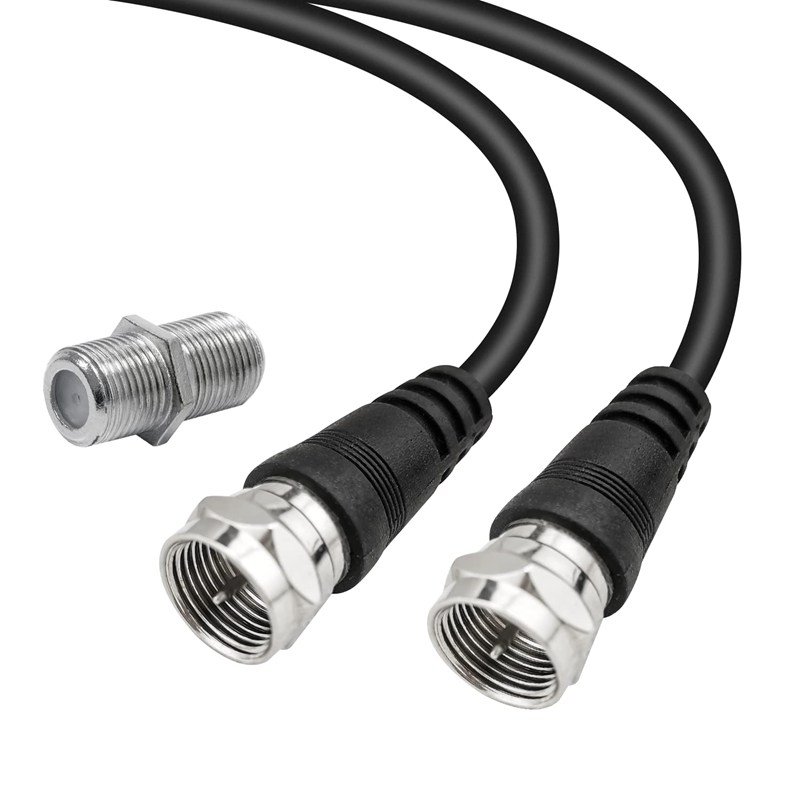
DTV cables commonly use F-type, IEC, or customized RF connectors, depending on regional standards and device design. Connector quality is critical, as poor termination often causes more signal issues than the cable itself.
Are DTV cables different for indoor and outdoor use?
Yes. Outdoor DTV cables require UV-resistant jackets, moisture protection, and sometimes additional shielding. Indoor cables prioritize flexibility and ease of routing.
Table 1: Common DTV Cable Types
| Cable Type | Typical Use | Signal Loss | Flexibility |
|---|---|---|---|
| RG-6 type | Long runs | Low | Medium |
| RG-59 type | Short runs | Medium | High |
| Micro-coax | Internal routing | Low | Very High |
What Is the Difference Between DTV Cable and Other TV Cables?
The difference between a DTV cable and other TV cables is not appearance, but signal type, performance tolerance, and design margin.
DTV cables are engineered for digital RF transmission, which requires tighter impedance control, stronger shielding, and more consistent assembly quality than traditional TV cables designed for analog signals.
Although many TV-related cables look similar, they are not functionally equivalent in real-world digital television systems.
What’s the difference between TV and DTV?
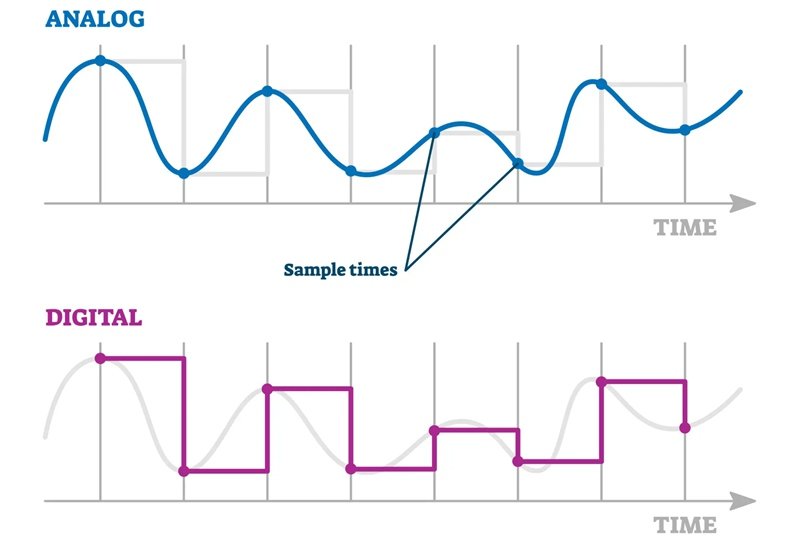
Traditional TV systems were based on analog broadcasting, where signals degraded gradually. Picture quality could worsen, but content often remained visible.
Digital TV (DTV), however, transmits compressed digital data, which behaves very differently.
Digital signals operate with a clear performance threshold:
- Above the threshold → stable image and sound
- Below the threshold → pixelation, freezing, or total signal loss
This makes cable quality far more critical in DTV systems than it ever was in analog TV systems.
Table : TV vs DTV Signal Characteristics
| Item | Traditional TV (Analog) | DTV (Digital Television) |
|---|---|---|
| Signal type | Analog RF waveform | Digital RF data |
| Degradation behavior | Gradual quality loss | Sudden failure |
| Noise tolerance | Relatively high | Low |
| Cable quality sensitivity | Moderate | High |
| Impact of impedance mismatch | Often tolerable | Often critical |
Analog TV cable vs DTV cable
Analog TV cables were often more forgiving. Even with imperfect impedance or weaker shielding, the system could still function.
DTV cables must meet stricter electrical and mechanical requirements, including:
- Stable 75-ohm impedance along the entire signal path
- Effective shielding against EMI and external noise
- Reliable connector termination to avoid reflections
A cable that “worked fine before” in analog systems may become a source of failure in a DTV application, especially over longer distances or in noisy environments.
Table : Analog TV Cable vs DTV Cable Requirements
| Parameter | Analog TV Cable | DTV Cable |
|---|---|---|
| Typical impedance control | Loose | Tight (75Ω) |
| Shielding requirement | Basic | Enhanced |
| Sensitivity to connectors | Low | High |
| Signal margin | Large | Limited |
| Typical failure symptom | Poor image | No signal / freezing |
DTV cable vs antenna cable: are they the same?
In everyday language, DTV cable and antenna cable are often used interchangeably.
Technically, both usually refer to 75-ohm coaxial cables, but the design intent and quality margin can be very different.
An antenna cable used casually in a home environment may not be optimized for:
- Long cable runs
- Industrial EMI conditions
- Mechanical stress or repeated bending
In contrast, DTV cables specified for OEM or embedded systems are selected based on known parameters such as attenuation, shielding effectiveness, outer diameter, and durability.
The structure may look similar, but the performance expectations are not.
DTV cable vs HDMI: completely different roles
A DTV cable and an HDMI cable serve entirely different functions in a TV system.
- DTV cable: carries broadcast RF signals into a tuner
- HDMI cable: carries processed digital audio/video between devices
They are not interchangeable and are often used together in the same system, each handling a different stage of signal transmission.
Table : DTV Cable vs HDMI Cable
| Feature | DTV Cable | HDMI Cable |
|---|---|---|
| Signal type | Digital RF | Digital audio/video |
| Typical impedance | 75Ω | Controlled differential pairs |
| Use case | Antenna / tuner input | Device-to-display |
| Cable structure | Coaxial | Multi-pair |
| Interchangeable | No | No |
Why these differences matter in real projects
In real OEM and industrial projects, assuming that “any TV cable will work” often leads to:
- Unstable reception
- Intermittent signal loss
- Difficult troubleshooting
- Late-stage design changes
Understanding the difference between DTV cables and other TV cables allows engineers and buyers to make the right selection early, reduce risk, and ensure consistent long-term performance.
In short, a DTV cable is not just another TV cable—it is a cable designed to meet the specific demands of digital broadcasting, where performance margins are smaller and consistency matters far more than appearance.
How to Choose the Right DTV Cable for Your Application?
Choosing the right DTV cable depends on impedance, shielding, length, connector type, and installation environment, not just appearance or price.
How does impedance affect DTV signal quality?
DTV systems require 75-ohm impedance throughout the signal path. Even small deviations can cause reflections that degrade digital performance.
How do shielding and EMI protection matter?
Proper shielding prevents external noise from corrupting digital signals. In industrial environments, multi-layer shielding is often essential.
How does cable length and OD impact performance?
Longer cables increase attenuation, while outer diameter affects flexibility and routing. Balancing these factors is key to reliable system design.
Can DTV Cables Be Customized for OEM or Industrial Use?
Yes. DTV cables can be fully customized in length, connector type, shielding, and mechanical design to meet OEM, industrial, or embedded system requirements.
What specifications are needed?
Customization typically requires impedance, OD, connector model, shielding type, and environmental requirements. Clear specifications reduce risk and lead time.
Why drawings and validation matter
Engineering drawings ensure that both sides agree on design before production. Validation confirms that performance meets real-world conditions.
Are DTV Cable Assemblies Used in Industrial or Embedded Systems?
Yes. DTV cable assemblies are widely used inside TVs, set-top boxes, industrial displays, and embedded systems where reliable digital signal transmission is required.
Internal DTV signal routing
Inside modern devices, compact coaxial or micro-coax assemblies connect tuners to main boards, where space and flexibility matter.
Industrial and embedded applications
In kiosks, control panels, and transportation systems, DTV cables must withstand vibration, temperature changes, and EMI exposure.
How to Work With a Reliable DTV Cable Assembly Supplier?
A reliable supplier offers engineering support, fast drawings, flexible customization, and consistent quality control, not just cables.
Why engineering support matters
Many customers provide only photos or part numbers. An experienced supplier translates that input into a manufacturable solution.
Lead time, MOQ, and flexibility
Fast prototyping, no MOQ, and flexible connector sourcing significantly reduce project risk.

Ready to Customize Your DTV Cable Assembly?
DTV cable performance is not just about the cable—it’s about how the entire assembly is designed, built, and validated. Whether you need a standard coaxial DTV cable or a fully customized assembly for an OEM or industrial application, Sino-Conn supports you from concept to production.
With fast drawings, flexible materials, no MOQ, and full quality inspection, we help you build DTV cable solutions that work reliably in real-world systems.
If you’re unsure which DTV cable is right for your application, start with a conversation. The right design choice today can save months of troubleshooting tomorrow.