Skip to content
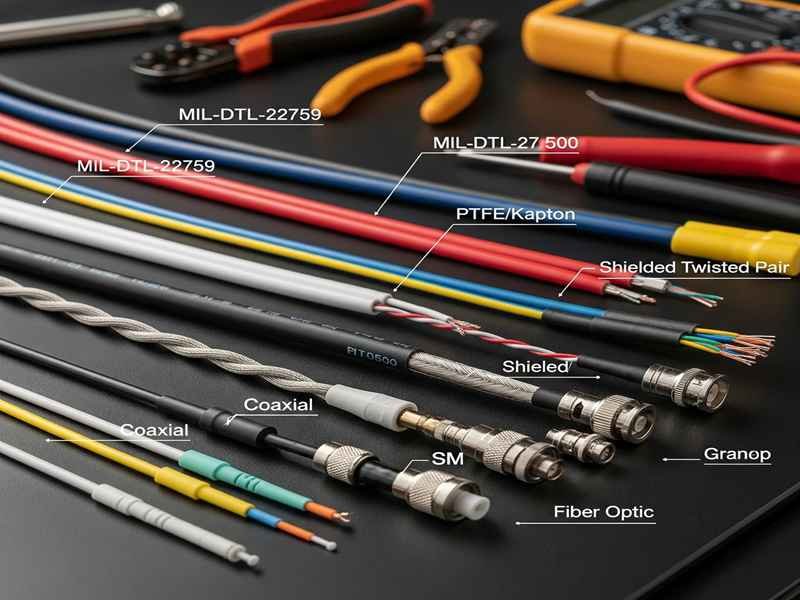
In cable assemblies, one of the most misunderstood questions buyers ask is surprisingly simple:
“What grade is this cable?”
At first glance, cable grading sounds like a fixed label—high grade, low grade, industrial grade, medical grade. But in reality, cable grading is not a single standard, number, or certification. It is a structured way of describing how a cable is designed, tested, and qualified to perform under specific electrical, mechanical, environmental, and regulatory conditions.
This misunderstanding creates real problems. Trade buyers may compare prices without realizing they are comparing different grades. Engineers may assume two cables are interchangeable because they look similar. OEM factories may discover too late that a lower-grade cable cannot pass compliance testing or survive long-term use.
Cable grading matters because it directly affects safety, performance, compliance, lead time, and total project cost. A higher-grade cable is not “better” by default—it is better for a specific application. Choosing the wrong grade often leads to redesigns, delayed approvals, or field failures.
In global sourcing, grading becomes even more complex. Different countries, industries, and standards bodies emphasize different grading factors. What qualifies as an acceptable grade in consumer electronics may be completely unacceptable in medical, military, or industrial environments.
Understanding how cables are graded—and how grading should guide selection—is essential for engineers, procurement teams, and OEM decision-makers alike.

Cable grading is the process of classifying cables based on their electrical ratings, materials, mechanical durability, environmental resistance, and compliance with industry standards. Cable grades help determine where a cable can be safely and reliably used, such as in consumer, industrial, medical, or military applications. Choosing the correct cable grade ensures performance, safety, regulatory compliance, and cost efficiency.
What Is Grading of Cables?
Grading of cables refers to the systematic classification of cables based on their electrical ratings, material quality, mechanical performance, environmental resistance, and compliance requirements. Cable grading helps engineers, OEMs, and buyers determine whether a cable is suitable for a specific application, operating environment, and regulatory market, rather than relying on appearance or basic specifications alone.
In real-world engineering and sourcing, “cable grading” is not a single standard or a stamped label.
It is a practical framework used to evaluate whether a cable can reliably and safely perform in a defined application.
Many people mistakenly believe cable grading is the same as:
- Cable type (coaxial, power, signal)
- Cable size (AWG, OD)
- Or simply “high-end vs low-end”

In reality, grading answers a much more important question:
How much stress—electrical, mechanical, environmental, and regulatory—can this cable tolerate over its intended life cycle?
What does “cable grading” actually mean?
At its core, cable grading is the combined evaluation of multiple performance dimensions, not a single parameter.
These dimensions typically include:
- Electrical capability (voltage, current, impedance stability)
- Material quality (insulation, jacket, shielding)
- Mechanical durability (flex life, bend radius, tensile strength)
- Environmental resistance (heat, oil, UV, chemicals, corrosion)
- Safety and compliance level (flammability, halogen-free, certifications)
A cable’s grade reflects how well these factors are balanced and verified, not just how good one aspect looks on paper.
Is cable grading the same as cable specification?
No — and confusing the two is one of the most common sourcing mistakes.
- Cable specifications describe what the cable is
- Cable grading describes what the cable can survive
Two cables may share identical specifications (same AWG, same voltage rating), but:
- One may be suitable only for indoor consumer use
- The other may be graded for industrial or medical environments
The difference lies in materials, process control, testing depth, and compliance scope, not just the spec sheet headline numbers.
Why is cable grading often misunderstood?
Cable grading is frequently misunderstood because:
- There is no single global “grading label” system
- Different industries define “high grade” differently
- Marketing terms often replace engineering definitions
For example, a supplier may describe a cable as “industrial grade” without:
- Defining test standards
- Specifying environmental limits
- Providing documentation
True cable grading is evidence-based, supported by standards, test data, and controlled manufacturing—not descriptive language.
How cable grading developed in practice
Cable grading evolved as products became:
- More regulated
- More compact
- More exposed to harsh environments
As a result, industries needed a way to:
- Compare cables objectively
- Reduce failure risk
- Ensure compliance across markets
Today, cable grading functions as a decision-making tool for engineers, buyers, and auditors—especially in OEM and regulated industries.
Why grading matters more than cable type
Choosing the wrong cable grade can cause:
- Early failure despite correct specifications
- Certification rejection
- Safety incidents
- Costly redesigns and delays
Choosing the correct grade ensures:
- Long-term reliability
- Predictable performance
- Smoother regulatory approval
- Lower total cost of ownership
This is why professional cable assembly suppliers focus on grading first, then configuration, not the other way around.
Which Factors Are Used to Grade Cables?
Cables are graded based on a combination of electrical ratings, material properties, mechanical durability, environmental resistance, shielding effectiveness, and compliance requirements. These factors together determine how reliably a cable can operate under specific conditions, how long it will last, and whether it meets regulatory and safety expectations for its intended application.
Cable grading is never determined by a single parameter.
In professional cable engineering, grade is the outcome of how multiple factors interact under real operating conditions.
A cable with excellent electrical ratings but poor mechanical durability may fail just as quickly as a mechanically strong cable with inadequate insulation or shielding. True grading evaluates the whole system, not isolated features.
Below are the core factors used to grade cables in real-world OEM and industrial environments.
Electrical ratings and signal performance
Electrical capability is the most visible grading factor—but also the most commonly oversimplified.
Key elements include:
- Rated voltage and current
- Impedance stability (especially for coaxial and high-speed cables)
- Signal attenuation and loss
- Dielectric performance of insulation materials
Higher-grade cables maintain stable electrical performance across temperature ranges, bending cycles, and long-term operation. Lower-grade cables may meet ratings only under ideal, short-term conditions.
Material quality and construction
Materials largely define a cable’s grade because they dictate how the cable behaves over time.
Grading considerations include:
- Conductor material and purity
- Insulation compounds (PVC, XLPE, PTFE, silicone, TPU, etc.)
- Jacket material durability and flexibility
- Shielding materials and coverage
Higher-grade cables use materials selected not just for cost, but for predictable aging behavior, chemical resistance, and process stability.
Mechanical durability and flex life
Mechanical performance is a critical grading factor, especially for cables exposed to movement or stress.
This includes:
- Minimum bend radius
- Tensile strength
- Flex cycle life
- Resistance to vibration and abrasion
A cable graded for static installation may fail rapidly in dynamic applications. Higher-grade cables are tested and designed for repeated mechanical stress, not just installation survivability.
Environmental resistance
Environmental exposure dramatically affects cable grade.
Typical grading parameters include resistance to:
- High and low temperatures
- Oils, fuels, and chemicals
- UV radiation
- Moisture and corrosion
Cables intended for industrial, outdoor, or medical use are graded higher because they are designed to maintain performance despite environmental attack, not just avoid immediate damage.
EMI shielding and noise control
Shielding performance is a decisive grading factor for signal integrity and safety.
Grading looks at:
- Shield type (foil, braid, combination)
- Shield coverage percentage
- Grounding continuity
- Resistance to external interference
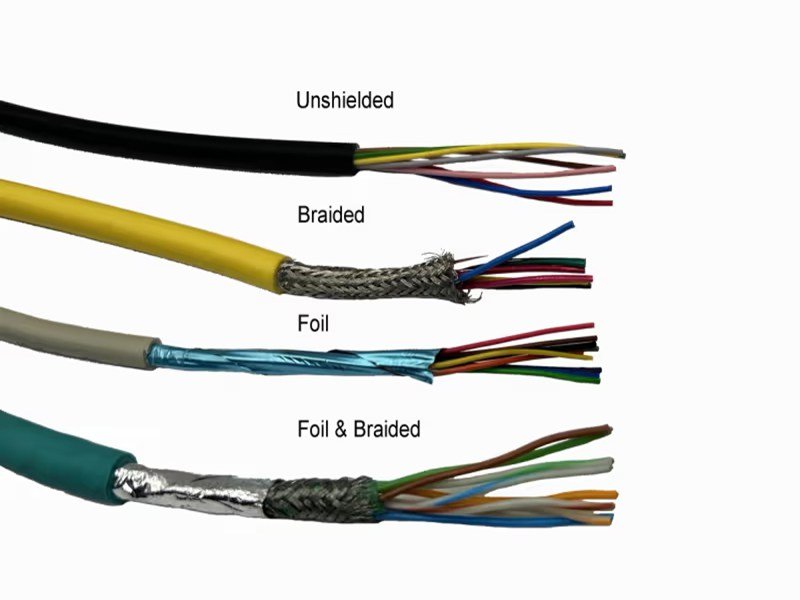
Higher-grade cables provide consistent EMI control across frequency ranges and over time, rather than relying on nominal shielding claims.
Safety, flammability, and fire behavior
Safety-related properties are often what elevate a cable into a higher grade category.
Important factors include:
- Flame retardancy
- Smoke generation
- Toxic gas emission
- Halogen-free performance
These factors are especially critical in buildings, transportation systems, medical environments, and confined spaces, where failure consequences are severe.
Compliance and certification requirements
Compliance does not automatically make a cable “high grade,” but lack of compliance limits its grade.
Grading is influenced by:
- UL and IEC safety certifications
- RoHS and REACH material restrictions
- PFAS-related requirements
- Industry-specific standards
Higher-grade cables are supported by verifiable documentation, not just verbal claims.
Manufacturing process control and consistency
Two cables made from similar materials can have very different grades depending on process control.
Grading considers:
- Process repeatability
- Inspection depth
- Traceability of materials and batches
- Change management
Cables produced under controlled systems with documented inspection and testing are graded higher because their performance is reproducible, not accidental.
How These Factors Work Together
Cable grade is determined by the weakest link, not the strongest feature.
For example:
- Excellent materials + poor shielding = lower effective grade
- Strong electrical specs + weak jacket = limited application grade
This is why professional suppliers assess all grading factors together, rather than focusing on a single highlight specification.
How Are Cables Graded by Application?
Cables are graded by application based on the specific electrical loads, mechanical stresses, environmental conditions, safety risks, and regulatory requirements of their intended use. Different applications—such as consumer electronics, industrial equipment, medical devices, and military systems—demand different cable grades to ensure reliable performance, compliance, and lifecycle stability.
Consumer electronics cable grades
Consumer electronics cables are typically graded for:
- Moderate electrical loads
- Controlled indoor environments
- Limited mechanical stress
- Short to medium product lifecycles
These cables prioritize cost efficiency, compact size, and ease of mass production. While they meet basic safety standards, they are not designed for long-term exposure to heat, chemicals, or repeated mechanical movement.
From a grading perspective, consumer cables are optimized for acceptable performance at scale, not extreme durability.
Industrial equipment cable grades
Industrial applications significantly raise grading requirements.
Industrial-grade cables must withstand:
- Continuous operation
- Vibration and mechanical shock
- Exposure to oil, dust, moisture, and chemicals
- Elevated temperatures
Here, grading emphasizes robustness and longevity, even if it increases size, weight, or cost. A cable that performs perfectly in a consumer product may fail within weeks in an industrial machine simply due to environmental mismatch.
Medical device cable grades
Medical applications redefine cable grading around risk and safety, not just performance.
Medical-grade cables are graded for:
- Patient electrical safety
- Low EMI emission and high noise immunity
- Biocompatible or skin-safe materials
- Resistance to cleaning agents and sterilization
In this context, grading is closely tied to regulatory approval. Even a mechanically excellent cable may be considered low-grade if it lacks appropriate documentation, material traceability, or compliance support.
Military and aerospace cable grades
Military and aerospace cables represent extreme reliability grades.
These cables are graded to survive:
- Wide temperature ranges
- Severe vibration and shock
- Long service life with minimal maintenance
- Harsh environmental exposure
Unlike consumer or industrial cables, grading here often prioritizes failure prevention over cost optimization. Redundancy, conservative design margins, and extensive testing are common grading characteristics.
Commercial vs mission-critical applications
An important but often overlooked distinction is between:
- Commercial-grade applications (acceptable failure risk)
- Mission-critical applications (failure is unacceptable)
For example:
- A commercial display cable may tolerate intermittent signal loss
- A control cable in a medical or safety system may not
Cable grading increases sharply as the consequence of failure increases, even if operating conditions appear similar.
Static vs dynamic installation grading
Application grading also depends on how a cable is used mechanically.
- Static installations prioritize insulation stability and fire safety
- Dynamic installations prioritize flex life, strain relief, and conductor fatigue resistance
Using a static-grade cable in a dynamic application is one of the most common real-world grading errors.
Application-Based Cable Grading Guide
| Application Type | Typical Cable Grade | Primary Grading Focus |
|---|---|---|
| Consumer electronics | Consumer grade | Cost, size, basic safety |
| Industrial machinery | Industrial grade | Durability, resistance |
| Medical devices | Medical grade | Safety, EMI, compliance |
| Military / aerospace | High-reliability grade | Extreme robustness |
| Mission-critical systems | Application-specific | Risk mitigation |
What Standards and Certifications Define Cable Grades?
Cable grades are defined and validated through standards and certifications such as UL, IEC, ISO, RoHS, REACH, and PFAS-related regulations. These standards establish test methods, safety limits, material restrictions, and documentation requirements that distinguish one cable grade from another.
Without standards, cable grading becomes subjective.
Standards provide objective criteria that define what a cable grade truly represents.
UL and IEC standards
UL and IEC standards are the backbone of cable grading worldwide.

They define:
- Electrical safety limits
- Flame resistance behavior
- Temperature ratings
- Construction requirements
Meeting UL or IEC standards elevates a cable’s grade because it confirms the cable has passed recognized safety and performance benchmarks.
ISO and manufacturing controls
ISO standards, such as ISO 9001 and ISO 13485, influence cable grading indirectly.

They ensure:
- Controlled manufacturing processes
- Consistent material sourcing
- Traceability and change control
Cables produced under certified quality systems are considered higher grade because their performance is repeatable and auditable, not accidental.
Environmental and material compliance
Regulations like RoHS, REACH, and PFAS restrictions affect cable grading by limiting material choices.

Cables that comply with these regulations:
- Reduce environmental and health risks
- Are accepted in more global markets
- Avoid future compliance issues
In many industries, compliance is no longer optional—it is part of the cable’s grade definition.
Compliance vs performance
A critical distinction in cable grading is the difference between compliance grade and performance grade.
- Compliance grade focuses on meeting regulations
- Performance grade focuses on how the cable behaves in use
High-grade cables usually satisfy both. Low-grade cables may meet minimum compliance but fail under real-world conditions.
Documentation as part of grading
Documentation is often overlooked, but it is a grading factor.
Higher-grade cables are supported by:
- Detailed specifications
- Test reports
- Certificates of Conformity (COC)
- Country of Origin (COO)
Without documentation, even a well-made cable may be treated as lower grade in audits or procurement reviews.
How Does Cable Grading Affect Price and Lead Time?
Cable grading directly affects price and lead time because higher-grade cables require better materials, stricter testing, more complex manufacturing processes, and compliance documentation. As cable grade increases, costs and production time generally rise, but so do reliability, safety, and long-term value.
Many buyers assume cable price differences are driven mainly by brand or supplier margin.
In reality, cable grading defines the entire cost structure of a cable, from raw materials to testing, documentation, and production scheduling.
Why higher-grade cables cost more
Higher-grade cables cost more because they require:
- Certified or specialty materials
- Tighter process control
- Additional electrical, mechanical, or environmental testing
- Compliance documentation and traceability
Each of these elements adds cost, but also reduces risk. In regulated or mission-critical applications, these costs are often far lower than the cost of failure, recall, or redesign.
Material and process complexity
As cable grade increases, manufacturing becomes more complex.
Examples include:
- Multi-layer shielding structures
- Halogen-free or specialty insulation compounds
- Tighter dimensional tolerances
- Lower defect acceptance thresholds
These factors reduce production yield and increase inspection time, which directly impacts price and throughput.
Testing and inspection impact
Higher-grade cables require:
- More test steps
- Higher test coverage
- More detailed test records
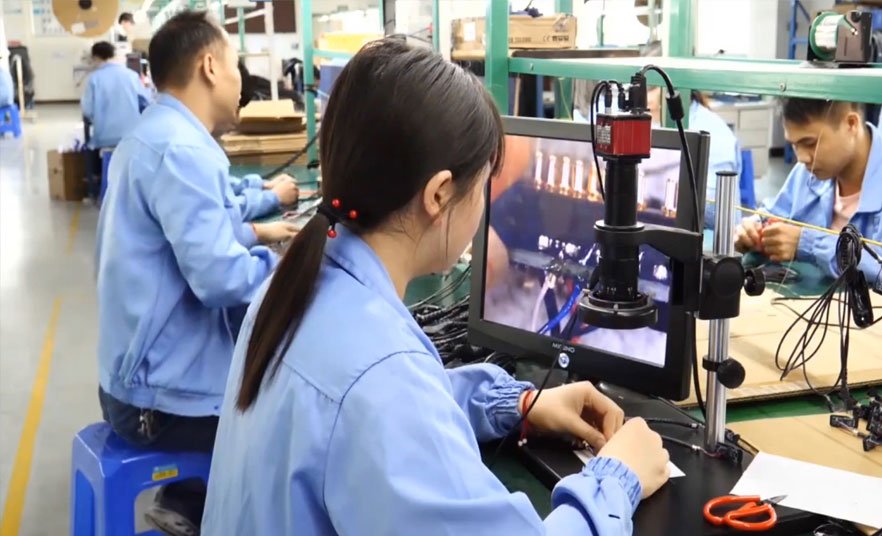
For example, medical or industrial cables may require 100% inspection, while lower-grade consumer cables may rely on sampling. Inspection intensity is a hidden but significant cost driver.
How grading affects lead time
Cable grade also influences lead time.
Higher-grade cables may involve:
- Longer material procurement cycles
- Additional testing or validation steps
- Approval processes for drawings or samples
However, experienced suppliers can often optimize lead time by:
- Using qualified alternative materials
- Maintaining buffer stock for common components
- Streamlining drawing and approval workflows
This is where supplier capability makes a measurable difference.
Regional and market differences
Cable grade expectations—and pricing—vary by region.
For example:
- US and European markets typically demand higher compliance grades
- Some Asian markets prioritize cost over long-term durability
- Medical and military sectors accept higher prices for higher grades
Understanding these differences helps buyers avoid over-specifying or under-specifying cable grade.
Cable Grade vs Cost & Lead Time
| Cable Grade | Relative Cost | Typical Lead Time | Risk Level |
|---|---|---|---|
| Consumer grade | Low | Short | High (long-term) |
| Industrial grade | Medium | Medium | Moderate |
| Medical grade | High | Medium–Long | Low |
| High-reliability grade | Very High | Long | Very Low |
How Can Cable Grades Be Customized for OEM Projects?
Cable grades can be customized for OEM projects by adjusting materials, electrical ratings, shielding, mechanical performance, and compliance requirements. Custom grading allows OEMs to balance performance, cost, and regulatory needs more effectively than using off-the-shelf cables.
In real OEM projects, the goal is rarely to choose the “highest possible grade.”
The goal is to choose the right grade—one that meets requirements without unnecessary cost or complexity.
Which grading parameters are commonly customized
OEM customers frequently customize:
- Cable length and OD
- Voltage and current ratings
- Shielding structure and coverage
- Insulation and jacket materials
- Flex life and bend radius
- Environmental resistance
Each parameter affects cable grade, and each can be tuned based on application needs.
How drawings and specs define cable grade
Cable grade only becomes actionable when it is clearly defined in:
- Specifications
- Drawings
- Bills of materials
At Sino-conn, drawings are provided before production—often within hours—and all orders are manufactured strictly according to approved documents. This prevents misunderstandings about grade and performance.
Original vs alternative components
Cable grade does not always require original branded components.
In many cases:
- Qualified alternative connectors
- Equivalent materials
Can achieve the same functional grade with better cost or lead time. The key is proper validation—not blind substitution.
MOQ and prototyping flexibility
OEM projects often begin with:
- Small quantities
- Engineering samples
- Iterative design changes
Sino-conn supports 1-piece MOQ, fast sampling, and flexible revisions—allowing customers to validate cable grade before committing to volume production.

Aligning grade with real risk
The most successful OEM projects define cable grade by asking:
- What happens if this cable fails?
- How hard is it to replace?
- What are the regulatory consequences?
Cable grade should increase as risk increases, not simply because a product is “high-end.”
Conclusion
Cable grading is not about choosing the most expensive cable.
It’s about choosing the right grade for your application, market, and risk profile.
Whether you are:
- Replacing an existing cable
- Developing a new OEM product
- Optimizing cost without sacrificing compliance
Sino-conn helps you define, document, and manufacture cable assemblies with the correct grade—backed by fast engineering support, flexible customization, and full testing and documentation.
Send us your drawing, specification, or even just a reference photo.
We’ll help you translate your requirements into a clearly defined cable grade—and deliver a cable assembly you can rely on.