Skip to content
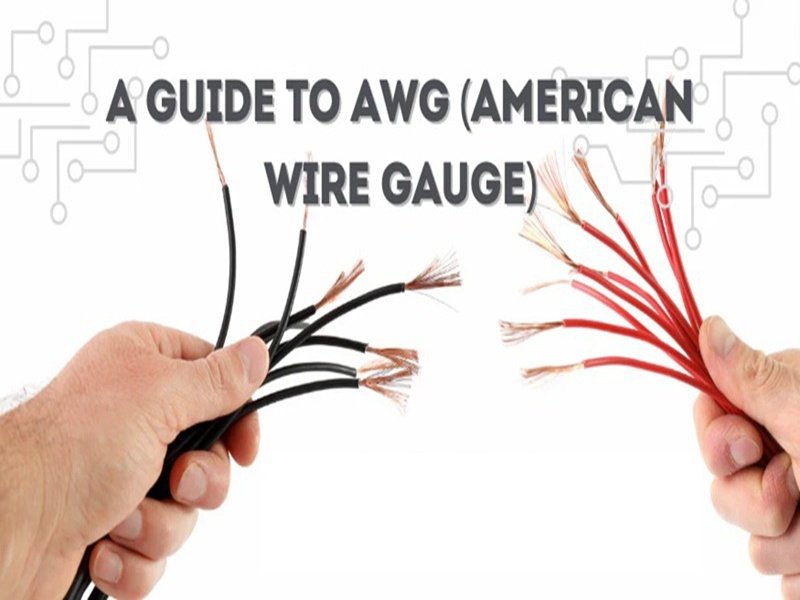
If you’ve ever reviewed a cable drawing, wire harness specification, or electrical BOM, you’ve almost certainly encountered terms like 18 AWG, 22 AWG, or 10 AWG. These numbers may look simple, but behind them lies one of the most critical — and often misunderstood — standards in cable and wire harness design: AWG. Choosing the wrong AWG size can lead to overheating, voltage drop, mechanical failure, or even compliance issues in regulated industries such as medical, industrial, and military electronics.
For engineers, AWG is not just a number — it directly affects current capacity, flexibility, connector compatibility, and long-term reliability. For procurement teams, misunderstanding AWG can mean unexpected cost increases or production delays. And for OEMs working with custom cable assemblies, AWG often becomes the hidden variable that determines whether a design succeeds or fails in real-world use.
AWG cable refers to electrical wire sized according to the American Wire Gauge (AWG) standard, which defines conductor diameter, resistance, and current-carrying capacity. A smaller AWG number means a thicker wire with lower resistance and higher current capability. AWG is widely used in cable assemblies and wire harness design to ensure electrical performance, mechanical compatibility, and safety across signal, power, and industrial applications.
In real projects, AWG decisions are rarely made in isolation. They are shaped by voltage, current, connector constraints, flexibility requirements, certifications, and even production lead time. As we explore AWG in depth, you’ll see why experienced engineers treat AWG as a system-level decision — and why capable manufacturers like Sino-Conn invest heavily in understanding every detail behind it.
What Is AWG Cable?
AWG cable refers to electrical wire sized according to the American Wire Gauge (AWG) standard, a widely adopted system used to define the conductor diameter, electrical resistance, and current-carrying capability of a wire. In real-world cable and wire harness manufacturing, AWG is one of the most fundamental parameters because it directly determines whether a cable assembly can operate safely, reliably, and in compliance with industry requirements.
It is important to clearly understand what AWG does and does not represent. AWG is not a cable type, nor does it describe insulation material, shielding structure, or connector style. Instead, AWG specifies only the physical size of the metal conductor inside the cable, typically copper. When a cable is labeled as 18 AWG or 22 AWG, engineers immediately know the conductor thickness, resistance per unit length, and the safe current range the wire can handle without excessive heat buildup.
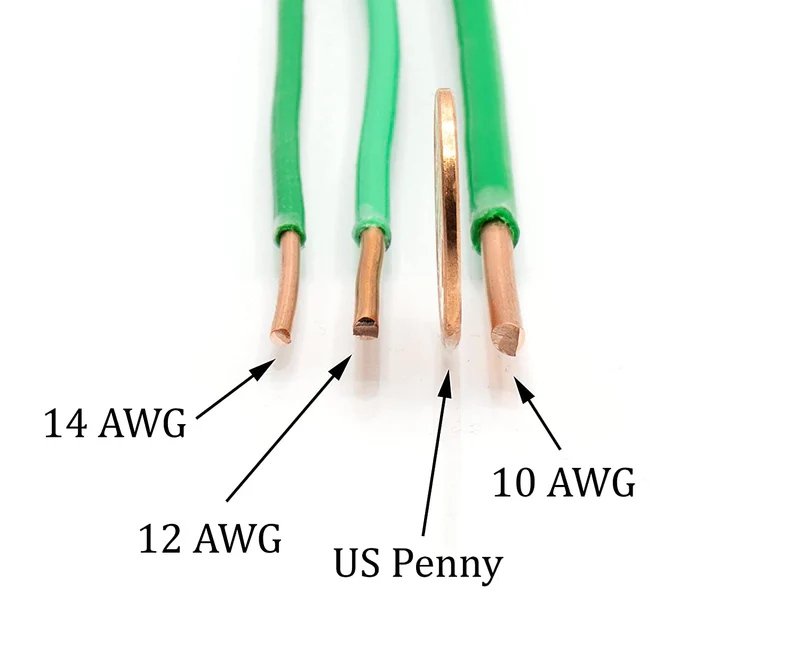
A defining characteristic of the AWG system is that smaller AWG numbers indicate thicker wires, while larger numbers indicate thinner wires. This can feel counterintuitive at first, but it is a fixed and standardized rule. For example, a 10 AWG wire is significantly thicker than a 14 AWG wire, which means it has lower resistance and can carry higher current. Because this relationship is standardized, AWG enables consistent communication between engineers, manufacturers, inspectors, and procurement teams across drawings, specifications, and production documents.

What AWG Defines vs. What It Does Not Define
| Aspect | Defined by AWG | Not Defined by AWG |
|---|---|---|
| Conductor diameter | ✔ Yes | — |
| Electrical resistance | ✔ Yes | — |
| Current capacity | ✔ Yes | — |
| Insulation material | — | ✘ No |
| Shielding / EMI structure | — | ✘ No |
| Connector or terminal type | — | ✘ No |
In cable assemblies and wire harnesses, AWG influences multiple critical design decisions at the same time. Electrically, it affects voltage drop, current capacity, and heat generation. Mechanically, it impacts flexibility, bend radius, and routing capability. From a manufacturing perspective, AWG must match the crimp range of terminals and connectors to ensure long-term reliability. Selecting an incorrect AWG can result in performance degradation, premature failure, or non-compliance with safety and regulatory standards.
Example: AWG Size and Electrical Impact
| AWG Size | Relative Thickness | Resistance | Typical Impact |
|---|---|---|---|
| 22 AWG | Thin | Higher | Suitable for low-current signal wiring |
| 18 AWG | Medium | Moderate | Common in control and general wiring |
| 14 AWG | Thick | Low | Used for higher-current power circuits |
| 10 AWG | Very thick | Very low | Designed for high-current power delivery |
For manufacturers like Sino-Conn, AWG is treated as a core engineering parameter, not merely a number shown on a drawing. Every custom cable or wire harness project starts with verifying the correct AWG based on current load, cable length, application environment, connector selection, and customer specifications. This disciplined approach ensures that the final product is not only electrically safe and mechanically reliable, but also fully aligned with the customer’s real-world application and long-term performance expectations.
How Does the AWG System Work?
The AWG system works by assigning smaller numbers to thicker wires and larger numbers to thinner wires. Each step in AWG represents a fixed change in conductor diameter and electrical resistance, allowing predictable scaling of current capacity and voltage drop.
How are AWG numbers defined?
The AWG scale is logarithmic, not linear. Each decrease of three AWG numbers roughly doubles the cross-sectional area of the conductor. This design allows predictable electrical behavior across sizes.
For example:
- 24 AWG is much thinner than 18 AWG
- 10 AWG is dramatically thicker than 22 AWG
This mathematical consistency is why AWG remains relevant even as cable materials and applications evolve.
Which is bigger, 10 AWG or 14 AWG?
This is one of the most common — and most counterintuitive — questions.
10 AWG is bigger than 14 AWG.
In the AWG system:
- Smaller number = thicker wire
- Larger number = thinner wire
10 AWG has a larger diameter, lower resistance, and higher current-carrying capacity than 14 AWG. Engineers often verify this explicitly in drawings and specifications to avoid costly misunderstandings during manufacturing.
Why does a smaller AWG mean a thicker wire?
The AWG system originated from the number of drawing steps required to manufacture wire. Thinner wires required more drawing steps, resulting in higher gauge numbers. While modern manufacturing no longer uses this method, the numbering system remains.
Understanding this historical logic helps engineers remember the rule and avoid selection errors.
AWG Size Comparison
| AWG Size | Conductor Diameter (mm) | Resistance (Ω/1000m) | Typical Use |
|---|---|---|---|
| 24 AWG | 0.51 | 84.2 | Signal wires |
| 18 AWG | 1.02 | 21.2 | Control circuits |
| 14 AWG | 1.63 | 8.3 | Power distribution |
| 10 AWG | 2.59 | 3.3 | High-current power |
Which AWG Size Should You Choose?
Choosing the correct AWG size is not about picking a “standard number” — it is about balancing electrical performance, mechanical requirements, safety margins, and cost within a real application. In cable assemblies and wire harness design, AWG selection directly impacts whether a product performs reliably over time or becomes a source of heat, voltage loss, or premature failure.
At a basic level, smaller AWG numbers are used for higher current and power transmission, while larger AWG numbers are used for low-current signal and control wiring. However, professional AWG selection goes beyond this simple rule. Engineers must consider current load, cable length, operating environment, connector limitations, and regulatory requirements together, rather than in isolation.
Key Factors That Determine AWG Selection
| Factor | Why It Matters |
|---|---|
| Current (Amps) | Higher current requires thicker wire to prevent overheating |
| Cable length | Longer cables increase resistance and voltage drop |
| Application type | Signal, control, power, or battery applications differ greatly |
| Flexibility requirements | Smaller AWG or fine-stranded wire improves bending |
| Connector & terminal limits | Each terminal supports a specific AWG range |
| Environment | Temperature, oil, vibration, and movement affect choice |
Which AWG Is Used for Signal Wires?
Signal and data cables typically use larger AWG numbers (thinner wires), commonly ranging from 22 AWG to 30 AWG. These wires carry low current and are optimized for compact routing, flexibility, and ease of termination in dense connectors.
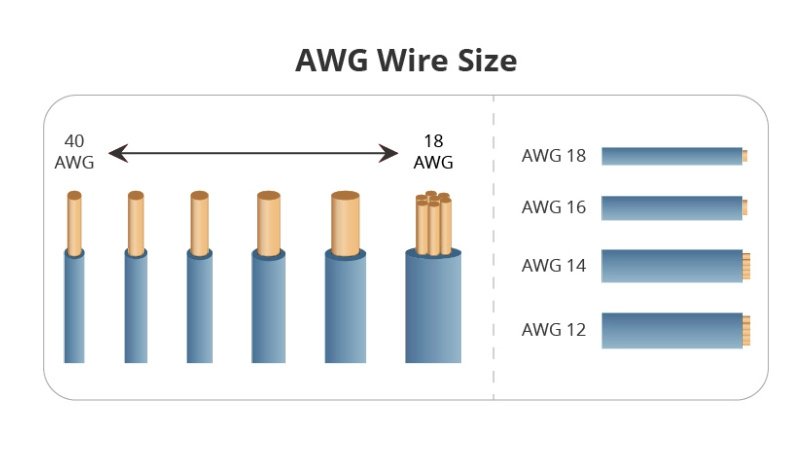
However, thinner wires are more sensitive to voltage drop, noise, and EMI. In applications such as sensors, control signals, or communication lines, AWG selection must be coordinated with shielding, grounding, and insulation materials to maintain signal integrity.
| Application | Typical AWG Range |
|---|---|
| Sensors & low-level signals | 24–30 AWG |
| Control signals | 22–26 AWG |
| Data & communication | 24–28 AWG |
Which AWG Is Used for Power Cables?
Power cables require smaller AWG numbers (thicker conductors) to safely carry higher current without excessive heat or voltage drop. Common power applications use AWG sizes from 10 AWG to 18 AWG, depending on load and distance.
For battery cables or continuous-load power harnesses, engineers often select a thicker AWG than the theoretical minimum to add thermal and reliability margin. This is especially important in industrial, medical, and automotive applications where long-term stability is critical.
| Power Application | Typical AWG Range |
|---|---|
| Low-power devices | 16–18 AWG |
| General power harness | 12–16 AWG |
| Battery & high-current | 6–12 AWG |
How Do Current and Cable Length Affect AWG Selection?
Current and length work together. Even moderate current can cause significant voltage drop if the cable is long and the AWG is too thin. This is one of the most common design mistakes seen in early-stage projects.
As cable length increases:
- Resistance increases
- Voltage at the load decreases
- Heat generation rises
This often requires choosing a thicker AWG than initially expected, even when current levels appear acceptable on paper.
Typical AWG Selection by Application
| Application Type | Recommended AWG |
|---|---|
| Internal electronics | 24–28 AWG |
| Control panels | 18–22 AWG |
| Industrial equipment | 12–16 AWG |
| Power distribution | 8–12 AWG |
Why “The Right AWG” Is an Engineering Decision, Not a Guess
There is no universal “best AWG.” The correct choice depends on how the cable will be used, not just how it looks on a specification sheet. In real manufacturing environments, AWG must also align with:
- Connector crimp ranges
- UL and industry standards
- Mechanical routing and bending constraints
For manufacturers like Sino-Conn, AWG selection is treated as part of an engineering verification process. Customers may provide a drawing, a specification, a sample, or even just a photo. Based on this information, the engineering team evaluates current load, application environment, and connector compatibility to confirm or optimize the AWG choice before production begins.
This approach ensures that the final cable or wire harness is electrically safe, mechanically reliable, and cost-effective, while fully meeting the customer’s real application requirements — not just theoretical calculations.
How Does AWG Affect Cable Performance?
AWG affects cable performance by controlling current capacity, resistance, heat generation, flexibility, and long-term reliability. Selecting the wrong AWG can compromise safety and performance.
How does AWG impact current capacity?
Thicker wires carry more current safely. Undersized AWG leads to overheating and failure, especially in continuous-load applications.
Does AWG affect flexibility and bending?
Yes. Thicker AWG wires are stiffer. Fine-strand conductors can improve flexibility even at lower AWG numbers.
How does AWG relate to temperature rating?
Higher current increases heat. AWG must be matched with insulation rated for the expected temperature range.
Are AWG Cables Used in Wire Harness Assemblies?
Yes. AWG sizing is fundamental to wire harness assemblies, influencing connector compatibility, crimp quality, electrical safety, and compliance with industry standards.
How is AWG applied in custom wire harness design?
Engineers specify AWG in drawings to ensure repeatability. Harness manufacturers match AWG to terminals, connectors, and routing constraints.
Do connectors and terminals depend on AWG size?
Absolutely. Every terminal is rated for a specific AWG range. Using the wrong size compromises crimp integrity.
How do engineers specify AWG in drawings and specs?
AWG appears in BOMs, wiring diagrams, and CAD drawings. Manufacturers like Sino-Conn provide confirmation drawings before production.
How to Specify AWG Cable for Custom Assemblies?
To specify AWG cable correctly, customers should define current, voltage, length, environment, connector type, and compliance requirements. Manufacturers then verify AWG before production.

What information should customers provide?
Even partial data — photos, samples, or drawings — can be enough. Sino-Conn fills gaps through engineering analysis.
Can AWG be customized for different applications?
Yes. AWG can vary within a harness to optimize cost, flexibility, and performance.
How do manufacturers verify AWG before production?
Verification includes conductor measurement, process inspection, and 100% final inspection.
Request a Custom AWG Cable or Wire Harness from Sino-Conn

Selecting the right AWG is not just about numbers — it’s about understanding real-world performance, manufacturing constraints, and application demands. Whether you are an engineer refining a prototype or a procurement team sourcing a production-ready cable assembly, Sino-Conn provides engineering support, fast drawings, rapid samples, and fully customized solutions with no MOQ.
If you have a drawing, specification, photo, or even just an idea, our team can help you define the correct AWG and deliver a reliable cable assembly tailored to your application. Reach out to start your custom project today.