Skip to content
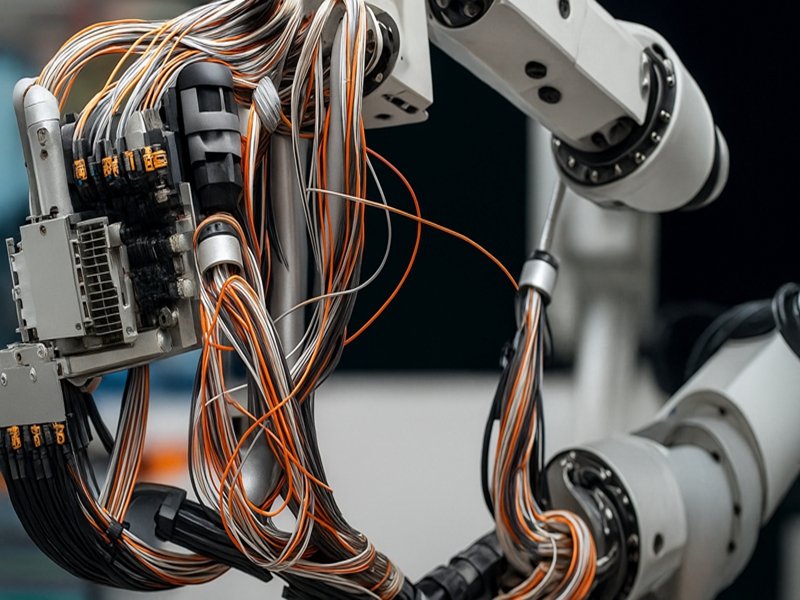
The world’s factories, automotive plants, and logistics hubs now rely more on machines that move like humans but work faster than them — industrial robots. Yet behind every precisely timed movement lies a quiet workhorse: the robotic cable. It’s not just a wire; it’s a flexible nervous system carrying signals, data, and power across countless repetitive motions.
If you’ve ever watched a robotic arm assemble car components or sort packages at lightning speed, you’ve seen how each joint twists, bends, and rotates continuously. Ordinary industrial cables would break, fatigue, or lose signal after a few thousand cycles. Robotic cables, however, are engineered to withstand millions of bending and torsion cycles while maintaining consistent performance under motion, heat, oil, and electromagnetic stress.
Robotic cables are high-flex, durable electrical cables designed for continuous motion in automation and robotics. They feature specialized conductors, insulation, and shielding that resist bending, torsion, and EMI over millions of cycles in harsh environments.
As robotics grows across industries — from automotive welding to surgical automation — understanding how these cables work can help designers, OEMs, and engineers make better sourcing and reliability decisions. Let’s explore what makes robotic cables unique, how they’re built, and how Sino-Conn helps global customers design cables that never miss a move.
What Is a Robotic Cable and How Does It Work?
Modern robotics has become synonymous with precision, repetition, and motion. But hidden inside every robotic arm, gantry system, or assembly robot lies a crucial yet often overlooked component — the robotic cable. This cable is not just an electrical connection; it’s the lifeline of motion, responsible for transmitting power, control signals, and data between robot controllers and moving components millions of times throughout its lifespan.
A robotic cable is a specialized high-flex electrical cable designed to withstand continuous motion, bending, and torsion without breaking or signal degradation. It uses ultra-fine copper strands, flexible insulation, and reinforced shielding to deliver reliable power and data in robotic systems operating under high mechanical stress.
The Core Purpose of a Robotic Cable
At its essence, a robotic cable functions as the electrical nervous system of automation. Just like the human body relies on nerves to transmit signals, robotic systems depend on these cables to carry control instructions, feedback data, and electrical energy between stationary and moving parts.
Unlike conventional cables that remain static, robotic cables must bend, flex, twist, and stretch simultaneously — often in tight radii or complex 3D trajectories. These motions can reach up to 10 million flex cycles or more, especially in 24-hour production environments. Any failure can halt an entire production line, making reliability a non-negotiable engineering priority.
How Robotic Cables Differ Structurally
Standard industrial cables are not designed to survive constant mechanical stress. They tend to fail where insulation cracks, shields loosen, or conductors break from metal fatigue.
Robotic cables, on the other hand, feature a meticulously engineered internal architecture that distributes mechanical forces evenly and prevents premature wear.
| Cable Component | Robotic Cable Design Features | Purpose |
|---|---|---|
| Conductor | Ultra-fine tinned copper (0.05–0.1 mm strands) | Enables flexibility and vibration absorption |
| Insulation | TPE, PUR, or FEP with elastic recovery | Maintains dielectric strength under bending |
| Shielding | Braided copper or aluminum foil | Protects signals from EMI and crosstalk |
| Fillers & Tapes | Kevlar yarn, fleece, or cotton fillers | Maintain cable roundness and prevent stress concentration |
| Outer Jacket | Abrasion-resistant PUR or TPE | Resists oil, coolant, and UV exposure |
Every layer plays a role in ensuring the cable’s mechanical harmony. For example, Sino-Conn’s cross-lay stranding design alternates conductor lay directions in multiple layers to neutralize torsional forces, reducing internal friction by up to 40% compared with conventional parallel-lay cables.
The Motion Dynamics: Bend, Twist, and Torsion
To understand how a robotic cable works, imagine its environment inside a 6-axis robotic arm.
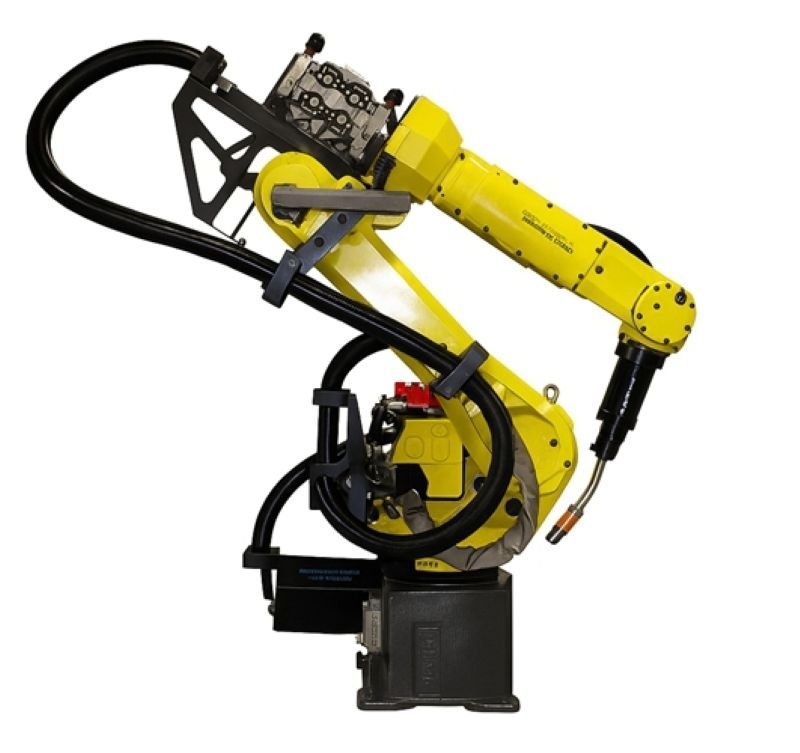
Each joint rotates independently, creating simultaneous bending and twisting forces. A typical robot motion path includes:
- Linear motion in drag chains (back-and-forth motion up to millions of cycles)
- Torsional motion where cables rotate ±360° per meter repeatedly
- Multidirectional flexing as joints move in 3D planes
Robotic cables are tested under dynamic simulation rigs, where they must survive:
- >10 million bending cycles without conductor breakage
- >3 million torsional cycles at ±360°/m
- Constant acceleration up to 10 m/s²
Sino-Conn’s robotic cables undergo these life-cycle validations to ensure consistent signal integrity and mechanical endurance in applications ranging from welding robots to pick-and-place systems.
Electrical and Signal Integrity Under Motion
While mechanical endurance ensures longevity, electrical stability ensures precision. In robotic applications, even a microsecond of signal delay or noise interference can disrupt motion synchronization or positional accuracy.
To counter this, robotic cables integrate:
- Low-capacitance insulation (reduces signal distortion over long distances)
- Tight impedance control (essential for Ethernet or fieldbus communication)
- EMI/RFI shielding (protects signal cables near high-power motor lines)
- Drain wires and grounding for consistent shielding effectiveness
For example, a servo motor cable from Sino-Conn might contain three power cores, two signal pairs, and one overall shield, each layer optimized to reduce interference while maintaining flexibility.
Test results typically show attenuation below 0.3 dB/m at 10 MHz and shielding effectiveness ≥90 dB, even after millions of cycles — critical for industrial Ethernet, CANopen, or encoder feedback systems.
Material Engineering Behind Longevity
The performance of robotic cables depends heavily on material selection.
Where ordinary PVC might crack under cold or oil exposure, Sino-Conn uses PUR (Polyurethane) or TPE (Thermoplastic Elastomer) jackets that retain elasticity from –40°C to +125°C while resisting oils, solvents, and abrasion.
Advanced compounds also offer:
- Flame resistance: meeting UL VW-1 and IEC 60332-1
- Halogen-free safety: preventing toxic emissions in factories
- UV and chemical resistance: essential for outdoor or automotive use
Additionally, fine-stranded copper minimizes conductor stress, and fiber-reinforced fillers distribute torsional load, preventing internal layer shifting — a common cause of early cable failure in motion applications.
The Working Principle in a Robotic System
When installed, a robotic cable is secured within cable tracks, routing harnesses, or rotating joints. As the robot moves:
- The conductor flexes to deliver uninterrupted electrical flow.
- The insulation expands and contracts to absorb motion energy.
- The shielding maintains electromagnetic protection across dynamic bends.
- The jacket resists physical wear, heat, or chemical exposure.
This synchronized mechanical-electrical balance enables robots to function with millimeter precision, day after day. For a production line running 24 hours, the difference between a well-designed robotic cable and a generic cable can mean years of uptime versus months of maintenance interruptions..
What Makes Robotic Cables Different from Standard Industrial Cables?
Robotic cables differ from standard industrial cables in flexibility, durability, and motion tolerance. They use ultra-fine copper stranding, reinforced insulation, and torsion-resistant designs to endure millions of bending and twisting cycles. Unlike standard cables, robotic cables maintain electrical stability, EMI shielding, and structural integrity in dynamic, high-stress environments such as robotic arms and automation systems.
Flexibility and Bend Radius
The most visible difference lies in how robotic cables handle mechanical motion.
While a standard control cable may crack or fail after a few thousand bends, robotic cables are engineered to flex millions of times without breaking.
| Feature | Standard Industrial Cable | Robotic Cable |
|---|---|---|
| Conductor Type | Stranded copper (Class 5) | Ultra-fine tinned copper (Class 6) |
| Min. Bend Radius | 10–15 × OD | 5–7.5 × OD |
| Motion Tolerance | Limited | Continuous flexing, torsion, and drag-chain motion |
| Cycle Life | ~100,000 bends | 5–10 million bends or more |
Why this matters:
A smaller bend radius allows tighter routing through cable chains, robot joints, and compact machinery. Sino-Conn’s fine-strand copper conductors — sometimes as thin as 0.05 mm per filament — enable extreme flexibility without internal stress.
Additionally, filler materials such as Kevlar or non-woven fibers maintain the cable’s roundness during bending, preventing core migration — a common failure mode in non-robotic designs.
Torsion Resistance
One of the most demanding environments for any cable is inside a multi-axis robotic arm, where it undergoes both bending and torsion simultaneously.
A standard cable may tolerate slight twisting (±30°/m) before insulation strain appears, but robotic cables are tested up to ±360° per meter, repeating millions of times without conductor rupture.
Design Innovations That Enable This:
- Cross-Lay Stranding: Conductors are wound in alternating directions (left/right) to neutralize torsional stress.
- Layer Separation Tapes: Prevent internal friction between twisted layers.
- Torsion-Optimized Insulation: TPE or PUR layers maintain elasticity under 3D motion.
- Central Core Strength Members: Act as a pivot axis, keeping the internal geometry balanced during twist cycles.
At Sino-Conn, torsion testing is performed on dynamic rigs that simulate real-world robotic motion at ±360°/m with simultaneous flexing. Only cables that pass 3 million torsion cycles proceed to production certification.
Fatigue Resistance and Service Life
In dynamic robotics, durability is not measured in years — it’s measured in motion cycles.
A robotic cable’s lifetime can exceed 10 million bending operations without signal degradation, while standard cables might fail after a few hundred thousand cycles.

This endurance is achieved through:
- Ultra-fine stranded conductors that distribute stress evenly
- Elastomeric insulations (TPE, PUR) that stretch and recover repeatedly
- Hybrid shielding designs that remain intact during motion
- Internal stress-relief fillers that absorb vibration energy
Sino-Conn uses dynamic life-cycle simulation tests to verify each design, exposing cables to constant bending, twisting, and acceleration up to 10 m/s², replicating years of robotic operation within weeks.
Shielding and EMI Performance Under Motion
When robots operate near motors, drives, and inverters, electromagnetic interference (EMI) becomes a major concern.
Standard cables often lose shielding integrity over time due to mechanical movement that loosens braided shields.
Robotic cables combat this with hybrid shielding systems combining:
- Aluminum foil shields for full 100% coverage
- Braided copper shields (85–95% density) for low-impedance grounding
- Drain wires to ensure continuous shielding continuity during motion
Even after millions of flex cycles, Sino-Conn’s braided shields retain over 90 dB of attenuation between 10 MHz–1 GHz, protecting data signals (Ethernet, CAN, feedback lines) from crosstalk and motor noise.
Material Selection — Built for Harsh Industrial Environments
Standard cables typically use PVC insulation, which hardens, cracks, or melts when exposed to oil, heat, or cold.
Robotic cables rely on advanced thermoplastic compounds that remain flexible and stable under extreme conditions:
| Material | Temperature Range (°C) | Oil/Chemical Resistance | Flexibility Rating | Typical Application |
|---|---|---|---|---|
| PVC | –20 ~ +80 | Fair | Medium | Static machinery |
| PUR | –40 ~ +125 | Excellent | High | Industrial robots, drag chains |
| TPE | –50 ~ +125 | Good | Very High | Automotive robotics, cleanrooms |
| FEP / PTFE | –65 ~ +250 | Excellent | High | Aerospace & medical robots |
In practice, PUR jackets dominate robotic applications because they combine abrasion resistance, elasticity, and oil resistance — critical for factory floors where cables face moving metal arms, hydraulic fluids, and welding sparks.
For ultra-clean or high-temperature environments, Sino-Conn can produce FEP or PTFE-jacketed robotic cables that resist outgassing and chemical corrosion.
Precision Electrical Stability
In robotics, signal precision equals movement accuracy.
Standard cables can suffer from impedance drift and capacitance buildup as they flex, causing micro-delays in signal timing. This is catastrophic for servo control loops or encoder feedback systems.
Robotic cables maintain consistent electrical parameters under dynamic motion through:
- Tight impedance control (100 Ω ±5%) for Ethernet/Fieldbus lines
- Low-capacitance insulation (< 60 pF/m) for faster signal rise time
- Matched-length twisted pairs for synchronized data transmission
Sino-Conn’s robotic data cables are tested for attenuation < 0.3 dB/m at 10 MHz and maintain shield efficiency ≥ 90 dB even after full torsion simulation — ensuring stable communication for Ethernet, CANopen, or PROFIBUS systems.
Testing & Certification Standards
Before robotic cables reach customers, they undergo extensive mechanical and environmental qualification, often exceeding standard industrial cable tests.
| Test Category | Condition | Target Value | Standard Reference |
|---|---|---|---|
| Flex Life | Continuous drag-chain | ≥ 10 million cycles | Sino-Conn internal / IEC 60228 |
| Torsion | ±360°/m rotation | ≥ 3 million cycles | ISO 14572 / DIN EN 50289 |
| EMI Shielding | 10 MHz–1 GHz | ≥ 90 dB | EN 55022 / CISPR 11 |
| Oil & Chemical | Immersion test 7 days | No degradation | UL 758 / VW-1 |
| Temperature | –50 ~ +125 °C | Stable performance | UL 758 / IEC 60332 |
All Sino-Conn robotic cables are manufactured under UL-, ISO-, RoHS-, and REACH-certified processes, ensuring both performance and environmental compliance.
Engineering Summary — The True Difference
When you open a robotic cable and a standard cable side by side, the difference is clear not just in design but in engineering philosophy.
| Aspect | Standard Cable | Robotic Cable (Sino-Conn) |
|---|---|---|
| Purpose | Static or limited motion | Continuous dynamic motion |
| Stranding Class | Class 5 | Class 6 ultra-fine |
| Bend Radius | ≥ 10×OD | ≤ 7.5×OD |
| Torsion Life | < 100 k cycles | > 3 million cycles |
| Shielding | Foil only | Hybrid foil + braid |
| Jacket Material | PVC | PUR / TPE / FEP |
| EMI Control | Basic | Advanced multi-layer |
| Environmental Resistance | Limited | Oil, UV, heat, and chemicals |
| Testing | Static | Dynamic motion simulation |
| Lifecycle | Months to years | Years of continuous service **** |
What Are the Main Types of Robotic Cables?
When people think of robotic cables, they often imagine a single type of “flexible wire.”
In reality, the robotic cable family is diverse and highly specialized, with each type designed to perform distinct electrical, mechanical, and environmental tasks.
A robotic arm doesn’t just need power — it needs precise motion feedback, synchronized control, and reliable data communication between components that move millions of times.
Understanding the main categories of robotic cables helps engineers and system integrators choose the right cable for every axis and function, preventing failure, noise, or downtime in automated systems.
The main types of robotic cables include power cables, control cables, data cables, sensor/feedback cables, hybrid cables, and drag-chain cables. Each type is engineered to handle specific functions such as power delivery, signal transmission, or continuous flexing. Materials, shielding, and geometry differ depending on the robot’s motion type, voltage, and environment.
1. Power and Servo Motor Cables

Power cables are the muscles of robotic systems — carrying high current to drive actuators, servo motors, and robotic joints.
These cables must endure constant flexing, vibration, and temperature changes, all while maintaining electrical stability and insulation safety.
Key Characteristics:
- Conductor: Fine-stranded copper (AWG 16–4) for high current and flexibility
- Insulation: Cross-linked TPE or PVC for dielectric strength
- Shielding: Optional braided copper for EMI reduction near drives
- Voltage Rating: 300–600V (UL/CSA compliant)
- Temperature Range: –40°C to +105°C
| Specification | Typical Value | Purpose |
|---|---|---|
| Nominal Voltage | 600 V | Servo motor / actuator power |
| Bending Radius | ≤ 7.5×OD | Frequent bending motion |
| Flex Life | ≥ 10 million cycles | Long dynamic endurance |
| Jacket | PUR or TPE | Oil, coolant, abrasion resistance |
Applications:
- Industrial robots in automotive assembly
- CNC machinery and welding robots
- Servo drive power supply lines
- AGV and conveyor robot drive circuits
Sino-Conn provides both standard servo power cables and custom multi-core power harnesses, integrating strain relief and molded connectors for faster installation and improved cable management in high-motion axes.
2. Control and Signal Cables

Control cables form the nervous system of robotic systems, transmitting low-voltage control signals between the controller and actuators or I/O modules.
They are engineered for signal clarity, electromagnetic stability, and long mechanical life under continuous bending.
Key Characteristics:
- Conductors: Multi-core (0.14–0.75 mm²), fine-stranded
- Insulation: PVC, PUR, or halogen-free TPE
- Shielding: Aluminum foil or braid for EMI protection
- Typical Signals: On/off control, limit switches, relay triggering
Design Notes:
Control cables often include color-coded cores for easy wiring and maintenance. Shielded variants (SY, CY types) minimize electrical noise interference from servo drives or VFD motors.
| Parameter | Typical Value |
|---|---|
| Voltage Rating | 300 V |
| Temperature | –40°C to +90°C |
| EMI Shield Effectiveness | ≥ 80 dB |
| Service Life | 5–10 million flex cycles |
Sino-Conn ensures each control cable is tested for impedance balance and shield continuity, critical for smooth signal performance in automation lines.
3. Data and Communication Cables

Modern robotic systems rely on real-time data transfer — between the controller, sensors, and motion components — to synchronize operation.
These data cables are optimized for high-speed communication, low signal attenuation, and excellent EMI immunity even in noisy industrial environments.
Common Protocols:
- Ethernet / Industrial Ethernet (Cat5e, Cat6)
- PROFIBUS / PROFINET / CANopen / DeviceNet
- RS-485 / RS-232 serial communication
Design Features:
- Twisted pair geometry for impedance consistency
- Double shielding (foil + braid)
- Low-capacitance insulation (≤ 60 pF/m)
- Torsion-rated up to ±360°/m
| Cable Type | Bandwidth / Data Rate | Impedance | Shielding | Application |
|---|---|---|---|---|
| Ethernet Cat5e | 100 MHz | 100 Ω | Foil + braid | PLCs, control networks |
| PROFIBUS | 12 Mbps | 150 Ω | Foil + braid | Field devices |
| CANopen | 1 Mbps | 120 Ω | Foil | Sensors, actuators |
4. Sensor and Feedback Cables

These cables provide precision feedback for robot motion control — connecting encoders, resolvers, and proximity sensors to the controller.
In high-speed applications, even slight noise or signal delay can cause inaccurate motion, so these cables feature exceptionally high shielding performance and low signal loss.
Technical Highlights:
- Signal Types: Analog/digital encoder, temperature, limit sensor signals
- Conductor Size: 0.05–0.25 mm² fine copper strands
- Shielding: 100% foil + 90% braid coverage
- Resistance to Oil & Vibration: Excellent (PUR jacket)
| Feature | Description |
|---|---|
| EMI Shielding | ≥ 90 dB, dual-shielded |
| Voltage | < 50 V (signal lines) |
| Accuracy | ±0.5% positional feedback stability |
| Temperature | –50°C to +125°C |
Typical Uses:
- Servo motor encoders in robotic joints
- Position feedback loops in pick-and-place robots
- Proximity and limit sensors in automated lines
Sino-Conn’s feedback cable assemblies can combine power and feedback wires in a single sheath to reduce clutter and simplify robotic joint design.
5. Hybrid Cables (Power + Signal Combined)

Hybrid robotic cables integrate power, control, and data conductors into one compact sheath — saving space, weight, and installation time in robot arms and mobile machinery.
They’re ideal for applications where space is limited or multiple motion axes share the same routing channel.
Core Advantages:
- Reduced installation complexity
- Simplified cable management in moving robots
- Lower total cable weight
- Optimized EMC performance through integrated shielding
| Component | Included in Hybrid Cable |
|---|---|
| Power conductors | 3–5 cores, high voltage |
| Signal pairs | 2–6 twisted pairs |
| Shield layers | Separate + overall hybrid shield |
| Jacket | PUR / TPE (halogen-free) |
6. Drag Chain and Torsion-Resistant Cables

In robotics, cables experience two primary motion profiles:
- Linear motion — when cables move back and forth in a drag chain
- Rotational motion — when cables twist along robotic joints
Drag Chain Cables
- Designed for repetitive linear movement in cable carriers
- Feature tight stranding and lubricated core wraps to minimize friction
- Endure >10 million bending cycles in dynamic test rigs
- Ideal for gantry robots, linear actuators, and pick-and-place machines
Torsion-Resistant Cables
- Designed for 6-axis robotic arms
- Handle ±360° torsion per meter
- Built with cross-lay conductor geometry and internal aramid strength members
- Maintain electrical stability under rotational stress
| Motion Type | Recommended Cable | Cycle Life | Typical Use Case |
|---|---|---|---|
| Linear Flex | Drag-chain cable | 10+ million | CNC automation, conveyors |
| Rotational / Twist | Torsion cable | 3+ million | 6-axis robot arms |
| Hybrid Motion | Combined flex-torsion | 5–8 million | Cobots, industrial robots |
7. Specialized Robotic Cable Categories
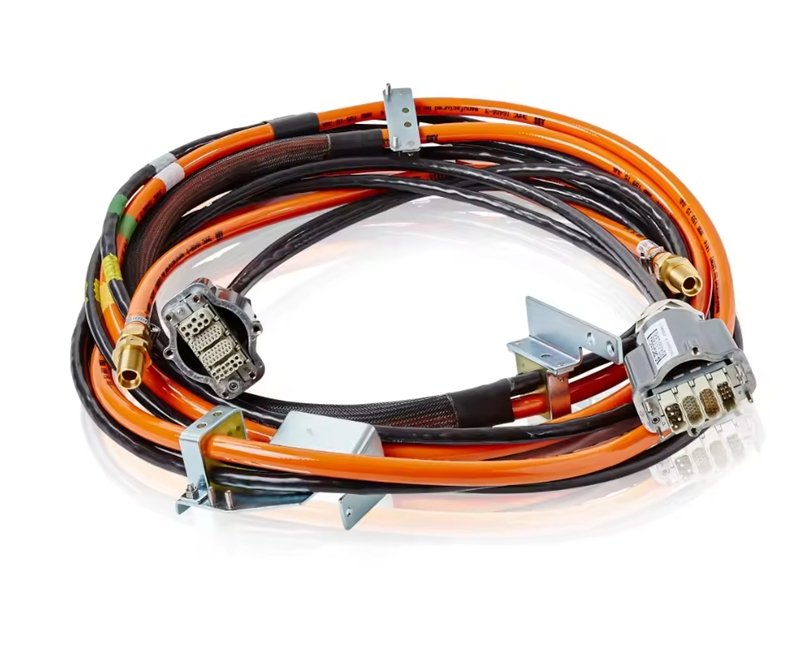
With the evolution of robotics, new subtypes are emerging:
- Cleanroom Cables: Low outgassing materials (FEP, PTFE), particle-free jackets
- Medical Robotic Cables: Silicone or TPU jackets for sterilization and biocompatibility
- High-Temperature Cables: Operate up to +250°C for aerospace and welding robots
- Miniature Robotic Cables: Ultra-thin OD (< 2 mm) for surgical or micro-assembly devices
- Underwater Robotic Cables: Pressure-resistant, water-blocked structures for ROVs
Sino-Conn’s engineering flexibility allows mixing materials, shielding designs, and connector types to meet highly specific requirements — from robot-assisted surgery to automated warehouse systems.
The Diversity of Robotic Cables
| Cable Type | Key Function | Typical Motion Type | Material / Jacket | Lifetime (cycles) |
|---|---|---|---|---|
| Power Cable | Power delivery | Flex + mild torsion | PUR / TPE | 10 million |
| Control Cable | Signal control | Continuous flex | PVC / TPE | 5–8 million |
| Data Cable | Communication | Flex + torsion | Shielded PUR | 5 million |
| Sensor Cable | Feedback signals | Flex | PUR / FEP | 10 million |
| Hybrid Cable | Power + Signal | Flex + torsion | PUR | 5 million |
| Drag Chain Cable | Linear motion | Flex only | PUR / PVC | 10+ million |
What Materials and Construction Features Ensure Durability?
Material quality defines cable endurance. Robotic cables combine precision metallurgy, engineered polymers, and multi-layered shielding to achieve long service life.
Durable robotic cables use fine-stranded copper conductors, high-flex insulation (TPE, PUR, FEP), EMI shielding, and abrasion-resistant jackets to ensure long-term reliability in motion-intensive applications.
Conductor Materials
Fine-stranded tinned copper provides high flexibility and oxidation resistance. For ultra-dynamic environments, Sino-Conn uses Class 6 ultra-fine conductors (0.07 mm strands) tested for 10 million cycles.
Insulation and Jacket Compounds
- TPE (Thermoplastic Elastomer): Excellent elasticity and low-temperature flexibility
- PUR (Polyurethane): High abrasion, oil, and chemical resistance
- FEP/PTFE: Used in cleanroom and high-temperature robotics
- PVC: Economical option for light-duty applications
| Material | Flexibility | Oil Resistance | Temp Range (°C) | Applications |
|---|---|---|---|---|
| PVC | Medium | Moderate | -20~+80 | General robotics |
| PUR | High | Excellent | -40~+125 | Industrial, drag chain |
| TPE | Very High | Good | -50~+125 | Automotive, EV robots |
| FEP/PTFE | High | Excellent | -65~+250 | Aerospace, medical |
Shielding and EMI Control
High-speed motors generate EMI that can disrupt sensors. Sino-Conn’s cables use braided copper + aluminum foil shielding, offering ≥90 dB attenuation across 1 MHz–1 GHz frequencies.
Mechanical Reinforcements
Kevlar threads, filler ropes, and separator tapes maintain roundness and prevent internal friction — key for torsional stability.
How to Choose the Right Robotic Cable for Your Application
Selecting the correct robotic cable is not just a procurement decision — it’s an engineering choice that defines reliability, accuracy, and uptime.
Every robot, from lightweight collaborative arms to heavy industrial manipulators, moves differently, operates under unique electrical loads, and faces varied environmental challenges.
Using the wrong cable type or material can lead to signal instability, premature failure, or costly downtime.
To choose the right robotic cable, evaluate your application’s motion type (bending or torsion), electrical requirements, environmental conditions, and signal needs. Select cables with fine-stranded copper conductors, PUR or TPE jackets, and EMI shielding for dynamic motion. The ideal cable balances flexibility, strength, and signal integrity to ensure long-term reliability in robotic systems.
Understand the Motion Profile
The first step is to analyze how the cable will move during operation — linear flexing, twisting, or a combination of both.
Different robotic tasks impose different mechanical stresses:
| Motion Type | Description | Recommended Cable Type | Cycle Life |
|---|---|---|---|
| Linear Flex | Moves back-and-forth in cable chains or sliding systems | Drag-chain cable | ≥10 million cycles |
| Torsion Motion | Rotates ±360°/m repeatedly (typical in 6-axis robots) | Torsion-optimized robotic cable | ≥3 million cycles |
| Hybrid Motion | Mix of bending, twisting, and acceleration | High-flex hybrid cable | ≥5 million cycles |
| Static | Minimal or no motion | Standard industrial cable | N/A |
For robots with multiple moving joints, the cable routing path should allow even stress distribution. Sino-Conn’s engineers simulate cable motion digitally before production, adjusting lay lengths and filler geometry to reduce friction between conductors.
This design process extends cable lifespan by up to 40% compared with generic flex cables.
Match Electrical and Signal Requirements
Electrical characteristics directly affect both performance and safety. Robotic cables must handle the proper voltage, current, impedance, and signal bandwidth without overheating or distorting signals.
Key Considerations:
- Voltage rating: Choose 300V for signal lines, 600V+ for power lines.
- Current capacity: Determine based on motor or actuator load (consider derating for motion).
- Signal type: Analog, digital, or data (Ethernet/CAN/PROFINET).
- Impedance control: Maintain 100 Ω ±5 Ω for Ethernet or fieldbus pairs.
- EMI shielding: Dual-layer (foil + braid) shields are ideal near motors or drives.
| Cable Function | Typical Spec | Shield Type | Conductor Size (mm²) |
|---|---|---|---|
| Power/Servo Cable | 600 V, 20–30 A | Optional braid | 0.75–4.0 |
| Control Cable | 300 V, 2–5 A | Foil/braid | 0.25–0.75 |
| Data Cable | 100 Ω, <0.3 dB/m loss | Foil + braid | 0.14–0.25 |
| Feedback Cable | <50 V | 100% foil + 90% braid | 0.05–0.14 |
Evaluate Environmental Conditions
Robotic environments vary widely — from sterile labs to oil-filled automotive lines.
The outer jacket material must resist the surrounding temperature, chemicals, and mechanical abrasion.
| Environment | Recommended Jacket Material | Properties |
|---|---|---|
| General indoor automation | PVC / TPE | Economical, flexible |
| Factory floor (oily or wet) | PUR | Resistant to oil, coolant, and abrasion |
| Outdoor or UV-exposed areas | PUR / TPU | UV-resistant, weather-stable |
| Cleanroom / medical | FEP / PTFE / silicone | Low outgassing, sterilizable |
| High-temperature zones | FEP / cross-linked TPE | Up to +200 °C continuous |
| Cryogenic / cold storage | TPE | Flexible to –50 °C |
Sino-Conn frequently combines multi-layer jackets — for instance, a TPE inner layer for flexibility and a PUR outer shell for mechanical toughness, achieving both durability and motion smoothness.

Consider Cable Length, Diameter, and Routing
A cable’s outer diameter (OD) and bend radius directly affect how it performs inside robot joints or cable carriers.
A thick cable may provide durability but restrict movement; a thin cable may flex easily but suffer from voltage drop or signal loss over distance.
Practical Guidelines:
- Keep bend radius ≤ 7.5 × OD for robotic motion.
- Allow 10–15% slack for free cable movement.
- Avoid tight bundling — maintain airflow to dissipate heat.
- Use strain relief clamps or spiral wraps at entry points.
Verify Mechanical Durability and Testing Standards
Longevity is the hallmark of robotic cables.
Look for cables that are tested and certified under recognized dynamic motion standards, not just static voltage tests.
| Performance Test | Condition | Minimum Requirement | Standard Reference |
|---|---|---|---|
| Flex Life | Drag-chain simulation | ≥10 million cycles | IEC 60228 / EN 50396 |
| Torsion Life | ±360° / m twist | ≥3 million cycles | ISO 14572 / DIN EN 50289 |
| EMI Shield Integrity | After motion | ≥ 85 dB attenuation | EN 55022 |
| Oil & Chemical Resistance | 7-day immersion | No degradation | UL 758 |
| Temperature Range | –50 ~ +125 °C | Stable insulation | IEC 60332-1 |
Match Cable Type to Robotic Application
Different robotic tasks demand different cable constructions.
Below are the most common application-based recommendations:
a. Industrial Robots (6-Axis Arms)
- Motion: High torsion and bending
- Recommended Cable: Torsion-optimized PUR cable with cross-lay conductors
- Why: Maintains structure during ±360°/m rotation
- Example Use: Automotive spot-welding robots, palletizers
b. Collaborative Robots (Cobots)
- Motion: Gentle repetitive motion, shared workspaces
- Recommended Cable: Lightweight TPE hybrid cable
- Why: Enhances flexibility, reduces drag and weight on joints
- Example Use: Pick-and-place or packaging cobots
c. Gantry or Linear Robots
- Motion: Linear back-and-forth in drag chains
- Recommended Cable: High-flex drag-chain cable
- Why: Engineered for millions of flex cycles without jacket cracking
- Example Use: CNC automation, laser-cutting systems
d. Medical and Laboratory Robots
- Motion: Small, precise, sterilizable movements
- Recommended Cable: Silicone or FEP jacket, halogen-free
- Why: Sterilization compatibility, chemical resistance, smooth surface
- Example Use: Surgical robots, automated analyzers
e. Outdoor / Harsh-Environment Robots
- Motion: Mixed; includes UV, heat, and moisture exposure
- Recommended Cable: UV-resistant PUR with additional sealing layer
- Why: Protects against degradation, cracking, and chemical erosion
- Example Use: Agricultural, mining, or inspection robots
f. Data-Intensive Robots (Vision / AI Systems)
- Motion: Moderate flex, high-speed signal transmission
- Recommended Cable: Shielded Cat6 / Hybrid Ethernet cable
- Why: Ensures data integrity under EMI and continuous flex
- Example Use: Vision-guided assembly robots, logistics sorters
Check Connector Compatibility and Customization
Cable selection doesn’t end at the conductor — connectors define system reliability.
Ensure the cable’s OD, conductor gauge, and shielding match the connector type.
Key Connector Types for Robotic Cables:
- Circular Connectors: M8, M12, M23 for sensors and servo motors
- Rectangular Power Connectors: For hybrid power + signal systems
- Industrial Ethernet Connectors: RJ45, EtherCAT, PROFINET interfaces
- Custom Molded Connectors: Tailored for tight robotic joints or sealed housings
Sino-Conn offers OEM-grade connector integration, including molded strain reliefs, pin-to-pin definition matching, and labeling, ensuring plug-and-play compatibility for complex robotic systems.
Prioritize Lifecycle Cost Over Initial Price
While robotic cables can cost 1.5–3× more than standard cables, they typically last 10–20× longer in continuous motion.
This translates to lower maintenance downtime and better ROI.
| Cable Type | Initial Cost | Average Lifespan | Maintenance Frequency |
|---|---|---|---|
| Standard Industrial Cable | Low | 0.5–1 year | Frequent replacement |
| High-Flex Industrial Cable | Medium | 2–3 years | Moderate |
| Robotic Cable (Sino-Conn) | Medium–High | 5–10 years | Minimal |
Where Are Robotic Cables Used Across Industries?
Robotic cables are at the heart of modern automation — they make machines move, sense, and respond with precision. From factory floors and surgical suites to aerospace assembly lines, these cables deliver power, control, and data in environments where flexibility, durability, and reliability are non-negotiable.
Unlike standard wires, robotic cables must survive millions of continuous bending, twisting, and flexing cycles without degradation. They are engineered to endure vibration, oil exposure, chemical splashes, and high temperatures while maintaining electrical stability and mechanical strength.
Their use extends far beyond traditional industrial robots. Today, robotic cables are found in every major automation sector, supporting everything from autonomous logistics to medical robotics.
Robotic cables are used across industries such as automotive, manufacturing, logistics, medical, aerospace, and semiconductor automation. They power and control robotic arms, conveyors, sensors, and vision systems, ensuring flexibility and electrical stability under dynamic motion. Designed to resist oil, heat, and torsion, these cables are essential for high-performance automation environments.
1. Automotive Manufacturing and Assembly
The automotive sector is the largest consumer of robotic cables worldwide.
Industrial robots in automotive plants perform welding, painting, assembling, and inspection tasks 24/7 — environments filled with oil mist, high temperatures, and strong EMI fields.

Typical Cable Applications:
- Servo Power Cables: Deliver energy to robotic welding arms and presses.
- Control Cables: Coordinate movements between the controller and robotic joints.
- Data/Feedback Cables: Ensure real-time communication for precise motion synchronization.
- Hybrid Cables: Combine servo power and feedback signals to reduce cabling clutter.
| Application Zone | Motion Type | Recommended Cable Material | Key Features |
|---|---|---|---|
| Welding Robots | Torsion + heat exposure | Cross-linked PUR / FEP | Heat & spark resistant |
| Paint Robots | Multi-axis flex | TPE / PTFE | Chemical and solvent resistant |
| Assembly Arms | High-speed bending | PUR | Light, abrasion-resistant |
| Vision/Inspection | Flex + signal integrity | Shielded Cat6 / CAN | EMI protected, low loss |
2. Electronics and Semiconductor Manufacturing
In electronics and semiconductor production, robotic systems must operate in clean, vibration-free, and high-precision environments.
Even slight particle generation or EMI disturbance can ruin an entire wafer or PCB.
Typical Cable Applications:
- Cleanroom Robotic Cables: Made from low-outgassing FEP or PTFE materials.
- Signal/Feedback Cables: Used for wafer-handling arms and precision conveyors.
- Miniature Data Cables: Ultra-thin for compact pick-and-place systems.
| Requirement | Design Feature | Benefit |
|---|---|---|
| Particle-free operation | Smooth, non-friction jacket (PTFE) | ISO Class 1–3 cleanroom compatible |
| Precision motion | Ultra-fine stranded cores | Minimal signal delay |
| ESD control | Anti-static coating | Prevents charge accumulation |
| Heat & chemical resistance | Fluoropolymer jacket | Safe under plasma/etch environments |
3. Medical and Laboratory Robotics
Robotic automation in healthcare and life sciences requires exceptional flexibility, sterilization resistance, and biocompatibility.
These cables power systems such as surgical robots, patient-assist devices, and automated analyzers — often in confined spaces.
Key Design Priorities:
- Material Safety: Medical-grade silicone, TPU, or FEP.
- Cleanability: Smooth, non-porous surfaces to resist disinfectants.
- Silent Flexibility: Low-friction layers for quiet operation in operating rooms.
- Miniaturization: Ultra-thin OD for handheld or micro-robotic tools.
| Application | Cable Type | Material | Performance Need |
|---|---|---|---|
| Surgical Robots | Multi-core micro cable | FEP / Silicone | Sterilizable, precise flex |
| Diagnostic Machines | Sensor/data cable | PVC / TPE | EMI shielded, chemical resistant |
| Laboratory Arms | Hybrid robotic cable | PUR / TPE | Long flex life, fluid-resistant |
4. Logistics, Warehousing, and AGV Systems
Automation in logistics — from automated guided vehicles (AGVs) to smart conveyors — relies on cables that can handle motion, vibration, and environmental exposure.

Typical Cable Applications:
- Power and Control Cables: For drive systems and lifting mechanisms.
- Hybrid Cables: For AGV steering systems combining data and power.
- Ethernet / Communication Cables: For navigation and real-time tracking.
| System Component | Motion Type | Cable Requirement | Material |
|---|---|---|---|
| Conveyor belts | Linear flex | Oil- and dust-resistant jacket | PUR |
| AGV steering arms | Torsion motion | High-flexibility, EMI-shielded | TPE / PUR |
| Lifting systems | Flex + tension | Reinforced strain relief | TPU |
| Vision scanners | Fixed + data | Shielded Cat6 | Foil + braid shield |
5. Aerospace and Defense Robotics
Aerospace robotics demand lightweight, high-temperature, and EMI-resistant cables capable of precise movement under extreme mechanical and environmental stress.
Key Use Cases:
- Satellite assembly automation
- Robotic drilling and riveting systems
- UAV (drone) actuation systems
- Inspection and maintenance robots
| Performance Demand | Cable Feature | Material Recommendation |
|---|---|---|
| Weight reduction | Ultra-fine conductors | Silver-plated copper |
| High-temperature endurance | Thermal-resistant insulation | FEP / PTFE |
| EMI protection | Dual shielded twisted pairs | Aluminum foil + copper braid |
| Flame retardancy | Aerospace compliance | UL VW-1 / FAR 25.853 rated |
6. Food and Beverage Processing Automation
In food automation, robotic systems must meet hygienic and chemical-resistance standards, as cables are constantly exposed to moisture, oil, cleaning agents, and high-pressure washdowns.
Typical Cable Requirements:
- Non-toxic materials compliant with FDA and EU food-contact standards.
- Smooth, non-absorptive jackets to prevent bacterial buildup.
- Corrosion-resistant shields and conductors.
| Application Area | Motion Profile | Cable Material | Certification |
|---|---|---|---|
| Packaging robots | Multi-axis flex | PUR / TPU | FDA 21 CFR 177 |
| Bottle-filling systems | Flex + vibration | TPE / FEP | RoHS / REACH |
| Washdown zones | Stationary + exposure | PTFE | IP69K water resistance |
7. Renewable Energy and Industrial Automation
In renewable and heavy industrial environments, robotic systems such as solar panel installers, wind turbine maintenance robots, and battery pack assembly systems need robust, high-flex, and weatherproof cables.

Key Cable Features:
- UV- and ozone-resistant PUR jackets
- Reinforced conductors for torque resistance
- Extended temperature range (–50°C to +125°C)
- Integrated hybrid functionality for compact motion systems
| Application | Cable Function | Material | Motion Type |
|---|---|---|---|
| Solar robotics | Control + power | PUR | Linear + torsion |
| Wind turbine automation | Sensor + data | TPE / FEP | Flex under vibration |
| Battery production lines | Hybrid robotic | PUR / TPU | Drag chain |
8. Emerging Fields: Service Robots, AI, and Cobots
With the rise of service and collaborative robots, cable design has shifted toward lightweight, compact, and aesthetically integrated systems that ensure safety and silent operation.
Emerging Applications:
- Domestic robots: Vacuum, cleaning, and inspection units
- Retail and hospitality robots: Food delivery, service automation
- AI-driven cobots: Working alongside humans with torque sensors and feedback loops
| Design Priority | Cable Design Solution |
|---|---|
| Compact form factor | Ultra-thin, multi-core flexible cable |
| Low noise | TPE inner layers for smooth motion |
| Safety & touch comfort | Silicone / TPU soft-touch jacket |
| Modular integration | Custom connectors & cable harness assemblies |
What Are Common Problems and How to Avoid Them?
Common robotic cable problems include conductor breakage, insulation cracking, EMI interference, connector failure, and routing stress.
To avoid these issues, choose cables rated for high-flex or torsion motion, ensure proper bend radius and strain relief, and use materials resistant to heat, oil, and vibration.
Regular inspection and correct installation are key to long-term robotic cable reliability.
1. Conductor Fatigue and Breakage
The number-one failure cause in robotic cables is conductor fatigue — the copper strands inside the wire gradually weaken after millions of bends or twists.
When a cable is not designed for continuous motion, microscopic cracks form, eventually leading to open circuits and signal loss.
Why It Happens
- Cable not rated for dynamic flex or torsion
- Over-tight bend radius (<7.5×OD)
- Cable tie strain or improper clamping
- Inconsistent motion speed or acceleration
| Symptom | Diagnostic Sign | Underlying Cause |
|---|---|---|
| Intermittent signal loss | Resistance fluctuation | Broken strands |
| Sudden motor stop | Voltage drop | Fatigue fracture |
| Visible flat spot | Uneven routing | Excess compression |
How to Prevent It
- Use fine-stranded (Class 6) copper conductors for flexibility.
- Follow the manufacturer’s bend-radius limit precisely.
- Add strain-relief glands or spiral wraps near connectors.
- Verify cable movement path through simulation or CAD modeling.
Sino-Conn’s robotic cables use ultra-fine copper strands (≥ 50 µm) and optimized lay lengths, proven to withstand 10 million + flex cycles without conductor fatigue.
2. Jacket and Insulation Damage
When cables operate near heat sources, sharp edges, or chemicals, the outer jacket can degrade.
Cracks, cuts, and melting often expose the insulation, leading to short circuits or contamination — a critical issue in cleanroom and medical robotics.
Root Causes
- Poor abrasion resistance (PVC in harsh zones)
- Exposure to oil, coolant, or welding spatter
- UV or ozone aging in outdoor applications
- Excessive friction against moving machine parts
| Environment | Risk Factor | Recommended Jacket Material |
|---|---|---|
| Factory oil mist | Chemical corrosion | PUR / TPU |
| Welding cell | Heat & spatter | FEP / cross-linked TPE |
| Outdoor exposure | UV & ozone | TPU / PUR |
| Cleanroom | Particle generation | PTFE / FEP |
Prevention Tips
- Choose PUR or TPE jackets for industrial zones.
- Add protective sleeves or energy chains.
- Ensure 5–10 mm clearance from metal edges.
- For heat zones, apply fluoropolymer jackets (FEP/PTFE) rated > 200 °C.
3. Electromagnetic Interference (EMI)
In robotic systems, motors and drives generate intense electromagnetic fields.
Without proper shielding, these signals can distort sensor feedback and communication lines, leading to misalignment, latency, or system shutdowns.
Why EMI Problems Occur
- Unshielded control or feedback cables
- Poor shield termination or grounding
- Parallel routing of power and data lines
- Damaged braid from repeated flexing
| Signal Type | Sensitivity to EMI | Recommended Shield |
|---|---|---|
| Power (AC/DC) | Low | Optional braid |
| Control (analog/digital) | Medium | Foil + drain wire |
| Data (Ethernet/PROFINET) | High | Foil + braid > 85 dB |
| Feedback (encoder) | Very High | 100 % foil + 90 % braid |
Prevention Tips
- Use dual-layer (foil + braid) shields with > 85 dB attenuation.
- Ground shields 360° at both cable ends for minimal impedance.
- Separate power and data lines by ≥ 100 mm in routing channels.
- Regularly test shield continuity after motion testing.
4. Connector and Termination Failures
A robotic cable is only as reliable as its connector.
Frequent bending and vibration can loosen crimps or break solder joints, while torque on the connector body may cause intermittent disconnection.
Typical Failure Points
- Poor crimp contact or cold solder joint
- Inadequate strain relief or boot design
- Loose coupling due to vibration
- Mis-matched connector OD to cable OD
| Connector Type | Common Issue | Preventive Design |
|---|---|---|
| M8 / M12 circular | Back-shell loosening | Molded strain relief |
| RJ45 Ethernet | EMI leakage | Shielded Cat6 connectors |
| Power/Servo | Crimp fatigue | Crimped + molded boot |
| Custom hybrid | Seal failure | Over-molded connector housing |
How to Prevent It
- Use over-molded connectors with integrated strain relief.
- Match connector spec with cable OD tolerance (± 0.2 mm).
- Avoid twisting or pulling connectors during operation.
- Periodically inspect torque and locking mechanisms.
5. Routing and Installation Mistakes
Incorrect cable routing can shorten cable life by 80 % or more.
Kinking, tight bundling, or twisting along the cable axis induces stress far beyond rated tolerance.
Frequent Mistakes
- Using standard zip ties (cuts jacket)
- Forcing tight loops or sharp angles
- Over-stretching cables to reach terminals
- Placing cables too close to heat or vibration sources
| Installation Error | Resulting Damage | Better Practice |
|---|---|---|
| Tight bend radius | Internal conductor fracture | Maintain ≥ 7.5 × OD radius |
| Cable pulled taut | Core stress at connectors | Leave 10 % slack |
| Parallel power/data | EMI cross-talk | Separate by ≥ 100 mm |
| Unsupported spans | Sag or snagging | Use energy-chain guides |
Prevention Tips
- Route cables along neutral bending planes.
- Use energy chains or robotic dress packs for dynamic motion.
- Secure cables with rounded clamps or flexible straps.
- Perform a test run (100 cycles) before final installation.
6. Environmental and Material Mismatch
Environmental exposure can silently degrade cable performance over time.
Using the wrong insulation or jacket in certain environments leads to swelling, cracking, or corrosion, especially under heat, humidity, or UV exposure.
Common Scenarios
- Oil-based coolants softening PVC insulation
- UV degradation in outdoor robots
- Hydrolysis in humid conditions
- Salt or corrosive gas exposure in coastal plants
| Environment | Incorrect Material | Correct Solution |
|---|---|---|
| Oil/Chemical | PVC | PUR / TPU |
| UV Outdoor | Non-UV PVC | UV-stabilized PUR |
| Humid / Marine | PVC | TPU / FEP |
| Cleanroom | PVC / PUR | PTFE / Silicone |
Preventive Measures
- Identify all environmental stressors during design.
- Select jacket materials with specific chemical resistance data.
- Use halogen-free and flame-retardant compounds for safety compliance.
- For multi-environment robots, opt for dual-jacket cables (inner TPE, outer PUR).
7. Maintenance Neglect
Even the best-engineered cable can fail if preventive maintenance is ignored.
Routine inspection helps detect wear long before it causes downtime.
Maintenance Checklist
- Visual check for jacket cuts or flat spots
- Measure resistance for conductor fatigue
- Inspect connectors for oxidation or looseness
- Confirm shield grounding continuity
- Replace cables showing > 10 % deviation from original impedance
Recommended Frequency:
- Every 3 months: high-motion industrial robots
- Every 6 months: collaborative or medical robots
- Annually: stationary systems
Conclusion
In the world of robotics, every motion counts — and every cable defines that motion’s precision, consistency, and longevity.

While mechanical parts and algorithms often take the spotlight, it’s the cable system that quietly ensures the robot’s signals, power, and data remain stable through millions of movements, harsh environments, and tight spaces.
Whether you’re developing an industrial robot, an autonomous warehouse system, or a medical automation platform, Sino-Conn provides the expertise and agility to bring your design to life.