Skip to content

In today’s connected world, the internet feels invisible. We stream movies in seconds, sync massive files to the cloud, and rely on real-time communication without thinking twice about what makes it all possible. Yet behind every stable connection—whether in a home office, a factory floor, or a data center—there is still something surprisingly physical: an internet cable.
As wireless technologies improve, many people assume cables are becoming less important. In reality, the opposite is true. The faster, more reliable, and more secure a network needs to be, the more critical the underlying cabling becomes. From Ethernet cables running through office walls to fiber optic lines carrying data across continents, internet cables quietly determine speed, latency, stability, and long-term scalability.
For buyers, engineers, and system integrators, the challenge is not a lack of options—it is choosing the right one. Cat6 or Cat8? Fiber or copper? Shielded or unshielded? Indoor-rated or industrial-grade? Each decision affects performance, cost, installation, and future upgrades.
Internet cables are physical transmission lines that carry data between devices and networks. The most common types of internet cables include Ethernet cables (Cat5e, Cat6, Cat6A, Cat7, Cat8), fiber optic cables, and coaxial cables. Each type differs in speed, bandwidth, distance capability, shielding, and application. Choosing the right internet cable depends on network speed requirements, environment, installation conditions, and long-term scalability.
Despite how technical this topic may seem, the real story of internet cables is deeply practical. It is about real environments, real constraints, and real performance needs. Understanding how different internet cables work—and where they perform best—can prevent costly mistakes and unlock more reliable networks. Let’s take a closer look.
What Are Internet Cables?
Internet cables are physical communication cables used to transmit data between network devices and access points. They form the backbone of wired internet connections and are essential for stable, high-speed, and low-latency data transmission. Common internet cables include Ethernet cables for local networks, fiber optic cables for high-speed and long-distance connections, and coaxial cables for certain broadband services.
What does an internet cable do?
At its core, an internet cable transfers digital data from one device to another. This data may represent web pages, video streams, emails, or machine-to-machine communication. Unlike wireless signals, which are affected by interference, distance, and physical obstacles, wired internet cables provide a controlled transmission path with predictable performance.
Different cable designs use different transmission methods. Copper-based cables transmit electrical signals, while fiber optic cables transmit light pulses. Each approach has strengths and limitations in terms of speed, distance, immunity to interference, and installation complexity.
Are internet cables the same as network cables?
The terms “internet cable” and “network cable” are often used interchangeably, but they are not always identical. A network cable refers broadly to any cable used to connect devices within a network. An internet cable is typically the part of that network which provides access to external networks or the internet itself.
In practice, most internet cables in homes and offices are Ethernet cables. In larger infrastructures, fiber optic cables are often used to connect buildings, floors, or entire campuses to the internet backbone.
How are internet cables used in modern networks?
Modern networks are hybrid by design. Wireless access points rely on wired internet cables for backhaul. Servers and switches depend on high-quality cabling to maintain performance under heavy data loads. Even in wireless-first environments, cables remain essential for reliability, security, and consistent bandwidth.
Which Types of Internet Cables Are Commonly Used?
The most commonly used internet cables today include Ethernet cables, fiber optic cables, and coaxial cables. Each type is designed for different network environments and performance requirements. Ethernet cables dominate local area networks, fiber optic cables support high-speed and long-distance data transmission, and coaxial cables are still used in certain broadband and legacy systems. Understanding how these cable types differ helps users select the most suitable solution for their specific infrastructure needs.
What are the different types of Internet cables?
Internet cables generally fall into three main categories: Ethernet (twisted-pair copper), fiber optic, and coaxial. These categories reflect not only the physical construction of the cable but also how data is transmitted, how far it can travel, and what kind of environments the cable is designed to operate in.
- Ethernet cables are the most familiar and widely used, commonly found in homes, offices, commercial buildings, and industrial networks.
- Fiber optic cables form the backbone of modern internet infrastructure, especially where high bandwidth and long transmission distances are required.
- Coaxial cables, while less common in new installations, are still used in certain cable broadband systems and existing network infrastructures.
Ethernet cables (Cat5e, Cat6, Cat6A, Cat7, Cat8)

Ethernet cables use twisted pairs of copper conductors to transmit data. Over time, Ethernet standards have evolved to support higher speeds, greater bandwidth, and improved resistance to electromagnetic interference. Different cable categories are designed for different performance levels and installation scenarios.
| Category | Max Speed | Max Distance | Typical Use |
|---|---|---|---|
| Cat5e | 1 Gbps | 100 m | Home & small offices |
| Cat6 | 10 Gbps | 55 m | Offices & light industrial |
| Cat6A | 10 Gbps | 100 m | Commercial networks |
| Cat7 | 10 Gbps | 100 m | Shielded environments |
| Cat8 | 25–40 Gbps | 30 m | Data centers |
Ethernet remains the preferred choice for most wired internet connections because it offers a strong balance between performance, cost, and installation flexibility. Lower categories such as Cat5e and Cat6 are sufficient for general networking needs, while higher categories like Cat6A and Cat8 are typically selected for environments with higher bandwidth demands or stricter performance requirements.
Fiber optic cables

Fiber optic cables transmit data as light pulses rather than electrical signals. This allows them to support extremely high data rates over long distances with minimal signal loss. Fiber cables are widely used in internet backbones, data centers, campus networks, and fiber-to-the-home (FTTH) deployments. They are particularly valuable in environments where electromagnetic interference is a concern or where future network scalability is a priority.
Coaxial cables
Coaxial cables use a central conductor surrounded by insulation and shielding, which helps protect signals from external interference. Although largely replaced by Ethernet and fiber in modern networks, coaxial cables are still used in certain cable internet services and legacy systems. In some regions, they remain an important part of existing broadband infrastructure.

Do wireless networks still need cables?
Yes. Even in wireless networks, wired internet cables remain essential. Wireless access points, routers, and switches all rely on wired connections for power, backhaul, and stable data transmission. High-quality cabling ensures consistent network performance and reduces latency, especially in high-traffic environments.
How Do Ethernet Internet Cables Differ by Category?
Ethernet internet cables differ by category mainly in terms of data transmission speed, supported bandwidth, maximum cable length, shielding design, and resistance to electromagnetic interference (EMI). Higher cable categories are engineered to support faster data rates and stricter signal integrity requirements, but they often involve trade-offs in installation flexibility, cable thickness, and cost. Understanding these differences helps network designers and buyers select the most appropriate Ethernet cable category based on real application needs rather than headline specifications alone.
How fast is each Ethernet cable type?
Ethernet cable speed is defined by the maximum data rate the cable can reliably support under standardized conditions. Lower categories such as Cat5e are designed for gigabit networks, while newer categories enable multi-gigabit and ultra-high-speed connections. However, achievable speed depends not only on the cable category but also on installation quality, connector termination, and environmental conditions.
| Ethernet Category | Rated Max Speed | Typical Application |
|---|---|---|
| Cat5e | 1 Gbps | Home and small office networks |
| Cat6 | Up to 10 Gbps | Office and light industrial networks |
| Cat6A | 10 Gbps | Commercial and enterprise networks |
| Cat7 | 10 Gbps | High-interference environments |
| Cat8 | 25–40 Gbps | Data center interconnections |
While Cat6 and above support 10 Gbps or higher speeds, these performance levels are most relevant in enterprise and data center environments rather than standard office networks.
What is the maximum cable length for each category?
Transmission distance is a critical factor in Ethernet cable selection. Most Ethernet standards specify a maximum channel length of 100 meters, including patch cords and horizontal cabling. However, as data rates increase, effective transmission distance may be reduced.
Cat6 cables, for example, can support 10 Gbps speeds only over shorter distances (typically up to 55 meters). Cat6A maintains 10 Gbps performance across the full 100-meter channel, making it more suitable for larger commercial installations. Cat8 cables, designed for extremely high speeds, are limited to shorter runs of around 30 meters and are therefore primarily used within data centers rather than across buildings.
How do shielding and EMI protection differ?
Shielding design is one of the key distinctions between Ethernet cable categories, particularly in environments with high electromagnetic noise. Unshielded twisted pair (UTP) cables rely on balanced twisting to reduce interference, while shielded designs such as FTP and STP incorporate additional layers of foil or braid to block external noise.
Higher-category cables often include more robust shielding to maintain signal integrity at higher frequencies. However, shielded cables typically require proper grounding and more careful installation. In low-interference environments, unshielded cables may offer sufficient performance with easier handling and lower cost.
How do bandwidth and signal integrity vary by category?
Each Ethernet category is specified for a maximum operating frequency, which directly affects bandwidth and resistance to crosstalk. Higher frequencies allow cables to carry more data but also increase sensitivity to installation errors and physical stress.
As categories increase, cable construction becomes more precise, with tighter twist rates, improved insulation materials, and stricter impedance control. These enhancements help preserve signal quality but also result in thicker cables with reduced flexibility, which can affect routing in tight spaces.
Is Cat6 or Cat8 better for different applications?
Neither Cat6 nor Cat8 is universally better; each serves a distinct purpose. Cat6 is widely used in office, commercial, and industrial networks because it offers a practical balance between performance, flexibility, and cost. Cat8, by contrast, is optimized for short, high-speed connections in data centers where maximum bandwidth is required over limited distances.
Selecting between Cat6 and Cat8 should be based on application requirements, expected network growth, installation constraints, and budget considerations—not solely on maximum speed ratings. For many users, Cat6 or Cat6A provides ample performance, while Cat8 is best reserved for specialized high-density networking environments.
How to Choose the Right Internet Cable for Your Application?
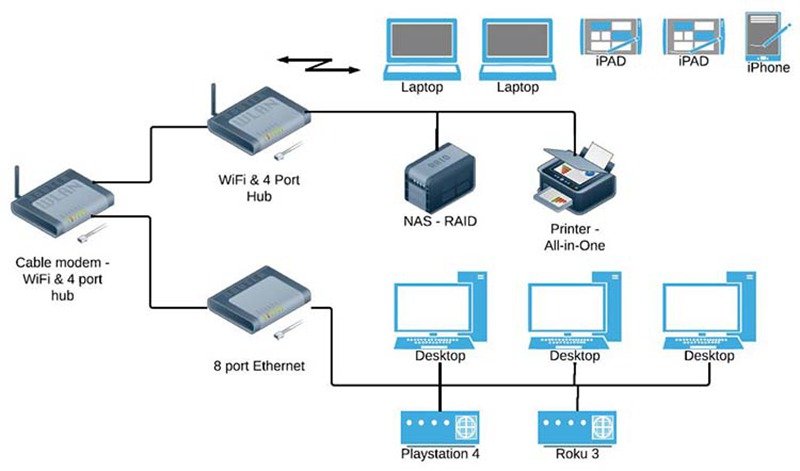
Choosing the right internet cable depends on network speed requirements, installation environment, distance, and future scalability. Home and office networks prioritize flexibility and cost, while industrial and data center environments require higher durability, shielding, and performance margins.
Home and office networks
For most homes and offices, Cat6 or Cat6A cables provide sufficient performance for current and near-future needs. Ease of installation and flexibility are often more important than maximum speed.
Industrial and commercial environments
Industrial environments introduce challenges such as vibration, oil exposure, UV radiation, and electromagnetic noise. Cables in these settings often require enhanced jackets, shielding, and temperature resistance.
Data centers and high-speed applications
Data centers prioritize bandwidth density, low latency, and thermal stability. Short-run, high-performance cables such as Cat8 or fiber optic assemblies are commonly used.
Indoor vs outdoor installations
Outdoor installations require UV-resistant, waterproof, and corrosion-resistant materials. Using indoor-rated cables outdoors can significantly reduce service life.
What Specifications Matter in Internet Cable Assemblies?
Key specifications for internet cable assemblies include conductor material, shielding design, impedance control, connector type, length, outer diameter, and flexibility. These factors directly affect signal integrity, durability, and compatibility with network equipment.
Cable structure and conductor materials
Copper purity, conductor gauge, and twisting consistency all influence electrical performance. Poor materials can lead to attenuation and crosstalk.
Shielding, impedance, and signal integrity
Controlled impedance and proper shielding are critical for maintaining high-speed signal integrity, especially in noisy environments.
Connector types and pin definitions
Connector quality and correct pinout definitions ensure compatibility and reduce installation errors. Even high-quality cables can fail if connectors are poorly terminated.
Length, OD, and flexibility requirements
Mechanical factors such as outer diameter and bending radius affect installation feasibility and long-term reliability.
Can Internet Cables Be Customized for Specific Needs?
Yes, internet cables can be fully customized to meet specific electrical, mechanical, and environmental requirements. Customization may include cable length, pinout definition, connector selection, materials, shielding, and compliance with international certifications.
Can cable length and pinout be customized?
Custom lengths eliminate excess cable and reduce signal loss. Custom pinouts support non-standard device interfaces and system architectures.

Can materials and structures be adjusted?
Jacket materials can be selected for flame resistance, oil resistance, UV protection, or halogen-free requirements depending on application.
Original connectors vs compatible alternatives
Original-brand connectors offer brand assurance, while compatible alternatives provide flexibility, shorter lead times, and cost efficiency without sacrificing performance.
How fast can samples and drawings be provided?
Rapid prototyping, accurate drawings, and pre-production approval reduce development risk and speed up project timelines.
Do custom internet cables meet global certifications?
Custom assemblies can comply with UL, ISO, RoHS, REACH, PFAS, and other international standards required for global markets.
Final Thoughts: From Selection to Custom Solutions
Choosing the right internet cable is not about selecting the highest specification—it is about matching performance, environment, and long-term reliability. Standard cables work well in many cases, but custom cable assemblies become essential when conditions, layouts, or performance expectations exceed standard limits.

At Sino-conn, we work closely with engineers, OEMs, and distributors to turn requirements—whether detailed specifications or simple reference images—into reliable internet cable solutions. From rapid drawings and samples to flexible customization and strict quality control, we support projects at every stage.
If you are evaluating internet cable options or need a custom cable assembly tailored to your application, reach out to Sino-conn for a technical discussion and quotation. The right cable choice today can define network performance for years to come.