Skip to content
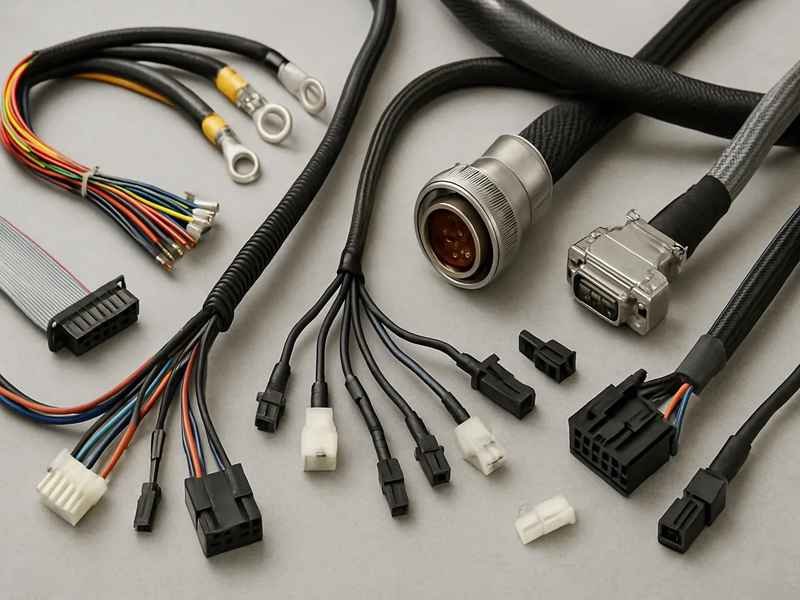
Modern electronics, vehicles, medical devices, and automation systems all depend on one fundamental element: cable assemblies. Yet most engineers, procurement teams, and even experienced technicians underestimate how many distinct types exist—or why so many variations are required. From tiny FFC jumpers inside laptops to armored industrial cables in robotic arms, each assembly represents a specific combination of connectors, conductors, shielding structures, and environmental protections. Understanding these differences is the foundation of reliable product design.
Cable assemblies are engineered combinations of cables, connectors, terminals, shielding, jackets, and protective structures designed to transmit power or signals reliably. They exist in many forms—power cables, data cables, RF coaxial assemblies, sensor wires, automotive harnesses, industrial M12 cables, and more—because each application requires a unique balance of electrical performance, mechanical durability, and environmental resistance. Choosing the right type ensures stability, safety, and product longevity.
As electronics become more compact and systems grow more interconnected, the number of cable assembly types continues to expand. A simple laptop contains more than 20 types of internal and external cables. Now imagine the complexity in EVs, medical devices, telecom systems, factory automation, or aerospace—each requiring tailored assemblies that match voltage, current, EMI, temperature, and mechanical demands. At Sino-Conn, we see this need every day: customers send us drawings, photos, or sometimes only a broken sample and ask, “Can you build this?”
What Are Cable Assemblies and Why Do So Many Types Exist?
Cable assemblies are engineered combinations of wires, connectors, shielding, and protective materials designed to transmit power or signals reliably in specific environments. Hundreds of cable types exist because every application—robotics, medical devices, telecom, automotive, aerospace, outdoor systems—demands unique electrical ratings, mechanical durability, and environmental resistance. Variations in voltage, frequency, EMI exposure, motion, temperature, and connector compatibility drive the diversity of modern cable assemblies.

Cable assemblies aren’t “one product.” They are engineered solutions built to match the electrical, mechanical, and environmental conditions of a device or system. Sino-Conn’s project data shows more than 70% of failed cables from new clients originate from choosing the wrong construction—not the wrong connector. This is why the market supports so many variants: each assembly solves a specific problem.
Power vs Signal Requirements
Different industries transmit either power, data, or both—and each requires different constructions.
Power Assemblies
- Larger AWG (4–18 AWG)
- Heat-resistant insulation
- High current load capability
- Strong mechanical strain relief
- Often include waterproof overmold

Used in: EV chargers, motors, batteries, HVAC units
Signal Assemblies
- Small AWG (24–32 AWG)
- Twisted pairs or coax for noise immunity
- Precise impedance (50Ω, 75Ω, 90Ω, 100Ω, 120Ω)
- EMI shielding and low-capacitance materials

Used in: RF modules, LVDS screens, USB/HDMI, sensors
Sino-Conn Insight
Across 19 years, we observed that mixed-signal assemblies (power + control signal) are the fastest-growing category in robotics and AGV vehicles, requiring customized shielding layouts and segregated conductor groups.
Environmental Challenges
The environment greatly influences cable structure.
Harsh Environment Factors
- Moisture → waterproof housings, TPU jackets, IP68 overmold
- UV exposure → UV-stable PE
- Oil/chemicals → PUR or XLPE insulation
- Extreme temperature → silicone (−60°C to +200°C)
- Outdoor abrasion → braid reinforcement or fiber fillers
Industry Examples
- Solar cables must resist UV + heat + moisture + pulling force
- Medical cables require soft-touch TPU + high flex cycles (300k–500k bends)
- Automotive cables must survive 125°C+ under-hood environments
Sino-Conn Real Cases
In 2024, we designed a TPU + Kevlar filler + IP67 overmold structure for an outdoor smart lock in Europe, increasing its tensile strength by 38% and its bending life by 240%.
Connector Diversity
Different connectors create different assembly structures.
Common Connector Families
- JST / Molex / TE Micro-Fit、Mini-Fit → consumer & industrial control
- Hirose / I-PEX micro connectors → telecom, camera modules
- Circular M8 / M12 / M16 → sensors, factory automation
- RF connectors (SMA, UFL, MMCX) → wireless, antennas
- USB, HDMI, DisplayPort → consumer electronics
Why This Creates Many Cable Types
- Different pitch sizes
- Different pin counts
- Straight vs. right-angle
- Waterproof vs. non-waterproof
- Locking vs. friction-fit mechanisms
Sino-Conn Capability
We support both original branded connectors (Molex/JST/I-PEX) and equivalent cost-saving alternatives, allowing customers to balance cost and performance.
Motion and Mechanical Stress
A cable’s required flex life dramatically changes its construction.
Motion Conditions
- Static installation → PVC or PE, simple geometry
- Moderate bending → stranded copper + TPE jacket
- Constant movement (robotics)
- High-flex silicone or PUR
- Ultra-fine copper strands (0.05–0.08 mm)
- 1–2 million cycle life
Mechanical Stress Considerations
- Pull strength (Kevlar fillers)
- Crush resistance (spiral steel or nylon layers)
- Vibration resistance (automotive standards)
Sino-Conn Testing Data
For a robotics client:
- High-flex control cable achieved 1.2 million bending cycles in testing
- Standard PVC cable failed after 18,000 cycles
Signal Integrity and Frequency Requirements
Different applications demand different electromagnetic performance.
Low-Frequency Signals (<1 MHz)
- Simple shielding
- Thicker conductors
- Basic twisted pairs
High-Frequency Signals (1 MHz–6 GHz)
- Coaxial or twinax structures
- Strict impedance tolerances
- Low-loss dielectric materials
- Multi-layer shielding
Used in:
- RF modules (2.4 GHz, 5.8 GHz)
- GPS antennas
- 5G base station modules
- High-speed LVDS for displays
Sino-Conn Measurement
We perform time-domain reflectometry (TDR) and impedance sweep tests to ensure assemblies meet signal integrity standards.
Compliance and Industry Standards
Different industries impose different compliance rules:
Certifications That Drive Cable Variation
- UL → North America safety
- ROHS / REACH → Europe
- PFAS-free → environmental markets
- ISO13485 → medical
- IP67/IP68 → outdoor/waterproof
- MIL-STD → defense & aerospace
Sino-Conn provides complete COC (Certificate of Conformity) and test reports.
Which Signal and Power Cable Assemblies Are Most Common?
Signal and power cable assemblies differ in conductor size, shielding, insulation, and connector type. Common signal cables include USB, HDMI, LVDS, coax, sensor cables, and data-grade twisted pairs. Power assemblies typically use thicker AWG wires, high-temperature jackets, and locking connectors to carry higher currents safely. Sino-Conn builds both types for industries such as robotics, medical devices, telecom, automotive, and outdoor equipment.
The Most Widely Used Cable Assemblies Today
Across Sino-Conn’s 19+ years of production data, more than 70% of customer orders fall into two major categories:
- Signal transmission cables
- Power delivery cables
However, within these two broad categories, demand further differentiates into dozens of forms based on frequency, current, shielding level, and industry application. The following content comprehensively breaks down the common signal and power cable assemblies most frequently ordered by engineers worldwide, and, combined with real-world case studies and technical parameters from Sino-Conn, provides users with engineering-grade selection references.
Common Low-Voltage Power Cable Assemblies
1) DC Power Cables (5V / 12V / 24V / 48V)
Typical connectors: DC barrel, JST VH/XH, Molex Mini-Fit, XT60/XT90
Used in: Consumer devices, routers, industrial control boxes
- AWG: 18–24 AWG
- Jacket: PVC / TPE
- Features: Polarity protection, strain relief
- Sino-Conn insight: >18,000 custom variations supplied since 2016
2) High-Current Cables (5A–30A)
Typical connectors: Anderson, Mini-Fit Jr., EC3/EC5, Higo, automotive terminals
Used in: EV chargers, scooters, motors, battery packs
- AWG: 10–16 AWG copper
- Jacket: PVC / XLPE / Silicone
- Optional: Overmolding, temperature-resistant terminals
- Sino-Conn case: Delivered 6,000 pcs/month for a European EV company
3) AC Power Cable Assemblies
Typical connectors: IEC C13/C14, C7/C8, C5/C6
Used in: Industrial machinery, consumer electronics
- Voltage: 110–250V
- Safety: UL/CE certification required
- Jacket: Flame-retardant PVC
- Sino-Conn note:We offer UL SJT, SVT, H05VV-F structures for U.S./EU markets
Common Signal Cable Assemblies
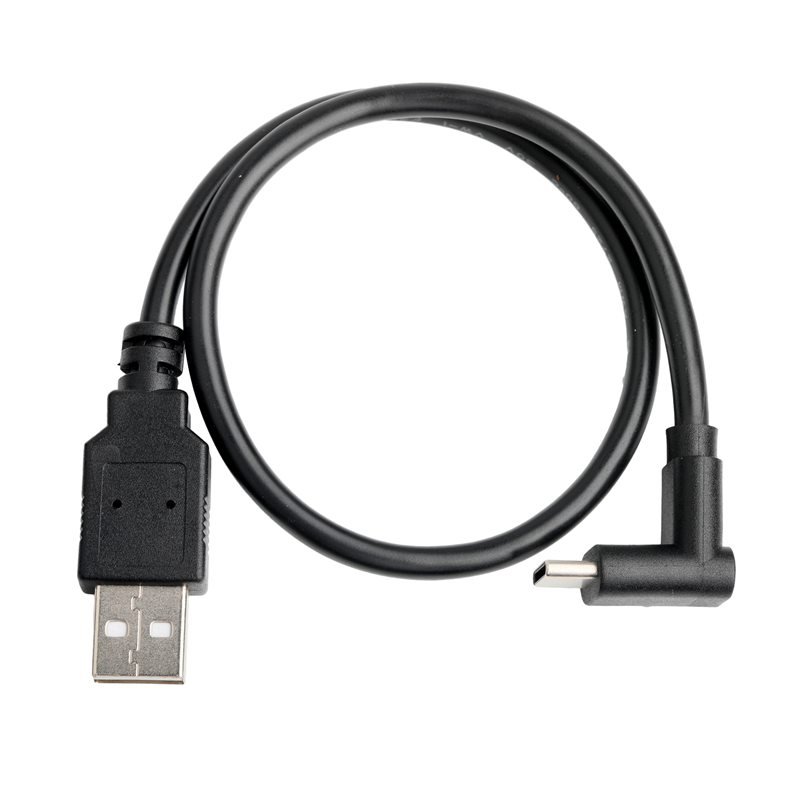
4) USB Cable Assemblies (USB 2.0 / 3.x / USB-C)
Used in: Smartphones, computers, medical devices
- Wiring: 4-wire, 9-wire, or 24-pin shielded
- Frequency: Up to 10Gbps (USB 3.1)
- Shield: Foil + braid
- Sino-Conn capability: Custom pin-out, E-marker IC integration, 100% continuity tests
5) HDMI & DisplayPort Cables
Used in: Displays, kiosks, AI terminals, surveillance systems
- Features: Differential pairs, strict impedance control
- AWG: 30–36 AWG micro-coax
- Shielding: Multi-layer foil + braid
- Sino-Conn QC: Impedance sweep + TDR testing for high-speed signal integrity

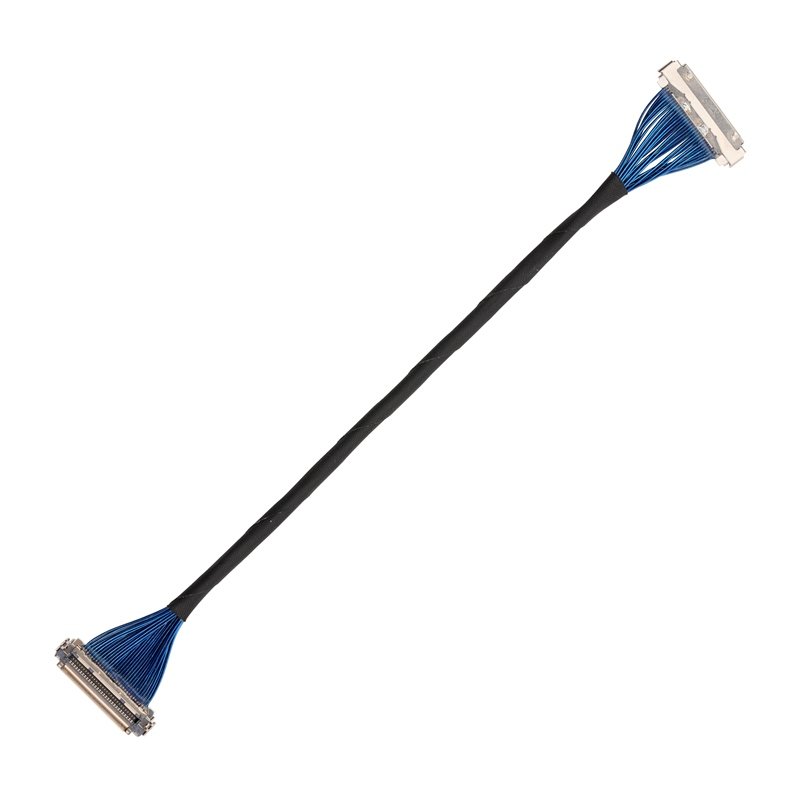
6) LVDS / eDP / FFC Display Cables
Used in: Tablets, laptops, industrial HMI displays
- Structure: Twisted pairs or micro-coax
- Connectors: I-PEX, Hirose, JAE
- Key attributes: Impedance matching + EMI stability
- Sino-Conn fact: ~35% of our display cable projects require custom I-PEX equivalents to reduce cost by 15–28%
7) Sensor & Control Cables (M8 / M12 / JST / Molex)
Used in: Robotics, AGV, automation, CNC systems
- Features: Waterproof IP67/IP68 options
- Cable type: Shielded twisted pairs
- Sino-Conn specialty: Overmolded circular connectors with tensile reinforcement

8) Coaxial RF Cable Assemblies (SMA, MMCX, U.FL)
Used in: 4G/5G modules, GPS antennas, WiFi devices
- Impedance: 50Ω or 75Ω
- Cables: RG174, RG316, 1.13/1.37 mm micro-coax
- Sino-Conn RF test: Frequency sweep up to 6 GHz

9) Network & Data Cables (CAT5e / CAT6 / CAT7)
Used in: Security cameras, routers, industrial switches
- Pair type: Twisted pairs with separators
- Jacket: PVC / LSZH
- Shielding: UTP, FTP, STP
- Sino-Conn note: Custom molded RJ45 available with waterproof caps
10) Audio & Communication Cables
Used in: Headsets, intercom systems, microphones
- Structures: Multicore, spiraled, shielded
- Jackets: Flexible TPE/Silicone
- Sino-Conn contribution: Soft-touch headphone cable with >300,000 bend life for a U.S. brand
Sino-Conn: Real Market Demand Distribution
Based on 2023–2024 orders:
| Cable Assembly Category | % of Total Orders | Notes |
|---|---|---|
| Power Cables | 33% | EV, robotics, battery applications rising rapidly |
| USB/HDMI/LVDS | 26% | Display + AI terminal devices growing |
| RF Coaxial | 14% | 5G & IoT modules demand ↑ |
| Sensor Cables (M8/M12) | 11% | Automation & AGV market expansion |
| Automotive Harnesses | 9% | High-temperature & vibration-resistant |
| Misc. Data & Control | 7% | Custom assemblies for niche equipment |
What Other Cable Assembly Types Are Common Across Industries?
Beyond signal and power assemblies, industries rely on specialized cable types such as medical-grade cables, automotive harnesses, robotic cables, waterproof assemblies, high-temperature lines, fiber-optic jumpers, military-spec cables, and overmolded custom assemblies. These cables differ in materials, shielding, durability, and certification needs. Sino-Conn manufactures all of these categories with custom pin-outs, drawings, and rapid sampling for engineering teams.
Across automation, medical equipment, EV mobility, aerospace, industrial IoT, and communication systems, many projects require not just a single “signal wire” or “power wire,” but hybrid wire harnesses optimized for specific applications. These harnesses often demand higher durability, stricter material requirements, or multi-functional integration (signal + power + shielding + waterproofing + tensile strength).
Sino-Conn’s statistics show:
- 27% of annual projects fall into the category of these “special industry wire harnesses”
- Each industry project requires an average of 3–5 rounds of drawing confirmation
- Over 70% ultimately utilize custom pin-outs and custom overmolding
- Medical, robotics, and outdoor equipment customers have higher requirements for chemical resistance, oil resistance, and bending resistance.
Medical-Grade Cable Assemblies
Applications
Patient monitors, imaging devices, surgical tools, wearable medical sensors
Key Characteristics
- Biocompatible TPU / TPE jackets
- High-flex life (>2 million bend cycles)
- Snap-in locking medical connectors
- Low-noise spiral shielding
- Sterilization-resistant (ETO, gamma)

Sino-Conn Example
Delivered 5,000+ sets/month for a European medical OEM using custom TPU overmolding and gold-plated precision pins.
Automotive & EV Cable Assemblies
Applications
Battery management systems, sensors, lighting modules, ECUs, charging ports
Key Characteristics
- High-temperature XLPE or silicone wire (125–200°C)
- Vibration-proof terminals
- Waterproof IP67/IP69K structures
- Multi-pin sealed connectors (AMP, Yazaki, Sumitomo equivalents)
Sino-Conn Insight
EV lines require 2–4× stronger strain relief and thicker insulation due to heat + vibration.
Industrial Robot & Automation Cables
Applications
CNC machines, AGV/AMR robots, servo motors, factory sensors
Key Characteristics
- Continuous-flex cable types (>8 million cycles)
- Double-braided shielding
- Oil-resistant PUR outer jacket
- M8/M12 circular connectors
- Custom spiral overmolding
Sino-Conn Project Data
A robotics client required 1.5 million flex-cycle durability—achieved using PUR + Kevlar strength members.
Waterproof Cable Assemblies (IP67–IP69K)
Applications
Outdoor lighting, marine devices, security cameras, industrial IoT
Common Features
- Overmolded connectors (PVC/TPE/TPU)
- O-ring sealing
- UV-resistant jacket materials
- Salt-spray protection (48–96 hours)

Best-Seller Cable Types
- Waterproof RJ45
- Waterproof USB
- M8/M12 sealed cables
- DC waterproof extensions
High-Temperature Cable Assemblies
Applications
Industrial heaters, ovens, engines, aerospace equipment
Material Options
- PTFE (up to 200–260°C)
- Silicone (up to 180°C)
- FEP / ETFE insulation
Sino-Conn Engineering Note
PTFE cables require special stripping tools; bending radius must be controlled to avoid conductor damage.
Fiber Optic Cable Assemblies
Applications
Data centers, telecom, 5G infrastructure, medical imaging
Connector Types
- LC / SC / ST
- MPO/MTP
- FC for precision optical systems
Performance Factors
- Insertion loss
- Return loss
- Jacket flame rating
Fiber assemblies now account for 12% of Sino-Conn’s export volume.
Overmolded Custom Cable Assemblies
Applications
Consumer electronics, outdoor equipment, automotive sensing units
Key Advantages
- Better strain resistance (up to 3× stronger pull force)
- Waterproofing capability
- Enhanced shock and vibration protection
- Custom branding + color + shape
Sino-Conn Capability
Custom molds can be produced in 7–10 days, with 3D CAD + sampling included.
Custom Multi-Connector Hybrid Assemblies
These combine multiple connector types in a single harness.
Examples:
- USB + power + switch harness
- RF + DC power bundle
- Multi-branch Y-splitter harnesses
These are especially common for robotics, kiosk machines, EV control boxes, and smart home systems.
30 Common Cable Assembly Types:List Guide
| Category | Typical Use | Custom Options Available at Sino-Conn |
|---|---|---|
| Power cables | AC/DC power | Gauge, jacket, connector, length |
| USB cables | Data + charging | Pin-out, OD, mold design |
| HDMI cables | Displays | EMI, length, bandwidth |
| Coaxial RF cables | Antenna, GPS, routers | Impedance, shielding, connector type |
| Ethernet cables | Networking | Outdoor, waterproof, angled plug |
| Fiber-optic | High-speed telecom | Polishing, connector type |
| Medical cables | Diagnostic devices | Sterile materials, color coding |
| Servo motor cables | CNC & robotics | Hybrid cable, PUR jacket |
| FFC/FPC | Displays & drones | Pitch, folding shape |
| SATA/SAS | Storage | Length, impedance |
| Outdoor rugged cables | Base stations | UV, IP ratings |
| Robotics cables | Automation | Flex-rated materials |
| LVDS/eDP | Screens | Twist control |
| CCTV cables | Security | Power+signal bundles |
| LED harnesses | Lighting | Silicone wire |
| Sensor cables | PLC & automation | Overmold sealing |
| Automotive harnesses | ECUs and lighting | Heat-resistant materials |
| Battery cables | EV & tools | High-current terminals |
| CANbus/RS485 | Industrial networks | Shielding type |
| M8/M12 | Sensors & actuators | IP67/68 |
| Multi-connector hybrid | Complex machines | Full OEM build |
| Audio assemblies | Broadcasting | Noise shielding |
| Micro-coax cables | Cameras & drones | 1.13/1.37 mm |
| DC power cables | Small devices | Polarity control |
| TE/Molex harnesses | Appliances | Housing type |
| Military-grade | Defense | Flame/chemical resistance |
| Marine cables | Boats | Salt-corrosion protection |
| Solar harnesses | Panels & inverters | UV + weatherproof |
| Elevator control | Safety systems | Redundancy wiring |
| EV charging interface | Mobility | High-voltage insulation |
How Do Materials, Shielding, and Cable Construction Affect Performance?
Cable performance is influenced by conductor material, insulation and jacket type, shielding structure, and mechanical construction. These factors determine flexibility, frequency capability, EMI immunity, heat resistance, signal stability, and service life. Choosing the right combination is essential for applications such as robotics, medical devices, outdoor installations, or high-speed data transmission. Sino-Conn helps engineers optimize these parameters to meet electrical, mechanical, and environmental requirements.
Selecting the correct cable assembly is not only about choosing a connector—it is about creating the right internal structure so that the cable maintains electrical integrity, mechanical strength, and environmental durability. Below, we break down the engineering principles that matter most.
Conductor Types
Common conductor materials and their characteristics:
- Tinned Copper – Corrosion resistance, easy soldering, common in consumer and automotive harnesses.
- Bare Copper – Best conductivity for power delivery; used in high-current battery cables.
- Silver-Plated Copper – Heat-resistant (up to 200°C), ideal for RF, aerospace, and high-frequency applications.
- Stranded vs. Solid Wire –
- Stranded: Flexible, used for robotics, hinge cables, wear-intensive devices.
- Solid: Stable impedance, used for Ethernet, building wiring.
Sino-Conn Advantage
- Conductors available from 28 AWG to 4 AWG, with resistance and strand count matched to customer needs.
- Special alloys available for medical or high-temperature equipment.
Insulation and Jacket Materials
Each insulation material defines durability, flexibility, and environmental resistance.
Common insulation and jacket materials:
- PVC: Cost-effective, good flame resistance; perfect for consumer electronics.
- TPE / TPU: High flexibility, abrasion resistant, ideal for medical and handheld devices.
- Silicone: Withstands 60°C to +200°C; used in robotics and high-heat industrial machines.
- PE / XLPE: Low dielectric loss, used for RF, coax, and outdoor applications.
- PTFE / FEP: High-frequency, chemical-resistant; used in aerospace and military assemblies.
Sino-Conn real capability:
We provide 20+ jacket materials, and customers often request oil-resistant PUR, UV-resistant PE, or halogen-free LSZH for compliance markets.
Shielding Structures and EMI Protection
Shielding is essential for high-speed, low-noise systems.
Common shielding formats:
- Aluminum Mylar Foil – Basic EMI protection; used in USB, LVDS, audio cables.
- Braided Copper Shield (50–95% coverage) – Mechanical strength + EMI protection for industrial control cables.
- Combination Foil + Braid – Provides both high-frequency and low-frequency shielding.
- Spiral Wrap Shield – More flexible; used in medical or handheld devices.
Performance Considerations:
- Higher braid density = better EMI rejection.
- Foil shields improve high-frequency stability for HDMI, LVDS, and micro-coax.
Sino-Conn offering:
We measure shielding coverage and impedance during QC to ensure stable performance—especially for RF and LVDS assemblies.
Cable Construction: Twisting, Pairing, and Fillers
Construction affects both electrical and mechanical performance.
Key factors:
- Twisted Pairs: Reduce crosstalk; required for differential data (USB, Ethernet, RS485).
- Conductor Pair Matching: Length matching prevents signal skew.
- Kevlar or Nylon Fillers: Increase tensile strength; common in outdoor and fiber assemblies.
- Drain Wire: Provides clean ground reference for shielding termination.
- Separator Layers: Reduce friction and maintain cable geometry under bending.
Why this matters:
Incorrect twist or uneven length leads to unstable signal integrity—common failure in low-quality HDMI or LVDS cables.
How Do You Select the Right Cable Assembly for Your Application?
To select the right cable assembly, evaluate electrical requirements (voltage, current, frequency), connector type, environmental exposure, mechanical stress, shielding needs, international certifications, and expected service life. Matching these factors ensures the cable performs reliably without overheating, losing signal, or failing prematurely. Sino-Conn helps customers analyze specs or photos to determine the correct configuration.
Different industries have different tolerances and performance expectations. A surveillance camera cable exposed to outdoor UV is not engineered like a medical ECG lead, nor like a servo motor feedback cable inside a robot arm.
Below is a structured approach used by Sino-Conn engineers during customer consultations.
Step 1 – Electrical Requirements
Consider:
- Voltage rating
- Current load
- Impedance consistency (for RF, HDMI, LVDS)
- Signal type (analog, digital, differential pair, RF)
Example:
- RS485 requires twisted pairs + 120Ω impedance.
- Servo power cables need 2.5–4 mm² copper for current stability.
Step 2 – Environmental Conditions
Match materials to the environment:
- Outdoor: UV-resistant PE or TPU
- Automotive: high-heat PVC or XLPE
- Robotics: high-flex silicone or TPE
- Medical: soft TPU + color coding
- Marine: anti-corrosion metal + waterproof design
Sino-Conn provides IP67/IP68 molding when needed.
Step 3 – Mechanical Durability
Ask:
- Will the cable bend frequently?
- Is it installed in a hinge, robot, or sliding door?
- Should it withstand pulling or crushing?
We provide bend-test reports, especially for hinge cables used in laptops and kiosks.
Step 4 – Connector Compatibility
Consider:
- Housing style (Molex, JST, TE, Micro-Fit, Mini-Fit)
- Pin count
- Locking method
- Orientation (straight / right angle)
- Waterproofing requirements
Sino-Conn can redesign molds and adjust pin-outs based on customer drawings.
Step 5 – Compliance and Safety Standards
Industries require specific certifications:
- UL for U.S. markets
- ROHS / REACH for Europe
- PFAS-free for advanced compliance
- ISO-based traceability (medical & industrial)
Every Sino-Conn shipment includes COC + test reports.
How Does Sino-Conn Support Custom Cable Assembly Development?
Sino-Conn supports custom cable development through rapid drawing generation, accurate reverse-engineering, connector and pin-out selection, material optimization, prototype production in 2–3 days, and full inspection before shipment. With no MOQ, flexible pricing, 30-minute quoting, and 100% QC, the company helps engineers, OEM factories, and trading firms build reliable, application-specific cable assemblies.
Step 1 – Reverse Engineering & Design Consultation
Our engineers evaluate:
- Required pin-out
- Voltage/current demands
- Connector compatibility
- Shielding needs
- Material selection
- Assembly tolerance + bend radius
We often identify hidden risks (overheating, EMI, incorrect AWG) before production.
Step 2 – 30-Minute Quotation & 2–3 Day Drawings
Sino-Conn can provide:
- Accurate drawings in 30 min–3 hours for urgent projects
- CAD + PDF + 3D formats
- Alternative connector options (original or replacement)
- Cost-saving BOM proposals
Engineers often choose us because our quotes include detailed specifications, not simple unit pricing.

Step 3 – Prototype Manufacturing (2–3 Days)
Capabilities:
- Automated wire cutting and stripping
- Terminal crimping (TE, Molex, JST, Hirose, custom)
- Overmolding for waterproof or strain-relief
- Shield termination
- High-temperature soldering
Express samples ship within 2–3 days, or same day for urgent small builds.
Step 4 – Mass Production (2 Weeks Typical)
Depending on connector stock:
- Standard lead time: 3–4 weeks
- Urgent orders: 2 weeks
- Small flexible orders: NO MOQ (1 pcs)
This flexibility is extremely valuable for R&D engineers.
Step 5 – 100% Quality Inspection
Sino-Conn conducts:
- Visual inspection
- Pull-force test
- Continuity + pin-out testing
- Insulation resistance measurement
- Shield resistance test (for coax/RF)
- High-frequency sweep test (for RF + LVDS)
Three-stage QC:
- In-process inspection
- Finished product testing
- Pre-shipment verification
Conclusion
Every industry—from medical devices to EV systems, robotics, telecom equipment, and consumer electronics—depends on reliable, application-specific cable assemblies. Understanding materials, shielding, cable construction, connector compatibility, and environmental conditions helps engineers avoid failures, redesign cycles, and hidden long-term costs.
If you are ready to develop a reliable, high-performance cable assembly.
Contact Sino-Conn to request drawings, samples, or a custom engineering proposal.